















- 28th November 2026
Table of Contents
- What the research says about breakfast for type 2 diabetes
- 10 Indian breakfast options with protein and fibre
- 1. Moong dal chilla with plain curd and vegetables
- 2. Besan chilla stuffed with tofu or paneer
- 3. Vegetable poha with egg bhurji
- 4. Idli with thick vegetable sambar and a protein side
- 5. Pesarattu with tofu bhurji and tomato chutney
- 6. Savoury oats and moong dal khichdi
- 7. Vegetable upma with cooked chana and curd
- 8. Small atta roti with egg, tofu or paneer bhurji
- 9. Cooked moong and chana chaat with plain curd
- 10. Unsweetened dahi, oats, guava and flaxseed
- How to choose a breakfast you can repeat
- How to review your glucose response without overreacting to one reading
- Frequently asked questions
- Can I eat poha or idli every day if I have type 2 diabetes?
- Is a millet breakfast always better for blood sugar?
- Can I add fruit to an Indian breakfast for type 2 diabetes?
- Do I need a protein powder at breakfast?
- What if increasing fibre makes me bloated?
- What to try this week
- References
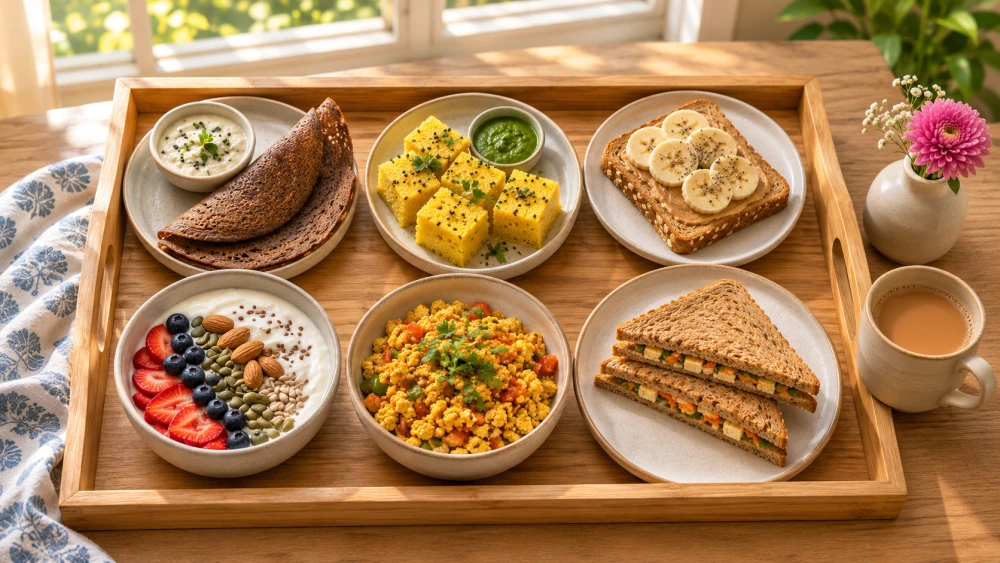
An Indian breakfast for type 2 diabetes can still include poha, idli, dosa or roti. The useful question is what goes with it and how much you serve. A plate of poha with a few peanuts and sweet chai is a different meal from a smaller serving of vegetable poha with eggs and unsweetened chai. In the second meal, protein has a clear place on the plate, vegetables add fibre, and the carbohydrate portion is easier to see and repeat.
This guide gives ten breakfasts using ingredients commonly available in Indian kitchens. Each starts with a portion you can picture, identifies the foods supplying protein and fibre, and explains one adjustment to try if your usual breakfast leaves you hungry or your glucose repeatedly rises above your agreed target. The portions are examples for adults. Your medication, appetite, activity, kidney function and usual carbohydrate intake matter when deciding what works for you.
What the research says about breakfast for type 2 diabetes
The American Diabetes Association’s 2026 Standards of Care recommend plans tailored to the person’s metabolic goals, energy needs and food preferences. They favour minimally processed, fibre-rich carbohydrate sources, including pulses, vegetables, whole fruit and whole grains, and give a daily fibre benchmark of at least 14 g per 1,000 kcal. At 1,800 kcal that works out to about 25 g across the day. Breakfast can contribute through dal, chana, vegetables and whole grains. The figure is a daily benchmark, not a quota to meet at every meal.
The 2023 European evidence-based recommendations likewise support food patterns rich in minimally processed plant foods. ICMR–National Institute of Nutrition’s 2024 guidelines bring this advice closer to the Indian kitchen by showing how cereals and millets fit alongside pulses, vegetables and other food groups. These publications support the principles used below. They do not establish a glucose response for a particular recipe or show that one Indian breakfast works best for everyone.
Carbohydrate amount and quality both matter
Rice flakes, suji, ragi flour, oats and atta all supply carbohydrate. Their effect depends on the amount served, how finely the grain is milled, how it is prepared and what else you eat. A large bowl of millet porridge can contain more carbohydrate than a small serving of a rice-based breakfast. Conversely, dal and beans bring carbohydrate together with fibre and protein, which makes them practical building blocks when combined with a measured grain portion. A recipe labelled whole grain, sugar-free or diabetic-friendly still deserves the same portion check.
The rest of the meal matters too. Two small idlis with a generous serving of thick sambar are a different proposition from four large idlis with a thin ladle of sambar. A serving of curd or an egg can improve a meal’s protein contribution, but neither cancels the carbohydrate already on the plate. Tea with sugar, juice, biscuits and a second helping are easy to overlook when trying to understand a glucose reading.
Give protein a visible place on the plate
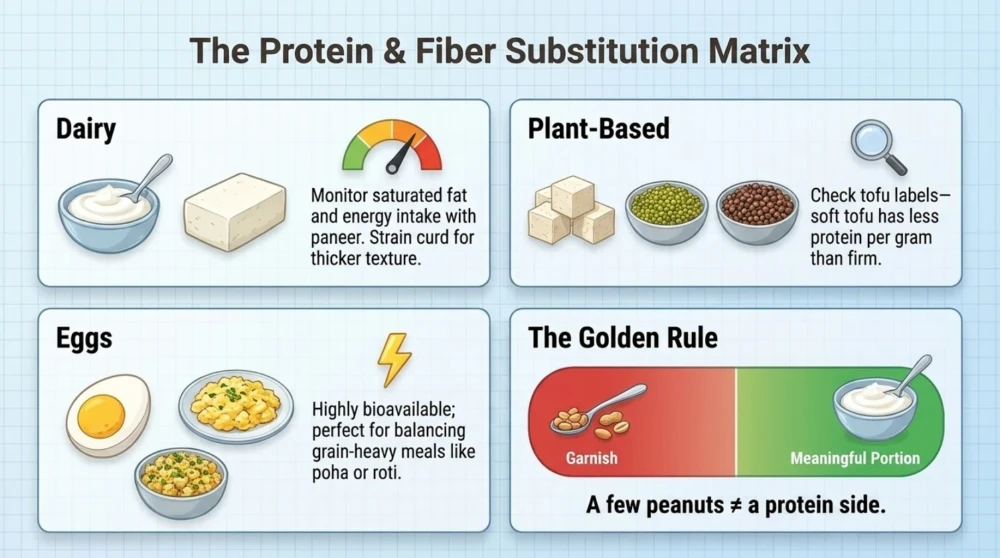
Look for a recognisable portion of dal, chana, eggs, tofu, curd, paneer or another protein source that fits your diet. A few peanuts scattered over poha contribute flavour and nutrients, but they serve a different role from a substantial side of eggs or curd. Plain curd, strained curd and tofu vary in protein content by product. A spoonful for garnish counts differently from a bowl eaten as part of the meal. Check the label when protein content matters to your plan.
There is no universal breakfast protein target for type 2 diabetes. Distributing protein across meals can be a practical way to meet your own daily needs, particularly if your present breakfast is mainly bread, cereal or tea and biscuits. If you have chronic kidney disease, ask your clinician or renal dietitian about your daily total before increasing protein across several meals. Targets differ with kidney disease stage, dialysis and nutritional status.

10 Indian breakfast options with protein and fibre
For the examples below, a cup means about 240 mL. A household katori may be smaller, so measure yours once if you want consistent portions. Grain, dal and bean amounts are cooked unless marked dry. A small chilla or dosa means a home-sized piece rather than a restaurant-sized serving. Cooking oil, fillings and recipes vary. The examples use ingredient amounts in place of fixed nutrition totals so you can adapt them to the food you actually cook.
1. Moong dal chilla with plain curd and vegetables
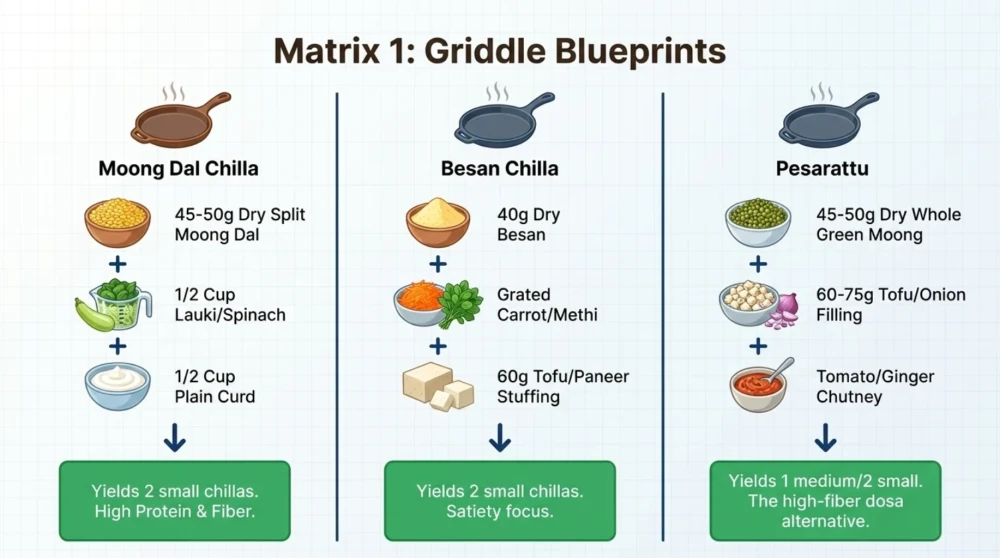
Example plate. Make two small chillas from about 45–50 g dry split moong dal, soaked and ground with water. Fold in about half a cup of grated lauki, finely chopped spinach or capsicum. Serve with half a cup of plain unsweetened curd and a little coriander chutney.
Moong dal contributes protein and fibre, while curd adds another protein source and makes the meal more substantial. This is a practical option when plain toast or a thin dosa leaves you looking for another snack mid-morning. Make the batter thick enough to hold the vegetables and divide it evenly so two chillas represent the same amount each time. The amount of dry dal going into your portion tells you more than the number of chillas if their size changes.
For a dairy-free plate, use tofu as a filling. If you prefer a smoother batter, start with split yellow moong. Whole green moong works too, though the texture and tolerance may differ. When making a family batch, measure out your share of batter before cooking. This makes glucose comparisons more useful than guessing whether yesterday’s two chillas were the same size.
2. Besan chilla stuffed with tofu or paneer
Example plate. Use about 40 g dry besan for two small chillas. Add grated carrot, methi or capsicum to the batter, and divide about 60 g tofu or paneer between the two. Season with ajwain, chilli or cumin and cook on a lightly oiled tawa.
Besan supplies protein, fibre and carbohydrate. The filling adds another protein source without needing a larger chilla. Paneer and tofu differ in protein, fat and energy by preparation and brand. Tofu or lower-fat paneer can be useful when you are managing saturated fat or energy intake. For texture, crumble the filling and cook it with onions, tomatoes and spices before adding it to the chilla.
At a canteen it can be hard to tell how much oil was used or how large the chilla will be. Order one when portions are large and see whether a side of curd completes the meal. At home, compare two versions made with the same amount of besan. If the plain version leaves you hungry earlier, try the filled version and pay attention to both fullness and your glucose pattern.
3. Vegetable poha with egg bhurji
Example plate. Start with roughly three-quarters of a cup of cooked vegetable poha and two eggs scrambled with tomato, spinach or capsicum. Add lemon and coriander to the poha. If you do not eat eggs, serve a side of tofu bhurji and adjust the portion using the product’s protein information.
Poha is the main carbohydrate source. Egg bhurji provides protein, and the vegetables across both dishes provide fibre. Peanuts add crunch and can stay in the recipe. If you usually eat a large bowl of plain poha, serve a smaller bowl first and use the bhurji to fill the rest of the plate. A few peas or chopped beans help bulk out the poha, but the volume added by cooking can make serving sizes misleading. Use the same bowl for a few trials.
On a rushed morning, boil the eggs ahead and keep chopped vegetables ready. If your glucose runs high after this breakfast, look at sweet chai, juice or an extra serving before deciding poha itself is the issue. If you still notice a pattern after measuring the full meal, ask about adjusting the carbohydrate portion, particularly if you use a fixed insulin dose.
4. Idli with thick vegetable sambar and a protein side
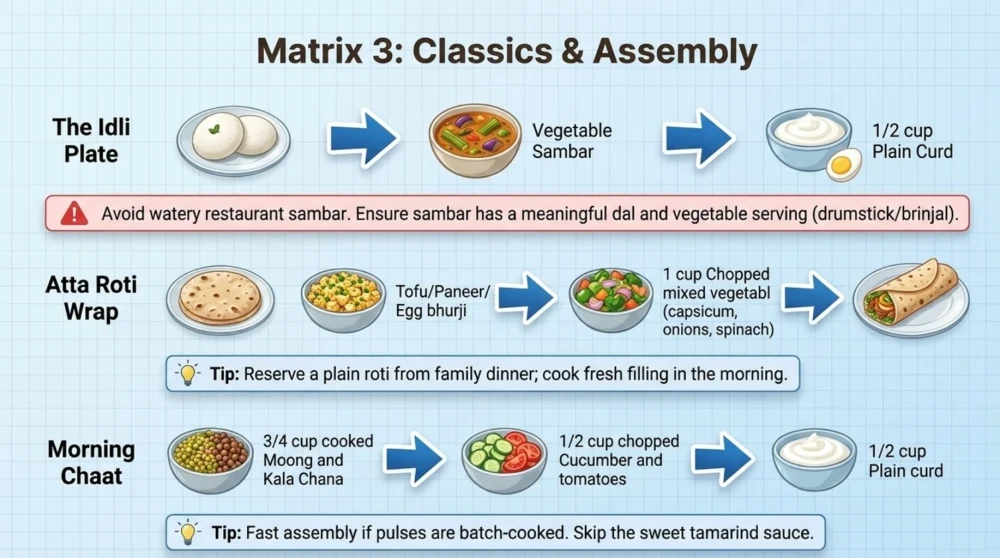
Example plate. Serve two small idlis with about one cup of thick, vegetable-rich sambar and half a cup of plain curd or one egg. The sambar should contain a meaningful serving of dal and vegetables such as drumstick, brinjal, beans, pumpkin or okra. If you are eating out, ask for more sambar if the first serving is small.
Rice and urad in the batter contribute carbohydrate and some protein. Dal in the sambar adds protein and fibre, but a restaurant’s watery sambar may contain considerably less dal than your home recipe. The egg or curd makes the meal easier to reproduce when you cannot estimate the dal. Coconut chutney can add flavour. Treat it as a condiment when planning the protein portion.
Idli size varies widely. Two small homemade pieces may be a smaller serving than a single oversized shop idli. Start by checking the portion you actually eat, including refills. A good experiment is to keep the number and size of idlis steady and compare your usual side with a larger helping of thick sambar. Assess the meal as a whole rather than making assumptions from the fact that the batter is fermented.
5. Pesarattu with tofu bhurji and tomato chutney
Example plate. Make one medium or two small pesarattu using about 45–50 g dry whole green moong for your share of batter. Fill with about 60–75 g crumbled tofu and chopped onion, or serve the filling on the side. Add a little tomato or ginger chutney with no added sugar.
Pesarattu is a useful alternative if your usual breakfast is dosa and you want pulses to account for more of the batter. Whole moong supplies both fibre and protein, and tofu makes it easier to have a substantial protein serving without filling the dosa with additional starch. Some recipes use rice to improve crispness and some restaurants serve pesarattu filled with upma. Both additions change the carbohydrate amount. Ask what is in the version you order.
If whole moong makes you bloated, try a smaller amount first or alternate it with the split-moong chilla. Soak the beans and cook the batter thoroughly. When travelling, plain pesarattu with sambar is easier to judge than a stuffed combination with several unknown portions. Keep the number of pieces, filling and sides in mind when comparing it with your regular dosa.
6. Savoury oats and moong dal khichdi
Example bowl. Cook approximately 30 g dry plain rolled oats with 25–30 g dry split moong dal and about half to one cup of chopped vegetables. Bottle gourd, carrots, beans and spinach work well. Season with cumin, ginger, turmeric and lemon. Add a little plain curd if it suits your appetite and dietary plan.
Oats contribute soluble fibre, including beta-glucan, and moong contributes protein and additional fibre. The combination has a different ingredient balance from instant masala oats with a few scattered peas. The dry quantities are worth measuring because the cooked bowl may look much larger with extra water. Choose plain oats if you want control over the seasoning and salt. A small pressure cooker makes this a practical one-pot meal, and chopped vegetables from dinner can go straight into it the next morning.
If you prefer dalia, substitute plain broken wheat for the oats in a measured amount, provided you tolerate wheat. The recipe is still useful because the dal and vegetables have a clear share of the bowl. If you make a larger batch, divide the finished khichdi into servings instead of estimating how much dal or grain ended up in each ladle. Refrigerate leftovers promptly and reheat thoroughly.

7. Vegetable upma with cooked chana and curd
Example plate. Use around 30–35 g dry suji for your share of vegetable upma. Stir in half a cup of cooked kala chana or kabuli chana and at least half a cup of chopped vegetables. Serve with half a cup of plain curd if you enjoy it and it fits your breakfast portion.
Suji is the main grain component. Chana adds protein and fibre, but also contributes carbohydrate. The intention is to replace some of the usual upma with chana and vegetables, rather than serve the full old portion and pile everything else on top. Onion, carrots, beans and capsicum add texture. Use mustard seeds, curry leaves and lemon for flavour, then taste before reaching for the salt.
Batch-cooked chana makes this easy on a weekday. For people who find beans uncomfortable first thing in the morning, start with a smaller portion and use plain curd or tofu for part of the protein. Increase pulses gradually as tolerated. If using canned chickpeas, drain and rinse them. This version works warm or packed for work, provided you keep it at a safe temperature and refrigerate it when needed.
8. Small atta roti with egg, tofu or paneer bhurji
Example plate. Make one small whole-wheat roti with about 30 g dry atta. Serve it with bhurji made from two eggs or a portion of tofu or paneer and about one cup of vegetables. Tomato, capsicum and spinach work well. For a portable meal, roll the bhurji into the roti and pack the remaining vegetables separately.
The roti supplies carbohydrate and some fibre. The filling supplies most of the protein, and the vegetables add fibre and volume. A wrap made with one home-sized roti and a thick filling is easier to compare from day to day than a large paratha cooked with varying amounts of oil. When using paneer, consider the overall saturated fat in your day. If you use tofu, check the label for protein, as soft tofu can provide less per gram than a firmer product.
This works especially well for families already making rotis for another meal. Reserve a plain roti, cook the fresh filling in the morning, and add a small salad if desired. A packaged wrap may be substantially larger or made with refined flour, so compare the actual size and ingredients. If your routine breakfast includes two rotis, choose any change in portion with your hunger, activity and medication in mind.
9. Cooked moong and chana chaat with plain curd
Example bowl. Use about three-quarters of a cup of cooked moong and kala chana combined. Toss with half a cup of cucumber, tomato and grated carrot, then add lemon, coriander and roasted jeera. Serve with half a cup of plain curd. For a dairy-free version, add cubed firm tofu instead of curd.
The pulses do much of the work here, providing fibre, protein and carbohydrate. This is useful if breakfast usually means namkeen or biscuits because a batch of cooked pulses makes it nearly as quick to assemble. Keep sev and sweet tamarind sauce as optional extras in small amounts if you use them at all. Commercial chaat masala can be salty. Lemon, cumin and coriander do much of the flavouring without relying on a large spoonful of seasoning.
Use thoroughly cooked pulses, especially if you have been advised to avoid raw sprouts. If you are used to very little fibre, start with a smaller bowl or alternate with an egg-and-vegetable breakfast. When preparing a lunch-box version, keep the curd chilled and add it just before eating. If you add bread or a large fruit serving on the side, account for that when comparing the meal with another breakfast.
10. Unsweetened dahi, oats, guava and flaxseed
Example bowl. Mix about 170–200 g plain unsweetened dahi or strained curd with 25–30 g dry rolled oats, about half a cup of chopped guava and one tablespoon of ground flaxseed. Soak the oats in the curd in the refrigerator overnight if you want a softer texture. For a dairy-free version use plain unsweetened soy yoghurt with a meaningful protein content, as checked on the label.
The curd or soy yoghurt supplies most of the protein. Oats, guava and flaxseed contribute fibre, and the oats and fruit are part of the carbohydrate portion. Ordinary dahi and strained curd differ in protein content. Read the label on packaged yoghurt and check for added sugar. A product marketed as Greek-style can still be sweetened. Choose a portion of fruit you enjoy eating whole rather than replacing it with juice.
This is a fast option for people who prefer a sweet-tasting breakfast. Use cinnamon or elaichi for flavour. Honey, jaggery, date syrup and a generous handful of sweetened granola can substantially change the meal. Try a version with plain curd, measured oats and fruit first. If you are consistently hungry well before lunch, look at the total meal and how much protein the yoghurt provides before assuming you need a larger serving of oats.
How to choose a breakfast you can repeat
Pick two or three meals that fit the mornings you actually have. Pesarattu or chilla makes sense if you can keep batter ready. A curd bowl or a roti roll is easier if you leave early. When eating with your family, use the same main dish and choose your own portions and sides. Someone else eating a large plate of poha does not oblige you to cook a separate meal. Use the same poha and add a side that provides protein.
Vegetarians can rotate dal, chana, tofu and curd. For a vegan breakfast, use pulses, tofu and unsweetened soy yoghurt where appropriate. If you eat eggs, use them to balance meals such as poha or roti that are otherwise dominated by grain. Rotate the source of fibre as well. It is easier to increase fibre gradually with small servings of vegetables, pulses and fruit than by putting bran, seeds, beans and raw salad into the same breakfast on day one.
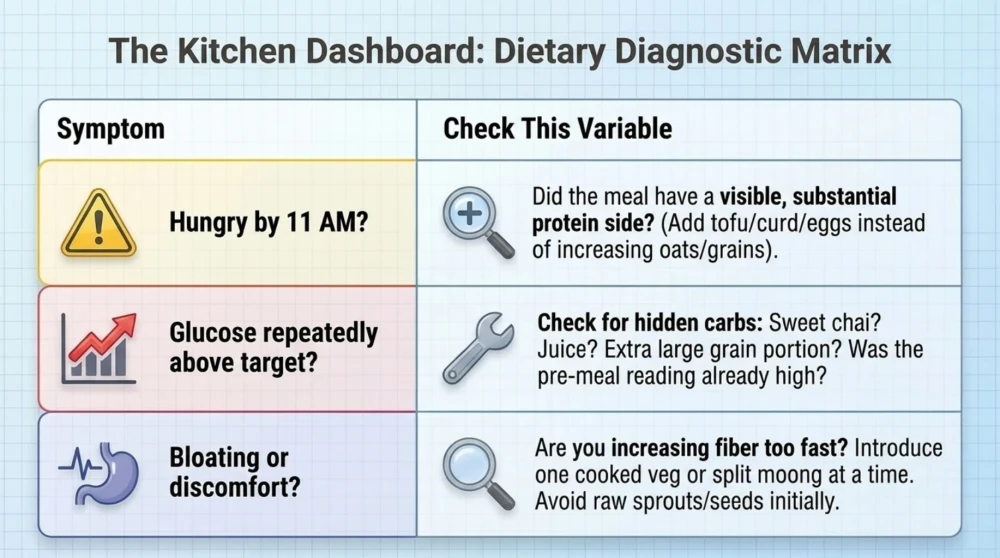
Match the serving to the day. A morning with several hours on your feet may feel different from a quiet morning at a desk. A meal that is too small can leave you hungry and lead to an unplanned second breakfast, while adding protein-rich sides to a full usual serving can increase total intake without addressing the original issue. Decide what you are trying to change, such as hunger at 11 a.m. or repeated glucose readings above target, then make one adjustment at a time.
How to review your glucose response without overreacting to one reading
If your clinician has advised home glucose monitoring, use the timing and targets in your care plan. To compare breakfasts, record a pre-meal value and a post-meal value at a consistent time, often around two hours after the first bite when that matches the plan. Record the drink, portions, medication timing and any movement afterward. Repeat the comparison on a few similar mornings. If you use a continuous glucose monitor, review the pattern with your care team, especially if the sensor value does not match how you feel.
For example, if you were already above your pre-meal target when you sat down, a high post-meal reading cannot be attributed to breakfast alone. Poor sleep, illness, stress, medicines and activity can influence the readings. If you want to see what reducing a poha serving does, keep the bhurji and tea the same for the comparison. If glucose is repeatedly above target despite a breakfast you can sustain, take the log to your diabetes review. Persistent highs may need a broader look at the treatment plan.
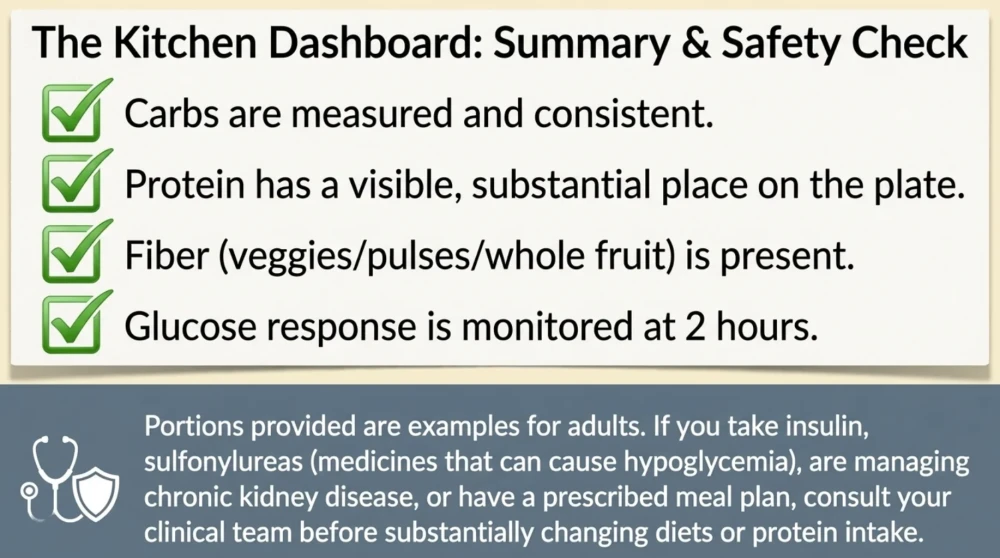
If you take insulin or a medicine that can cause hypoglycaemia, such as a sulfonylurea, discuss any major decrease in the amount or timing of breakfast with your clinician. The ADA recommends consistency in carbohydrate timing and amount for people using fixed insulin doses, taking insulin action into account. Follow your prescribed low-glucose plan if a low occurs. A high-fibre chilla or a handful of nuts serves a very different purpose from the fast-acting carbohydrate used to treat a low.
For more on interpreting readings after meals, see why post-meal blood sugar matters.
Frequently asked questions
Can I eat poha or idli every day if I have type 2 diabetes?
Either can fit if the portion and the rest of the meal suit your glucose and nutritional goals. Rotate the vegetable or protein side if you eat the same base often. If glucose repeatedly runs high after the meal, check the serving size, sweet drinks and refills. Also check whether glucose was already high before you ate. Discuss persistent patterns with your care team.
Is a millet breakfast always better for blood sugar?
Millets can contribute variety, but the grain name does not tell you how much carbohydrate is in the bowl or how the meal was prepared. Finely ground flour, a large serving or added jaggery can change what you are eating substantially. Judge the complete meal: portion, preparation, protein side, vegetables and drinks. A measured serving of a familiar grain with dal and vegetables is often easier to evaluate than a large bowl of instant millet cereal.
Can I add fruit to an Indian breakfast for type 2 diabetes?
Whole fruit can fit into a diabetes meal plan. Start with a portion that fits the rest of the plate, such as the half cup of guava in the curd bowl. People who count carbohydrates should include fruit in the meal total. Juice is easier to drink quickly and offers a different fibre profile. If a meal already has a large grain serving, adjust the whole breakfast to accommodate the fruit instead of treating it as an uncounted extra.
Do I need a protein powder at breakfast?
Start by checking what you already get from food and why you want the powder. Eggs, curd, tofu and pulses can do much of the work in the examples above. A supplement may be useful in specific circumstances, such as when appetite or food choices make it difficult to meet an agreed intake, but it adds cost and may contain sweeteners or other ingredients. If you have kidney disease, poor appetite, unintentional weight loss or a prescribed nutrition plan, ask your clinician or dietitian before changing your protein intake substantially.
What if increasing fibre makes me bloated?
Increase fibre gradually and change one ingredient at a time. A large bowl of whole chana, extra seeds and raw vegetables introduced together makes it hard to identify the problem. Try cooked vegetables or split moong, and give yourself time to see how you respond. Drink according to your usual plan, especially if you have a fluid restriction. Persistent or worsening symptoms deserve a clinical review rather than a series of increasingly restrictive self-directed diets.
What to try this week
Choose one breakfast that is closest to what you already cook. Measure the grain or flour once, add a clear source of protein, and include a vegetable, pulse or serving of whole fruit for fibre. Keep the drink in the same plan. If you monitor your glucose, compare a few mornings using a consistent timeline, and note how long the breakfast keeps you satisfied. Use that information to refine a meal you will actually eat again.
Written by Dr. Pankaj Kumar, General & Lifestyle Physician.
Medical note. These are educational portion examples for adults with type 2 diabetes. If you use insulin or a medicine that can cause low glucose, have kidney disease, are pregnant, or have a prescribed meal plan, discuss changes with your treating team.
References
- American Diabetes Association. Facilitating Positive Health Behaviors and Well-being to Improve Health Outcomes. Standards of Care in Diabetes—2026.
- Diabetes and Nutrition Study Group of the EASD. Evidence-based European recommendations for the dietary management of diabetes. Diabetologia, 2023.
- ICMR–National Institute of Nutrition. Dietary Guidelines for Indians, 2024.
- American Diabetes Association. Glycemic Goals, Hypoglycemia, and Hyperglycemic Crises. Standards of Care in Diabetes—2026.
- American Diabetes Association. Chronic Kidney Disease and Risk Management. Standards of Care in Diabetes—2026.