












- 17th November 2026
Table of Contents
- Protein Distribution Across Meals: Does It Matter When You Eat Protein?
- What Is Protein Distribution Across Meals?
- Why Total Daily Protein Still Matters Most
- What Happens to Protein After You Eat It?
- Protein Absorption vs Muscle Protein Synthesis: An Important Difference
- Protein Absorption and Muscle Protein Synthesis Compared
- What Is Muscle Protein Synthesis?
- How Does a Protein-Rich Meal Stimulate Muscle Protein Synthesis?
- What Is the Leucine Threshold?
- Why Older Adults May Respond Differently to Protein
- 60 Grams at Dinner vs 20 Grams at Three Meals: What Is Different?
- Comparing Two Protein Distribution Patterns
- Does the Body Waste Protein Above 30 Grams Per Meal?
- What Did the 2023 Protein Dose Study Actually Show?
- Why the 100-Gram Protein Study Does Not Settle the Distribution Debate
- What Does the 2024 Research Say About Protein Distribution?
- Why Short-Term Muscle Protein Synthesis Does Not Always Predict Long-Term Muscle Growth
- Does Equal Protein Distribution Always Make Sense?
- Protein Distribution Across Meals: Why Age and Lifestyle Change the Answer
- Protein Distribution for Younger Adults
- Protein Distribution for Adults Over 60
- Why Breakfast Protein May Be Particularly Important After 60
- Example Protein Distribution for a Healthy Older Adult
- Protein Distribution During Weight Loss
- Does Eating Protein at Breakfast Reduce Hunger Later?
- Protein Distribution During Resistance Training
- Is the Post-Workout Anabolic Window Really Only 30 Minutes?
- Protein Timing for Morning vs Evening Exercise
- Protein Distribution and Intermittent Fasting
- Is One Meal a Day Ideal for Muscle Preservation?
- Does Protein Quality Change the Importance of Meal Distribution?
- Indian Breakfast Options That Can Improve Protein Distribution
- How to Improve Protein at Lunch Without Using Supplements
- Why Dinner Should Not Be the Only Protein-Rich Meal
- How Much Protein Should Be Consumed Per Meal?
- Example Protein Distribution for Different Daily Targets
- Does Protein Distribution Matter for Vegetarians?
- When Protein Distribution Should Be Individualised Medically
- Clinical Example: A 62-Year-Old With Low Breakfast Protein
- Clinical Example: A 30-Year-Old Who Eats Most Protein at Dinner
- Clinical Example: A Patient Losing Weight With Poor Appetite
- How to Calculate Protein Distribution Across Meals
- Step 1: Estimate Your Daily Protein Requirement
- Step 2: Divide Protein Across Your Usual Meals
- Step 3: Check Protein Quality and Meal Composition
- Illustrative Protein Distribution by Daily Requirement
- Is Protein Before Bedtime Beneficial?
- Does Casein Protein Work Better Before Sleep?
- Can Ordinary Foods Replace a Bedtime Protein Shake?
- Is It Better to Eat Protein at Breakfast or Before Bed?
- Can You Build Muscle Eating Protein Only Twice a Day?
- Can Too Much Protein at One Meal Cause Kidney Damage?
- Seven Common Mistakes in Protein Distribution Across Meals
- 1. Counting Only Protein From Eggs, Paneer or Chicken
- 2. Assuming Protein Above 30 Grams Is Wasted
- 3. Focusing on Meal Timing While Total Protein Is Inadequate
- 4. Using Protein Supplements Without Calculating Food Protein
- 5. Believing Every Meal Must Contain Exactly 30 Grams
- 6. Ignoring Resistance Exercise
- 7. Copying Athlete Protein Targets for Patients With Chronic Disease
- Frequently Asked Questions About Protein Distribution Across Meals
- 1. Is 60 grams of protein at dinner wasted?
- 2. Is 20 grams of protein three times a day better than 60 grams once?
- 3. How much protein can the body absorb in one meal?
- 4. How much protein should I eat at breakfast?
- 5. Does protein timing matter for muscle growth?
- 6. Do I need protein immediately after exercise?
- 7. Is protein before bed good for muscle growth?
- 8. Is whey protein better than paneer or dal?
- 9. Should older adults distribute protein evenly?
- 10. Can I build muscle while intermittent fasting?
- 11. Is one meal a day bad for muscle?
- 12. Does protein distribution help with weight loss?
- 13. Does leucine determine whether protein is used?
- 14. Can vegetarians distribute protein effectively?
- 15. Is a large protein-rich dinner harmful?
- What I Explain to Patients About Protein Timing
- Key Takeaways: Protein Distribution Across Meals
- Protein and Muscle Health Consultation in Dwarka, Delhi
- Scientific References and Clinical Guidelines
- About the Author
- Medical Disclaimer
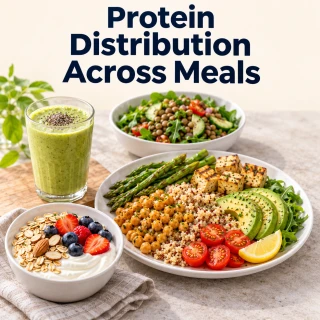
Protein Distribution Across Meals: Does It Matter When You Eat Protein?
Imagine two people who consume exactly 60 grams of protein daily.
The first person eats a light breakfast, a carbohydrate-heavy lunch and a protein-rich dinner containing nearly all 60 grams.
The second person consumes approximately 20 grams of protein at breakfast, 20 grams at lunch and 20 grams at dinner.
Both have the same total daily protein intake. But will their muscles respond in exactly the same way?
This question has attracted considerable attention among nutrition researchers, fitness professionals and clinicians interested in healthy ageing.
Protein is essential for maintaining skeletal muscle, repairing tissues, producing enzymes and supporting many other physiological functions.
However, the relationship between dietary protein and muscle health is more complicated than simply counting grams.
The timing of protein intake, protein quality, age, physical activity and the total amount consumed can all influence the body's response.
Protein distribution across meals may influence how muscle protein synthesis responds throughout the day, but this does not mean that large protein-rich meals are wasted or that evenly divided meals always produce greater muscle growth.
Recent research has challenged several traditional assumptions about how much protein the body can use at one time.
Understanding these findings can help people make practical decisions without following unnecessarily rigid eating schedules.
What Is Protein Distribution Across Meals?
Protein distribution refers to how total daily dietary protein is divided among meals and snacks.
For example, someone consuming 90 grams of protein daily could eat 10 grams at breakfast, 20 grams at lunch and 60 grams at dinner.
Alternatively, the same person could consume 30 grams at each of three meals.
Both patterns provide the same total protein intake, but they differ in the size and timing of the protein doses.
Researchers study whether these differences influence muscle protein synthesis, muscle protein breakdown, muscle mass and physical performance.
The concept is particularly relevant because many adults consume relatively little protein at breakfast and a larger amount at dinner.
In India, for example, breakfast may consist of tea and toast, poha or a small portion of upma, while dinner includes dal, paneer, chicken or other protein-rich foods.
This pattern is not automatically unhealthy, but it may leave opportunities to improve nutritional balance earlier in the day.

Why Total Daily Protein Still Matters Most
Before discussing meal timing, it is important to understand the role of total daily protein intake.
A person who consistently consumes insufficient protein may struggle to maintain muscle mass, especially during ageing, illness or weight loss.
Dividing an inadequate protein intake into several equal meals does not automatically correct the deficiency.
Similarly, consuming adequate protein throughout the day does not guarantee muscle growth without an appropriate exercise stimulus and sufficient energy intake.
For many healthy adults, the established protein Recommended Dietary Allowance is approximately 0.8 grams per kilogram of body weight daily, although individual needs may be higher depending on age, activity and health status.
This amount is intended to meet the needs of most healthy adults rather than necessarily optimise muscle growth in every situation.
People undertaking regular resistance training, older adults at risk of muscle loss and patients recovering from certain illnesses may require individualised higher targets.
However, people with chronic kidney disease or other conditions affecting protein metabolism may need different recommendations.
The first priority is to establish an appropriate total daily protein intake. Meal distribution is a secondary consideration that may help optimise how that protein is used.
What Happens to Protein After You Eat It?
When a person eats eggs, dal, paneer, chicken, fish or another protein-containing food, digestion begins breaking dietary proteins into smaller peptides and amino acids.
These nutrients are absorbed through the small intestine and enter the circulation.
Amino acids are then used throughout the body.
Some support the synthesis of skeletal muscle proteins. Others contribute to enzymes, hormones, immune proteins and the maintenance of other tissues.
Amino acids may also be oxidised for energy or converted into other compounds.
The body does not store amino acids in a dedicated reserve in the same way that it stores fat in adipose tissue or carbohydrate as glycogen.
Nevertheless, this does not mean that amino acids from a large meal must be used immediately or discarded.
Digestion and absorption can continue over several hours, especially after larger mixed meals.
Protein Absorption vs Muscle Protein Synthesis: An Important Difference
One of the most persistent nutrition myths is that the body can absorb only 20–30 grams of protein from a meal.
This is incorrect.
The digestive system can absorb substantially larger quantities of dietary protein.
However, absorption is not the same as muscle protein synthesis.
Muscle protein synthesis, or MPS, is the process through which the body builds new muscle proteins.
The response of MPS to dietary protein depends on several factors, including protein quantity, amino acid composition, age, exercise and the duration over which measurements are taken.
Earlier research often measured the response during relatively short periods after a meal. This contributed to the idea that protein doses above approximately 20–40 grams provided little additional muscle-building benefit.
More recent research suggests that larger protein doses can produce a more prolonged anabolic response than previously recognised.
Protein Absorption and Muscle Protein Synthesis Compared
| Feature | Protein Absorption | Muscle Protein Synthesis |
|---|---|---|
| Meaning | Movement of digested protein-derived nutrients into the body | Production of new skeletal muscle proteins |
| Main location | Primarily the small intestine | Skeletal muscle tissue |
| Does it stop after 30 g? | No | No universal fixed ceiling has been established |
| Important influences | Meal size, digestion and food composition | Amino acids, exercise, age and measurement period |
| Clinical significance | Determines nutrient availability | Contributes to muscle maintenance and adaptation |
What Is Muscle Protein Synthesis?
Skeletal muscle is constantly undergoing protein turnover.
Some muscle proteins are broken down, while new proteins are synthesised.
Muscle protein synthesis refers to the production of new muscle proteins from available amino acids.
Muscle protein breakdown refers to the degradation of existing proteins.
Over time, changes in muscle mass depend partly on the balance between these processes.
Resistance exercise stimulates muscle adaptation, while adequate dietary protein provides the amino acids needed to support that response.
However, a temporary increase in muscle protein synthesis does not automatically translate into measurable muscle growth.
Long-term muscle outcomes also depend on training, total nutrition, recovery and other physiological factors.
How Does a Protein-Rich Meal Stimulate Muscle Protein Synthesis?
After a protein-containing meal, circulating amino acid concentrations increase.
Essential amino acids, particularly leucine, help stimulate signalling pathways involved in muscle protein synthesis.
One important pathway involves mechanistic target of rapamycin complex 1, commonly abbreviated mTORC1.
This pathway helps regulate cellular protein synthesis in response to nutrients and other signals.
However, muscle protein synthesis is not controlled by leucine alone.
All essential amino acids must be available to support sustained muscle protein production.
Exercise, energy availability and individual physiological characteristics also influence the response.
What Is the Leucine Threshold?
The leucine threshold is a concept describing the amount of leucine or essential amino acids required to produce a substantial stimulation of muscle protein synthesis.
Older adults may require a larger protein dose to produce a comparable anabolic response because of a phenomenon called anabolic resistance.
Some research suggests that approximately 2.5–3 grams of leucine, often provided by roughly 25–35 grams of high-quality protein, may be useful for stimulating MPS in older adults.
However, this is not a universal biological switch.
The amount required varies with age, exercise, protein quality, body size and other factors.
A meal containing less than this amount is not automatically useless, and a meal containing more does not become wasteful.
Why Older Adults May Respond Differently to Protein
Ageing is associated with changes in muscle mass, physical activity and the body's response to anabolic stimuli.
Some older adults experience anabolic resistance, meaning that a relatively small protein dose may stimulate muscle protein synthesis less effectively than it does in younger adults.
As a result, a breakfast containing only 5–8 grams of protein may be insufficient to produce a strong anabolic response in some older individuals.
Increasing breakfast protein may be a practical way to improve the daily dietary pattern.
However, the benefits of equal protein distribution on long-term muscle mass and strength remain uncertain.
It is therefore more appropriate to view balanced protein distribution as a potentially useful strategy rather than a guaranteed method of preventing sarcopenia.
60 Grams at Dinner vs 20 Grams at Three Meals: What Is Different?
Consider two hypothetical eating patterns that each provide 60 grams of protein daily.
In the first pattern, nearly all protein is consumed at dinner.
In the second, 20 grams are consumed at breakfast, lunch and dinner.
These patterns provide the same total quantity but expose the body to amino acids at different times.
Eating protein across several meals may provide repeated opportunities to stimulate muscle protein synthesis.
On the other hand, a larger protein dose may sustain amino acid availability and anabolic responses for longer.
Therefore, the two patterns are not necessarily metabolically identical, but current evidence does not establish that one always produces superior long-term muscle growth.
Comparing Two Protein Distribution Patterns
| Feature | 60 g Mainly at Dinner | 20 g at Three Meals |
|---|---|---|
| Total daily protein | 60 g | 60 g |
| Protein timing | Concentrated late in the day | Distributed across the day |
| Amino acid availability | Potentially prolonged after the large meal | Repeated post-meal increases |
| MPS response | May be substantial and prolonged | May provide multiple stimulation periods, depending on dose and protein quality |
| Older adult consideration | Breakfast and lunch may provide insufficient anabolic stimulus | 20 g per meal may still be below a robust stimulus for some older adults |
| Proven long-term superiority | Not established | Not established |
One important limitation of this comparison is that 60 grams per day may be insufficient for some adults, particularly larger individuals, athletes and older adults with increased requirements.
Therefore, the first question should be whether the daily total is appropriate before deciding how to distribute it.
Does the Body Waste Protein Above 30 Grams Per Meal?
No. The claim that protein above 30 grams per meal is automatically wasted is not supported by current evidence.
In a 2023 study published in Cell Reports Medicine, researchers compared the anabolic response to 25 grams and 100 grams of protein after resistance exercise.
The 100-gram dose produced a greater and more prolonged anabolic response during the 12-hour observation period.
This finding challenges the idea that muscle protein synthesis stops benefiting from additional protein after a rigid per-meal threshold.
However, the study did not establish that consuming 100 grams in one meal is superior to consuming the same total amount across several meals.
It also did not measure long-term changes in muscle size or strength.
Therefore, the study supports greater flexibility in protein meal size but does not eliminate the potential importance of distribution.

What Did the 2023 Protein Dose Study Actually Show?
The study used sophisticated isotope-tracing methods to investigate how dietary amino acids were incorporated into muscle and other tissues following exercise.
Participants received either a smaller or much larger protein dose, and researchers monitored protein metabolism for an extended period.
The larger dose resulted in greater amino acid availability and a longer anabolic response.
This was an important finding because many earlier studies had assessed muscle protein synthesis over only a few hours.
However, it is essential to distinguish the study's actual findings from broader claims sometimes made on social media.
The research did not prove that protein timing never matters, that unlimited protein is beneficial or that very large meals are appropriate for every patient.
It demonstrated that the anabolic response to a large protein dose can extend beyond the short measurement periods used in earlier research.
Why the 100-Gram Protein Study Does Not Settle the Distribution Debate
To determine whether protein distribution itself improves muscle growth, researchers must compare eating patterns with the same total protein intake.
For example, a direct comparison might involve 100 grams in one meal versus 25 grams at four separate meals, while controlling exercise and total energy intake.
The 2023 study did not include that comparison.
Therefore, its results cannot establish which pattern would produce greater long-term muscle gains.
Researchers have also highlighted the importance of studying different populations, including women, older adults and people with metabolic disease.
The scientifically appropriate conclusion is that large protein doses can be utilised effectively, while the optimal distribution for long-term muscle health remains uncertain.
What Does the 2024 Research Say About Protein Distribution?
A 2024 review published in Frontiers in Nutrition examined protein quantity, distribution and body composition, particularly in relation to ageing.
The authors discussed evidence that older adults may benefit from consuming a sufficient quantity of high-quality protein at individual meals, especially breakfast.
They also noted that the effects of meal distribution on long-term muscle mass remain difficult to establish.
Another 2024 systematic review and meta-analysis investigated protein supplementation in adults aged 65 years and older.
It found that protein supplementation improved muscle mass modestly in community-dwelling older adults.
However, differences in supplementation dose, frequency and timing did not significantly modify the observed effect in the analysed subgroups.
These findings suggest that the benefits of protein distribution should not be overstated.
Why Short-Term Muscle Protein Synthesis Does Not Always Predict Long-Term Muscle Growth
Muscle protein synthesis can change substantially during the hours following a meal or exercise session.
However, muscle mass changes more slowly.
A person may experience a temporary increase in MPS without developing a measurable increase in muscle size over several months.
Long-term outcomes depend on repeated training stimuli, adequate nutrition, recovery and the balance between muscle protein synthesis and breakdown.
Therefore, studies measuring short-term MPS provide useful mechanistic information but cannot independently prove long-term muscle growth benefits.
Does Equal Protein Distribution Always Make Sense?
Not necessarily.
Consider an older adult consuming only 60 grams of protein daily.
Dividing that amount into three meals of 20 grams may improve dietary consistency but might not provide a sufficiently strong anabolic stimulus at each meal, depending on protein quality and individual physiology.
In contrast, a pattern containing one meal with 30–35 grams of high-quality protein may produce a stronger response at that meal.
However, this does not establish that a heavily skewed pattern is always preferable.
It illustrates why both total intake and per-meal dose matter.
The most suitable pattern depends on the individual's protein requirement, age, exercise habits and usual eating schedule.
Protein Distribution Across Meals: Why Age and Lifestyle Change the Answer
There is no single protein distribution pattern that works equally well for a 25-year-old gym enthusiast, a 65-year-old person trying to preserve muscle, and a 45-year-old patient losing weight.
Although all three individuals need dietary protein, their requirements and physiological responses may differ.
Age, body weight, physical activity, calorie intake, muscle mass, underlying illness and protein quality all influence how dietary protein supports muscle health.
This is why advice such as "eat exactly 30 grams of protein every three hours" is unnecessarily rigid for most people.
Instead, protein distribution across meals should begin with an appropriate daily protein target and then be adapted to the individual's eating pattern, health status and goals.
Protein Distribution for Younger Adults
Healthy younger adults generally respond effectively to dietary protein and resistance exercise.
For someone who is physically active, meeting an appropriate daily protein target and following a progressive resistance-training programme are important priorities.
Distributing protein across breakfast, lunch and dinner can be a convenient way to meet that target.
For example, a person consuming 100 grams of protein daily may find it easier to eat approximately 25 grams at breakfast, 35 grams at lunch and 40 grams at dinner than to consume nearly everything at night.
However, these quantities are examples rather than proven optimal meal doses.
If the same person occasionally consumes a larger protein-rich dinner, the additional protein is not automatically wasted.
The 2023 study by Trommelen and colleagues demonstrated that a large protein dose following resistance exercise could produce a prolonged anabolic response.
Nevertheless, the study did not establish that concentrating all daily protein in one meal produces equivalent long-term muscle growth compared with several protein-containing meals.
Protein Distribution for Adults Over 60
Protein distribution may deserve particular attention in older adults.
Ageing is often accompanied by reduced muscle mass, lower physical activity and changes in the response to dietary amino acids.
Some older adults experience anabolic resistance, meaning that a small protein dose may stimulate muscle protein synthesis less effectively than it would in a younger person.
This makes a breakfast containing only tea and two biscuits, or a lunch consisting mainly of rice and vegetables, potentially inadequate for supporting muscle health.
However, the answer is not simply to prescribe the same protein dose to every older adult.
The appropriate daily requirement depends on body weight, activity, frailty, nutritional status and medical conditions.
For selected healthy older adults, protein intakes above the standard adult RDA may be appropriate. Individuals with chronic kidney disease, however, require separate assessment.
A practical strategy is to include a meaningful source of high-quality protein at more than one meal rather than relying almost entirely on dinner.

Why Breakfast Protein May Be Particularly Important After 60
Many older adults consume most of their protein during lunch or dinner.
Breakfast may contain only tea, toast, biscuits or a small serving of a cereal-based dish.
Although these foods provide energy, they may contribute relatively little protein.
Increasing breakfast protein can improve total daily intake and provide another opportunity to stimulate muscle protein synthesis.
For example, adding eggs, curd, milk, paneer or tofu to breakfast may help achieve a more balanced dietary pattern.
However, it would be inaccurate to claim that every older adult must consume exactly 30 grams of protein at breakfast.
Individual meal targets should reflect the person's overall protein requirement and the quality of available protein sources.
Example Protein Distribution for a Healthy Older Adult
Consider a hypothetical 70 kg older adult without significant kidney disease who has been advised to consume approximately 84 grams of protein daily, equivalent to 1.2 g/kg/day.
The following examples show how the same daily quantity could be distributed.
| Meal | Dinner-Heavy Pattern | More Balanced Pattern |
|---|---|---|
| Breakfast | 8 g | 28 g |
| Lunch | 16 g | 28 g |
| Dinner | 60 g | 28 g |
| Total | 84 g | 84 g |
The more balanced pattern may help ensure that each meal provides a meaningful protein dose.
However, these examples should not be interpreted as proof that the second pattern will always produce greater muscle mass.
Long-term clinical trials have not consistently established an advantage of equal distribution when total protein intake is matched.
Protein Distribution During Weight Loss
Weight loss creates another important situation in which protein intake deserves attention.
When calorie intake decreases, body weight may fall through a combination of fat loss, water changes and loss of lean tissue.
The proportion of lean tissue lost varies considerably according to the dietary approach, exercise, age and metabolic health.
Adequate protein and resistance exercise can help preserve muscle during weight reduction.
For some patients, distributing protein across meals may also improve satiety and make the diet easier to follow.
For example, a breakfast containing curd, eggs or tofu may provide greater protein than tea and toast alone.
However, appetite responses vary, and distributing protein evenly has not been established as an independent method of producing superior fat loss.
For patients with obesity, the protein calculation weight also requires attention. Using actual body weight without adjustment can sometimes produce unnecessarily high targets.
Does Eating Protein at Breakfast Reduce Hunger Later?
Protein-containing meals may influence appetite through several mechanisms, including effects on satiety-related hormones and gastric emptying.
Some studies suggest that higher-protein breakfasts can improve fullness or reduce subsequent food intake.
However, results are not uniform across populations or meal compositions.
A breakfast containing protein may be useful for someone who experiences substantial hunger during the late morning.
Nevertheless, breakfast protein should be viewed as one component of an overall dietary strategy rather than a guaranteed appetite-control treatment.
Protein Distribution During Resistance Training
Resistance exercise stimulates muscle adaptation.
Dietary protein supplies amino acids that support the recovery and remodelling processes following exercise.
For healthy people undertaking regular resistance training, consuming sufficient total protein is a major consideration.
Protein distribution can then be planned around meal preferences, training schedules and digestive comfort.
Many athletes find it practical to consume protein across three or four eating occasions.
However, there is no strong evidence that every person must eat protein at precisely three-hour intervals.
Research on protein timing also suggests that the anabolic response to exercise persists beyond the immediate post-workout period.
Therefore, missing a protein shake immediately after training does not mean the exercise session has been wasted.
Is the Post-Workout Anabolic Window Really Only 30 Minutes?
The idea that protein must be consumed within 30 minutes of exercise is an oversimplification.
Resistance exercise increases muscle sensitivity to amino acids over an extended period.
The timing of the previous meal also matters.
For example, someone who eats a substantial protein-containing lunch and exercises two hours later may still have amino acids available during recovery.
In contrast, someone who exercises after a prolonged fast may benefit from consuming a suitable protein-containing meal afterwards.
The most practical approach is to ensure adequate daily protein and avoid unnecessarily long periods of inadequate intake around training.
Protein Timing for Morning vs Evening Exercise
| Exercise Schedule | Practical Protein Strategy | Important Consideration |
|---|---|---|
| Early morning training | Include protein in breakfast after training | Especially useful after overnight fasting |
| Midday training | Use breakfast and lunch to support daily intake | A separate shake may be unnecessary |
| Evening training | Include protein in dinner or a suitable nearby meal | Avoid assuming an immediate supplement is mandatory |
| Training after a prolonged fast | Plan a protein-containing meal around recovery | Consider energy needs and medical conditions |
Protein Distribution and Intermittent Fasting
Intermittent fasting changes the number of hours available for eating.
Some people consume their meals within an eight-hour window, while others follow more restrictive schedules.
For someone with an appropriate daily protein target, a shorter eating window may make it harder to distribute protein across several meals.
However, this does not mean that intermittent fasting automatically causes muscle loss.
Muscle outcomes depend on total protein intake, energy balance, exercise and the specific fasting protocol.
For example, a person eating during an eight-hour window may be able to consume adequate protein through two substantial meals and a snack.
In contrast, a person following one meal a day may find it difficult to consume sufficient calories, fibre, protein and micronutrients comfortably.
Whether this creates a clinically important disadvantage depends on the individual and the duration of the eating pattern.
Is One Meal a Day Ideal for Muscle Preservation?
One meal a day, often called OMAD, concentrates most daily nutrition into a single eating occasion.
Although the body can digest and use large protein doses, this does not prove that OMAD is optimal for preserving muscle.
It may be difficult for some people to meet adequate daily energy and protein needs in one meal.
Older adults, people with low appetite and patients at risk of malnutrition may be particularly vulnerable to inadequate intake.
However, it would also be inaccurate to claim that OMAD inevitably causes muscle loss.
The available evidence is insufficient to establish universal long-term muscle outcomes across different populations.
For individuals prioritising muscle preservation, a less restrictive eating window may be more practical.
Does Protein Quality Change the Importance of Meal Distribution?
Protein quality can influence the amount of essential amino acids available after a meal.
Animal foods such as eggs, dairy, fish and meat generally provide complete essential amino acid profiles.
Plant foods vary in amino acid composition and digestibility.
However, vegetarian diets can meet protein requirements when appropriately planned.
For example, a meal containing dal and roti contributes amino acids from both legumes and cereals.
It is not necessary to combine complementary plant proteins in precisely the same mouthful, provided that the overall diet supplies adequate essential amino acids.
Nevertheless, a meal containing 20 grams of protein from mixed plant foods may not produce an identical acute muscle protein synthesis response to 20 grams of whey protein.
Therefore, per-meal protein targets should not be treated as physiologically identical across every food source.
Indian Breakfast Options That Can Improve Protein Distribution
Many Indian breakfasts are dominated by carbohydrates, but they can be modified without becoming expensive or dependent on protein powder.
For example, poha may be combined with curd, vegetable besan chilla can be served with a dairy accompaniment, or eggs can be added to a conventional breakfast.
The objective is not to eliminate carbohydrates but to improve the nutritional balance of the meal.
Approximate Protein in Common Indian Breakfast Combinations
| Breakfast Combination | Approximate Protein | Practical Note |
|---|---|---|
| 2 eggs + 200 mL milk + 2 slices whole-wheat bread | 25–27 g | Convenient non-vegetarian option |
| 2 besan chillas made with 60 g dry besan + 150 g plain curd | 18–21 g | Vegetarian option |
| 100 g paneer bhurji + 2 medium rotis | 22–28 g | Protein-rich; consider fat content |
| 150 g firm tofu bhurji + 2 medium rotis | 18–31 g | Protein varies considerably by tofu brand |
| 200 g plain strained Greek-style yogurt + 30 g oats | 19–25 g | Check the product label |
| 2 idlis + 150 g sambar + 200 mL milk | 15–19 g | Moderate-protein South Indian breakfast |
Protein values are approximate and depend on ingredient quantities, recipes and brands. For precise dietary planning, actual food weights and nutritional labels should be used.

How to Improve Protein at Lunch Without Using Supplements
Lunch can provide a substantial amount of protein through ordinary Indian foods.
For vegetarians, options include dal, rajma, chole, soy foods, paneer and curd.
For non-vegetarians, eggs, fish and chicken can contribute high-quality protein.
However, it is important to consider the entire meal.
For example, a lunch containing two rotis, dal and curd may already provide a meaningful quantity of protein.
Adding a large serving of paneer may be unnecessary if the person's daily target is relatively modest.
On the other hand, someone with a higher protein requirement may need a larger or more concentrated protein source.
Why Dinner Should Not Be the Only Protein-Rich Meal
Eating a protein-rich dinner is not inherently harmful.
However, relying almost entirely on dinner may create practical difficulties.
Some people may struggle to consume a very large meal comfortably.
Others may experience reflux, bloating or sleep disruption after a heavy late dinner.
Furthermore, breakfast and lunch may remain nutritionally inadequate.
Distributing protein more broadly can make it easier to meet daily requirements and improve meal balance.
However, the claim that dinner protein above 30 grams is wasted remains incorrect.
How Much Protein Should Be Consumed Per Meal?
There is no universal per-meal protein requirement suitable for every adult.
In sports nutrition, approximately 0.25–0.4 g/kg per eating occasion is sometimes used as a practical framework, particularly when protein is distributed across several meals.
However, these values are not strict physiological limits and should not be applied automatically to patients with kidney disease or other clinical conditions.
For example, a healthy 70 kg resistance-training enthusiast may choose meals containing approximately 25–35 grams of protein as part of an appropriate daily target.
An older adult may benefit from sufficiently substantial protein-containing meals, but individual needs and tolerability remain important.
In contrast, a patient with CKD G3–G5 may have a lower prescribed total daily intake and should not attempt to meet bodybuilding-oriented per-meal targets.
Example Protein Distribution for Different Daily Targets
| Daily Protein Target | Breakfast | Lunch | Dinner | Snack |
|---|---|---|---|---|
| 60 g | 20 g | 20 g | 20 g | 0 g |
| 80 g | 25 g | 25 g | 30 g | 0 g |
| 100 g | 25 g | 30 g | 35 g | 10 g |
| 120 g | 30 g | 35 g | 40 g | 15 g |
These are illustrative distributions, not recommendations that everyone should consume 60–120 grams of protein daily.
The total target must be selected according to individual requirements, and meal distribution can then be adjusted for practicality.
Does Protein Distribution Matter for Vegetarians?
Vegetarian diets can provide adequate protein, but some people may find it harder to obtain substantial protein quantities from individual meals.
This is especially true when meals rely heavily on refined cereals and contain small portions of pulses or dairy.
For example, tea and toast at breakfast, rice with vegetables at lunch and dal with roti at dinner may concentrate much of the day's protein in the evening.
Adding curd, milk, soy foods, paneer or appropriately portioned legumes earlier in the day can improve distribution.
However, vegetarian patients do not necessarily need protein powders to achieve this.
Ordinary foods can often meet requirements when meals are planned carefully.
When Protein Distribution Should Be Individualised Medically
Protein distribution advice should not be separated from clinical conditions that affect protein requirements.
Patients with chronic kidney disease may require moderation of total daily protein intake.
People with liver cirrhosis may benefit from avoiding prolonged fasting and may have specific requirements for meal frequency and late-evening nutrition.
Patients recovering from surgery, severe illness or malnutrition may need specialised nutritional support.
Individuals with swallowing difficulties, gastrointestinal disorders or poor appetite may also require modified meal sizes and textures.
Therefore, recommendations developed for healthy athletes should not be applied indiscriminately to patients with chronic medical conditions.
Clinical Example: A 62-Year-Old With Low Breakfast Protein
Consider a hypothetical 62-year-old woman who consumes approximately 75 grams of protein daily.
Her breakfast contains 6 grams, lunch provides 19 grams and dinner provides 50 grams.
She has noticed declining muscle strength and reduced physical activity.
Her clinician evaluates her nutritional status, physical function and relevant medical conditions.
Rather than simply increasing total protein, her diet may be reorganised to provide a more meaningful amount at breakfast and lunch.
Resistance exercise may also be introduced according to her ability.
This approach is practical, but it should not be presented as a guaranteed treatment for sarcopenia without broader assessment.
Clinical Example: A 30-Year-Old Who Eats Most Protein at Dinner
A hypothetical 30-year-old man exercises regularly and consumes an adequate total daily protein intake.
Because of his work schedule, most of his protein is eaten at dinner.
He worries that the protein above 30 grams is wasted.
He can be reassured that the body can digest and utilise much larger protein doses.
However, he may still find it more convenient to distribute some protein into breakfast or lunch.
There is no need to create anxiety about precise timing when overall dietary intake and training are appropriate.
Clinical Example: A Patient Losing Weight With Poor Appetite
A hypothetical 48-year-old woman is following a medically supervised weight-loss programme.
She experiences reduced appetite and frequently skips breakfast.
Most of her daily protein is consumed at dinner, but her total intake is still below the amount prescribed for her nutritional needs.
In this situation, improving protein distribution may help, but the primary problem is inadequate total intake.
Small, protein-containing meals may be easier to tolerate than one large meal.
Her dietary plan should also ensure adequate energy, micronutrients and hydration.
How to Calculate Protein Distribution Across Meals
Once you know your appropriate daily protein requirement, the next step is deciding how to distribute that amount across meals.
However, it is important to avoid treating protein distribution as a rigid mathematical rule.
For most people, protein distribution across meals is a practical strategy for improving dietary quality, meeting daily protein requirements and potentially supporting muscle protein synthesis.
It is not necessary to consume exactly the same quantity at breakfast, lunch and dinner.
The first step is to establish a suitable total daily protein target based on body weight, age, activity level, nutritional status and medical conditions.
For healthy adults, the standard protein Recommended Dietary Allowance is approximately 0.8 grams per kilogram of body weight daily.
However, this is a minimum population-level recommendation intended to meet the needs of most healthy adults rather than necessarily optimise muscle growth in every situation.
Physically active individuals and some older adults may benefit from higher protein intakes, while people with chronic kidney disease or other medical conditions may require different targets.
Step 1: Estimate Your Daily Protein Requirement
Consider a hypothetical healthy adult weighing 70 kg who performs regular resistance exercise.
If an appropriate protein target is selected at 1.4 g/kg/day, the calculation would be:
70 kg × 1.4 g/kg = 98 grams of protein daily.
This is an illustrative calculation, not a recommendation that every 70 kg adult should consume 98 grams of protein.
For someone with a sedentary lifestyle, different health goals or an underlying medical condition, the appropriate target may be different.
Step 2: Divide Protein Across Your Usual Meals
Once the daily target has been established, protein can be distributed according to the person's eating schedule.
For example, a 98-gram daily target might be divided into approximately 25 grams at breakfast, 30 grams at lunch, 33 grams at dinner and 10 grams from a snack.
Alternatively, a person who prefers three meals may consume approximately 30–35 grams at each meal.
Neither pattern should be considered universally superior.
The objective is to make the daily target achievable without unnecessarily large meals or excessive reliance on supplements.
Step 3: Check Protein Quality and Meal Composition
Two meals containing 25 grams of protein may not produce identical short-term muscle protein synthesis responses.
The amino acid composition, digestibility and overall meal structure can influence the response.
For example, 25 grams of protein from whey may produce a different acute response from 25 grams obtained through a mixed plant-based meal.
However, this does not mean that plant proteins are ineffective.
Vegetarian diets can support muscle health when total protein, essential amino acids and energy requirements are met.
The practical objective is to include suitable protein sources across the day while maintaining a balanced diet.
Illustrative Protein Distribution by Daily Requirement
| Daily Protein Target | Breakfast | Lunch | Dinner | Snack |
|---|---|---|---|---|
| 60 g | 20 g | 20 g | 20 g | 0 g |
| 80 g | 25 g | 25 g | 30 g | 0 g |
| 100 g | 25 g | 30 g | 35 g | 10 g |
| 120 g | 30 g | 35 g | 40 g | 15 g |
These values illustrate possible distributions. They are not fixed recommendations or evidence-based requirements for every meal.
Is Protein Before Bedtime Beneficial?
Pre-sleep protein consumption has attracted attention because skeletal muscle continues undergoing protein turnover during sleep.
Several controlled studies have investigated whether consuming protein before bedtime can increase overnight muscle protein synthesis.
Research suggests that protein consumed before sleep can be digested and absorbed during the night, providing amino acids that support overnight muscle protein synthesis.
This may be particularly relevant after evening resistance exercise.
However, a higher overnight muscle protein synthesis response does not necessarily mean that adding a bedtime protein supplement will produce greater long-term muscle growth in everyone.
Long-term benefits depend on total daily protein, exercise, energy intake and other factors.
Does Casein Protein Work Better Before Sleep?
Casein is a milk-derived protein that is generally digested more slowly than whey.
Because of its digestion characteristics, casein has frequently been used in studies of pre-sleep protein intake.
Some studies have examined approximately 30–40 grams of casein before bedtime.
However, this should not be interpreted as a universal recommendation.
A person who already meets their daily protein requirement may not need an additional bedtime supplement.
Furthermore, adding a large protein shake late at night may increase calorie intake or cause gastrointestinal discomfort in some individuals.
For patients with gastro-oesophageal reflux, large late meals or drinks may worsen symptoms.
Patients with chronic kidney disease should not add bedtime protein without considering their prescribed daily protein limit.

Can Ordinary Foods Replace a Bedtime Protein Shake?
Yes. A protein supplement is not mandatory.
Milk, curd and other suitable protein-containing foods can contribute to daily intake.
However, the protein quantity provided by ordinary foods may be lower than the doses used in some research studies.
For example, 200 mL of milk typically provides approximately 6–7 grams of protein.
This is not equivalent to a 30-gram casein supplement.
Nevertheless, the goal should be to meet the individual's nutritional requirements rather than reproduce a research protocol unnecessarily.
Is It Better to Eat Protein at Breakfast or Before Bed?
There is no universal answer.
For someone who habitually consumes very little protein at breakfast, improving breakfast may be more useful than adding an extra supplement at bedtime.
For an individual who trains in the evening and struggles to meet daily protein requirements, a suitable evening protein-containing meal may be convenient.
For an older adult with poor appetite, distributing protein across smaller meals may improve overall intake.
For a person with reflux or sleep difficulties, a large late-night meal may be undesirable.
Therefore, meal timing should be adapted to nutritional needs, symptoms and lifestyle rather than treated as a universal rule.
Can You Build Muscle Eating Protein Only Twice a Day?
Yes, muscle growth is possible with two protein-containing meals daily, provided that total nutrition and resistance-training requirements are met.
However, whether two meals are optimal compared with three or four meals remains uncertain.
Two large meals may be practical for some individuals, particularly those following time-restricted eating.
Others may find it easier to meet their requirements through three meals and a snack.
Older adults with reduced appetite may struggle to consume enough protein in only two meals.
The most appropriate eating frequency depends on individual circumstances.
Can Too Much Protein at One Meal Cause Kidney Damage?
For healthy individuals, consuming a large protein-rich meal does not automatically cause kidney damage.
However, sustained high protein intake may be inappropriate for people with chronic kidney disease or certain other medical conditions.
Kidney-related recommendations depend primarily on total protein exposure, kidney function, albuminuria and progression risk rather than a single universally defined maximum meal dose.
For many adults with CKD G3–G5 who are not receiving dialysis, KDIGO 2024 suggests approximately 0.8 g/kg/day.
It also advises avoiding high protein intake above 1.3 g/kg/day in adults with CKD at risk of progression.
Therefore, bodybuilding-oriented protein distribution advice should not be applied automatically to patients with kidney disease.
Seven Common Mistakes in Protein Distribution Across Meals
1. Counting Only Protein From Eggs, Paneer or Chicken
Protein from cereals, legumes, milk, curd and other foods also contributes to total daily intake.
Ignoring these sources may lead to inaccurate calculations.
2. Assuming Protein Above 30 Grams Is Wasted
The body can digest and use substantially larger protein quantities.
Recent research demonstrates that large doses can produce prolonged anabolic responses.
3. Focusing on Meal Timing While Total Protein Is Inadequate
Dividing an insufficient daily intake into equal meals does not correct the underlying deficiency.
Daily requirements should be assessed first.
4. Using Protein Supplements Without Calculating Food Protein
A supplement may be unnecessary if the person's ordinary diet already provides sufficient protein.
Additional protein also contributes calories and may be unsuitable in certain medical conditions.
5. Believing Every Meal Must Contain Exactly 30 Grams
There is no universal requirement for every adult to consume 30 grams at every meal.
Body size, age, protein quality and medical conditions affect appropriate targets.
6. Ignoring Resistance Exercise
Protein alone does not replace the stimulus provided by resistance training.
Exercise is an important component of maintaining and improving muscle strength.
7. Copying Athlete Protein Targets for Patients With Chronic Disease
Patients with CKD, frailty, malnutrition or other medical conditions may require specialised recommendations.
Protein targets should be clinically individualised.

Frequently Asked Questions About Protein Distribution Across Meals
1. Is 60 grams of protein at dinner wasted?
No. The body can digest and utilise more than 30 grams of protein from a meal. A larger dose may produce a prolonged anabolic response.
2. Is 20 grams of protein three times a day better than 60 grams once?
It may provide repeated opportunities to stimulate muscle protein synthesis, but long-term superiority has not been conclusively established when total daily protein is matched.
3. How much protein can the body absorb in one meal?
There is no scientifically established 20- or 30-gram absorption ceiling. The body can absorb much larger protein quantities.
4. How much protein should I eat at breakfast?
The amount depends on your daily requirement, age, activity and medical conditions. For some healthy adults, approximately 20–35 grams may be a practical target, but it is not a universal requirement.
5. Does protein timing matter for muscle growth?
Protein timing can influence short-term muscle protein synthesis, but total daily protein and resistance training are generally more important practical priorities.
6. Do I need protein immediately after exercise?
Not necessarily. The post-exercise anabolic response extends beyond a narrow 30-minute window. The timing of previous and subsequent meals also matters.
7. Is protein before bed good for muscle growth?
Pre-sleep protein can support overnight muscle protein synthesis, but additional long-term muscle growth benefits are not guaranteed for everyone.
8. Is whey protein better than paneer or dal?
Whey provides concentrated, highly digestible protein, but ordinary foods can also support muscle health. Protein quality, quantity and total dietary intake matter.
9. Should older adults distribute protein evenly?
Balanced distribution may be practical, especially when breakfast is low in protein. However, equal distribution has not been conclusively proven superior for all older adults.
10. Can I build muscle while intermittent fasting?
Yes, provided that adequate protein, calories and resistance exercise are maintained. Very restrictive eating windows may make nutritional targets harder to achieve.
11. Is one meal a day bad for muscle?
It may make adequate protein and energy intake difficult for some individuals, but evidence is insufficient to conclude that it inevitably causes muscle loss.
12. Does protein distribution help with weight loss?
Protein-containing meals may support satiety and muscle preservation, but equal protein distribution has not been established as an independent method of increasing fat loss.
13. Does leucine determine whether protein is used?
Leucine helps stimulate muscle protein synthesis signalling, but sustained muscle protein production requires adequate essential amino acids and other physiological conditions.
14. Can vegetarians distribute protein effectively?
Yes. Appropriate combinations of dal, legumes, soy, dairy, cereals and other foods can provide protein across meals.
15. Is a large protein-rich dinner harmful?
Not automatically. However, large late meals may be uncomfortable for some people and may worsen reflux. Patients with certain medical conditions may also need to moderate total protein intake.
What I Explain to Patients About Protein Timing
When patients ask whether they should eat protein every three hours, I explain that there is no universal schedule that guarantees better muscle growth.
I first assess their total daily protein intake, age, physical activity, body composition and medical conditions.
For patients trying to preserve muscle during weight loss, adequate protein and resistance exercise are important.
For older adults, I pay particular attention to whether breakfast and lunch contain meaningful protein.
For people who exercise regularly, I explain that protein above 30 grams at one meal is not automatically wasted.
For patients with chronic kidney disease, I avoid applying high-protein bodybuilding recommendations without considering kidney-related dietary targets.
The goal is to create an eating pattern that supports nutritional health without unnecessary complexity.
Key Takeaways: Protein Distribution Across Meals
- Total daily protein intake is the first priority.
- The body can absorb and utilise substantially more than 30 grams of protein from one meal.
- Large protein doses may produce prolonged muscle protein synthesis responses.
- Equal protein distribution has not been conclusively shown to maximise long-term muscle growth in every population.
- Older adults may benefit from improving protein intake at habitually low-protein meals.
- Resistance exercise is an important stimulus for muscle maintenance and growth.
- Protein timing around exercise can be flexible.
- Pre-sleep protein may support overnight muscle protein synthesis but is not mandatory.
- Vegetarian diets can provide adequate protein when appropriately planned.
- Patients with kidney disease and other medical conditions require individualised protein targets.
Protein and Muscle Health Consultation in Dwarka, Delhi
If you are unsure how much protein you need for weight management, healthy ageing, exercise or a medical condition, an individualised nutritional assessment can help.
Dr. Pankaj Kumar, General & Lifestyle Physician, provides consultations for obesity, diabetes, metabolic disorders and lifestyle-related health concerns.
Protein recommendations are individualised according to nutritional requirements, physical activity, medical history and relevant laboratory findings.
Clinic: Dr. Pankaj Kumar Medical & Lifestyle Clinic, Dwarka, New Delhi.
Scientific References and Clinical Guidelines
- Trommelen J, et al. The Anabolic Response to Protein Ingestion During Recovery From Exercise Has No Upper Limit in Magnitude and Duration in Vivo in Humans. Cell Reports Medicine. 2023;4(12):101324. https://doi.org/10.1016/j.xcrm.2023.101324.
- Hudson JL, et al. Protein Distribution and Muscle Mass in Older Adults: Considerations for Dietary Protein Intake. Frontiers in Nutrition. 2024. Frontiers in Nutrition.
- Kidney Disease: Improving Global Outcomes (KDIGO) CKD Work Group. KDIGO 2024 Clinical Practice Guideline for the Evaluation and Management of Chronic Kidney Disease. Kidney International. 2024;105(4S):S117–S314. KDIGO 2024 Guideline.
- American Diabetes Association Professional Practice Committee. Chronic Kidney Disease and Risk Management: Standards of Care in Diabetes—2026. Diabetes Care. 2026. ADA Standards of Care—2026.
- Morton RW, et al. A Systematic Review, Meta-analysis and Meta-regression of the Effect of Protein Supplementation on Resistance Training-Induced Gains in Muscle Mass and Strength in Healthy Adults. British Journal of Sports Medicine. 2018;52:376–384. https://doi.org/10.1136/bjsports-2017-097608. Foundational reference.
About the Author
Dr. Pankaj Kumar
MBBS, DNB (Family Medicine)
General & Lifestyle Physician
Founder, Diet Plus Minus
Dwarka, New Delhi
Dr. Pankaj Kumar focuses on evidence-based management of obesity, diabetes, metabolic disorders and lifestyle-related health conditions through medical assessment, clinical nutrition and practical lifestyle interventions.
Websites: www.dietplusminus.com | www.drpankajkumar.com
Medical Disclaimer
This article is intended for general medical education and does not replace personalised medical advice. Protein requirements vary according to age, body weight, physical activity, nutritional status, kidney function, pregnancy, illness and other clinical factors. Do not begin a high-protein diet, restrictive diet or supplement programme without appropriate guidance if you have a medical condition affecting protein requirements.
Written by Dr. Pankaj Kumar , General & Lifestyle Physician, Dwarka, New Delhi