
















- 23rd November 2026
Table of Contents
- What Is White-Coat Hypertension?
- What Blood Pressure Readings Suggest White-Coat Hypertension?
- White-Coat Hypertension: European vs American Diagnostic Thresholds
- Why Does Blood Pressure Rise During a Doctor's Visit?
- Is White-Coat Hypertension Simply Anxiety?
- Is White-Coat Hypertension Harmless?
- White-Coat Hypertension vs Sustained Hypertension
- Four Important Blood Pressure Patterns
- Why White-Coat Hypertension May Predict Future Hypertension
- Who May Have Higher Risk With White-Coat Hypertension?
- Can White-Coat Hypertension Damage the Heart or Kidneys?
- Can One High Clinic Reading Diagnose White-Coat Hypertension?
- Common Reasons for a Falsely High Clinic Blood Pressure Reading
- How to Measure Blood Pressure Correctly in the Clinic
- Does Blood Pressure Falling After Rest Prove White-Coat Hypertension?
- Why White-Coat Hypertension Is Frequently Misunderstood
- When a Very High Clinic Reading Needs Prompt Attention
- How Is White-Coat Hypertension Diagnosed?
- Home Blood Pressure Monitoring: The First Practical Step
- How to Measure Blood Pressure Correctly at Home
- Home Blood Pressure Measurement Checklist
- How Many Days Should Home Blood Pressure Be Recorded?
- Example of a Seven-Day Home Blood Pressure Record
- What Is 24-Hour Ambulatory Blood Pressure Monitoring?
- Why ABPM Is Particularly Useful for White-Coat Hypertension
- Home BP Monitoring vs 24-Hour ABPM
- What Is a Normal 24-Hour ABPM Reading?
- European ABPM Thresholds for Hypertension
- Why Night-Time Blood Pressure Matters
- What Is Non-Dipping Blood Pressure?
- Can a Person Have Normal Home BP but High Night-Time BP?
- How to Interpret an ABPM Report
- How Many Valid ABPM Readings Are Needed?
- When Home BP and ABPM Results Do Not Agree
- Can Anxiety Affect Home Blood Pressure Monitoring?
- Should Blood Pressure Be Checked Every Hour?
- How to Choose a Reliable Home Blood Pressure Monitor
- Should Both Arms Be Checked?
- Can White-Coat Hypertension Be Diagnosed Without ABPM?
- What If Clinic Blood Pressure Is High but Home BP Is Borderline?
- Can White-Coat Hypertension Change Over Time?
- How Often Should White-Coat Hypertension Be Rechecked?
- Common Mistakes When Diagnosing White-Coat Hypertension
- 1. Diagnosing It After One High Clinic Reading
- 2. Accepting One Normal Home Reading as Proof
- 3. Using an Incorrect Cuff Size
- 4. Measuring Immediately After Physical Activity
- 5. Ignoring Night-Time Blood Pressure
- 6. Mixing Diagnostic Thresholds From Different Guidelines
- 7. Assuming White-Coat Hypertension Is Permanent
- 8. Starting or Intensifying Medication Without Confirming the Pattern
- Does White-Coat Hypertension Need Treatment?
- Why Starting Blood Pressure Medicine Immediately May Not Always Be Appropriate
- What Do Current Guidelines Recommend for White-Coat Hypertension?
- White-Coat Hypertension Treatment: When Is Medication Considered?
- Practical Management According to Blood Pressure Pattern
- Why Lifestyle Modification Matters in White-Coat Hypertension
- Weight Management and White-Coat Hypertension
- Does Reducing Salt Help White-Coat Hypertension?
- Common Indian Foods That May Contribute to Excess Sodium Intake
- Can Exercise Improve White-Coat Hypertension?
- Does Stress Management Help?
- Can Poor Sleep Increase Blood Pressure?
- White-Coat Hypertension in People With Diabetes
- White-Coat Hypertension and Chronic Kidney Disease
- White-Coat Effect in Patients Already Taking Blood Pressure Medicine
- Can White-Coat Hypertension Eventually Become Sustained Hypertension?
- How Often Should White-Coat Hypertension Be Followed Up?
- Practical Follow-Up Plan for White-Coat Hypertension
- Common Myths About White-Coat Hypertension
- Myth 1: White-Coat Hypertension Is Always Harmless
- Myth 2: Anxiety Is the Only Cause
- Myth 3: One Normal Home Reading Confirms the Diagnosis
- Myth 4: Everyone With White-Coat Hypertension Needs Medication
- Myth 5: White-Coat Hypertension Never Becomes Sustained Hypertension
- Myth 6: Blood Pressure Is Normal if There Are No Symptoms
- Myth 7: A Lower Reading After Rest Proves White-Coat Hypertension
- Myth 8: Home BP Monitoring and ABPM Are Identical
- Myth 9: A High Clinic Reading Should Always Lead to a Higher Medication Dose
- Myth 10: Once Diagnosed, White-Coat Hypertension Does Not Need Follow-Up
- Frequently Asked Questions About White-Coat Hypertension
- 1. What is white-coat hypertension?
- 2. Is white-coat hypertension dangerous?
- 3. Can white-coat hypertension cause a heart attack?
- 4. Does white-coat hypertension require medicine?
- 5. How can I confirm white-coat hypertension?
- 6. What is the difference between white-coat hypertension and white-coat syndrome?
- 7. Can white-coat hypertension become permanent hypertension?
- 8. Is 150/90 mmHg in the clinic always hypertension?
- 9. What if my clinic BP is 160/100 but home BP is normal?
- 10. Can anxiety raise blood pressure to 180 mmHg?
- 11. Is 24-hour ABPM better than home BP monitoring?
- 12. Can white-coat hypertension occur in young adults?
- 13. Can white-coat hypertension occur in people with diabetes?
- 14. Does weight loss help white-coat hypertension?
- 15. How often should I check my blood pressure at home?
- 16. Can poor sleep affect white-coat hypertension?
- 17. What is the difference between white-coat and masked hypertension?
- 18. Should I ignore high clinic BP if my home readings are normal?
- My Clinical Approach to White-Coat Hypertension
- Key Takeaways: White-Coat Hypertension
- Blood Pressure and Hypertension Consultation in Dwarka, Delhi
- Scientific References
- About the Author
- Medical Disclaimer
White-Coat Hypertension: Is a High Clinic Reading Really Harmless?
A 45-year-old man visits his doctor for a routine health check-up. His blood pressure is 158/94 mmHg. He feels well and has no headache, dizziness or chest discomfort.
When the doctor asks whether his blood pressure has been high before, he explains that his readings are usually around 122/78 mmHg at home.
He believes the elevated reading is simply because he becomes nervous during medical appointments.
After sitting quietly for several minutes, his blood pressure falls to 144/88 mmHg. He smiles and says, "Doctor, this always happens when I come to a clinic. My blood pressure is normal otherwise."
This situation is common in clinical practice. However, it raises an important question.
Is the high clinic reading truly harmless, or could it indicate an increased risk of developing sustained hypertension in the future?
The answer is more complicated than simply blaming anxiety.
Some people genuinely have higher blood pressure in medical settings while maintaining normal readings during their usual activities. This pattern is known as white-coat hypertension.
However, not every person with a high clinic reading has white-coat hypertension. Some have undiagnosed sustained hypertension, while others have inaccurate readings caused by improper measurement techniques.
Understanding the difference matters because the diagnosis influences treatment, follow-up and long-term cardiovascular risk assessment.
What Is White-Coat Hypertension?
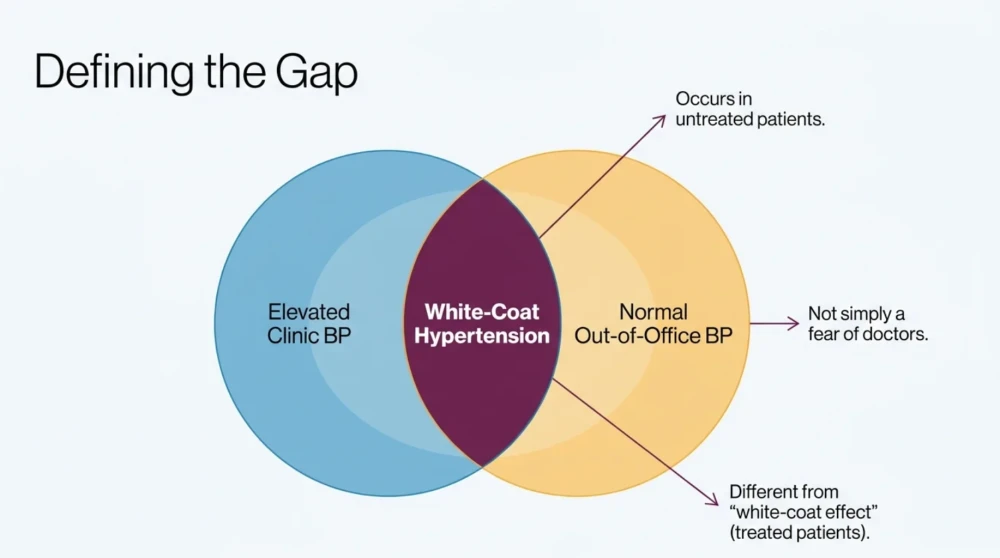
White-coat hypertension refers to a pattern in which blood pressure is elevated in a medical setting but remains below the diagnostic threshold for hypertension when measured outside the clinic.
The term originated from the observation that some people experience higher blood pressure in the presence of healthcare professionals.
However, the response is not necessarily caused by fear of a doctor or the sight of a white coat.
Anticipation, unfamiliar surroundings, previous experiences, conversation during measurement and other factors may contribute.
White-coat hypertension is generally used to describe this pattern in people who are not already receiving blood-pressure-lowering medication.
In patients taking antihypertensive medication, higher clinic readings with controlled out-of-office blood pressure are more accurately described as a white-coat effect or white-coat uncontrolled hypertension.
This distinction is clinically important because untreated white-coat hypertension and a white-coat effect during treatment may have different implications.
What Blood Pressure Readings Suggest White-Coat Hypertension?
Diagnostic thresholds differ between international guidelines.
Under the 2024 European Society of Cardiology guideline, white-coat hypertension can be identified when office blood pressure meets or exceeds 140/90 mmHg while the average home or daytime ambulatory blood pressure remains below 135/85 mmHg.
A normal 24-hour ambulatory average is below 130/80 mmHg under the corresponding European diagnostic framework.
The 2025 American ACC/AHA guideline uses a lower office hypertension threshold of 130/80 mmHg and corresponding lower out-of-office thresholds.
Therefore, a person may be classified differently depending on the guideline used.
The important principle is that clinic and out-of-office readings must be interpreted using corresponding thresholds from the same diagnostic framework.
White-Coat Hypertension: European vs American Diagnostic Thresholds
| Measurement | 2024 ESC Framework | 2025 ACC/AHA Framework |
|---|---|---|
| Clinic hypertension threshold | ≥140/90 mmHg | ≥130/80 mmHg |
| Home BP threshold | ≥135/85 mmHg | ≥130/80 mmHg |
| Daytime ambulatory BP threshold | ≥135/85 mmHg | ≥130/80 mmHg |
| 24-hour ambulatory BP threshold | ≥130/80 mmHg | ≥125/75 mmHg |
These thresholds are used to classify blood pressure, not to define treatment goals for every patient. A reading meeting either the systolic or diastolic threshold may qualify as elevated. The diagnostic framework should be applied consistently.
Why Does Blood Pressure Rise During a Doctor's Visit?
Blood pressure is not a fixed number. It changes continuously in response to physical activity, emotions, body position, sleep and other physiological factors.
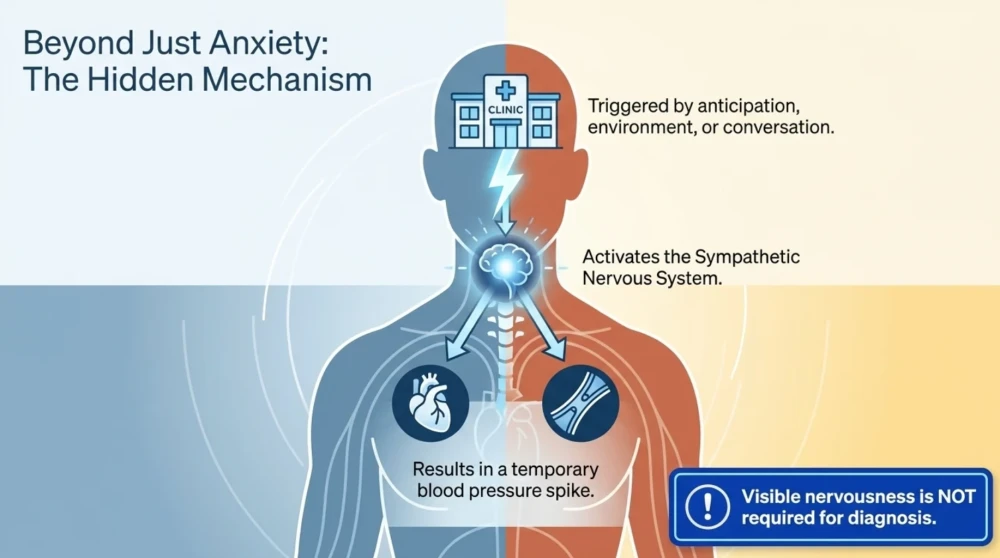
During a medical appointment, some people experience a temporary increase in sympathetic nervous system activity.
This may increase heart rate, vascular resistance and blood pressure.
However, the magnitude of the response varies considerably.
Some patients become visibly anxious, while others feel calm despite showing a substantial clinic-related blood pressure rise.
Therefore, visible nervousness is not required for white-coat hypertension.
Is White-Coat Hypertension Simply Anxiety?
Anxiety can contribute to elevated clinic readings, but white-coat hypertension should not be diagnosed solely because a patient reports feeling nervous.
A person may have genuine sustained hypertension and also become anxious during medical appointments.
Similarly, a person may experience elevated clinic blood pressure without consciously feeling anxious.
The diagnosis depends on demonstrating a difference between clinic and out-of-office blood pressure.
This is why home blood pressure monitoring and 24-hour ambulatory blood pressure monitoring are important.
Feeling anxious in a clinic may explain a blood pressure rise, but it does not prove that blood pressure is normal during the rest of the day.
Is White-Coat Hypertension Harmless?
White-coat hypertension was historically considered relatively benign because blood pressure outside medical settings was normal.
However, subsequent research has shown that the picture is more complex.
Compared with people who have consistently normal blood pressure, individuals with untreated white-coat hypertension may have a somewhat higher risk of cardiovascular events in some populations.
The magnitude of this risk varies between studies.
Some analyses find little or no increase in cardiovascular risk, while others report a modest increase, particularly among older adults and those with additional cardiovascular risk factors.
Importantly, sustained hypertension generally carries greater cardiovascular risk than white-coat hypertension.
Therefore, white-coat hypertension should not be treated as equivalent to sustained hypertension.
But it should not automatically be dismissed as completely harmless either.
White-Coat Hypertension vs Sustained Hypertension
Sustained hypertension means blood pressure is elevated both in the clinic and during normal daily activities.
White-coat hypertension means clinic blood pressure is elevated while out-of-office blood pressure remains below the corresponding diagnostic threshold.
This difference matters because out-of-office blood pressure is strongly associated with cardiovascular outcomes.
Patients with sustained hypertension are generally exposed to higher blood pressure for a greater proportion of the day and night.
That sustained exposure contributes to cardiovascular and kidney-related risk.
By contrast, a person with genuine white-coat hypertension has lower average blood pressure exposure outside medical settings.
However, their risk may still differ from that of someone whose blood pressure remains consistently normal in all settings.
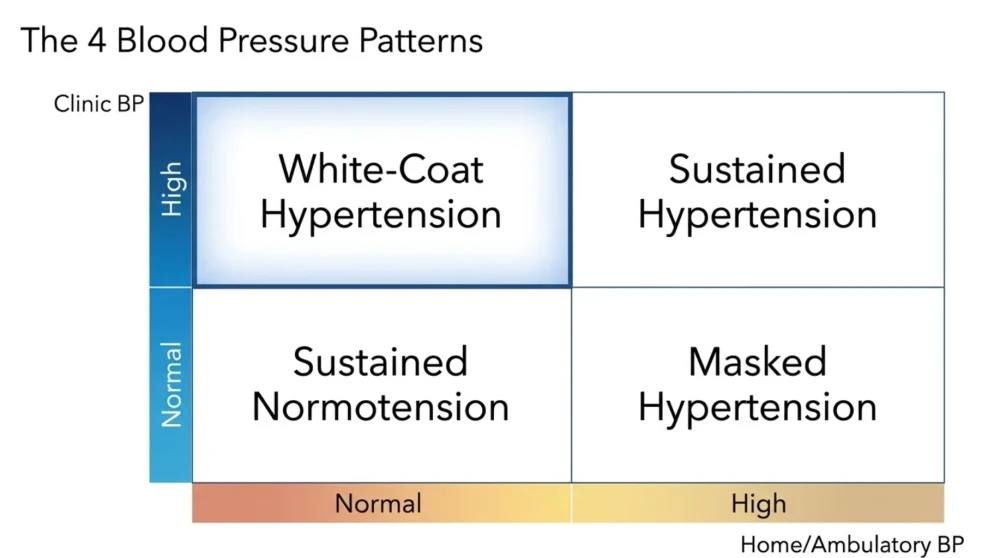
Four Important Blood Pressure Patterns
| Blood Pressure Pattern | Clinic BP | Home or Ambulatory BP | Meaning |
|---|---|---|---|
| Sustained normotension | Normal | Normal | Blood pressure is below diagnostic thresholds in both settings |
| White-coat hypertension | High | Normal | Elevation primarily identified in the medical setting |
| Masked hypertension | Normal | High | Hypertension may be missed during clinic assessment |
| Sustained hypertension | High | High | Persistent hypertension across settings |
These categories apply primarily to people not taking antihypertensive medication. Different terminology is used for treated patients.
Why White-Coat Hypertension May Predict Future Hypertension
One important concern is that some individuals initially diagnosed with white-coat hypertension subsequently develop sustained hypertension.
This means that home or ambulatory blood pressure, which was initially below the diagnostic threshold, becomes elevated during follow-up.
Not every person with white-coat hypertension will progress to sustained hypertension.
However, the possibility of progression explains why repeat monitoring is important.
For example, a patient with elevated clinic blood pressure and normal home readings today may develop elevated home blood pressure several years later.
Without follow-up, this transition may go unnoticed.
The 2025 ACC/AHA guideline supports periodic out-of-office monitoring in people with white-coat hypertension to detect progression to sustained hypertension.
Who May Have Higher Risk With White-Coat Hypertension?
Risk is not identical for every person with white-coat hypertension.
Age, baseline cardiovascular risk and the presence of other medical conditions influence the overall clinical picture.
For example, a younger adult without diabetes, kidney disease or other cardiovascular risk factors may have a different risk profile from an older adult with obesity, dyslipidaemia and established vascular disease.
Similarly, the level of out-of-office blood pressure matters.
A patient whose home blood pressure is consistently near the upper limit of the diagnostic range may require closer monitoring than someone whose home readings are substantially lower.
Therefore, the appropriate response is individual risk assessment rather than assuming that all patients with white-coat hypertension are either low-risk or high-risk.
Can White-Coat Hypertension Damage the Heart or Kidneys?
Some observational studies have reported associations between white-coat hypertension and markers of target-organ damage, including increased left ventricular mass and vascular changes.
However, findings vary according to study design, patient characteristics and the blood pressure thresholds used.
It is also difficult to separate the effects of white-coat hypertension from age, obesity, diabetes and other cardiovascular risk factors.
Therefore, white-coat hypertension should not be described as a proven direct cause of heart or kidney damage in every patient.
Nevertheless, the presence of target-organ damage may influence clinical assessment and raise concern about previously unrecognised or inadequately measured hypertension.
Can One High Clinic Reading Diagnose White-Coat Hypertension?
No.
A single elevated clinic reading does not establish white-coat hypertension.
The reading may be affected by measurement technique, recent physical activity, caffeine, nicotine, pain or other temporary factors.
Even when the clinic measurement is accurate, out-of-office readings are needed to determine whether the elevation persists outside the medical setting.
Diagnosis should therefore rely on properly performed measurements rather than one isolated result.
Common Reasons for a Falsely High Clinic Blood Pressure Reading
Blood pressure measurement appears simple, but several avoidable errors can produce inaccurate readings.
Using a cuff that is too small may overestimate blood pressure.
Measuring immediately after walking into the clinic may capture a temporary rise related to physical activity.
Talking during measurement, crossing the legs, leaving the arm unsupported or sitting without back support can also affect results.
For some patients, a full bladder may contribute to higher readings.
Therefore, correct measurement technique should be established before concluding that the patient has hypertension or a white-coat effect.
How to Measure Blood Pressure Correctly in the Clinic
The patient should sit quietly for approximately five minutes before measurement.
The back should be supported, feet should rest flat on the floor, and the arm should be supported at heart level.
The correct cuff size should be selected according to arm circumference.
The patient should avoid talking during measurement.
Recent caffeine intake, smoking, exercise and other factors should be considered.
When an initial reading is elevated, repeat measurements can help determine whether the value remains high.
However, even carefully measured clinic blood pressure cannot reliably distinguish white-coat hypertension from sustained hypertension without out-of-office assessment.
Does Blood Pressure Falling After Rest Prove White-Coat Hypertension?
No.
A decrease after several minutes of rest may reflect normal physiological settling, reduced anxiety or correction of an initially suboptimal measurement.
For example, a reading of 160/96 mmHg may decrease to 145/88 mmHg after the patient rests.
Although the reduction is reassuring, the second reading may still be elevated.
More importantly, neither reading tells us what happens during the patient's usual activities or sleep.
Home blood pressure monitoring or 24-hour ambulatory blood pressure monitoring remains important when white-coat hypertension is suspected.
Why White-Coat Hypertension Is Frequently Misunderstood
Some patients dismiss repeated clinic readings because they feel healthy and have no symptoms.
Others assume that any elevated clinic reading means they must immediately begin lifelong medication.
Both conclusions may be premature.
Blood pressure frequently causes no noticeable symptoms, even when it is persistently elevated.
At the same time, starting or intensifying medication solely because of a modestly elevated clinic reading may expose a person with normal out-of-office blood pressure to unnecessary treatment.
The appropriate approach is to confirm the blood pressure pattern, assess cardiovascular risk and determine whether treatment is indicated.
When a Very High Clinic Reading Needs Prompt Attention
White-coat hypertension should not be used as an explanation for ignoring markedly elevated blood pressure.
A clinic reading around 180 mmHg systolic or 120 mmHg diastolic, particularly if persistent, warrants prompt medical assessment.
Symptoms such as chest pain, severe breathlessness, new neurological weakness, confusion or visual disturbance may indicate acute target-organ injury and require emergency evaluation.
Even without symptoms, markedly elevated readings require timely confirmation and clinical assessment.
The possibility of a white-coat effect should not delay appropriate evaluation of a potential hypertensive emergency.
How Is White-Coat Hypertension Diagnosed?
White-coat hypertension cannot be diagnosed simply because a patient reports normal blood pressure at home or feels nervous during medical appointments.
The diagnosis requires evidence that blood pressure is elevated in the clinic but remains below the relevant diagnostic threshold outside the clinic.
This distinction is important because sustained hypertension, white-coat hypertension and inaccurate blood pressure measurements can initially appear similar.
For example, a patient may have a clinic blood pressure of 152/92 mmHg but report home readings around 125/80 mmHg.
These values raise the possibility of white-coat hypertension. However, the diagnosis depends on whether the home measurements were performed correctly and whether the readings accurately represent the patient's usual blood pressure.
The two main methods used to confirm white-coat hypertension are home blood pressure monitoring (HBPM) and ambulatory blood pressure monitoring (ABPM).
Both methods provide information beyond an isolated clinic reading, although they have different strengths and limitations.
Home Blood Pressure Monitoring: The First Practical Step
Home blood pressure monitoring involves measuring blood pressure using a validated device while the patient is in their usual home environment.
It is relatively accessible, convenient and suitable for repeated measurements over several days.
For many patients, home monitoring provides a useful starting point when clinic blood pressure is unexpectedly elevated.
However, home readings are only reliable when the device, cuff size and measurement technique are appropriate.
A patient who measures blood pressure immediately after climbing stairs or while sitting with an unsupported arm may obtain misleading values.
Similarly, relying on one normal reading at home is insufficient to establish that blood pressure is consistently normal.
Diagnosis should be based on an average of properly collected readings rather than isolated measurements.
How to Measure Blood Pressure Correctly at Home
Accurate home monitoring begins with the correct equipment.
A validated automatic upper-arm blood pressure monitor is generally preferred for routine home use.
Wrist devices may be less reliable when positioning is incorrect, and smartphone applications that claim to measure blood pressure without a validated cuff should not be used as substitutes for established measurement methods.
The cuff must fit the patient's arm circumference. An incorrectly sized cuff can produce systematically inaccurate readings.
Before measurement, the patient should avoid smoking, caffeine and exercise for approximately 30 minutes.
The bladder should be emptied if necessary, and the patient should sit quietly for at least five minutes.
During measurement, the back should be supported, both feet should rest flat on the floor, and the arm should be supported at heart level.
The patient should not talk or use the phone while the device is measuring blood pressure.
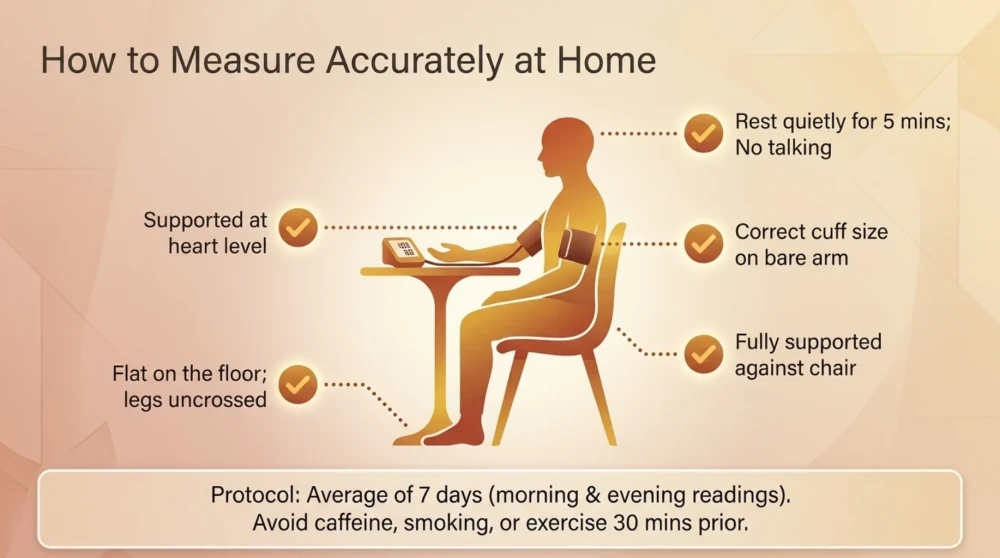
Home Blood Pressure Measurement Checklist
| Measurement Factor | Recommended Practice | Why It Matters |
|---|---|---|
| Device | Validated automatic upper-arm monitor | Improves measurement reliability |
| Cuff | Correct size for arm circumference | Reduces systematic measurement error |
| Rest | Sit quietly for at least five minutes | Reduces temporary activity-related elevation |
| Posture | Back supported, feet flat, legs uncrossed | Improves consistency |
| Arm position | Arm supported at heart level | Avoids position-related inaccuracies |
| Conversation | Remain silent during measurement | Prevents talking-related blood pressure changes |
| Recent activities | Avoid caffeine, smoking and exercise for about 30 minutes | Reduces temporary influences |
How Many Days Should Home Blood Pressure Be Recorded?
A structured home monitoring schedule is more informative than occasional measurements taken only when a person feels unwell.
A commonly recommended approach is to measure blood pressure in the morning and evening for seven consecutive days.
At each session, two readings can be taken approximately one minute apart.
The patient should record the results, including the date and time.
Many protocols recommend using the average of readings collected over several days, with some excluding the first day's measurements.
The precise averaging method should follow the clinical protocol being used.
Seven days of measurements are generally preferable when feasible, although shorter monitoring periods may sometimes provide useful information.
The important point is that the diagnosis should not depend on one unusually high or low reading.
Example of a Seven-Day Home Blood Pressure Record
Consider a patient whose clinic blood pressure is repeatedly around 150/92 mmHg.
The following home measurements are collected using a validated monitor.
| Day | Morning Average | Evening Average |
|---|---|---|
| Day 1 | 132/82 | 128/80 |
| Day 2 | 126/78 | 124/76 |
| Day 3 | 128/80 | 126/78 |
| Day 4 | 124/76 | 126/78 |
| Day 5 | 128/80 | 130/80 |
| Day 6 | 126/78 | 124/76 |
| Day 7 | 128/78 | 126/78 |
These readings are illustrative and are not actual patient data.
The average home blood pressure is substantially lower than the clinic reading.
Under a diagnostic framework using a clinic threshold of 140/90 mmHg and a home threshold of 135/85 mmHg, this pattern is consistent with possible white-coat hypertension.
However, confirmation may still require additional assessment, particularly when clinical risk is high or the readings are inconsistent.
What Is 24-Hour Ambulatory Blood Pressure Monitoring?
Ambulatory blood pressure monitoring, or ABPM, involves wearing a portable blood pressure device that automatically records measurements throughout the day and night.
The monitor is connected to an upper-arm cuff and usually takes readings at predetermined intervals.
During the day, measurements are commonly recorded every 15–30 minutes.
At night, the interval may be longer, depending on the device and monitoring protocol.
Patients are generally encouraged to continue their usual activities while recording relevant information such as sleep times, exercise, medication use and unusual symptoms.
ABPM provides a more complete picture of blood pressure exposure than isolated clinic measurements.
It is particularly useful because it measures blood pressure during sleep, when conventional home monitoring usually does not.
Why ABPM Is Particularly Useful for White-Coat Hypertension
ABPM can help determine whether a high clinic reading is limited to the medical setting or reflects a more persistent elevation.
For example, a patient may have a clinic reading of 155/95 mmHg but a daytime ambulatory average of 125/78 mmHg.
This pattern supports a white-coat effect under commonly used diagnostic frameworks.
However, another patient may have normal home readings but elevated night-time blood pressure.
In that situation, home monitoring alone may fail to identify an important abnormality.
ABPM is therefore particularly valuable when the diagnosis remains uncertain or when nocturnal hypertension is suspected.
Home BP Monitoring vs 24-Hour ABPM
| Feature | Home BP Monitoring | 24-Hour ABPM |
|---|---|---|
| Measurement setting | Home | Usual daily activities and sleep |
| Measurement frequency | Scheduled morning and evening readings | Automatic readings at regular intervals |
| Night-time blood pressure | Usually not measured | Measured |
| Patient convenience | Suitable for repeated long-term use | Requires wearing a monitor for approximately 24 hours |
| Main advantage | Accessible and repeatable | Captures daytime and night-time patterns |
| Main limitation | Depends on correct patient technique | May disturb sleep and is less convenient |
What Is a Normal 24-Hour ABPM Reading?
The interpretation of ambulatory blood pressure depends on whether the reading represents daytime, night-time or the entire 24-hour period.
These measurements have different diagnostic thresholds.
Under the 2024 European Society of Cardiology framework, hypertension thresholds include a daytime ambulatory average of 135/85 mmHg or higher, a night-time average of 120/70 mmHg or higher, and a 24-hour average of 130/80 mmHg or higher.
The American framework uses lower corresponding thresholds.
Therefore, an ABPM report should not be interpreted using one universal cut-off without considering the relevant guideline and clinical context.
European ABPM Thresholds for Hypertension
| ABPM Measurement | Hypertension Threshold | Clinical Relevance |
|---|---|---|
| Daytime average | ≥135/85 mmHg | Reflects blood pressure during waking activities |
| Night-time average | ≥120/70 mmHg | Identifies nocturnal hypertension |
| 24-hour average | ≥130/80 mmHg | Reflects overall ambulatory blood pressure exposure |
These thresholds correspond to the 2024 ESC diagnostic framework. A reading meeting either the systolic or diastolic threshold may qualify as elevated.
Why Night-Time Blood Pressure Matters
Blood pressure normally decreases during sleep in many individuals.
This reduction is often called nocturnal dipping.
However, the degree of dipping varies, and some people experience little reduction or even an increase in blood pressure at night.
Elevated night-time blood pressure has been associated with cardiovascular and kidney-related risk.
It may occur in people with obstructive sleep apnoea, chronic kidney disease, diabetes and other conditions.
However, a particular night-time blood pressure pattern does not independently diagnose any of these disorders.
ABPM can identify nocturnal abnormalities that routine home monitoring may miss.
What Is Non-Dipping Blood Pressure?
Non-dipping describes a pattern in which blood pressure falls by less than approximately 10% during sleep compared with daytime levels.
In some patients, blood pressure remains unchanged or increases at night.
These patterns may be associated with increased cardiovascular risk, but interpretation requires caution.
Sleep disturbance caused by the monitor itself can affect night-time readings.
Shift work, irregular sleep schedules and inaccurate recording of sleep times may also influence results.
Therefore, non-dipping should not automatically be interpreted as a separate disease or as proof of sleep apnoea.
Can a Person Have Normal Home BP but High Night-Time BP?
Yes.
Consider a patient whose home blood pressure readings average 126/78 mmHg.
These readings may appear reassuring.
However, 24-hour ABPM may reveal a night-time average of 132/78 mmHg.
Under the European diagnostic framework, this would meet the threshold for nocturnal hypertension.
This example illustrates why normal daytime home readings do not always exclude abnormal blood pressure patterns.
ABPM can therefore be particularly useful when clinical findings suggest a higher risk than home readings alone would indicate.
How to Interpret an ABPM Report
An ABPM report should be reviewed systematically.
First, the clinician should confirm that the monitoring period contains enough technically valid measurements.
Second, the daytime, night-time and 24-hour averages should be examined separately.
Third, the patient's actual sleep and waking times should be considered.
Fourth, the report should be reviewed for unusual readings, measurement errors and symptoms recorded during monitoring.
Finally, the results should be compared with properly measured clinic blood pressure.
The diagnosis should not depend on one unusually high ambulatory reading.
How Many Valid ABPM Readings Are Needed?
ABPM reports require sufficient valid measurements to support interpretation.
Many clinical protocols use at least 70% valid readings, with adequate measurements during both waking and sleeping periods.
However, specific minimum requirements vary between guidelines and monitoring protocols.
If the report contains extensive missing data, the averages may not accurately represent the patient's blood pressure pattern.
In such circumstances, repeating the test may be appropriate.
When Home BP and ABPM Results Do Not Agree
Sometimes home blood pressure monitoring and ABPM produce different conclusions.
For example, home readings may appear normal while daytime ambulatory blood pressure is elevated.
Alternatively, home readings may be high while the ambulatory average is below the diagnostic threshold.
Possible explanations include differences in daily activities, measurement technique, sleep patterns and the monitoring periods.
Home monitoring generally captures blood pressure during planned periods of rest, whereas ABPM records readings during a wider range of activities.
Therefore, disagreement does not necessarily mean that one device is defective.
The clinician should review the quality of both datasets and decide whether further monitoring is required.
Can Anxiety Affect Home Blood Pressure Monitoring?
Yes.
Some patients become anxious while measuring their own blood pressure.
Repeated checking may increase concern, particularly when an unexpectedly high reading appears.
This can create a cycle in which the patient measures blood pressure repeatedly and becomes increasingly distressed by normal fluctuations.
For most patients, a structured schedule is preferable to frequent unscheduled measurements.
Home monitoring should provide useful information without becoming a source of unnecessary anxiety.
Should Blood Pressure Be Checked Every Hour?
Routine hourly home blood pressure measurements are generally unnecessary for diagnosing white-coat hypertension.
Frequent measurements may increase anxiety and produce large amounts of data that are difficult to interpret.
A structured morning and evening schedule over several days is usually more informative.
Patients should also avoid repeatedly measuring blood pressure immediately after receiving one high reading unless there is a clear clinical reason.
However, markedly elevated readings or concerning symptoms require appropriate medical assessment rather than simply waiting for the next scheduled measurement.
How to Choose a Reliable Home Blood Pressure Monitor
A reliable home blood pressure monitor should have undergone independent clinical validation.
Patients should select a device with an appropriate upper-arm cuff and clear instructions.
Memory storage may help reduce recording errors, particularly when multiple readings are required.
Bluetooth connectivity and smartphone applications can be convenient but are not essential for accurate measurement.
Device validation is more important than the number of additional features.
Patients may consult recognised validation resources, such as STRIDE BP, when selecting a monitor.
Should Both Arms Be Checked?
During an initial blood pressure assessment, measurements in both arms can help identify a clinically relevant inter-arm difference.
If a persistent difference is found, subsequent measurements are generally taken using the arm with the higher reading.
A substantial and reproducible inter-arm difference may warrant further evaluation, depending on its magnitude and the patient's clinical circumstances.
However, a small difference between arms is common and does not necessarily indicate vascular disease.
Can White-Coat Hypertension Be Diagnosed Without ABPM?
In many circumstances, properly performed home blood pressure monitoring can support the diagnosis.
However, ABPM is particularly useful when home measurements are unreliable, the results are inconsistent or nocturnal hypertension is suspected.
Some clinical guidelines prefer ABPM for confirming hypertension because it captures blood pressure throughout the day and night.
The choice depends on device availability, patient tolerance, clinical risk and the quality of home monitoring.
The essential requirement is reliable out-of-office evidence rather than reliance on clinic readings alone.
What If Clinic Blood Pressure Is High but Home BP Is Borderline?
Consider a patient whose clinic blood pressure is 148/92 mmHg and whose home average is 134/84 mmHg.
Under the 2024 European framework, the home average remains below the usual home hypertension threshold of 135/85 mmHg.
However, it is close to that threshold.
Under the 2025 American framework, the same home average would meet the threshold for hypertension.
This illustrates why blood pressure classification depends partly on the guideline used.
It also demonstrates why borderline results require careful interpretation rather than a simple normal-or-abnormal label.
Clinical risk factors, repeat measurements and possibly ABPM may help clarify the appropriate diagnosis and management.
Can White-Coat Hypertension Change Over Time?
Yes.
Blood pressure patterns are not necessarily permanent.
A patient with white-coat hypertension may continue to have normal out-of-office blood pressure for years.
Another patient may gradually develop sustained hypertension.
Changes in age, body weight, physical activity, sleep, kidney function and other factors may influence blood pressure over time.
Therefore, a previous diagnosis of white-coat hypertension should not be treated as permanent proof that future high clinic readings are harmless.
Periodic reassessment is important.
How Often Should White-Coat Hypertension Be Rechecked?
The frequency of follow-up should reflect the patient's cardiovascular risk and previous blood pressure results.
For many patients with confirmed white-coat hypertension, periodic home or ambulatory monitoring is appropriate to detect progression to sustained hypertension.
Annual reassessment is a reasonable approach in many clinical situations, although some patients may require earlier monitoring.
Those with borderline out-of-office readings, diabetes, kidney disease or additional cardiovascular risk factors may need closer follow-up.
However, repeat monitoring should be individualised rather than performed at an arbitrary frequency for every patient.
Common Mistakes When Diagnosing White-Coat Hypertension
1. Diagnosing It After One High Clinic Reading
A single elevated reading cannot establish white-coat hypertension.
2. Accepting One Normal Home Reading as Proof
Diagnosis requires a representative average of properly collected out-of-office readings.
3. Using an Incorrect Cuff Size
An unsuitable cuff may produce inaccurate blood pressure values.
4. Measuring Immediately After Physical Activity
Recent activity can temporarily increase blood pressure.
5. Ignoring Night-Time Blood Pressure
Home readings may be normal despite nocturnal hypertension.
6. Mixing Diagnostic Thresholds From Different Guidelines
European and American frameworks use different blood pressure thresholds.
7. Assuming White-Coat Hypertension Is Permanent
Some patients develop sustained hypertension during follow-up.
8. Starting or Intensifying Medication Without Confirming the Pattern
Inappropriate treatment may expose patients with normal out-of-office blood pressure to unnecessary medication effects. Markedly elevated readings or high-risk clinical situations require separate consideration.
Does White-Coat Hypertension Need Treatment?
One of the most common questions patients ask after receiving a diagnosis of white-coat hypertension is whether they need blood pressure medication.
The answer depends on whether white-coat hypertension has been properly confirmed, the patient's overall cardiovascular risk and whether other medical conditions are present.
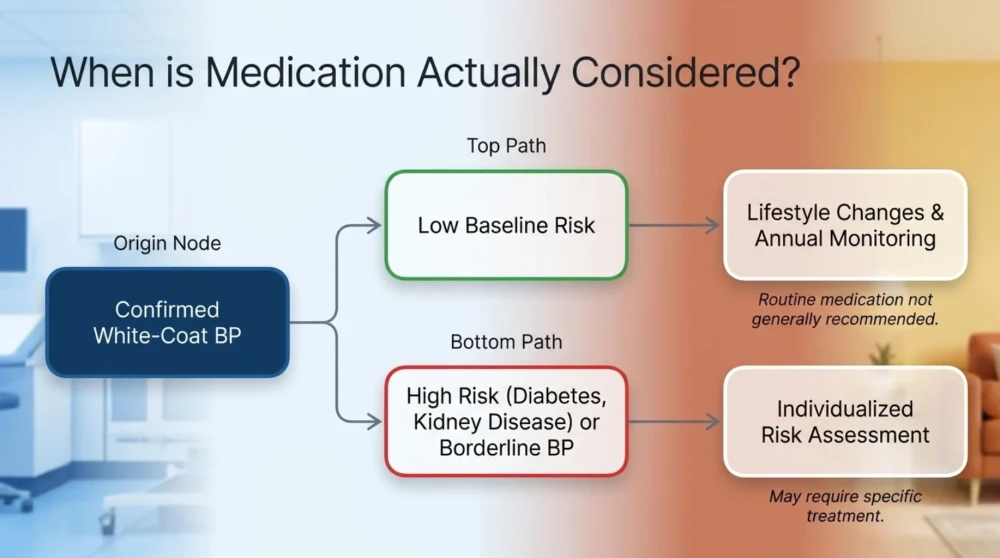
For many people with confirmed white-coat hypertension and normal out-of-office blood pressure, immediate antihypertensive medication is not routinely recommended solely because of elevated clinic readings.
However, this does not mean the condition should be ignored.
White-coat hypertension may be associated with a higher probability of developing sustained hypertension over time. Some patients also have additional cardiovascular risk factors that require attention.
Therefore, management generally focuses on accurate diagnosis, cardiovascular risk assessment, lifestyle modification and periodic blood pressure monitoring.
The goal is to avoid both unnecessary medication and missed sustained hypertension.
Why Starting Blood Pressure Medicine Immediately May Not Always Be Appropriate
Consider a 48-year-old man whose clinic blood pressure repeatedly measures around 150/92 mmHg.
His seven-day home blood pressure average is 124/78 mmHg, and 24-hour ambulatory monitoring confirms that his blood pressure remains below the relevant diagnostic thresholds outside the clinic.
He has no known cardiovascular disease, diabetes or chronic kidney disease.
In this situation, starting antihypertensive medication solely to reduce the clinic reading may not provide a clear benefit.
Medication could lower his already normal out-of-office blood pressure and potentially cause dizziness, fatigue or symptomatic hypotension.
However, the patient still requires appropriate assessment and follow-up because his blood pressure pattern may change over time.
This example illustrates why treatment decisions should not be based on one clinic reading alone.
What Do Current Guidelines Recommend for White-Coat Hypertension?
Recent hypertension guidelines emphasise the importance of confirming elevated clinic blood pressure with out-of-office measurements.
The 2024 European Society of Cardiology guideline supports lifestyle interventions and periodic monitoring for patients with white-coat hypertension.
Routine blood pressure-lowering medication is not generally recommended solely for confirmed white-coat hypertension, although management must consider the patient's overall clinical circumstances.
The 2025 American ACC/AHA guideline similarly emphasises out-of-office monitoring and periodic reassessment to detect progression to sustained hypertension.
These recommendations reflect an important limitation in the evidence: randomised clinical trials have not established that routinely treating confirmed white-coat hypertension with antihypertensive medication improves cardiovascular outcomes.
Therefore, the decision to prescribe medication should not be driven by the clinic reading alone.
White-Coat Hypertension Treatment: When Is Medication Considered?
Medication decisions require particular care when a patient has other cardiovascular risk factors or evidence of target-organ damage.
For example, a patient with established coronary artery disease, chronic kidney disease or diabetes may require treatment for reasons that extend beyond the white-coat blood pressure pattern.
However, the presence of these conditions does not automatically mean that every patient with confirmed white-coat hypertension should receive antihypertensive medication.
The clinician should determine whether out-of-office blood pressure is genuinely below the relevant threshold, whether other treatment indications exist and whether the patient has signs of previously unrecognised sustained hypertension.
When readings are borderline or inconsistent, repeating home monitoring or ABPM may be more useful than immediately escalating treatment.
Practical Management According to Blood Pressure Pattern
| Clinical Situation | Main Concern | Usual Management Approach |
|---|---|---|
| Confirmed white-coat hypertension, low cardiovascular risk | Possible progression to sustained hypertension | Lifestyle measures and periodic out-of-office monitoring |
| White-coat hypertension with borderline home readings | Possible evolving sustained hypertension | Repeat structured monitoring, consider ABPM and assess overall risk |
| White-coat hypertension with diabetes or kidney disease | Higher baseline cardiovascular risk and possible target-organ damage | Individualised risk assessment, monitoring and treatment of established indications |
| High clinic and high out-of-office BP | Sustained hypertension | Manage according to hypertension guidelines and cardiovascular risk |
| High clinic BP while taking medication, normal out-of-office BP | White-coat effect during treatment | Review treatment safety and avoid automatic dose escalation based only on clinic readings |
These approaches are general clinical principles. Treatment decisions must account for the patient's complete medical history and current clinical findings.
Why Lifestyle Modification Matters in White-Coat Hypertension
Even when medication is not required, lifestyle modification remains important.
White-coat hypertension may coexist with excess body weight, physical inactivity, high sodium intake, poor sleep or other cardiovascular risk factors.
Addressing these factors can improve overall cardiovascular health and may help prevent progression to sustained hypertension.
However, lifestyle changes should not be presented as a guaranteed cure for white-coat hypertension.
Some individuals continue to experience elevated clinic readings despite maintaining a healthy lifestyle.
The purpose of lifestyle management is to improve cardiovascular risk and support healthy blood pressure over time.
Weight Management and White-Coat Hypertension
Excess body weight is associated with higher blood pressure and increased cardiovascular risk.
In people with overweight or obesity, gradual and sustained weight reduction can improve blood pressure and several related metabolic risk factors.
For example, a person with central obesity, elevated triglycerides and borderline home blood pressure may benefit from a structured weight-management programme.
Even modest weight reduction can contribute to improvement in blood pressure, insulin sensitivity and overall cardiometabolic health.
However, the degree of improvement varies between individuals.
Patients should focus on sustainable dietary and activity changes rather than rapid weight loss or restrictive short-term diets.
Does Reducing Salt Help White-Coat Hypertension?
Excess sodium intake can contribute to elevated blood pressure, particularly in salt-sensitive individuals.
Reducing sodium intake is an established lifestyle strategy for blood pressure management.
For many Indian households, sodium comes not only from salt added during cooking but also from packaged snacks, pickles, papad, sauces, instant noodles and processed foods.
A practical approach involves reducing unnecessary added salt and limiting frequently consumed high-sodium packaged foods.
The World Health Organization recommends that adults consume less than 2,000 mg of sodium per day, equivalent to less than approximately 5 grams of salt.
However, individual dietary advice may require modification in patients with certain medical conditions.
Common Indian Foods That May Contribute to Excess Sodium Intake
| Food Category | Examples | Practical Alternative |
|---|---|---|
| Salty snacks | Namkeen, salted chips, packaged mixtures | Unsalted roasted chana, fruit or suitable homemade snacks |
| Pickles and accompaniments | Achar, papad and salted chutneys | Use smaller portions and prepare lower-salt alternatives |
| Instant foods | Instant noodles, packaged soups | Freshly prepared meals with controlled salt |
| Sauces and condiments | Soy sauce, packaged sauces, seasoning mixes | Use herbs, lemon and spices for flavour |
| Restaurant and takeaway meals | Many commercially prepared dishes | Choose simpler preparations and moderate portions |
Can Exercise Improve White-Coat Hypertension?
Regular physical activity is associated with lower blood pressure and improved cardiovascular health.
For most adults, guidelines recommend at least 150 minutes of moderate-intensity aerobic activity each week.
Brisk walking, cycling, swimming and similar activities can contribute to this target.
Resistance training is also beneficial and can be included on at least two days per week.
However, exercise recommendations should be adjusted according to age, physical fitness and medical conditions.
A person with previously sedentary habits may begin with shorter walking sessions and gradually increase activity.
Regular exercise may improve resting blood pressure even if the patient continues to experience temporary elevations during medical appointments.
Does Stress Management Help?
Stress and anticipatory anxiety can contribute to temporary blood pressure elevations.
Relaxation techniques, slow breathing and stress-management strategies may reduce blood pressure in some individuals.
However, the evidence for sustained long-term reductions varies across interventions.
Stress management should therefore be considered a supportive strategy rather than a substitute for proper blood pressure assessment.
For example, a patient who becomes anxious before clinic appointments may benefit from arriving early, sitting quietly and avoiding unnecessary conversation during measurement.
These measures may improve measurement consistency, but they do not establish whether the patient has sustained hypertension.
Can Poor Sleep Increase Blood Pressure?
Sleep duration and sleep quality influence cardiovascular and metabolic health.
Chronic sleep restriction and certain sleep disorders are associated with elevated blood pressure.
Obstructive sleep apnoea is particularly relevant in patients with obesity, loud snoring, witnessed breathing pauses or excessive daytime sleepiness.
Sleep apnoea may contribute to nocturnal hypertension and abnormal night-time blood pressure patterns.
However, not every person with white-coat hypertension requires sleep apnoea testing.
Evaluation should be guided by symptoms, clinical findings and overall risk.
White-Coat Hypertension in People With Diabetes
Diabetes increases cardiovascular and kidney-related risk, making accurate blood pressure assessment especially important.
A person with diabetes may have elevated clinic blood pressure but apparently normal home readings.
In this situation, it is important to determine whether the patient has genuine white-coat hypertension or whether out-of-office measurements are missing clinically important elevations.
ABPM may be useful when nocturnal hypertension is suspected.
However, diabetes alone does not justify automatically prescribing antihypertensive medication for every patient with confirmed white-coat hypertension.
Management should consider kidney function, albuminuria, cardiovascular disease, overall risk and the patient's actual blood pressure profile.
White-Coat Hypertension and Chronic Kidney Disease
Patients with chronic kidney disease require careful blood pressure assessment because sustained hypertension can contribute to kidney disease progression.
Clinic readings may not always reflect blood pressure during normal daily activities.
Some patients also have nocturnal hypertension or abnormal dipping patterns.
Home monitoring and ABPM can therefore provide useful additional information.
However, treatment targets and medication decisions in chronic kidney disease should follow disease-specific clinical recommendations.
Kidney function, potassium levels, albuminuria and medication tolerability may influence treatment choices.
White-Coat Effect in Patients Already Taking Blood Pressure Medicine
White-coat hypertension and the white-coat effect during treatment are related but distinct conditions.
Consider a patient taking antihypertensive medication whose clinic blood pressure is 152/90 mmHg.
However, the patient's home blood pressure average is 124/76 mmHg.
Increasing medication solely because of the clinic reading could potentially lower out-of-office blood pressure excessively.
This may be particularly important in older adults or patients experiencing dizziness and falls.
Therefore, when a white-coat effect is suspected in a treated patient, out-of-office measurements can help avoid unnecessary treatment escalation.
However, the clinician must also confirm that home readings are reliable and that sustained or nocturnal hypertension is not being overlooked.
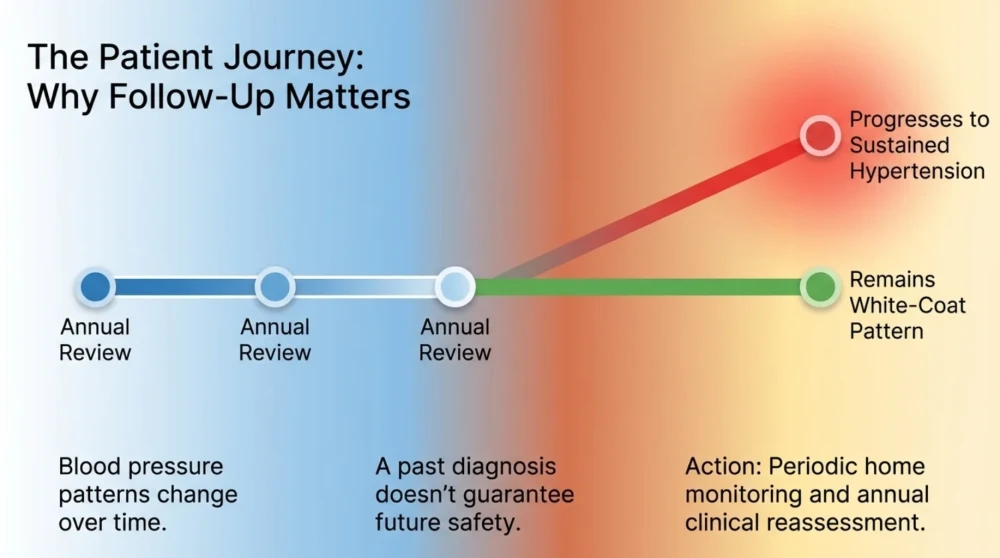
Can White-Coat Hypertension Eventually Become Sustained Hypertension?
Yes.
Some people with white-coat hypertension subsequently develop elevated blood pressure outside the clinic.
This transition may occur gradually and may not produce noticeable symptoms.
For example, a patient whose home blood pressure averaged 124/78 mmHg several years ago may later develop readings around 140/88 mmHg.
At that point, the original diagnosis of white-coat hypertension may no longer describe the patient's current condition.
Therefore, periodic monitoring is important even when initial out-of-office readings are reassuring.
How Often Should White-Coat Hypertension Be Followed Up?
Follow-up should reflect the patient's cardiovascular risk, age and out-of-office blood pressure levels.
For many patients with confirmed white-coat hypertension, annual reassessment using home or ambulatory blood pressure monitoring is reasonable.
However, patients with borderline home readings or additional cardiovascular risk factors may need earlier review.
Follow-up should also be reconsidered if the patient develops new symptoms, changes medication or experiences a significant change in health status.
Practical Follow-Up Plan for White-Coat Hypertension
| Clinical Situation | Suggested Follow-Up | Main Objective |
|---|---|---|
| Confirmed white-coat hypertension with low cardiovascular risk | Periodic review, often approximately annually | Detect progression to sustained hypertension |
| Borderline home BP | Earlier repeat monitoring according to clinical judgement | Clarify whether hypertension is developing |
| Diabetes, kidney disease or high cardiovascular risk | Individualised and potentially more frequent assessment | Assess risk and identify missed hypertension |
| Newly elevated home readings | Prompt structured reassessment | Evaluate possible sustained hypertension |
Common Myths About White-Coat Hypertension
Myth 1: White-Coat Hypertension Is Always Harmless
White-coat hypertension generally carries less risk than sustained hypertension, but some patients may have modestly increased cardiovascular risk and may develop sustained hypertension over time.
Myth 2: Anxiety Is the Only Cause
Anxiety may contribute, but white-coat hypertension can occur without obvious nervousness.
Myth 3: One Normal Home Reading Confirms the Diagnosis
A representative average of properly collected out-of-office readings is required.
Myth 4: Everyone With White-Coat Hypertension Needs Medication
Routine medication is not generally indicated solely for confirmed white-coat hypertension.
Myth 5: White-Coat Hypertension Never Becomes Sustained Hypertension
Some patients develop sustained hypertension during follow-up.
Myth 6: Blood Pressure Is Normal if There Are No Symptoms
Hypertension frequently causes no noticeable symptoms.
Myth 7: A Lower Reading After Rest Proves White-Coat Hypertension
A reduction after rest does not establish normal blood pressure outside the clinic.
Myth 8: Home BP Monitoring and ABPM Are Identical
ABPM provides information about night-time blood pressure that routine home monitoring usually cannot capture.
Myth 9: A High Clinic Reading Should Always Lead to a Higher Medication Dose
In treated patients, a white-coat effect may cause elevated clinic readings despite adequate out-of-office control.
Myth 10: Once Diagnosed, White-Coat Hypertension Does Not Need Follow-Up
Periodic reassessment is important because blood pressure patterns can change over time.
Frequently Asked Questions About White-Coat Hypertension
1. What is white-coat hypertension?
White-coat hypertension is a pattern of elevated blood pressure in the clinic with blood pressure below the corresponding diagnostic threshold outside the clinic in an untreated person.
2. Is white-coat hypertension dangerous?
It generally carries less cardiovascular risk than sustained hypertension, but some patients may have modestly increased risk compared with people whose blood pressure is consistently normal.
3. Can white-coat hypertension cause a heart attack?
Some observational studies have found an association between untreated white-coat hypertension and cardiovascular events. However, this does not establish that white-coat hypertension directly causes a heart attack in an individual patient.
4. Does white-coat hypertension require medicine?
Routine antihypertensive medication is not generally recommended solely for confirmed white-coat hypertension. Management depends on the complete clinical assessment.
5. How can I confirm white-coat hypertension?
Properly performed home blood pressure monitoring or 24-hour ABPM can help establish whether blood pressure remains below diagnostic thresholds outside the clinic.
6. What is the difference between white-coat hypertension and white-coat syndrome?
White-coat syndrome is an informal term often used for the same phenomenon. White-coat hypertension is the more precise clinical term for untreated patients with elevated clinic and normal out-of-office blood pressure.
7. Can white-coat hypertension become permanent hypertension?
Yes. Some patients develop sustained hypertension during follow-up.
8. Is 150/90 mmHg in the clinic always hypertension?
It is an elevated clinic reading, but the diagnosis and blood pressure pattern require confirmation using appropriately collected measurements.
9. What if my clinic BP is 160/100 but home BP is normal?
White-coat hypertension is possible, but reliable out-of-office confirmation and timely clinical assessment are important. The clinic reading should not be dismissed without evaluation.
10. Can anxiety raise blood pressure to 180 mmHg?
Stress can cause substantial temporary blood pressure elevations in some people. However, a reading around 180 mmHg systolic or 120 mmHg diastolic requires prompt reassessment and clinical evaluation, regardless of suspected anxiety.
11. Is 24-hour ABPM better than home BP monitoring?
ABPM captures daytime and night-time blood pressure and can identify nocturnal hypertension. Home monitoring is convenient for repeated long-term assessment. Both have important roles.
12. Can white-coat hypertension occur in young adults?
Yes. It can occur across adult age groups, although cardiovascular risk and management differ according to individual circumstances.
13. Can white-coat hypertension occur in people with diabetes?
Yes. Accurate out-of-office monitoring is particularly important because diabetes increases cardiovascular and kidney-related risk.
14. Does weight loss help white-coat hypertension?
For people with overweight or obesity, sustainable weight reduction can improve blood pressure and overall cardiometabolic health, although it may not eliminate the clinic-related rise.
15. How often should I check my blood pressure at home?
A structured monitoring schedule is generally more useful than repeated unscheduled measurements. The frequency should depend on the purpose of monitoring and the patient's clinical risk.
16. Can poor sleep affect white-coat hypertension?
Poor sleep and sleep disorders can influence blood pressure. However, they do not independently establish the diagnosis of white-coat hypertension.
17. What is the difference between white-coat and masked hypertension?
White-coat hypertension involves high clinic and normal out-of-office blood pressure. Masked hypertension involves normal clinic but elevated out-of-office blood pressure.
18. Should I ignore high clinic BP if my home readings are normal?
No. The difference should be evaluated using reliable measurements, and follow-up is important to detect changes over time.
My Clinical Approach to White-Coat Hypertension
When a patient presents with elevated clinic blood pressure, I first consider whether the measurement was performed correctly.
A high reading obtained immediately after walking into the consultation room may not accurately represent resting blood pressure.
However, repeating the measurement after rest is only the beginning of the assessment.
If the clinic reading remains elevated and there is no immediate clinical emergency, I assess the need for structured home monitoring or 24-hour ABPM.
The results help distinguish white-coat hypertension from sustained hypertension and identify patients who may have abnormal night-time blood pressure.
I also consider cardiovascular risk factors such as diabetes, obesity, dyslipidaemia, smoking, kidney disease and family history.
For patients with confirmed white-coat hypertension, management usually focuses on appropriate lifestyle measures and periodic reassessment.
The objective is to avoid unnecessary medication while ensuring that sustained hypertension is not overlooked.
Key Takeaways: White-Coat Hypertension
- White-coat hypertension means elevated clinic blood pressure with normal out-of-office readings under the applicable diagnostic framework.
- It is not identical to sustained hypertension.
- Some patients may have modestly increased cardiovascular risk compared with consistently normotensive individuals.
- White-coat hypertension may progress to sustained hypertension.
- Home blood pressure monitoring and 24-hour ABPM are important for diagnosis.
- ABPM can identify nocturnal hypertension that routine home monitoring may miss.
- Routine medication is not generally recommended solely for confirmed white-coat hypertension.
- Weight management, regular physical activity, sodium reduction and healthy sleep remain important.
- Patients with diabetes, kidney disease or additional cardiovascular risk factors may require closer assessment.
- Periodic follow-up is necessary even when initial out-of-office readings are reassuring.
Blood Pressure and Hypertension Consultation in Dwarka, Delhi
Accurate hypertension assessment involves more than reviewing one clinic blood pressure reading.
Dr. Pankaj Kumar, General & Lifestyle Physician, provides clinical evaluation and management of hypertension, diabetes, obesity and associated metabolic risk factors.
Assessment may include review of home blood pressure records, ambulatory blood pressure reports, cardiovascular risk factors and lifestyle habits.
Clinic: Dr. Pankaj Kumar Medical & Lifestyle Clinic, Dwarka, New Delhi.
Scientific References
- American College of Cardiology/American Heart Association. 2025 Guideline for the Prevention, Detection, Evaluation, and Management of High Blood Pressure in Adults. Circulation. 2025. DOI: 10.1161/CIR.0000000000001356.
- McEvoy JW, et al. 2024 ESC Guidelines for the Management of Elevated Blood Pressure and Hypertension. European Heart Journal. 2024;45:3912–4018. DOI: 10.1093/eurheartj/ehae178.
- Kidney Disease: Improving Global Outcomes (KDIGO). KDIGO 2024 Clinical Practice Guideline for the Evaluation and Management of Chronic Kidney Disease. Kidney International. 2024. Official Guideline.
- World Health Organization. WHO Guideline for the Pharmacological Treatment of Hypertension in Adults. 2021. WHO Guideline.
- World Health Organization. Sodium Reduction. WHO Salt Reduction Fact Sheet.
- STRIDE BP. International Scientific Organisation for the Validation of Blood Pressure Measuring Devices. Validated Blood Pressure Devices.
About the Author
Dr. Pankaj Kumar
MBBS, DNB (Family Medicine)
General & Lifestyle Physician
Founder, Diet Plus Minus
Dwarka, New Delhi
Dr. Pankaj Kumar focuses on evidence-based management of hypertension, type 2 diabetes, obesity, fatty liver and metabolic disorders through medical assessment, clinical nutrition and practical lifestyle modification.
Websites: www.dietplusminus.com | www.drpankajkumar.com
Medical Disclaimer
This article is intended for general medical education and does not replace personalised medical assessment or treatment. Blood pressure diagnosis and management depend on accurate measurements, individual cardiovascular risk and relevant medical conditions. Do not start, stop or adjust prescribed blood pressure medication solely because of isolated home or clinic readings. Markedly elevated blood pressure requires timely assessment, and symptoms such as chest pain, severe breathlessness, new neurological weakness, confusion or sudden visual disturbance require emergency medical care.
Written by Dr. Pankaj Kumar , General & Lifestyle Physician, Dwarka, New Delhi