
















- 11th August 2026
Table of Contents
- Why a Fruit-Only Breakfast Can Feel Filling at First
- Why Protein Matters in a Fruit-Only Breakfast
- Why Fat Also Helps a Fruit-Only Breakfast Feel More Satisfying
- Why a Fruit-Only Breakfast May Cause a Rapid Energy Rise and Fall
- Fruit-Only Breakfast and Mid-Morning Cravings
- Why a Fruit-Only Breakfast May Not Work Well for Everyone
- Which Fruits Make a Fruit-Only Breakfast More Filling?
- Why Fruit Juice Is Very Different From a Fruit-Only Breakfast
- Fruit-Only Breakfast and Prediabetes
- Fruit-Only Breakfast and Weight Loss
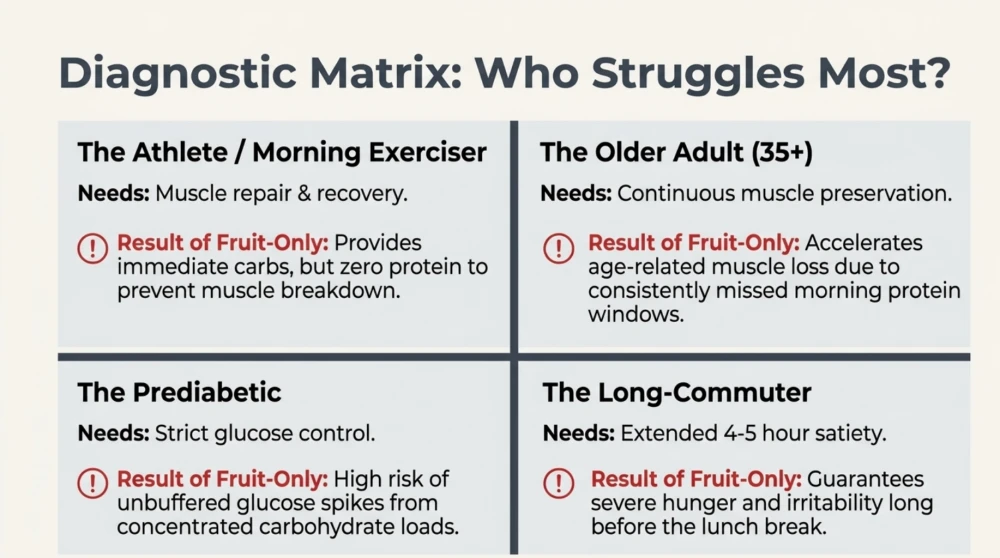
- Can Athletes or Exercising Adults Rely on a Fruit-Only Breakfast?
- Why Older Adults Need More Than a Fruit-Only Breakfast
- Common Mistakes With a Fruit-Only Breakfast
- Mistake 1: Eating Too Little
- Mistake 2: Eating Too Much Fruit at Once
- Mistake 3: Drinking Fruit Instead of Eating It
- Mistake 4: Assuming Natural Sugar Has No Metabolic Impact
- Mistake 5: Ignoring Protein Completely
- Better Alternatives to a Fruit-Only Breakfast
- Fruit and Greek Yogurt Breakfast
- Fruit and Eggs Breakfast
- Fruit, Paneer, and Nuts Breakfast
- Fruit With Moong Dal Chilla
- Why Personal Response Matters More Than Breakfast Trends
- How to Build a Better Breakfast Than a Fruit-Only Breakfast
- How Much Fruit Should You Eat at Breakfast?
- When a Fruit-Only Breakfast May Still Be Reasonable
- Fruit-Only Breakfast and Diabetes: What Matters Most
- Fruit-Only Breakfast and Muscle Health
- Simple Indian Breakfast Combinations With Fruit
- Common Myths About a Fruit-Only Breakfast
- Myth 1: Fruit Alone Is Always the Healthiest Breakfast
- Myth 2: Fruit Sugar Is the Same as Added Sugar
- Myth 3: A Fruit-Only Breakfast Is Best for Weight Loss
- Myth 4: Adding Protein Makes Breakfast Too Heavy
- Key Takeaways About a Fruit-Only Breakfast
- References
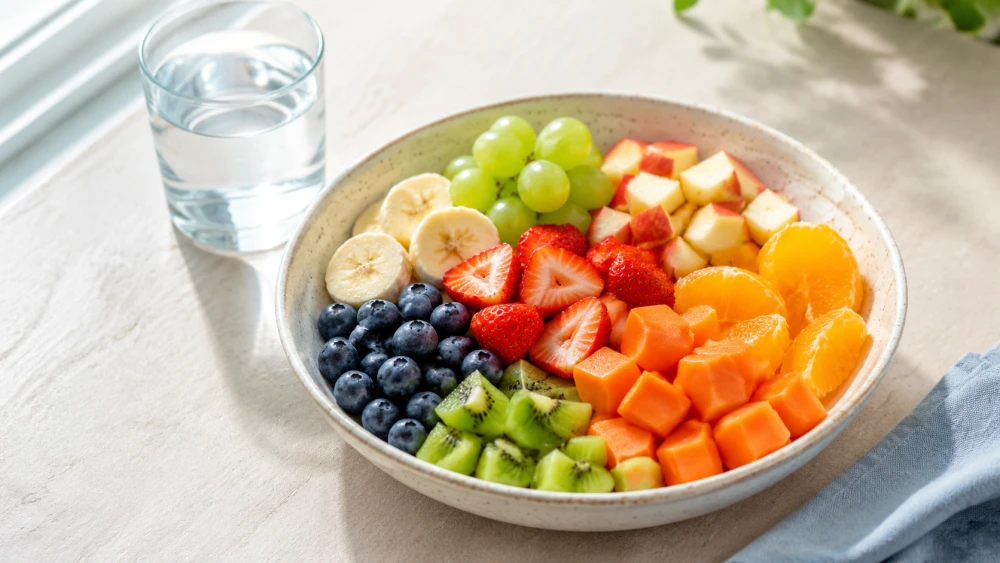
Fruit is nutritious, convenient, naturally sweet, and rich in vitamins, minerals, fibre, and plant compounds. For these reasons, many people assume that eating only fruit in the morning is one of the healthiest ways to start the day.
However, a fruit-only breakfast does not work equally well for everyone. Some people feel light and comfortable after eating fruit in the morning, while others become hungry again within one or two hours, develop cravings, or feel low in energy before lunchtime.
The problem is not that fruit is unhealthy. The issue is that a fruit-only breakfast may not provide enough protein, fat, or total satiety for some adults, especially those with high activity levels, poor sleep, insulin resistance, or a long gap before the next meal.
Understanding why a fruit-only breakfast sometimes leaves you hungry again so quickly can help you build a morning meal that is both nutritious and satisfying.
Why a Fruit-Only Breakfast Can Feel Filling at First
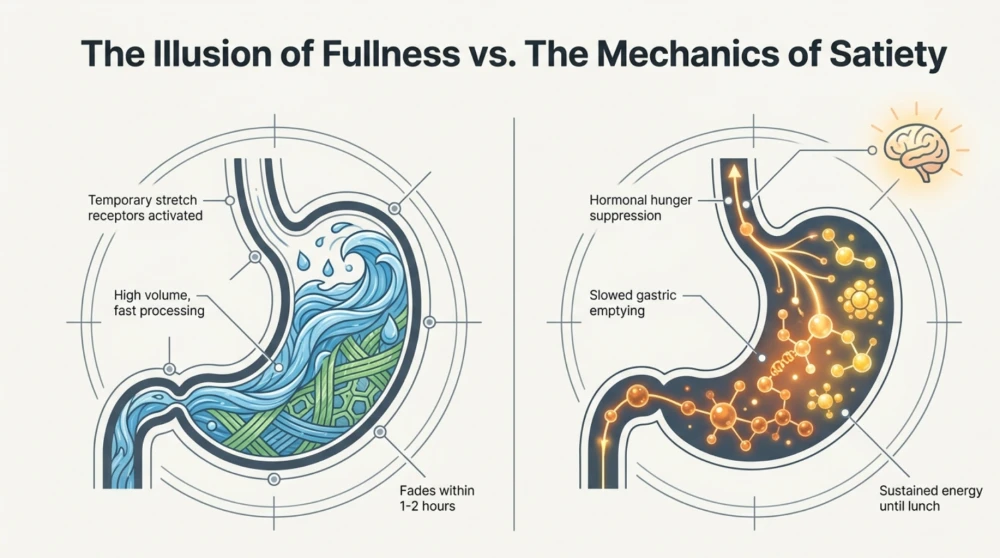
Fruit contains water and fibre, both of which add volume to a meal and can create a temporary feeling of fullness. Fruits such as apples, oranges, guava, papaya, pears, and berries can be particularly filling compared with juices or highly processed snacks.
However, fullness immediately after eating is not the same as sustained satiety.
A fruit-only breakfast may fill the stomach initially, but if the meal contains very little protein and fat, the feeling of fullness may fade relatively quickly.
This is especially true when the fruit portion is small or when highly sweet fruits are eaten without other foods that slow digestion.
Why Protein Matters in a Fruit-Only Breakfast
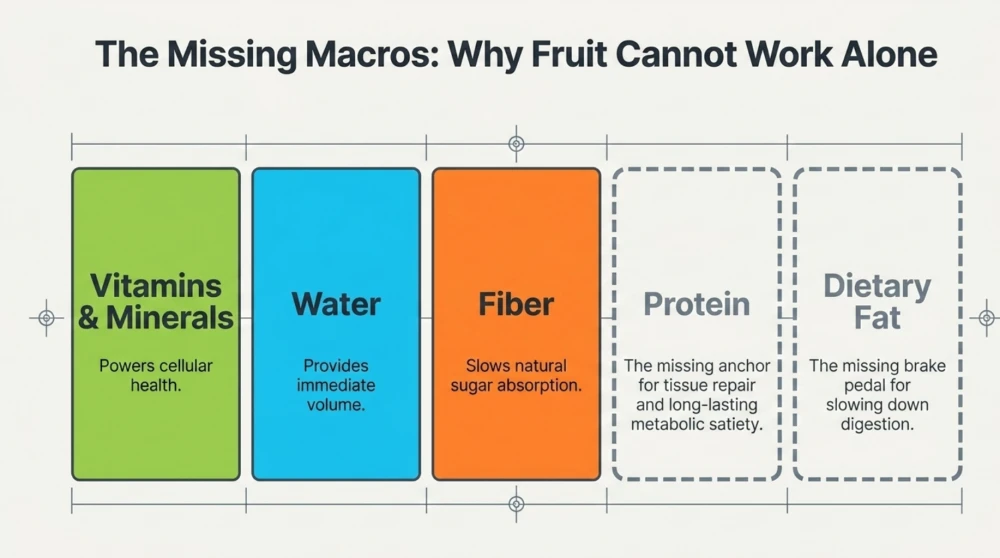
Protein is one of the strongest dietary contributors to satiety. It also supports muscle maintenance, tissue repair, and metabolic health.
Most fruits contain only a small amount of protein. As a result, a fruit-only breakfast may provide vitamins and fibre but still fail to deliver enough protein to keep hunger controlled for several hours.
Without adequate protein, many people experience:
- Early return of hunger.
- Mid-morning cravings.
- Reduced meal satisfaction.
- Greater likelihood of snacking.
This does not mean fruit should be removed from breakfast. A better strategy may be to combine fruit with a protein-rich food such as curd, Greek yogurt, eggs, paneer, tofu, or nuts.
Fruit-Only Breakfast vs Fruit Plus Protein
Compare these two morning meals:
- A bowl of papaya and banana.
- A bowl of papaya and banana with Greek yogurt and nuts.
Both contain fruit, but the second meal provides significantly more protein and healthy fat. For many people, this combination produces longer-lasting satiety than a fruit-only breakfast.
Why Fat Also Helps a Fruit-Only Breakfast Feel More Satisfying
Dietary fat slows digestion and contributes to meal satisfaction. Healthy fats can come from foods such as nuts, seeds, peanut butter, curd, and eggs.
Because most fruits are naturally very low in fat, a fruit-only breakfast may be digested relatively quickly, particularly if it consists mainly of soft or very ripe fruit.
Adding a small amount of healthy fat may help slow gastric emptying and improve satiety without making the meal excessively heavy.
Why a Fruit-Only Breakfast May Cause a Rapid Energy Rise and Fall
Fruit contains natural sugars, primarily fructose and glucose. In whole fruit, these sugars are packaged with fibre and water, which slows absorption compared with fruit juice or sugary drinks.
Even so, some individuals may experience a relatively quick rise in blood glucose after a fruit-only breakfast, especially when eating large portions of high-sugar fruits without protein or fat.
This does not mean fruit causes diabetes or should be avoided. The metabolic response depends on the type of fruit, portion size, individual insulin sensitivity, and what else is eaten with it.
For people with prediabetes or diabetes, pairing fruit with protein and fibre-rich foods may help create a more balanced breakfast.
Fruit-Only Breakfast and Mid-Morning Cravings
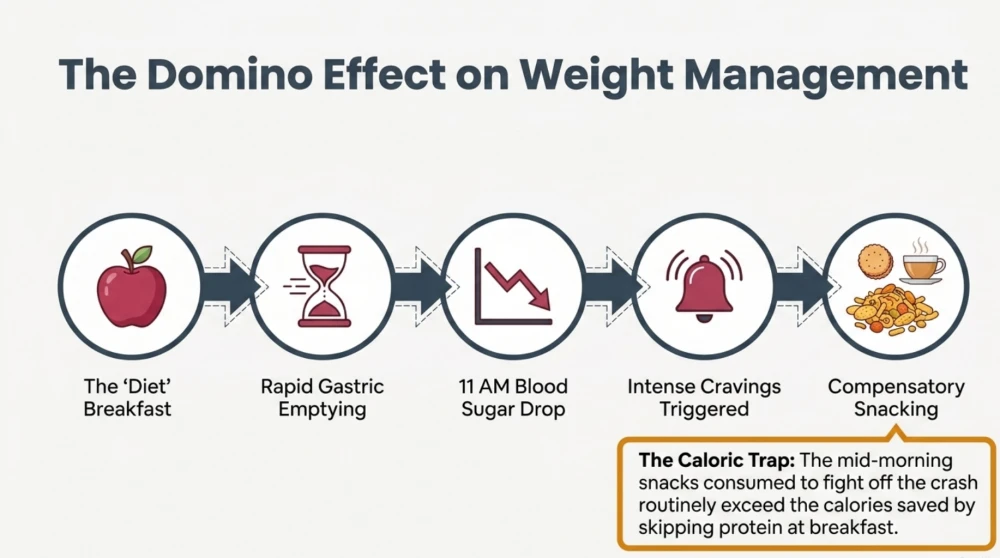
One common problem with a fruit-only breakfast is that hunger returns before the next planned meal.
When this happens, people often reach for convenient foods such as:
- Biscuits.
- Namkeen.
- Sweetened tea or coffee.
- Bakery products.
- Packaged snacks.
Ironically, a breakfast chosen because it seemed light and healthy can lead to higher calorie intake later in the morning if it does not provide enough satiety.
This is why a good breakfast should be evaluated not only by how healthy it looks, but also by how well it controls hunger over the next several hours.
Why a Fruit-Only Breakfast May Not Work Well for Everyone
Some people tolerate a fruit-only breakfast perfectly well, especially if they are not very hungry in the morning or are planning an early lunch.
Others may struggle more, particularly if they:
- Exercise in the morning.
- Have long working hours before lunch.
- Are trying to preserve muscle mass.
- Have frequent food cravings.
- Have insulin resistance or prediabetes.
- Sleep poorly.
Individual response matters. Nutrition should be personalised rather than based on the assumption that one breakfast pattern is ideal for everyone.
Which Fruits Make a Fruit-Only Breakfast More Filling?
Not all fruits affect fullness in exactly the same way. Their fibre content, water content, texture, ripeness, and portion size all influence how quickly they are eaten and how satisfying they feel.
Whole fruits that require chewing and contain more fibre generally provide better satiety than fruit juice, smoothies, or very soft fruit eaten quickly. Apples, pears, oranges, guava, berries, and pomegranate are examples of fruits that may feel more satisfying than juice because their natural structure remains intact.
However, even a fibre-rich fruit-only breakfast may still provide relatively little protein. This is why some people remain hungry despite choosing high-fibre fruit.
High-Fibre Fruit-Only Breakfast Choices
If someone prefers a fruit-only breakfast, choosing whole fruits rather than juices is usually the better option. Examples may include:
- Guava.
- Apple.
- Pear.
- Orange or sweet lime.
- Berries.
- Pomegranate.
- Papaya.
These foods provide vitamins, minerals, water, and fibre, but they should still be viewed as part of an overall dietary pattern rather than as a complete source of all major nutrients.
Why Fruit Juice Is Very Different From a Fruit-Only Breakfast
Many people assume that drinking fruit juice is nutritionally equivalent to eating whole fruit. It is not.
Juicing removes or breaks down much of the natural food structure and makes it possible to consume the sugars from several pieces of fruit within a few minutes.
For example, drinking a glass of orange juice may require the juice of several oranges, while most people would not eat the same number of whole oranges in one sitting.
Whole fruit requires chewing, occupies more stomach volume, and generally provides better satiety because its fibre remains intact.
This makes a whole-fruit fruit-only breakfast more filling than fruit juice alone, although it may still be less satisfying than a balanced breakfast containing protein.
Why Smoothies May Not Be as Filling as Whole Fruit
Smoothies retain more fibre than juice, but blending still changes the physical structure of the food and allows it to be consumed rapidly.
A smoothie containing fruit, yogurt, milk, nuts, seeds, or protein-rich ingredients can be nutritionally balanced. However, a smoothie made only from several fruits may behave more like a concentrated carbohydrate meal than a complete breakfast.
This is another reason a blended fruit-only breakfast may leave some people hungry sooner than expected.
Fruit-Only Breakfast and Prediabetes
People with prediabetes often become unnecessarily afraid of fruit. Whole fruit does not need to be automatically eliminated simply because blood sugar is elevated.
The more important factors are:
- Portion size.
- Type of fruit.
- Total carbohydrate load.
- Meal composition.
- Individual glucose response.
A large fruit-only breakfast containing several servings of sweet fruit may produce a larger glucose rise than a smaller fruit portion combined with protein, fibre, and healthy fat.
For someone with insulin resistance or prediabetes, pairing fruit with curd, Greek yogurt, nuts, seeds, eggs, paneer, or another protein-rich food may improve satiety and provide a more balanced metabolic response.
Does Fruit-Only Breakfast Cause Diabetes?
No. It would be inaccurate to say that a fruit-only breakfast causes diabetes.
Type 2 diabetes develops through the interaction of genetics, insulin resistance, body composition, physical inactivity, sleep, diet quality, and other metabolic factors.
The concern is not fruit itself. The question is whether a fruit-only meal provides enough protein, satiety, and nutritional balance for the individual eating it.
Fruit-Only Breakfast and Weight Loss
A fruit-only breakfast is often promoted as a weight-loss strategy because fruit is relatively low in calorie density compared with many processed breakfast foods.
However, weight loss does not depend only on making breakfast as light as possible.
If a very light breakfast leads to intense hunger, repeated snacking, large lunch portions, or evening cravings, the total daily calorie intake may actually increase.
This is why appetite control is just as important as calorie restriction.
A breakfast that contains adequate protein and fibre may be more useful for sustainable weight management than a fruit-only breakfast that leaves someone hungry again within two hours.
Why a Fruit-Only Breakfast Can Backfire During Weight Loss
When hunger returns too quickly, people often compensate subconsciously. They may consume extra tea, biscuits, sweets, chips, or other snacks before lunch.
The original breakfast may have contained relatively few calories, but the additional snacks can easily offset that difference.
This is one reason a successful weight-loss breakfast should be judged by how well it supports appetite control over the entire morning rather than by calories alone.
Can Athletes or Exercising Adults Rely on a Fruit-Only Breakfast?
Active individuals usually require more protein and total energy than sedentary adults.
A fruit-only breakfast may provide carbohydrate for exercise but very little protein for muscle repair and recovery.
Someone exercising in the morning may benefit from combining fruit with:
- Greek yogurt.
- Milk.
- Eggs.
- Paneer.
- Tofu.
- Nuts or seeds.
This creates a more complete meal that supports both energy and recovery.
Why Older Adults Need More Than a Fruit-Only Breakfast
Muscle preservation becomes increasingly important with age. Older adults are more vulnerable to gradual loss of muscle mass, particularly when dietary protein and resistance training are inadequate.
A fruit-only breakfast provides useful vitamins, minerals, and fibre but usually contributes very little protein toward daily muscle requirements.
Over time, consistently low protein intake may make it more difficult to preserve strength, mobility, and metabolic health.
Fruit Plus Protein Is Usually a Better Combination
For older adults, a breakfast containing fruit alongside curd, eggs, paneer, Greek yogurt, or another high-quality protein source may provide a better nutritional balance than fruit alone.
The goal is not to remove fruit. It is to make the meal more complete.
Common Mistakes With a Fruit-Only Breakfast
Mistake 1: Eating Too Little
A single apple or banana may not provide enough energy to sustain someone through a long working morning.
Very small meals can result in hunger that has little to do with metabolic dysfunction and everything to do with inadequate food intake.
Mistake 2: Eating Too Much Fruit at Once
The opposite mistake also occurs. Some people eat four or five fruits together because fruit is considered healthy.
A very large fruit-only breakfast can provide a substantial carbohydrate load without enough protein to balance the meal.
Mistake 3: Drinking Fruit Instead of Eating It
Juices and fruit drinks are easier to overconsume and generally produce less satiety than whole fruit.
Mistake 4: Assuming Natural Sugar Has No Metabolic Impact
The sugar in whole fruit comes packaged with fibre, water, and nutrients, making it very different from added sugar. However, carbohydrate from fruit still contributes to the total glucose load of a meal.
People with diabetes or significant insulin resistance may therefore benefit from individualised portion guidance rather than assuming unlimited fruit is appropriate.
Mistake 5: Ignoring Protein Completely
This is perhaps the most important limitation of a fruit-only breakfast. Most fruit provides minimal protein, yet protein plays a major role in satiety, muscle maintenance, and recovery.
Better Alternatives to a Fruit-Only Breakfast
People who enjoy fruit in the morning do not need to stop eating it. Instead, the meal can be upgraded by combining fruit with foods that provide protein, fibre, and healthy fat.
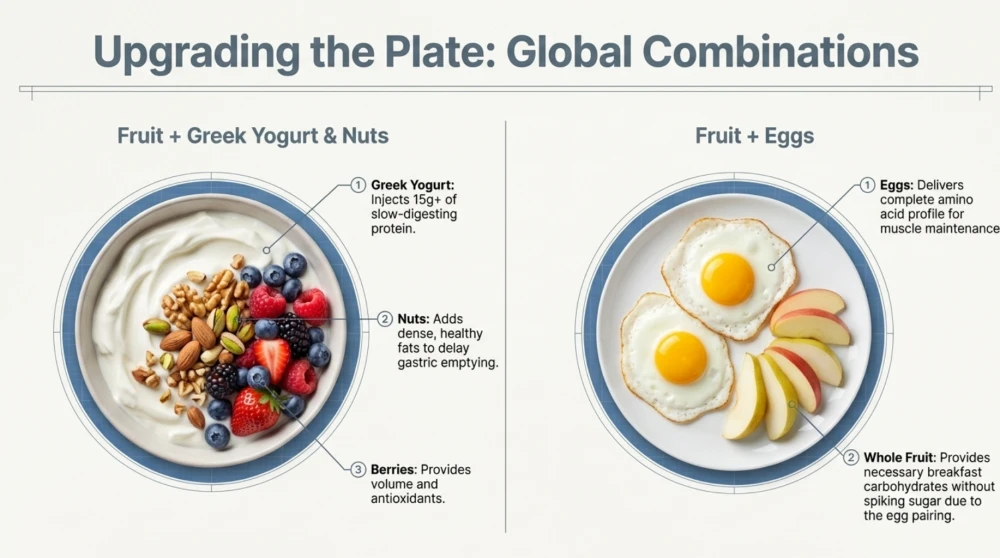
Fruit and Greek Yogurt Breakfast
A bowl of fruit with unsweetened Greek yogurt provides significantly more protein than a fruit-only breakfast. Adding a small portion of nuts or seeds can further improve satiety.
Fruit and Eggs Breakfast
Eggs paired with whole fruit provide protein alongside vitamins, fibre, and carbohydrate. This combination may suit people who prefer a savoury breakfast with fruit on the side.
Fruit, Paneer, and Nuts Breakfast
Paneer provides protein, while fruit contributes fibre and micronutrients. Nuts add healthy fats and additional satiety.
Fruit With Moong Dal Chilla
For an Indian breakfast, fruit alongside moong dal chilla creates a much more balanced meal than relying entirely on fruit. The dal provides protein and fibre, while the fruit adds natural sweetness, vitamins, and variety.
Why Personal Response Matters More Than Breakfast Trends
Nutrition trends often promote one breakfast as universally superior. Some advocate fasting, some recommend only fruit, while others promote extremely high-protein meals.
In reality, individual responses vary considerably.
The most useful questions are:
- Does your breakfast keep you comfortably full until your next planned meal?
- Does it support stable energy?
- Does it provide enough protein for your needs?
- Does it fit your blood sugar goals?
- Can you follow it consistently without cravings or overeating later?
If a fruit-only breakfast leaves you hungry every morning within one or two hours, that is useful information. Rather than assuming you lack willpower, the meal itself may simply need more protein, fat, or total energy.
How to Build a Better Breakfast Than a Fruit-Only Breakfast
If a fruit-only breakfast leaves you hungry within one or two hours, the solution is usually not to stop eating fruit. A more practical approach is to make the meal more complete.
A balanced breakfast generally works better when it contains a combination of:
- Protein.
- Fibre.
- Healthy fats.
- Appropriate carbohydrates.
Fruit can remain an important part of that meal. The difference is that it no longer carries the full burden of providing satiety on its own.
Add Protein to a Fruit-Only Breakfast
Protein is the first nutrient to consider when upgrading a fruit-only breakfast.
Practical options include:
- Greek yogurt or unsweetened curd.
- Eggs.
- Paneer.
- Tofu.
- Milk.
- Sprouts.
- Moong dal chilla.
The aim is to create a breakfast that feels satisfying rather than simply light.
Add Healthy Fat to a Fruit-Only Breakfast
A small portion of nuts or seeds may also improve satiety. Almonds, walnuts, chia seeds, flaxseeds, or pumpkin seeds can complement fruit without overwhelming the meal.
Healthy fat should still be portion controlled because it is calorie dense. More is not always better.
How Much Fruit Should You Eat at Breakfast?
There is no universal fruit portion that suits everyone. The right amount depends on body size, blood sugar control, physical activity, total daily intake, and what else is included in the meal.
For many adults, one or two portions of whole fruit can fit comfortably into a balanced breakfast. Problems are more likely when a fruit-only breakfast turns into a very large bowl containing multiple bananas, mangoes, grapes, dates, and other concentrated carbohydrate sources at the same time.
Variety is useful, but quantity still matters.
Whole Fruit Is Usually Better Than Juice
Whole fruit generally provides more satiety because it retains fibre and requires chewing. Juice can deliver the carbohydrate from several pieces of fruit very quickly while providing much less fullness.
For this reason, replacing a fruit-only breakfast with a large glass of juice is usually not an improvement.
When a Fruit-Only Breakfast May Still Be Reasonable
A fruit-only breakfast is not automatically unhealthy. Context matters.
It may work reasonably well for someone who:
- Has a low appetite in the morning.
- Plans to eat a balanced meal shortly afterward.
- Uses it as a light pre-exercise snack rather than a complete breakfast.
- Feels satisfied and energetic afterward.
- Meets protein requirements adequately through the rest of the day.
The key issue is whether the meal supports the person’s overall nutritional needs.
Listen to Hunger, Not Food Rules
If a fruit-only breakfast keeps you comfortable, does not trigger cravings, and fits well into the rest of your eating pattern, there may be no need to change it simply because someone online says fruit alone is wrong.
On the other hand, if you repeatedly become hungry, tired, or irritable soon afterward, that response suggests the meal may be incomplete for your needs.
Fruit-Only Breakfast and Diabetes: What Matters Most
People with diabetes do not need to fear fruit, but a large fruit-only breakfast may not be ideal for everyone.
The glucose response depends on:
- Type of fruit.
- Portion size.
- Degree of ripeness.
- Whether fruit is eaten whole or blended.
- What protein or fat is eaten alongside it.
- Individual insulin sensitivity.
Someone with diabetes may tolerate an apple with Greek yogurt very differently from a large smoothie containing several bananas, mangoes, and dates.
Personal glucose response and overall meal quality matter more than simply labelling fruit as good or bad.
Use Glucose Data Intelligently
People who monitor their blood glucose can sometimes learn how different breakfast combinations affect them. However, one isolated reading should not lead to unnecessary food restriction.
Patterns over time are more useful, especially when interpreted alongside HbA1c, medications, physical activity, sleep, and overall diet.
Fruit-Only Breakfast and Muscle Health
One of the biggest long-term limitations of a regular fruit-only breakfast is that it contributes very little protein toward daily muscle requirements.
This becomes increasingly important after the age of 35, when muscle preservation deserves greater attention.
Adults who repeatedly consume low-protein breakfasts may need to compensate at lunch and dinner. In practice, many do not, leaving total daily protein intake lower than expected.
Why Muscle Matters for Metabolic Health
Muscle helps with:
- Glucose utilisation.
- Insulin sensitivity.
- Physical strength.
- Healthy ageing.
- Weight management.
For this reason, upgrading a fruit-only breakfast with protein is not only about controlling hunger. It can also support long-term metabolic health.
Simple Indian Breakfast Combinations With Fruit
Fruit can be incorporated into familiar Indian breakfasts without making the meal complicated.
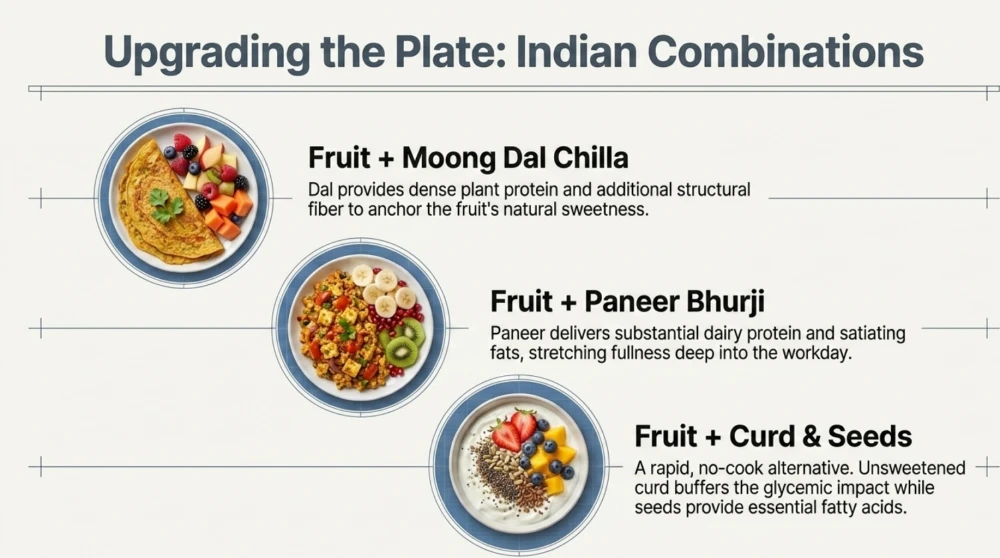
Fruit With Moong Dal Chilla
Moong dal provides protein and fibre, while fruit adds vitamins, minerals, and natural sweetness.
Fruit With Paneer Bhurji
Paneer provides substantial protein and may keep hunger controlled for much longer than a fruit-only breakfast.
Fruit With Curd and Nuts
This is a practical option for busy mornings. Unsweetened curd provides protein, while nuts add healthy fat and improve satiety.
Fruit With Eggs
Eggs and fruit create a simple combination of protein, fat, fibre, and carbohydrate. This may work especially well for people who prefer a quick breakfast.
Common Myths About a Fruit-Only Breakfast
Myth 1: Fruit Alone Is Always the Healthiest Breakfast
Fruit is healthy, but healthy food does not automatically create a balanced meal. A complete breakfast should also support satiety, protein intake, and individual energy needs.
Myth 2: Fruit Sugar Is the Same as Added Sugar
Whole fruit contains sugar, but it also provides fibre, water, vitamins, minerals, and plant compounds. This makes it metabolically different from soft drinks or sweets.
However, large amounts of fruit still contribute carbohydrate, so portion size matters.
Myth 3: A Fruit-Only Breakfast Is Best for Weight Loss
A very light breakfast may reduce calories initially, but if it causes intense hunger and snacking later, the overall effect may be counterproductive.
Myth 4: Adding Protein Makes Breakfast Too Heavy
Protein does not automatically make a meal heavy or difficult to digest. A moderate portion of yogurt, eggs, paneer, or dal can improve satiety without creating an excessively large meal.
Key Takeaways About a Fruit-Only Breakfast
- A fruit-only breakfast can be nutritious but may not provide enough protein or fat for lasting satiety.
- Whole fruit is generally more filling than juice or fruit drinks.
- Adding protein such as yogurt, eggs, paneer, tofu, or dal can make breakfast more satisfying.
- A fruit-only breakfast does not cause diabetes, but portion size and meal composition matter for people with insulin resistance or diabetes.
- People trying to lose weight should judge breakfast by how well it controls hunger across the morning, not by calories alone.
- Older adults and physically active people may benefit especially from adding protein to breakfast.
- Fruit should not be feared or eliminated; it is better combined intelligently with other foods when needed.
You can book a consultation here:
Book an Appointment
References
- American Diabetes Association. Standards of Care in Diabetes. 2026.
- Harvard T.H. Chan School of Public Health. The Nutrition Source: Fruits and Vegetables. Updated 2025.
- World Health Organization. Healthy Diet Fact Sheet. Updated 2025.
- Leidy HJ, et al. Higher Protein Intake and Appetite Control in Adults. American Journal of Clinical Nutrition.
- Reynolds A, et al. Carbohydrate Quality and Human Health: Systematic Reviews and Meta-analyses. The Lancet.
- Phillips SM, et al. Dietary Protein and Healthy Muscle Across the Lifespan. Nutrients.
Written by Dr. Pankaj Kumar, General & Lifestyle Physician, Dwarka, New Delhi