













- 16th November 2026
Table of Contents
- Protein Intake With Early Kidney Disease: Why the Right Amount Matters
- What Is Early Chronic Kidney Disease?
- Understanding eGFR and CKD Stages
- Why Urine Albumin Matters Alongside eGFR
- How Does Dietary Protein Affect the Kidneys?
- What Is Glomerular Hyperfiltration?
- Does Eating More Protein Automatically Increase Creatinine?
- How Much Protein Is Recommended in Early Kidney Disease?
- Protein Recommendations by Clinical Situation
- Why Do Some Kidney Nutrition Guidelines Recommend Less Than 0.8 g/kg?
- How to Calculate Daily Protein Intake With Early Kidney Disease
- Example Protein Calculations at 0.8 g/kg/day
- Is 100 Grams of Protein Too Much With Early Kidney Disease?
- Is Protein Restriction Necessary in CKD Stage 2?
- Is Protein Restriction Necessary in CKD Stage 3?
- What Happens if Protein Intake Becomes Too Low?
- Does Everyone With Protein in Urine Need to Stop Eating Protein?
- Protein Intake With Early Kidney Disease: Does the Source of Protein Matter?
- Animal Protein vs Plant Protein in Chronic Kidney Disease
- Why Plant-Based Protein May Be Helpful in CKD
- Animal vs Plant Protein: Practical Comparison
- Is Dal Safe for Patients With Early Kidney Disease?
- Does Soaking or Boiling Dal Remove Its Protein?
- Is Paneer Safe in Early Kidney Disease?
- Can Patients With CKD Eat Eggs?
- Is Chicken or Fish Safe With Early Kidney Disease?
- How Much Protein Is Present in Common Indian Foods?
- Why Protein From Roti, Rice and Vegetables Also Counts
- Is Whey Protein Safe in Early Chronic Kidney Disease?
- What Should You Check Before Using Protein Powder With CKD?
- Whey Protein, Creatine and High-Protein Diets: Important Differences
- Can Patients With Early CKD Follow a High-Protein Weight-Loss Diet?
- Can You Preserve Muscle While Eating Moderate Protein?
- Should Protein Be Spread Across Meals?
- Do Patients With Early CKD Need to Avoid Potassium-Rich Foods?
- Does Early CKD Require a Low-Phosphorus Diet?
- Natural Phosphorus vs Phosphate Additives
- Potassium and Phosphorus: When Restrictions May Be Needed
- Why Sodium May Matter More Than Avoiding Dal or Fruit
- Can Vegetarian Patients Meet Protein Needs Without Supplements?
- Clinical Example: A Vegetarian Patient With CKD G3a
- Clinical Example: A Gym Enthusiast With Albuminuria
- How to Plan Daily Protein Intake With Early Kidney Disease
- A Practical Indian Meal Plan for Early CKD
- How to Calculate Protein in an Indian Thali
- How to Balance Protein Intake With Early Kidney Disease and Diabetes
- Can Patients With Diabetic Kidney Disease Eat Dal, Rice and Roti?
- Is a Low-Carbohydrate, High-Protein Diet Safe in CKD?
- Can Patients With Early CKD Lose Weight Safely?
- Protein Intake During GLP-1 Treatment in Patients With CKD
- How to Preserve Muscle Without Excessive Protein Intake
- Example Exercise Plan for a Stable Patient With Early CKD
- Why Sodium Control Matters Alongside Protein Intake
- Should Patients With Early CKD Restrict Water?
- How to Monitor Kidney Health While Adjusting Protein Intake
- Can Blood Urea Tell Whether You Are Eating Too Much Protein?
- When Should a Patient With CKD See a Nephrologist?
- Common Myths About Protein Intake With Early Kidney Disease
- Myth 1: Anyone With High Creatinine Must Stop Eating Protein
- Myth 2: All Patients With CKD Need a Very Low-Protein Diet
- Myth 3: Plant Protein Does Not Count Toward Daily Protein Intake
- Myth 4: Egg Whites Can Be Eaten Without Limit
- Myth 5: Whey Protein Is Always Harmful in CKD
- Myth 6: More Protein Always Means More Muscle
- Myth 7: All Patients With CKD Must Avoid Bananas, Tomatoes and Dal
- Myth 8: Drinking More Water Can Reverse Kidney Disease
- Myth 9: Protein Restriction Alone Can Stop Kidney Disease Progression
- Myth 10: A High-Protein Gym Diet Is Safe Whenever eGFR Is Above 60
- Frequently Asked Questions About Protein Intake With Early Kidney Disease
- 1. How much protein is safe in early kidney disease?
- 2. Is 100 grams of protein too much for CKD stage 3?
- 3. Can I eat eggs with CKD stage 2?
- 4. Is paneer safe in early kidney disease?
- 5. Can I eat dal every day?
- 6. Is whey protein safe if creatinine is high?
- 7. Can high protein intake worsen kidney disease?
- 8. Should patients with CKD avoid chicken?
- 9. Is plant protein better than animal protein for kidney health?
- 10. Can I build muscle with CKD stage 3?
- 11. Does protein in urine mean I should stop eating protein?
- 12. Do I need to avoid potassium-rich fruits?
- 13. Is a ketogenic diet safe in CKD?
- 14. Can protein restriction improve eGFR?
- 15. Do dialysis patients need the same protein restriction?
- What I Explain to Patients About Protein and Kidney Health
- Key Takeaways: Protein Intake With Early Kidney Disease
- Kidney Health and Medical Nutrition Consultation in Dwarka, Delhi
- Scientific References and Clinical Guidelines
- About the Author
- Medical Disclaimer
Protein Intake With Early Kidney Disease: Why the Right Amount Matters
A 48-year-old man with type 2 diabetes visits his doctor after a routine blood test shows an estimated glomerular filtration rate (eGFR) of 54 mL/min/1.73 m². His urine albumin-to-creatinine ratio is also elevated.
He has recently started exercising and follows a high-protein diet to lose abdominal fat and preserve muscle. His daily meals include eggs, chicken, paneer and two scoops of whey protein.
He asks an important question: "Should I stop eating protein because my kidneys are weak?"
The answer is not as simple as avoiding protein.
Protein is essential for maintaining muscle, supporting immunity, repairing tissues and preserving overall nutritional health. However, people with chronic kidney disease (CKD) may need to avoid excessive protein intake because the kidneys are responsible for eliminating many products of protein metabolism.
At the same time, unnecessarily severe protein restriction can cause muscle loss, weakness and malnutrition, particularly in older adults.
Protein intake with early kidney disease should therefore be individualised according to kidney function, albuminuria, nutritional status, age, body weight and other medical conditions.
For many metabolically stable adults with CKD stages G3–G5 who are not receiving dialysis, the KDIGO 2024 guideline suggests approximately 0.8 grams of protein per kilogram of body weight per day. It also advises avoiding high protein intake above 1.3 g/kg/day in adults with CKD at risk of progression.
However, these recommendations should not be applied automatically to every person with a mildly abnormal creatinine result.
What Is Early Chronic Kidney Disease?
Chronic kidney disease occurs when abnormalities of kidney structure or function persist for at least three months and have implications for health.
These abnormalities may include a reduced eGFR, increased urinary albumin excretion, structural kidney abnormalities or other markers of kidney damage.
A single mildly elevated creatinine result does not necessarily establish chronic kidney disease.
For example, temporary dehydration, acute illness, recent strenuous exercise and certain medications can affect kidney-related blood tests.
Therefore, CKD diagnosis requires consideration of previous results, repeat testing when appropriate and other clinical findings.

Understanding eGFR and CKD Stages
eGFR estimates how efficiently the kidneys filter blood.
It is commonly calculated from serum creatinine using validated equations, although cystatin C may help refine assessment in selected patients.
CKD is classified using both GFR categories and albuminuria categories.
| GFR Category | eGFR (mL/min/1.73 m²) | Description |
|---|---|---|
| G1 | 90 or higher | Normal or high GFR |
| G2 | 60–89 | Mildly decreased GFR |
| G3a | 45–59 | Mildly to moderately decreased GFR |
| G3b | 30–44 | Moderately to severely decreased GFR |
| G4 | 15–29 | Severely decreased GFR |
| G5 | Below 15 | Kidney failure |
Importantly, G1 and G2 categories do not establish CKD unless another marker of kidney damage is present.
For example, a patient with an eGFR of 82 and persistently elevated urine albumin may have CKD, while another person with the same eGFR and no evidence of kidney damage may not.
Why Urine Albumin Matters Alongside eGFR
Urine albumin-to-creatinine ratio (UACR) is an important measurement used to assess kidney damage and predict kidney and cardiovascular outcomes.
Albumin is a protein normally retained in the bloodstream by the kidneys.
When the kidney's filtration barrier is affected, increased amounts of albumin may appear in urine.
Albuminuria can be present even when eGFR remains normal.
| Albuminuria Category | UACR (mg/g) | Description |
|---|---|---|
| A1 | Below 30 | Normal to mildly increased |
| A2 | 30–300 | Moderately increased |
| A3 | Above 300 | Severely increased |
Albuminuria should be confirmed when necessary because temporary factors such as infection, fever and strenuous exercise may influence the result.
Protein intake decisions should consider both kidney filtration and evidence of kidney damage, rather than serum creatinine alone.
How Does Dietary Protein Affect the Kidneys?
When we eat protein, digestive enzymes break it into amino acids.
These amino acids are used to build and maintain muscles, enzymes, hormones and other tissues.
When amino acids are metabolised, nitrogen-containing waste products are produced. Urea is one of the major products.
The kidneys help eliminate urea and other metabolic waste products through urine.
In healthy individuals, the kidneys can generally adapt to variations in dietary protein intake.
However, in people with CKD, reduced kidney function may limit the ability to eliminate certain waste products efficiently.
Protein intake can also influence renal blood flow and glomerular filtration dynamics.
What Is Glomerular Hyperfiltration?
Glomeruli are microscopic filtering structures inside the kidneys.
After a protein-rich meal, renal blood flow and filtration may increase temporarily.
This response is part of normal kidney physiology.
However, sustained high protein intake can increase intraglomerular pressure and filtration demand.
In people with susceptible kidneys, particularly those with existing CKD, these haemodynamic effects may contribute to kidney injury over time.
Nevertheless, it would be inaccurate to claim that every high-protein meal causes permanent kidney damage.
The clinical concern is more relevant to sustained excessive intake in people who already have kidney disease or are at risk of progression.

Does Eating More Protein Automatically Increase Creatinine?
Not necessarily.
Serum creatinine is influenced by kidney filtration, muscle mass and other factors.
Eating cooked meat shortly before blood testing can temporarily increase serum creatinine because cooked meat contains creatinine formed during cooking.
Creatine supplementation and greater muscle mass can also complicate interpretation of creatinine-based eGFR.
Therefore, a higher creatinine result in a physically active person does not always indicate worsening kidney disease.
However, this possibility should not be used to dismiss persistent abnormalities, particularly when albuminuria or declining eGFR is present.
In selected patients, cystatin C-based assessment may help clarify kidney function.
How Much Protein Is Recommended in Early Kidney Disease?
The appropriate amount depends on whether CKD is confirmed, its stage, the risk of progression and the patient's nutritional condition.
The KDIGO 2024 guideline suggests approximately 0.8 grams of protein per kilogram of body weight per day for adults with CKD stages G3–G5 who are not receiving dialysis.
It also advises avoiding protein intake above 1.3 g/kg/day in adults with CKD who are at risk of progression.
However, these figures require careful interpretation.
For CKD G1–G2, the same 0.8 g/kg recommendation is not explicitly presented as a stage-specific KDIGO prescription. Dietary advice should be individualised according to albuminuria, underlying kidney disease, progression risk and nutritional needs.
For older adults with frailty or sarcopenia, higher protein and energy targets may be appropriate.
For children with CKD, routine protein restriction is not recommended because adequate intake is essential for growth.
Protein Recommendations by Clinical Situation
| Clinical Situation | Protein Consideration | Important Note |
|---|---|---|
| CKD G1–G2 | Individualised; approximately 0.8 g/kg/day may be a reasonable reference for many adults | Avoid automatically prescribing restriction without assessing kidney damage and nutritional status |
| CKD G3–G5, not on dialysis | Approximately 0.8 g/kg/day | KDIGO 2024 recommendation for adults |
| CKD at risk of progression | Avoid sustained intake above 1.3 g/kg/day | This is a caution threshold, not an ideal target |
| Selected metabolically stable CKD G3–G5 patients | Lower protein prescriptions may be considered | Require specialist supervision and nutritional monitoring |
| Older adults with frailty or sarcopenia | May require higher protein intake | Preventing malnutrition and muscle loss is important |
| Patients receiving maintenance dialysis | Generally higher protein requirements | Non-dialysis CKD targets should not be applied |
Why Do Some Kidney Nutrition Guidelines Recommend Less Than 0.8 g/kg?
Patients may encounter different recommendations when reading about kidney diets.
The KDOQI 2020 nutrition guideline recommends supervised low-protein diets of approximately 0.55–0.60 g/kg/day for selected metabolically stable adults with CKD G3–G5 without diabetes.
For patients with diabetes, KDOQI describes approximately 0.6–0.8 g/kg/day under close clinical supervision.
However, KDIGO 2024 generally recommends maintaining approximately 0.8 g/kg/day for adults with CKD G3–G5.
These differences reflect variations in the interpretation of clinical evidence, feasibility, patient preferences and the risks of inadequate nutrition.
Lower protein diets are not automatically better for every patient.
They may be difficult to maintain and can increase the risk of inadequate protein or energy intake without appropriate supervision.
Therefore, very low-protein diets and specialised ketoacid-supplemented regimens should never be started independently.
How to Calculate Daily Protein Intake With Early Kidney Disease
A common starting calculation multiplies the relevant body weight by the prescribed protein target in grams per kilogram per day.
Daily protein (grams) = Body weight (kg) × Prescribed protein target (g/kg/day)
For example, a metabolically stable adult weighing 70 kg with CKD G3a who has been advised to consume approximately 0.8 g/kg/day would have an illustrative daily target of 56 grams of protein.
However, actual body weight is not always the appropriate calculation weight.
Patients with significant obesity, oedema, fluid retention or undernutrition may require an adjusted, ideal or estimated dry body weight selected by the clinician or renal dietitian.
Example Protein Calculations at 0.8 g/kg/day
| Calculation Weight | Daily Protein at 0.8 g/kg | Interpretation |
|---|---|---|
| 50 kg | 40 g | Illustrative target |
| 60 kg | 48 g | Illustrative target |
| 70 kg | 56 g | Illustrative target |
| 80 kg | 64 g | Illustrative target |
| 90 kg | 72 g | Illustrative target |
These calculations illustrate the guideline target and are not personalised prescriptions. In particular, using actual body weight without adjustment may overestimate requirements in some patients with obesity or fluid overload.
Is 100 Grams of Protein Too Much With Early Kidney Disease?
The answer depends on body weight and clinical circumstances.
For a 60 kg adult, 100 grams of protein corresponds to approximately 1.67 g/kg/day.
For an 80 kg adult, the same 100 grams corresponds to 1.25 g/kg/day.
Therefore, the same protein quantity can represent very different dietary exposures.
For a 60 kg patient with CKD at risk of progression, 100 grams per day would exceed the KDIGO high-protein caution threshold of 1.3 g/kg/day.
For an 80 kg patient, 100 grams would fall below that threshold but still exceed the usual 0.8 g/kg/day target recommended for CKD G3–G5.
The 1.3 g/kg/day threshold should not be interpreted as a recommended intake. It identifies a level of high protein consumption that KDIGO advises avoiding in adults with CKD at risk of progression.
Is Protein Restriction Necessary in CKD Stage 2?
CKD G2 describes an eGFR of 60–89 mL/min/1.73 m² when there is another persistent marker of kidney damage.
Many people with CKD G2 have relatively preserved kidney filtration.
Routine severe protein restriction is not appropriate simply because the eGFR falls within the G2 category.
However, the presence of significant albuminuria, progressive kidney disease or another high-risk condition may justify more individualised dietary guidance.
Patients should also avoid assuming that high-protein bodybuilding diets are harmless merely because their eGFR is above 60.
The appropriate recommendation depends on the cause of kidney disease, progression risk and nutritional requirements.
Is Protein Restriction Necessary in CKD Stage 3?
For adults with CKD G3 who are not on dialysis, KDIGO 2024 suggests approximately 0.8 g/kg/day.
This provides a practical starting point for many metabolically stable patients.
However, patients with frailty, muscle wasting, active illness or poor dietary intake may need a different approach.
More restrictive diets should be considered only when clinically justified and supported by nutritional monitoring.
What Happens if Protein Intake Becomes Too Low?
Excessive protein restriction can lead to inadequate amino acid intake, loss of muscle mass and poor nutritional status.
This risk may be greater in older adults, patients with poor appetite and people experiencing unintentional weight loss.
Inadequate calorie intake can worsen the problem because the body may break down muscle tissue to meet energy requirements.
Therefore, dietary management must address total energy intake as well as protein quantity.
A low-protein diet that leaves a patient weak, losing muscle and unable to maintain adequate nutrition is not a successful kidney-protection strategy.
Does Everyone With Protein in Urine Need to Stop Eating Protein?
No.
Albuminuria reflects increased urinary albumin excretion and may indicate kidney damage.
However, albuminuria is not simply caused by eating protein.
Its causes include diabetes, hypertension and various kidney disorders.
Reducing excessive dietary protein may be appropriate in selected patients, but albuminuria management also involves blood pressure control, treatment of underlying disease and kidney-protective medication when indicated.
Patients should not attempt to eliminate dietary protein to stop protein loss in urine.
Protein Intake With Early Kidney Disease: Does the Source of Protein Matter?
Once a patient understands how much protein may be appropriate, the next question is usually about food choices.
Should a person with early chronic kidney disease stop eating eggs? Is paneer harmful? Can dal and beans worsen kidney function? Is plant protein safer than chicken or fish?
These questions are particularly relevant in India, where diets may include a combination of cereals, pulses, dairy products, eggs and meat.
The answer is that protein intake with early kidney disease depends on both the total quantity and the overall quality of the diet.
Protein sources differ in amino acid composition, phosphorus content, potassium content, saturated fat, sodium and the way they affect dietary acid load.
However, there is no scientific basis for automatically banning all animal protein or recommending unlimited plant protein.
The best approach is to select suitable foods within an individualised daily protein target while maintaining adequate calories and essential nutrients.
Animal Protein vs Plant Protein in Chronic Kidney Disease
Animal protein sources include eggs, milk, curd, paneer, fish, chicken and meat.
Plant protein sources include dal, beans, chickpeas, soy products, nuts, seeds and whole grains.
Both can contribute to meeting protein requirements, but their nutritional characteristics differ.
Animal proteins generally provide all essential amino acids in proportions that support human protein synthesis.
Many plant foods also contribute valuable protein, particularly when a variety of foods is consumed across the day.
Soy foods, for example, can provide high-quality plant protein.
For patients with CKD, plant-forward dietary patterns may offer advantages because they often provide more fibre and less saturated fat, while potentially reducing dietary acid load.
However, evidence that replacing animal protein with plant protein directly slows CKD progression remains less certain than evidence supporting established kidney-protective interventions such as blood pressure control and appropriate medication.
Why Plant-Based Protein May Be Helpful in CKD
Plant-based dietary patterns may influence kidney health through several mechanisms.
Many plant foods provide fibre that supports gastrointestinal health and may influence the production and elimination of certain gut-derived metabolites.
Plant-forward diets may also improve dietary quality and reduce intake of processed meats and excess saturated fat.
In addition, phosphorus in many unprocessed plant foods is less readily absorbed than phosphorus from food additives.
However, these potential advantages do not mean that all plant-based diets are automatically kidney-friendly.
A diet consisting mainly of refined carbohydrates, packaged vegan foods and inadequate protein may be nutritionally poor.
The focus should remain on minimally processed foods, appropriate portions and overall nutritional adequacy.
Animal vs Plant Protein: Practical Comparison
| Feature | Animal Protein | Plant Protein |
|---|---|---|
| Common sources | Eggs, dairy, fish, chicken and meat | Dal, beans, soy, nuts and seeds |
| Protein quality | Generally high digestibility and complete essential amino acid profiles | Varies by source; adequate amino acids can be achieved through dietary variety |
| Fibre | Usually absent | Often present in minimally processed foods |
| Phosphorus | Often more readily absorbed | Phytate-bound phosphorus is generally less bioavailable |
| Saturated fat | Can be high in fatty meat and full-fat dairy | Usually lower in legumes and soy foods |
| Dietary consideration | Choose suitable portions and limit processed meat | Maintain variety and monitor nutrients when necessary |

Is Dal Safe for Patients With Early Kidney Disease?
Dal is a major source of protein in Indian vegetarian diets.
Common varieties include moong dal, masoor dal, arhar dal, chana dal and urad dal.
These foods provide plant protein, carbohydrates, fibre and several micronutrients.
For many patients with early CKD and normal potassium and phosphorus levels, dal can remain part of a balanced diet.
However, the quantity should be included in the total daily protein calculation.
A patient prescribed 50 grams of protein per day should not assume that dal protein does not count because it comes from plants.
It is also important to recognise that the protein content of dry dal is substantially higher than that of cooked dal per 100 grams because cooking adds water.
Therefore, nutritional calculations should clearly distinguish between dry and cooked quantities.
Does Soaking or Boiling Dal Remove Its Protein?
Soaking and cooking can change the digestibility and composition of legumes.
Some water-soluble nutrients may be lost when cooking water is discarded.
However, soaking or boiling does not make dal protein-free.
Patients should not rely on these methods to eliminate protein from legumes.
Similarly, potassium reduction through soaking or boiling is variable and depends on the food, preparation method and water used.
Routine potassium-reduction techniques are not necessary for every patient with early CKD.
Is Paneer Safe in Early Kidney Disease?
Paneer provides protein, calcium and phosphorus.
It can be included in selected patients' diets, but portions matter.
For example, a large serving of paneer may contribute a substantial proportion of a patient's daily protein target.
Full-fat paneer can also contain considerable saturated fat.
For patients with diabetes, obesity or cardiovascular risk, lower-fat preparations may be preferable.
However, patients with elevated serum phosphorus or more advanced CKD may require additional dietary assessment.
Paneer should therefore not be classified as universally harmful or universally unrestricted.
Can Patients With CKD Eat Eggs?
Eggs provide high-quality protein and several essential nutrients.
One large egg typically provides approximately 6–7 grams of protein.
Egg whites contain most of their calories from protein and have less phosphorus than whole eggs.
However, egg whites still contribute to total daily protein intake.
For many patients with early CKD, eggs can be included in an individualised meal plan.
Whether to use whole eggs, egg whites or a combination depends on the patient's nutritional needs and laboratory findings.
Patients should not assume that unlimited egg whites are safe simply because they contain relatively little fat.
Is Chicken or Fish Safe With Early Kidney Disease?
Chicken and fish provide concentrated sources of high-quality protein.
For patients with early CKD, these foods may be included in suitable portions.
However, large servings can quickly increase daily protein intake above the prescribed target.
For example, 100 grams of cooked skinless chicken breast can provide approximately 30–31 grams of protein.
For a patient with a daily protein target of 56 grams, this represents more than half of the day's allowance.
Cooking methods also matter. Grilled, steamed or lightly cooked preparations may be preferable to heavily salted, processed or deep-fried options.
Processed meats should generally be limited because of their sodium content and other health concerns.
How Much Protein Is Present in Common Indian Foods?
The following values are approximate and may vary according to variety, brand, portion size and cooking method.
| Food | Approximate Serving | Protein |
|---|---|---|
| Cooked moong dal | 100 g | 6–8 g |
| Cooked chickpeas | 100 g | 8–9 g |
| Paneer | 100 g | 16–20 g |
| Cow's milk | 200 mL | 6–7 g |
| Plain curd | 100 g | 3–5 g |
| Large egg | 1 egg | 6–7 g |
| Egg white | 1 large | 3–4 g |
| Cooked chicken breast | 100 g | 30–31 g |
| Cooked fish | 100 g | 20–25 g |
| Firm tofu | 100 g | 8–17 g |
| Whole-wheat roti | 1 medium | 3–4 g |
These values should be used as approximate educational references rather than precise dietary prescriptions. Actual protein calculations should use the patient's usual portion sizes and reliable food composition data.
Why Protein From Roti, Rice and Vegetables Also Counts
One common mistake in protein calculation is counting only eggs, paneer, chicken or protein supplements.
However, cereals, legumes and vegetables also contribute protein.
For example, three medium whole-wheat rotis may provide approximately 9–12 grams of protein, depending on size and flour quantity.
When combined with dal, curd and other foods, these contributions can become significant.
Therefore, a patient prescribed 55 grams of protein daily should calculate protein from the complete diet, not only from obvious protein-rich foods.
Is Whey Protein Safe in Early Chronic Kidney Disease?
Whey protein is a concentrated source of dietary protein derived from milk.
It is commonly used by people who exercise, older adults trying to preserve muscle and patients attempting weight loss.
However, whey protein is not inherently kidney-protective.
For patients with CKD, the important question is whether the supplement causes total daily protein intake to exceed the appropriate target.
For example, a patient who already consumes 65 grams of protein from food and adds a supplement containing 25 grams will consume approximately 90 grams daily.
For a 70 kg patient with CKD G3 and a target of approximately 56 grams per day, this would be substantially above the prescribed amount.
However, a protein supplement may occasionally be useful when a patient cannot meet an appropriate nutritional target through ordinary food.
Such use should be guided by a clinician or renal dietitian.

What Should You Check Before Using Protein Powder With CKD?
Patients should examine the supplement's protein content per serving, serving size and ingredient list.
Some products contain additional creatine, herbal ingredients, stimulants, potassium, phosphorus additives or large amounts of other nutrients.
These ingredients may be unsuitable for some patients with kidney disease.
Products marketed as "kidney-safe" should not automatically be considered appropriate without reviewing their composition.
Patients should also be cautious about supplements that promise to reverse CKD or detoxify the kidneys.
There is no reliable evidence that ordinary protein powders reverse chronic kidney disease.
Whey Protein, Creatine and High-Protein Diets: Important Differences
Whey protein and creatine are not the same substance.
Whey provides amino acids used for protein synthesis.
Creatine is involved in cellular energy metabolism and may increase serum creatinine in some circumstances without necessarily indicating structural kidney damage.
However, creatine supplementation can complicate the interpretation of creatinine-based kidney tests.
Safety data from healthy athletes should not automatically be applied to patients with established CKD.
Therefore, people with kidney disease should discuss creatine use with their treating clinician before starting supplementation.
Can Patients With Early CKD Follow a High-Protein Weight-Loss Diet?
Many weight-loss programmes recommend protein intakes of approximately 1.2–1.6 g/kg/day or higher to support satiety and muscle preservation.
These targets may be appropriate for selected people without kidney disease.
However, they should not automatically be applied to patients with CKD.
For adults with CKD at risk of progression, KDIGO advises avoiding sustained protein intake above 1.3 g/kg/day.
For many patients with CKD G3–G5 who are not receiving dialysis, the suggested intake is approximately 0.8 g/kg/day.
Therefore, weight-loss programmes should be modified to balance kidney protection, energy intake and muscle preservation.
Importantly, the appropriate strategy may differ for patients with obesity, sarcopenia, frailty or rapidly declining kidney function.
Can You Preserve Muscle While Eating Moderate Protein?
Yes, although the strategy must be individualised.
Muscle preservation depends on more than protein quantity alone.
Resistance exercise, adequate calorie intake, treatment of underlying illness and appropriate protein distribution can all contribute.
For patients with CKD, a supervised resistance-training programme may help maintain muscle strength and physical function.
However, the ideal protein target for muscle preservation must be balanced against kidney-related considerations.
Older patients with frailty or significant muscle loss may require a different dietary prescription from younger, metabolically stable patients.
Should Protein Be Spread Across Meals?
Distributing protein across meals can make it easier to meet a daily target without consuming very large amounts at one sitting.
For example, a patient with a daily target of approximately 54 grams may obtain protein through a combination of breakfast, lunch, dinner and an optional snack.
However, there is no established CKD-specific rule requiring equal protein quantities at every meal.
The distribution should be practical and compatible with appetite, nutritional needs and any other medical conditions.
Do Patients With Early CKD Need to Avoid Potassium-Rich Foods?
Not automatically.
Potassium is an essential mineral involved in nerve, muscle and cardiac function.
Some patients with advanced CKD or certain medication-related complications develop elevated blood potassium.
However, many patients with early CKD maintain normal potassium levels.
Routine restriction of fruits, vegetables, legumes and other potassium-containing foods may unnecessarily reduce dietary quality.
Potassium advice should therefore be based on serum potassium, kidney function, medication use and clinical context.
When hyperkalaemia is present, the clinician should also review medications, metabolic acidosis, constipation and other contributing factors rather than relying only on dietary restriction.
Does Early CKD Require a Low-Phosphorus Diet?
Not necessarily.
Phosphorus is essential for bones, cells and energy metabolism.
However, phosphorus regulation can become abnormal as CKD progresses.
Dietary phosphorus restriction is generally guided by persistent abnormalities in serum phosphorus and other CKD-related mineral and bone parameters.
Patients with early CKD and normal phosphorus levels do not necessarily need to eliminate dairy products, pulses or nuts.
It is often useful to limit foods containing highly absorbable phosphate additives, particularly heavily processed foods.
However, unnecessarily restrictive diets may compromise nutritional adequacy.
Natural Phosphorus vs Phosphate Additives
Phosphorus in unprocessed plant foods is often partly bound to phytate and is less readily absorbed.
Phosphorus from animal foods is generally more bioavailable.
Inorganic phosphate additives used in processed foods are often highly absorbable.
Therefore, two foods with similar total phosphorus content may differ in the amount of phosphorus absorbed.
For patients requiring phosphorus management, the type and source of phosphorus can be clinically relevant.
Potassium and Phosphorus: When Restrictions May Be Needed
| Nutrient | Early CKD With Normal Levels | When Restriction May Be Considered |
|---|---|---|
| Potassium | Routine restriction is usually unnecessary | Persistent hyperkalaemia or specific clinical indications |
| Phosphorus | Avoid unnecessary blanket restrictions | Persistently elevated serum phosphorus or relevant CKD-MBD abnormalities |
| Protein | Individualise according to CKD stage and nutrition | CKD progression risk and specific clinical recommendations |
| Sodium | Avoid excessive intake | Particularly important with hypertension or fluid retention |
Why Sodium May Matter More Than Avoiding Dal or Fruit
For many patients with CKD, controlling blood pressure and avoiding excessive sodium intake are important components of kidney protection.
High sodium intake can contribute to hypertension and fluid retention.
Common sources in Indian diets include pickles, papad, packaged namkeen, instant noodles, processed sauces and restaurant meals.
KDIGO 2024 suggests sodium intake below 2 grams per day, equivalent to less than approximately 5 grams of salt daily, for people with CKD.
However, sodium recommendations should be individualised in selected conditions involving salt loss or other special circumstances.
Can Vegetarian Patients Meet Protein Needs Without Supplements?
Many vegetarian patients can meet moderate protein targets using appropriate combinations of legumes, dairy products, soy foods and cereals.
However, achieving adequate protein while controlling potassium, phosphorus or total energy may become more complicated in advanced CKD.
Vegetarian diets also require attention to nutrients such as vitamin B12, iron and overall energy intake.
Therefore, a renal dietitian can help design a balanced diet when restrictions become complex.
Clinical Example: A Vegetarian Patient With CKD G3a
Consider a hypothetical 58-year-old woman with CKD G3a, stable kidney function and a prescribed protein target of approximately 48 grams per day.
She follows a vegetarian diet containing roti, rice, dal, curd, vegetables and occasional paneer.
She assumes that dal and roti do not contribute significantly to protein intake and adds a protein supplement providing 25 grams daily.
After reviewing her complete dietary intake, her clinician finds that the supplement may be unnecessary because she is already obtaining substantial protein from ordinary food.
The dietary plan is adjusted to meet her nutritional requirements without excessive supplementation.
This example illustrates why protein calculations should include all foods rather than only concentrated protein sources.
Clinical Example: A Gym Enthusiast With Albuminuria
A hypothetical 35-year-old man with type 2 diabetes has an eGFR of 78 mL/min/1.73 m² but persistently elevated urine albumin.
He follows a bodybuilding diet providing approximately 1.8 g/kg/day of protein.
Although his eGFR is relatively preserved, the presence of persistent albuminuria indicates kidney damage.
His clinician reviews the underlying kidney condition, progression risk, dietary protein intake and other kidney-protective measures.
Continuing a very high-protein diet without reassessment would not be advisable.
However, the appropriate protein prescription should be individualised rather than automatically reduced to an extremely low level.
How to Plan Daily Protein Intake With Early Kidney Disease
After understanding the recommended protein quantity and choosing suitable food sources, the next challenge is converting medical advice into everyday meals.
For many Indian patients, this is where confusion begins. A person may be advised to consume approximately 55 grams of protein daily but may not know how much protein is present in roti, dal, milk, curd, paneer or chicken.
Some patients respond by avoiding almost every protein-containing food. Others continue taking protein supplements without including them in their daily calculations.
Neither approach is ideal.
Protein intake with early kidney disease should be planned around the patient's prescribed protein target, nutritional requirements, kidney function and usual eating habits.
For adults with CKD G3–G5 who are not receiving dialysis, KDIGO 2024 suggests maintaining approximately 0.8 g/kg/day. The ADA Standards of Care in Diabetes—2026 provides a similar recommendation for patients with diabetes and CKD G3 or higher.
However, this is not a universal prescription for every person with an abnormal creatinine result.
A Practical Indian Meal Plan for Early CKD
Consider a hypothetical 70 kg adult with stable CKD G3a who is not receiving dialysis.
If the clinician selects a protein target of 0.8 g/kg/day using 70 kg as the appropriate calculation weight, the daily target would be approximately 56 grams.
The following meal pattern illustrates how protein may be distributed across an Indian diet.
It assumes normal serum potassium and phosphorus, no fluid restriction, adequate appetite and no other condition requiring a specialised diet.
Example One-Day Indian Meal Plan: Approximately 56 Grams of Protein
| Meal | Example Food | Approximate Protein |
|---|---|---|
| Breakfast | Two medium vegetable poha servings made from a combined 50 g dry poha, with 150 mL milk | 9 g |
| Mid-morning | One whole fruit and 100 g plain curd | 5 g |
| Lunch | Two medium whole-wheat rotis, 100 g cooked moong dal and one serving cooked vegetables | 17 g |
| Evening snack | 15 g unsalted roasted chana and a suitable beverage | 3 g |
| Dinner | 150 g cooked rice, 100 g firm tofu and one serving cooked vegetables | 17 g |
| Additional food allowance | A small portion of curd, milk or another suitable food, adjusted to the complete diet | 5 g |
| Total | Illustrative daily intake | Approximately 56 g |
Important: This is a protein-distribution illustration, not a complete calorie-calculated renal diet. Protein values vary by food composition, brand, recipe and portion size. The energy content of the example may be insufficient for some adults, so adequate calories must be planned separately. Patients should not follow this menu without individualising energy, sodium, potassium, phosphorus and other nutritional requirements.

How to Calculate Protein in an Indian Thali
Many patients find it easier to calculate protein from a complete meal rather than individual ingredients.
For example, a typical lunch may contain two rotis, one bowl of dal, cooked vegetables and curd.
Each component contributes protein, even when it is not traditionally considered a protein-rich food.
| Food | Approximate Quantity | Estimated Protein |
|---|---|---|
| Whole-wheat roti | 2 medium | 6–8 g |
| Cooked moong dal | 100 g | 6–8 g |
| Cooked vegetables | 1 serving | 1–3 g |
| Plain curd | 100 g | 3–5 g |
| Total | Complete meal | Approximately 16–24 g |
This example demonstrates why protein calculations should include cereals, pulses and dairy products together.
For accurate dietary planning, the clinician or renal dietitian should use actual ingredient weights and appropriate food composition databases.
How to Balance Protein Intake With Early Kidney Disease and Diabetes
Diabetes is one of the leading causes of chronic kidney disease.
Patients with diabetic kidney disease often receive conflicting dietary advice.
They may be told to reduce carbohydrates to control blood glucose while also being advised to avoid excessive protein because of kidney disease.
This can create confusion, particularly when the patient is also trying to lose weight.
The solution is not to replace nearly all carbohydrates with protein.
Instead, meals should include appropriate portions of high-quality carbohydrates, protein and healthy fats while meeting individual energy requirements.
For example, a patient may benefit from replacing sugary beverages and refined snacks with balanced meals containing vegetables, suitable whole grains, legumes and measured protein portions.
The ADA Standards of Care in Diabetes—2026 recommends approximately 0.8 g/kg/day for people with CKD G3 or higher.
It does not recommend routinely reducing protein below this level in diabetic CKD because additional restriction has not demonstrated clear benefits and may increase nutritional risks.
Can Patients With Diabetic Kidney Disease Eat Dal, Rice and Roti?
Yes, in appropriately selected portions.
Diabetes and CKD do not automatically require complete elimination of rice, roti or dal.
The appropriate carbohydrate quantity depends on glucose control, medications, energy needs and other metabolic factors.
Dal contributes protein and carbohydrate, while rice and roti also contribute smaller amounts of protein.
Therefore, the complete meal should be considered when calculating both carbohydrate and protein intake.
Patients using insulin or sulfonylureas should avoid major dietary changes without reviewing the risk of hypoglycaemia.
Is a Low-Carbohydrate, High-Protein Diet Safe in CKD?
Some low-carbohydrate diets compensate for reduced carbohydrate intake by increasing protein consumption.
For patients with CKD, this may lead to protein intakes above recommended levels.
However, not all lower-carbohydrate diets are high-protein diets.
Carbohydrate modification can sometimes be achieved without excessive protein intake.
Patients with diabetes and CKD should therefore avoid copying high-protein diet plans designed for healthy athletes.
Any major dietary change should consider eGFR, albuminuria, serum potassium, nutritional status and prescribed medicines.
Can Patients With Early CKD Lose Weight Safely?
For patients with obesity and CKD, appropriate weight management may improve blood pressure, glucose regulation and other metabolic risk factors.
However, weight loss should not be achieved through severe calorie restriction or excessive protein intake.
Rapid weight loss may also increase the risk of muscle loss, especially in older adults.
A gradual, nutritionally adequate approach is generally preferable.
Patients with advanced CKD, significant oedema or malnutrition require particularly careful assessment because changes in body weight may not accurately reflect changes in body fat.
Protein Intake During GLP-1 Treatment in Patients With CKD
Some patients with obesity, type 2 diabetes and CKD receive GLP-1 receptor agonists or related medicines for appropriate clinical indications.
These treatments can reduce appetite and food intake.
However, when appetite becomes very low, patients may struggle to consume adequate protein and calories.
For patients with CKD, the aim should not be to increase protein indiscriminately.
Instead, nutritional intake should be monitored to prevent protein-energy wasting and muscle loss while respecting the kidney-related protein target.
Persistent nausea, vomiting or dehydration requires medical assessment because volume depletion can worsen kidney function.
How to Preserve Muscle Without Excessive Protein Intake
Muscle preservation is particularly important in patients with CKD because reduced physical activity, inflammation, inadequate nutrition and other factors may contribute to muscle loss.
However, increasing protein intake above kidney-related recommendations is not the only way to support muscle health.
Appropriate resistance exercise, sufficient energy intake and management of underlying medical conditions are also important.
For many adults with stable CKD, a combination of moderate aerobic activity and supervised strength training may be beneficial.
The KDIGO 2024 guideline recommends at least 150 minutes of moderate-intensity physical activity per week, or an amount compatible with the patient's cardiovascular health and physical tolerance.
Patients with frailty, balance problems or significant cardiovascular disease may need a modified exercise programme.
Example Exercise Plan for a Stable Patient With Early CKD
| Activity | Suggested Pattern | Purpose |
|---|---|---|
| Brisk walking | 30 minutes on five days weekly, as tolerated | Cardiovascular and metabolic health |
| Resistance exercises | Two or three non-consecutive days weekly | Support muscle strength |
| Balance exercises | Several days weekly when appropriate | Reduce fall risk |
| Breaking up sitting time | Regularly throughout the day | Reduce sedentary behaviour |
Why Sodium Control Matters Alongside Protein Intake
Patients often focus so much on protein restriction that they overlook other important kidney-protective measures.
For many people with CKD, blood pressure control and sodium reduction are highly relevant.
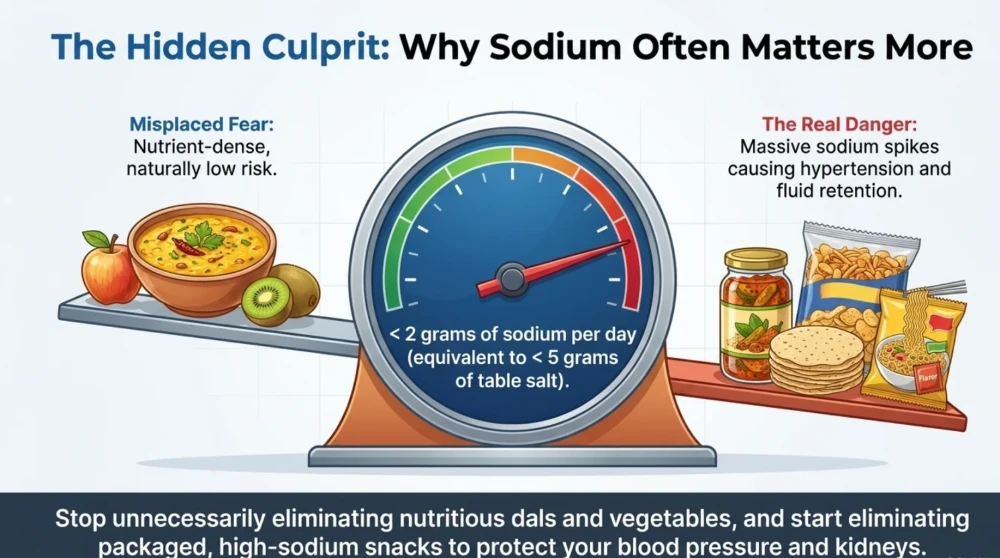
KDIGO 2024 suggests sodium intake below 2 grams per day, equivalent to less than approximately 5 grams of salt.
Common sources of excess sodium in Indian diets include packaged namkeen, pickles, papad, processed foods, instant noodles and restaurant meals.
However, patients should not automatically replace ordinary salt with potassium-based salt substitutes, particularly when potassium levels are elevated or potassium-raising medications are used.
Reducing sodium is often more useful than unnecessarily eliminating nutritious foods such as dal, vegetables or fruit.
Should Patients With Early CKD Restrict Water?
Not everyone with CKD requires fluid restriction.
Many patients with early CKD can drink fluids according to thirst, environmental conditions and clinical needs.
However, patients with fluid overload, heart failure, significant hyponatraemia or certain advanced kidney conditions may require individualised fluid guidance.
Drinking excessive amounts of water does not reverse chronic kidney disease.
Similarly, dehydration should be avoided because it can contribute to acute kidney injury.
How to Monitor Kidney Health While Adjusting Protein Intake
Dietary management should be accompanied by appropriate clinical monitoring.
The frequency of testing depends on CKD stage, albuminuria, disease stability, medications and progression risk.
Patients should not assume that a stable serum creatinine alone provides a complete assessment of kidney health.
Important Monitoring Parameters
| Parameter | Why It Matters | Clinical Consideration |
|---|---|---|
| Serum creatinine and eGFR | Assess kidney filtration and trends | Interpret changes over time |
| Urine ACR | Assess albuminuria | Useful for prognosis and treatment decisions |
| Serum potassium | Identify potassium abnormalities | Especially relevant with certain medicines |
| Serum bicarbonate | Assess metabolic acidosis | More relevant with declining kidney function |
| Serum phosphorus and calcium | Assess mineral abnormalities | Testing guided by CKD stage and clinical context |
| Weight, muscle and dietary intake | Identify inadequate nutrition or muscle loss | Particularly important during protein restriction |
| Blood pressure and HbA1c | Assess major CKD progression factors | Individualise treatment goals |
Can Blood Urea Tell Whether You Are Eating Too Much Protein?
Blood urea may increase with higher protein intake, dehydration, gastrointestinal bleeding, catabolic illness or reduced kidney function.
Therefore, an elevated urea result does not independently establish that dietary protein intake is excessive.
Similarly, normal urea does not prove that a high-protein diet is safe for a patient with CKD.
The result should be interpreted alongside eGFR, hydration, clinical condition and dietary history.
When Should a Patient With CKD See a Nephrologist?
Many patients with stable early CKD can receive coordinated care through their primary physician, with specialist input when appropriate.
However, certain findings warrant nephrology assessment.
Examples include unexplained kidney disease, rapidly declining eGFR, significant persistent albuminuria, haematuria with suspected kidney disease, resistant hypertension and difficult-to-manage electrolyte abnormalities.
KDIGO 2024 includes eGFR below 30 mL/min/1.73 m² among important referral indications.
It also recommends considering a validated kidney failure risk equation for people with CKD G3–G5.
A five-year kidney failure risk of approximately 3–5% may support referral decisions, alongside clinical findings and other referral criteria.
Earlier referral may be appropriate for patients with high-risk features even when eGFR remains above 30.
Common Myths About Protein Intake With Early Kidney Disease

Myth 1: Anyone With High Creatinine Must Stop Eating Protein
False. A creatinine result requires clinical interpretation, and complete protein avoidance is unsafe.
Myth 2: All Patients With CKD Need a Very Low-Protein Diet
False. KDIGO generally suggests approximately 0.8 g/kg/day for adults with CKD G3–G5 who are not receiving dialysis. More restrictive diets require careful selection and supervision.
Myth 3: Plant Protein Does Not Count Toward Daily Protein Intake
False. Protein from dal, beans, soy, cereals and other plant foods contributes to total daily intake.
Myth 4: Egg Whites Can Be Eaten Without Limit
False. Egg whites contain protein and must be included in the daily calculation.
Myth 5: Whey Protein Is Always Harmful in CKD
False. Its suitability depends on the patient's protein requirements, total dietary intake and clinical circumstances. Routine supplementation is not automatically necessary.
Myth 6: More Protein Always Means More Muscle
False. Muscle preservation also depends on resistance exercise, adequate calories and overall health.
Myth 7: All Patients With CKD Must Avoid Bananas, Tomatoes and Dal
False. Potassium and phosphorus restrictions should be individualised according to laboratory findings and clinical needs.
Myth 8: Drinking More Water Can Reverse Kidney Disease
False. Adequate hydration is important, but excessive water intake does not reverse CKD.
Myth 9: Protein Restriction Alone Can Stop Kidney Disease Progression
False. Kidney protection also involves management of blood pressure, diabetes, albuminuria, cardiovascular risk and other causes of kidney injury.
Myth 10: A High-Protein Gym Diet Is Safe Whenever eGFR Is Above 60
False. Persistent albuminuria or other markers of kidney damage may be present despite relatively preserved eGFR.
Frequently Asked Questions About Protein Intake With Early Kidney Disease
1. How much protein is safe in early kidney disease?
For many adults with CKD G3–G5 who are not on dialysis, approximately 0.8 g/kg/day is recommended. Earlier CKD stages require individualised assessment.
2. Is 100 grams of protein too much for CKD stage 3?
It may be excessive depending on calculation weight and nutritional needs. For a 70 kg patient, 100 grams equals approximately 1.43 g/kg/day, exceeding the KDIGO high-protein caution threshold.
3. Can I eat eggs with CKD stage 2?
Often yes. The portion should fit within the patient's overall protein and nutritional plan.
4. Is paneer safe in early kidney disease?
Paneer may be included in suitable portions, depending on protein needs, phosphorus status and other medical conditions.
5. Can I eat dal every day?
Many patients with early CKD can include dal regularly. Its protein content should be counted, and portions should be individualised.
6. Is whey protein safe if creatinine is high?
A high creatinine result should be evaluated before recommending supplements. Whey protein should be considered only when appropriate for the patient's total protein target.
7. Can high protein intake worsen kidney disease?
Sustained excessive protein intake may be undesirable in patients with CKD at risk of progression. The effect depends on the underlying disease and clinical context.
8. Should patients with CKD avoid chicken?
Not automatically. Chicken may be included in measured portions when consistent with the prescribed protein target.
9. Is plant protein better than animal protein for kidney health?
Plant-forward dietary patterns may offer advantages, but the evidence does not justify a universal ban on animal protein. Total intake and nutritional quality remain important.
10. Can I build muscle with CKD stage 3?
Many patients can improve strength through suitable resistance training and adequate nutrition. Protein targets should be individualised rather than copied from bodybuilding programmes.
11. Does protein in urine mean I should stop eating protein?
No. Albuminuria requires assessment of the underlying kidney condition and appropriate treatment, not complete protein avoidance.
12. Do I need to avoid potassium-rich fruits?
Not necessarily. Dietary potassium restriction should depend on serum potassium, medications and clinical circumstances.
13. Is a ketogenic diet safe in CKD?
It requires individual assessment. Some ketogenic diets contain high amounts of protein or saturated fat and may be unsuitable for patients with CKD.
14. Can protein restriction improve eGFR?
Dietary protein modification may affect kidney haemodynamics and some laboratory measurements, but an apparent change in eGFR does not necessarily indicate structural kidney recovery.
15. Do dialysis patients need the same protein restriction?
No. Patients receiving maintenance dialysis generally require higher protein intake because their nutritional needs differ from those of patients with non-dialysis CKD.
What I Explain to Patients About Protein and Kidney Health
When patients consult me about protein intake after receiving an abnormal kidney report, I first assess whether chronic kidney disease is actually present.
I review eGFR, urine albumin, previous laboratory results, diabetes, blood pressure and medication history.
I also ask about protein powders, creatine supplements, gym diets and recent dietary changes.
For patients with confirmed CKD, I explain that dietary protein should be sufficient to maintain muscle and nutritional health but should not be unnecessarily excessive.
I also emphasise that kidney protection involves more than protein restriction.
Blood pressure control, diabetes management, appropriate kidney-protective medicines, sodium reduction and avoidance of nephrotoxic exposures are important parts of comprehensive care.
Most importantly, patients should not begin severe dietary restrictions based only on internet advice or a single creatinine result.
Key Takeaways: Protein Intake With Early Kidney Disease
- CKD diagnosis requires persistent abnormalities in kidney function or markers of kidney damage.
- Both eGFR and urine albumin help assess kidney health.
- KDIGO 2024 suggests approximately 0.8 g/kg/day for adults with CKD G3–G5 who are not receiving dialysis.
- Adults with CKD at risk of progression should avoid sustained protein intake above 1.3 g/kg/day.
- Protein targets should be adjusted for nutritional status, frailty, body composition and clinical circumstances.
- Protein from dal, roti, rice, dairy, eggs and other foods all contributes to daily intake.
- Whey protein and high-protein gym diets should not be used automatically in CKD.
- Routine potassium and phosphorus restriction is unnecessary for many patients with early CKD.
- Resistance exercise and adequate energy intake support muscle preservation.
- Kidney protection requires comprehensive medical care rather than protein restriction alone.
Kidney Health and Medical Nutrition Consultation in Dwarka, Delhi
If your kidney report shows reduced eGFR, increased urine albumin or an abnormal creatinine result, a medical consultation can help determine whether chronic kidney disease is present and what dietary changes are appropriate.
Dr. Pankaj Kumar, General & Lifestyle Physician, provides assessment and lifestyle guidance for diabetes, hypertension, obesity and metabolic conditions associated with kidney health.
Patients requiring specialised renal management or complex protein restriction may need coordinated care with a nephrologist and renal dietitian.
Clinic: Dr. Pankaj Kumar Medical & Lifestyle Clinic, Dwarka, New Delhi.
Scientific References and Clinical Guidelines
- Kidney Disease: Improving Global Outcomes (KDIGO) CKD Work Group. KDIGO 2024 Clinical Practice Guideline for the Evaluation and Management of Chronic Kidney Disease. Kidney International. 2024;105(4S):S117–S314. Read the KDIGO 2024 Guideline.
- Kidney Disease: Improving Global Outcomes (KDIGO). Executive Summary of the KDIGO 2024 Clinical Practice Guideline for CKD. Kidney International. 2024;105:684–701. DOI: 10.1016/j.kint.2023.10.016.
- American Diabetes Association Professional Practice Committee. Chronic Kidney Disease and Risk Management: Standards of Care in Diabetes—2026. Diabetes Care. 2026. Read the ADA 2026 CKD Recommendations.
- Kidney Disease: Improving Global Outcomes. Evaluation and Management of Chronic Kidney Disease: Synopsis of the KDIGO 2024 Clinical Practice Guideline. Annals of Internal Medicine. 2024. DOI: 10.7326/ANNALS-24-01926.
- American Diabetes Association Professional Practice Committee. Chronic Kidney Disease and Risk Management: Standards of Care in Diabetes—2025. Diabetes Care. 2025. Read the ADA 2025 Recommendations.
About the Author
Dr. Pankaj Kumar
MBBS, DNB (Family Medicine)
General & Lifestyle Physician
Founder, Diet Plus Minus
Dwarka, New Delhi
Dr. Pankaj Kumar focuses on evidence-based management of diabetes, obesity, hypertension, fatty liver and metabolic disorders through medical assessment, clinical nutrition and practical lifestyle interventions.
Websites: www.dietplusminus.com | www.drpankajkumar.com
Medical Disclaimer
This article is intended for general medical education and does not replace personalised medical advice. Protein requirements vary according to kidney function, albuminuria, nutritional status, body composition, age, pregnancy, acute illness and dialysis status. Do not begin a restrictive renal diet, stop prescribed medication or use protein supplements without appropriate clinical guidance. Patients with rapidly worsening kidney function, severe electrolyte abnormalities or other concerning symptoms require timely medical assessment.
Written by Dr. Pankaj Kumar , General & Lifestyle Physician, Dwarka, New Delhi