










- 18th November 2026
Table of Contents
- PCOS Is More Than a Reproductive Hormonal Disorder
- What Is Fatty Liver Disease?
- MASLD, MASH and Liver Fibrosis: Understanding the Difference
- Why Are PCOS and Fatty Liver Connected?
- Insulin Resistance: The Common Metabolic Link
- How Insulin Resistance Can Affect Both the Ovaries and Liver
- PCOS and Fatty Liver: Shared Metabolic Features
- Does High Testosterone in PCOS Increase Fatty Liver Risk?
- Why Abdominal Fat Matters More Than Weight Alone
- Can Women With Lean PCOS Develop Fatty Liver?
- Why a Normal BMI Does Not Guarantee a Healthy Liver
- How Common Is Fatty Liver in Women With PCOS?
- Does Every Woman With PCOS Need a Liver Ultrasound?
- Why Liver Risk Assessment Should Be Individualised in PCOS
- PCOS, Fatty Liver and Future Diabetes Risk
- Why Cardiovascular Health Also Matters
- Clinical Example: PCOS With Normal Periods but Metabolic Risk
- Clinical Example: PCOS and Fatty Liver Without Obesity
- PCOS and Fatty Liver: Why Symptoms Alone Cannot Identify Liver Disease
- What Are the Symptoms of Fatty Liver in Women With PCOS?
- Can Fatty Liver Be Present With Normal ALT and AST?
- Does Elevated ALT Always Mean Fatty Liver?
- Which Blood Tests Are Useful in Women With PCOS and Suspected Fatty Liver?
- Should Fasting Insulin or HOMA-IR Be Tested Routinely in PCOS?
- Does Every Woman With PCOS Need Liver Function Tests?
- Ultrasound for Fatty Liver in PCOS: What Can It Detect?
- What Do Grade 1, Grade 2 and Grade 3 Fatty Liver Mean?
- Ultrasound vs FibroScan: What Is the Difference?
- Ultrasound vs FibroScan vs MRI: Practical Comparison
- When Should FibroScan Be Considered in Women With PCOS?
- What Is FIB-4 and Why Is It Used?
- FIB-4 Interpretation in Adults With Suspected MASLD
- Why FIB-4 Is Less Reliable in Young Women With PCOS
- Clinical Example: Why a Low FIB-4 May Be Misleading
- How to Interpret FibroScan Liver Stiffness Results
- FibroScan Liver Stiffness: General MASLD Risk Categories
- Does a High CAP Score Mean Severe Liver Disease?
- How Should a Woman Prepare for FibroScan?
- Does Every Woman With PCOS and Fatty Liver Need a Liver Biopsy?
- When Should a Woman With PCOS Be Referred to a Liver Specialist?
- Can Fatty Liver Be Reversed in Women With PCOS?
- What If PCOS Symptoms Improve but Fatty Liver Persists?
- PCOS and Fatty Liver: Can Both Conditions Improve With Lifestyle Changes?
- Weight Loss in PCOS and Fatty Liver: How Much Is Enough?
- Weight Loss Targets and Expected Liver Benefits
- What Is the Best Diet for PCOS and Fatty Liver?
- How to Build an Indian Diet for PCOS and Fatty Liver
- Example Indian Meal Plan for PCOS and Fatty Liver
- Should Women With PCOS and Fatty Liver Stop Eating Rice?
- Are Low-Carbohydrate Diets Better for PCOS and Fatty Liver?
- Does Intermittent Fasting Help PCOS and Fatty Liver?
- Exercise for PCOS and Fatty Liver: Why Both Walking and Strength Training Matter
- Walking vs Strength Training: Which Is Better?
- A Weekly Exercise Plan for Women With PCOS and Fatty Liver
- What About Women With Lean PCOS and Fatty Liver?
- Does Metformin Treat Both PCOS and Fatty Liver?
- Can GLP-1 Medicines Help Women With PCOS and Fatty Liver?
- Are There Medicines Specifically Approved for MASH?
- Does Inositol Improve Fatty Liver in PCOS?
- Do Liver Detox Supplements Help?
- How Should PCOS and Fatty Liver Be Monitored?
- Monitoring PCOS and Fatty Liver: What Matters?
- Common Myths About PCOS and Fatty Liver
- Myth 1: PCOS Only Affects Periods and Fertility
- Myth 2: Every Woman With PCOS Has Fatty Liver
- Myth 3: Lean Women With PCOS Cannot Develop Fatty Liver
- Myth 4: Normal ALT Means the Liver Is Healthy
- Myth 5: Grade 1 Fatty Liver Means There Is No Fibrosis
- Myth 6: All Women With PCOS Need FibroScan
- Myth 7: Metformin Automatically Reverses Fatty Liver
- Myth 8: Rice and Roti Must Be Completely Avoided
- Myth 9: A Liver Detox Drink Can Cure Fatty Liver
- Myth 10: Regular Periods Mean PCOS-Related Metabolic Risk Has Disappeared
- Frequently Asked Questions About PCOS and Fatty Liver
- 1. Can PCOS cause fatty liver?
- 2. Is fatty liver common in women with PCOS?
- 3. Can fatty liver occur in lean PCOS?
- 4. Does every woman with PCOS need liver tests?
- 5. Is FibroScan necessary for PCOS?
- 6. Can fatty liver improve without weight loss?
- 7. Does metformin cure fatty liver in PCOS?
- 8. Can women with PCOS and fatty liver eat fruit?
- 9. Is intermittent fasting necessary?
- 10. Does high testosterone cause fatty liver?
- 11. Can fatty liver affect fertility?
- 12. Should women with PCOS take liver supplements?
- 13. How often should women with PCOS check blood glucose?
- 14. Can PCOS and fatty liver be completely reversed?
- 15. When should a woman with PCOS see a liver specialist?
- What I Explain to Women With PCOS About Liver Health
- Key Takeaways: PCOS and Fatty Liver
- PCOS and Metabolic Health Consultation in Dwarka, Delhi
- Scientific References and Clinical Guidelines
- About the Author
- Medical Disclaimer
PCOS and Fatty Liver: Why Women With PCOS Should Think Beyond Periods
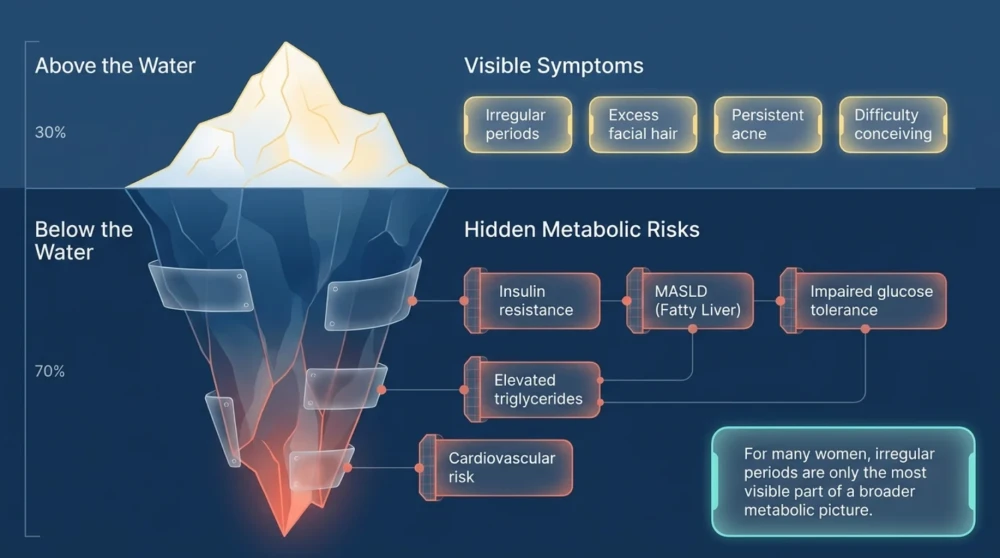
A 28-year-old woman visits her doctor because her periods have become irregular. She has noticed increased facial hair, persistent acne and gradual weight gain around her waist. An ultrasound suggests polycystic ovarian morphology, and further evaluation supports a diagnosis of polycystic ovary syndrome (PCOS).
Her immediate concerns are understandable. Will her periods become regular? Will she be able to conceive? Can her acne and unwanted facial hair improve?
During her assessment, however, her doctor also identifies elevated triglycerides, increased waist circumference and borderline blood glucose levels. An abdominal ultrasound performed for another reason reports fatty changes in the liver.
She is surprised. What does a hormonal condition affecting the ovaries have to do with the liver?
The answer lies in the metabolic disturbances that frequently accompany PCOS.
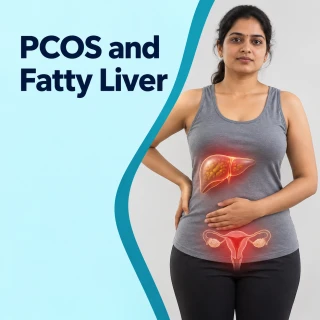
PCOS and fatty liver are closely connected through insulin resistance, abdominal adiposity and other metabolic abnormalities. Although not every woman with PCOS develops fatty liver disease, the association is important because both conditions can remain clinically silent for years.
For many women, irregular periods are only the most visible part of a broader metabolic picture.
Understanding this connection can help identify diabetes risk, cardiovascular risk and potentially significant liver disease before complications develop.
PCOS Is More Than a Reproductive Hormonal Disorder
Polycystic ovary syndrome is commonly associated with irregular menstrual cycles, excess androgen activity, acne, unwanted facial hair and difficulties with ovulation.
However, PCOS is not simply a disorder of the ovaries.
It is a heterogeneous endocrine and metabolic condition that can affect glucose regulation, lipid metabolism, body composition, sleep and psychological wellbeing.
Some women with PCOS have obesity and marked insulin resistance. Others have a normal body mass index and relatively few metabolic abnormalities.
This variation is important because the diagnosis of PCOS alone does not establish the severity of an individual's metabolic risk.
The 2023 International Evidence-Based Guideline for PCOS recognises increased risks of impaired glucose tolerance, type 2 diabetes and cardiovascular risk factors.
It recommends assessing glycaemic status at diagnosis and evaluating cardiovascular risk factors, including blood pressure and lipid levels.
Therefore, treating menstrual irregularity without assessing metabolic health may leave important problems unidentified.
What Is Fatty Liver Disease?
Fatty liver disease develops when excess fat accumulates within liver cells.
In recent years, medical terminology has changed to better describe the relationship between liver fat and metabolic dysfunction.
The term metabolic dysfunction-associated steatotic liver disease (MASLD) has replaced non-alcoholic fatty liver disease (NAFLD) in current international nomenclature.
MASLD refers to hepatic steatosis occurring in the presence of at least one defined cardiometabolic risk factor, within the appropriate diagnostic framework.
These factors include abnormalities involving body weight or waist circumference, glucose regulation, blood pressure and blood lipids.
Importantly, fatty liver is not always a harmless finding.
Some patients have relatively uncomplicated fat accumulation, while others develop liver inflammation and cellular injury.
More advanced disease may involve fibrosis, which refers to the development of scar tissue in the liver.
Over time, substantial fibrosis can progress to cirrhosis in a subset of patients.
However, most people with fatty liver do not develop cirrhosis, and individual risk depends on several factors.
MASLD, MASH and Liver Fibrosis: Understanding the Difference
| Term | Meaning | Clinical Importance |
|---|---|---|
| Hepatic steatosis | Excess fat accumulation in the liver | Requires evaluation of underlying causes and metabolic risk |
| MASLD | Steatotic liver disease associated with defined cardiometabolic risk factors | Associated with metabolic and cardiovascular risk |
| MASH | Metabolic dysfunction-associated steatohepatitis, involving liver injury and inflammation | May increase the risk of progressive fibrosis |
| Liver fibrosis | Scar tissue formation following chronic liver injury | Fibrosis stage helps predict liver-related outcomes |
| Cirrhosis | Advanced architectural distortion and scarring of the liver | May lead to portal hypertension and liver complications |
These terms are not interchangeable. A person with fatty liver does not automatically have liver inflammation, advanced fibrosis or cirrhosis.
Why Are PCOS and Fatty Liver Connected?
PCOS and fatty liver frequently share underlying metabolic abnormalities.
The most important common mechanisms include insulin resistance, increased visceral fat, altered lipid metabolism and, potentially, excess androgen activity.
These factors can interact in ways that influence both reproductive hormone function and liver metabolism.
However, the relationship is complex. Not every woman with PCOS has insulin resistance, and not every woman with insulin resistance develops fatty liver.
Similarly, the presence of PCOS does not automatically mean that a woman has MASLD.
The connection is best understood as an increased likelihood of overlapping metabolic risk rather than a direct cause-and-effect relationship in every patient.
Insulin Resistance: The Common Metabolic Link
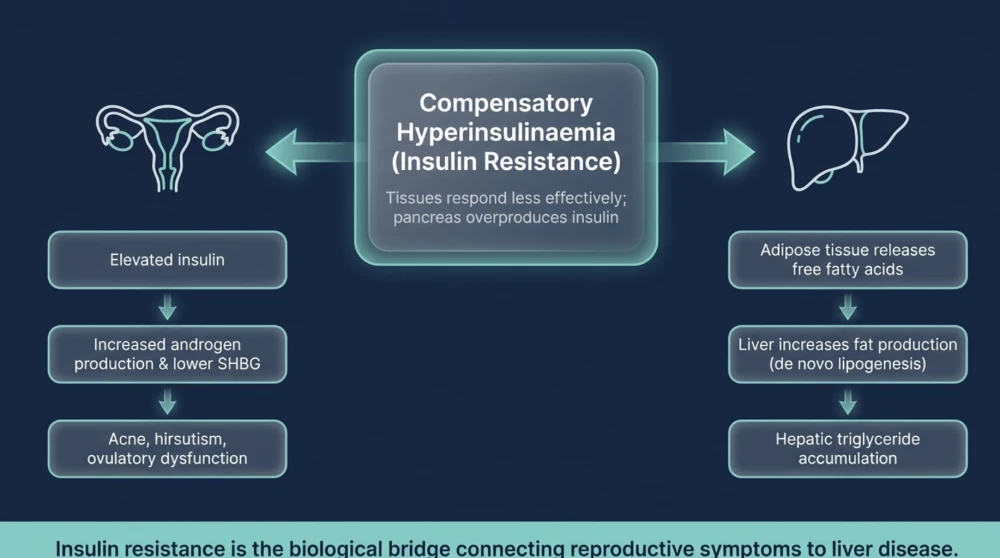
Insulin is a hormone produced by the pancreas that helps regulate blood glucose and influences the metabolism of carbohydrates, fats and proteins.
Insulin resistance occurs when certain tissues respond less effectively to insulin.
To maintain glucose regulation, the pancreas may initially compensate by producing more insulin.
This compensatory hyperinsulinaemia can occur before fasting glucose or HbA1c becomes abnormal.
Insulin resistance is common in PCOS, although its severity varies substantially among individuals.
In the liver, insulin resistance can contribute to abnormal lipid metabolism and increased hepatic fat accumulation.
At the same time, insulin resistance in adipose tissue may increase the release of free fatty acids into the circulation.
These fatty acids can reach the liver and contribute to hepatic triglyceride accumulation.
The liver may also increase the production of fatty acids from carbohydrate substrates through a process called de novo lipogenesis.
Together, these mechanisms help explain why women with PCOS and metabolic dysfunction may be more likely to develop fatty liver.
How Insulin Resistance Can Affect Both the Ovaries and Liver
Insulin resistance has effects beyond blood glucose.
In PCOS, elevated insulin concentrations may contribute to increased ovarian androgen production and reduced hepatic production of sex hormone-binding globulin (SHBG).
Lower SHBG can increase the proportion of circulating androgens that are biologically available.
This may contribute to symptoms such as acne, hirsutism and ovulatory dysfunction.
Meanwhile, insulin resistance and associated abnormalities in lipid metabolism may promote fat accumulation within the liver.
Therefore, insulin resistance provides a plausible biological link between reproductive manifestations of PCOS and metabolic liver disease.
However, PCOS has multiple underlying mechanisms, and insulin resistance is not the only factor involved.
PCOS and Fatty Liver: Shared Metabolic Features
| Metabolic Feature | Relevance in PCOS | Relevance in Fatty Liver |
|---|---|---|
| Insulin resistance | May contribute to hyperandrogenism and metabolic dysfunction | Can promote hepatic fat accumulation |
| Abdominal adiposity | Associated with increased metabolic risk | Associated with hepatic steatosis and fibrosis risk |
| Elevated triglycerides | May occur as part of insulin-resistant dyslipidaemia | Often accompanies metabolic liver disease |
| Prediabetes or diabetes | Risk is increased in women with PCOS | Type 2 diabetes increases the risk of progressive liver disease |
| Androgen excess | A major clinical feature in many PCOS phenotypes | May contribute to metabolic risk; independent effects remain under investigation |
Does High Testosterone in PCOS Increase Fatty Liver Risk?
Hyperandrogenism refers to increased androgen activity, which may be identified through clinical features or biochemical testing.
Women with PCOS may have elevated testosterone or other androgen abnormalities.
Several observational studies have investigated whether hyperandrogenic PCOS phenotypes are associated with a higher prevalence of fatty liver.
Some findings suggest that women with greater androgen excess may have higher liver fat or metabolic risk.
However, the relationship is difficult to separate from insulin resistance, abdominal adiposity and other metabolic factors.
Therefore, it would be premature to conclude that elevated testosterone directly causes fatty liver in every woman with PCOS.
The association is biologically plausible, but the degree of independent causality remains uncertain.
Why Abdominal Fat Matters More Than Weight Alone
Body mass index is commonly used to classify underweight, normal weight, overweight and obesity.
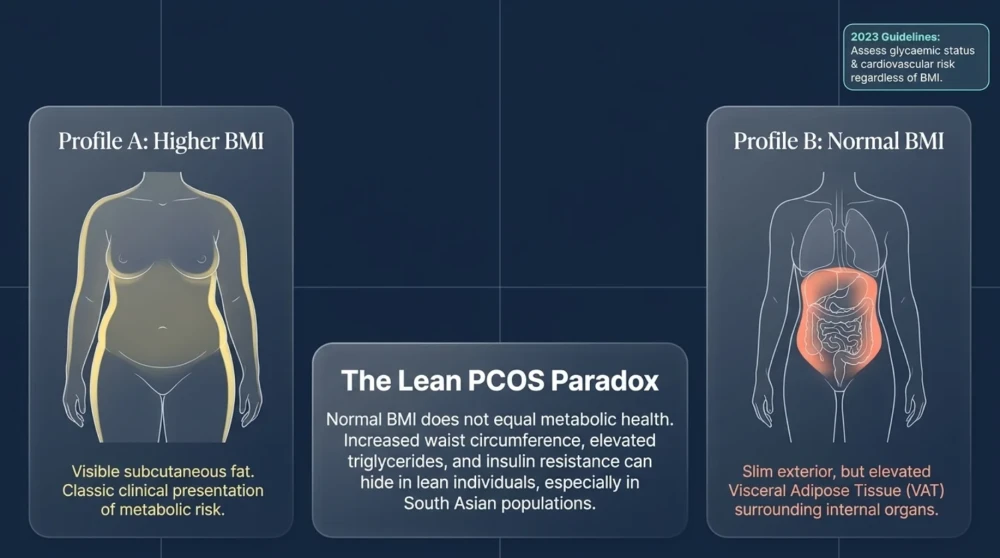
However, BMI does not directly measure visceral fat.
Visceral adipose tissue is fat located around internal abdominal organs.
Excess visceral fat is associated with insulin resistance, inflammation and increased cardiometabolic risk.
For women with PCOS, abdominal adiposity may be particularly relevant when assessing metabolic health.
A woman may have a BMI that appears only mildly elevated but still have increased waist circumference and significant insulin resistance.
Conversely, some women with higher BMI may have relatively fewer metabolic abnormalities.
Therefore, BMI should be interpreted alongside waist circumference, blood pressure, glucose regulation, lipid levels and other clinical findings.
Can Women With Lean PCOS Develop Fatty Liver?
Yes.
Women with PCOS who have a normal BMI can still develop insulin resistance, abnormal glucose tolerance or fatty liver disease.
This is especially relevant in South Asian populations, where metabolic abnormalities can occur at relatively lower BMI levels.
However, lean PCOS does not automatically indicate fatty liver, and normal body weight does not establish metabolic disease.
The important point is that body weight alone should not determine whether metabolic risk assessment is necessary.
The 2023 international PCOS guideline recommends assessment of glycaemic status and cardiovascular risk factors regardless of BMI.
Whether liver-specific investigations are required should then depend on the overall clinical picture rather than PCOS diagnosis alone.
Why a Normal BMI Does Not Guarantee a Healthy Liver
Consider a hypothetical 26-year-old woman with PCOS and a BMI of 22 kg/m².
She does not consider herself overweight, but she has increased waist circumference, elevated triglycerides and a family history of type 2 diabetes.
Despite her normal BMI, these findings indicate a need for metabolic assessment.
If hepatic steatosis is subsequently identified, the clinician should evaluate its cause and determine whether she meets criteria for MASLD.
However, the presence of PCOS alone would not justify diagnosing MASLD without evidence of hepatic steatosis and the appropriate diagnostic criteria.
This distinction helps avoid both underdiagnosis and overdiagnosis.
How Common Is Fatty Liver in Women With PCOS?
Research generally indicates that fatty liver is more common among women with PCOS than among women without PCOS.
However, reported prevalence varies widely across studies.
Differences in age, ethnicity, BMI, metabolic characteristics, diagnostic criteria and liver imaging methods all influence the estimates.
Studies conducted in obesity clinics or specialist centres may report higher prevalence than studies involving community populations.
Furthermore, much of the earlier research used the term NAFLD, whereas current practice increasingly uses MASLD.
These definitions overlap substantially but are not identical.
Therefore, it is not appropriate to tell every woman with PCOS that she has a fixed probability of developing fatty liver based on a single prevalence estimate.
Her individual risk depends on metabolic characteristics and other factors.
Does Every Woman With PCOS Need a Liver Ultrasound?
No.
Although PCOS is associated with increased metabolic risk, current international guidelines do not establish routine liver ultrasound screening for every woman with PCOS regardless of clinical findings.
The 2024 European MASLD guideline supports targeted case-finding for liver fibrosis in individuals with relevant cardiometabolic risk factors, abnormal liver enzymes or imaging evidence of hepatic steatosis.
Particular attention is recommended for people with type 2 diabetes, abdominal obesity with additional metabolic risk factors or persistently elevated liver enzymes.
Therefore, a woman with PCOS, normal metabolic parameters and no other concerning findings may not need immediate liver imaging solely because of the PCOS diagnosis.
In contrast, a woman with PCOS and type 2 diabetes, significant abdominal adiposity or unexplained liver enzyme elevation may warrant further evaluation.
Why Liver Risk Assessment Should Be Individualised in PCOS
PCOS is a lifelong condition, but its clinical manifestations can change over time.
A woman may initially seek treatment for irregular periods or acne and later develop gestational diabetes, prediabetes, hypertension or abnormal lipid levels.
These changes can influence the need for additional metabolic and liver assessment.
Therefore, a single normal metabolic evaluation at age 22 does not eliminate the need for reassessment later in life.
At the same time, repeated liver scans without a clinical indication can increase costs and anxiety without necessarily improving outcomes.
A risk-based approach is more appropriate than either ignoring liver health or screening everyone indiscriminately.
PCOS, Fatty Liver and Future Diabetes Risk
One of the most important reasons to assess metabolic health in PCOS is the increased risk of impaired glucose tolerance and type 2 diabetes.
The 2023 international PCOS guideline recommends glycaemic assessment at diagnosis and reassessment every one to three years according to individual risk factors.
It identifies the 75-gram oral glucose tolerance test as the most accurate method of assessing glycaemic status in women with PCOS.
Fasting glucose and HbA1c may be considered when an OGTT cannot be performed, although they have limitations in detecting glucose abnormalities in this population.
When PCOS and fatty liver occur together, the clinician should pay particular attention to overlapping cardiometabolic risks.
However, fatty liver should not be used as a substitute for formal diabetes screening.
Why Cardiovascular Health Also Matters
Fatty liver and PCOS are both associated with cardiometabolic risk factors.
These may include insulin resistance, abnormal blood lipids, increased blood pressure and abdominal adiposity.
For patients with MASLD, cardiovascular disease is an important cause of morbidity.
The 2024 European MASLD guideline recommends assessing cardiovascular risk and associated metabolic conditions.
Similarly, the 2023 PCOS guideline recommends lipid assessment at diagnosis and regular blood pressure monitoring.
Therefore, the evaluation of a woman with PCOS should extend beyond menstrual cycles and ovarian ultrasound findings.
It should include a broader assessment of metabolic and cardiovascular health.
Clinical Example: PCOS With Normal Periods but Metabolic Risk
Consider a hypothetical 32-year-old woman previously diagnosed with PCOS.
After treatment, her menstrual cycles become more regular and her acne improves.
She assumes that her PCOS is now completely controlled.
However, she continues to have increased waist circumference, elevated triglycerides and impaired glucose tolerance.
These findings indicate persistent metabolic risk despite improvement in reproductive symptoms.
Her clinician evaluates her cardiovascular and diabetes risk and considers whether additional liver assessment is appropriate.
This example illustrates an important principle: improvement in menstrual symptoms does not necessarily mean that metabolic abnormalities have resolved.
Clinical Example: PCOS and Fatty Liver Without Obesity
A hypothetical 29-year-old woman has PCOS, normal BMI and a family history of type 2 diabetes.
Her fasting glucose is normal, but an oral glucose tolerance test identifies impaired glucose tolerance.
An abdominal ultrasound performed for another indication also reports hepatic steatosis.
Her clinician evaluates cardiometabolic risk factors and other potential causes of liver fat accumulation.
Rather than recommending aggressive weight loss solely on the basis of the liver finding, the management plan focuses on metabolic health, physical activity, dietary quality and appropriate follow-up.
For a woman who is already at a healthy body weight, the objective may be to improve insulin sensitivity and body composition rather than reduce weight substantially.
PCOS and Fatty Liver: Why Symptoms Alone Cannot Identify Liver Disease
One of the biggest challenges in identifying fatty liver disease among women with polycystic ovary syndrome (PCOS) is that liver fat accumulation often causes no noticeable symptoms.
A woman may have irregular periods, acne, unwanted facial hair or weight gain associated with PCOS while remaining completely unaware of an underlying liver condition.
In some cases, fatty liver is discovered incidentally during an abdominal ultrasound performed for another reason.
In others, mildly elevated liver enzymes prompt further evaluation.
However, neither symptoms nor liver enzymes alone can reliably establish the presence or severity of fatty liver disease.
The important clinical question is not simply whether a woman with PCOS has liver fat, but whether she has metabolic risk factors and potentially significant liver fibrosis.
This distinction helps determine which patients need additional investigations and which can be managed through appropriate metabolic care and follow-up.
What Are the Symptoms of Fatty Liver in Women With PCOS?
Most people with early fatty liver disease do not experience specific symptoms.
Some report tiredness or vague discomfort in the right upper abdomen, but these complaints are common and can occur for many unrelated reasons.
Fatigue in women with PCOS may also be associated with poor sleep, obstructive sleep apnoea, iron deficiency, thyroid disorders, depression or other medical conditions.
Therefore, fatigue should not automatically be attributed to fatty liver.
Similarly, abdominal bloating, irregular periods and pelvic discomfort are not reliable indicators of hepatic steatosis.
Advanced liver disease may eventually produce symptoms such as jaundice, abdominal swelling, easy bruising or gastrointestinal bleeding.
However, these findings require prompt medical evaluation and should never be considered routine features of PCOS.
Can Fatty Liver Be Present With Normal ALT and AST?
Yes.
Alanine aminotransferase (ALT) and aspartate aminotransferase (AST) are commonly measured liver enzymes.
They may increase when liver cells are injured, but their levels do not directly measure the amount of fat or scar tissue within the liver.
A person can have hepatic steatosis despite normal ALT and AST results.
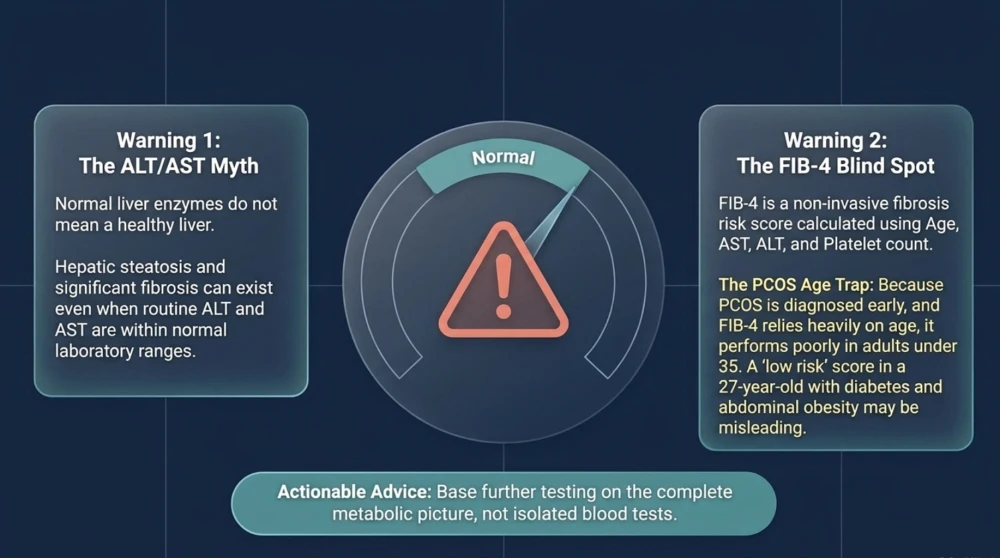
More importantly, clinically significant liver fibrosis can sometimes be present even when routine liver enzymes are within the laboratory reference range.
This is why the 2024 European MASLD guideline recommends appropriate non-invasive fibrosis assessment in patients with relevant metabolic risk factors rather than relying exclusively on liver enzyme elevation.
However, normal liver enzymes do not automatically justify additional testing in every woman with PCOS. The decision should be based on the complete clinical picture.
Does Elevated ALT Always Mean Fatty Liver?
No.
Elevated ALT may occur because of several conditions, including viral hepatitis, medication-related liver injury, alcohol-associated liver disease, autoimmune hepatitis and other metabolic or genetic disorders.
Intense exercise and muscle injury can also influence some enzyme measurements.
Therefore, abnormal liver enzymes should not automatically be attributed to PCOS or insulin resistance.
The clinician should review the pattern and persistence of abnormalities, medications, supplements, alcohol exposure and relevant medical history.
Further investigations may be required when another liver condition is suspected.
Which Blood Tests Are Useful in Women With PCOS and Suspected Fatty Liver?
Testing should address two related but different questions.
The first is whether the patient has metabolic abnormalities commonly associated with PCOS and fatty liver.
The second is whether there is evidence of liver injury or an increased risk of fibrosis.
The following investigations may be considered according to the patient's clinical findings.
| Investigation | What It Assesses | Clinical Relevance |
|---|---|---|
| ALT and AST | Markers associated with liver cell injury | Normal values do not exclude MASLD or fibrosis |
| Platelet count | Blood platelet concentration | Used with age and liver enzymes to calculate FIB-4 |
| 75-g OGTT | Glucose regulation after an oral glucose load | Preferred test for assessing glycaemic status in PCOS |
| HbA1c | Average glycaemia over approximately 2–3 months | Useful in metabolic assessment but less accurate than OGTT for some PCOS-related glucose abnormalities |
| Lipid profile | Cholesterol and triglycerides | Identifies dyslipidaemia and cardiovascular risk factors |
| HBsAg and anti-HCV | Evidence of hepatitis B or hepatitis C infection | Consider when evaluating unexplained liver abnormalities or according to screening indications |
| Other liver investigations | Alternative causes of liver disease | Selected according to history, examination and initial results |
This table does not mean every woman with PCOS needs every test. Investigations should be selected according to clinical indications.
Should Fasting Insulin or HOMA-IR Be Tested Routinely in PCOS?
Insulin resistance is an important mechanism in PCOS and fatty liver, but measuring it accurately in routine clinical practice is challenging.
Fasting insulin and HOMA-IR are sometimes used in research and selected clinical contexts.
However, insulin assays lack sufficient standardisation, and there are no universally accepted diagnostic thresholds for routine PCOS management.
The 2023 International Evidence-Based PCOS Guideline does not recommend routine clinical insulin testing to diagnose or monitor insulin resistance.
Instead, assessment should focus on established clinical outcomes and risk factors, including glucose tolerance, blood pressure, lipids and weight-related measures.
For women with PCOS, the 75-gram oral glucose tolerance test is recommended as the most accurate test for assessing glycaemic status, regardless of BMI.
Does Every Woman With PCOS Need Liver Function Tests?
There is no universally established recommendation to perform routine liver testing solely because a woman has PCOS.
However, liver tests may be appropriate when additional metabolic risk factors, relevant medication exposure, unexplained symptoms or other clinical indications are present.
Women with type 2 diabetes, significant abdominal adiposity or persistently abnormal liver enzymes deserve particular attention.
Testing should therefore be guided by risk rather than performed indiscriminately.
Ultrasound for Fatty Liver in PCOS: What Can It Detect?
Conventional abdominal ultrasound is commonly used in India to investigate suspected fatty liver.
It is widely available, relatively affordable and does not involve ionising radiation.
Ultrasound may identify increased liver echogenicity, sometimes described in reports as a bright liver or fatty infiltration.
However, conventional ultrasound has important limitations.
It may miss mild hepatic steatosis, particularly when liver fat content is relatively low.
Diagnostic performance may also be affected by body habitus and technical factors.
Most importantly, conventional ultrasound cannot reliably determine whether a patient has significant liver fibrosis.
Therefore, an ultrasound report describing fatty liver should not be treated as a complete assessment of liver disease severity.
What Do Grade 1, Grade 2 and Grade 3 Fatty Liver Mean?
Some ultrasound reports describe fatty liver using grades such as mild, moderate or severe.
These grades generally refer to the sonographic appearance of hepatic steatosis rather than the stage of liver fibrosis.
A report describing grade 1 fatty liver does not establish that fibrosis is absent.
Similarly, grade 3 fatty liver does not automatically mean cirrhosis.
This distinction is important because liver-related prognosis is strongly influenced by fibrosis severity.
Patients should therefore avoid interpreting ultrasound steatosis grades as equivalent to fibrosis stages F0–F4.
Ultrasound vs FibroScan: What Is the Difference?
FibroScan is a commonly used name for a device that performs vibration-controlled transient elastography (VCTE).
It measures liver stiffness, which can help estimate the likelihood of liver fibrosis.
Many FibroScan devices also provide a controlled attenuation parameter (CAP), which estimates hepatic steatosis.
Unlike conventional ultrasound, FibroScan can contribute to non-invasive fibrosis risk assessment.
However, it is not a perfect test.
Liver stiffness can be influenced by factors other than fibrosis, including inflammation, hepatic congestion and recent food intake.
Technical reliability, probe selection and patient characteristics also affect interpretation.
Ultrasound vs FibroScan vs MRI: Practical Comparison
| Test | Main Purpose | Important Limitation |
|---|---|---|
| Conventional ultrasound | Detects visible liver fat and evaluates liver anatomy | May miss mild steatosis; cannot reliably stage fibrosis |
| FibroScan CAP | Estimates hepatic steatosis | Affected by technical and patient-related factors |
| FibroScan liver stiffness | Estimates risk of liver fibrosis | Stiffness is not specific to fibrosis |
| MRI-PDFF | Quantifies liver fat more precisely | Higher cost and limited availability |
| MR elastography | Assesses liver stiffness and fibrosis risk | More expensive and less widely available |
When Should FibroScan Be Considered in Women With PCOS?
FibroScan is not required for every woman diagnosed with PCOS.
However, it may be useful when a patient has confirmed hepatic steatosis and clinically relevant risk factors for progressive liver disease.
Examples include type 2 diabetes, multiple cardiometabolic risk factors, persistent liver enzyme elevation or an indeterminate or elevated fibrosis risk score.
In younger women, the limitations of age-dependent fibrosis scores may influence the decision to proceed directly to elastography when clinical suspicion remains meaningful.
Importantly, the decision should consider the likelihood of significant fibrosis rather than the presence of PCOS alone.
What Is FIB-4 and Why Is It Used?
FIB-4 is a non-invasive fibrosis risk score calculated using age, AST, ALT and platelet count.
It is commonly used as an initial assessment tool in adults with suspected metabolic dysfunction-associated steatotic liver disease.
Its main purpose is to help identify individuals who are unlikely to have advanced fibrosis and those who may require additional evaluation.
FIB-4 does not directly measure scar tissue and cannot independently diagnose cirrhosis.
The 2024 European MASLD guideline recommends a stepwise approach using FIB-4 followed by liver elastography or another validated test when appropriate.
FIB-4 Interpretation in Adults With Suspected MASLD
| FIB-4 Result | General Interpretation | Possible Next Step |
|---|---|---|
| Below 1.3 | Lower probability of advanced fibrosis in populations where the score is validated | Risk-factor management and reassessment according to clinical risk |
| 1.3–2.67 | Indeterminate or increased risk | Consider elastography or an alternative guideline-supported pathway |
| Above 2.67 | Higher likelihood of advanced fibrosis | Specialist assessment and further fibrosis evaluation |
Important: These commonly used thresholds should not be applied indiscriminately to all ages. FIB-4 performs poorly in adults younger than 35 years. For adults older than 65 years, a different lower-risk threshold of approximately 2.0 is generally used.
Why FIB-4 Is Less Reliable in Young Women With PCOS
This is particularly relevant because PCOS is commonly diagnosed during adolescence and early adulthood.
Age is included directly in the FIB-4 calculation.
Consequently, younger patients often receive relatively low FIB-4 values even when other risk factors are present.
Research indicates that FIB-4 has reduced diagnostic accuracy in adults younger than 35 years.
Therefore, a low FIB-4 result in a 27-year-old woman should not automatically be interpreted as definitive evidence that clinically important liver fibrosis is absent.
If she has type 2 diabetes, substantial metabolic risk, persistent liver enzyme elevation or other concerning findings, additional assessment may still be appropriate.
However, a young woman with PCOS and no additional risk factors does not automatically require FibroScan merely because FIB-4 is less reliable at her age.
Clinical Example: Why a Low FIB-4 May Be Misleading
Consider a hypothetical 29-year-old woman with PCOS, type 2 diabetes and abdominal obesity.
Her blood tests show mildly elevated ALT, and ultrasound identifies hepatic steatosis.
Her FIB-4 result falls below 1.3.
Because she is younger than 35 years, this low score should be interpreted cautiously.
Her clinician considers the overall risk profile rather than using FIB-4 alone to exclude advanced fibrosis.
Depending on the clinical findings, liver elastography may be appropriate.
This illustrates why clinical judgement remains essential even when non-invasive scoring systems are available.
How to Interpret FibroScan Liver Stiffness Results
FibroScan liver stiffness is usually reported in kilopascals (kPa).
Higher values may indicate a greater likelihood of liver fibrosis.
However, stiffness thresholds depend on the underlying liver condition, technical quality and clinical setting.
For patients with MASLD, the 2024 European guideline provides commonly used thresholds to help stratify the likelihood of advanced fibrosis.
FibroScan Liver Stiffness: General MASLD Risk Categories
| Liver Stiffness | General Clinical Meaning | Interpretation |
|---|---|---|
| Below 8 kPa | Lower likelihood of advanced fibrosis | Reassuring when the examination is reliable and clinical risk is compatible |
| 8–12 kPa | Intermediate or increased fibrosis risk | May require further evaluation |
| Above 12 kPa | Greater likelihood of advanced fibrosis | Specialist assessment is generally appropriate |
These are broad risk-stratification thresholds, not definitive fibrosis-stage boundaries. FibroScan cannot assign an exact histological fibrosis stage in every patient, and elevated stiffness does not automatically mean cirrhosis.
Does a High CAP Score Mean Severe Liver Disease?
No.
CAP estimates liver fat rather than liver fibrosis.
A high CAP value may suggest substantial hepatic steatosis, but it does not independently establish liver inflammation, advanced fibrosis or cirrhosis.
Conversely, a patient with less liver fat may still have clinically important fibrosis.
Therefore, CAP and liver stiffness should be interpreted as different measurements.
Patients should not compare CAP and kPa values as though they measure the same process.
How Should a Woman Prepare for FibroScan?
FibroScan is generally a brief, non-invasive procedure performed while the patient lies on an examination couch.
Patients are commonly asked to fast for at least three hours before the examination because recent food intake can increase liver stiffness measurements.
Some centres may recommend a longer fasting period according to their protocol.
Water and medication instructions should be confirmed with the testing centre.
Patients with diabetes, pregnancy or other special circumstances should discuss preparation beforehand.
The operator should use appropriate equipment and assess examination reliability.
A single technically unreliable reading should not be used to make major treatment decisions.
Does Every Woman With PCOS and Fatty Liver Need a Liver Biopsy?
No.
Most patients with suspected MASLD can be assessed and managed without liver biopsy.
Non-invasive tests, including fibrosis scores and elastography, are usually sufficient for initial risk stratification.
However, biopsy may occasionally be considered when the diagnosis is uncertain, another liver disease is suspected or the results of non-invasive tests are discordant.
Liver biopsy remains important when definitive histological confirmation of steatohepatitis is required in selected circumstances.
Because biopsy is invasive, the decision should be made by an appropriate specialist.
When Should a Woman With PCOS Be Referred to a Liver Specialist?
Specialist referral may be appropriate when investigations suggest advanced fibrosis, liver stiffness is substantially elevated or liver enzymes remain persistently abnormal without a clear explanation.
Other indications include suspected cirrhosis, impaired liver synthetic function, unexplained thrombocytopenia or evidence of another chronic liver disease.
Referral should also be considered when non-invasive results are inconclusive but clinical suspicion remains significant.
For many women with PCOS and uncomplicated metabolic abnormalities, coordinated care through a primary physician, gynaecologist and relevant metabolic specialists may be sufficient.
The need for hepatology consultation should depend on liver-related risk rather than PCOS diagnosis alone.
Can Fatty Liver Be Reversed in Women With PCOS?
Hepatic steatosis can improve, particularly when the metabolic factors contributing to liver fat accumulation are addressed.
For women with excess body weight, sustained weight reduction may reduce liver fat and improve metabolic health.
However, improvement in liver fat does not automatically establish resolution of liver inflammation or fibrosis.
For women with normal BMI, management may focus on physical activity, dietary quality, body composition and associated metabolic conditions rather than substantial weight loss.
Patients with advanced fibrosis require more structured assessment and follow-up.
The most appropriate treatment strategy depends on the severity of liver disease and the individual's overall health.
What If PCOS Symptoms Improve but Fatty Liver Persists?
Improvement in menstrual regularity, acne or unwanted facial hair does not necessarily mean that insulin resistance or hepatic steatosis has resolved.
Similarly, improvement in liver fat does not guarantee that reproductive symptoms will disappear.
These conditions share metabolic pathways, but they are not identical diseases.
Therefore, management should monitor relevant reproductive, metabolic and liver-related outcomes separately.
For example, a woman may experience regular menstrual cycles after treatment while continuing to have elevated triglycerides or impaired glucose tolerance.
She may still benefit from metabolic risk management even when her reproductive symptoms are controlled.
PCOS and Fatty Liver: Can Both Conditions Improve With Lifestyle Changes?
When a woman is diagnosed with both polycystic ovary syndrome (PCOS) and fatty liver, she may receive different recommendations from different healthcare professionals.
One may focus on menstrual regularity and androgen-related symptoms. Another may recommend weight reduction for fatty liver. A third may advise reducing carbohydrates to improve insulin resistance.
Although these recommendations may address important concerns, the most effective long-term approach should consider the woman's reproductive, metabolic and liver health together.
PCOS and fatty liver share several metabolic pathways, particularly insulin resistance, abdominal adiposity and altered lipid metabolism. Lifestyle interventions can therefore benefit both conditions, although the response varies between individuals.
Importantly, treatment should not focus exclusively on weight loss.
Women with normal BMI may also have metabolic abnormalities, while those with obesity may need a structured approach that protects nutritional adequacy and muscle mass.
The goal is to improve metabolic health, reduce liver-related risk and manage PCOS symptoms without imposing unnecessarily restrictive diets.
Weight Loss in PCOS and Fatty Liver: How Much Is Enough?
For women with PCOS, excess body weight and metabolic dysfunction, sustained weight reduction can improve several cardiometabolic risk factors.
Weight reduction may also improve ovulatory function and menstrual regularity in some women, although responses are variable.
For patients with metabolic dysfunction-associated steatotic liver disease (MASLD), weight loss can reduce hepatic fat accumulation.
The 2024 EASL–EASD–EASO MASLD guideline describes different weight-loss ranges associated with improvements in liver-related outcomes.
In adults with overweight or obesity, sustained weight reduction of approximately 5% may reduce liver fat, while 7–10% may improve liver inflammation. Greater reductions, often above 10%, may be needed for meaningful fibrosis improvement in some patients.
These are approximate associations rather than guarantees.
Individual responses depend on baseline disease severity, metabolic characteristics, weight-loss maintenance and other factors.
Weight Loss Targets and Expected Liver Benefits
| Sustained Weight Reduction | Potential Liver Benefit | Clinical Interpretation |
|---|---|---|
| Approximately 5% | Reduction in liver fat | A useful initial target for selected patients with excess weight |
| Approximately 7–10% | Greater likelihood of improvement in liver inflammation | May provide additional metabolic benefits |
| More than 10% | May improve fibrosis in some patients | Not required or appropriate for every individual |
These targets apply primarily to patients with excess body weight. They should not be automatically prescribed to women who are already underweight or have a healthy BMI.
What Is the Best Diet for PCOS and Fatty Liver?
There is no single dietary pattern proven to be superior for every woman with PCOS.
The 2023 International Evidence-Based PCOS Guideline does not recommend one specific diet composition over all others for improving PCOS-related outcomes.
Similarly, MASLD management emphasises dietary quality, appropriate energy intake and sustainable lifestyle changes.
A Mediterranean-style dietary pattern has supportive evidence for cardiometabolic health and may help reduce liver fat.
However, women in India do not need to adopt an entirely Western diet to obtain these benefits.
The same principles can be applied through familiar foods such as dal, vegetables, whole grains, curd, fruit, nuts, seeds, fish and appropriately prepared lean protein sources.
The emphasis should be on reducing highly processed foods, excess added sugars and saturated fat while maintaining adequate protein, fibre and micronutrients.
How to Build an Indian Diet for PCOS and Fatty Liver
A practical Indian meal plan should be adapted to the woman's calorie requirements, glucose regulation, food preferences and medical conditions.
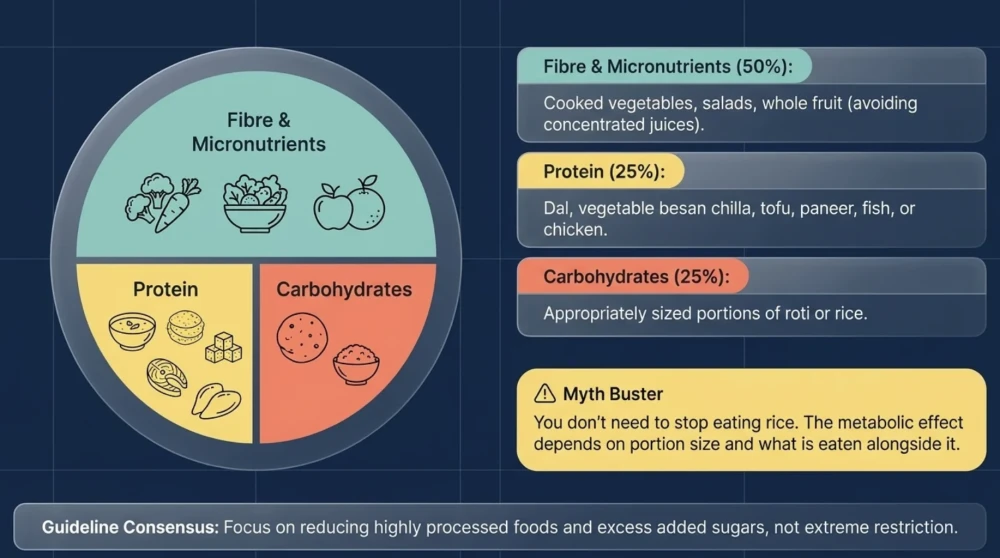
For example, breakfast may include vegetable besan chilla with curd rather than biscuits and sweetened tea.
Lunch may contain appropriately portioned roti or rice, dal, cooked vegetables and a protein-rich accompaniment.
Dinner may include vegetables, tofu, paneer, fish or chicken with a suitable portion of whole grains.
Fruit can generally be included as part of a balanced diet. It does not need to be eliminated simply because a woman has PCOS or fatty liver.
However, fruit juice and sugar-sweetened beverages provide concentrated sugars with less fibre than whole fruit.
Portion sizes should be adjusted according to nutritional needs rather than following a universal restrictive diet.
Example Indian Meal Plan for PCOS and Fatty Liver
The following example illustrates a balanced eating pattern for a woman with PCOS, excess body weight and uncomplicated MASLD.
It is not a calorie-calculated prescription and should be modified for individual energy requirements, pregnancy plans, food allergies, diabetes medications and other medical conditions.
| Meal | Example | Nutritional Purpose |
|---|---|---|
| Breakfast | Vegetable besan chilla with plain curd | Protein, fibre and improved meal balance |
| Mid-morning | Whole fruit such as guava, apple or orange | Fibre and micronutrients |
| Lunch | Two appropriately sized rotis, dal, vegetables and salad | Balanced carbohydrate, protein and fibre |
| Evening | Unsweetened beverage with a measured portion of roasted chana or nuts | Protein or healthy fats according to the food selected |
| Dinner | Tofu, paneer, fish or chicken with vegetables and a suitable portion of rice or roti | Protein and overall nutritional adequacy |
Cooking methods also matter. Frequent deep-frying, excess butter or ghee, and large portions of calorie-dense foods may make weight management more difficult.
However, patients should not be encouraged to eliminate all dietary fat. Unsaturated fats remain important components of a balanced diet.
Should Women With PCOS and Fatty Liver Stop Eating Rice?
No.
Rice is not inherently responsible for PCOS or fatty liver.
The metabolic effects of a meal depend on portion size, overall calorie intake, dietary quality and the foods consumed alongside it.
For example, a measured portion of rice served with dal, vegetables and a suitable protein source may fit within a balanced diet.
In contrast, repeatedly consuming very large portions of refined carbohydrates alongside sugary beverages and excess calories may contribute to metabolic difficulties.
The goal should be to improve meal composition and portion control rather than unnecessarily banning staple foods.
Are Low-Carbohydrate Diets Better for PCOS and Fatty Liver?
Some women experience improvements in body weight and glucose regulation when carbohydrate intake is reduced.
However, lower-carbohydrate diets vary considerably in their nutritional quality.
A diet containing vegetables, legumes, adequate protein and unsaturated fats differs substantially from one dominated by processed meat, butter and low-fibre foods.
The 2023 PCOS guideline does not identify one dietary composition as universally superior.
Similarly, long-term adherence and overall dietary quality are important in MASLD management.
Therefore, a moderate carbohydrate approach may be appropriate for some patients, but severe carbohydrate restriction is not mandatory.
Does Intermittent Fasting Help PCOS and Fatty Liver?
Intermittent fasting and time-restricted eating have been investigated for weight management and metabolic health.
Some studies suggest improvements in body weight and metabolic parameters, particularly when the eating pattern reduces overall energy intake.
However, evidence specifically establishing superior long-term outcomes in women with PCOS and MASLD remains limited.
Intermittent fasting should not be presented as a proven treatment for either condition.
Women who are pregnant, breastfeeding, have a history of eating disorders or use medications that increase hypoglycaemia risk may require special precautions or an alternative approach.
A regular, nutritionally adequate eating pattern may be more appropriate for many patients.
Exercise for PCOS and Fatty Liver: Why Both Walking and Strength Training Matter
Physical activity can improve several aspects of metabolic health, including insulin sensitivity, cardiovascular fitness and body composition.
Exercise may also reduce liver fat even when weight loss is modest.
For women with PCOS, regular physical activity can support metabolic health and psychological wellbeing.
The 2023 international PCOS guideline recommends following general population physical activity guidance and reducing sedentary behaviour.
For adults, a practical goal is at least 150–300 minutes of moderate-intensity aerobic activity weekly, or 75–150 minutes of vigorous activity, along with muscle-strengthening activities on at least two days per week.
Higher activity volumes may be useful for some weight-management goals, depending on tolerance and clinical circumstances.
Walking vs Strength Training: Which Is Better?
Both have important benefits.
Brisk walking, cycling and swimming can improve cardiorespiratory fitness and contribute to energy expenditure.
Resistance training helps preserve or increase muscle strength and may improve body composition.
Muscle tissue is an important site of glucose disposal, so maintaining muscle health is relevant to metabolic function.
However, no single exercise modality is universally superior for all PCOS and MASLD outcomes.
A combination of aerobic activity and resistance training is often practical.
A Weekly Exercise Plan for Women With PCOS and Fatty Liver
| Day | Suggested Activity | Main Benefit |
|---|---|---|
| Monday | 30-minute brisk walk and basic strength training | Aerobic fitness and muscle strength |
| Tuesday | 30–40-minute brisk walk or cycling | Cardiometabolic health |
| Wednesday | Strength training and a short walk | Muscle preservation |
| Thursday | 30–40-minute brisk walk | Aerobic fitness |
| Friday | Strength training and moderate walking | Muscle strength and metabolic health |
| Saturday | Longer walk, swimming or cycling | Physical activity and endurance |
| Sunday | Gentle walking, stretching or active recovery | Recovery and reduced sedentary time |
This schedule is illustrative. Beginners may need to start with shorter sessions and gradually increase activity. Exercise should be adapted for pregnancy, cardiovascular disease, musculoskeletal limitations and other medical conditions.
What About Women With Lean PCOS and Fatty Liver?
Women with normal BMI should not automatically be advised to lose substantial weight.
Instead, treatment should focus on the metabolic abnormalities actually present.
For example, a woman with normal BMI but increased waist circumference, impaired glucose tolerance and low physical activity may benefit from improving body composition and aerobic fitness.
Resistance training may help maintain muscle mass while dietary changes improve overall nutritional quality.
However, aggressive calorie restriction in a woman who is already lean may increase the risk of inadequate nutrition or menstrual disturbances.
The objective is metabolic improvement rather than pursuing the lowest possible body weight.
Does Metformin Treat Both PCOS and Fatty Liver?
Metformin is commonly used in selected women with PCOS, particularly when metabolic indications are present.
The 2023 international PCOS guideline supports considering metformin for anthropometric and metabolic outcomes, especially in adults with BMI of 25 kg/m² or higher, while recognising that it may also be considered in selected women with lower BMI.
Metformin can improve glucose regulation and insulin resistance in appropriate patients.
However, metformin should not be described as a proven treatment for reversing liver fibrosis or resolving metabolic dysfunction-associated steatohepatitis (MASH).
Its use should be based on established indications and individual clinical assessment.
Can GLP-1 Medicines Help Women With PCOS and Fatty Liver?
GLP-1 receptor agonists and related medicines are increasingly used for type 2 diabetes and obesity in appropriate patients.
In women with PCOS and excess body weight, these treatments may improve weight-related and metabolic outcomes.
However, they are not universally indicated for PCOS, and evidence for reproductive outcomes remains less established than for weight management.
Some incretin-based medicines have also demonstrated benefits for liver fat and MASH-related outcomes in selected populations.
Nevertheless, treatment eligibility depends on the specific medicine, approved indication, disease severity and local regulatory requirements.
These medicines should not be prescribed solely because a woman has PCOS and an ultrasound report describing fatty liver.
Women planning pregnancy require particular attention because anti-obesity medicines are not appropriate during pregnancy, and medication-specific discontinuation periods may be necessary before conception.
Are There Medicines Specifically Approved for MASH?
Drug treatment for MASH is evolving.
In some countries, selected medicines are approved for adults with non-cirrhotic MASH and moderate-to-advanced fibrosis.
However, approval status, eligibility and availability vary by country.
These treatments are not intended for every patient with uncomplicated hepatic steatosis.
They also do not replace management of diabetes, obesity, blood pressure and cardiovascular risk.
For women with PCOS and suspected advanced liver disease, specialist assessment is important before considering liver-directed pharmacological treatment.
Does Inositol Improve Fatty Liver in PCOS?
Inositol supplements are frequently marketed to women with PCOS.
Some studies have investigated potential effects on metabolic and reproductive outcomes.
However, the 2023 international PCOS guideline notes that evidence for clinically important benefits is limited and uncertain.
There is insufficient high-quality evidence to recommend inositol as an established treatment for MASLD or liver fibrosis.
Patients should be cautious about products claiming to reverse fatty liver or permanently correct PCOS-related hormonal abnormalities.
Do Liver Detox Supplements Help?
There is no reliable evidence that commercial liver detox products reverse PCOS-associated fatty liver.
Some herbal and dietary supplements may cause liver injury.
Patients should disclose all supplements, including weight-loss powders, herbal formulations and bodybuilding products, during medical consultations.
The liver does not require a special detox drink to perform its normal metabolic functions.
Evidence-based management focuses on underlying metabolic risk factors and appropriate assessment of liver disease severity.
How Should PCOS and Fatty Liver Be Monitored?
Follow-up should reflect the individual's reproductive symptoms, metabolic risk and liver findings.
For PCOS, the 2023 international guideline recommends reassessing glycaemic status every one to three years according to individual risk factors.
Blood pressure should be monitored regularly, and lipid assessment should be repeated according to the patient's risk profile.
For MASLD, follow-up depends on the likelihood of significant fibrosis, metabolic comorbidities and results of non-invasive tests.
Patients with advanced fibrosis require closer specialist monitoring than those with uncomplicated steatosis and low fibrosis risk.
Repeated ultrasound examinations alone should not be considered a complete monitoring strategy.
Monitoring PCOS and Fatty Liver: What Matters?
| Parameter | Why It Matters | Monitoring Approach |
|---|---|---|
| Weight and waist circumference | Assess body composition-related risk | Individualised clinical follow-up |
| Blood pressure | Identify hypertension | At least annually and according to clinical need |
| OGTT or other glycaemic assessment | Identify impaired glucose tolerance or diabetes | At diagnosis and every 1–3 years according to risk |
| Lipid profile | Assess dyslipidaemia | At diagnosis and subsequently according to risk |
| ALT and AST | Assess liver-related abnormalities | According to clinical indications |
| Fibrosis risk assessment | Identify potentially progressive liver disease | Risk-based testing; specialist input when appropriate |
| Menstrual and androgen-related symptoms | Assess PCOS-related clinical outcomes | Individualised reproductive health follow-up |
Common Myths About PCOS and Fatty Liver
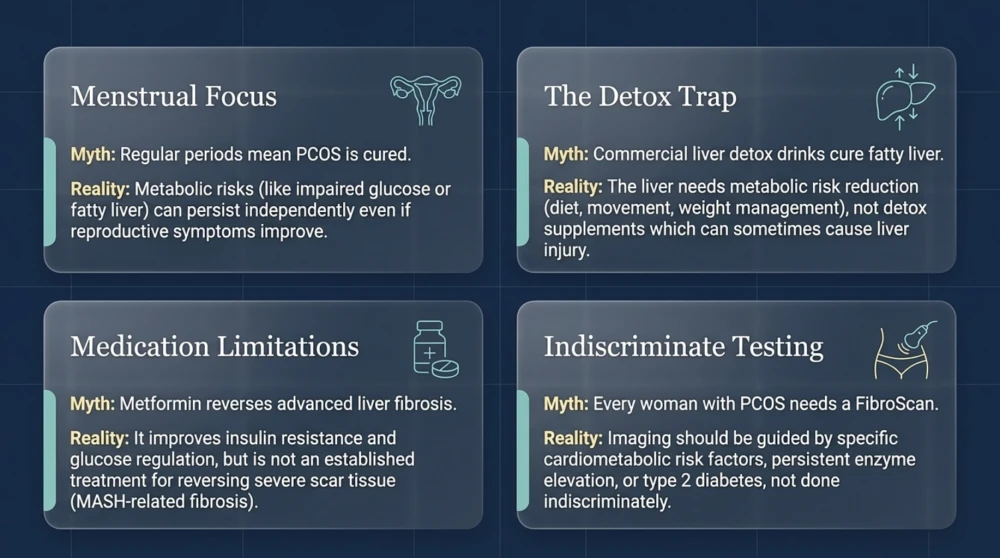
Myth 1: PCOS Only Affects Periods and Fertility
False. PCOS can also be associated with insulin resistance, abnormal glucose tolerance, dyslipidaemia and other metabolic risk factors.
Myth 2: Every Woman With PCOS Has Fatty Liver
False. PCOS increases the likelihood of metabolic abnormalities, but not every woman develops hepatic steatosis.
Myth 3: Lean Women With PCOS Cannot Develop Fatty Liver
False. Metabolic dysfunction and fatty liver can occur even when BMI is normal.
Myth 4: Normal ALT Means the Liver Is Healthy
False. Hepatic steatosis and significant fibrosis can occur despite normal liver enzymes.
Myth 5: Grade 1 Fatty Liver Means There Is No Fibrosis
False. Ultrasound steatosis grading does not reliably establish fibrosis stage.
Myth 6: All Women With PCOS Need FibroScan
False. Liver investigations should be guided by metabolic risk and clinical findings.
Myth 7: Metformin Automatically Reverses Fatty Liver
False. Metformin may improve metabolic parameters but is not an established treatment for reversing MASH-related fibrosis.
Myth 8: Rice and Roti Must Be Completely Avoided
False. Appropriate portions can be included in a balanced dietary pattern.
Myth 9: A Liver Detox Drink Can Cure Fatty Liver
False. Commercial detox products have no established role in reversing MASLD and some supplements can be harmful.
Myth 10: Regular Periods Mean PCOS-Related Metabolic Risk Has Disappeared
False. Reproductive symptoms and metabolic abnormalities may improve independently.
Frequently Asked Questions About PCOS and Fatty Liver
1. Can PCOS cause fatty liver?
PCOS is associated with an increased likelihood of fatty liver, particularly when insulin resistance, abdominal adiposity or other metabolic risk factors are present. However, a direct causal relationship is not established in every patient.
2. Is fatty liver common in women with PCOS?
Studies generally report higher fatty liver prevalence among women with PCOS than among women without PCOS, but estimates vary substantially according to population and diagnostic methods.
3. Can fatty liver occur in lean PCOS?
Yes. Normal BMI does not completely exclude insulin resistance or hepatic steatosis.
4. Does every woman with PCOS need liver tests?
Not automatically. Liver testing should be guided by metabolic risk factors, symptoms, medication history and other clinical indications.
5. Is FibroScan necessary for PCOS?
No. FibroScan may be appropriate when there is suspected MASLD with relevant risk factors or concern about liver fibrosis.
6. Can fatty liver improve without weight loss?
Yes. Exercise and dietary improvements can reduce liver fat even without major weight loss. However, the degree of improvement varies.
7. Does metformin cure fatty liver in PCOS?
No. Metformin may improve insulin resistance and glucose regulation but is not an established treatment for reversing liver fibrosis.
8. Can women with PCOS and fatty liver eat fruit?
Yes. Whole fruit can generally be included in appropriate portions as part of a balanced diet.
9. Is intermittent fasting necessary?
No. It is one possible eating pattern, but it has not been established as a superior long-term treatment for all women with PCOS and MASLD.
10. Does high testosterone cause fatty liver?
Androgen excess may contribute to metabolic risk, but its independent causal role in liver fat accumulation remains uncertain.
11. Can fatty liver affect fertility?
Fatty liver and PCOS may coexist with metabolic abnormalities associated with reproductive health, but hepatic steatosis alone should not be assumed to directly cause infertility.
12. Should women with PCOS take liver supplements?
Routine liver detox supplements are not recommended. Some products may cause liver injury.
13. How often should women with PCOS check blood glucose?
The 2023 PCOS guideline recommends assessment at diagnosis and reassessment every one to three years according to individual risk factors.
14. Can PCOS and fatty liver be completely reversed?
PCOS is generally managed as a long-term condition rather than considered permanently cured. Liver fat can improve substantially, but fibrosis outcomes depend on disease stage and treatment response.
15. When should a woman with PCOS see a liver specialist?
Referral may be appropriate when advanced fibrosis is suspected, liver stiffness is elevated, liver enzymes remain unexplained or another chronic liver disease is suspected.
What I Explain to Women With PCOS About Liver Health
When a woman consults me for PCOS, I explain that menstrual irregularity, acne and unwanted facial hair are important concerns, but they do not provide a complete picture of her metabolic health.
I assess relevant factors such as body weight, waist circumference, blood pressure, glucose regulation and lipid levels.
If she has additional metabolic risk factors or liver-related abnormalities, I consider whether further liver evaluation is appropriate.
I also explain that normal BMI does not automatically exclude metabolic risk.
For women with excess body weight, sustainable weight reduction may improve both metabolic and reproductive outcomes.
For women with lean PCOS, the focus may instead be on improving physical activity, dietary quality and body composition without unnecessary calorie restriction.
Most importantly, I discourage extreme diets, unproven supplements and the assumption that regular periods mean all metabolic risks have resolved.
Key Takeaways: PCOS and Fatty Liver
- PCOS is associated with reproductive and metabolic abnormalities.
- Insulin resistance, abdominal adiposity and dyslipidaemia help explain the association between PCOS and fatty liver.
- Not every woman with PCOS has MASLD.
- Women with normal BMI may still have metabolic risk factors.
- Normal ALT and AST do not exclude fatty liver or significant fibrosis.
- FibroScan is not routinely necessary for every woman with PCOS.
- For patients with excess weight, sustained weight reduction can improve liver fat and metabolic health.
- No single diet composition is proven superior for every woman with PCOS.
- A combination of aerobic exercise and resistance training can support metabolic health.
- Metformin and other medicines should be prescribed according to individual indications.
- Metabolic monitoring remains important even when menstrual symptoms improve.
PCOS and Metabolic Health Consultation in Dwarka, Delhi
Women with PCOS may benefit from a comprehensive assessment that includes reproductive symptoms, metabolic risk factors and relevant lifestyle concerns.
Dr. Pankaj Kumar, General & Lifestyle Physician, provides medical and lifestyle consultations for PCOS, obesity, insulin resistance, prediabetes, diabetes and fatty liver-related metabolic conditions.
Patients with suspected advanced liver fibrosis or complex reproductive concerns may require coordinated specialist care.
Clinic: Dr. Pankaj Kumar Medical & Lifestyle Clinic, Dwarka, New Delhi.
Scientific References and Clinical Guidelines
- Teede HJ, et al. Recommendations From the 2023 International Evidence-Based Guideline for the Assessment and Management of Polycystic Ovary Syndrome. Fertility and Sterility. 2023;120(4):767–793. DOI: 10.1016/j.fertnstert.2023.07.025.
- European Association for the Study of the Liver (EASL), European Association for the Study of Diabetes (EASD), European Association for the Study of Obesity (EASO). EASL–EASD–EASO Clinical Practice Guidelines on the Management of Metabolic Dysfunction-Associated Steatotic Liver Disease (MASLD). Journal of Hepatology. 2024. DOI: 10.1016/j.jhep.2024.04.031.
- Rinella ME, et al. A Multisociety Delphi Consensus Statement on New Fatty Liver Disease Nomenclature. Hepatology. 2023;78(6):1966–1986. DOI: 10.1097/HEP.0000000000000520.
- Monash University. International Evidence-Based Guideline for the Assessment and Management of Polycystic Ovary Syndrome 2023. Official PCOS Guideline Resource.
- Kidney Disease and Metabolic Health Clinical Resources. For patients with diabetes, kidney disease or additional metabolic conditions, treatment should be individualised according to relevant contemporary clinical guidelines.
About the Author
Dr. Pankaj Kumar
MBBS, DNB (Family Medicine)
General & Lifestyle Physician
Founder, Diet Plus Minus
Dwarka, New Delhi
Dr. Pankaj Kumar focuses on evidence-based management of PCOS, obesity, diabetes, fatty liver and other metabolic disorders through medical assessment, clinical nutrition and practical lifestyle interventions.
Websites: www.dietplusminus.com | www.drpankajkumar.com
Medical Disclaimer
This article is intended for general medical education and does not replace personalised medical advice. PCOS and fatty liver require individualised assessment according to symptoms, metabolic risk factors, liver findings, pregnancy plans and other medical conditions. Do not start or stop prescribed medication, undertake severe dietary restriction or use herbal supplements without appropriate medical guidance. Patients with suspected advanced liver disease or concerning symptoms should seek timely medical evaluation.
Written by Dr. Pankaj Kumar , General & Lifestyle Physician, Dwarka, New Delhi