












- 21st August 2026
Table of Contents
- What Does HbA1c Actually Measure?
- Can Anaemia Cause a Falsely High HbA1c?
- Why Iron Deficiency May Increase HbA1c
- Can Anaemia Cause a Falsely Low HbA1c?
- Recent Blood Loss Can Change HbA1c
- Blood Transfusion Can Make HbA1c Difficult to Interpret
- Why HbA1c and Blood Glucose Sometimes Do Not Match
- Does a Normal HbA1c Exclude Diabetes When Anaemia Is Present?
- The Key Principle: HbA1c Is an Indirect Marker
- Do All Types of Anaemia Affect HbA1c in the Same Way?
- Iron-Deficiency Anaemia and HbA1c
- Can Vitamin B12 Deficiency Affect HbA1c?
- Can Folate Deficiency Affect Anaemia and HbA1c?
- Thalassaemia Can Complicate HbA1c Interpretation
- Haemoglobin Variants Can Affect HbA1c Results
- Chronic Kidney Disease Can Make HbA1c More Difficult to Interpret
- Dialysis Further Complicates Anaemia and HbA1c
- Pregnancy Can Change the Relationship Between HbA1c and Glucose
- What Should You Use When HbA1c Is Unreliable?
- Continuous Glucose Monitoring Can Reveal What HbA1c Is Missing
- What Is Glucose Management Indicator?
- Can Fructosamine Be Used Instead of HbA1c?
- What About Glycated Albumin?
- Example 1: HbA1c Says Prediabetes but Glucose Looks Normal
- Example 2: HbA1c Looks Excellent but Glucose Is Frequently High
- Example 3: HbA1c Falls After Starting Erythropoietin
- Example 4: HbA1c Changes After Iron Treatment
- The Practical Lesson About Anaemia and HbA1c
- What Should You Do When HbA1c and Blood Glucose Do Not Match?
- Should HbA1c Be Used to Diagnose Diabetes When Significant Anaemia Is Present?
- Does Iron Treatment Lower HbA1c?
- Do Not Take Iron Simply to Lower HbA1c
- Finding the Cause of Anaemia Is More Important Than Correcting the HbA1c
- When Should HbA1c Be Repeated After Treating Anaemia?
- Can You Have Anaemia and Diabetes at the Same Time?
- What if HbA1c Is High but Fasting Glucose Is Normal?
- What if HbA1c Is Normal but Home Glucose Is High?
- Can Anaemia Explain an Unexpected Change in HbA1c?
- Common Myths About Anaemia and HbA1c
- Myth 1: Anaemia Always Raises HbA1c
- Myth 2: Low Haemoglobin Means HbA1c Cannot Be Used at All
- Myth 3: A High HbA1c With Iron Deficiency Means You Do Not Have Prediabetes
- Myth 4: A Normal HbA1c Means You Cannot Have Diabetes
- Myth 5: You Can Correct HbA1c by Subtracting a Fixed Number
- Myth 6: Iron Tablets Are a Treatment for High HbA1c
- Myth 7: Fasting Glucose Is Enough if HbA1c Is Unreliable
- When Should You Discuss an HbA1c Result With Your Doctor?
- Key Takeaways About Anaemia and HbA1c
- References
Can Anaemia Affect HbA1c? Why Your Diabetes Report May Be Misleading
HbA1c is one of the most widely used tests for diagnosing and monitoring diabetes. Unlike a fasting blood glucose test, it does not require fasting and is designed to reflect average glucose exposure over the previous two to three months.
That makes HbA1c extremely useful—but it is not infallible.
One important reason an HbA1c result may not match a person's actual blood glucose is anaemia. The relationship between anaemia and HbA1c is particularly important because different types of anaemia can affect the result in different directions.
Iron-deficiency anaemia may make HbA1c appear higher than expected. On the other hand, conditions that shorten the lifespan of red blood cells can produce an HbA1c that is lower than the person's true glucose exposure would suggest.
This means a patient could theoretically be labelled as having prediabetes based largely on HbA1c when glucose measurements tell a different story—or someone with genuinely elevated glucose could receive false reassurance from an unexpectedly low HbA1c.
The lesson is not that HbA1c is an unreliable test. It is that every laboratory result needs clinical context, particularly when anaemia and HbA1c occur together.
What Does HbA1c Actually Measure?
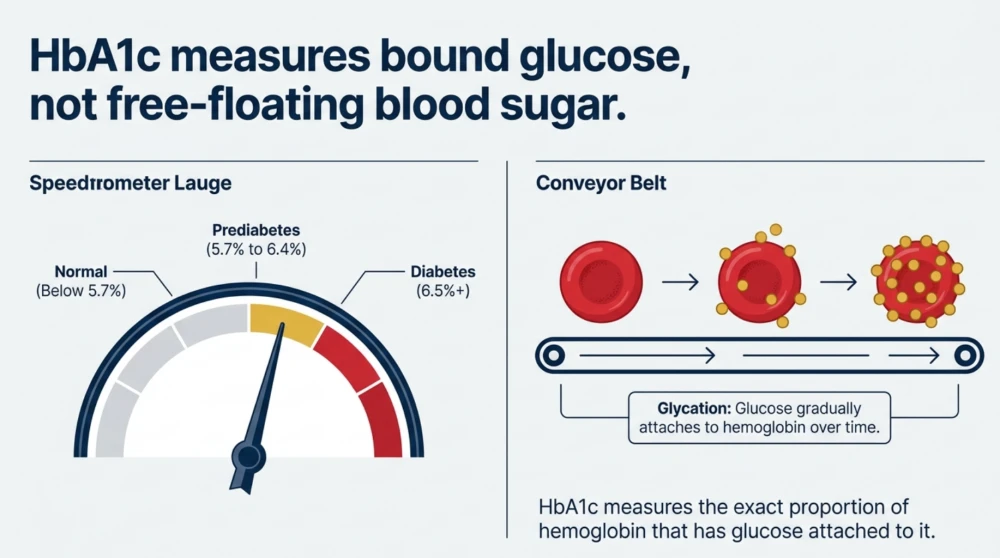
Glucose circulating in the bloodstream gradually attaches to haemoglobin, the oxygen-carrying protein inside red blood cells. This process is known as glycation.
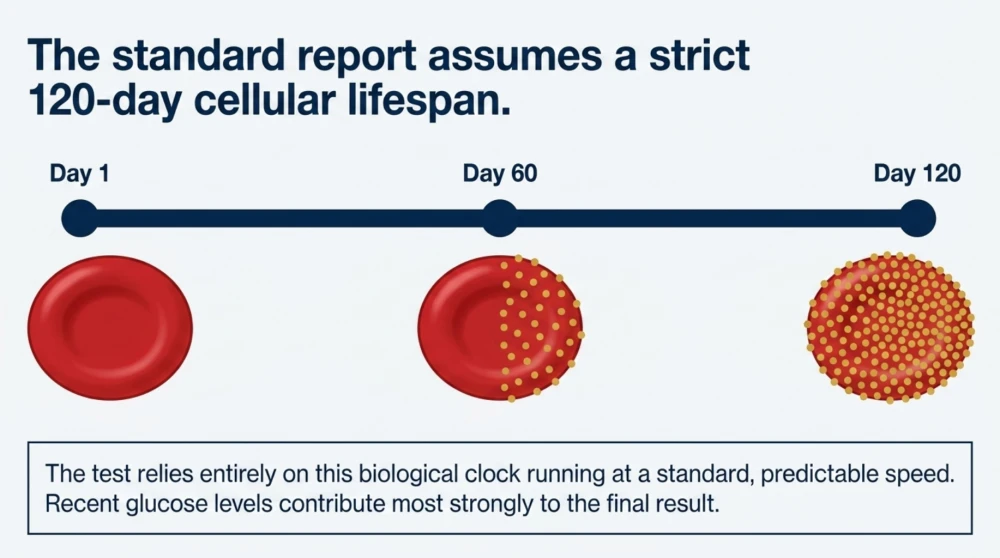
HbA1c measures the proportion of haemoglobin that has glucose attached to it. Because red blood cells normally survive for roughly 120 days, HbA1c provides an integrated estimate of glucose exposure over the preceding several weeks to months, with more recent glucose levels contributing more strongly to the result.
For diagnosis, HbA1c is commonly interpreted as:
- Below 5.7%: generally below the prediabetes range.
- 5.7% to 6.4%: prediabetes range.
- 6.5% or above: diabetes range when diagnostic criteria are appropriately confirmed.
These thresholds are useful only when the HbA1c measurement accurately reflects the patient's glycaemia.
Why Anaemia and HbA1c Are Connected to Red Blood Cell Lifespan
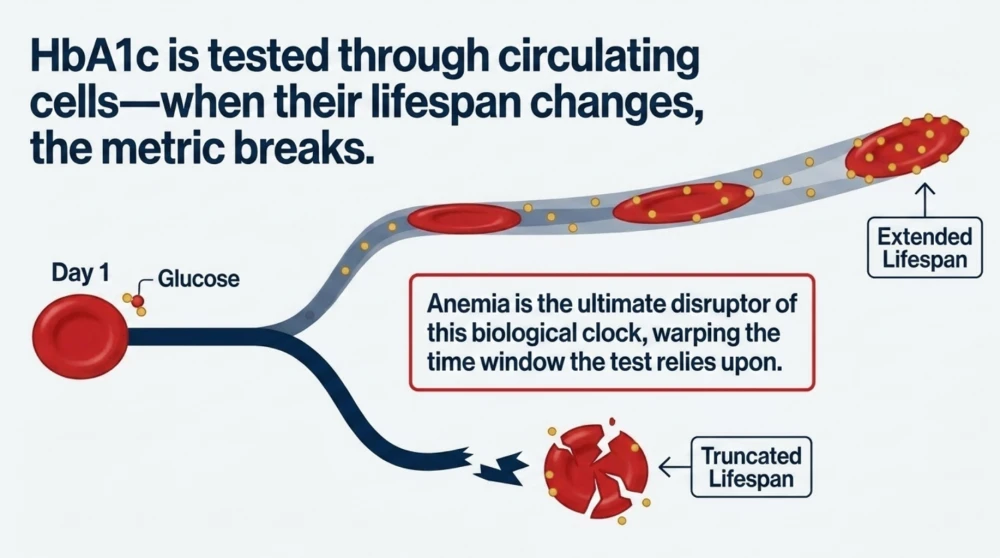
HbA1c is not simply a glucose test. It is a glucose measurement performed through haemoglobin inside circulating red blood cells.
Anything that substantially changes how long those red blood cells remain in circulation can therefore change how much time haemoglobin has to become glycated.
If red blood cells remain in circulation longer than usual, they have more time to accumulate glycated haemoglobin. HbA1c may consequently appear higher.
If red blood cells are destroyed or replaced more rapidly, the circulating population becomes younger. Younger cells have had less time to accumulate glucose, potentially making HbA1c appear lower.
This biological principle explains much of the complicated relationship between anaemia and HbA1c.
Can Anaemia Cause a Falsely High HbA1c?
Yes, some forms of anaemia can.
The most clinically relevant example is iron-deficiency anaemia. Current ADA guidance recognises iron-deficiency anaemia as a condition that may increase HbA1c independently of true glucose levels.
The NGSP, which standardises HbA1c testing internationally, also reports that iron-deficiency anaemia is associated with higher HbA1c and that HbA1c often decreases after successful iron replacement.
This does not mean every mildly low haemoglobin level causes a major HbA1c error. The magnitude of the effect varies according to the severity of iron deficiency, the individual patient, laboratory methodology, glucose levels, and other factors.
Iron-Deficiency Anaemia and HbA1c Can Create Diagnostic Confusion
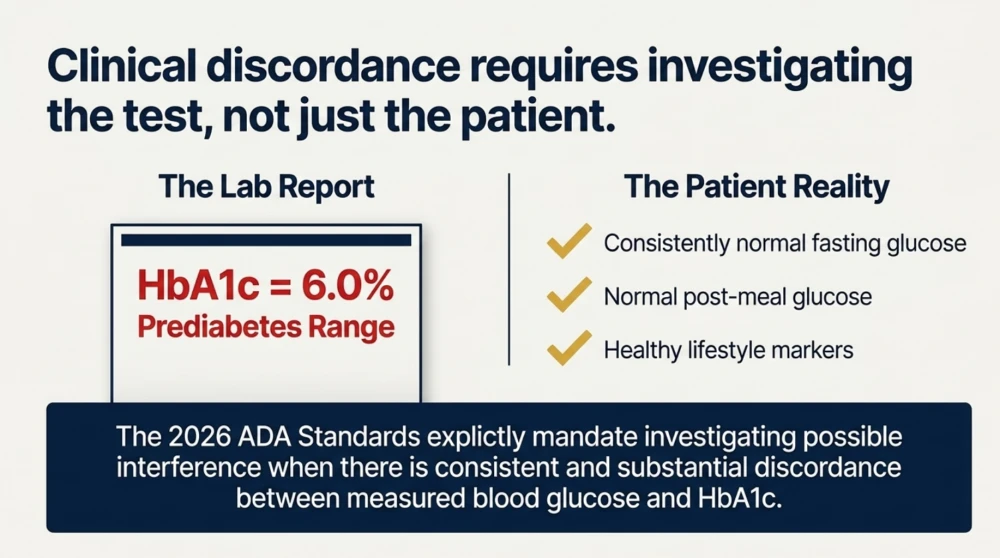
Consider a patient whose HbA1c is 6.0%, placing them in the laboratory range for prediabetes. Their fasting glucose, repeated home readings, and other glucose measurements are consistently normal.
If the same patient has significant iron-deficiency anaemia, interpreting the HbA1c in isolation may be misleading.
The correct response is not to automatically declare that the patient does not have prediabetes. Nor should the HbA1c simply be accepted without question.
Instead, the discrepancy between glucose values and HbA1c should prompt assessment for factors that may be affecting the test.
The 2026 ADA Standards specifically recommend investigating possible interference when there is consistent and substantial discordance between measured blood glucose and HbA1c.
Why Iron Deficiency May Increase HbA1c
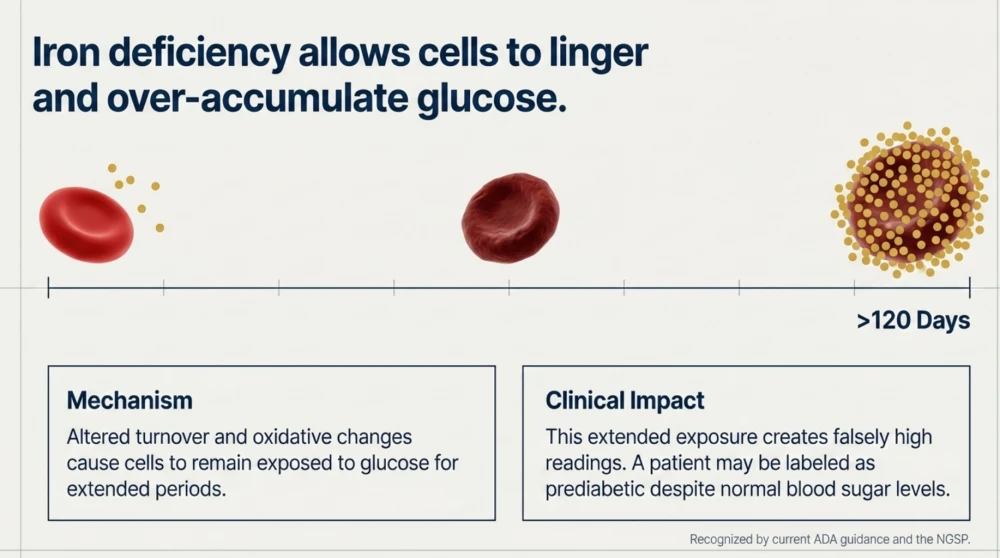
The precise mechanism is not completely explained by one pathway. Changes in red-cell turnover and the age distribution of circulating erythrocytes appear to contribute.
In iron deficiency, circulating red cells may on average remain exposed to glucose differently than under normal haematological conditions. Oxidative changes associated with iron deficiency have also been proposed to enhance haemoglobin glycation.
Whatever the exact mechanism in an individual patient, the practical point is more important: significant iron deficiency can alter the relationship between measured HbA1c and actual average glucose.
Anaemia and HbA1c Should Be Reassessed After Treating Iron Deficiency
If significant iron deficiency is identified and treated, glucose status can be reassessed after the haematological abnormality has improved.
This may include repeat HbA1c when appropriate, but fasting plasma glucose, post-meal glucose, oral glucose tolerance testing, or glucose monitoring may provide more reliable information while the anaemia is being corrected.
HbA1c should not be repeatedly interpreted as though the red-cell abnormality does not exist.
Can Anaemia Cause a Falsely Low HbA1c?
Yes—and this is where the relationship becomes more interesting.
Not all anaemia raises HbA1c.
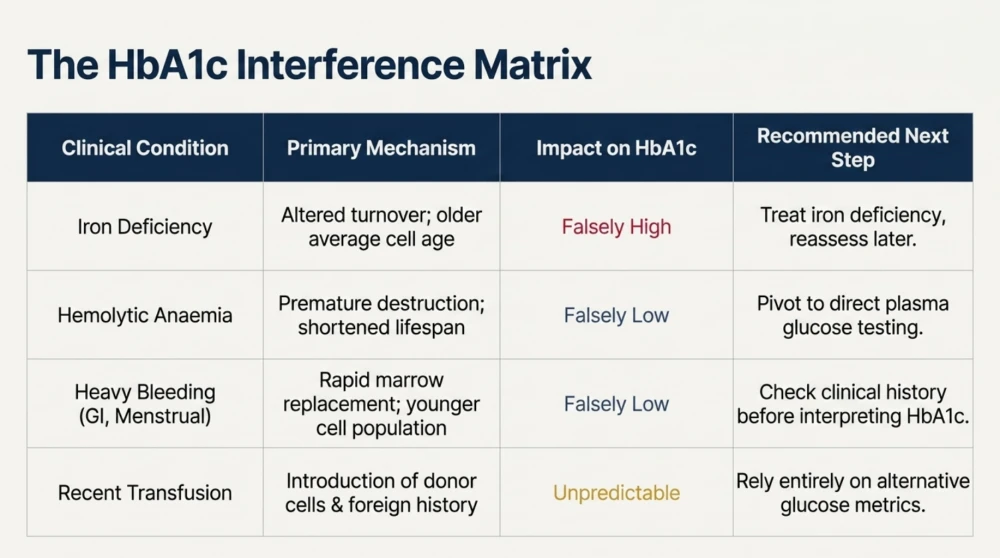
If anaemia results from shortened red blood cell survival, HbA1c can become falsely low. Examples include haemolytic anaemia, in which red blood cells are destroyed prematurely, and situations involving significant recent blood loss followed by rapid production of new red cells.
Because the circulating red cells are younger on average, they have had less time to accumulate glycated haemoglobin.
The result may underestimate the person's actual glucose exposure.
Haemolytic Anaemia and HbA1c May Hide Hyperglycaemia
Imagine someone with repeatedly elevated fasting and post-meal glucose readings whose HbA1c appears surprisingly normal.
That discrepancy should not automatically lead to the conclusion that the glucose meter is wrong.
If the person has haemolysis, recent significant blood loss, or another condition causing rapid red-cell turnover, HbA1c may be artificially lowered.
According to the NGSP, any condition that shortens erythrocyte survival or decreases the average age of circulating red cells can falsely lower HbA1c regardless of the assay method used.
This is a crucial difference within the broader subject of anaemia and HbA1c: iron deficiency may push the value upward, while increased red-cell destruction may push it downward.
Recent Blood Loss Can Change HbA1c
Significant blood loss changes the population of red blood cells circulating in the body. The bone marrow responds by producing new cells, resulting in a younger overall red-cell population.
Since these newer cells have been exposed to glucose for less time, HbA1c can become lower than expected.
This may occur after significant bleeding, surgery, trauma, or other causes of blood loss.
Do Not Interpret Anaemia and HbA1c Without Asking About Recent Bleeding
Clinical history matters enormously.
In women, heavy menstrual bleeding may cause iron deficiency and alter HbA1c interpretation. Gastrointestinal bleeding can also lead to anaemia. Recent surgery or acute blood loss creates yet another pattern.
Simply seeing “Hb low” on a blood report is therefore not enough. The clinician needs to understand what type of anaemia is present and how the red blood cells are behaving.
Blood Transfusion Can Make HbA1c Difficult to Interpret
Recent blood transfusion creates an additional challenge because the bloodstream now contains red blood cells originating from another person.
The donor's glucose exposure, the age of the transfused red cells, and the recipient's underlying condition can all influence the final HbA1c measurement.
For this reason, HbA1c may not accurately represent the recipient's own recent glycaemic history immediately after a significant transfusion.
Anaemia and HbA1c After Transfusion Need Alternative Glucose Assessment
If accurate glycaemic assessment is required during this period, clinicians may place greater emphasis on direct glucose measurements rather than interpreting HbA1c in isolation.
Depending on the clinical situation, fasting glucose, post-meal glucose, continuous glucose monitoring, or other validated measures may be considered.
Why HbA1c and Blood Glucose Sometimes Do Not Match
Most of the time, HbA1c and glucose measurements tell a broadly consistent story.
But occasionally a report looks puzzling. For example:
- HbA1c is high but fasting glucose is repeatedly normal.
- HbA1c is unexpectedly low despite frequent high glucose readings.
- Continuous glucose monitoring suggests a much different average glucose than HbA1c predicts.
- HbA1c changes significantly without an obvious change in diet, medicines, or glucose readings.
These discrepancies should not automatically be dismissed as laboratory error.
The 2026 ADA Standards recommend evaluating for an interference or problem with either test when there is substantial and consistent disagreement between HbA1c and glucose results.
Anaemia and HbA1c Are Only One Possible Explanation for Discordant Results
Other factors can also interfere with HbA1c interpretation, including:
- Haemoglobin variants.
- Glucose-6-phosphate dehydrogenase deficiency.
- Chronic kidney failure.
- Dialysis.
- Pregnancy.
- Erythropoietin treatment.
- Recent transfusion.
- Conditions causing altered red blood cell turnover.
Some haemoglobin variants interfere only with particular laboratory assay methods, while others alter HbA1c interpretation because of changes in red-cell survival.
This is why the laboratory method and the patient's clinical context both matter.
Does a Normal HbA1c Exclude Diabetes When Anaemia Is Present?
Not necessarily.
If a condition is present that can falsely lower HbA1c, a normal result should not override clearly abnormal plasma glucose measurements.
Similarly, if significant iron-deficiency anaemia may be falsely elevating HbA1c, a borderline value should be interpreted cautiously rather than being treated as unquestionable evidence of abnormal glucose metabolism.
Plasma Glucose May Be More Reliable When Anaemia and HbA1c Conflict
The 2026 ADA Standards recommend using plasma glucose criteria to diagnose diabetes when conditions alter the relationship between HbA1c and glycaemia.
Depending on the situation, these may include:
- Fasting plasma glucose.
- A 2-hour plasma glucose during an oral glucose tolerance test.
- Random plasma glucose in the presence of classic hyperglycaemic symptoms.
For monitoring someone who already has diabetes, blood glucose monitoring or continuous glucose monitoring can also provide valuable information when HbA1c is unreliable.
The Key Principle: HbA1c Is an Indirect Marker
HbA1c is convenient because it converts several weeks of glucose exposure into one number. But it does not directly measure glucose over those months.
It measures glucose attached to haemoglobin inside red blood cells.
That distinction explains why anaemia and HbA1c need to be considered together.
Whenever haemoglobin concentration, red-cell lifespan, red-cell production, or haemoglobin structure changes substantially, HbA1c may stop behaving like a simple average-glucose test.
This does not reduce the enormous clinical value of HbA1c. It simply reminds us that laboratory reports should be interpreted as part of a patient—not independently of one.
Do All Types of Anaemia Affect HbA1c in the Same Way?
No. This is one of the most important points when understanding anaemia and HbA1c.
Anaemia simply means that the haemoglobin concentration or red-cell mass is below the expected range. It does not tell us why the anaemia developed or what is happening to red blood cell production and survival.
Iron deficiency, vitamin B12 deficiency, folate deficiency, haemolysis, chronic kidney disease, thalassaemia, recent blood loss, and bone marrow disorders can all produce anaemia, but their effects on HbA1c may differ.
The direction of the HbA1c error depends largely on red-cell lifespan and turnover, although laboratory assay interference and haemoglobin variants can complicate the picture further.
Anaemia and HbA1c Depend on What Is Happening to Red Blood Cells
A useful way to think about the problem is:
- Older circulating red cells: potentially more time for glycation and a higher HbA1c.
- Younger circulating red cells: less time for glycation and a potentially lower HbA1c.
- Abnormal haemoglobin: the result may depend partly on the specific variant and laboratory assay.
- Mixed conditions: the final effect can become difficult to predict.
This is why there is no scientifically sound rule that says “anaemia always increases HbA1c” or “anaemia always lowers HbA1c.”
Iron-Deficiency Anaemia and HbA1c
Iron deficiency deserves particular attention because it is common and can produce a misleadingly elevated HbA1c in some patients.
The effect becomes clinically important when an HbA1c result sits near a diagnostic threshold.
For example, a patient with iron-deficiency anaemia and an HbA1c of 5.8% or 6.0% may appear to meet laboratory criteria for prediabetes. If fasting and post-meal glucose measurements are repeatedly lower than expected, the HbA1c should be interpreted in the context of the iron deficiency.
Do Not Automatically Cancel a Prediabetes Diagnosis Because Iron Is Low
The opposite mistake should also be avoided.
Someone can genuinely have both iron deficiency and prediabetes. Finding a low ferritin does not prove that the entire HbA1c elevation is artificial.
The appropriate approach is to assess actual glucose status using reliable glucose measurements and then reassess HbA1c after the iron deficiency has been appropriately treated when necessary.
This distinction is essential when discussing anaemia and HbA1c because the aim is accurate diagnosis—not simply explaining away an inconvenient laboratory result.
Can Vitamin B12 Deficiency Affect HbA1c?
Vitamin B12 deficiency can cause megaloblastic anaemia and alter normal red blood cell production.
Some studies have reported higher HbA1c values in people with vitamin B12 deficiency anaemia and reductions after B12 replacement, suggesting that altered red-cell turnover can influence HbA1c independently of glucose.
However, the magnitude and consistency of this effect are not as straightforward as a simple correction formula.
B12 Deficiency Can Occur in People With Diabetes
This is particularly relevant because long-term metformin therapy is associated with an increased risk of vitamin B12 deficiency.
A patient with diabetes taking metformin may therefore have both genuinely elevated glucose and B12 deficiency at the same time.
Symptoms such as numbness, tingling, burning feet, balance problems, or reduced sensation should not automatically be attributed to diabetic neuropathy without considering B12 deficiency and other possible causes.
Current diabetes guidance recommends considering periodic vitamin B12 assessment in people receiving long-term metformin, particularly when anaemia or peripheral neuropathy is present.
Can Folate Deficiency Affect Anaemia and HbA1c?
Folate deficiency can also cause megaloblastic anaemia and alter red-cell production.
In theory, reduced red-cell turnover may increase the average age of circulating cells and influence HbA1c upward. However, the clinical effect varies and should not be estimated using a universal correction factor.
If folate deficiency is confirmed, it should be treated appropriately, but the cause also deserves attention.
Do Not Treat Folate Deficiency Without Considering Vitamin B12
This is a clinically important precaution.
Giving folic acid can improve the haematological abnormalities of vitamin B12 deficiency while neurological damage related to B12 deficiency may continue.
Therefore, when megaloblastic anaemia is suspected, vitamin B12 status should be considered rather than automatically prescribing folic acid alone.
Thalassaemia Can Complicate HbA1c Interpretation
Thalassaemia is particularly relevant in India and other regions where haemoglobin disorders are relatively common.
The effect of thalassaemia on HbA1c depends on the type and severity of the disorder, red-cell survival, transfusion status, and the laboratory method being used.
Some patients with thalassaemia have increased red-cell turnover, which can make HbA1c lower than expected. Certain haemoglobin variants may also interfere analytically with specific HbA1c assays.
Microcytic Anaemia Does Not Automatically Mean Iron Deficiency
This is an important practical point when interpreting anaemia and HbA1c.
Iron deficiency commonly causes microcytosis, but thalassaemia trait can also produce small red blood cells.
Repeatedly giving iron to someone with thalassaemia trait who does not have iron deficiency is inappropriate.
Ferritin, red-cell indices, family history, haemoglobin analysis, and other investigations may help distinguish the causes when clinically indicated.
Haemoglobin Variants Can Affect HbA1c Results
HbA1c measurement relies on laboratory methods that distinguish glycated from non-glycated haemoglobin. Haemoglobin variants can interfere with some assays.
Examples include haemoglobin S, C, D, and E variants.
Modern laboratory methods have reduced many of these problems, but no clinician should assume that every HbA1c assay behaves identically in every haemoglobinopathy.
The Laboratory Method Matters
If a haemoglobin variant is known or suspected and HbA1c appears inconsistent with glucose measurements, the laboratory can often provide information about whether its particular assay is affected.
The NGSP maintains method-specific information regarding interference from common haemoglobin variants.
This becomes especially important when a patient's glucose readings repeatedly suggest one level of control while HbA1c suggests something very different.
Chronic Kidney Disease Can Make HbA1c More Difficult to Interpret
Diabetes and chronic kidney disease frequently occur together, making this another clinically important situation.
Advanced kidney disease can affect anaemia and HbA1c through several mechanisms.
Kidneys normally produce erythropoietin, a hormone that stimulates red blood cell production. As kidney function declines, erythropoietin production can decrease and anaemia may develop.
Red-cell lifespan can also be shortened in advanced kidney disease.
Erythropoietin Treatment Can Lower HbA1c Without Equivalent Glucose Improvement
Some patients with chronic kidney disease receive erythropoiesis-stimulating agents.
Treatment increases production of new red blood cells, creating a younger circulating red-cell population.
Because younger red cells have had less time to accumulate glycated haemoglobin, HbA1c may fall even when glucose control has not improved to the same extent.
In this situation, relying entirely on HbA1c can create false reassurance.
Dialysis Further Complicates Anaemia and HbA1c
People receiving dialysis may experience anaemia, altered red-cell survival, erythropoietin treatment, iron therapy, blood loss, transfusions, and other metabolic changes simultaneously.
These overlapping factors can weaken the relationship between HbA1c and average glucose.
For patients with advanced kidney disease, glucose monitoring therefore becomes particularly important when HbA1c appears inconsistent with the clinical picture.
Pregnancy Can Change the Relationship Between HbA1c and Glucose
Pregnancy changes red-cell turnover and glucose physiology. Iron deficiency is also common during pregnancy.
For these reasons, HbA1c has important limitations for diagnosing gestational diabetes and should not replace recommended glucose-based testing.
An oral glucose tolerance test remains central to the diagnosis of gestational diabetes according to established diagnostic pathways.
HbA1c Still Has Selected Uses During Pregnancy
HbA1c may provide useful information in specific situations, particularly in women with pre-existing diabetes, but targets and interpretation differ from those used outside pregnancy.
Pregnancy is therefore another example of why HbA1c should never be interpreted without considering the patient's physiological context.
What Should You Use When HbA1c Is Unreliable?
When anaemia and HbA1c conflict, the solution is not to guess whether the HbA1c is “really” half a percentage point higher or lower.
There is no universal formula that can reliably correct HbA1c for every type and severity of anaemia.
Instead, clinicians can use glucose-based measurements and, in selected circumstances, alternative markers.
Fasting Plasma Glucose
Fasting plasma glucose directly measures glucose concentration after an appropriate fasting period.
For diagnosing diabetes, a fasting plasma glucose of 126 mg/dL (7.0 mmol/L) or higher meets the diabetes threshold when diagnostic requirements are appropriately fulfilled.
Because fasting glucose does not depend on red blood cell lifespan, it can be particularly useful when HbA1c is unreliable.
Oral Glucose Tolerance Test
The oral glucose tolerance test can identify abnormalities that fasting glucose alone may miss.
After a standard glucose load, plasma glucose is measured according to the diagnostic protocol. A 2-hour value of 200 mg/dL (11.1 mmol/L) or higher meets the diabetes threshold in non-pregnant adults when appropriately interpreted.
This can be especially useful when HbA1c is borderline or discordant with other findings.
Continuous Glucose Monitoring Can Reveal What HbA1c Is Missing
Continuous glucose monitoring, or CGM, measures glucose repeatedly throughout the day and night using a sensor.
It can reveal:
- Overnight glucose patterns.
- Post-meal glucose excursions.
- Hypoglycaemia.
- Glucose variability.
- Time spent within, above, or below target ranges.
For people already being treated for diabetes, CGM can be particularly useful when HbA1c is difficult to interpret.
CGM Does Not Depend on Red Blood Cells
This is the major advantage when anaemia and HbA1c are creating confusion.
CGM measures glucose in interstitial fluid rather than estimating glucose exposure from glycated haemoglobin.
Therefore, iron deficiency, haemolysis, or shortened red-cell survival do not distort CGM through the same mechanism that affects HbA1c.
However, CGM has its own limitations and should not be treated as a perfect substitute for every laboratory test.
What Is Glucose Management Indicator?
Many CGM reports provide a glucose management indicator, or GMI.
GMI estimates an HbA1c-like value from the average glucose recorded by the sensor.
If GMI and laboratory HbA1c differ substantially, the discrepancy can sometimes provide a clue that red-cell biology is influencing the laboratory HbA1c.
GMI and HbA1c Are Not Supposed to Be Identical in Everyone
A difference does not automatically mean either test is wrong.
GMI is calculated from sensor glucose, while HbA1c depends on glucose exposure plus individual biological factors affecting haemoglobin glycation and red-cell lifespan.
The discrepancy itself can therefore be clinically informative.
Can Fructosamine Be Used Instead of HbA1c?
Fructosamine measures glycated circulating proteins, predominantly albumin, and reflects glucose exposure over a much shorter period than HbA1c—roughly the preceding two to three weeks.
Because fructosamine does not depend on red blood cells, it may be useful when HbA1c is unreliable because of altered red-cell turnover.
Fructosamine Has Its Own Limitations
It should not be considered a perfect HbA1c replacement.
Conditions that alter serum protein concentration or albumin metabolism can affect fructosamine interpretation. Examples may include significant protein loss, severe liver disease, nephrotic syndrome, and other conditions affecting albumin.
The test also has less standardised diagnostic use than HbA1c.
What About Glycated Albumin?
Glycated albumin measures the proportion of circulating albumin that has undergone glycation. Like fructosamine, it reflects a shorter period of glycaemia than HbA1c and does not depend on erythrocyte lifespan.
It may therefore provide additional information in selected patients when anaemia and HbA1c make routine interpretation difficult.
However, conditions affecting albumin production, loss, or turnover can influence the result, so clinical context remains essential.
Example 1: HbA1c Says Prediabetes but Glucose Looks Normal
Consider a 36-year-old woman whose routine health check shows:
- HbA1c: 6.0%.
- Fasting glucose: 91 mg/dL.
- Haemoglobin: 9.7 g/dL.
- Low ferritin with laboratory findings consistent with iron deficiency.
Should she immediately be labelled as having prediabetes?
Not from these numbers alone.
The HbA1c may be genuinely identifying dysglycaemia, but iron deficiency could also be contributing to the elevation. Direct glucose assessment and appropriate follow-up after treatment of iron deficiency can clarify the picture.
Do Not Ignore the Anaemia Just to Treat the HbA1c
Simply prescribing a restrictive “prediabetes diet” while overlooking significant iron deficiency would miss an important medical problem.
The anaemia itself needs diagnosis and treatment, including identifying why iron deficiency developed.
Example 2: HbA1c Looks Excellent but Glucose Is Frequently High
Now consider another patient:
- HbA1c: 5.8%.
- Repeated fasting glucose: 130–145 mg/dL.
- Frequent post-meal readings above 200 mg/dL.
- Evidence of increased red-cell destruction.
In this situation, the apparently reassuring HbA1c should not override repeatedly abnormal glucose values.
Shortened red-cell survival may be producing a falsely low HbA1c.
Anaemia and HbA1c Can Sometimes Hide Poor Diabetes Control
This is clinically important because the error does not always exaggerate diabetes risk.
In some patients, it does the opposite.
A falsely low HbA1c can create the impression that glucose is well controlled when direct glucose measurements show persistent hyperglycaemia.
Example 3: HbA1c Falls After Starting Erythropoietin
Consider a patient with diabetes and advanced chronic kidney disease whose HbA1c decreases substantially after treatment for renal anaemia.
It may be tempting to conclude that diabetes control has dramatically improved.
But if home glucose or CGM values have barely changed, increased production of younger red cells after erythropoietin treatment may partly explain the HbA1c reduction.
This is exactly why anaemia and HbA1c should be interpreted alongside the patient's treatment history.
Example 4: HbA1c Changes After Iron Treatment
A patient with iron-deficiency anaemia may notice that HbA1c falls after iron deficiency is corrected even though diet, exercise, medication, and glucose readings have changed very little.
This does not necessarily mean that iron treatment itself has dramatically improved insulin sensitivity.
Part of the change may simply reflect normalisation of red-cell physiology and a more accurate relationship between glucose and HbA1c.
Do Not Overinterpret Small HbA1c Changes
A change from 6.1% to 5.7% can look impressive on paper.
But if significant anaemia was corrected during the same period, attributing the entire improvement to weight loss, a supplement, or a particular diet may be misleading.
Laboratory values need to be interpreted in the context of everything that changed between the two measurements.
The Practical Lesson About Anaemia and HbA1c
HbA1c remains one of the most valuable tools in diabetes care. The problem is not the test itself but using it without recognising situations in which its assumptions no longer hold.
When anaemia and HbA1c occur together, ask three questions:
- What type of anaemia is present?
- Is red blood cell survival increased, decreased, or otherwise altered?
- Do direct glucose measurements agree with the HbA1c?
Those questions are far more useful than applying an arbitrary correction factor to the HbA1c value.
What Should You Do When HbA1c and Blood Glucose Do Not Match?
When anaemia and HbA1c occur together, the most important step is not to decide immediately which result is “wrong.” Instead, look at the complete clinical picture.
HbA1c, fasting glucose, post-meal glucose, complete blood count, iron studies, symptoms, medications, kidney function, recent bleeding, transfusions, and other medical conditions may all provide relevant information.
A small difference between estimated and measured glucose is common. A large and persistent discrepancy deserves more attention.
Start by Confirming the Glucose Pattern
If HbA1c appears unexpectedly high or low, direct glucose measurements can help clarify the situation.
Depending on the clinical question, this may include:
- Repeat fasting plasma glucose.
- Post-meal glucose measurements.
- An oral glucose tolerance test.
- Structured home glucose monitoring.
- Continuous glucose monitoring in selected patients.
The appropriate test depends on whether the objective is to diagnose diabetes, investigate prediabetes, or monitor someone already receiving diabetes treatment.
Should HbA1c Be Used to Diagnose Diabetes When Significant Anaemia Is Present?
Caution is appropriate when a condition is likely to alter the relationship between HbA1c and actual glycaemia.
If red blood cell turnover is substantially abnormal, current diabetes guidance recommends relying on plasma glucose criteria rather than HbA1c for diagnosis.
This is particularly important when the HbA1c result and direct glucose measurements tell different stories.
Anaemia and HbA1c Near Diagnostic Cut-Offs Need Careful Interpretation
The problem becomes especially important near the thresholds separating normal glucose, prediabetes, and diabetes.
For example, an HbA1c of 5.6% and 5.8% fall on opposite sides of the conventional prediabetes threshold. Similarly, 6.4% and 6.5% can lead to very different interpretations.
When significant iron deficiency or another red-cell abnormality is present, treating these small numerical differences as absolute proof can be misleading.
Diagnosis should incorporate appropriate confirmatory testing and the clinical context.
Does Iron Treatment Lower HbA1c?
In people with iron-deficiency anaemia, several studies have reported a reduction in HbA1c after iron replacement, sometimes without a corresponding change in glucose that would fully explain the fall.
This supports the observation that iron deficiency itself can influence HbA1c.
However, the size of the effect varies substantially between studies and individuals.
There Is No Reliable Formula to Correct HbA1c for Iron Deficiency
You may encounter claims that a specific amount should simply be subtracted from HbA1c when iron deficiency is present.
This is not a reliable clinical approach.
The effect depends on the severity and duration of iron deficiency, red-cell characteristics, glucose exposure, treatment response, and other biological factors.
When anaemia and HbA1c conflict, use alternative measures of glycaemia rather than attempting to mathematically “correct” the HbA1c.
Do Not Take Iron Simply to Lower HbA1c
Iron is a treatment for iron deficiency, not a glucose-lowering medicine.
Someone with an elevated HbA1c should not start iron supplements simply because they have read that iron treatment can reduce HbA1c.
Unnecessary iron supplementation can cause gastrointestinal side effects and, in certain circumstances, excessive iron accumulation.
Confirm Iron Deficiency Before Treating It
A complete blood count can identify anaemia but does not by itself prove iron deficiency.
Ferritin is commonly used to assess iron stores, although interpretation can become more difficult in inflammatory states because ferritin is also an acute-phase reactant.
Depending on the situation, clinicians may consider additional tests such as transferrin saturation, serum iron, total iron-binding capacity, reticulocyte indices, or other investigations.
The underlying cause of iron deficiency should also be considered rather than repeatedly replacing iron without asking why it became low.
Finding the Cause of Anaemia Is More Important Than Correcting the HbA1c
When anaemia is discovered during diabetes testing, attention often remains focused on whether the HbA1c is accurate.
But anaemia itself may require investigation.
Iron deficiency can result from inadequate dietary intake, menstrual blood loss, gastrointestinal bleeding, malabsorption, pregnancy, or other causes.
Vitamin B12 or folate deficiency, kidney disease, chronic inflammation, haemolysis, haemoglobin disorders, and bone marrow conditions require different approaches.
Do Not Assume Every Anaemia Is Nutritional
Starting iron, folic acid, and vitamin B12 together without identifying the cause may temporarily change laboratory values while obscuring the underlying diagnosis.
The patient's age, sex, diet, menstrual history, gastrointestinal symptoms, medications, kidney function, complete blood count indices, and other findings should guide further evaluation.
When Should HbA1c Be Repeated After Treating Anaemia?
There is no single repeat interval that applies to every cause of anaemia.
HbA1c reflects glucose exposure over approximately the previous two to three months, while correction of anaemia and normalisation of the red-cell population also take time.
For many stable patients, reassessment after roughly three months can provide a more representative HbA1c, but timing should be individualised according to the severity and cause of anaemia, treatment response, and urgency of assessing glucose status.
Do Not Wait Three Months if Diabetes Needs to Be Diagnosed Now
This is an important practical point.
If a patient has significant hyperglycaemia, there is no reason to postpone assessment simply because HbA1c is currently unreliable.
Plasma glucose measurements can be used immediately.
Similarly, someone already receiving diabetes treatment can use glucose monitoring or CGM when appropriate rather than waiting months for anaemia and HbA1c to become easier to interpret.
Can You Have Anaemia and Diabetes at the Same Time?
Absolutely.
One of the biggest interpretation errors is assuming that an abnormal HbA1c must either be caused by diabetes or caused by anaemia.
Both conditions can coexist.
A patient may have iron-deficiency anaemia that raises HbA1c slightly while also having genuine insulin resistance and abnormal post-meal glucose.
Likewise, someone with haemolytic anaemia may have diabetes despite an HbA1c that looks deceptively reassuring.
Anaemia Should Modify Interpretation, Not Automatically Cancel the Diagnosis
The correct question is not:
“Is the HbA1c due to anaemia or diabetes?”
A better question is:
“Does this HbA1c accurately represent this patient's glucose exposure, and what do the direct glucose measurements show?”
This approach prevents both overdiagnosis and underdiagnosis.
What if HbA1c Is High but Fasting Glucose Is Normal?
This pattern does not automatically mean the HbA1c is wrong.
Fasting glucose represents glucose at one point in time, whereas HbA1c reflects longer-term exposure. Some people have normal fasting glucose but substantial post-meal glucose elevations.
Therefore, a normal fasting glucose cannot by itself exclude prediabetes or diabetes.
Check for Post-Meal Hyperglycaemia Before Blaming Anaemia
If anaemia and HbA1c coexist and HbA1c is higher than expected, additional glucose assessment may be useful.
An oral glucose tolerance test or appropriately selected post-meal measurements can reveal glucose abnormalities that fasting glucose alone misses.
This prevents iron deficiency from becoming an automatic explanation for every elevated HbA1c.
What if HbA1c Is Normal but Home Glucose Is High?
This situation deserves equally careful attention.
First confirm that the glucose meter is being used correctly and that strips are appropriate and unexpired.
If repeated glucose measurements remain clearly elevated, investigate why HbA1c appears lower than expected.
Recent blood loss, haemolysis, erythropoietin treatment, advanced kidney disease, transfusion, haemoglobin disorders, or other conditions affecting red-cell turnover may contribute.
Never Ignore Repeated Hyperglycaemia Because HbA1c Looks Good
A reassuring HbA1c should not override repeatedly abnormal plasma glucose values when there is a plausible reason for HbA1c to be unreliable.
Direct evidence of hyperglycaemia deserves appropriate evaluation.
Can Anaemia Explain an Unexpected Change in HbA1c?
Yes, particularly if haemoglobin status changed substantially between two tests.
Suppose HbA1c decreases from 6.3% to 5.8%. It is tempting to attribute the entire improvement to a new diet, exercise programme, supplement, or medication.
But if significant iron-deficiency anaemia was corrected during those same three months, some of the HbA1c reduction may reflect changing red-cell biology.
This is why anaemia and HbA1c should be reviewed together when interpreting trends.
Compare More Than Two HbA1c Numbers
A meaningful diabetes review may include:
- Fasting and post-meal glucose.
- Home glucose or CGM patterns.
- Medication changes.
- Weight and waist circumference.
- Diet and physical activity.
- Haemoglobin and red-cell indices.
- Iron or vitamin status when clinically indicated.
- Kidney function.
- Recent bleeding, transfusion, or illness.
This gives a much more reliable picture than celebrating or worrying about one isolated HbA1c change.
Common Myths About Anaemia and HbA1c
Myth 1: Anaemia Always Raises HbA1c
No. Iron-deficiency anaemia can increase HbA1c, whereas conditions that shorten red-cell survival can lower it.
Myth 2: Low Haemoglobin Means HbA1c Cannot Be Used at All
Not necessarily. The effect depends on the cause and severity of anaemia and whether red-cell turnover is substantially altered.
The presence of mild anaemia does not automatically invalidate every HbA1c result.
Myth 3: A High HbA1c With Iron Deficiency Means You Do Not Have Prediabetes
No. Iron deficiency may contribute to HbA1c elevation, but genuine dysglycaemia can coexist.
Direct glucose testing helps distinguish the two.
Myth 4: A Normal HbA1c Means You Cannot Have Diabetes
Not when HbA1c is unreliable. Conditions that shorten red-cell survival can produce a falsely low result despite significant hyperglycaemia.
Myth 5: You Can Correct HbA1c by Subtracting a Fixed Number
No reliable universal correction formula exists for anaemia and HbA1c.
Myth 6: Iron Tablets Are a Treatment for High HbA1c
No. Iron treats iron deficiency. It should not be used as a strategy for lowering HbA1c in someone without an appropriate indication.
Myth 7: Fasting Glucose Is Enough if HbA1c Is Unreliable
Not always. Some people primarily develop post-meal hyperglycaemia. Depending on the clinical situation, an oral glucose tolerance test, post-meal testing, or glucose monitoring may provide additional information.
When Should You Discuss an HbA1c Result With Your Doctor?
Further assessment is particularly useful when:
- HbA1c and repeated glucose readings do not match.
- You have moderate or severe anaemia.
- You have known iron, vitamin B12, or folate deficiency.
- You recently experienced significant blood loss.
- You recently received a blood transfusion.low
- You have a haemoglobin disorder such as thalassaemia.
- You have advanced chronic kidney disease or receive dialysis.
- You are receiving erythropoietin or another erythropoiesis-stimulating treatment.
- HbA1c changes substantially without a corresponding change in glucose readings.
Symptoms of Anaemia Also Deserve Attention
Seek medical assessment if a low haemoglobin level is associated with symptoms such as significant fatigue, breathlessness, palpitations, dizziness, reduced exercise tolerance, or unexplained weakness.
Black stools, visible gastrointestinal bleeding, unusually heavy menstrual bleeding, unexplained weight loss, or other concerning symptoms require evaluation of the underlying cause rather than simply taking an iron supplement.
Key Takeaways About Anaemia and HbA1c
- Anaemia and HbA1c have a complex relationship because HbA1c depends partly on red blood cell lifespan.
- Iron-deficiency anaemia can make HbA1c appear higher than expected in some patients.
- Haemolysis, significant recent blood loss, and other conditions that shorten red-cell survival can falsely lower HbA1c.
- Vitamin B12 and folate deficiency may also alter HbA1c through changes in red-cell production and turnover.
- Thalassaemia and other haemoglobin variants can affect HbA1c through altered red-cell survival and, with some laboratory methods, assay interference.
- Advanced kidney disease, dialysis, erythropoietin therapy, and transfusion can make HbA1c more difficult to interpret.
- Anaemia does not automatically mean an elevated HbA1c is false. Diabetes, prediabetes, and anaemia can coexist.
- When HbA1c is unreliable, fasting plasma glucose, oral glucose tolerance testing, structured glucose monitoring, or CGM may provide more useful information depending on the clinical situation.
- Fructosamine and glycated albumin can be useful alternatives in selected patients, but they have limitations of their own.
- There is no universal formula for correcting HbA1c according to haemoglobin or ferritin levels.
References
- American Diabetes Association Professional Practice Committee. Standards of Care in Diabetes—2026. Diagnosis and Classification of Diabetes.
- American Diabetes Association Professional Practice Committee. Standards of Care in Diabetes—2026. Glycemic Goals, Hypoglycemia, and Glucose Monitoring.
- National Glycohemoglobin Standardization Program (NGSP). Factors That Interfere With HbA1c Test Results. Updated 2026.
- National Institute of Diabetes and Digestive and Kidney Diseases. The A1C Test and Diabetes. Current clinical guidance.
- Recent systematic reviews and clinical studies evaluating iron-deficiency anaemia, iron replacement, red-cell turnover, and HbA1c interpretation, 2021–2026.
Written by Dr. Pankaj Kumar, General & Lifestyle Physician, Dwarka, New Delhi