










- 26th November 2026
Table of Contents
- Can you drink smoothies if you have fatty liver?
- What the evidence says about sugar, fruit and blending
- Sugary drinks and excess energy have the clearest signal
- Blending keeps the pulp and changes the texture
- Read “no added sugar” alongside total carbohydrate
- How to build smoothies for fatty liver without added sugar
- Decide whether the glass is a drink, a snack or breakfast
- Choose a base with the protein you actually need
- Measure the fruit before it goes into the blender
- Use texture and flavour before reaching for sweeteners
- Six no-added-sugar smoothie recipes for fatty liver
- 1. Guava, dahi and roasted jeera
- 2. Papaya, elaichi and strained curd
- 3. Apple, cinnamon and flax
- 4. Berry and soft tofu smoothie
- 5. Small banana, cocoa and plain curd smoothie
- 6. Savoury cucumber, mint and dahi
- What to replace in a typical café or home smoothie
- How to adjust the smoothie for diabetes, weight goals or digestion
- If you also have type 2 diabetes or prediabetes
- If weight loss is part of your fatty liver plan
- If you have reflux, lactose intolerance or other dietary restrictions
- Put the smoothie in the context of your liver assessment
- Frequently asked questions
- Can I have a smoothie every day with fatty liver?
- Is 100% fruit juice a good base if it has no added sugar?
- Can I add dates instead of sugar?
- Do I need a green smoothie or a liver detox powder?
- Is mango allowed in a fatty liver smoothie?
- Can a smoothie reverse fatty liver?
- References
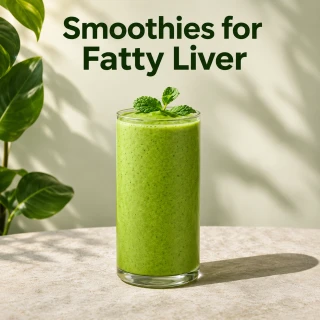
Smoothies for fatty liver can fit into your eating plan if each serving replaces a sugary drink or a planned snack and uses a measured portion of fruit, an unsweetened base and, where useful, a source of protein. A practical starting point is about ½ cup of chopped fruit, 150–200 g of plain high-protein curd or an equivalent unsweetened option, and enough water or ice to blend. Keep the pulp. Leave out juice, honey, jaggery and sweetened yoghurt. Start with one small glass and count the fruit and dairy as part of what you eat that day.
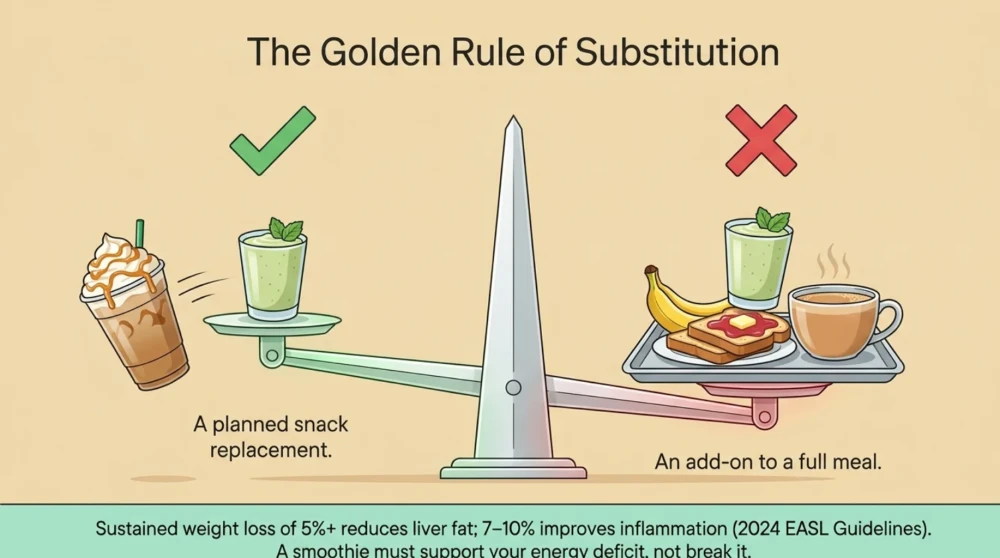
The main question is what the smoothie replaces. A small guava and curd blend instead of a sweetened cold coffee is one decision. The same blend after a full breakfast, on top of a banana, toast and sweet chai, is another. Even when the ingredient list is sensible, a daily add-on can work against an energy deficit if weight loss is part of your care plan. And if you prefer to eat the guava and curd separately, you already have a perfectly reasonable snack.
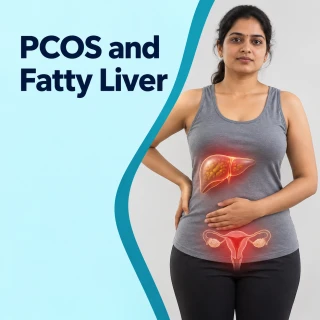
Fatty liver linked to metabolic risk factors is now called metabolic dysfunction-associated steatotic liver disease, or MASLD. Much of the research still uses the older term NAFLD. This guide focuses on practical food choices for adults with metabolic fatty liver. The recipes are examples of how to apply the evidence to daily eating. Their effects on liver fat and scarring have not been tested.
Can you drink smoothies if you have fatty liver?
Yes. Think of a smoothie as a food serving with a defined place in the day. A home blend of fruit and plain curd can make sense when the alternative is juice, a bottled milkshake or a sweet lassi. The benefit depends on the change in your usual intake. If your everyday snack is already a whole fruit and plain dahi, there is no liver-related reason to put both into a blender.
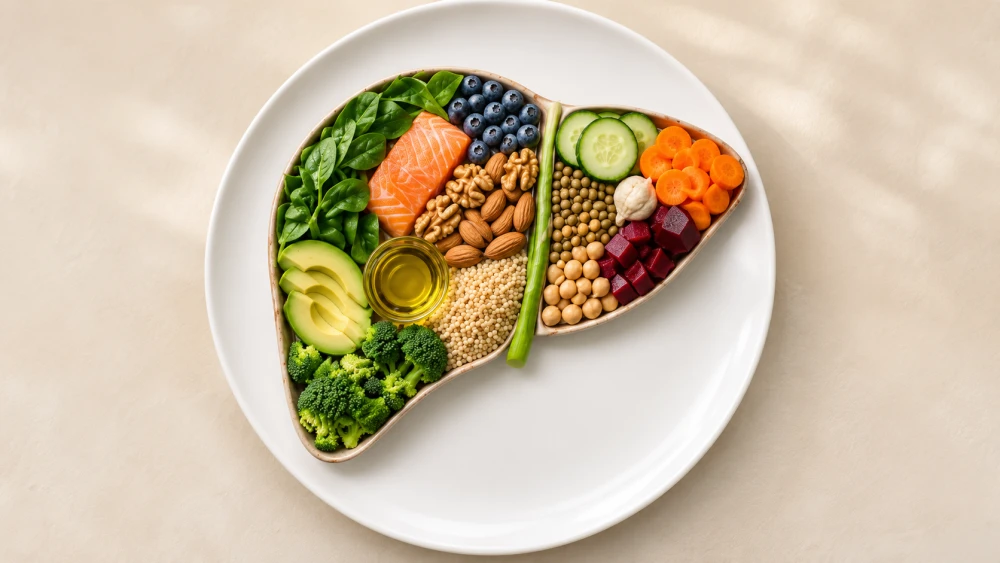
The 2024 EASL–EASD–EASO MASLD guideline recommends improving overall diet quality, limiting ultra-processed foods high in sugar and saturated fat, and avoiding sugar-sweetened beverages. It favours a Mediterranean-style eating pattern. In an Indian kitchen, the transferable principles are familiar. Make vegetables, dal and other pulses regular parts of meals, choose whole fruit, use nuts or seeds in measured amounts, and build meals around minimally processed foods you can afford and enjoy.
If you have MASLD and overweight, the same guideline associates sustained weight loss of at least 5% with a reduction in liver fat, 7–10% with improvement in liver inflammation, and at least 10% with a better chance of improving fibrosis. These are targets for a structured care plan. People with a lower body weight, older adults at risk of muscle loss, and people with advanced liver disease need individual assessment before pursuing weight loss. The useful measure of a smoothie is whether it helps you maintain the eating pattern that fits your situation.
What the evidence says about sugar, fruit and blending
Sugary drinks and excess energy have the clearest signal
A 2022 systematic review of 51 controlled trials looked at different sources of fructose-containing sugars and distinguished studies that added calories from those that exchanged one energy source for another. Adding extra calories through sugar-sweetened beverages increased liver fat and modestly increased ALT. Results varied by food source and study design, and the evidence for several other sources was less certain. Many participants were younger adults who did not necessarily have diagnosed MASLD.
This matters because people often hear that fruit contains fructose and conclude that a serving of fruit should be treated like a soft drink. In practice, a small apple brings fibre, water and a physical structure that takes time to chew. A large soft drink delivers sugar in a form that is easy to consume quickly. When a smoothie starts with juice and adds several fruits plus honey, the volume, calories and ease of drinking become the main concerns. Removing the added honey helps, but it leaves the juice and the large fruit portion in place.
Blending keeps the pulp and changes the texture
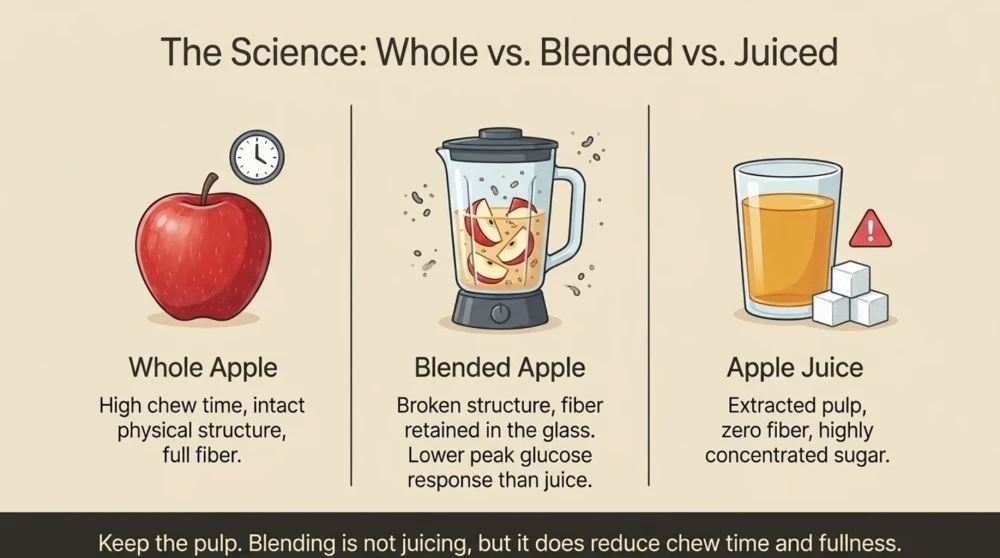
When you blend edible fruit flesh and skin and drink everything, most of the fibre stays in the glass. Straining a blend or using extracted juice removes some or much of the solid material. Blending also breaks down the physical structure of the food, and drinking usually takes less chewing. How filling a smoothie feels will vary with thickness, portion size, ingredients and how quickly you drink it. You can test this in daily life by comparing how long a small blend keeps you satisfied with how long the same food eaten as a snack keeps you satisfied.
A 2022 study in 20 healthy young adults compared the glucose response to apple and blackberries eaten whole or blended. The blended combination produced a lower peak and a lower incremental glucose response in that experiment. It was a short study of one fruit combination in people without diabetes and did not measure liver fat. A ripe banana blended with oat drink, a juice-based café smoothie and the apple–blackberry blend can produce different responses. Use the study to question broad claims about blending, rather than to set a personal glucose target or predict your response.
Read “no added sugar” alongside total carbohydrate
For these recipes, without added sugar means no ingredients added primarily to sweeten the drink, such as table sugar, honey, gur, date syrup or fruit juice concentrate. Fruit and plain milk or curd still contribute naturally occurring sugars. A product labelled no added sugar can also contain a substantial amount of carbohydrate if it uses several fruits, fruit purée or a carbohydrate-rich base. If you track carbohydrate for diabetes, use total carbohydrate for the actual serving you drink. The sugar line alone leaves out starch from ingredients such as oats.
At the supermarket, compare products per 100 g or 100 mL, then calculate the amount in your glass. A hypothetical 250 mL bottle containing 9 g of total sugars per 100 mL provides 22.5 g of total sugars if you drink the entire bottle. The same calculation works for protein. A plain curd with 8 g of protein per 100 g supplies 12 g in a 150 g portion. One with 3.5 g per 100 g supplies about 5 g in the same portion. Those differences matter when you expect a smoothie to keep you full through the morning.
How to build smoothies for fatty liver without added sugar
Decide whether the glass is a drink, a snack or breakfast
If you want something with lunch, water or an unsweetened beverage makes the simplest choice. If you need an afternoon snack, a measured fruit and curd smoothie can replace what you would otherwise eat at that time. For breakfast, ask whether the glass will actually carry you to your next meal. A diluted fruit blend may leave you looking for biscuits at 11 a.m. A thicker high-protein option or a small smoothie alongside a planned solid food can be more useful.
As a kitchen starting point, try a 200–250 mL glass for a snack and check how satisfying it feels. This is a practical portion cue, not a medical cutoff. The size of your blender jar tells you nothing about the size of your serving. If you make a double batch for two people, pour it into two glasses before you start drinking. When you add ice or water to thin the mixture, remember that the carbohydrate in the original ingredients stays the same.
Choose a base with the protein you actually need
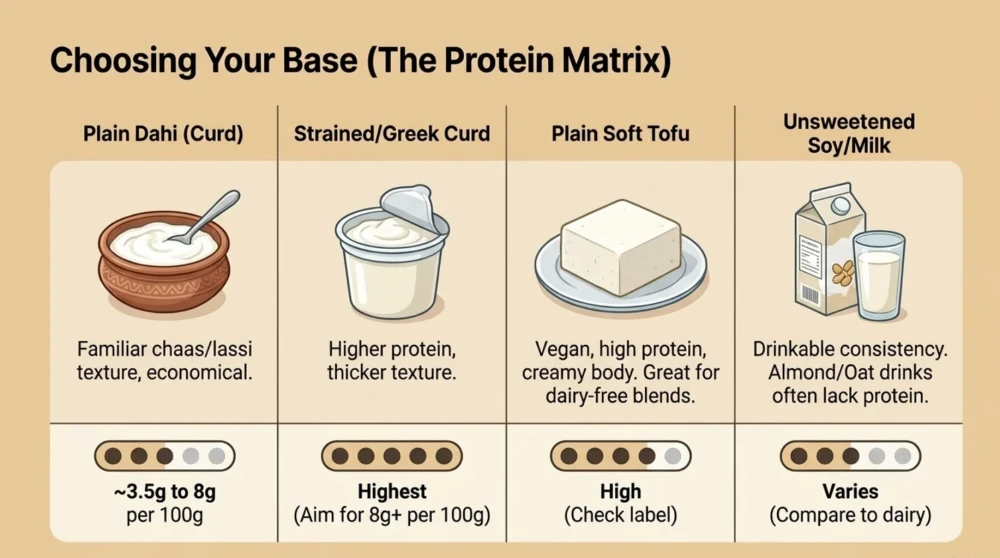
Plain dahi gives a familiar lassi-like texture. Unsweetened strained curd or Greek-style yoghurt is often higher in protein, but the label is more reliable than the product name. If you prefer a drinkable base, use plain milk or unsweetened fortified soy drink and compare the protein per serving. Many almond and oat drinks provide less protein than dairy milk or soy drink, though formulations vary. Water and ice are useful for texture when the recipe already contains curd or tofu.
Choose the base according to your other meals, tolerance and budget. Home-set curd can be an economical snack base, even if its protein contribution differs from a commercial strained product. For someone using a smoothie as breakfast, planning a protein source alongside it can be easier than buying a more expensive curd. If you prefer a vegan version, plain soft tofu or unsweetened soy yoghurt can provide body. Look for calcium and vitamin B12 fortification if a plant drink routinely replaces dairy in your diet.
Measure the fruit before it goes into the blender
Use one modest portion of fruit to start. Roughly ½ cup chopped papaya, guava, berries or apple suits many recipes. For a ripe banana, half of a small one is often enough to give sweetness and thickness. A ½-cup serving of one fruit can have a different carbohydrate content from the same volume of another. Use a kitchen scale or a reliable nutrient database if precise counting is part of your care plan.
Mango, chikoo and banana can fit in measured amounts. With very ripe mango, try a few cubes in plain dahi first and taste before adding more. For the easiest everyday version, choose the fruit already in your kitchen. Guava and papaya work just as well as imported berries for making an enjoyable drink. If you already had a fruit serving at breakfast, decide whether the smoothie is your next planned fruit serving or whether a savoury blend would suit the afternoon better.
Use texture and flavour before reaching for sweeteners
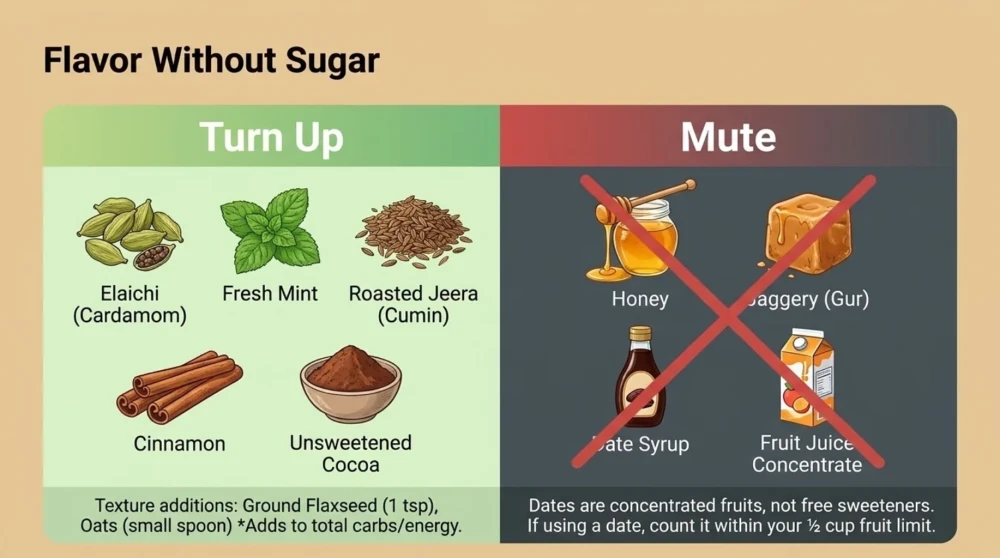
Chilled ingredients make a small smoothie more pleasant to drink. A pinch of elaichi pairs well with papaya or banana. Mint and roasted jeera give curd a familiar chaas flavour. A little unsweetened cocoa works with ripe banana. For extra body, start with one teaspoon of ground flaxseed or a small spoon of oats and decide whether you need it. Seeds, nut butter and oats are foods with useful nutrients, and each changes the energy or carbohydrate in the recipe.
Keep indulgent additions proportional to the job of the drink. A spoonful of peanut butter can make a breakfast blend more substantial. In a snack that already contains curd, fruit and oats, adding peanut butter, nuts and seeds together can turn a small glass into a meal. Full-fat coconut milk, cream and ice cream can also add substantial energy and saturated fat. For a regular smoothie base, choose an option that fits the rest of your diet and use water or ice to adjust thickness.
Six no-added-sugar smoothie recipes for fatty liver
Each recipe makes one serving. Blend just until smooth, adding cold water gradually if needed. Keep the pulp, taste the mixture before adjusting it, and serve in a small glass or bowl. The recipes vary in protein and carbohydrate depending on the fruit, brand and portion. If you are planning a full meal, decide what else you will eat before enlarging the drink.
1. Guava, dahi and roasted jeera
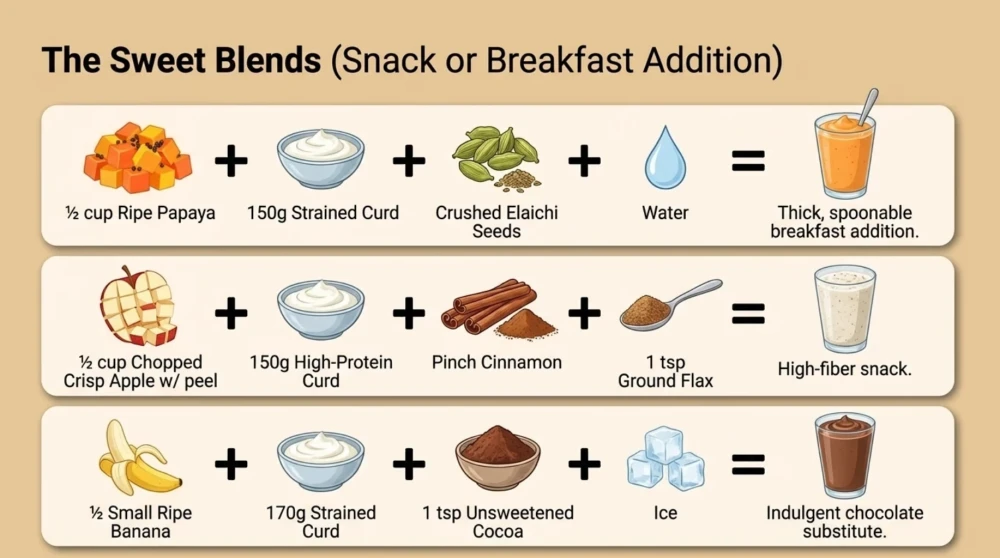
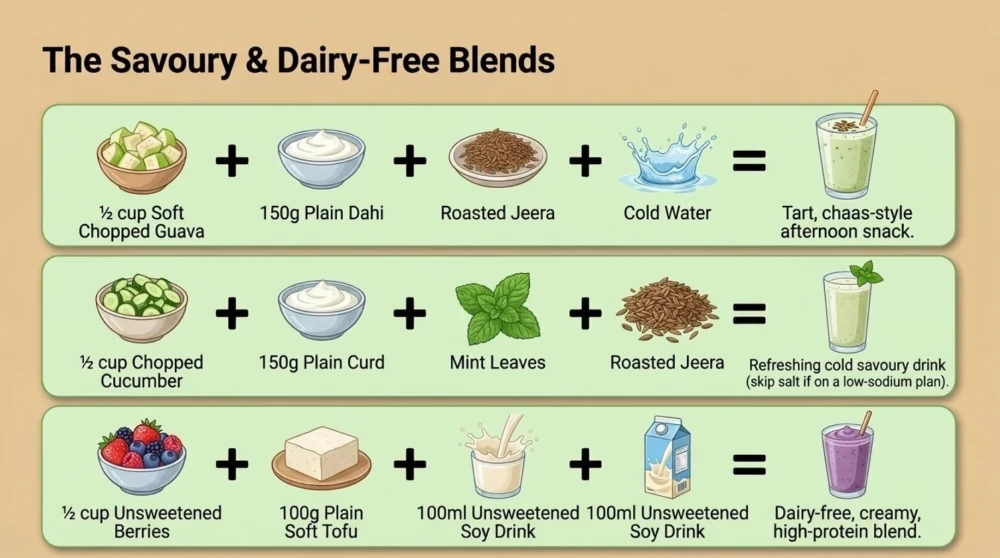
Blend ½ cup chopped ripe guava with 150 g plain dahi, a pinch of roasted jeera and a splash of cold water. Choose a soft guava. If the seeds are too hard for your blender, remove the tough seed core before blending and use the edible flesh. Mint works if you want a fresher flavour. The slight tartness of guava pairs well with curd, and the jeera keeps the drink from tasting like a dessert.
This works as a late-afternoon snack when you would otherwise have packaged juice or biscuits with chai. If you find it more satisfying to chew, eat guava wedges with a small bowl of jeera dahi. If your usual evening snack is already modest, keep the serving equally modest during the switch.
2. Papaya, elaichi and strained curd
Blend ½ cup ripe papaya with 150–170 g plain strained curd, the crushed seeds of one cardamom pod and enough water to loosen it. Add the water after blending once because a ripe papaya already gives a soft texture. Serve it thick enough to eat with a spoon if you find a thin drink goes down too quickly.
Papaya is widely available and needs little preparation. If this is breakfast and you usually get hungry well before lunch, pair it with a planned solid food, such as a small moong chilla. This adds something to chew and gives the meal more structure. Use the amounts that suit your breakfast plan.
3. Apple, cinnamon and flax
Blend ½ cup chopped apple with its edible peel, 150 g plain high-protein curd, a pinch of cinnamon and one teaspoon of ground flaxseed. Add cold water a tablespoon at a time until the blender moves freely. A crisp apple that you enjoy eating plain is a good fit. If the mixture is tart, try a naturally sweeter apple on the next occasion.
Flax contributes texture and fibre. Cinnamon adds aroma. If you routinely order a sweetened apple or cinnamon drink, this recipe gives you a comparable flavour with control over portions. The combination works best when you let the apple provide the sweetness and leave out granola, caramel syrup and flavoured yoghurt.
4. Berry and soft tofu smoothie
Blend ½ cup unsweetened berries with 100 g plain soft tofu and 100 mL unsweetened soy drink. Start with the smaller amount of liquid your blender can manage and add more only if needed. If you use a frozen berry mix, check that the ingredients are fruit only and follow the package preparation instructions. Seasonal strawberries are a reasonable substitute for a mixed berry pack.
This is a dairy-free option for someone who likes a creamy texture. Compare the protein content of the tofu and soy drink if breakfast adequacy is the goal. A thin blend made with low-protein almond drink and a few berries has a different nutritional role. Choose according to how you intend to use the glass.
5. Small banana, cocoa and plain curd smoothie
Blend half a small ripe banana with 170 g plain strained curd, one teaspoon unsweetened cocoa and a little cold water or ice. Look for plain cocoa powder in the ingredients. An instant chocolate milk mix often lists sugar prominently, even when the front of the pack emphasises cocoa or added vitamins.
This recipe suits the days when you want chocolate flavour with your snack. Banana and curd already create a thick mouthfeel. If you take your usual fruit with lunch or dinner, count this half banana in your overall plan. If your personal glucose readings rise more than expected after this combination, compare a smaller banana portion or eat the components separately on a similar day.
6. Savoury cucumber, mint and dahi
Blend ½ cup chopped cucumber with 150 g plain curd, a few mint leaves and roasted jeera. Add water for a chaas-like consistency. If you want a sharper taste, try a squeeze of lemon. You can leave out the salt, especially if you already eat salty snacks, papad or pickles regularly. With a low-sodium plan, check seasonings and packaged curd against your individual guidance.
This is a useful option when you want a cold savoury snack and have already had your planned fruit. Plain dahi adds some lactose, so include it if you track carbohydrate. The drink can also work alongside a meal if it replaces your usual chaas or sweet lassi and you account for the curd portion.
What to replace in a typical café or home smoothie
| If the recipe uses | Try this change | Why it matters |
|---|---|---|
| Packaged or freshly pressed juice | Water, ice or an unsweetened protein-containing base | The fruit you measure into the blender supplies the flavour and pulp. |
| Two or three full fruit portions | One measured portion or two half portions | The quantity of fruit stays visible even when the drink has several flavours. |
| Honey, jaggery or date syrup | Ripe fruit, elaichi, mint or unsweetened cocoa | Flavour comes from the foods already in the recipe. |
| Flavoured curd, ice cream or sweetened soy drink | Plain curd, plain tofu or unsweetened soy drink | You can choose how much protein and carbohydrate the base contributes. |
| Granola, nut butter and seeds together | One measured addition if you need it | The serving stays appropriate for its role as a snack or meal. |
At a juice counter, ask what liquid goes in first. Even when a seller can skip added sugar, the base may be juice or a ready-made sweetened mix. Ask for a small serving with plain curd and one fruit if the shop can make it that way. When the ingredients are fixed, plain chaas or whole fruit may be easier to judge. At home, the equivalent step is to measure the mix-ins before they go into the blender. A heaped spoon can be much larger than the teaspoon you thought you used.
How to adjust the smoothie for diabetes, weight goals or digestion
If you also have type 2 diabetes or prediabetes
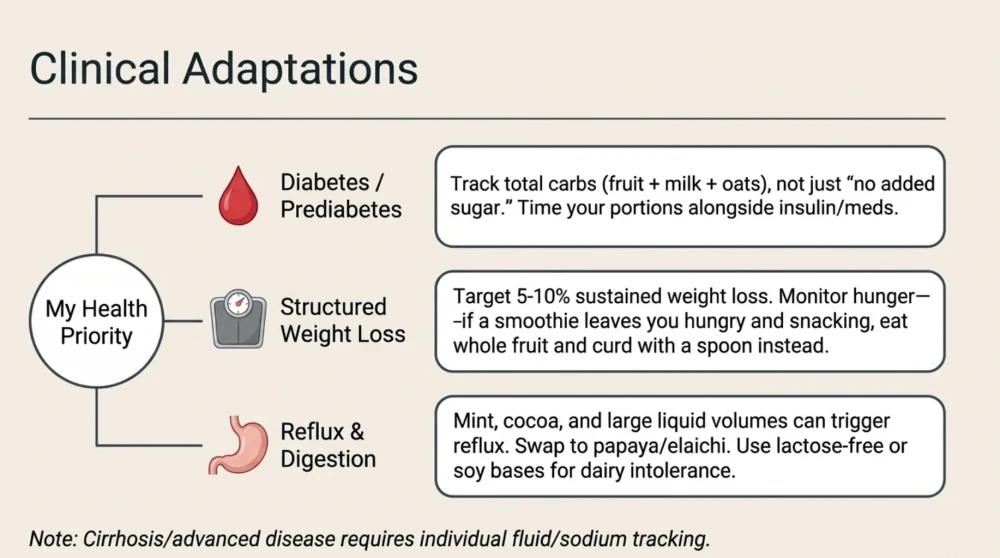
Start with the ingredients and portions you would normally count in a snack or meal. Include carbohydrate from the fruit, milk, curd, soy drink and oats if you use them. Protein, fat and fibre can change the timing and size of the glucose response, and the carbohydrate in the drink still counts. A recipe promoted as “diabetic-friendly” may use a serving size or mix of fruits that differs significantly from yours.
If you already check glucose as part of your plan, use the timing and targets set for your care and compare realistic portions under similar conditions. For example, compare a usual breakfast to a breakfast in which you substitute a small smoothie for a comparable portion of carbohydrate, or compare a fruit and curd blend with the same ingredients eaten separately. Note the serving size, other foods, activity and medication timing. One unusual reading can have several explanations. A repeated pattern gives you better grounds to adjust the recipe.
If you take insulin or a medicine that can cause hypoglycaemia, a light smoothie in place of a full meal can change how much carbohydrate you eat. Discuss recurring meal changes with the clinician who manages those medicines. Use your prescribed hypoglycaemia treatment plan if blood glucose is low. A thick fruit-and-curd blend is a poor substitute for a measured fast-acting glucose source during a low.
If weight loss is part of your fatty liver plan
Look first at what happens over a normal week. Replacing a sweetened milkshake twice a week is a change you can identify and repeat. Adding a smoothie to your regular breakfast because it sounds healthy adds food you need to account for. If a drink leaves you hungry and you eat again soon afterward, a bowl of curd with chopped fruit might suit you better. Build the decision around hunger, your schedule and what you can consistently prepare.
A filling breakfast has a different job from a small snack. When a smoothie replaces breakfast regularly, consider energy, protein and fibre across the whole meal. For instance, a small papaya and curd blend plus a moong chilla is more like a breakfast than papaya and water. Once you find an option that keeps you satisfied, measure it a few times so you know what your normal portion looks like without needing a scale every morning.
If you have reflux, lactose intolerance or other dietary restrictions
Choose ingredients you already tolerate. Cocoa, mint, citrus and larger volumes can trigger reflux symptoms in some people. You can swap a mint or cocoa blend for papaya and elaichi, or have a smaller portion earlier in the day. If lactose causes symptoms, an unsweetened lactose-free dairy product or suitable soy option may help. If you have a milk-protein allergy, choose a dairy-free product and check the full ingredient list.
People with advanced liver disease or prescribed fluid, sodium, potassium or other nutrient limits need a recipe that fits their own plan. For instance, a savoury drink may need to count toward a fluid limit if one has been prescribed. Maintaining adequate nutrition and muscle is particularly important in cirrhosis. A clinician or dietitian can help you decide where a smoothie belongs when your nutrition prescription has several competing priorities.
Put the smoothie in the context of your liver assessment
An ultrasound report saying fatty liver tells you that fat was seen. Fibrosis risk may need a separate assessment, especially if you have type 2 diabetes or multiple metabolic risk factors. The 2023 AASLD practice guidance describes a stepwise approach in which a clinician may use FIB-4 and, when indicated, a second test such as transient elastography. ALT can fall within the laboratory reference range even in people with advanced disease, so use the follow-up plan agreed with your clinician.
Follow changes that matter over time, including glucose control, weight or waist where appropriate, and the results of tests recommended for your risk level. A smoothie can help you change a specific eating habit. A sustained reduction in sweet drinks, a diet you can follow and regular physical activity are the larger changes addressed in the clinical guidance.
If you want help putting these choices into a full day of meals, Diet Plus Minus lists a fatty liver diet option among its therapeutic diet plans.
Frequently asked questions
Can I have a smoothie every day with fatty liver?
A small, unsweetened smoothie can fit daily if it replaces a planned snack or forms a suitable part of a meal. Rotate it with whole fruit and other snacks if that is easier to sustain. Pay attention to whether it satisfies you and how much you consume over the week.
Is 100% fruit juice a good base if it has no added sugar?
Use water, plain dahi or unsweetened soy drink for a routine smoothie. A juice base adds carbohydrate and sweetness before you add any fruit. Strained juice usually retains much less fibre than the fruit it came from.
Can I add dates instead of sugar?
Dates are fruit and provide fibre, but they are concentrated and add carbohydrate. If you want to use a date, count it within the fruit portion, particularly if you manage diabetes. A few ripe papaya cubes or half a small banana is often enough to flavour the entire blend.
Do I need a green smoothie or a liver detox powder?
Choose greens, herbs and spices for a taste you enjoy. Spend your effort first on replacing sweet drinks and improving regular meals. Clinical guidance centres on overall diet, activity and appropriate follow-up. Concentrated herbal products can carry risks and are worth discussing with a clinician before use, especially with known liver disease.
Is mango allowed in a fatty liver smoothie?
Yes. Try a small measured portion of ripe mango cubes in plain curd. Use water or ice to thin it if needed. Check the carbohydrate in the full serving if you manage diabetes, and pay attention to how it fits with the rest of your meal.
Can a smoothie reverse fatty liver?
A smoothie can support a food substitution, such as replacing sweet lassi with plain curd and fruit. The evidence for improving metabolic fatty liver comes from broader changes in dietary pattern, physical activity and, when appropriate, sustained weight loss. The effect of these individual recipes on liver outcomes has not been established.
References
- EASL, EASD and EASO. Clinical Practice Guidelines on the management of metabolic dysfunction-associated steatotic liver disease (MASLD). Journal of Hepatology. 2024;81:492–542. PubMed.
- Lee D, et al. Important Food Sources of Fructose-Containing Sugars and Non-Alcoholic Fatty Liver Disease: A Systematic Review and Meta-Analysis of Controlled Trials. Nutrients. 2022;14:2846. PubMed.
- Crummett LT, Grosso K. Postprandial Glycemic Response to Whole Fruit versus Blended Fruit in Healthy, Young Adults. Nutrients. 2022;14:4565. PubMed.
- Rinella ME, et al. AASLD Practice Guidance on the clinical assessment and management of nonalcoholic fatty liver disease. Hepatology. 2023;77:1797–1835. PubMed.
This article provides general nutrition information. Individual advice may differ with diabetes treatment, advanced liver disease and other conditions that affect dietary requirements.