














- 27th October 2026
Table of Contents
- What Is Social Jet Lag and Why Does It Matter?
- How Is Social Jet Lag Different From Ordinary Jet Lag?
- How Do Researchers Measure Social Jet Lag?
- Social Jet Lag Calculation: A Practical Example
- What Is the Circadian Rhythm?
- How Does the Body Clock Influence Blood Sugar?
- What Happens When the Internal Clock and Daily Routine Do Not Match?
- Can Social Jet Lag Increase the Risk of Insulin Resistance?
- Social Jet Lag and Type 2 Diabetes: What Does the Research Suggest?
- Why Fasting Blood Sugar May Be Higher After Poor or Irregular Sleep
- How Can Social Jet Lag Affect Appetite and Hunger?
- Social Jet Lag and Weight Gain: Is There a Direct Connection?
- Why Weekend Eating Patterns May Contribute to Weight Gain
- Can Social Jet Lag Affect People Who Sleep Eight Hours Every Night?
- Are Night Owls More Likely to Experience Social Jet Lag?
- Why Social Jet Lag May Be Common Among Working Professionals in Delhi-NCR
- Social Jet Lag vs Sleep Deprivation vs Shift Work
- Social Jet Lag and Insulin Resistance: What Happens Inside the Body?
- How Does Circadian Misalignment Affect Insulin Sensitivity?
- What Happens in the Pancreas During Circadian Disruption?
- Does Social Jet Lag Increase Cortisol?
- Melatonin, Late-Night Eating and Blood Sugar Regulation
- Why Eating at 11 PM May Affect Two People Differently
- Social Jet Lag and Glucose Variability: Can Weekend Readings Be Different?
- Can Social Jet Lag Raise HbA1c?
- Social Jet Lag in People With Prediabetes
- Social Jet Lag in People With Type 2 Diabetes
- Why Sunday and Monday Blood Sugar Readings May Differ
- Social Jet Lag and Obesity: Is Appetite the Missing Link?
- Can Social Jet Lag Make Weight Loss More Difficult?
- Social Jet Lag and PCOS: Is There a Connection?
- Social Jet Lag and Fatty Liver Disease
- Social Jet Lag and Cardiovascular Health
- Does Weekend Catch-Up Sleep Cancel the Effects of Short Weekday Sleep?
- Is Sleeping Late on Sunday Worse Than Sleeping Late on Saturday?
- Can Morning Light Help Reduce Social Jet Lag?
- Does Screen Time at Night Cause Social Jet Lag?
- Does Social Jet Lag Affect Everyone Equally?
- What Does the Evidence Actually Establish?
- How to Reduce Social Jet Lag Without Sacrificing Sleep
- What Is the Best Sleep Schedule for Reducing Social Jet Lag?
- How Much Weekend Sleep Difference Is Acceptable?
- A Practical Weekday and Weekend Sleep Schedule
- Why Wake-Up Time Is Important for the Body Clock
- How Morning Sunlight May Help Reduce Social Jet Lag
- Should You Avoid Bright Light Before Bedtime?
- Can Meal Timing Help Improve Circadian Regularity?
- Does Eating Dinner Early Reduce Social Jet Lag?
- How Exercise Can Support Sleep Regularity
- Should You Take Afternoon Naps to Recover From Weekend Sleep Loss?
- How to Reduce Social Jet Lag in Seven Practical Steps
- 1. Identify Your Actual Weekday and Weekend Sleep Timings
- 2. Protect Adequate Sleep Duration
- 3. Reduce Unnecessary Weekend Timing Shifts
- 4. Obtain Appropriate Morning Light Exposure
- 5. Maintain a Sustainable Meal Pattern
- 6. Limit Behaviours That Repeatedly Delay Sleep
- 7. Seek Medical Assessment for Persistent Sleep Problems
- A Practical Sleep Diary for Patients With Prediabetes or Diabetes
- When Should Social Jet Lag Be Evaluated by a Doctor?
- Social Jet Lag in Children and Adolescents
- Social Jet Lag in Shift Workers
- Clinical Example 1: Weekend Sleep Changes and Weight Management
- Clinical Example 2: Prediabetes With Irregular Weekend Sleep
- Clinical Example 3: Higher Monday Fasting Blood Sugar
- Common Myths About Social Jet Lag
- Myth 1: Social Jet Lag Happens Only When You Travel
- Myth 2: Sleeping Eight Hours Means Social Jet Lag Cannot Occur
- Myth 3: Weekend Sleep Changes Directly Cause Diabetes
- Myth 4: Everyone Must Wake at 5 AM for Better Metabolic Health
- Myth 5: Weekend Catch-Up Sleep Is Always Harmful
- Myth 6: Correcting Social Jet Lag Will Reverse Insulin Resistance
- Myth 7: A Late Dinner Automatically Causes Weight Gain
- Myth 8: Sleep Timing Is More Important Than Diabetes Medication
- Frequently Asked Questions About Social Jet Lag
- 1. What is social jet lag?
- 2. Can social jet lag cause weight gain?
- 3. Can sleeping late on weekends increase blood sugar?
- 4. Is two hours of social jet lag dangerous?
- 5. Can social jet lag occur even if I sleep eight hours?
- 6. Does social jet lag cause insulin resistance?
- 7. Is sleeping late on Sunday bad for health?
- 8. Should I wake up at the same time every day?
- 9. Can weekend catch-up sleep compensate for weekday sleep deprivation?
- 10. Can social jet lag affect HbA1c?
- 11. Does social jet lag worsen PCOS?
- 12. Can improving sleep regularity reverse prediabetes?
- 13. Does morning sunlight help?
- 14. Can a sleep tracker diagnose social jet lag?
- 15. When should I consult a doctor about irregular sleep?
- What I Explain to Patients About Social Jet Lag and Metabolic Health
- Key Takeaways: Social Jet Lag, Weight and Blood Sugar
- Sleep, Diabetes and Weight Management Consultation in Dwarka, Delhi
- Scientific References and Clinical Guidelines
What Is Social Jet Lag and Why Does It Matter?
Many people follow one sleep schedule during the working week and a completely different routine on weekends. They may wake up at 6:30 AM from Monday to Friday, but sleep until 10:30 AM or later on Saturdays and Sundays. Some also stay awake much later on Friday and Saturday nights, even when they do not have work commitments.
At first glance, this may appear harmless. After all, weekends are often the only opportunity to relax, recover from a demanding work schedule and enjoy additional sleep.
However, repeatedly shifting sleep and wake timings can create a mismatch between the body's internal biological clock and the schedule imposed by work, school and social activities.
This mismatch is commonly described as social jet lag.
Unlike conventional jet lag, social jet lag does not require travelling across time zones. Instead, the individual experiences a recurring shift in sleep timing between workdays and free days.
Researchers have investigated whether these changes in sleep timing are associated with obesity, insulin resistance, abnormal blood glucose and other cardiometabolic outcomes.
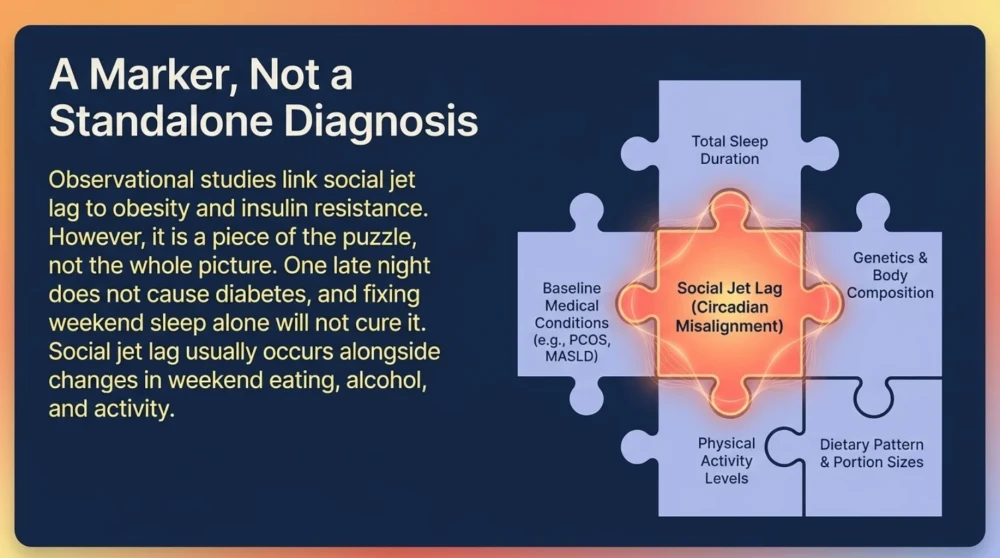
Several observational studies have identified associations between greater social jet lag and less favourable metabolic health. However, these findings do not establish that weekend sleep changes directly cause diabetes or weight gain in every individual.
The relationship is complex because sleep duration, sleep quality, physical activity, diet, work schedules and underlying health conditions may also influence metabolic outcomes.
Social jet lag is therefore best understood as a potentially important marker of circadian misalignment and irregular sleep timing, rather than a diagnosis that automatically explains weight gain or high blood sugar.
How Is Social Jet Lag Different From Ordinary Jet Lag?
Conventional jet lag occurs when someone travels rapidly across multiple time zones. The body's internal clock remains temporarily aligned with the original time zone, while the external light-dark cycle has changed.
As a result, the person may experience sleepiness at inappropriate times, difficulty sleeping at night, reduced alertness and other symptoms until the circadian system gradually adjusts.
Social jet lag involves a different situation.
The person remains in the same geographical location but follows substantially different sleep schedules on workdays and free days.
For example, an office employee may wake early throughout the working week because of commuting requirements but follow a much later sleep-wake schedule on weekends.
Although the individual has not travelled, the repeated timing difference can resemble a small, recurring shift in time zones.
However, social jet lag is not identical to travel-related jet lag, and the physiological consequences depend on several factors.
How Do Researchers Measure Social Jet Lag?
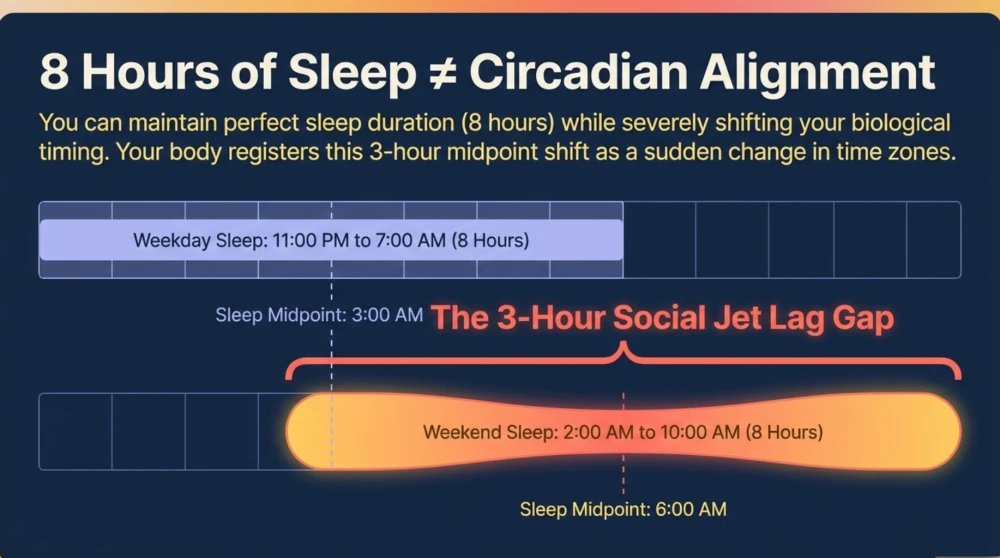
In research, social jet lag is commonly estimated by comparing the midpoint of sleep on workdays with the midpoint of sleep on free days.
The sleep midpoint is the halfway point between sleep onset and final awakening.
For example, someone who sleeps from 11:00 PM to 7:00 AM has a sleep midpoint of 3:00 AM.
If the same person sleeps from 2:00 AM to 10:00 AM on weekends, the midpoint becomes 6:00 AM.
The difference between these two midpoints is three hours.
In this example, the person has approximately three hours of social jet lag according to the conventional midpoint-based calculation.
Researchers sometimes apply additional corrections to account for accumulated sleep debt on workdays. Therefore, estimates may differ depending on the method used.
Does Sleeping Longer on Weekends Always Mean Social Jet Lag?
No.
Sleeping longer and shifting the timing of sleep are related but different phenomena.
A person may sleep longer on weekends while maintaining a similar sleep midpoint, resulting in relatively little social jet lag.
Conversely, someone may obtain the same number of hours of sleep on weekdays and weekends but shift the entire sleep period several hours later.
That person may have substantial social jet lag despite having a consistent sleep duration.
This distinction is important because sleep duration and sleep timing may influence health through partly different mechanisms.
Social Jet Lag Calculation: A Practical Example
| Sleep Pattern | Weekdays | Weekends |
|---|---|---|
| Bedtime | 11:00 PM | 2:00 AM |
| Wake-up time | 7:00 AM | 10:00 AM |
| Sleep duration | 8 hours | 8 hours |
| Sleep midpoint | 3:00 AM | 6:00 AM |
| Social jet lag | Approximately 3 hours | |
This example illustrates an important point: even when total sleep duration remains unchanged, a substantial difference in sleep timing can occur.
What Is the Circadian Rhythm?
The circadian rhythm is an approximately 24-hour biological timing system that helps coordinate numerous physiological functions.
It influences sleep and wakefulness, hormone secretion, body temperature, appetite, glucose metabolism and several other processes.
The central circadian clock is located in the suprachiasmatic nucleus of the hypothalamus.
This central clock receives information about environmental light through pathways connected to the retina.
Light exposure helps synchronise the internal biological clock with the external day-night cycle.
However, the circadian system is not limited to the brain.
Many tissues, including the liver, pancreas, skeletal muscle and adipose tissue, contain molecular clocks that participate in the regulation of local physiological processes.
These peripheral clocks are influenced by signals from the central clock as well as behaviours such as eating and physical activity.
When sleep timing, light exposure and meal timing become irregular, coordination between these systems may be affected.
How Does the Body Clock Influence Blood Sugar?
Blood glucose regulation is not identical at every hour of the day.
Insulin sensitivity, insulin secretion and glucose tolerance show circadian variation.
In controlled laboratory studies, glucose tolerance is often less favourable during the biological evening or night compared with the biological morning.
This does not mean that every person must eat only during the morning.
However, it demonstrates that the timing of food intake may interact with the body's internal biological rhythms.
When sleep schedules shift substantially between weekdays and weekends, the timing of meals, activity and light exposure may also change.
These changes can contribute to circadian misalignment, although the extent of disruption varies between individuals.
What Happens When the Internal Clock and Daily Routine Do Not Match?
The circadian system helps coordinate physiological processes with expected periods of wakefulness, activity, food intake and rest.
When behavioural schedules become misaligned with internal circadian timing, the body may be required to perform certain functions at biologically less favourable times.
Controlled laboratory experiments have shown that circadian misalignment can impair aspects of glucose regulation and influence other cardiometabolic measurements.
However, these experiments often involve more pronounced or tightly controlled circadian disruption than ordinary weekend sleep changes.
Therefore, their findings should not be interpreted as proof that a single late weekend night directly causes insulin resistance.
They do, however, provide a plausible biological explanation for why persistent sleep-timing irregularity may be relevant to metabolic health.
Can Social Jet Lag Increase the Risk of Insulin Resistance?
Insulin resistance occurs when cells become less responsive to insulin, requiring the body to produce more insulin to maintain glucose regulation.
It is influenced by multiple factors, including body composition, genetics, physical activity, sleep and certain medical conditions.
Some observational studies have reported associations between social jet lag and markers of insulin resistance or metabolic dysfunction.
However, not all studies have produced identical results.
Differences in age, work schedules, sleep measurement methods and adjustment for confounding factors may contribute to inconsistent findings.
Furthermore, an association between social jet lag and insulin resistance does not establish that social jet lag is the direct cause.
People with greater social jet lag may also differ in sleep duration, meal timing, alcohol consumption, physical activity or other behaviours that influence glucose regulation.
Social jet lag may contribute to an unfavourable metabolic environment in some individuals, but it should not be considered a stand-alone explanation for insulin resistance.
Social Jet Lag and Type 2 Diabetes: What Does the Research Suggest?
Researchers have investigated whether irregular sleep timing and social jet lag are associated with the development of type 2 diabetes.
Several observational studies have reported associations between irregular sleep patterns and diabetes-related outcomes.
However, the strength and consistency of these associations vary.
Some studies focus specifically on social jet lag, while others examine sleep regularity, shift work, chronotype or variability in sleep duration.
These related concepts should not be treated as interchangeable.
For example, shift workers may experience more extensive circadian disruption than individuals who simply sleep later on weekends.
Similarly, irregular sleep duration may influence metabolic health independently of changes in sleep timing.
Therefore, current evidence supports considering sleep regularity as one component of metabolic health, but it does not establish that correcting weekend sleep timing alone prevents type 2 diabetes.
Why Fasting Blood Sugar May Be Higher After Poor or Irregular Sleep
Patients sometimes notice that their fasting blood glucose is higher after a night of poor sleep.
Sleep restriction and circadian disruption can influence glucose regulation through several pathways.
These may include changes in insulin sensitivity, autonomic activity, stress-related signalling and behavioural factors.
However, fasting glucose also varies because of medication timing, previous meals, physical activity, illness, the dawn phenomenon and normal measurement variability.
Therefore, a single elevated fasting glucose reading after a late night should not automatically be attributed to social jet lag.
Persistent abnormalities require appropriate medical assessment.
Can One Late Night Raise Blood Sugar?
Acute sleep restriction or circadian disruption may affect glucose regulation under certain experimental conditions.
However, the effect of one late night on an individual's home glucose reading is difficult to predict.
For patients with diabetes, the most useful approach is to review repeated patterns alongside meals, medication, activity and other relevant factors.
One isolated reading rarely provides enough information to identify the cause.
How Can Social Jet Lag Affect Appetite and Hunger?
Sleep and circadian timing interact with systems involved in appetite regulation.
Sleep restriction has been associated in experimental studies with changes in hunger, food reward and eating behaviour.
Some individuals experience stronger cravings for energy-dense foods after insufficient sleep.
Late bedtimes may also increase opportunities for evening or nighttime eating.
However, these effects are not uniform, and social jet lag should not be assumed to produce the same appetite changes in every person.
It is also important to distinguish between insufficient sleep and irregular sleep timing.
A person may have social jet lag while obtaining sufficient sleep on both weekdays and weekends.
Nevertheless, changes in sleep timing often occur alongside differences in meal timing, social activities and food intake.
Social Jet Lag and Weight Gain: Is There a Direct Connection?
Several observational studies have reported associations between greater social jet lag and higher body mass index or other indicators of adiposity.
However, these relationships are not necessarily causal.
Individuals with greater social jet lag may also have shorter sleep duration on workdays, irregular eating schedules, lower physical activity or other characteristics associated with weight gain.
Furthermore, body weight itself may influence sleep quality and sleep-related disorders.
For example, obesity increases the likelihood of obstructive sleep apnoea, which can disrupt sleep and affect daytime functioning.
Therefore, the relationship between sleep irregularity and obesity may operate in more than one direction.
Social jet lag may be associated with weight-related risk factors, but it should not be presented as a proven independent cause of obesity in every patient.
Why Weekend Eating Patterns May Contribute to Weight Gain
Weekend sleep changes often occur alongside changes in eating behaviour.
Some individuals eat dinner later, consume more restaurant meals, snack during late-night entertainment or shift breakfast and lunch to different times.
These behaviours can influence overall energy intake and metabolic regulation.
However, weekend meals are not inherently unhealthy, and eating later does not automatically cause weight gain.
The overall dietary pattern, portion sizes, food quality and total energy intake remain important.
Meal timing may provide additional context, particularly in individuals with irregular sleep schedules or diabetes.
Can Social Jet Lag Affect People Who Sleep Eight Hours Every Night?
Yes.
Social jet lag describes a difference in sleep timing rather than simply insufficient sleep.
A person who sleeps from 10:30 PM to 6:30 AM on weekdays and from 2:30 AM to 10:30 AM on weekends obtains eight hours of sleep on both schedules.
However, the sleep midpoint shifts by four hours.
This represents substantial social jet lag despite consistent sleep duration.
Whether this produces clinically important metabolic effects in that individual depends on multiple factors.
Nevertheless, it demonstrates why sleep duration alone does not provide a complete picture of sleep health.
Are Night Owls More Likely to Experience Social Jet Lag?
Chronotype refers to an individual's tendency towards earlier or later sleep and activity timing.
People with an evening chronotype often prefer going to sleep and waking later.
When work or school schedules require early awakening, they may experience a greater mismatch between preferred biological timing and social obligations.
As a result, evening-type individuals may accumulate sleep debt during workdays and shift their sleep schedule later on free days.
However, being a night owl is not itself a disease.
The clinical concern arises when preferred sleep timing, required schedules and sleep opportunity are poorly aligned.
Why Social Jet Lag May Be Common Among Working Professionals in Delhi-NCR
In cities such as Delhi, Gurugram, Noida and Dwarka, work schedules and commuting demands can influence sleep timing.
Some professionals wake early to accommodate long commutes but stay awake later during weekends.
Others work rotating shifts, manage international business schedules or experience irregular working hours.
These circumstances may make consistent sleep timing difficult.
However, the prevalence and metabolic effects of social jet lag among Delhi-NCR residents cannot be assumed without population-specific data.
For patients presenting with obesity, prediabetes, type 2 diabetes or persistent fatigue, asking about weekday and weekend sleep schedules may provide useful clinical information.
Sleep assessment should complement, rather than replace, evaluation of diet, physical activity, medications and other medical factors.
Social Jet Lag vs Sleep Deprivation vs Shift Work
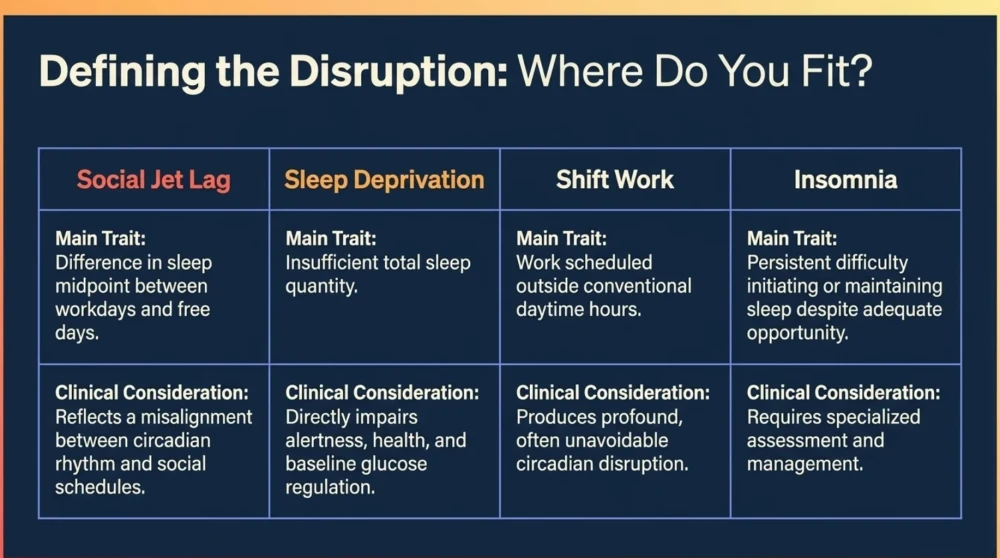
| Sleep-Related Pattern | Main Characteristic | Clinical Consideration |
|---|---|---|
| Social jet lag | Difference in sleep midpoint between workdays and free days | May reflect circadian and social schedule misalignment |
| Sleep deprivation | Insufficient sleep quantity | Can affect alertness, health and glucose regulation |
| Shift work | Work scheduled outside conventional daytime hours | May produce substantial circadian disruption |
| Irregular sleep duration | Variation in hours slept across nights | Distinct from variation in sleep timing |
| Insomnia | Persistent difficulty initiating or maintaining sleep despite adequate opportunity, with daytime impairment | Requires separate assessment and management |
Social Jet Lag and Insulin Resistance: What Happens Inside the Body?
Insulin resistance is an important metabolic concern because it can contribute to the development of prediabetes, type 2 diabetes and other cardiometabolic disorders.
However, insulin resistance does not develop because of a single factor. Genetics, body composition, physical activity, sleep, medications and other physiological influences all contribute.
Researchers have become increasingly interested in whether social jet lag and irregular sleep timing may add to this metabolic burden.
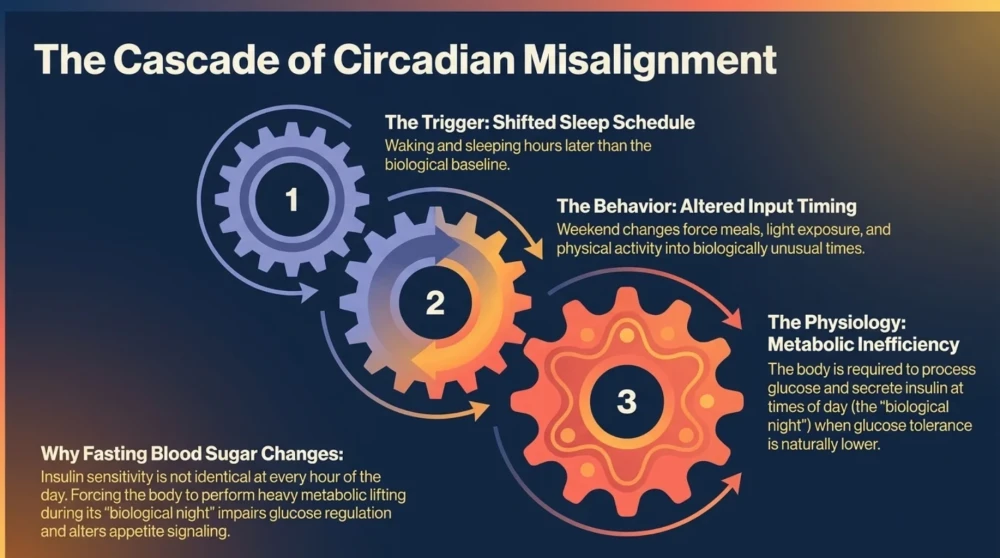
The underlying hypothesis is that the body's internal circadian system helps coordinate glucose regulation with expected periods of eating, activity and rest.
When sleep schedules repeatedly shift between weekdays and weekends, meal timing, light exposure and physical activity may also shift.
These changes can create a mismatch between behavioural schedules and internal biological timing.
Controlled experiments involving circadian misalignment have demonstrated changes in glucose tolerance and insulin-related physiology.
However, experimental circadian misalignment is not always equivalent to ordinary weekend social jet lag.
The evidence suggests that circadian disruption can affect glucose metabolism, but the independent long-term effect of typical weekend social jet lag remains less certain.
How Does Circadian Misalignment Affect Insulin Sensitivity?
Insulin sensitivity refers to how effectively insulin helps regulate glucose uptake and other metabolic processes.
It varies according to numerous factors, including the time of day.
In controlled human studies, circadian timing has been shown to influence glucose tolerance and insulin-related responses.
Glucose handling is often less favourable during the biological evening than during the biological morning.
When people eat, sleep or remain awake at times that conflict with their internal circadian phase, glucose regulation may become less efficient.
However, these effects vary across individuals and experimental conditions.
It is therefore inappropriate to assume that a person who wakes three hours later on Sunday will necessarily become insulin resistant.
Instead, repeated sleep-timing irregularity should be considered a potentially relevant lifestyle factor within a broader metabolic assessment.
What Happens in the Pancreas During Circadian Disruption?
The pancreas contains insulin-producing beta cells that respond to changes in blood glucose.
Research suggests that circadian clock mechanisms participate in regulating pancreatic function and insulin secretion.
Experimental disruption of circadian timing can affect glucose-related physiological responses.
However, much of the detailed mechanistic evidence comes from laboratory studies, animal models and tightly controlled human experiments.
These findings provide biological plausibility but do not establish that routine weekend sleep changes directly damage pancreatic beta cells.
For patients, the practical implication is that regular sleep timing may support a more consistent daily metabolic routine.
Does Social Jet Lag Increase Cortisol?
Cortisol is a hormone involved in stress responses, energy regulation and several other physiological processes.
It normally follows a circadian pattern, with concentrations typically rising towards the morning and declining later in the day.
Sleep timing, light exposure and stress can influence cortisol measurements.
However, it would be inaccurate to claim that social jet lag always causes persistently elevated cortisol.
Studies examining sleep irregularity and cortisol have produced findings that depend on the population, timing of measurement and experimental conditions.
Furthermore, cortisol levels naturally fluctuate throughout the day.
A single cortisol measurement cannot reliably establish whether weekend sleep timing is causing metabolic problems.
Can High Cortisol Explain Weekend Weight Gain?
Not necessarily.
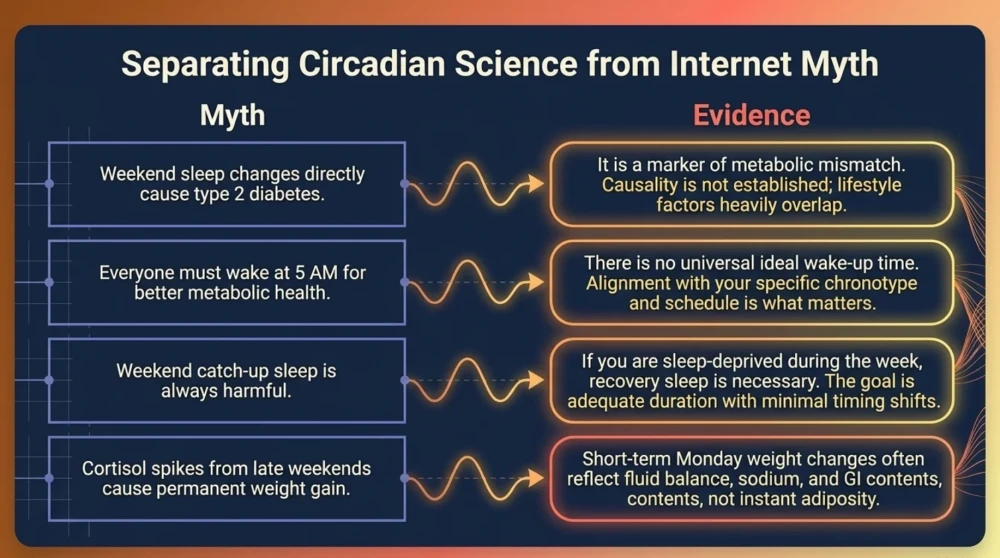
Short-term increases in body weight after weekends may reflect changes in fluid balance, sodium intake, carbohydrate storage and gastrointestinal contents.
These changes should not automatically be attributed to cortisol or increased body fat.
Persistent weight gain requires assessment of longer-term dietary intake, physical activity, sleep and other relevant factors.
Melatonin, Late-Night Eating and Blood Sugar Regulation
Melatonin is a hormone that helps signal biological night.
Its secretion is closely related to circadian timing and environmental light exposure.
Researchers have investigated how eating during the biological night, when melatonin concentrations may be elevated, affects glucose regulation.
Some controlled studies suggest that eating close to the biological night may produce less favourable glucose responses under certain conditions.
However, the magnitude of these effects depends on factors such as meal composition, circadian phase, individual physiology and genetic variation.
It is therefore too simplistic to state that eating after a particular clock time automatically causes diabetes.
The more relevant issue is the interaction between meal timing and the individual's biological rhythm.
Why Eating at 11 PM May Affect Two People Differently
Consider two individuals who both eat dinner at 11 PM.
One follows a regular late schedule, sleeps at 2 AM and wakes at 10 AM.
The other usually sleeps at 10:30 PM but stays awake unusually late for a weekend gathering.
Although both eat at the same clock time, the meal may occur at different points in their internal circadian cycles.
Their glucose responses may also differ because of meal composition, activity, sleep history, insulin sensitivity and other factors.
This is one reason why meal timing cannot be interpreted independently of sleep and circadian timing.
Social Jet Lag and Glucose Variability: Can Weekend Readings Be Different?
Glucose variability describes fluctuations in blood glucose over time.
People using continuous glucose monitoring may notice that their glucose patterns differ between workdays and weekends.
For example, a patient may have relatively consistent meal timing from Monday to Friday but eat dinner much later on Saturday.
Weekend changes in food choices, portion sizes, alcohol intake, physical activity and sleep can all influence glucose patterns.
Therefore, a different weekend glucose profile does not establish that social jet lag itself caused the change.
However, comparing glucose data with sleep and meal records may help identify useful patterns.
What Can CGM Reveal About Sleep and Meal Timing?
Continuous glucose monitoring can show glucose patterns throughout the day and night.
When interpreted alongside meal timing, activity and medication information, CGM may help patients and clinicians understand why glucose levels differ on certain days.
However, CGM does not directly measure insulin resistance or circadian phase.
It also cannot independently establish that a particular glucose excursion was caused by social jet lag.
CGM interpretation should therefore consider the complete clinical context.
Can Social Jet Lag Raise HbA1c?
HbA1c reflects average glycaemic exposure over approximately the preceding two to three months, with greater influence from more recent weeks.
Several studies have explored associations between sleep irregularity and HbA1c or other markers of glucose regulation.
However, findings vary, and many studies are observational.
HbA1c is influenced by numerous factors, including diabetes treatment, dietary intake, physical activity and underlying glucose metabolism.
Conditions affecting red blood cell turnover can also influence HbA1c interpretation.
Therefore, an elevated HbA1c should not be attributed to social jet lag without appropriate evaluation.
Improving sleep regularity may be a reasonable part of lifestyle management, but it should not replace established diabetes treatment.
Social Jet Lag in People With Prediabetes
Prediabetes is characterised by glucose measurements above the normal range but below the diagnostic threshold for diabetes.
It is associated with increased risk of future type 2 diabetes, although progression is not inevitable.
Weight management, physical activity, nutritional changes and appropriate medical follow-up can help reduce risk.
Sleep is another relevant aspect of metabolic health.
Patients with prediabetes may benefit from discussing sleep duration, sleep quality and sleep-timing regularity during lifestyle assessment.
However, there is insufficient evidence to promise that reducing social jet lag alone will reverse prediabetes.
Sleep regularity should be incorporated into a broader evidence-based management plan.
Social Jet Lag in People With Type 2 Diabetes
For patients with type 2 diabetes, consistent daily routines can make glucose management easier.
Regular sleep and meal timing may help patients follow prescribed medication schedules, maintain physical activity and interpret glucose patterns.
However, treatment needs differ considerably between individuals.
For example, a patient using insulin may require a different approach from someone taking metformin alone.
Late meals, delayed waking and changes in activity can influence glucose readings and the timing of some medicines.
Patients should not independently change medication doses because they plan to sleep later on weekends.
Those using insulin or sulfonylureas should discuss significant changes in eating and sleep schedules with their treating clinician, particularly if hypoglycaemia is a concern.
Why Sunday and Monday Blood Sugar Readings May Differ
Some patients notice higher fasting glucose readings on Monday morning than on other weekdays.
Possible explanations include late weekend meals, reduced physical activity, alcohol consumption, sleep changes, stress and ordinary glucose variability.
The dawn phenomenon may also influence fasting glucose.
However, a consistent Monday elevation cannot be diagnosed as social jet lag without further assessment.
Patients may find it useful to record sleep timing, evening meals, medication timing and fasting glucose over several weeks.
This information can help identify patterns that deserve discussion during consultation.
Social Jet Lag and Obesity: Is Appetite the Missing Link?
Obesity involves complex interactions between biological regulation, environmental influences and behaviour.
Sleep timing may be relevant because it can influence opportunities for eating, activity patterns and appetite-related processes.
For example, staying awake several hours later may increase the time available for snacking.
Late social activities may also involve energy-dense foods and larger portions.
However, these behaviours are not inevitable consequences of social jet lag.
Furthermore, experimental evidence on sleep restriction should not automatically be applied to individuals who maintain adequate sleep duration but shift their schedule on weekends.
The relationship between social jet lag and obesity is therefore best understood as multifactorial.
Can Social Jet Lag Make Weight Loss More Difficult?
Some individuals with irregular sleep schedules may find it harder to maintain consistent eating and activity patterns.
For example, a person who wakes at 6 AM during the week but at 11 AM on weekends may struggle to maintain regular meal timing.
They may also experience reduced alertness after returning to an early schedule on Monday.
However, evidence does not establish that social jet lag independently prevents weight loss.
Patients can achieve meaningful weight reduction despite imperfect sleep schedules.
Nevertheless, improving sleep consistency may make broader lifestyle management more practical for some individuals.
Social Jet Lag and PCOS: Is There a Connection?
Polycystic ovary syndrome, or PCOS, is a complex endocrine and metabolic condition.
Insulin resistance is common in many patients with PCOS, although it is not present in everyone.
Sleep disturbances and obstructive sleep apnoea may also occur more frequently in certain groups of patients with PCOS.
Researchers have investigated associations between sleep patterns, circadian timing and PCOS-related metabolic outcomes.
However, direct evidence establishing that social jet lag causes PCOS or independently worsens its symptoms remains limited.
Therefore, patients should not be told that correcting weekend sleep timing will cure PCOS.
Instead, sleep assessment can form part of comprehensive PCOS management alongside metabolic evaluation, appropriate nutrition, physical activity and indicated medical treatment.
Social Jet Lag and Fatty Liver Disease
Metabolic dysfunction-associated steatotic liver disease, commonly abbreviated as MASLD, is closely associated with metabolic risk factors such as insulin resistance, type 2 diabetes and excess adiposity.
Researchers have investigated whether sleep disturbances and circadian disruption are associated with hepatic steatosis and metabolic liver disease.
Some observational studies suggest relationships between irregular sleep patterns and liver-related metabolic outcomes.
However, these associations may be influenced by obesity, diabetes, diet, sleep apnoea and other factors.
Direct evidence that correcting social jet lag reverses MASLD or liver fibrosis is insufficient.
Patients with MASLD should therefore continue established management strategies, including appropriate weight management, physical activity, cardiometabolic risk assessment and liver fibrosis evaluation when indicated.
Social Jet Lag and Cardiovascular Health
Sleep regularity has also been investigated in relation to cardiovascular risk.
Some observational studies have reported associations between irregular sleep timing and cardiovascular outcomes.
However, these studies do not necessarily isolate the effect of social jet lag from other sleep characteristics or lifestyle factors.
Blood pressure, lipid abnormalities, smoking, diabetes and other established cardiovascular risk factors remain important.
Patients should not assume that maintaining identical sleep timing eliminates cardiovascular risk.
Nevertheless, sleep health is increasingly recognised as a relevant component of overall cardiovascular wellbeing.
Does Weekend Catch-Up Sleep Cancel the Effects of Short Weekday Sleep?
Many people sleep less during the working week and attempt to recover by sleeping longer on weekends.
Additional weekend sleep may help reduce accumulated sleepiness in some circumstances.
However, research has not established that weekend catch-up sleep completely reverses all physiological consequences of repeated weekday sleep restriction.
Some observational studies have reported potential benefits associated with weekend recovery sleep, while others have produced mixed findings.
Differences in study populations and measurement methods complicate interpretation.
Importantly, sleeping longer on weekends may also shift the sleep midpoint, increasing measured social jet lag.
This creates a practical challenge: patients may need additional sleep because they are sleep-deprived, but large timing shifts may also increase circadian irregularity.
The preferable long-term strategy is generally to obtain sufficient sleep consistently throughout the week rather than repeatedly accumulating sleep debt.
Is Sleeping Late on Sunday Worse Than Sleeping Late on Saturday?
The effect of a late sleep schedule depends on the person's overall routine.
For someone who must wake early on Monday, a substantially delayed Sunday bedtime may reduce sleep opportunity or make waking more difficult.
This can contribute to sleepiness and impaired alertness at the beginning of the working week.
However, there is insufficient evidence to claim that late Sunday sleep is uniquely more harmful to blood sugar than an equivalent timing shift on Saturday.
The broader concern is repeated mismatch between sleep timing and required daily schedules.
Can Morning Light Help Reduce Social Jet Lag?
Light is one of the strongest environmental signals influencing circadian timing.
Morning light exposure can help shift circadian timing earlier in many individuals, depending on when it occurs relative to their internal biological clock.
For people trying to maintain an earlier schedule, regular morning light exposure may support circadian alignment.
However, the effect depends on timing, intensity and individual circadian phase.
Bright light at an inappropriate time may produce an undesired shift.
Patients with significant circadian rhythm disorders may require specialised guidance.
Does Screen Time at Night Cause Social Jet Lag?
Evening exposure to bright or short-wavelength-enriched light can influence melatonin secretion and circadian timing.
However, the effects of screens depend on brightness, duration, timing and individual sensitivity.
Late-night screen use may also delay bedtime simply because the activity keeps the person awake.
Therefore, reducing stimulating screen use before bedtime may help some individuals maintain a more consistent sleep schedule.
However, social jet lag is not caused exclusively by mobile phones or other electronic devices.
Work requirements, chronotype and social schedules may be equally important.
Does Social Jet Lag Affect Everyone Equally?
No.
Individuals differ in chronotype, sleep requirements, circadian timing and tolerance of schedule changes.
Age, work demands, family responsibilities, health conditions and environmental factors may also influence sleep patterns.
For example, adolescents often experience a biological tendency towards later sleep timing, which may conflict with early school schedules.
Adults working rotating shifts face different challenges from people with regular daytime employment.
Therefore, sleep recommendations should consider individual circumstances rather than assuming that one fixed bedtime is ideal for everyone.
What Does the Evidence Actually Establish?
It is useful to distinguish between findings supported by controlled experiments and associations observed in population studies.
| Research Question | Current Interpretation | Important Limitation |
|---|---|---|
| Can circadian misalignment affect glucose regulation? | Supported by controlled experimental evidence | Laboratory conditions may differ from ordinary weekends |
| Is social jet lag associated with obesity? | Associations reported in observational studies | Causality and confounding remain important |
| Does social jet lag directly cause type 2 diabetes? | Not established | Long-term causal evidence is insufficient |
| Can irregular sleep timing affect glucose patterns? | Biologically plausible and supported by related research | Meal timing and other behaviours also influence glucose |
| Will correcting social jet lag reverse insulin resistance? | Not established as a stand-alone treatment | Clinical outcomes require further study |
| Can sleep regularity support metabolic health? | Reasonable component of comprehensive lifestyle care | Not a substitute for established treatment |
How to Reduce Social Jet Lag Without Sacrificing Sleep
Once patients understand the relationship between social jet lag, circadian timing and metabolic health, the next question is usually practical: how can they maintain a consistent sleep schedule when workdays and weekends are so different?
For many working professionals, early morning commitments are unavoidable. Office hours, commuting, school schedules and family responsibilities may require waking earlier than the body's preferred timing.
Weekends then become an opportunity to recover from insufficient weekday sleep.
However, repeatedly shifting bedtime and wake-up time by several hours may create additional circadian irregularity.
The objective should not be to maintain a rigid schedule at the expense of adequate sleep. Instead, the aim is to obtain sufficient sleep while reducing unnecessary differences between weekday and weekend timing.
Reducing social jet lag should never mean deliberately restricting weekend sleep when someone is already sleep-deprived.
A sustainable approach addresses both sleep duration and sleep regularity.
What Is the Best Sleep Schedule for Reducing Social Jet Lag?
There is no single bedtime that is ideal for every adult.
Sleep requirements and preferred circadian timing vary between individuals.
However, most adults generally need at least seven hours of sleep per night, with many requiring approximately seven to nine hours.
Maintaining relatively consistent sleep and wake timings may help support circadian alignment.
For someone who must wake at 6:30 AM on workdays, a weekend wake-up time of approximately 7:00–7:30 AM may create less timing variation than sleeping until 11:00 AM.
However, this example assumes that the person is obtaining sufficient sleep during the week.
If someone regularly sleeps only five hours on workdays, simply forcing an early weekend wake-up may worsen sleep deprivation.
In that situation, improving weekday sleep opportunity should be a priority.
How Much Weekend Sleep Difference Is Acceptable?
Sleep health recommendations commonly encourage maintaining similar bedtimes and wake-up times throughout the week.
Some practical guidance suggests limiting weekday-to-weekend timing differences to approximately one hour when feasible.
However, this should be understood as a useful behavioural target rather than a scientifically validated threshold below which metabolic risk disappears.
There is no established universal cut-off defining a completely safe amount of social jet lag.
Furthermore, patients with accumulated sleep debt may require additional recovery sleep.
The appropriate strategy should balance consistency with adequate sleep duration.
A Practical Weekday and Weekend Sleep Schedule
Consider an adult who needs to wake at 6:30 AM for work.
The following example illustrates how sleep timing can remain relatively consistent without requiring identical bedtimes every night.
| Day | Bedtime | Wake-Up Time | Sleep Opportunity |
|---|---|---|---|
| Monday–Friday | 10:30 PM | 6:30 AM | 8 hours |
| Saturday | 11:00 PM | 7:00 AM | 8 hours |
| Sunday | 10:30 PM | 6:30 AM | 8 hours |
This is an illustrative schedule rather than a prescription.
Actual sleep duration may be shorter than time spent in bed because of sleep onset latency and nighttime awakenings.
Patients should adapt their routine to their sleep needs, work commitments and medical circumstances.
Why Wake-Up Time Is Important for the Body Clock
Wake-up time influences when a person is exposed to morning light, begins daily activity and consumes meals.
These behaviours provide timing signals that can help coordinate circadian rhythms.
Maintaining a reasonably consistent wake-up time may therefore support a more stable daily routine.
However, wake-up time is not the only factor that matters.
Bedtime, light exposure, sleep duration, meal timing and individual chronotype also influence circadian alignment.
A consistent wake-up time should not be achieved by repeatedly sacrificing necessary sleep.
How Morning Sunlight May Help Reduce Social Jet Lag
Environmental light is one of the strongest signals regulating the human circadian clock.
For many individuals following a conventional daytime schedule, exposure to natural light after waking can help reinforce an earlier circadian phase.
Morning outdoor activity may also support alertness and provide an opportunity for physical exercise.
However, the direction of circadian shifting depends on the timing of light exposure relative to the individual's internal biological clock.
People with delayed sleep-wake phase disorder or complex shift-work schedules may require more specific advice.
Light exposure should therefore be used thoughtfully rather than assuming that any bright light at any time is beneficial.
Should You Avoid Bright Light Before Bedtime?
Bright evening light can delay circadian timing in some circumstances.
Light from room illumination, mobile phones, televisions and other electronic devices may contribute to this effect.
However, the impact depends on brightness, exposure duration, timing and individual sensitivity.
Reducing unnecessarily bright light and stimulating activities before bedtime may help some people maintain an earlier sleep schedule.
Simple changes, such as dimming room lighting and avoiding prolonged late-night screen use, may be practical.
However, these measures alone may not correct substantial social jet lag caused by incompatible work schedules.
Can Meal Timing Help Improve Circadian Regularity?
Meal timing provides important signals to peripheral circadian clocks involved in metabolism.
Research suggests that eating at biologically unusual times may influence glucose regulation.
However, there is no universally established meal schedule that prevents diabetes or weight gain by eliminating social jet lag.
For many patients, maintaining reasonably consistent meal timing may help support regular daily routines.
For example, avoiding repeated shifts from an early weekday dinner to very late weekend meals may reduce unnecessary variability.
However, the overall nutritional quality and quantity of food remain important.
Patients with diabetes should coordinate meal timing with their medication regimen when relevant.
Does Eating Dinner Early Reduce Social Jet Lag?
Eating dinner earlier does not directly change the mathematical definition of social jet lag, which is based on sleep timing.
However, meal timing may influence metabolic physiology and the organisation of daily routines.
Late meals may also contribute to discomfort or delayed bedtime in some individuals.
Therefore, an appropriate dinner schedule may support sleep consistency.
Nevertheless, patients should not assume that eating dinner before a particular clock time automatically prevents insulin resistance.
How Exercise Can Support Sleep Regularity
Regular physical activity contributes to cardiovascular, metabolic and general health.
It may also improve sleep quality in some individuals.
For adults, general physical activity guidelines recommend at least 150–300 minutes of moderate-intensity aerobic activity per week, or an equivalent amount of vigorous activity, together with muscle-strengthening activities on at least two days weekly.
However, exercise timing should be adapted to individual preferences and sleep responses.
Some people tolerate evening exercise well, while others find intense activity immediately before bedtime stimulating.
The most useful approach is a sustainable exercise routine that does not repeatedly interfere with sleep opportunity.
Should You Take Afternoon Naps to Recover From Weekend Sleep Loss?
Short daytime naps may improve alertness in some sleep-deprived individuals.
However, long or late naps may make nighttime sleep more difficult for certain people.
Napping should not become a routine substitute for adequate nighttime sleep.
Patients with persistent excessive daytime sleepiness should be assessed for insufficient sleep, sleep apnoea, medication effects and other possible causes.
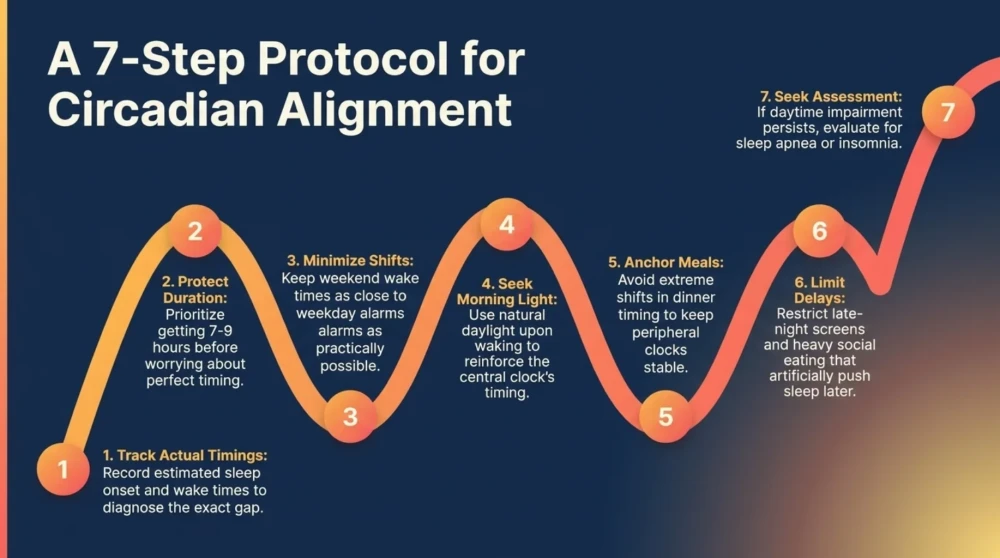
How to Reduce Social Jet Lag in Seven Practical Steps
The following measures can help patients develop a more consistent sleep routine. They should be adapted to individual circumstances rather than treated as a rigid medical prescription.
1. Identify Your Actual Weekday and Weekend Sleep Timings
Before making changes, record bedtime, estimated sleep onset and wake-up time for at least one or two weeks.
This can help identify whether the main problem is insufficient sleep, a large weekend timing shift or both.
2. Protect Adequate Sleep Duration
Avoid reducing weekend sleep simply to make the schedule look more consistent.
Instead, improve weekday sleep opportunity where possible.
3. Reduce Unnecessary Weekend Timing Shifts
Try to keep bedtime and wake-up time reasonably close to the usual schedule when practical.
Large, repeated shifts may make returning to an early Monday routine more difficult.
4. Obtain Appropriate Morning Light Exposure
For people maintaining a daytime routine, morning daylight may help reinforce circadian timing.
Light-based strategies should be individualised for shift workers or people with circadian rhythm disorders.
5. Maintain a Sustainable Meal Pattern
Avoid repeated large changes in meal timing when possible, while prioritising balanced nutrition and adequate energy intake.
6. Limit Behaviours That Repeatedly Delay Sleep
Late-night screen use, prolonged social activities and excessive evening caffeine may contribute to delayed bedtime in some individuals.
Identify the factors that are most relevant to your own routine.
7. Seek Medical Assessment for Persistent Sleep Problems
If sleep remains irregular despite reasonable adjustments, or if significant daytime impairment occurs, further evaluation may be necessary.
Sleep apnoea, insomnia, circadian rhythm disorders and other medical conditions may require specific management.
A Practical Sleep Diary for Patients With Prediabetes or Diabetes
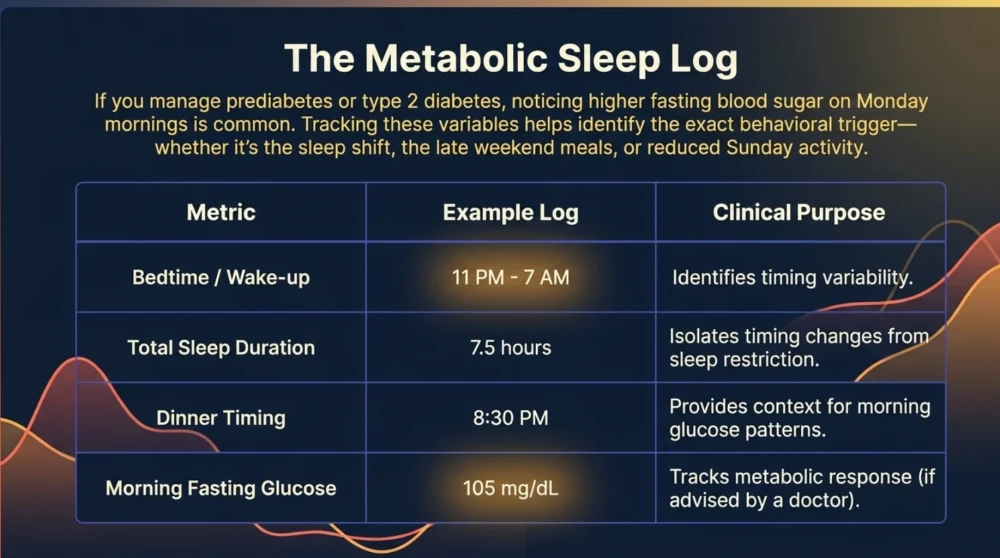
Patients who want to understand whether sleep changes coincide with glucose fluctuations may benefit from maintaining a short sleep and lifestyle diary.
The objective is not to prove that sleep timing caused a particular glucose reading.
Instead, it is to identify patterns that may be useful during medical consultation.
| Information to Record | Example | Clinical Relevance |
|---|---|---|
| Bedtime and wake-up time | 11 PM–7 AM | Helps identify timing variability |
| Estimated sleep duration | 7.5 hours | Distinguishes timing changes from sleep restriction |
| Dinner timing | 8:30 PM | Provides context for glucose patterns |
| Physical activity | 30-minute walk | Helps interpret metabolic changes |
| Glucose readings, if indicated | Fasting or post-meal glucose | Allows review of repeated patterns |
| Medication timing | As prescribed | Important for interpreting glucose results |
Patients should not increase glucose testing unnecessarily or alter diabetes medicines without clinical advice.
When Should Social Jet Lag Be Evaluated by a Doctor?
Occasional differences between weekday and weekend sleep schedules do not necessarily require medical treatment.
However, persistent sleep difficulties may warrant assessment when they cause significant daytime sleepiness, impaired functioning or other symptoms.
Patients should also seek evaluation if they experience loud snoring, witnessed breathing pauses, recurrent morning headaches or unexplained fatigue.
These symptoms may indicate obstructive sleep apnoea or another sleep-related disorder.
For patients with diabetes, persistent unexplained glucose abnormalities should be assessed independently of sleep timing.
Sleep regularity is one part of health assessment, not a substitute for appropriate investigation.
Social Jet Lag in Children and Adolescents
Social jet lag can also occur in school-age children and adolescents.
During adolescence, biological sleep timing often shifts later, while school schedules may continue to require early waking.
This mismatch can contribute to differences between school-day and weekend sleep timing.
However, children and adolescents have different sleep requirements from adults.
Sleep recommendations should therefore be age-appropriate.
Persistent sleep problems, excessive daytime sleepiness or significant school-related impairment may require paediatric assessment.
Social Jet Lag in Shift Workers
Shift workers may experience sleep-timing challenges that differ substantially from conventional weekend social jet lag.
Night shifts, rotating schedules and irregular duty hours can produce pronounced circadian disruption.
Some workers may not be able to maintain the same sleep schedule every day.
In these situations, sleep planning may require consideration of shift timing, light exposure, protected sleep periods and occupational safety.
Generic advice to wake at the same time every morning may be inappropriate for someone working overnight.
Patients with persistent shift-related sleep problems may benefit from specialist sleep-medicine assessment.
Clinical Example 1: Weekend Sleep Changes and Weight Management
Consider a hypothetical 35-year-old office employee who sleeps from 11 PM to 6 AM during the working week but from 2 AM to 10 AM on weekends.
He is concerned about gradual weight gain.
His sleep history reveals both insufficient weekday sleep and a substantial weekend timing shift.
However, these findings do not establish that social jet lag is the cause of his weight gain.
A comprehensive assessment also considers dietary intake, physical activity, medications and other relevant factors.
The management plan focuses on improving weekday sleep opportunity, reducing unnecessary weekend shifts and addressing established weight-related risk factors.
Clinical Example 2: Prediabetes With Irregular Weekend Sleep
A hypothetical 42-year-old woman with prediabetes reports sleeping approximately six hours on weekdays and nine hours on weekends.
She also follows a later weekend meal schedule.
Her clinician discusses sleep duration and regularity as part of comprehensive lifestyle management.
However, improving sleep timing is not presented as a guaranteed way to reverse prediabetes.
Appropriate nutrition, physical activity, weight management when indicated and glucose monitoring remain important.
Clinical Example 3: Higher Monday Fasting Blood Sugar
A hypothetical 56-year-old man with type 2 diabetes notices that his fasting glucose is sometimes higher on Monday mornings.
He initially assumes that sleeping later on weekends is the only explanation.
However, review of his records reveals differences in dinner timing, weekend food intake and physical activity.
His clinician also evaluates medication adherence and other potential contributors.
The example demonstrates why glucose patterns should be interpreted in context rather than attributed automatically to social jet lag.
These clinical examples are hypothetical and intended for educational purposes.
Common Myths About Social Jet Lag
Myth 1: Social Jet Lag Happens Only When You Travel
False. Social jet lag occurs because of differences between workday and free-day sleep timing, even without travel.
Myth 2: Sleeping Eight Hours Means Social Jet Lag Cannot Occur
False. Sleep duration may remain consistent while the sleep midpoint shifts substantially.
Myth 3: Weekend Sleep Changes Directly Cause Diabetes
Not established. Research suggests associations between irregular sleep timing and metabolic outcomes, but causality remains uncertain.
Myth 4: Everyone Must Wake at 5 AM for Better Metabolic Health
False. There is no universal ideal wake-up time. Adequate sleep and alignment with individual circumstances are important.
Myth 5: Weekend Catch-Up Sleep Is Always Harmful
False. Recovery sleep may help reduce accumulated sleepiness. The goal should be to improve sleep adequacy while avoiding unnecessary schedule disruption.
Myth 6: Correcting Social Jet Lag Will Reverse Insulin Resistance
Not established. Sleep regularity may support health, but insulin resistance requires comprehensive assessment and management.
Myth 7: A Late Dinner Automatically Causes Weight Gain
False. Meal timing may matter, but overall dietary intake, food quality, activity and other factors also influence weight regulation.
Myth 8: Sleep Timing Is More Important Than Diabetes Medication
False. Sleep health complements established diabetes treatment and does not replace prescribed medication or appropriate medical monitoring.
Frequently Asked Questions About Social Jet Lag
1. What is social jet lag?
Social jet lag is the difference in sleep timing between workdays and free days, commonly measured using the difference in sleep midpoints.
2. Can social jet lag cause weight gain?
Observational studies have reported associations between social jet lag and higher body weight or adiposity, but a direct causal relationship has not been established.
3. Can sleeping late on weekends increase blood sugar?
Sleep-timing changes may influence glucose regulation, but individual glucose readings are affected by multiple factors. A direct effect cannot be assumed from one reading.
4. Is two hours of social jet lag dangerous?
There is no universally established threshold that determines whether a particular amount of social jet lag is dangerous. Risk depends on broader sleep and health circumstances.
5. Can social jet lag occur even if I sleep eight hours?
Yes. Social jet lag concerns the timing of sleep rather than sleep duration alone.
6. Does social jet lag cause insulin resistance?
Circadian misalignment can affect glucose regulation in controlled experiments, but evidence that ordinary social jet lag directly causes insulin resistance remains insufficient.
7. Is sleeping late on Sunday bad for health?
Occasional late sleep is not necessarily harmful. Repeated large schedule changes may make maintaining an early workday routine more difficult.
8. Should I wake up at the same time every day?
Maintaining reasonably consistent wake-up times may support sleep regularity, but adequate sleep duration should also be protected.
9. Can weekend catch-up sleep compensate for weekday sleep deprivation?
Additional sleep may help reduce accumulated sleepiness, but it may not completely reverse all consequences of repeated insufficient sleep.
10. Can social jet lag affect HbA1c?
Some studies have examined associations between sleep irregularity and HbA1c, but the findings do not establish that social jet lag independently determines HbA1c levels.
11. Does social jet lag worsen PCOS?
Direct causal evidence remains limited. Sleep health may be relevant to comprehensive PCOS management but is not a stand-alone treatment.
12. Can improving sleep regularity reverse prediabetes?
There is insufficient evidence that correcting social jet lag alone reverses prediabetes. Established lifestyle and medical interventions remain important.
13. Does morning sunlight help?
Appropriately timed morning light exposure may support an earlier circadian schedule in many individuals, although effects depend on timing and individual biology.
14. Can a sleep tracker diagnose social jet lag?
A sleep tracker may help estimate sleep timing, but its measurements have limitations. Clinical interpretation may require a sleep diary and additional assessment.
15. When should I consult a doctor about irregular sleep?
Seek medical advice if sleep problems are persistent, cause significant daytime impairment or are accompanied by symptoms suggesting sleep apnoea or another medical condition.
What I Explain to Patients About Social Jet Lag and Metabolic Health
When patients consult me for obesity, prediabetes, type 2 diabetes or persistent fatigue, I consider sleep as part of the broader lifestyle assessment.
Many patients focus on the number of hours they sleep but do not consider how much their sleep schedule changes between weekdays and weekends.
I explain that the body has an internal circadian timing system involved in regulating sleep, appetite and several metabolic processes.
However, I also clarify that social jet lag should not automatically be blamed for elevated blood sugar or weight gain.
These conditions are influenced by multiple factors, including dietary intake, physical activity, medications, body composition and underlying medical conditions.
When substantial sleep-timing differences are present, I discuss practical ways to improve consistency while protecting adequate sleep duration.
For patients with diabetes, reviewing glucose patterns alongside sleep and meal timing may provide additional clinical information.
The objective is to improve overall lifestyle management without making unsupported claims that correcting sleep timing alone will cure metabolic disease.
Key Takeaways: Social Jet Lag, Weight and Blood Sugar
- Social jet lag refers to differences between workday and free-day sleep timing.
- It can occur even when total sleep duration remains adequate.
- The circadian system participates in glucose and metabolic regulation.
- Controlled studies show that circadian misalignment can affect glucose tolerance.
- Observational studies have linked social jet lag with several metabolic outcomes, but causality remains uncertain.
- Sleep duration and sleep timing are related but distinct aspects of sleep health.
- Weekend catch-up sleep should not be restricted at the expense of adequate sleep.
- Maintaining reasonably consistent sleep and wake times may support circadian regularity.
- Morning light, sustainable meal timing and regular physical activity may support healthy routines.
- Patients with diabetes should not alter medicines independently because of weekend schedule changes.
- Persistent sleep problems or symptoms of sleep apnoea require appropriate evaluation.
- Sleep regularity should complement established metabolic health treatment.
Sleep, Diabetes and Weight Management Consultation in Dwarka, Delhi
If you have persistent fatigue, irregular sleep timing, unexplained glucose fluctuations, prediabetes or weight-management concerns, a medical consultation can help identify relevant contributing factors.
Dr. Pankaj Kumar, General & Lifestyle Physician, provides consultations for general medical conditions, diabetes, obesity, metabolic health and lifestyle-related disorders in Dwarka, New Delhi.
Assessment may include reviewing sleep habits, dietary patterns, physical activity, medications and relevant metabolic investigations.
Clinic location: Doctors Lane, Sector 6, Dwarka, opposite Dhanwantari Labs, New Delhi.
Consultations: In-clinic and online consultations are available.
Scientific References and Clinical Guidelines
- Wittmann M, Dinich J, Merrow M, Roenneberg T. Social Jetlag: Misalignment of Biological and Social Time. Chronobiology International. 2006;23(1–2):497–509. DOI: 10.1080/07420520500545979.
- Roenneberg T, Allebrandt KV, Merrow M, Vetter C. Social Jetlag and Obesity. Current Biology. 2012;22(10):939–943. DOI: 10.1016/j.cub.2012.03.038.
- Scheer FAJL, Hilton MF, Mantzoros CS, Shea SA. Adverse Metabolic and Cardiovascular Consequences of Circadian Misalignment. Proceedings of the National Academy of Sciences. 2009;106(11):4453–4458. DOI: 10.1073/pnas.0808180106.
- Buxton OM, Cain SW, O'Connor SP, et al. Adverse Metabolic Consequences in Humans of Prolonged Sleep Restriction Combined With Circadian Disruption. Science Translational Medicine. 2012;4(129):129ra43. DOI: 10.1126/scitranslmed.3003200.
- St-Onge MP, Grandner MA, Brown D, et al. Sleep Duration and Quality: Impact on Lifestyle Behaviors and Cardiometabolic Health: A Scientific Statement From the American Heart Association. Circulation. 2016;134(18):e367–e386. DOI: 10.1161/CIR.0000000000000444.
- Huang T, Redline S. Cross-Sectional and Prospective Associations of Actigraphy-Assessed Sleep Regularity With Metabolic Abnormalities: The Multi-Ethnic Study of Atherosclerosis. Diabetes Care. 2019;42(8):1422–1429. DOI: 10.2337/dc19-0596.
- World Health Organization. WHO Guidelines on Physical Activity and Sedentary Behaviour. 2020. WHO Physical Activity Guidelines.
- American Academy of Sleep Medicine and Sleep Research Society. Recommended Amount of Sleep for a Healthy Adult: A Joint Consensus Statement. Sleep. 2015;38(6):843–844. DOI: 10.5665/sleep.4716.
Medical disclaimer: This article is intended for general health education and does not replace individual medical advice. Social jet lag is not a stand-alone diagnosis of diabetes, insulin resistance or obesity. Sleep-related symptoms and abnormal glucose measurements should be evaluated in the context of medical history, medications and appropriate investigations. Do not change prescribed diabetes medication or deliberately restrict necessary sleep without medical guidance.
Written by Dr. Pankaj Kumar , General & Lifestyle Physician, Dwarka, New Delhi