









- 28th October 2026
Table of Contents
- High Ferritin and Fatty Liver: Why Are These Findings Often Seen Together?
- What Is Ferritin and What Does It Measure?
- Why Ferritin Is More Than an Iron Marker
- What Is Fatty Liver Disease?
- Why Can Ferritin Be High in Fatty Liver?
- High Ferritin and Insulin Resistance: What Is the Connection?
- What Is Dysmetabolic Hyperferritinaemia?
- High Ferritin With Normal Transferrin Saturation: What Does It Mean?
- What Is Transferrin Saturation and Why Is It Important?
- Ferritin vs Serum Iron vs Transferrin Saturation
- Can Ferritin Be High Even When Liver Enzymes Are Normal?
- Does High Ferritin Mean Liver Inflammation?
- Does High Ferritin Mean Liver Fibrosis?
- What Is FIB-4 and Why Is It Useful in Fatty Liver?
- When Is FibroScan Useful in a Patient With High Ferritin and Fatty Liver?
- Can Ultrasound Detect Iron Overload in the Liver?
- Can High Ferritin Occur Without Fatty Liver?
- How High Is Too High? Understanding Ferritin Results
- Illustrative Ferritin Patterns and Their Possible Interpretation
- High Ferritin and Fatty Liver: How Do Doctors Identify the Actual Cause?
- What Is Hereditary Haemochromatosis?
- How Is Haemochromatosis Different From Metabolic Hyperferritinaemia?
- Metabolic Hyperferritinaemia vs Hereditary Haemochromatosis
- Why Transferrin Saturation Is Important in Suspected Iron Overload
- What Does Ferritin 400 With Normal Transferrin Saturation Mean?
- What Does Ferritin 600 With Transferrin Saturation 55% Mean?
- When Should HFE Genetic Testing Be Considered?
- Can Hereditary Haemochromatosis Occur in Indian Patients?
- Can Iron Overload Occur With Normal Transferrin Saturation?
- Other Causes of High Ferritin That Should Not Be Missed
- Alcohol-Related Liver Disease
- Inflammation and Infection
- Chronic Kidney Disease
- Malignancy and Haematological Disorders
- Repeated Blood Transfusions
- Can Iron Supplements Cause High Ferritin?
- Why Very High Ferritin Requires a Different Approach
- What Does Ferritin Above 1,000 ng/mL Mean?
- Which Blood Tests Are Useful When Ferritin Is High?
- Should Ferritin Be Repeated Before Further Investigation?
- Is Fasting Required for Iron Studies?
- When Is Liver MRI Needed for High Ferritin?
- Can FibroScan Measure Liver Iron?
- When Is Liver Biopsy Considered?
- Does High Ferritin Require Therapeutic Phlebotomy?
- Should Patients With High Ferritin Avoid All Iron-Rich Foods?
- Can Vitamin C Supplements Increase Iron Absorption?
- Should Patients With Fatty Liver Stop Taking Multivitamins Containing Iron?
- Does Reducing Body Weight Lower Ferritin?
- Can Exercise Reduce High Ferritin?
- When Should a Patient With High Ferritin See a Liver Specialist?
- A Practical Diagnostic Approach to High Ferritin and Fatty Liver
- High Ferritin and Fatty Liver: What Is the Right Treatment?
- Can Treating Fatty Liver Reduce High Ferritin?
- Why Weight Management Matters in Patients With Fatty Liver
- How Much Weight Loss Can Help Fatty Liver?
- What Is the Best Indian Diet for High Ferritin and Fatty Liver?
- Practical Dietary Principles for Patients With MASLD and Elevated Ferritin
- Sample Indian Meal Pattern for Fatty Liver and Metabolic Health
- Should Patients With High Ferritin Avoid Spinach, Lentils and Other Iron-Rich Foods?
- Should Red Meat Be Avoided When Ferritin Is High?
- What About Tea and Coffee in Patients With High Ferritin?
- Should Alcohol Be Avoided With High Ferritin and Fatty Liver?
- Can Exercise Improve Fatty Liver When Ferritin Is Elevated?
- A Practical Weekly Exercise Framework
- How Often Should Ferritin Be Rechecked?
- What Should Be Monitored Along With Ferritin?
- Should Ferritin Be Used to Monitor Fatty Liver Improvement?
- What If Ferritin Remains High Despite Weight Loss?
- When Does High Ferritin Require Urgent Medical Attention?
- Clinical Example 1: High Ferritin With Fatty Liver and Normal Transferrin Saturation
- Clinical Example 2: High Ferritin With Increased Transferrin Saturation
- Clinical Example 3: Persistent Ferritin Elevation Despite Improved Metabolic Health
- Clinical Example 4: Very High Ferritin With Systemic Symptoms
- Common Myths About High Ferritin and Fatty Liver
- Myth 1: High Ferritin Always Means Excess Iron
- Myth 2: Fatty Liver Is Always the Cause of High Ferritin
- Myth 3: High Ferritin Means Liver Cirrhosis
- Myth 4: Everyone With High Ferritin Needs Blood Removal
- Myth 5: Normal Liver Enzymes Mean the Liver Is Healthy
- Myth 6: Patients With High Ferritin Must Avoid All Iron-Rich Foods
- Myth 7: FibroScan Measures Iron in the Liver
- Myth 8: Normal Ferritin Means Fatty Liver Has Resolved
- Frequently Asked Questions About High Ferritin and Fatty Liver
- What I Explain to Patients With High Ferritin and Fatty Liver
- Key Takeaways: High Ferritin and Fatty Liver
- High Ferritin and Fatty Liver Consultation in Dwarka, Delhi
- Scientific References and Clinical Guidelines
High Ferritin and Fatty Liver: Why Are These Findings Often Seen Together?
A patient undergoes a routine health check-up and discovers two abnormalities in the reports. An ultrasound shows fatty liver, while a blood test reveals elevated serum ferritin.
The patient may immediately become concerned about excessive iron accumulation in the liver.
This concern is understandable because ferritin is commonly described as a marker of the body's iron stores.
However, the relationship between high ferritin and fatty liver is more complicated than simply having too much iron.
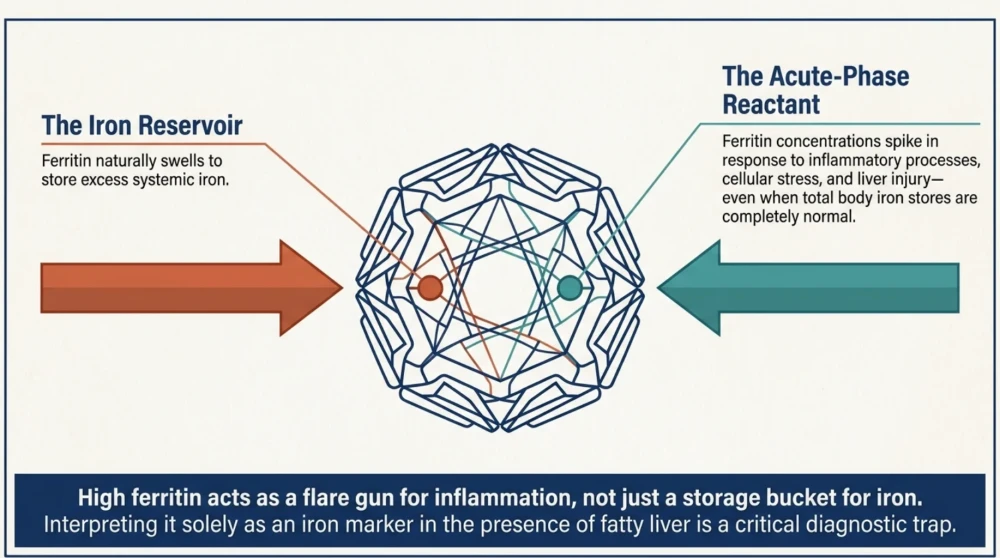
Ferritin is an iron-storage protein, but its concentration in the bloodstream can also increase in association with inflammation, liver injury, metabolic dysfunction and several other medical conditions.
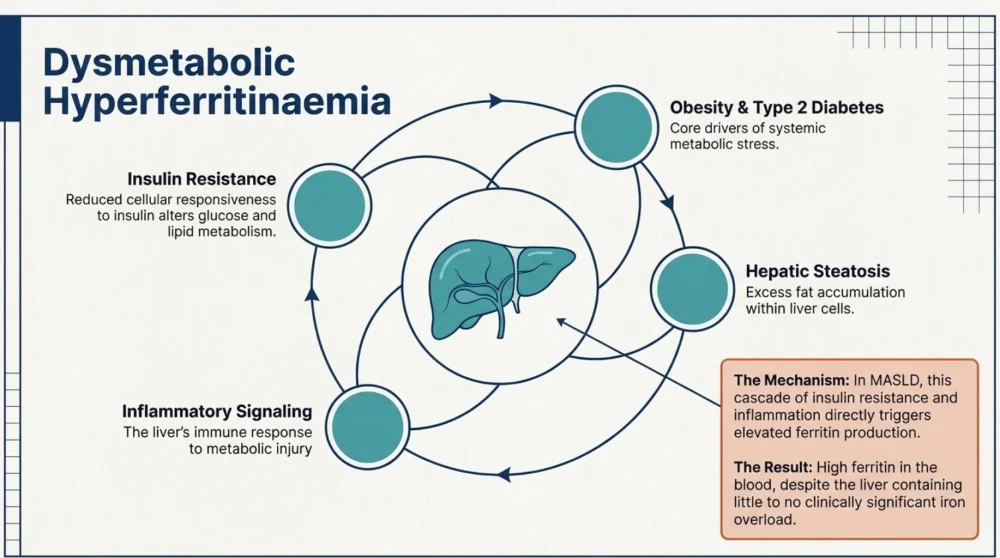
In people with metabolic dysfunction-associated steatotic liver disease, or MASLD, elevated ferritin is not uncommon.
However, a high ferritin result does not automatically mean that the liver contains excessive iron.
Nor does it necessarily mean that significant liver fibrosis or cirrhosis is present.
Some patients have elevated ferritin with normal transferrin saturation, while others have biochemical findings that raise concern for iron overload.
Distinguishing these situations is important because the underlying causes and appropriate management can differ substantially.
The key clinical question is not simply whether ferritin is high, but why it is high and whether there is evidence of iron overload, liver disease or another relevant condition.
What Is Ferritin and What Does It Measure?
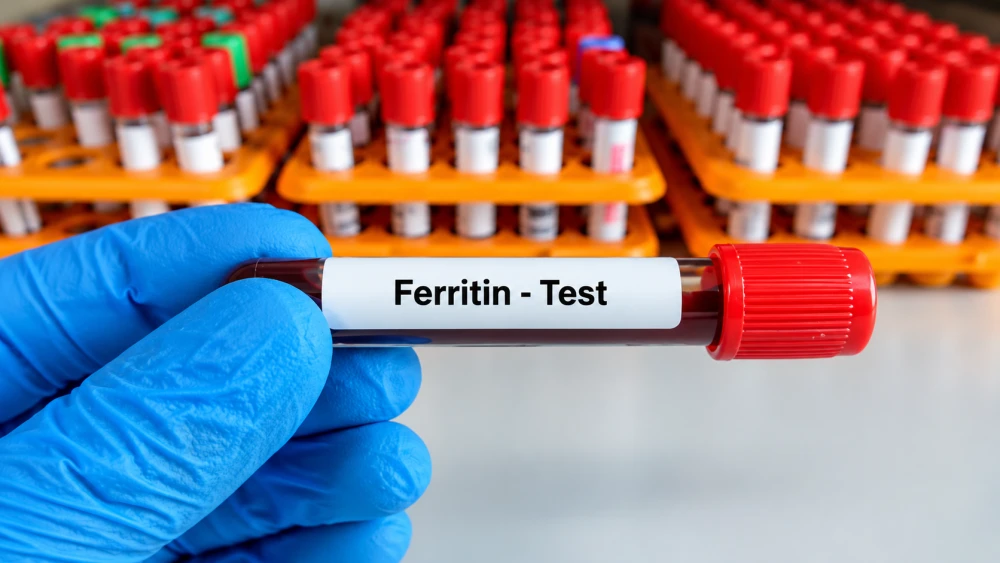
Ferritin is a protein complex that stores iron within cells.
It helps maintain iron in a form that can be stored and released according to physiological requirements.
Ferritin is found in several tissues, including the liver, spleen and bone marrow.
Small amounts are also present in the bloodstream, where serum ferritin is measured through a blood test.
In many clinical situations, serum ferritin provides useful information about iron stores.
For example, a low ferritin concentration often supports a diagnosis of iron deficiency, particularly when interpreted with the patient's clinical history and other laboratory findings.
However, elevated ferritin is less specific.
A high ferritin result may reflect increased iron stores, but it can also occur in the absence of significant iron overload.
This is because ferritin behaves as an acute-phase reactant, meaning its concentration may rise in association with inflammatory processes.
Liver disease can also influence serum ferritin concentrations.
Why Ferritin Is More Than an Iron Marker
Ferritin is frequently included in investigations for anaemia and suspected iron deficiency.
However, interpreting ferritin only as an iron-storage marker can be misleading when the result is elevated.
Several biological processes can contribute to high serum ferritin.
These include increased iron stores, inflammation, liver injury, alcohol-related liver disease, metabolic dysfunction, infection and certain malignancies.
The relative contribution of these mechanisms varies between patients.
For example, an individual with obesity, type 2 diabetes and fatty liver may have elevated ferritin even when transferrin saturation is not increased.
Another patient with hereditary haemochromatosis may have elevated ferritin accompanied by persistently increased transferrin saturation.
Although both patients have high ferritin, their clinical evaluation and treatment may be different.
Does High Ferritin Always Mean Too Much Iron?
No.
High ferritin does not always indicate iron overload.
Ferritin may rise in association with inflammation, liver disease and metabolic dysfunction even when total body iron stores are not substantially increased.
Therefore, ferritin should usually be interpreted alongside transferrin saturation, other iron studies, liver tests and the patient's clinical circumstances.
When the cause remains uncertain, additional investigation may be necessary.
What Is Fatty Liver Disease?
Fatty liver disease occurs when excess fat accumulates within liver cells.
The terminology used to describe this condition has changed in recent years.
The term non-alcoholic fatty liver disease, or NAFLD, was previously widely used.
In the updated nomenclature, metabolic dysfunction-associated steatotic liver disease, or MASLD, refers to hepatic steatosis occurring in the presence of at least one specified cardiometabolic risk factor, provided the relevant diagnostic criteria are met.
MASLD is commonly associated with obesity, insulin resistance, type 2 diabetes, hypertension and dyslipidaemia.
However, fatty liver can also occur in people without obesity.
Some individuals develop liver inflammation and progressive fibrosis, while others have steatosis without advanced liver injury.
Therefore, identifying fatty liver on ultrasound is only the beginning of clinical assessment.
The next step is to evaluate metabolic risk factors and determine whether clinically significant liver fibrosis may be present.
Why Can Ferritin Be High in Fatty Liver?
Several mechanisms may contribute to elevated ferritin in people with MASLD.
These include metabolic dysfunction, inflammatory signalling, changes in iron regulation and liver-cell injury.
However, the contribution of each mechanism is not identical in every patient.
Some individuals may have increased hepatic iron stores, while others have elevated serum ferritin without substantial iron accumulation.
Therefore, the presence of fatty liver does not establish the cause of hyperferritinaemia.
It is important to avoid assuming that every elevated ferritin result in a patient with MASLD is caused by fatty liver alone.
High Ferritin and Insulin Resistance: What Is the Connection?
Insulin resistance is a common metabolic abnormality in patients with MASLD.
It involves reduced responsiveness of certain tissues to insulin, which can influence glucose and lipid metabolism.
Research has identified associations between elevated ferritin and metabolic conditions such as insulin resistance, obesity and type 2 diabetes.
However, these associations do not necessarily establish that ferritin itself causes insulin resistance.
Ferritin may act as a marker of underlying metabolic or inflammatory processes.
In some individuals, changes in iron metabolism may also contribute to the relationship.
However, the mechanisms remain complex, and elevated ferritin should not be interpreted as a direct measurement of insulin resistance.
A patient can have high ferritin without insulin resistance, and insulin resistance can occur with normal ferritin.
What Is Dysmetabolic Hyperferritinaemia?
The term dysmetabolic hyperferritinaemia is used to describe elevated ferritin associated with metabolic abnormalities, often in the absence of markedly increased transferrin saturation.
It has been described in patients with obesity, insulin resistance, dyslipidaemia and fatty liver disease.
However, the term is descriptive rather than a substitute for a complete diagnostic evaluation.
Not every patient with elevated ferritin and metabolic risk factors has the same underlying iron status.
Some may have modest increases in liver iron, while others may have little or no clinically significant iron overload.
Therefore, the diagnosis should not be made solely because a patient has fatty liver and high ferritin.
High Ferritin With Normal Transferrin Saturation: What Does It Mean?
Transferrin is a protein that transports iron through the bloodstream.
Transferrin saturation estimates the proportion of available transferrin iron-binding sites occupied by iron.
It is commonly calculated using serum iron and total iron-binding capacity or related measurements.
When ferritin is elevated but transferrin saturation is normal, significant systemic iron overload may be less likely in many clinical circumstances.
However, normal transferrin saturation does not exclude every form of iron-loading disorder.
For example, some conditions involving altered iron distribution or specific genetic disorders may present differently.
Therefore, interpretation depends on the degree of ferritin elevation, persistence of the abnormality, liver findings, family history and other laboratory results.
What Is Transferrin Saturation and Why Is It Important?
Transferrin saturation is an important component of the evaluation of suspected iron overload.
Persistently increased transferrin saturation can raise concern for conditions such as hereditary haemochromatosis.
Thresholds around 45% are commonly used in clinical evaluation, although interpretation depends on the guideline, laboratory and patient characteristics.
A single mildly elevated result may require confirmation because serum iron measurements can vary.
Conversely, a normal transferrin saturation makes classic HFE-related haemochromatosis less likely in many circumstances, although it does not exclude all causes of iron overload.
Therefore, ferritin and transferrin saturation provide complementary information.
Ferritin vs Serum Iron vs Transferrin Saturation
| Test | What It Reflects | Important Limitation |
|---|---|---|
| Serum ferritin | Provides information about iron stores and may rise with inflammation or liver disease | Elevated ferritin does not establish iron overload |
| Serum iron | Amount of circulating iron bound mainly to transferrin | Varies with several physiological and clinical factors |
| Transferrin saturation | Percentage of iron-binding sites occupied by iron | Requires interpretation with ferritin and clinical context |
| Total iron-binding capacity | Reflects the blood's iron-binding capacity, largely related to transferrin | Can be influenced by nutritional status and liver disease |
| Complete blood count | Provides information about haemoglobin and blood-cell indices | Does not directly measure body iron stores |
Can Ferritin Be High Even When Liver Enzymes Are Normal?
Yes.
Patients with fatty liver may have normal alanine aminotransferase (ALT) and aspartate aminotransferase (AST) despite the presence of hepatic steatosis.
Normal liver enzymes do not reliably exclude clinically important liver fibrosis.
Similarly, elevated ferritin may occur without a marked increase in ALT or AST.
Therefore, the combination of normal liver enzymes and elevated ferritin does not establish that the liver is healthy or that the ferritin elevation is harmless.
The need for further evaluation depends on the patient's metabolic risk profile, age, other laboratory findings and fibrosis risk assessment.
Does High Ferritin Mean Liver Inflammation?
Not necessarily.
Ferritin can rise in association with inflammatory processes, including some forms of liver injury.
However, it is not a specific test for liver inflammation.
A patient with elevated ferritin may have metabolic dysfunction without active steatohepatitis.
Another patient may have liver inflammation with a normal ferritin concentration.
Therefore, ferritin cannot independently diagnose metabolic dysfunction-associated steatohepatitis, or MASH.
MASH refers to a form of steatotic liver disease involving characteristic liver-cell injury and inflammation.
Diagnosis and risk assessment require appropriate clinical evaluation, and selected patients may need specialist investigations.
Does High Ferritin Mean Liver Fibrosis?
Elevated ferritin has been investigated as a possible marker of more severe liver disease in MASLD.
Some studies have reported associations between higher ferritin concentrations and more severe histological findings.
However, other studies have found limited diagnostic performance for predicting significant fibrosis.
Therefore, ferritin alone is not considered a reliable test for diagnosing or staging liver fibrosis.
Patients with MASLD should undergo appropriate fibrosis risk stratification using validated approaches.
These may include FIB-4 and liver stiffness assessment with transient elastography when indicated.
A high ferritin result should not be used as a substitute for proper liver fibrosis assessment.
What Is FIB-4 and Why Is It Useful in Fatty Liver?
FIB-4 is a non-invasive fibrosis risk score calculated using age, AST, ALT and platelet count.
It is commonly used as an initial risk-stratification tool in adults with suspected or established MASLD.
A low FIB-4 score may help identify patients at lower risk of advanced fibrosis, while higher or indeterminate scores may require additional evaluation.
However, FIB-4 has important limitations.
Its performance is less reliable in adults younger than 35 years, and age-adjusted interpretation is recommended in older adults.
It should also not be applied indiscriminately during acute illness or acute liver injury.
Importantly, ferritin is not part of the FIB-4 calculation.
When Is FibroScan Useful in a Patient With High Ferritin and Fatty Liver?
FibroScan, a form of vibration-controlled transient elastography, provides a non-invasive measurement of liver stiffness.
Liver stiffness can help assess the likelihood of clinically significant fibrosis, although results can be affected by factors such as inflammation, congestion and technical limitations.
FibroScan may also provide a controlled attenuation parameter (CAP) measurement that estimates hepatic steatosis.
However, CAP does not replace a complete metabolic or liver assessment.
In patients with MASLD, transient elastography is often considered when initial fibrosis risk assessment is indeterminate or elevated, or when clinical circumstances warrant further evaluation.
Ferritin elevation alone does not automatically mean that every patient requires FibroScan.
The decision should be guided by the broader clinical picture.
Can Ultrasound Detect Iron Overload in the Liver?
Routine abdominal ultrasound is useful for identifying certain structural abnormalities and may detect moderate or marked hepatic steatosis.
However, conventional ultrasound cannot reliably quantify liver iron concentration.
Therefore, an ultrasound report showing fatty liver does not establish whether iron overload is present.
When clinically significant hepatic iron accumulation is suspected, specialised magnetic resonance imaging techniques may be used to estimate liver iron concentration.
The need for MRI depends on iron studies, clinical findings and specialist assessment.
Can High Ferritin Occur Without Fatty Liver?
Yes.
Elevated ferritin can occur in many conditions unrelated to MASLD.
Examples include inflammatory disorders, infections, alcohol-related liver disease, chronic kidney disease, iron-loading disorders and certain malignancies.
Some patients may also have elevated ferritin because of recent iron treatment or repeated blood transfusions.
Therefore, high ferritin should not automatically be attributed to fatty liver, even when both findings are present.
Persistent or unexplained hyperferritinaemia deserves an appropriate diagnostic approach.
How High Is Too High? Understanding Ferritin Results
Ferritin reference ranges vary according to laboratory methods, sex, age and other factors.
Therefore, a value slightly above one laboratory's reference range may not have the same significance as a markedly elevated result.
Clinical interpretation also depends on whether ferritin elevation is persistent and whether transferrin saturation is increased.
Very high ferritin concentrations can occur in several serious inflammatory and liver-related conditions, as well as iron overload.
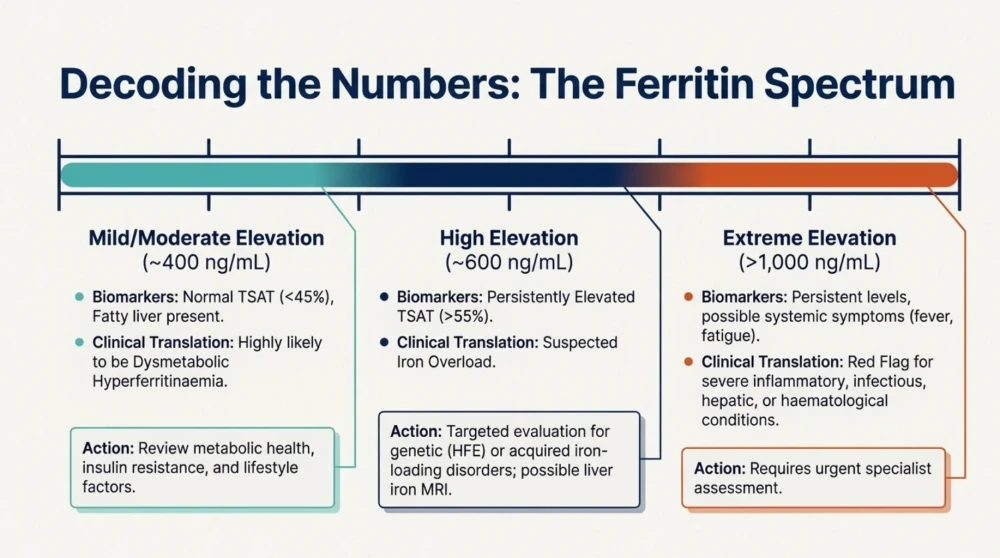
For example, persistent ferritin above approximately 1,000 ng/mL often warrants more detailed evaluation, particularly when accompanied by abnormal liver tests or other concerning findings.
However, this is not a universal diagnostic threshold, and important disease can occur at lower ferritin concentrations.
Illustrative Ferritin Patterns and Their Possible Interpretation
| Laboratory Pattern | Possible Consideration | Important Next Step |
|---|---|---|
| Mild ferritin elevation with normal transferrin saturation | Metabolic dysfunction, inflammation or other non-iron-overload causes | Review history, repeat testing when appropriate and assess relevant conditions |
| High ferritin with persistently elevated transferrin saturation | Possible iron overload | Evaluate for hereditary or acquired iron-loading disorders |
| High ferritin with abnormal liver enzymes | Possible liver injury, metabolic disease, alcohol-related disease or another cause | Assess liver disease and fibrosis risk |
| Markedly elevated ferritin with systemic symptoms | Potential significant inflammatory, infectious, hepatic or haematological condition | Prompt clinical assessment according to severity |
| Persistent ferritin above approximately 1,000 ng/mL | Requires careful evaluation; cause cannot be determined from ferritin alone | Consider specialist assessment and further investigation |
These patterns are illustrative rather than diagnostic rules. Ferritin values must be interpreted using the laboratory's reference range and the patient's complete clinical context.
High Ferritin and Fatty Liver: How Do Doctors Identify the Actual Cause?
When a patient has both elevated serum ferritin and fatty liver disease, it may be tempting to assume that the two findings have a single explanation.
However, this assumption can be misleading.
Although metabolic dysfunction-associated steatotic liver disease (MASLD) is frequently associated with elevated ferritin, other causes must be considered according to the patient's history, examination and laboratory findings.
Some patients have metabolic hyperferritinaemia without clinically important iron overload. Others may have hereditary or acquired iron-loading disorders that require specific treatment.
Occasionally, two conditions coexist. A patient may have metabolic fatty liver and an unrelated disorder of iron metabolism.
Therefore, the objective is not simply to confirm that ferritin is elevated. The objective is to determine whether the elevation reflects increased iron stores, inflammation, liver injury, metabolic dysfunction or another process.
The diagnostic approach to high ferritin and fatty liver should begin with clinical context and iron studies, rather than assuming that every elevated ferritin result requires iron-removal treatment.
What Is Hereditary Haemochromatosis?
Hereditary haemochromatosis is a group of inherited disorders characterised by inappropriate iron accumulation in the body.
In classic HFE-related haemochromatosis, altered regulation of intestinal iron absorption can lead to progressive iron loading over time.
Excess iron may accumulate in organs such as the liver and, in some patients, the pancreas, heart and endocrine tissues.
However, the severity of iron accumulation and clinical consequences vary considerably.
Not everyone with a genetic susceptibility develops clinically significant disease.
Furthermore, the prevalence of common HFE-related haemochromatosis variants differs substantially between populations.
Classic HFE-related haemochromatosis is particularly associated with people of Northern European ancestry. Other genetic forms of iron overload may occur in different populations.
Therefore, ethnicity, family history, biochemical findings and clinical context are relevant when deciding whether genetic testing is appropriate.
How Is Haemochromatosis Different From Metabolic Hyperferritinaemia?
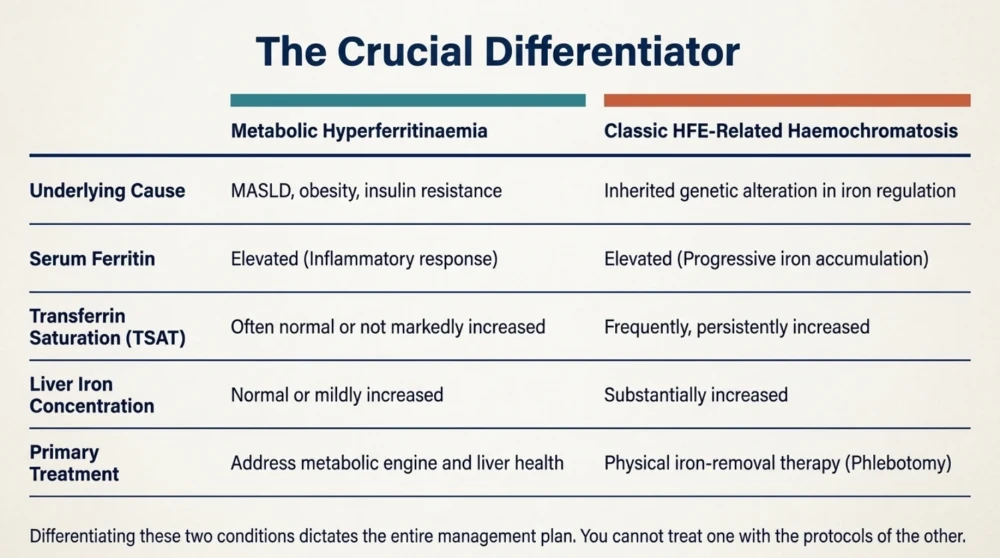
The distinction between haemochromatosis and metabolic hyperferritinaemia is clinically important because the management may differ.
In classic HFE-related haemochromatosis, increased transferrin saturation is often an important early biochemical finding.
Ferritin may rise as iron accumulates.
In contrast, metabolic hyperferritinaemia commonly occurs in association with obesity, insulin resistance, dyslipidaemia and MASLD, often without markedly elevated transferrin saturation.
However, these patterns are not absolute.
Some patients with metabolic dysfunction may have increased hepatic iron, while certain less common iron-loading disorders may present with normal or relatively low transferrin saturation.
Therefore, the distinction requires more than one laboratory result.
Metabolic Hyperferritinaemia vs Hereditary Haemochromatosis
| Feature | Metabolic Hyperferritinaemia | Classic HFE-Related Haemochromatosis |
|---|---|---|
| Common association | MASLD, obesity, insulin resistance and metabolic dysfunction | Inherited alteration in iron regulation |
| Serum ferritin | May be elevated | May be elevated as iron accumulates |
| Transferrin saturation | Often normal or not markedly increased | Frequently increased |
| Liver iron concentration | May be normal or mildly increased in some patients | May be substantially increased |
| Main treatment approach | Address underlying metabolic and liver-related conditions | Iron-removal therapy when indicated |
| Is routine phlebotomy recommended? | Not routinely recommended solely for metabolic ferritin elevation | Therapeutic phlebotomy is a standard treatment for appropriate patients with iron overload |
These differences are typical patterns rather than definitive diagnostic criteria.
Why Transferrin Saturation Is Important in Suspected Iron Overload
Transferrin saturation, commonly abbreviated as TSAT, provides information about the proportion of circulating transferrin iron-binding sites occupied by iron.
It is an important investigation when serum ferritin is elevated.
Persistently increased TSAT may raise suspicion for hereditary haemochromatosis or another iron-loading disorder.
Many clinical pathways use a threshold around 45% when evaluating possible iron overload, although interpretation varies according to guidelines and patient characteristics.
However, TSAT is not a perfect diagnostic test.
Serum iron measurements can fluctuate, and acute illness or other physiological factors may influence results.
Therefore, an unexpected abnormal result may require confirmation.
Similarly, normal TSAT reduces the likelihood of classic HFE-related haemochromatosis in many circumstances but does not exclude all iron-loading disorders.
What Does Ferritin 400 With Normal Transferrin Saturation Mean?
Consider a hypothetical patient with ferritin of 400 ng/mL, transferrin saturation of 28%, and ultrasound evidence of fatty liver.
This pattern may occur in association with metabolic dysfunction.
However, it does not establish that fatty liver is the only explanation.
The clinician should review alcohol intake, medications, metabolic risk factors, inflammatory conditions and other relevant findings.
Liver enzymes and appropriate fibrosis risk assessment may also be considered.
If ferritin remains elevated without a clear explanation, further investigation may be necessary.
Importantly, the ferritin value alone does not justify therapeutic phlebotomy.
What Does Ferritin 600 With Transferrin Saturation 55% Mean?
A patient with ferritin of 600 ng/mL and persistently elevated transferrin saturation of 55% requires a different diagnostic approach.
Increased TSAT raises concern for iron overload, although it does not independently confirm hereditary haemochromatosis.
The clinician may consider repeat iron studies, relevant family history, liver assessment and genetic investigations when appropriate.
The choice of testing depends partly on ancestry and the local prevalence of specific genetic variants.
In some patients, specialist evaluation and liver iron quantification may be necessary.
The presence of fatty liver should not prevent investigation of possible iron overload.
When Should HFE Genetic Testing Be Considered?
HFE genetic testing may be appropriate when biochemical findings and clinical circumstances suggest hereditary haemochromatosis.
Persistently increased transferrin saturation, elevated ferritin, relevant family history and ancestry associated with HFE-related disease may support testing.
However, HFE testing is not a universal screening test for every patient with fatty liver and mildly elevated ferritin.
The prevalence of common HFE variants varies across populations, and the clinical significance of genetic findings must be interpreted carefully.
For example, carrying one HFE variant does not automatically mean that a person has clinically significant iron overload.
Likewise, genetic susceptibility does not necessarily predict the degree of future organ injury.
Testing should therefore be guided by established clinical pathways rather than performed indiscriminately.
Can Hereditary Haemochromatosis Occur in Indian Patients?
Yes, hereditary and other forms of iron overload can occur in Indian patients.
However, the distribution of genetic causes differs between populations.
The common HFE C282Y variant associated with classic haemochromatosis in Northern European populations is substantially less prevalent in many South Asian populations.
Therefore, a diagnostic strategy based entirely on the prevalence of classic European HFE-related disease may not be appropriate for every Indian patient.
When biochemical findings strongly suggest iron overload, specialist evaluation may be necessary even if common HFE testing is negative.
Other hereditary and acquired causes should be considered according to the clinical presentation.
Can Iron Overload Occur With Normal Transferrin Saturation?
Although increased TSAT is characteristic of classic HFE-related haemochromatosis, not all iron-loading disorders produce the same biochemical pattern.
For example, ferroportin disease can present with elevated ferritin and relatively normal or low transferrin saturation in some forms.
Other conditions involving altered iron distribution may also have unusual laboratory patterns.
However, these disorders are uncommon and should not be assumed to explain every patient with elevated ferritin and normal TSAT.
Clinical history, family history, blood counts, liver findings and specialist investigations help determine whether such conditions should be considered.
Other Causes of High Ferritin That Should Not Be Missed
Metabolic dysfunction is only one possible explanation for hyperferritinaemia.
Several other conditions can increase serum ferritin, sometimes substantially.
The relative likelihood depends on the degree of elevation, accompanying symptoms and other laboratory findings.
Alcohol-Related Liver Disease
Alcohol consumption can influence liver health and ferritin concentrations.
Some patients with alcohol-related liver disease have elevated ferritin without classic hereditary iron overload.
Alcohol may also coexist with metabolic risk factors.
Therefore, alcohol history should be assessed carefully and without assuming that fatty liver has only one cause.
Inflammation and Infection
Ferritin is an acute-phase reactant and may increase during inflammatory or infectious conditions.
In such situations, ferritin may not accurately reflect iron stores.
Clinical assessment and selected inflammatory markers may help identify the underlying cause.
Chronic Kidney Disease
Patients with chronic kidney disease may have altered iron metabolism and inflammatory activity.
Ferritin interpretation can be particularly challenging in this population.
Iron studies should be assessed using the appropriate kidney-disease context rather than general population assumptions alone.
Malignancy and Haematological Disorders
Some malignancies and haematological conditions are associated with elevated ferritin.
However, high ferritin alone is not a cancer screening test and does not establish malignancy.
Further evaluation should be guided by clinical findings, blood counts and other relevant abnormalities.
Repeated Blood Transfusions
Patients receiving repeated red blood cell transfusions may accumulate excess iron over time.
This is particularly relevant in some chronic haematological disorders.
Transfusion-related iron overload requires a different management approach from metabolic hyperferritinaemia.
Can Iron Supplements Cause High Ferritin?
Iron supplementation can influence iron stores and laboratory measurements.
However, the significance depends on the dose, duration, route of administration and underlying condition.
Recent intravenous iron treatment can substantially affect ferritin interpretation.
Patients should inform their clinician about oral iron supplements, intravenous iron and previous blood transfusions.
However, patients should not discontinue medically indicated iron treatment solely because of one unexpected laboratory result without appropriate review.
Why Very High Ferritin Requires a Different Approach
Marked hyperferritinaemia may occur in severe inflammatory, infectious, hepatic and haematological conditions, as well as iron overload.
Extremely elevated ferritin can be seen in conditions such as haemophagocytic lymphohistiocytosis, adult-onset Still's disease and severe systemic inflammatory illnesses.
However, ferritin alone cannot diagnose these disorders.
Patients with very high ferritin accompanied by fever, systemic illness, abnormal blood counts or organ dysfunction require prompt medical assessment.
The urgency of evaluation depends on the clinical condition rather than the ferritin number alone.
What Does Ferritin Above 1,000 ng/mL Mean?
Persistent ferritin above approximately 1,000 ng/mL often warrants more detailed evaluation.
However, this value is not specific for iron overload.
Some patients have marked ferritin elevation because of liver disease or inflammation, while others have significant iron accumulation.
The clinician should review TSAT, liver enzymes, blood counts, inflammatory findings, medical history and other relevant investigations.
Specialist assessment may be appropriate, particularly when the cause remains uncertain or there is concern for advanced liver disease.
Which Blood Tests Are Useful When Ferritin Is High?
The initial evaluation should be tailored to the patient's history and examination.
Commonly considered investigations include repeat ferritin, transferrin saturation, serum iron, transferrin or total iron-binding capacity, complete blood count and liver enzymes.
Additional tests may be selected to evaluate metabolic dysfunction, inflammation, kidney disease or other suspected causes.
Not every patient requires every investigation.
| Investigation | Clinical Purpose | Important Consideration |
|---|---|---|
| Repeat serum ferritin | Assess persistence and trend | Interpret in relation to recent illness or treatment |
| Transferrin saturation | Evaluate possible iron overload | Unexpected elevation may require confirmation |
| Complete blood count | Assess haemoglobin, cell counts and indices | May identify haematological abnormalities |
| ALT, AST, ALP and bilirubin | Assess liver-related biochemical abnormalities | Normal values do not exclude significant fibrosis |
| HbA1c or glucose testing | Assess glucose regulation | Relevant when metabolic dysfunction is suspected |
| Lipid profile | Assess cardiometabolic risk | Does not establish the cause of ferritin elevation |
| CRP, when indicated | Evaluate possible inflammation | Non-specific marker |
| Creatinine and kidney function | Assess kidney-related conditions | Relevant to overall evaluation |
| Viral hepatitis testing, when indicated | Evaluate alternative or coexisting liver disease | Selected according to clinical context |
Should Ferritin Be Repeated Before Further Investigation?
Repeating ferritin may be appropriate when the elevation is mild, unexpected or measured during a recent illness.
However, repeat testing should not delay evaluation when there are concerning symptoms, markedly abnormal results or evidence of possible organ injury.
The interval for repeat testing depends on the suspected cause and clinical circumstances.
There is no single repeat-testing schedule suitable for every patient.
Is Fasting Required for Iron Studies?
Iron studies may be performed according to the laboratory's instructions and the clinician's diagnostic objective.
Fasting is not universally required for every assessment of ferritin and transferrin saturation.
However, serum iron can vary, and some clinicians may request a repeat morning sample when an unexpected result needs confirmation.
Patients should follow the instructions provided by the treating clinician and testing laboratory.
When Is Liver MRI Needed for High Ferritin?
Specialised MRI techniques can estimate liver iron concentration non-invasively.
MRI may be useful when biochemical findings suggest iron overload, when the diagnosis remains uncertain or when specialist assessment indicates a need to quantify hepatic iron.
However, liver MRI is not routinely required for every patient with mildly elevated ferritin and MASLD.
It should be selected according to the likelihood of clinically significant iron accumulation and the results of initial evaluation.
Can FibroScan Measure Liver Iron?
No.
FibroScan primarily assesses liver stiffness and, when available, hepatic steatosis through the controlled attenuation parameter.
It does not directly quantify hepatic iron concentration.
Therefore, FibroScan and liver iron MRI answer different clinical questions.
A patient may require fibrosis assessment, iron quantification, both or neither depending on the clinical situation.
When Is Liver Biopsy Considered?
Liver biopsy is not routinely required for every patient with high ferritin and fatty liver.
However, it may be considered in selected cases when non-invasive tests are inconclusive, when alternative liver diseases are suspected or when histological information is likely to change management.
In patients with suspected iron overload, modern MRI techniques and genetic investigations have reduced the need for biopsy in many situations.
Nevertheless, biopsy may remain relevant for selected patients, particularly when there is concern for advanced liver disease or diagnostic uncertainty.
Does High Ferritin Require Therapeutic Phlebotomy?
Therapeutic phlebotomy involves removing blood to reduce body iron stores.
It is an established treatment for appropriate patients with hereditary haemochromatosis and clinically significant iron overload.
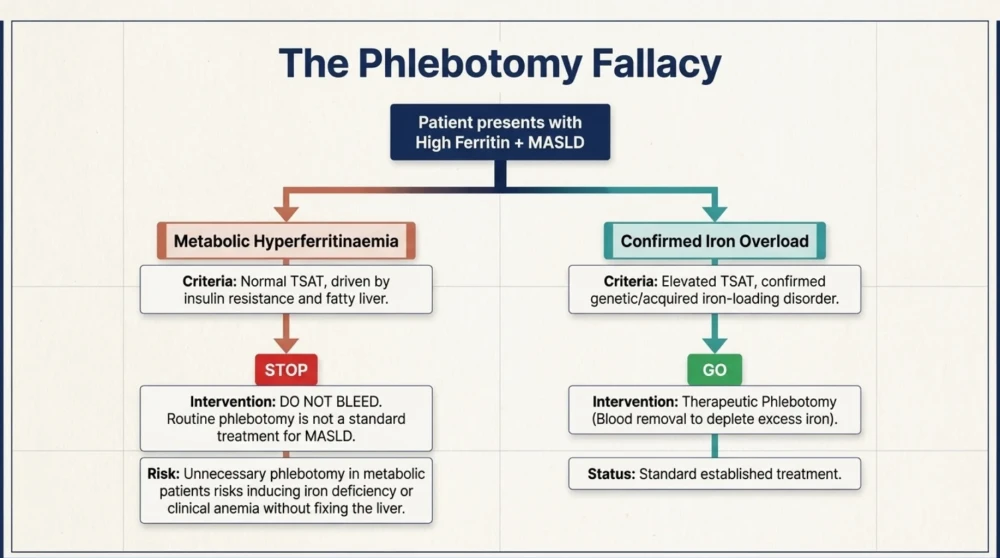
However, elevated ferritin alone is not an indication for phlebotomy.
In patients with metabolic hyperferritinaemia without confirmed iron overload, routine phlebotomy has not been established as a standard treatment for MASLD.
Clinical trials examining iron removal in fatty liver disease have produced inconsistent results, and routine iron depletion is not generally recommended solely to improve metabolic fatty liver.
Unnecessary phlebotomy can cause iron deficiency or anaemia.
Therefore, the decision should be based on the underlying diagnosis rather than the ferritin number alone.
Should Patients With High Ferritin Avoid All Iron-Rich Foods?
Not automatically.
Patients with elevated ferritin due to metabolic dysfunction do not necessarily have excessive body iron stores.
Therefore, eliminating all iron-containing foods may be unnecessary and could compromise nutritional adequacy.
For patients with confirmed iron overload, dietary advice may differ according to the diagnosis and treatment plan.
However, even in hereditary haemochromatosis, therapeutic phlebotomy is generally more important than attempting to control iron overload through extreme dietary restriction.
Patients should avoid self-prescribing iron supplements unless medically indicated.
Can Vitamin C Supplements Increase Iron Absorption?
Vitamin C can enhance the absorption of non-haem iron from food.
For patients with confirmed iron-loading disorders, high-dose vitamin C supplementation may require caution.
However, this does not mean that ordinary fruits and vegetables containing vitamin C should be routinely avoided.
Dietary recommendations should reflect the underlying diagnosis rather than ferritin elevation alone.
Should Patients With Fatty Liver Stop Taking Multivitamins Containing Iron?
Patients should review supplements with their clinician, particularly if ferritin is elevated and the cause is uncertain.
Unnecessary iron supplementation may be inappropriate when iron stores are already sufficient.
However, some patients have legitimate indications for iron treatment, including documented iron deficiency.
Therefore, stopping supplements should be based on clinical assessment rather than an isolated ferritin result.
Does Reducing Body Weight Lower Ferritin?
In some patients with metabolic dysfunction and MASLD, improvements in weight and metabolic health may be accompanied by reductions in ferritin.
However, the response varies.
Ferritin may remain elevated because of other contributing conditions, and a reduction in ferritin does not automatically establish that liver fibrosis has improved.
Similarly, normalisation of ferritin is not a validated treatment target for MASLD.
The primary goals of management should remain improvement in metabolic health, reduction of liver-related risk and appropriate assessment of fibrosis.
Can Exercise Reduce High Ferritin?
Regular physical activity can improve several metabolic risk factors relevant to MASLD.
It may also contribute to improvements in liver fat and overall cardiometabolic health.
However, exercise should not be presented as a direct or guaranteed treatment for elevated ferritin.
Ferritin changes depend on the underlying cause, and vigorous exercise may temporarily influence some laboratory markers.
The most appropriate activity programme should be based on the patient's health status and physical capacity.
When Should a Patient With High Ferritin See a Liver Specialist?
Specialist evaluation may be appropriate when ferritin is markedly elevated or persistently unexplained, transferrin saturation is increased, liver tests are significantly abnormal or there is concern for advanced fibrosis.
Referral may also be appropriate when hereditary or acquired iron overload is suspected, when specialised MRI is required or when the diagnosis remains uncertain after initial assessment.
Patients with jaundice, significant systemic illness or other concerning symptoms may require more urgent evaluation.
A Practical Diagnostic Approach to High Ferritin and Fatty Liver
| Clinical Situation | Main Concern | Possible Next Step |
|---|---|---|
| Mild ferritin elevation with normal TSAT and metabolic risk factors | Metabolic or inflammatory hyperferritinaemia | Review metabolic health, liver disease and other causes |
| Persistently elevated TSAT | Possible iron overload | Consider targeted iron-overload evaluation |
| High ferritin with abnormal liver tests | Possible liver injury or coexisting liver disease | Investigate liver disease and assess fibrosis risk |
| High ferritin with concerning systemic symptoms | Inflammatory, infectious or haematological condition | Prompt clinical assessment |
| Unexplained persistent ferritin above approximately 1,000 ng/mL | Possible significant underlying disease | Further investigation and often specialist review |
High Ferritin and Fatty Liver: What Is the Right Treatment?
When patients discover that they have both high ferritin and fatty liver, one of their first questions is whether they need treatment to reduce the ferritin level.
However, treatment should not begin with the assumption that ferritin itself is the disease.
Ferritin is a laboratory marker that may increase because of several different physiological and pathological processes.
In some patients, elevated ferritin reflects genuine iron overload. In others, it is associated with metabolic dysfunction, liver injury, inflammation or another underlying condition.
Therefore, the appropriate treatment depends on identifying the cause.
For patients with metabolic dysfunction-associated steatotic liver disease (MASLD) and elevated ferritin without confirmed iron overload, management generally focuses on metabolic health and liver-related risk.
This may involve weight management when indicated, physical activity, nutritional improvement, diabetes management, blood pressure control and assessment of liver fibrosis.
For patients with confirmed iron-loading disorders, specific iron-removal treatment may be necessary.
The central principle is to treat the underlying condition rather than attempting to normalise ferritin without understanding why it is elevated.
Can Treating Fatty Liver Reduce High Ferritin?
In some patients, improvements in metabolic health and liver-related abnormalities may be accompanied by a reduction in serum ferritin.
For example, weight reduction, improved glucose regulation and changes in lifestyle may influence inflammatory and metabolic processes associated with MASLD.
However, the ferritin response varies between individuals.
Some patients experience lower ferritin concentrations after metabolic improvement, while others continue to have elevated values.
This may occur because ferritin is influenced by several factors beyond liver fat.
Furthermore, a reduction in ferritin does not necessarily mean that liver fibrosis has improved.
Similarly, a normal ferritin concentration does not exclude advanced liver disease.
Therefore, ferritin should not be used as the primary treatment target or the sole marker of improvement in MASLD.
Why Weight Management Matters in Patients With Fatty Liver
Excess adiposity, particularly visceral adiposity, is an important contributor to metabolic dysfunction in many patients with MASLD.
Weight reduction can improve hepatic steatosis and several cardiometabolic risk factors.
Greater sustained weight loss may also improve steatohepatitis and, in some patients, liver fibrosis.
However, the amount of weight reduction required varies according to the individual and the clinical outcome being assessed.
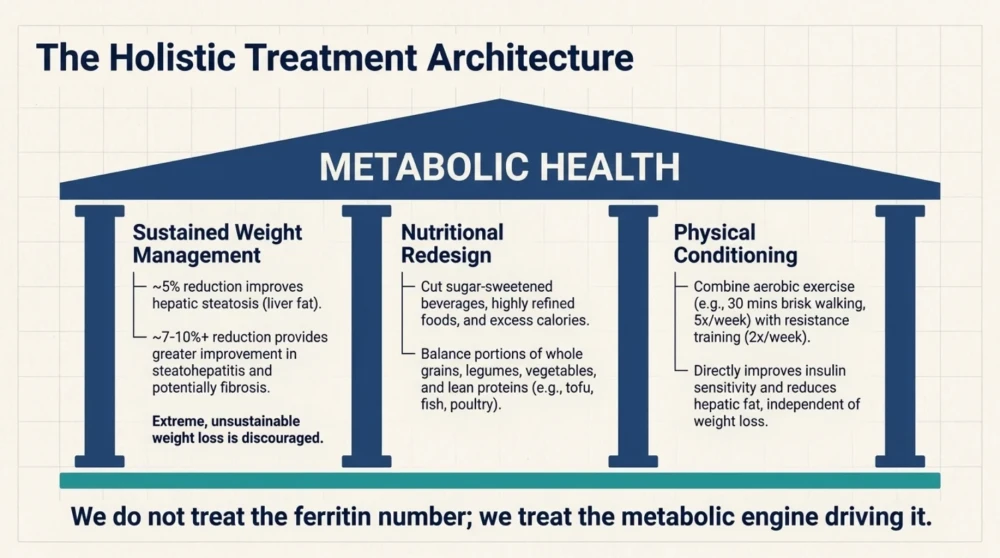
Patients should not be encouraged to pursue extreme or unsustainable weight-loss strategies solely to reduce ferritin.
Instead, weight management should be based on a comprehensive assessment of nutritional needs, metabolic health, physical activity and relevant medical conditions.
How Much Weight Loss Can Help Fatty Liver?
Clinical guidelines commonly describe improvements in hepatic steatosis with relatively modest weight reduction.
Greater weight loss may be associated with improvements in steatohepatitis and fibrosis.
However, these relationships describe population-level findings rather than guaranteed individual outcomes.
| Approximate Sustained Weight Reduction | Potential Liver-Related Benefit | Important Limitation |
|---|---|---|
| Around 5% | May improve hepatic steatosis | Response varies and does not guarantee fibrosis improvement |
| Around 7–10% | May provide greater improvement in steatosis and steatohepatitis | Not every patient achieves the same histological response |
| More than 10% | May increase the likelihood of fibrosis improvement in some patients | Benefits depend on baseline disease and sustained weight loss |
These are general clinical associations, not mandatory targets for every patient.
Patients with lean MASLD, frailty, advanced liver disease or other medical conditions may require a different approach.
What Is the Best Indian Diet for High Ferritin and Fatty Liver?
There is no single diet that has been proven to normalise ferritin in every patient with MASLD.
However, a balanced dietary pattern that supports metabolic health can be useful.
For Indian patients, this may involve improving meal composition, reducing excessive energy intake when appropriate and choosing foods that support nutritional adequacy.
A diet should not automatically exclude iron-rich foods simply because ferritin is elevated.
For example, pulses, legumes, green vegetables and other nutritious foods contain iron but may still be appropriate for patients with metabolic hyperferritinaemia.
Dietary restrictions should be guided by the actual diagnosis, especially when true iron overload has been confirmed.
Practical Dietary Principles for Patients With MASLD and Elevated Ferritin
For many patients, the most useful dietary changes involve reducing frequent consumption of sugar-sweetened beverages, highly refined foods and excess calories.
Meals can be structured around vegetables, appropriate portions of whole grains, pulses, legumes and protein-containing foods.
Healthy fat sources may include nuts, seeds and suitable cooking oils in appropriate quantities.
However, even nutritious foods can contribute excessive energy intake when consumed in large portions.
Therefore, portion sizes should reflect the patient's nutritional requirements and metabolic goals.
Patients with diabetes, chronic kidney disease or other medical conditions may require individualised modifications.
Sample Indian Meal Pattern for Fatty Liver and Metabolic Health
The following meal pattern is an educational example for adults who need a balanced diet while managing metabolic risk factors.
It is not a personalised calorie prescription or a specific treatment for high ferritin.
| Meal | Vegetarian Option | Non-Vegetarian Option | Nutritional Purpose |
|---|---|---|---|
| Breakfast | Besan chilla with plain curd | Eggs with whole-grain toast and vegetables | Provide protein and support meal satisfaction |
| Mid-morning | Whole fruit | Whole fruit | Provide fibre and micronutrients |
| Lunch | Roti, dal, vegetables and tofu or paneer | Roti, vegetables and fish or chicken | Support balanced nutrition |
| Evening | Plain curd or a suitable portion of roasted chana | Plain curd or another suitable snack | Provide an optional planned snack |
| Dinner | Vegetable preparation with dal or tofu and a suitable cereal portion | Fish or chicken with vegetables and a suitable cereal portion | Maintain nutritional adequacy |
Meal portions should be adjusted according to age, body composition, physical activity, medical conditions and weight-management goals.
Snacks are optional rather than mandatory.
Should Patients With High Ferritin Avoid Spinach, Lentils and Other Iron-Rich Foods?
Not automatically.
Many nutritious plant foods contain non-haem iron.
However, dietary iron intake is not the only determinant of serum ferritin.
In metabolic hyperferritinaemia without confirmed iron overload, excluding legumes, lentils and vegetables may unnecessarily reduce dietary quality.
These foods can provide fibre, protein, vitamins and minerals that support metabolic health.
Therefore, dietary restrictions should be based on the underlying diagnosis rather than the ferritin number alone.
Should Red Meat Be Avoided When Ferritin Is High?
The answer depends on the patient's clinical circumstances.
Red meat contains haem iron, which is generally more readily absorbed than non-haem iron.
For patients with confirmed iron-loading disorders, dietary counselling may include avoiding excessive intake of iron-rich foods and unnecessary iron supplements.
However, dietary changes alone are not a substitute for indicated iron-removal treatment.
For patients with MASLD, limiting frequent consumption of processed meats and excessive saturated fat may also support a healthier overall dietary pattern.
Nevertheless, high ferritin does not automatically mean that every patient must completely eliminate red meat.
What About Tea and Coffee in Patients With High Ferritin?
Tea and coffee contain compounds that can influence the absorption of non-haem iron when consumed with meals.
However, patients should not attempt to treat suspected iron overload simply by drinking excessive amounts of tea or coffee.
Coffee consumption has also been associated with favourable liver-related outcomes in several observational studies.
However, these findings do not establish that coffee directly treats MASLD or lowers ferritin in every patient.
Patients who tolerate coffee may include it as part of a balanced diet, while considering caffeine sensitivity, sleep and other medical conditions.
Should Alcohol Be Avoided With High Ferritin and Fatty Liver?
Alcohol can contribute to liver injury and may influence ferritin concentrations.
Patients with MASLD should discuss alcohol consumption with their clinician.
Those with advanced fibrosis or cirrhosis should avoid alcohol.
For patients with confirmed iron overload, alcohol may increase liver-related risk, particularly when significant liver injury is present.
Therefore, alcohol history is an important part of evaluating high ferritin and fatty liver.
Reducing or avoiding alcohol may be appropriate according to the patient's liver disease severity and overall clinical circumstances.
Can Exercise Improve Fatty Liver When Ferritin Is Elevated?
Regular physical activity is an important component of MASLD management.
Aerobic exercise and resistance training can improve several aspects of metabolic health.
Exercise may also reduce hepatic fat even when substantial weight loss does not occur.
However, there is insufficient evidence that a specific exercise programme reliably normalises elevated ferritin.
Patients should therefore focus on improving physical fitness and metabolic health rather than using ferritin as the sole measure of exercise benefit.
A Practical Weekly Exercise Framework
| Activity | Illustrative Approach | Potential Benefit |
|---|---|---|
| Brisk walking | 30 minutes on five days weekly, adjusted to ability | Supports cardiovascular and metabolic health |
| Resistance training | At least two days weekly when appropriate | Supports muscle strength and function |
| Reduced sedentary time | Regular movement breaks | Reduces prolonged inactivity |
| Individualised progression | Gradually increase duration or intensity | Improves long-term adherence |
Patients with significant cardiovascular disease, advanced liver disease or other exercise limitations may require individualised advice.
How Often Should Ferritin Be Rechecked?
There is no single monitoring interval suitable for every patient with elevated ferritin.
The appropriate timing depends on the degree of elevation, suspected cause, associated abnormalities and whether treatment has been started.
For example, mild unexplained hyperferritinaemia may be reassessed after an appropriate interval when recent illness or other temporary factors have resolved.
Patients with confirmed iron overload undergoing therapeutic phlebotomy require a more structured monitoring programme.
In MASLD, ferritin monitoring should not replace assessment of metabolic health and liver fibrosis risk.
Therefore, repeat testing should be based on a clinical plan rather than performed frequently without a clear purpose.
What Should Be Monitored Along With Ferritin?
Patients with fatty liver often benefit from monitoring several aspects of metabolic and liver health.
Depending on clinical circumstances, these may include body weight, waist circumference, blood pressure, glucose regulation, lipid profile, liver enzymes and fibrosis risk.
Patients with suspected or confirmed iron overload may require additional iron studies and specialist assessment.
| Parameter | Why It May Be Useful | Important Limitation |
|---|---|---|
| Ferritin | Monitor the trend when clinically indicated | Not specific for iron overload or fibrosis |
| Transferrin saturation | Assess iron-loading patterns | Interpret with other findings |
| ALT and AST | Assess liver-related biochemical changes | Normal values do not exclude fibrosis |
| HbA1c or glucose testing | Assess glycaemic health | Does not establish the cause of ferritin elevation |
| Lipid profile | Evaluate cardiometabolic risk | Requires broader cardiovascular assessment |
| FIB-4 | Initial risk stratification for advanced fibrosis in appropriate adults | Not suitable for every age group or clinical situation |
| Transient elastography | Assess liver stiffness when indicated | Does not directly measure liver iron |
Should Ferritin Be Used to Monitor Fatty Liver Improvement?
Ferritin may change during treatment, but it is not a validated stand-alone marker of MASLD improvement.
A reduction in ferritin may occur without meaningful improvement in fibrosis.
Conversely, liver fat or metabolic health may improve while ferritin remains elevated for another reason.
Therefore, clinical assessment should focus on established metabolic and liver-related outcomes.
When fibrosis risk is relevant, validated non-invasive assessment methods should be used rather than relying on ferritin trends.
What If Ferritin Remains High Despite Weight Loss?
Persistent ferritin elevation after weight loss does not necessarily mean that lifestyle treatment has failed.
Ferritin may remain elevated because of inflammation, liver disease, iron-loading disorders or other conditions.
Therefore, the clinician should reassess the original diagnostic assumptions.
Depending on the results, repeat iron studies, additional investigations or specialist referral may be appropriate.
Patients should not automatically intensify calorie restriction or begin iron-removal treatment solely because ferritin has not normalised.
When Does High Ferritin Require Urgent Medical Attention?
Many patients with mildly elevated ferritin are clinically stable and can undergo planned outpatient evaluation.
However, the situation is different when marked ferritin elevation occurs alongside severe illness.
Concerning features may include persistent high fever, jaundice, confusion, significant weakness, abnormal bleeding or evidence of organ dysfunction.
These symptoms require prompt assessment because they may indicate conditions unrelated to uncomplicated metabolic fatty liver.
The urgency should be determined by the patient's clinical condition and accompanying investigations, not ferritin alone.
Clinical Example 1: High Ferritin With Fatty Liver and Normal Transferrin Saturation
Consider a hypothetical 44-year-old man with obesity, elevated triglycerides and ultrasound evidence of fatty liver.
His ferritin is 480 ng/mL, while transferrin saturation is 27%.
His clinician reviews alcohol intake, medications, inflammatory conditions and other possible causes.
Metabolic hyperferritinaemia is considered, but it is not assumed without appropriate evaluation.
The management plan includes metabolic risk assessment and fibrosis risk stratification.
Therapeutic phlebotomy is not prescribed solely because ferritin is elevated.
Clinical Example 2: High Ferritin With Increased Transferrin Saturation
A hypothetical 52-year-old patient has ferritin of 750 ng/mL and repeatedly elevated transferrin saturation.
Although ultrasound also shows fatty liver, the clinician does not attribute the abnormal iron studies entirely to MASLD.
Further evaluation for iron overload is considered.
Depending on the patient's background and findings, this may involve genetic assessment, liver iron MRI or specialist consultation.
Treatment is determined after the underlying diagnosis has been clarified.
Clinical Example 3: Persistent Ferritin Elevation Despite Improved Metabolic Health
A hypothetical 47-year-old woman with MASLD achieves sustained weight reduction and improvement in glucose and lipid measurements.
However, ferritin remains elevated on repeat testing.
Rather than assuming that her fatty liver has worsened, the clinician reassesses other potential causes.
The example illustrates why ferritin should not be used as the sole indicator of treatment success or failure.
Clinical Example 4: Very High Ferritin With Systemic Symptoms
A hypothetical patient presents with fever, marked fatigue, abnormal blood counts and substantially elevated ferritin.
This presentation requires evaluation beyond metabolic fatty liver.
Inflammatory, infectious, hepatic and haematological conditions may need consideration.
Prompt clinical assessment is important because the ferritin result may be a marker of significant systemic illness.
All clinical examples are hypothetical and intended for educational purposes.
Common Myths About High Ferritin and Fatty Liver
Myth 1: High Ferritin Always Means Excess Iron
False. Ferritin may rise because of inflammation, metabolic dysfunction, liver injury and other conditions without clinically significant iron overload.
Myth 2: Fatty Liver Is Always the Cause of High Ferritin
False. Other causes must be considered, especially when ferritin is markedly elevated or transferrin saturation is increased.
Myth 3: High Ferritin Means Liver Cirrhosis
False. Ferritin cannot independently diagnose or stage liver fibrosis or cirrhosis.
Myth 4: Everyone With High Ferritin Needs Blood Removal
False. Therapeutic phlebotomy is indicated for selected iron-loading disorders, not for every elevated ferritin result.
Myth 5: Normal Liver Enzymes Mean the Liver Is Healthy
False. Clinically significant liver fibrosis can occur despite normal ALT and AST.
Myth 6: Patients With High Ferritin Must Avoid All Iron-Rich Foods
False. Dietary restrictions depend on the cause of ferritin elevation and whether true iron overload is present.
Myth 7: FibroScan Measures Iron in the Liver
False. FibroScan assesses liver stiffness and can estimate steatosis, but it does not directly quantify liver iron concentration.
Myth 8: Normal Ferritin Means Fatty Liver Has Resolved
False. Ferritin is not a reliable stand-alone marker of MASLD resolution or fibrosis improvement.
Frequently Asked Questions About High Ferritin and Fatty Liver
1. Why is ferritin high in fatty liver?
Ferritin may increase in association with metabolic dysfunction, inflammatory processes, liver injury or altered iron regulation. The exact cause varies between patients.
2. Does high ferritin mean iron overload?
No. High ferritin is not specific for iron overload. Transferrin saturation and other clinical findings help determine whether excess iron is likely.
3. Can fatty liver cause ferritin above 500?
Elevated ferritin can occur in patients with MASLD, including values above 500 ng/mL. However, other causes should not be excluded solely because fatty liver is present.
4. Is ferritin above 1,000 dangerous?
Persistent ferritin above approximately 1,000 ng/mL often warrants detailed evaluation, but its significance depends on the underlying cause and clinical circumstances.
5. What does high ferritin with normal transferrin saturation mean?
This pattern may occur with metabolic dysfunction, inflammation or liver disease. However, normal transferrin saturation does not exclude every iron-loading disorder.
6. Can high ferritin indicate liver fibrosis?
Ferritin may be associated with liver disease severity in some studies, but it is not reliable enough to diagnose or stage fibrosis independently.
7. Should I get a FibroScan if ferritin is high?
FibroScan may be appropriate when fibrosis risk assessment indicates a need for additional testing. Ferritin elevation alone does not automatically require FibroScan.
8. Can weight loss reduce ferritin?
Ferritin may decrease with metabolic improvement in some patients, but the response is variable and should not be used as the sole marker of liver improvement.
9. Should I stop eating spinach and lentils?
Not automatically. These foods can provide important nutrients, and dietary restrictions should depend on whether iron overload is actually present.
10. Can ferritin be high when ALT and AST are normal?
Yes. Elevated ferritin may occur with normal liver enzymes, and normal ALT or AST does not exclude clinically important liver fibrosis.
11. Does high ferritin require blood donation?
Routine blood donation or therapeutic phlebotomy should not be used as treatment without establishing an appropriate indication, such as confirmed iron overload.
12. Is hereditary haemochromatosis common in India?
Classic HFE-related haemochromatosis is less common in many South Asian populations than in Northern European populations, but hereditary and other iron-loading disorders can still occur.
13. Can ferritin remain high after fatty liver improves?
Yes. Ferritin may remain elevated because of other contributing factors. Persistent elevation may require reassessment of the underlying cause.
14. Can a liver ultrasound detect iron overload?
Routine ultrasound cannot reliably quantify liver iron. Specialised MRI techniques may be used when hepatic iron assessment is clinically indicated.
15. When should I consult a doctor for high ferritin?
Medical review is appropriate for persistent or unexplained elevation, increased transferrin saturation, abnormal liver tests, concerning symptoms or markedly elevated ferritin.
What I Explain to Patients With High Ferritin and Fatty Liver
When patients consult me with elevated ferritin and fatty liver, I explain that ferritin is not simply a measurement of iron stored in the body.
Although it provides information about iron stores, ferritin can also increase in association with metabolic dysfunction, inflammation and liver injury.
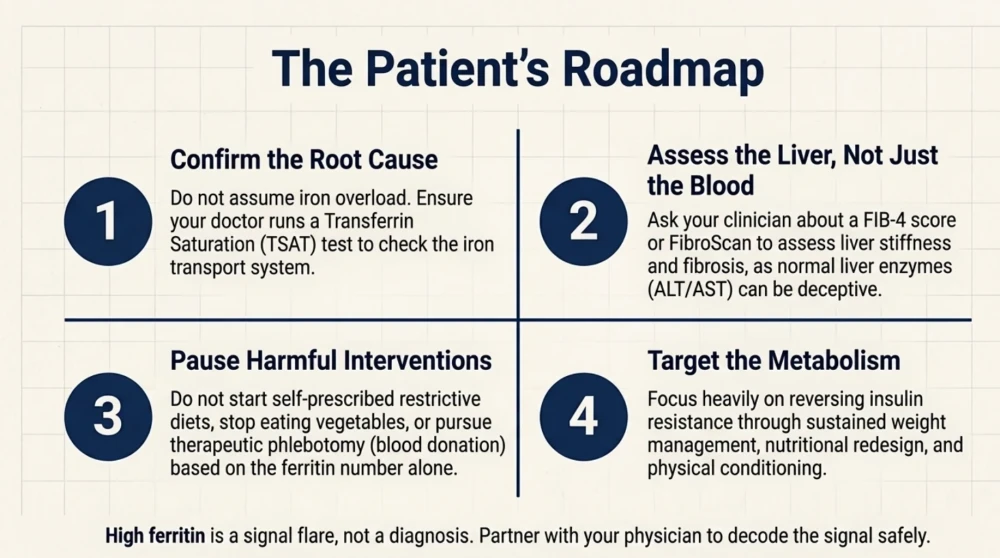
Therefore, the first step is to understand why ferritin is elevated.
I review the patient's metabolic risk factors, alcohol history, medications, supplements, liver tests and relevant iron studies.
Transferrin saturation is particularly useful when evaluating possible iron overload.
For patients with MASLD, I also consider the need for liver fibrosis risk assessment rather than relying on ferritin or liver enzymes alone.
If the findings suggest metabolic hyperferritinaemia without significant iron overload, management focuses on the underlying metabolic and liver-related conditions.
If iron overload is suspected, further investigations or specialist referral may be necessary.
I also explain that lowering ferritin is not the same as treating fatty liver and that unnecessary iron-removal treatment can cause harm.
The aim is to identify the underlying cause, assess liver-related risk and develop an appropriate management plan rather than treating an isolated laboratory number.
Key Takeaways: High Ferritin and Fatty Liver
- High ferritin and fatty liver commonly occur together, particularly in patients with metabolic dysfunction.
- Ferritin is an iron-storage marker but can also rise with inflammation and liver injury.
- Elevated ferritin does not automatically indicate iron overload.
- Transferrin saturation is an important part of evaluating possible iron-loading disorders.
- Normal transferrin saturation makes classic HFE-related haemochromatosis less likely in many circumstances but does not exclude every iron-loading disorder.
- Ferritin alone cannot diagnose MASH, liver fibrosis or cirrhosis.
- FIB-4 and transient elastography may be useful for fibrosis risk assessment when indicated.
- FibroScan does not directly quantify liver iron.
- Therapeutic phlebotomy is not routinely recommended solely for metabolic hyperferritinaemia without confirmed iron overload.
- Dietary restrictions should be based on the underlying diagnosis rather than ferritin alone.
- Weight management and regular physical activity can support metabolic and liver health.
- Persistent or markedly elevated ferritin requires appropriate clinical evaluation.
High Ferritin and Fatty Liver Consultation in Dwarka, Delhi
If your blood reports show elevated ferritin, abnormal liver enzymes or fatty liver, a medical consultation can help determine whether additional investigation is necessary.
Dr. Pankaj Kumar, General & Lifestyle Physician, provides consultations for fatty liver, type 2 diabetes, metabolic health, weight management and other lifestyle-related conditions in Dwarka, New Delhi.
Assessment may include reviewing iron studies, liver tests, metabolic risk factors and the need for non-invasive liver fibrosis evaluation.
Clinic: Dr. Pankaj Kumar Medical & Lifestyle Clinic
Address: 13A, Pocket-2, Sector-6, Doctors Lane, Dwarka, New Delhi-110075.
Consultations: In-clinic and online consultations are available.
Scientific References and Clinical Guidelines
- European Association for the Study of the Liver (EASL), European Association for the Study of Diabetes (EASD), and European Association for the Study of Obesity (EASO). EASL–EASD–EASO Clinical Practice Guidelines on the Management of Metabolic Dysfunction-Associated Steatotic Liver Disease (MASLD). Journal of Hepatology. 2024. DOI: 10.1016/j.jhep.2024.04.031.
- European Association for the Study of the Liver. EASL Clinical Practice Guidelines on Haemochromatosis. Journal of Hepatology. 2022;77(2):479–502. DOI: 10.1016/j.jhep.2022.03.033.
- Rinella ME, Neuschwander-Tetri BA, Siddiqui MS, et al. AASLD Practice Guidance on the Clinical Assessment and Management of Nonalcoholic Fatty Liver Disease. Hepatology. 2023;77(5):1797–1835. DOI: 10.1097/HEP.0000000000000323.
- Kowdley KV, Brown KE, Ahn J, Sundaram V. ACG Clinical Guideline: Hereditary Hemochromatosis. American Journal of Gastroenterology. 2019;114(8):1202–1218. DOI: 10.14309/ajg.0000000000000315.
- Valenti L, Corradini E, Adams LA, et al. Consensus Statement on the Definition and Classification of Metabolic Hyperferritinaemia. Nature Reviews Endocrinology. 2023;19:299–310. DOI: 10.1038/s41574-023-00807-6.
- European Association for the Study of the Liver. EASL Clinical Practice Guidelines on Non-Invasive Tests for Evaluation of Liver Disease Severity and Prognosis — 2021 Update. Journal of Hepatology. 2021;75(3):659–689. DOI: 10.1016/j.jhep.2021.05.025.
- World Health Organization. WHO Guidelines on Physical Activity and Sedentary Behaviour. 2020. WHO Physical Activity Guidelines.
Medical disclaimer: This article is intended for general health education and does not replace individual medical advice. Elevated ferritin has multiple possible causes, and treatment should be based on appropriate clinical assessment. Do not begin therapeutic phlebotomy, discontinue prescribed iron treatment or make major dietary restrictions solely because of a high ferritin result. Patients with suspected iron overload, significant liver abnormalities or concerning symptoms may require specialist evaluation.
Written by Dr. Pankaj Kumar , General & Lifestyle Physician, Dwarka, New Delhi