















- 26th January 2026
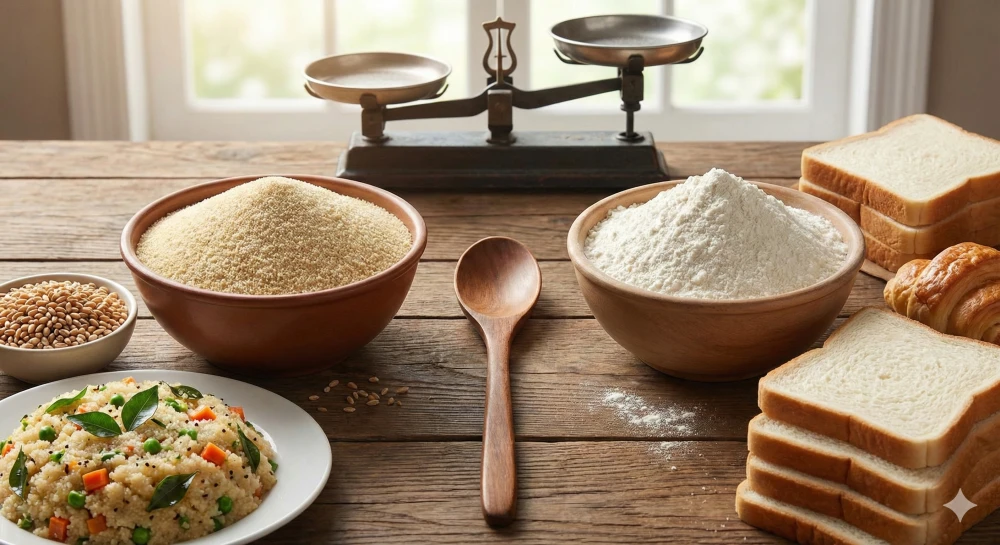
When you are standing in your kitchen deciding between upma or a paratha, you might wonder about the grains on your counter. Both sooji and maida originate from the same wheat grain, but their journey to your plate involves very different processing steps. At the Dr. Pankaj Kumar Medical and Lifestyle Clinic, we believe understanding the science of your food is the first step toward better health.
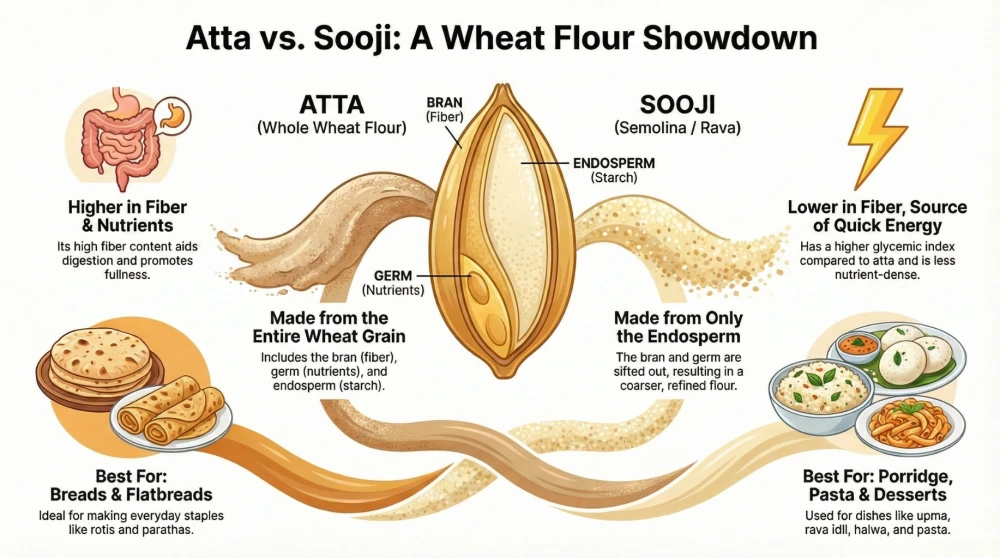
The wheat grain is not a simple, uniform block. It contains distinct layers including the high-fiber aleurone, the protein-rich sub-aleurone, and the central starchy endosperm. While maida is a finely refined flour from the core, sooji consists of the coarse, purified middlings of durum wheat. These prismatic cells radiate from the center and provide the specific texture we associate with semolina.
Is Sooji Truly Glorified Maida?
There is a viral debate suggesting sooji is simply maida in a different texture. This is an oversimplification that misses key clinical distinctions. In the milling world, Bombay rava is often a byproduct of maida processing, whereas Chamba rava is obtained from whole wheat. However, even the standard sooji sits somewhere in between maida and whole wheat (atta) in terms of refinement and impact on the body.
The scientific value of sooji lies in its protein structure. While the total concentration of protein decreases toward the center of the wheat grain, studies such as Tosi et al. (2018) show that the quality of glutenin polymers actually increases in the core. This means sooji provides a better structural matrix than maida. This structure leads to higher satiety, helping you feel full for longer periods after a meal.
Nutritional Breakdown: Why the Texture Matters
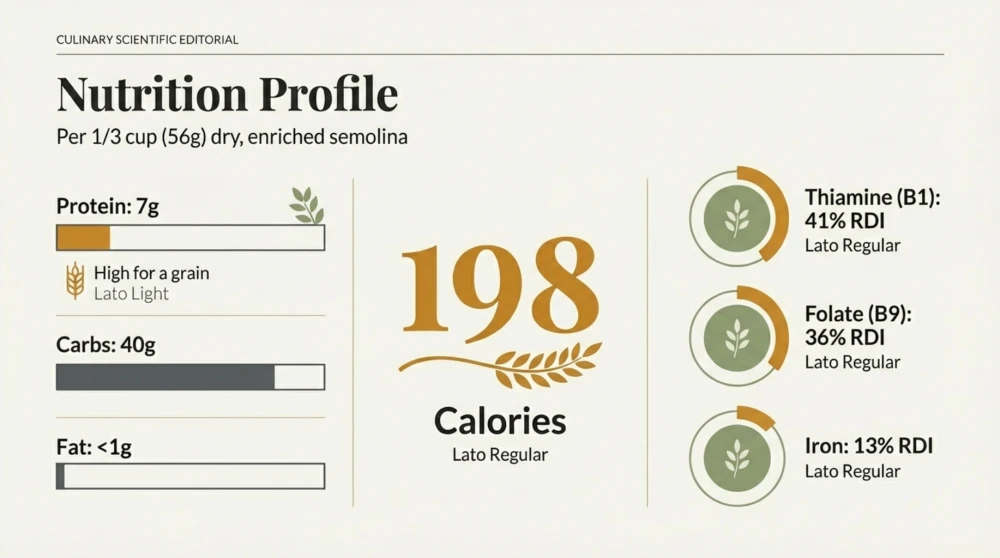
A 1/3 cup serving of uncooked, enriched sooji provides approximately 198 calories and 7 grams of protein. It is a nutritional powerhouse when it comes to B-vitamins, offering 41 percent of the RDI for thiamine and 36 percent of the RDI for folate. These vitamins are essential for converting your daily meals into usable energy and supporting cellular function.
The texture of sooji also plays a vital role in how your body processes energy. Its coarseness gives it a moderately low glycemic index compared to the rapid spikes caused by maida. Because it is less refined than all-purpose flour, it retains more of its natural integrity. This makes it a more functional choice for a clinical lifestyle, though it still lacks the full bran and germ of a whole grain.
Heart Health and Blood Sugar Control
Sooji contains significant amounts of magnesium and fiber, which are critical for long-term metabolic wellness. Magnesium helps your cells respond more effectively to insulin, which is the primary hormone regulating your blood sugar. For those concerned about heart health, the fiber found in semolina is a valuable tool for managing your lipid profile and reducing systemic inflammation.
Evidence suggests that a diet rich in whole-grain fiber can lead to a 5 percent reduction in LDL (bad) cholesterol. It is important to note that this specific benefit was observed in studies where participants consumed 23 grams of fiber per day. While sooji contributes to this goal, pairing it with other high-fiber foods is necessary to reach the levels required for significant heart protection.
The Smart Way to Eat Sooji
In our clinic, we often discuss how to transform a simple carbohydrate into a balanced medical-grade meal. To lower the glycemic response of your upma or idli, you should always add a variety of vegetables and protein sources like curd or dal. Adding a healthy fat like ghee further slows the absorption of sugar into your bloodstream, preventing the spikes that lead to energy crashes.
Here is a special doctor's tip for your next meal: semolina contains non-heme iron, which is not as easily absorbed as iron from meat. To fix this, always add a source of Vitamin C, such as a fresh squeeze of lemon over your dish. This simple kitchen-table adjustment significantly increases the bioavailability of the iron, making your breakfast much more effective at supporting your blood health.
Who should be careful?
While sooji is a versatile ingredient, certain individuals must exercise caution. Because it is made from durum wheat, it has a very high gluten content. This makes it strictly off-limits for anyone with celiac disease or non-celiac gluten sensitivity. Individuals with a known wheat allergy should also avoid sooji entirely to prevent adverse reactions.
For those managing diabetes, remember that sooji is still a refined carbohydrate. While its coarseness helps, it can still contribute to blood sugar fluctuations if eaten in large, unaccompanied portions. We recommend using it as a transitional grain rather than a daily staple. If you are on a strict diabetic protocol, focus on whole grains like millets or oats as your primary sources of energy.
Key Points
- Sooji is the coarse middlings of wheat, making it less refined than maida but more processed than whole wheat atta.
- It contains high-quality gluten polymers and 7 grams of protein per serving, which provide better structure and satiety than finer flours.
- It is rich in essential B-vitamins, providing 41 percent of the RDI for thiamine and 36 percent of the RDI for folate to support energy.
- To maximize heart benefits and blood sugar control, always pair sooji with vegetables and healthy fats to slow digestion.
- Sooji is not a whole grain and contains high levels of gluten, requiring caution for those with sensitivities or diabetic concerns.
You can book a consultation here: Book Appointment
Written by Dr. Pankaj Kumar, General & Lifestyle Physician, Dwarka, New Delhi