



- 27th February 2026
Table of Contents
- Can You Really Reduce Cholesterol Without Medication?
- Understanding What Cholesterol Really Means
- How Lifestyle Directly Impacts Cholesterol Levels
- What This Means for Real Patients
- How to Lower Cholesterol Without Medication: The Practical Science
- Lever 1: Upgrade the fat quality (not just eat less fat)
- Lever 2: Use soluble fiber as a daily tool
- Lever 3: Consider plant sterols in the right context
- Lever 4: Move in a way that improves lipid handling
- Practical Application: What to Do in the Next 30 Days
- 1) Build one cholesterol-friendly plate you can repeat
- 2) Use refined carb cut-down as your triglyceride lever
- 3) Trial a consistent meal-timing pattern
- 4) Track the right metric, not just the lab number
- One small table that helps clarity
- How to Lower Cholesterol Without Medication: What I Recommend in Clinic
- 1) Set a realistic LDL target and timeline
- 2) Fix the biggest saturated fat source first
- 3) Make soluble fiber non-negotiable
- 4) Use protein to prevent rebound eating
- 5) Reduce refined carbs if triglycerides are elevated
- 6) Walk daily and add strength training twice weekly
- 7) Treat sleep like a metabolic intervention
- 8) Limit alcohol if triglycerides are high
- 9) Recheck the right labs at the right time
- When Medication Becomes Necessary (And Why That Is Not Failure)
- Warning Signs: When to Seek Urgent Medical Care
- References
- Ready to take the next step?
Can You Really Reduce Cholesterol Without Medication?
If you have recently been told your cholesterol is high, your first question is probably this: how to lower cholesterol without medication and avoid starting lifelong tablets. This is a very reasonable concern.
In many cases, especially in early metabolic imbalance, cholesterol levels can improve significantly with structured lifestyle changes. However, the key word here is structured. Random diet attempts or short-term restrictions rarely produce meaningful LDL cholesterol reduction.
Before we go further, it is important to clarify something: lifestyle changes are powerful, but they are not magic. The success depends on your baseline risk, genetics, metabolic health, and consistency.
Some patients can reduce LDL cholesterol by 15 to 30 percent through lifestyle alone. Others may see modest changes. A small percentage will still need medication despite doing everything correctly. The goal is to identify where you stand.
Understanding What Cholesterol Really Means
Before discussing natural ways to reduce cholesterol, we must understand what we are treating. Cholesterol itself is not the enemy. It is essential for hormone production, cell membrane structure, and vitamin D synthesis. The concern arises when specific lipoproteins, especially low-density lipoprotein (LDL), remain elevated over time.
High LDL contributes to plaque formation inside arteries. Over years, this can increase the risk of heart attack and stroke. However, not every person with elevated cholesterol has the same risk. Context matters.
For example:
- A 35-year-old overweight individual with borderline LDL and no diabetes has a different risk profile compared to
- A 55-year-old diabetic patient with hypertension and family history of heart disease
That is why high cholesterol management must be individualized. In India, we also commonly see mixed dyslipidemia, where triglycerides are elevated along with LDL. This is often linked to insulin resistance, abdominal obesity, and high refined carbohydrate intake.
If insulin resistance is present, simply reducing dietary fat will not correct the root problem. We must address metabolic health.
How Lifestyle Directly Impacts Cholesterol Levels
The question of how to lower cholesterol without medication has been studied extensively. Several recent studies have shown that dietary fiber intake, weight reduction, and structured physical activity can significantly improve LDL cholesterol reduction and triglyceride control.
A 2020 review in the Journal of the American College of Cardiology highlighted that dietary patterns rich in whole grains, legumes, nuts, and unsaturated fats reduce cardiovascular risk and improve lipid markers.
Similarly, increased soluble fiber intake has been shown to reduce LDL cholesterol by binding bile acids and enhancing cholesterol excretion.
Weight loss itself plays a major role. Even a 5 to 10 percent reduction in body weight can significantly improve lipid profile and insulin sensitivity.
Exercise also independently improves lipid metabolism. Regular moderate-intensity aerobic activity reduces triglycerides and improves HDL levels.
These effects are not theoretical. They are measurable and clinically significant when implemented properly. However, the mistake many people make is attempting extreme diets for 2 to 3 weeks. Cholesterol levels do not change meaningfully in 10 days. Sustained metabolic correction is required.
What This Means for Real Patients
If you are trying to figure out how to lower cholesterol without medication, the first practical question is: what exactly is high on your report?
Many lab reports show just total cholesterol, but treatment decisions are usually driven by LDL cholesterol, triglycerides, and your overall risk profile. If your triglycerides are also high, that often points to insulin resistance and excess refined carbohydrates rather than just fat in the diet. In that situation, targeting insulin resistance usually improves the whole lipid picture, not just one number. If this sounds familiar, read this deeper breakdown of insulin resistance and diet approach here: Insulin resistance: causes, diagnosis, and treatment with diet.
Another common confusion is blaming eggs or dietary cholesterol alone. For most people, saturated fat and ultra-processed foods drive LDL more strongly than eggs. If you have been avoiding yolk but still seeing high LDL, this perspective will help: Eat whole eggs: why skipping yolk may be a mistake.
Here is the honest clinical reality. Lifestyle works best when the risk is not extreme and when there is room for metabolic improvement. It is less likely to fully replace medication when LDL is very high, when strong family history exists, or when heart disease is already present. Still, even when medication is required, lifestyle reduces dose needs and improves long-term outcomes.
How to Lower Cholesterol Without Medication: The Practical Science
When people ask how to lower cholesterol without medication, I usually break the strategy into four levers that produce measurable change:
- Reduce the drivers of LDL production and absorption
- Increase LDL clearance through the gut and liver
- Correct insulin resistance and triglycerides
- Improve vascular health through activity, sleep, and stress control
Instead of planning rigid diet charts for yourself, it's better to talk to your doctor for customized diet plan.
Lever 1: Upgrade the fat quality (not just eat less fat)
If you reduce overall fat but keep refined carbs high, many patients see triglycerides rise and HDL drop. A better approach is shifting from saturated fats to unsaturated fats. That means reducing butter, ghee-heavy portions, cream-rich gravies, and processed meats, while using more nuts, seeds, and oils in sensible quantities.
You do not need imported foods for this. The Indian plate can be optimized using small swaps that you repeat consistently.
Lever 2: Use soluble fiber as a daily tool
Soluble fiber helps lower LDL by binding bile acids and increasing cholesterol excretion. In a 2023 meta-analysis of randomized controlled trials, soluble fiber supplementation showed measurable reductions in total cholesterol and LDL cholesterol. You can read the PubMed abstract here: Soluble fiber supplementation and lipid profile (2023).
Practical, food-first ways to raise soluble fiber include oats, barley, psyllium husk, legumes, fruits like guava and apple, and vegetables. Supplements can help, but food should be the base.
Lever 3: Consider plant sterols in the right context
Plant sterols can reduce LDL by reducing cholesterol absorption in the intestine. A 2025 meta-analysis suggests phytosterols may reduce LDL and total cholesterol, though most trials are short-term and results vary by dose and background diet. PubMed here: Effects of phytosterols on cardiovascular risk factors (2025).
If you choose sterol-enriched foods, treat them as a structured add-on, not a replacement for core habits. Also, if you are already on medication, discuss this with your doctor to avoid stacking supplements without monitoring.
Lever 4: Move in a way that improves lipid handling
Exercise improves triglycerides, HDL function, blood pressure, and insulin sensitivity. A 2024 meta-analysis found that physical activity improved total cholesterol, triglycerides, and HDL, with some variation by training type. PubMed here: Aerobic and resistance exercise effects on lipid profile (2024).
The best plan is the one you can sustain. For most people, the combination that works is:
- 150 minutes per week of brisk walking or cycling, plus
- 2 to 3 weekly sessions of resistance training (basic, progressive, safe)
Practical Application: What to Do in the Next 30 Days
If you want a realistic path for how to lower cholesterol without medication, give yourself a 30-day trial with measurable actions. These are the moves that usually create the biggest return:
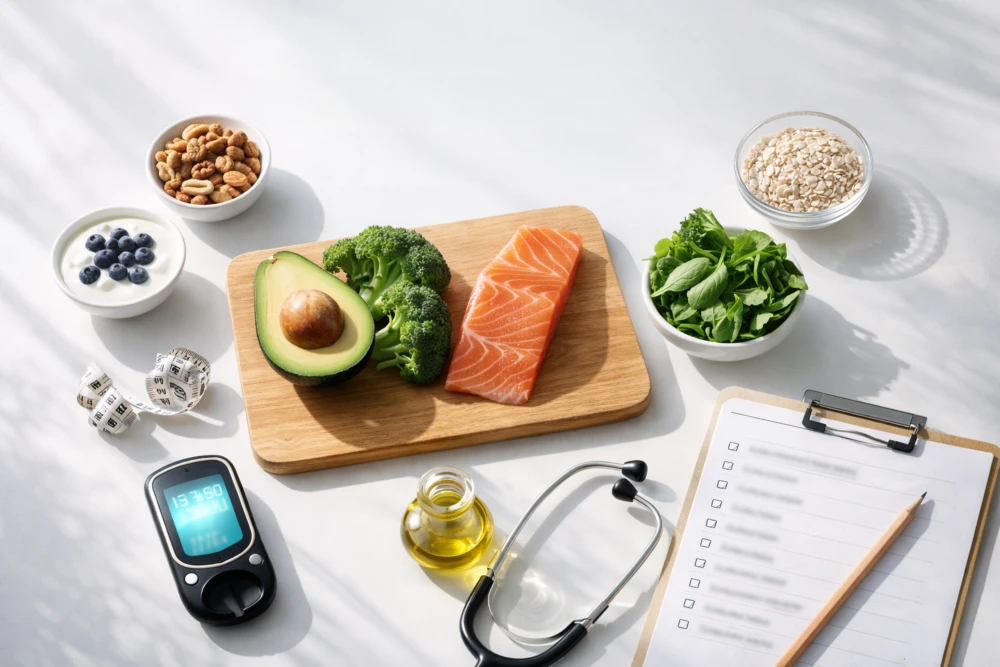
1) Build one cholesterol-friendly plate you can repeat
Instead of trying 20 recipes, choose one daily default meal. For example:
- One protein anchor (dal, chana, rajma, paneer, curd, eggs, fish, chicken)
- One large vegetable portion (at least two types)
- One smart carb portion (prefer whole grains over refined)
- One fat quality upgrade (nuts, seeds, small amount of oil, avoid deep frying)
If you want a structured diet plan approach for cholesterol and triglycerides, this page shows the diet plan framework: High cholesterol or triglycerides lowering diet plan.
2) Use refined carb cut-down as your triglyceride lever
If your triglycerides are high, focus on reducing refined flour snacks, sweets, sugary drinks, and frequent late-night eating. Many patients notice triglycerides improve faster than LDL when this is done consistently.
3) Trial a consistent meal-timing pattern
For some patients, structured meal timing helps reduce snacking, improves weight regulation, and can support lipid improvement. If you are curious, this article explains the link between intermittent fasting, cholesterol, and blood pressure: Intermittent fasting and heart health.
Meal timing is not mandatory. It is a tool. If it disrupts sleep, increases binge eating, or causes dizziness, it is not the right tool for you.
4) Track the right metric, not just the lab number
If your goal is how to lower cholesterol without medication, track the upstream drivers:
- Waist circumference
- Body weight trend (weekly average)
- Step count or activity consistency
- Sleep duration and regularity
- Alcohol frequency (especially if triglycerides are high)
One small table that helps clarity
| If your report shows... | Most common driver | Best first lifestyle focus |
|---|---|---|
| High LDL | Saturated fat, genetics, low fiber | Soluble fiber plus fat quality plus weight loss |
| High triglycerides | Insulin resistance, refined carbs, alcohol | Refined carb cut-down plus activity plus sleep |
| Low HDL | Inactivity, smoking, metabolic syndrome | Resistance training plus weight loss plus stop smoking |
If you want a quick, easy summary approach in video form, you can also review: Managing high cholesterol with diet.
How to Lower Cholesterol Without Medication: What I Recommend in Clinic
When someone asks me how to lower cholesterol without medication, I do not start with a long food list. I start with a clear checklist that makes the next 8 to 12 weeks predictable.
Here are the 9 steps that work best for most patients:
1) Set a realistic LDL target and timeline
Most meaningful improvements take 8 to 12 weeks. If your LDL is borderline high, lifestyle has a better chance of reaching target. If LDL is very high, lifestyle still helps, but medication may be required.
2) Fix the biggest saturated fat source first
Most patients do better by cutting one major saturated fat habit rather than banning everything. Common examples include frequent butter-heavy cooking, bakery items, and repeated fried snacks.
3) Make soluble fiber non-negotiable
Aim for a daily source of soluble fiber. If food intake is inconsistent, psyllium husk may be discussed with your clinician, especially if constipation or low fiber intake exists.
4) Use protein to prevent rebound eating
Low protein diets often increase hunger and snacking. A protein anchor supports weight and triglyceride control.
5) Reduce refined carbs if triglycerides are elevated
If triglycerides are high, your cholesterol problem is often part of insulin resistance. Cutting refined carbs usually gives faster results than cutting oil.
6) Walk daily and add strength training twice weekly
Walking improves triglycerides and blood pressure. Strength training improves insulin sensitivity and body composition, which indirectly helps lipid markers.
7) Treat sleep like a metabolic intervention
Short sleep increases appetite and insulin resistance. Fixing sleep timing often improves cravings and late-night eating patterns.
8) Limit alcohol if triglycerides are high
Even modest alcohol intake can raise triglycerides in susceptible people. If triglycerides are elevated, alcohol reduction is a high-impact move.
9) Recheck the right labs at the right time
Repeat lipid profile after 8 to 12 weeks of consistent changes. If results are still high, we escalate intelligently rather than guessing.
When Medication Becomes Necessary (And Why That Is Not Failure)
It is important to keep the conversation balanced.
Lifestyle is powerful, but there are situations where delaying medication increases long-term risk. Medication is not a punishment. It is risk reduction.
Medication is more likely to be necessary when:
- LDL is very high (especially if genetic risk is suspected)
- You have diabetes, kidney disease, or established heart disease
- There is strong family history of early heart events
- Coronary artery calcium or other risk markers are high (if tested)
- Lifestyle is already excellent but LDL remains high
One reason I do not encourage fear-based messaging is that statins have strong evidence for reducing cardiovascular events in appropriate risk groups. At the same time, lifestyle reduces the total burden and often helps minimize dose needs.
For patients exploring dietary patterns that combine multiple LDL-lowering components, a randomized pilot trial showed improved LDL levels at 6 months when Mediterranean and Portfolio components were emphasized. PubMed here: Mediterranean and Portfolio components trial (2021).
Warning Signs: When to Seek Urgent Medical Care
High cholesterol itself rarely causes symptoms. But the conditions that often travel with it can be dangerous. Seek urgent care if you have:
- Chest pain, chest pressure, or pain radiating to arm or jaw
- Breathlessness at rest or with minimal activity
- Sudden weakness on one side, facial droop, or speech difficulty
- Sudden severe headache or fainting
- New severe leg pain with swelling, especially if one-sided
References
- Soluble fiber supplementation and lipid profile (2023)
- Effects of phytosterols on cardiovascular risk factors (2025)
- Aerobic and resistance exercise effects on lipid profile (2024)
- Mediterranean and Portfolio components trial (2021)
- Aerobic exercise training and lipid changes in metabolic risk (2021)
Ready to take the next step?
Disclaimer: This article is for education only and does not replace a personalized medical consultation.
You can book a consultation here: Book Appointment
Written by Dr. Pankaj Kumar, General & Lifestyle Physician, Dwarka, New Delhi