
















- 27th January 2026
The Sustainability Challenge in Modern Weight Loss
If you have ever tried intermittent fasting to shed a few pounds, you are certainly not alone. It is one of the most popular health trends today, often marketed as a simple fix for complex goals. At the Dr. Pankaj Kumar Medical and Lifestyle Clinic, we understand the appeal of timed eating. It feels structured and manageable in a world of confusing dietary advice.
While intermittent fasting (IF) offers a promising start, the real challenge lies in what happens when the fasting window closes for good. Many people find that while the weight drops initially, it returns just as quickly. This cycle highlights a significant gap between short-term results and long-term metabolic health.
What Intermittent Fasting Really Is (And What It Isn't)
Intermittent fasting is primarily a strategy of meal timing rather than a specific nutritional plan. It is about when you eat, not what you eat. Common clinical methods include the 16:8 approach (eating all meals within an eight-hour window) or fasting entirely for one to two days each week.
This approach can be effective for short-term weight loss over a few months. However, this initial success often creates a false sense of long-term security. Because the focus remains strictly on the clock, many people neglect the nutritional quality of their food. This focus on timing over substance makes the results difficult to maintain.
The Sustainability Gap: Why the Weight Returns
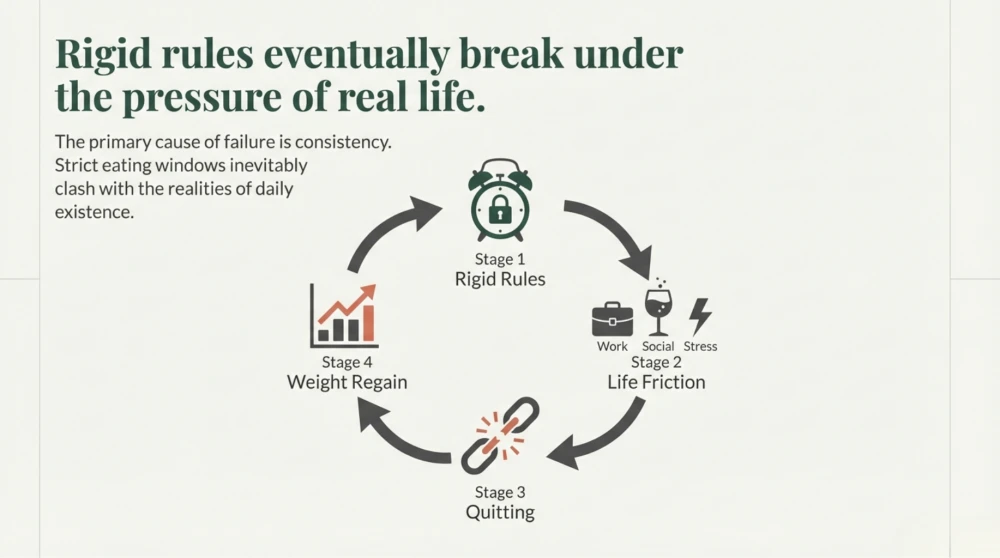
The biggest hurdle with intermittent fasting is the friction between rigid biological protocols and real life. Strict eating windows frequently clash with demanding work schedules, social plans, and daily stress. When a lifestyle becomes too rigid, it eventually breaks under the pressure of human reality.
When a diet is too strict, any minor deviation feels like a total failure. This often leads to abandoning the habit entirely, causing the weight to return quickly.
Evidence Check: Heart Health, Cancer, and Longevity
It is important to distinguish between what is marketed by influencers and what is proven by clinical science. While IF is often touted as a "miracle" for longevity, the long-term data in humans remains limited. Current research has not yet proven that IF prevents heart disease or cancer in humans.
Short-term weight loss is a valid outcome, but we must prioritize long-term disease prevention over temporary scale numbers. There is currently a lack of evidence that fasting increases the human lifespan. Understanding these limitations allows us to transition toward more balanced and sustainable alternatives to strict fasting.
Who Should Be Careful?
While many people experiment with fasting, different bodies have different metabolic requirements. It is vital to approach these methods with a calm, non-alarmist mindset. Certain groups need to be particularly cautious to ensure they do not compromise their physiological health or medication efficacy.
Precautions are especially important for those on regular medications, pregnant individuals, or those suffering from acid reflux. For these groups, the stress of a fasting window can exacerbate existing health issues. For those who cannot safely fast, there are more flexible ways to manage metabolic health and weight.
Better Habits: The Early Breakfast and Before Bed Rules
A sustainable alternative to strict fasting is circadian-aligned eating. This method focuses on how your body processes energy at different times of the day. By working with your body's natural clock, you can improve insulin sensitivity without the stress of a rigid fasting timer.
The first habit is to eat a high-protein, high-fiber breakfast within an hour of waking up. Avoid sugary cereals or pastries, as a nutrient-dense start reduces late-day cravings. Second, try to stop all food intake two to three hours before bedtime to allow your body to enter a restful state.
Eating late at night disrupts your metabolic processing. It shifts the body's priority away from burning calories for energy and toward storing them as fat, which significantly increases obesity risk. Focusing on these habits ensures that the quality of your food remains the foundation of your success.
Quality Over Timing: The Real Secret to Success
Ultimately, the nutritional density of what you eat is more important than the chronological window of your meals. Clinical evidence strongly supports a diet rich in whole foods for long-term health. Prioritizing fruits, vegetables, legumes, whole grains, nuts, and seeds is a more evidence-based path than simply watching the clock.
Ultra-processed foods often trigger intense hunger signals and hormonal spikes. These biological cues make it nearly impossible to maintain a fasting window, creating a gap between your goals and your results. By shifting your focus from the clock to your plate, you can build a sustainable lifestyle based on these core principles.
Take-home points
- Intermittent fasting is often unsustainable because rigid windows clash with work, social life, and stress.
- Weight regain is common because any deviation from a strict schedule often leads to total abandonment of the habit.
- There is no proven long-term human data linking intermittent fasting to cancer prevention or a longer lifespan.
- Eating a high-protein breakfast within an hour of waking stabilizes blood sugar and reduces afternoon snacking.
- Finishing your last meal 2-3 hours before bed optimizes your metabolism to burn calories more efficiently rather than storing them as fat.
Disclaimer
The information provided in this article is for educational purposes only and is not a substitute for professional medical advice, diagnosis, or treatment.
For personalized guidance on sustainable weight management, visit Dr. Pankaj Kumar Medical and Lifestyle Clinic.
You can book a consultation here: Book Appointment
Written by Dr. Pankaj Kumar, General & Lifestyle Physician, Dwarka, New Delhi