
















- 31st January 2026
Why this matters now in India
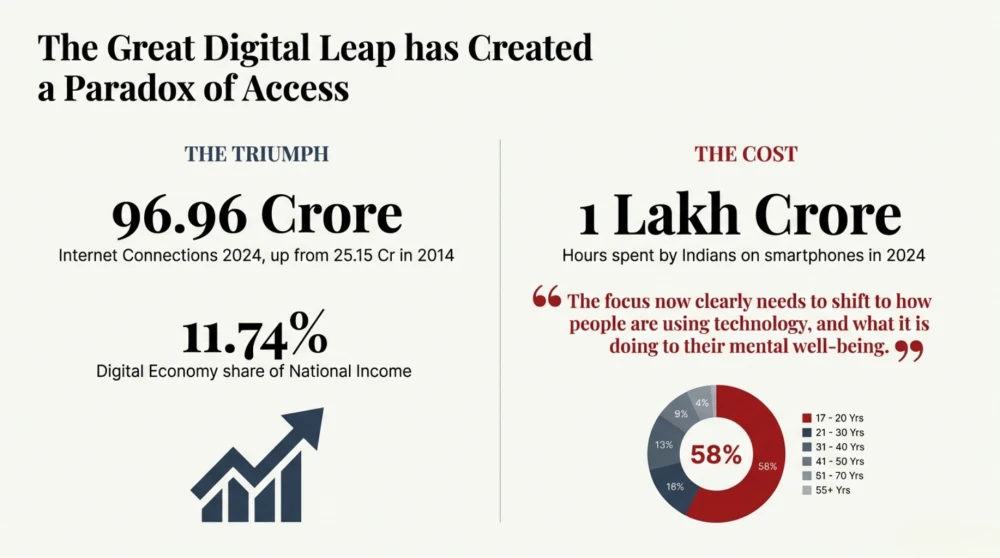
India has seen a steep rise in internet access, including reports of internet connections crossing 97 crore around mid-2024. This is great for education, jobs, and convenience. But in day-to-day clinic practice, I also see a quieter side of this growth: more sleep problems, more irritability, more attention difficulties, and more family conflict linked to screens.
This is not about blaming technology. It is about using it deliberately, so it serves your family rather than silently running your family.
What is "digital addiction" and how is it different from regular screen use?
Most people use screens heavily without meeting any clinical threshold. The problem starts when use becomes:
- Compulsive (you feel pulled, not choosing)
- Hard to stop even when you want to
- Clearly harmful (sleep, school/work, relationships, mood, health)
- Followed by guilt, hiding, or repeated failed attempts to cut down
Many experts use the term "problematic use" because not every pattern fits a single diagnosis, but the harms are real and measurable. The National Academies report on social media and adolescent health emphasizes focusing on outcomes like sleep, mood, functioning, and safety, not only screen-time minutes.
Why it feels so hard to stop: the design is doing its job
A big reason families struggle is that many platforms are built around attention-capture features such as infinite scroll, autoplay, and constant notifications. Research in human-computer interaction describes these as patterns that can reduce user autonomy and make stopping harder, especially in vulnerable users.
Short-form video is a special risk because it combines novelty, speed, and endless feed design. Studies on binge-scrolling and short-form video consumption show links to loss of self-control and negative internal states.
The real health costs we are seeing in families
1) Sleep gets hit first
Late-night scrolling and video loops delay sleep onset and fragment sleep quality. Poor sleep then worsens appetite control, mood, and attention the next day.
Indian pediatric guidance emphasizes age-appropriate limits and highlights sleep as a key protected zone (especially avoiding screens close to bedtime).
2) Anxiety, low mood, and social comparison
For teenagers and young adults, social comparison (looks, lifestyle, money, popularity) can quietly drive anxiety and low self-worth. The evidence is not perfect, but multiple reviews find consistent associations between problematic social media use and adverse mental health outcomes, including anxiety, depression, and sleep disturbance.
3) Attention and learning quality decline
Parents often say, "My child studies, but retention is poor." Constant feed switching trains the brain toward rapid reward and low tolerance for boredom. This can show up as reduced sustained attention, more procrastination, and lower depth of learning. The practical sign is not marks alone, but reduced ability to sit with one task calmly.
4) Weight gain risk rises through multiple pathways
Screens affect weight through more sitting, more snacking, later bedtimes, and poorer next-day appetite regulation. On a population level, global projections warn childhood overweight and obesity will continue rising, and India is among the countries carrying a large share of the future burden.
This is not about blaming parents. It is about designing a healthier home environment.
5) Real-money gaming is a different level of risk
Real-money gaming can quickly become financially and psychologically damaging because it adds the dopamine loop of "win or loss" with money pressure and secrecy. India has been tightening regulation in this space, including a national legal and rules framework discussion around online gaming and real-money games.
If you see borrowing, lying, sudden mood swings, or chasing losses, treat it as urgent.
.webp)
What governments and systems are starting to do
India is now openly discussing age-based curbs for children on social media use, with the Chief Economic Adviser publicly calling compulsive scrolling a "silent scourge" and supporting curbs for kids.
Separately, online gaming regulation has also been moving, with draft rules and enforcement debates around real-money gaming.
But policies alone will not solve what happens inside homes. Family routines still matter most.
A clinic-style digital wellness plan for families
Step 1: Start with a simple home audit (no judgement)
For 3 days, note:
- Total screen time
- The worst 2 time windows (usually morning rush and bedtime)
- The top 2 apps causing loss of control
- Sleep timing (bedtime, wake time)
- Mood markers (irritability, fights, isolation)
- This turns a vague worry into a plan.
Step 2: Protect the 3 non-negotiable zones
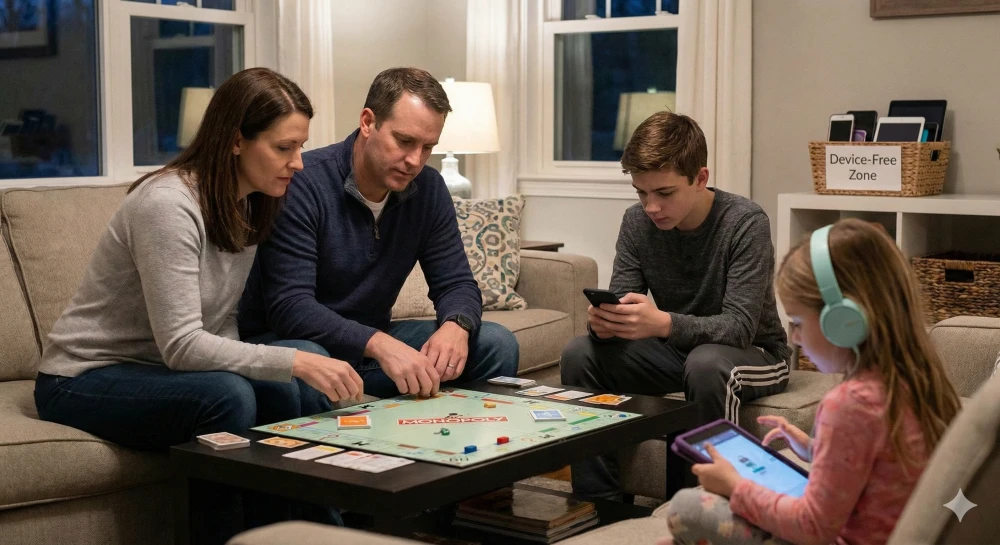
- Bedroom = phone-free for children (and ideally adults)
- Keep chargers outside bedrooms
- Use an alarm clock if needed
- Target: no scrolling in the last 60 minutes before sleep
- Meals = device-free
- At least one full family meal daily with no screens
- This is where values, bonding, and emotional safety build
- Study blocks = single-task only
- Put phone in another room
- Use a visible timer (25-5 or 45-10 cycles)
Step 3: Replace, do not just remove
If you only cut screens, children feel punished. Replace with structured alternatives:
- Daily outdoor time (even 30-45 minutes)
- One skill hobby (music, sport, art, coding, dance)
- One family ritual (evening walk, board game, prayer/meditation, reading)
Step 4: Use "friction" to break compulsive loops
These small barriers work better than motivation:
- Turn off non-essential notifications
- Remove social apps from the home screen
- Log out after each use
- Keep the phone on grayscale
- Disable autoplay where possible
Step 5: Use age-appropriate tech boundaries
- Under 6: aim for minimal recreational screens, supervised only
- 6-12: fixed time slots, no free access in bedroom
- 13-18: negotiated limits plus clear consequences, with privacy respected but safety monitored
- If parents also scroll late at night, children will not take rules seriously. Start with adult behavior first.
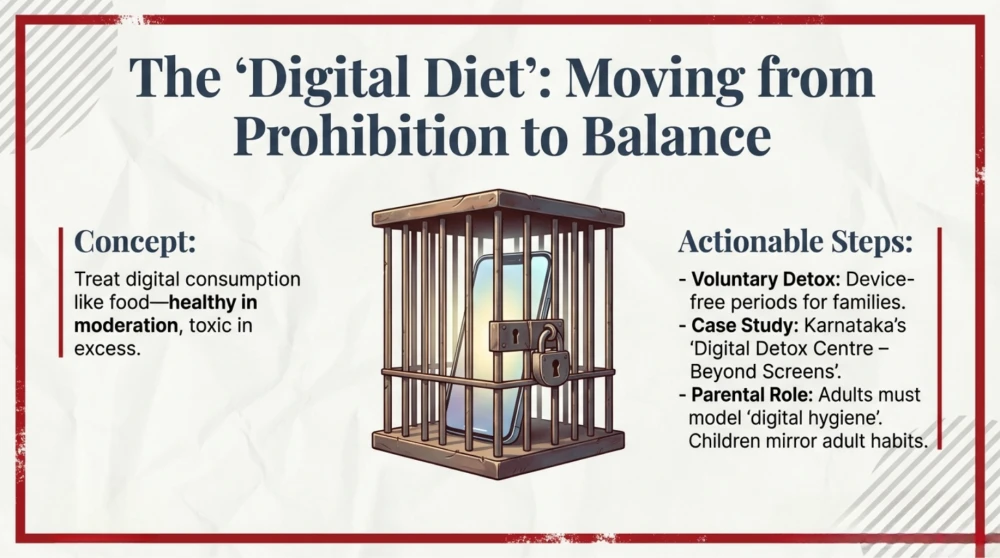
Step 6: Build a "Digital Diet" that is realistic
Try this weekly structure:
- 5 normal days: time windows + bedtime rule
- 1 lighter day: reduced social media, more outdoor
- 1 detox block: half-day or full day with no recreational screens
NIMHANS has also discussed "digital fasting" concepts in public education, and this matches what we see clinically: periodic resets can restore self-control for many people.
Who needs extra caution
Take digital wellness more seriously if any of these are present:
- Pre-existing anxiety, depression, attention issues
- Ongoing sleep debt
- Bullying, loneliness, or social withdrawal
- Rapid weight gain
- Real-money gaming exposure
- Self-harm content exposure or risky online communities
In these cases, you should not rely on home rules alone.
When to seek help and where
If screen use is causing clear impairment (sleep collapse, aggression, school refusal, isolation, lying, financial losses), get professional help.
In India, Tele-MANAS offers free 24/7 mental health support through the Government of India. You can start by calling 14416.
If you want clinic-guided help, treat it like any other lifestyle condition: assess triggers, build replacement routines, and track outcomes weekly.
Take-home points
- Digital wellness is not about banning tech. It is about protecting sleep, learning, and relationships.
- Start with 3 protected zones: bedroom, meals, and study blocks.
- Add friction to compulsive apps (notifications off, logout, grayscale).
- Replace screen time with movement, hobbies, and family rituals.
- Escalate early if you see real-money gaming harms, severe sleep disruption, or emotional decline.
- Educational only, not a substitute for medical advice.
You can book a consultation here: Book Appointment
Written by Dr. Pankaj Kumar, General & Lifestyle Physician, Dwarka, New Delhi