












- 17th March 2026
Table of Contents
- How Fatty Liver Develops Without Symptoms
- The Liver Can Function Normally Despite Fat Accumulation
- Insulin Resistance Starts the Process
- Visceral Fat Directly Affects the Liver
- Why Early Fatty Liver Does Not Cause Symptoms
- Early Changes Inside the Liver
- Non-Obvious Early Warning Signs
- Risk Factors That Accelerate Silent Fatty Liver
- Stages of Fatty Liver Progression
- Why Early Detection Matters
- Can Early Fatty Liver Be Reversed?
- Practical Steps to Reverse Early Fatty Liver
- When Fatty Liver Needs Medical Attention
- References
- Consultation and Next Steps
How Fatty Liver Develops Without Symptoms
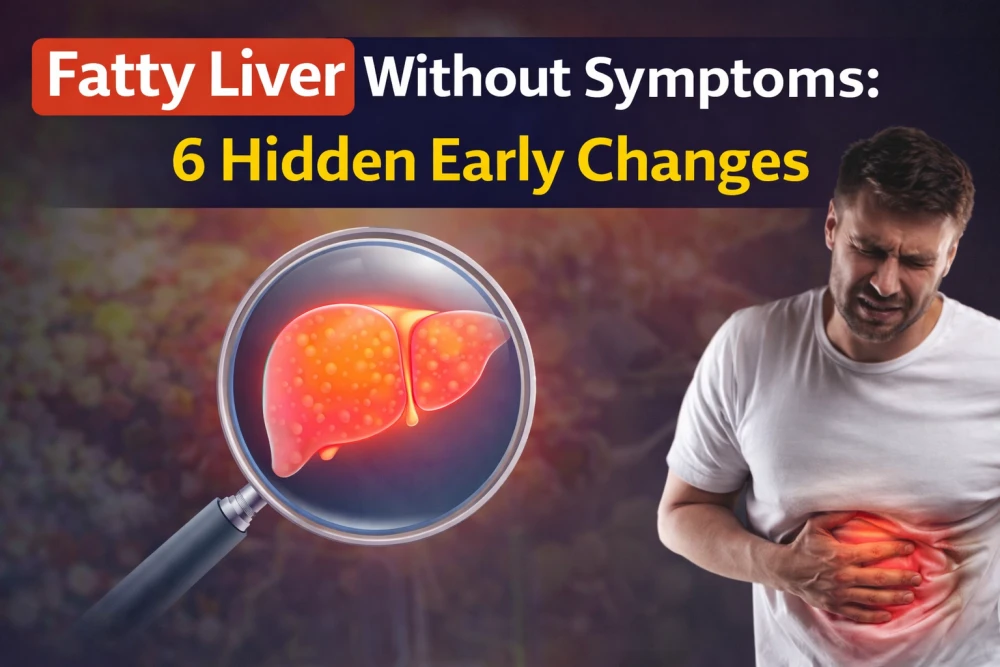
Fatty liver disease is increasingly being diagnosed in individuals who feel completely healthy. Many people are surprised when routine blood tests or ultrasound reports show fatty liver changes, even though they have no obvious symptoms.
This is because fatty liver without symptoms is very common in the early stages. The liver has a remarkable ability to function normally even when fat begins to accumulate within its cells.
In the initial phase, fat builds up gradually inside liver cells without causing pain or noticeable discomfort. This silent progression allows the condition to develop unnoticed for years.
Research on non-alcoholic fatty liver disease (NAFLD) shows that most individuals remain asymptomatic during early stages.
Understanding how fatty liver without symptoms develops is essential for early detection and prevention of long-term complications.
The Liver Can Function Normally Despite Fat Accumulation
The liver performs several vital functions including detoxification, metabolism, and nutrient processing.
In early fatty liver disease, fat accumulation typically affects a portion of liver cells rather than the entire organ. Because of this, the remaining healthy liver tissue continues to perform normal functions.
This compensatory ability is the main reason why fatty liver without symptoms often goes unnoticed. Unlike other organs, the liver does not produce strong pain signals during early damage, which further contributes to silent progression.
Insulin Resistance Starts the Process
The most important driver of fatty liver development is insulin resistance.
Insulin resistance occurs when the body’s cells become less responsive to insulin, leading to higher insulin levels in the bloodstream.
High insulin levels promote fat storage in multiple organs, including the liver. Scientific research shows a strong link between insulin resistance and liver fat accumulation.
This metabolic process begins silently, which is why fatty liver without symptoms can develop even in individuals who feel completely normal.
Visceral Fat Directly Affects the Liver
Fat stored around the abdomen, known as visceral fat, plays a major role in fatty liver development.
Visceral fat releases fatty acids directly into the liver through the bloodstream. This continuous supply of fat leads to gradual accumulation within liver cells.
Research shows that visceral fat is strongly associated with liver fat accumulation and metabolic risk. This explains why individuals with abdominal obesity are more likely to develop fatty liver without symptoms.
Why Early Fatty Liver Does Not Cause Symptoms
One of the most important reasons why fatty liver without symptoms is so common is the liver’s ability to adapt and compensate.
In early stages, fat accumulation does not immediately interfere with liver function. The liver continues to process nutrients, detoxify substances, and regulate metabolism efficiently.
Unlike organs such as the heart or lungs, the liver does not produce early warning pain signals. This means that significant changes can occur before any noticeable symptoms develop.
Research examining the natural history of fatty liver disease shows that the condition can progress silently for years before symptoms appear. This silent phase is the reason why many people are diagnosed incidentally during routine health checkups.
Early Changes Inside the Liver
Although symptoms are absent, several metabolic changes begin early in the course of fatty liver disease. These changes occur at a cellular level and are not immediately visible externally.
Fat droplets start accumulating within liver cells, altering their structure and function gradually. Over time, this can lead to inflammation, oxidative stress, and metabolic disturbances.
These early internal changes explain how fatty liver without symptoms can still progress if not identified and managed early.
Non-Obvious Early Warning Signs
Even though fatty liver is often asymptomatic, some subtle signs may be present but are usually overlooked.
These signs are not specific and may not directly point to liver disease, which makes early detection challenging.
- Mild fatigue or low energy levels
- Slight increase in abdominal fat
- Difficulty losing weight despite dieting
- Elevated triglycerides in blood reports
- Borderline high blood sugar levels
- Occasional bloating or heaviness after meals
These subtle indicators may be early clues of fatty liver without symptoms, especially in individuals with metabolic risk factors.
Risk Factors That Accelerate Silent Fatty Liver
Certain lifestyle and metabolic factors significantly increase the likelihood of developing fatty liver without noticeable symptoms.
These factors often work together and may remain unnoticed for long periods.
- Sedentary lifestyle
- Excess abdominal fat
- Insulin resistance or prediabetes
- High intake of refined carbohydrates and sugars
- Poor sleep patterns
- Chronic stress
Because these risk factors are common in modern lifestyles, fatty liver without symptoms is increasingly seen even in younger individuals.
Stages of Fatty Liver Progression
| Stage | What Happens | Symptoms |
|---|---|---|
| Simple fatty liver | Fat accumulation in liver cells | Usually none |
| Steatohepatitis | Inflammation and liver cell injury | Mild fatigue |
| Fibrosis | Scar tissue formation | Usually minimal |
| Cirrhosis | Severe scarring and liver dysfunction | Noticeable symptoms |
This progression shows how fatty liver without symptoms in early stages can eventually lead to serious complications if not addressed.
Why Early Detection Matters
Because fatty liver often develops silently, early detection becomes extremely important. Routine blood tests, liver function tests, and ultrasound scans can help identify fatty liver before symptoms appear.
Early diagnosis allows individuals to make lifestyle changes that can reverse fat accumulation and prevent disease progression.
You can explore a structured approach to early intervention through the Lifestyle Modification Program, which focuses on metabolic health and long-term prevention.
Recognizing the silent nature of fatty liver without symptoms can help individuals take timely action before complications develop.
Can Early Fatty Liver Be Reversed?
The most important point to understand is that fatty liver without symptoms is often reversible in its early stages.
When fat accumulation is limited to early changes without significant inflammation or fibrosis, the liver can recover with appropriate lifestyle interventions.
The liver has a strong regenerative capacity. If the underlying metabolic causes are corrected, fat content in the liver can reduce significantly over time.
Scientific studies show that structured lifestyle interventions including diet, physical activity, and weight management can improve liver fat and metabolic health. You can review the research here: lifestyle intervention and fatty liver reversal.
This makes early identification of fatty liver without symptoms extremely valuable because timely action can prevent progression.
Practical Steps to Reverse Early Fatty Liver
If fatty liver is detected early, simple but consistent lifestyle changes can produce meaningful improvements.
- Focus on balanced nutrition. Reduce refined carbohydrates, sugary foods, and processed items.
- Increase physical activity. Combine aerobic exercise with strength training.
- Target abdominal fat reduction. Waist circumference is a key indicator.
- Improve insulin sensitivity. Regular exercise and proper meal timing help.
- Maintain healthy sleep patterns. Aim for 7 to 8 hours of sleep daily.
- Manage stress levels. Chronic stress contributes to metabolic imbalance.
- Avoid alcohol if fatty liver is present. Even small amounts may worsen liver stress.
These steps address the underlying causes of fatty liver without symptoms rather than just treating the condition superficially.
When Fatty Liver Needs Medical Attention
Although early fatty liver is often silent, certain symptoms may indicate progression and require medical evaluation.
- Persistent fatigue
- Pain or discomfort in the upper abdomen
- Unexplained weight changes
- Elevated liver enzymes in blood reports
- Signs of metabolic syndrome
- Yellowing of eyes or skin (late stage)
If these symptoms appear along with fatty liver without symptoms history, timely clinical assessment is important to prevent complications.
Key Takeaway
Fatty liver without symptoms is very common in early stages because the liver continues to function normally despite fat accumulation.
The condition often develops silently due to insulin resistance, visceral fat, and lifestyle factors.
The good news is that early fatty liver is usually reversible with timely lifestyle changes.
Regular health checkups and early detection play a crucial role in preventing long-term liver damage.
References
Consultation and Next Steps
If you have been diagnosed with fatty liver or have risk factors such as abdominal obesity, diabetes, or abnormal reports, early intervention can make a significant difference.
You can learn more about a structured approach through the Lifestyle Modification Program.
For personalized evaluation and guidance, you can book a consultation here:
Disclaimer: This content is for educational purposes and should not replace professional medical advice.
You can book a consultation here: Book Appointment
Written by Dr. Pankaj Kumar, General & Lifestyle Physician, Dwarka, New Delhi