












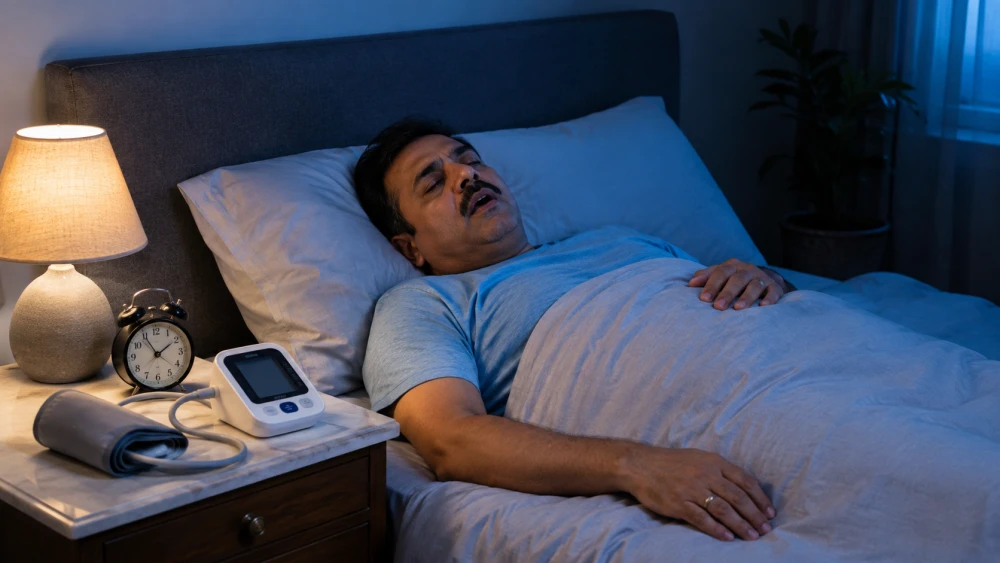
- 15th August 2026
Table of Contents
- How Are Sleep Apnoea and High Blood Pressure Connected?
- Why Does Sleep Apnoea Raise Blood Pressure?
- 1. Repeated Oxygen Drops Activate the Stress Response
- 2. Sleep Fragmentation Prevents Normal Cardiovascular Recovery
- 3. Hormonal Systems Controlling Blood Pressure May Be Affected
- 4. Oxidative Stress and Inflammation May Contribute
- What Is Resistant Hypertension?
- Sleep Apnoea Is an Important Cause of Secondary Hypertension
- Snoring Is an Important Clue—but Snoring Alone Is Not Sleep Apnoea
- Why Nighttime Blood Pressure Can Provide an Important Clue
- Obesity Strengthens the Link Between Sleep Apnoea and High Blood Pressure
- Do Not Simply Keep Adding Blood Pressure Medicines Without Looking for the Cause
- Who Should Be Screened for Sleep Apnoea and High Blood Pressure?
- What Is the STOP-BANG Questionnaire?
- How Is Sleep Apnoea Diagnosed?
- What Does the Apnoea-Hypopnoea Index Mean?
- Why Can Sleep Apnoea Cause High Morning Blood Pressure?
- Why 24-Hour Blood Pressure Monitoring Can Be Useful
- What Is the Connection Between Aldosterone, Sleep Apnoea and High Blood Pressure?
- Can Treating Sleep Apnoea Lower Blood Pressure?
- Why CPAP Adherence Matters in Sleep Apnoea and High Blood Pressure
- Does CPAP Prevent Heart Attacks and Strokes?
- Can Weight Loss Improve Sleep Apnoea and High Blood Pressure?
- Why Lifestyle Still Matters When You Take Several BP Medicines
- What Should Happen When Blood Pressure Remains High Despite Medicines?
- How to Monitor Blood Pressure Properly at Home
- Why Morning Readings Matter in Sleep Apnoea and High Blood Pressure
- Other Causes of High Blood Pressure That Should Not Be Missed
- Common Myths About Sleep Apnoea and High Blood Pressure
- Myth 1: If I Do Not Feel Sleepy, I Cannot Have Sleep Apnoea
- Myth 2: CPAP Will Cure My High Blood Pressure
- Myth 3: Only People With Obesity Have Sleep Apnoea
- Myth 4: Snoring Means I Definitely Have Sleep Apnoea
- Myth 5: More BP Medicines Are Always the Answer
- When Sleep Apnoea and High Blood Pressure Need Medical Review
- When High Blood Pressure Requires Urgent Attention
- Practical Lifestyle Steps That Support Both Sleep and Blood Pressure
- Reduce Excess Sodium
- Increase Physical Activity
- Address Excess Body Fat When Relevant
- Limit Alcohol
- Prioritise Medication Adherence
- Treat Sleep Apnoea When It Is Confirmed
- Key Takeaways About Sleep Apnoea and High Blood Pressure
- References
You take your blood pressure medicines regularly. You have reduced salt. Perhaps you have even lost some weight. Yet every time you check your blood pressure, the numbers remain higher than expected.
The natural response is often to increase the dose or add another medicine.
Sometimes that is necessary. But when blood pressure remains persistently high despite appropriate treatment, there is another question worth asking:
Could something else be driving the blood pressure?
One frequently overlooked possibility is obstructive sleep apnoea (OSA). The relationship between sleep apnoea and high blood pressure is well established, and sleep apnoea is particularly common among people whose hypertension remains difficult to control.
This does not mean that everyone with uncontrolled blood pressure has sleep apnoea. Incorrect blood pressure measurement, missed medicines, excess dietary sodium, alcohol, obesity, kidney disease, hormonal disorders, and certain medications can all contribute.
But if high blood pressure occurs alongside loud snoring, witnessed pauses in breathing, poor-quality sleep, morning headaches, or daytime sleepiness, sleep deserves much closer attention.
How Are Sleep Apnoea and High Blood Pressure Connected?
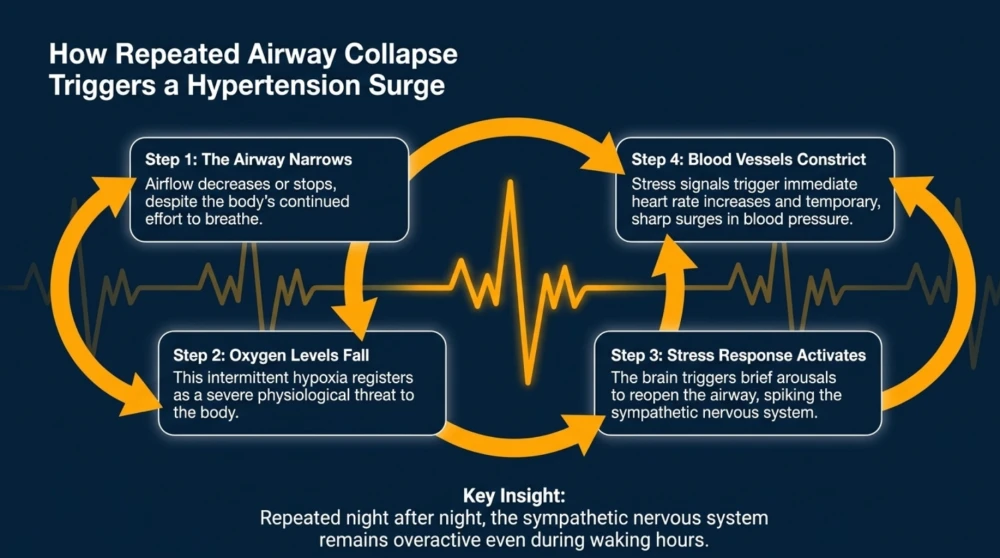
Obstructive sleep apnoea occurs when the upper airway repeatedly narrows or closes during sleep. Airflow decreases or temporarily stops even though the body continues trying to breathe.
When this happens, blood oxygen levels may fall. The brain detects the problem and briefly activates mechanisms that reopen the airway.
The person may snort, gasp, choke, or briefly wake before falling asleep again.
In significant sleep apnoea, this cycle can occur repeatedly throughout the night.
Each episode places stress on systems involved in cardiovascular regulation. This helps explain the relationship between sleep apnoea and high blood pressure.
Sleep Apnoea and High Blood Pressure Can Continue Throughout the Night
Sleep is normally a period when the cardiovascular system gets some relief. In many healthy adults, blood pressure decreases during sleep.
With obstructive sleep apnoea, repeated breathing disturbances can interrupt this normal pattern.
Every episode of airway obstruction may be accompanied by changes in oxygen levels, sympathetic nervous system activation, and temporary surges in blood pressure.
If this happens repeatedly night after night, the effects may extend beyond sleep and contribute to persistent daytime hypertension.
Why Does Sleep Apnoea Raise Blood Pressure?
There is no single mechanism responsible for hypertension in obstructive sleep apnoea. Several processes appear to interact.
1. Repeated Oxygen Drops Activate the Stress Response
During an obstructive apnoea or hypopnoea, oxygen levels may fall before breathing resumes.
The body interprets this as a physiological threat.
The sympathetic nervous system becomes activated, increasing the release of stress-related signals that constrict blood vessels and can raise heart rate and blood pressure.
When this occurs repeatedly, the sympathetic nervous system may remain more active even during waking hours.
2. Sleep Fragmentation Prevents Normal Cardiovascular Recovery
A person with sleep apnoea may technically spend seven or eight hours in bed yet experience repeated brief arousals throughout the night.
Most of these awakenings are so short that they are not remembered the next morning.
The result is fragmented rather than restorative sleep.
This repeated disruption contributes to the relationship between sleep apnoea and high blood pressure by maintaining greater physiological stress during a period when blood pressure would normally fall.
3. Hormonal Systems Controlling Blood Pressure May Be Affected
Obstructive sleep apnoea can also influence the renin-angiotensin-aldosterone system, which plays an important role in regulating blood pressure, sodium balance, and body fluid volume.
Increased aldosterone activity and fluid retention may be particularly relevant in some people with resistant hypertension.
This relationship is complex because obesity, sleep apnoea, resistant hypertension, and aldosterone excess can overlap in the same patient.
4. Oxidative Stress and Inflammation May Contribute
Repeated cycles of falling and recovering oxygen levels are different from a single sustained reduction in oxygen.
This intermittent hypoxia may promote oxidative stress, inflammatory signalling, and changes in blood-vessel function.
These mechanisms provide another biological explanation for the association between sleep apnoea and high blood pressure.
What Is Resistant Hypertension?
Not every elevated blood pressure reading despite medication represents resistant hypertension.
Before labelling hypertension as resistant, clinicians need to confirm that blood pressure is genuinely uncontrolled and that treatment is appropriate.
In practical terms, resistant hypertension refers to blood pressure that remains above the treatment goal despite the use of multiple appropriate blood-pressure-lowering medicines, usually including a diuretic, at maximally tolerated doses.
Current guidelines also emphasise confirming uncontrolled blood pressure outside the clinic and excluding factors such as poor medication adherence before diagnosing true resistant hypertension.
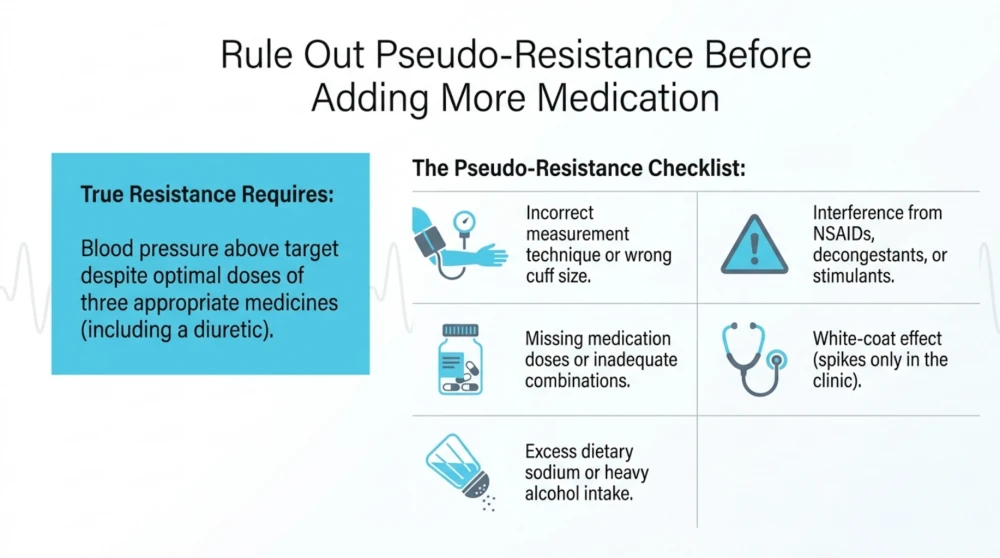
High Blood Pressure Despite Medicines May Be Pseudo-Resistant
Sometimes blood pressure appears resistant when there is another explanation.
Possible reasons include:
- Incorrect blood pressure measurement technique.
- Using an inappropriate cuff size.
- White-coat effect.
- Missing medication doses.
- Inadequate medication doses or combinations.
- Excess dietary sodium.
- Heavy alcohol intake.
- Medicines or substances that raise blood pressure.
For this reason, the first response to an uncontrolled reading should not automatically be to blame sleep apnoea or prescribe another tablet.
The entire blood pressure pattern needs to be reviewed.
Sleep Apnoea Is an Important Cause of Secondary Hypertension
Most people with hypertension have primary hypertension, meaning there is no single identifiable underlying disease responsible for the elevated blood pressure.
In secondary hypertension, another medical condition contributes significantly to the problem.
Recognised secondary causes include:
- Obstructive sleep apnoea.
- Primary aldosteronism.
- Kidney disease.
- Renovascular disease.
- Thyroid disorders.
- Cushing syndrome.
- Phaeochromocytoma and paraganglioma.
- Certain medicines and substances.
The connection between sleep apnoea and high blood pressure becomes especially important in people with resistant hypertension. Current European hypertension guidance specifically recommends considering sleep apnoea in patients with resistant hypertension and in those with suggestive clinical features.
Why Sleep Apnoea and High Blood Pressure Are Often Missed
Sleep apnoea is easy to overlook because the most important events occur while the patient is asleep.
A person may tell the doctor:
“I sleep for seven hours every night.”
That statement tells us how long the person spends sleeping. It does not tell us whether breathing remained normal during those seven hours.
In fact, some patients become aware of the problem only because their spouse notices loud snoring, repeated breathing pauses, choking, or restless sleep.
Snoring Is an Important Clue—but Snoring Alone Is Not Sleep Apnoea
Loud habitual snoring is one of the most recognisable symptoms of obstructive sleep apnoea.
However, not everyone who snores has OSA, and some people with sleep apnoea may not report obvious snoring.
The suspicion becomes stronger when snoring occurs together with other features.
Warning Signs of Sleep Apnoea and High Blood Pressure
Consider discussing sleep apnoea assessment with your doctor if high blood pressure occurs alongside:
- Loud snoring on most nights.
- Witnessed pauses in breathing during sleep.
- Gasping or choking at night.
- Repeated nighttime awakenings.
- Morning headaches.
- Dry mouth on waking.
- Excessive daytime sleepiness.
- Poor concentration.
- Persistent fatigue despite apparently adequate sleep.
- Obesity or increasing neck circumference.
Importantly, the absence of dramatic daytime sleepiness does not completely exclude obstructive sleep apnoea.
Why Nighttime Blood Pressure Can Provide an Important Clue
Blood pressure normally follows a circadian pattern. In many people, it decreases during sleep compared with daytime levels.
This is often called nocturnal dipping.
Some people with obstructive sleep apnoea show a reduced nighttime fall in blood pressure—a pattern known as non-dipping. Others may even have higher blood pressure at night.
This is another reason the relationship between sleep apnoea and high blood pressure may not be fully appreciated from occasional clinic readings.
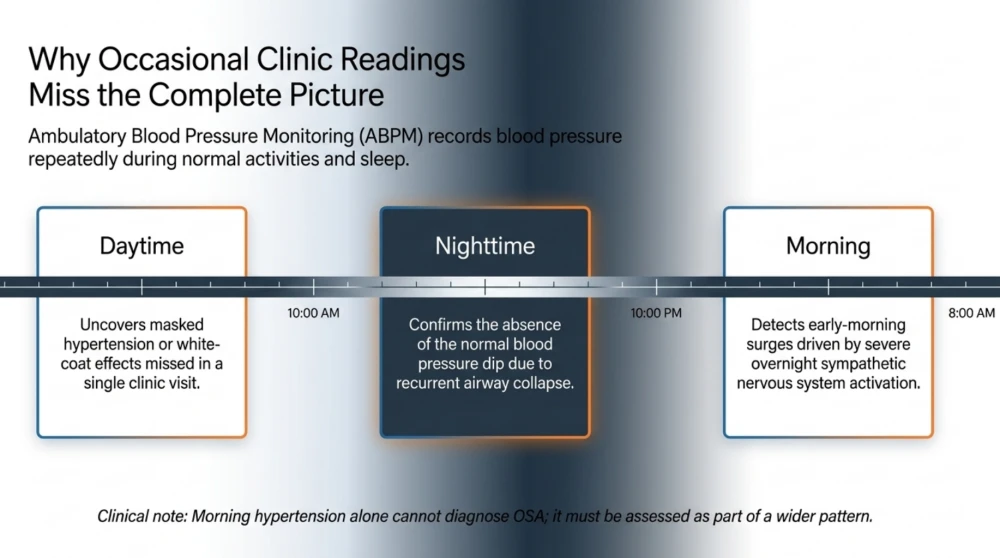
Why 24-Hour Blood Pressure Monitoring Can Help
Ambulatory blood pressure monitoring records blood pressure repeatedly during normal daytime activities and sleep.
It can help identify:
- White-coat hypertension.
- Masked hypertension.
- Nighttime hypertension.
- Non-dipping blood pressure patterns.
- Whether blood pressure remains elevated throughout the full 24-hour period.
A non-dipping or reverse-dipping pattern does not diagnose sleep apnoea. However, in someone with resistant hypertension and other suggestive symptoms, it may strengthen the reason to investigate sleep-disordered breathing.
Obesity Strengthens the Link Between Sleep Apnoea and High Blood Pressure
Excess body fat, particularly around the neck and abdomen, increases the likelihood of obstructive sleep apnoea.
At the same time, obesity is independently associated with hypertension, insulin resistance, fatty liver, abnormal triglycerides, and cardiovascular disease.
This creates substantial overlap.
A person may therefore have obesity, hypertension, insulin resistance, and sleep apnoea simultaneously, with each problem interacting with the others.
But Thin People Can Have Sleep Apnoea Too
Body weight should never be used as the only screening criterion.
People with normal BMI can develop obstructive sleep apnoea because of factors such as upper-airway anatomy, jaw structure, enlarged tonsils, nasal obstruction, ageing, or genetic susceptibility.
Therefore, unexplained sleep apnoea and high blood pressure should still be considered in a lean patient when the clinical pattern is suggestive.
Do Not Simply Keep Adding Blood Pressure Medicines Without Looking for the Cause
Some people genuinely require several antihypertensive medicines, and additional medication may be entirely appropriate.
However, persistent hypertension despite a reasonable treatment regimen should trigger a broader evaluation rather than an endless sequence of prescription changes.
The clinician may need to review:
- Home blood pressure readings.
- Medication adherence.
- Salt and alcohol intake.
- Kidney function.
- Urine albumin.
- Potassium levels.
- Medicines that may increase blood pressure.
- Possible primary aldosteronism.
- Symptoms suggesting obstructive sleep apnoea.
The key message is simple: when blood pressure remains high despite medicines, sometimes the next step is not another tablet—it is finding out why.
Who Should Be Screened for Sleep Apnoea and High Blood Pressure?
Not every person with hypertension needs a sleep study. However, the threshold for considering obstructive sleep apnoea should be lower when blood pressure remains difficult to control or when typical sleep-related symptoms are present.
The 2024 European hypertension guideline recommends suspecting obstructive sleep apnoea in people with resistant hypertension, suggestive symptoms, or a non-dipping or reverse-dipping blood pressure pattern on 24-hour monitoring. Importantly, the absence of obvious symptoms does not completely exclude the condition.
Screening for sleep apnoea and high blood pressure becomes particularly relevant when hypertension occurs together with:
- Loud habitual snoring.
- Witnessed pauses in breathing during sleep.
- Gasping or choking at night.
- Excessive daytime sleepiness.
- Morning headaches.
- Obesity or increasing neck circumference.
- Resistant hypertension.
- Nighttime hypertension.
- A non-dipping or reverse-dipping blood pressure pattern.
Obstructive sleep apnoea is particularly common in resistant hypertension. The 2024 ESC guideline notes that studies have found features of obstructive sleep apnoea in up to approximately 60% of people with resistant hypertension.
Do You Need to Feel Sleepy to Have Sleep Apnoea and High Blood Pressure?
No. Excessive daytime sleepiness is an important symptom, but it is not present in every person with obstructive sleep apnoea.
Some patients report that they feel reasonably well during the day despite significant nighttime breathing disturbances. Others may have gradually adapted to chronic fatigue and assume that feeling tired is simply part of ageing or a busy lifestyle.
This is why clinicians should not rely on daytime sleepiness alone when evaluating sleep apnoea and high blood pressure.
What Is the STOP-BANG Questionnaire?
STOP-BANG is a commonly used screening questionnaire that helps estimate the likelihood of obstructive sleep apnoea.
It considers eight features:
- S – Snoring.
- T – Tiredness during the daytime.
- O – Observed pauses in breathing.
- P – High blood pressure.
- B – Body mass index.
- A – Age.
- N – Neck circumference.
- G – Sex.
A higher score suggests a greater probability of obstructive sleep apnoea and can help determine who deserves further evaluation.
STOP-BANG Does Not Diagnose Sleep Apnoea
This distinction is important.
A screening questionnaire can identify risk, but it cannot confirm obstructive sleep apnoea. The American Academy of Sleep Medicine advises that questionnaires and clinical prediction tools should not be used by themselves to diagnose OSA.
Therefore, someone with a high STOP-BANG score and uncontrolled hypertension may need formal sleep testing rather than simply being labelled as having sleep apnoea.
How Is Sleep Apnoea Diagnosed?
If clinical assessment suggests obstructive sleep apnoea, objective sleep testing is generally required.
The two main approaches are:
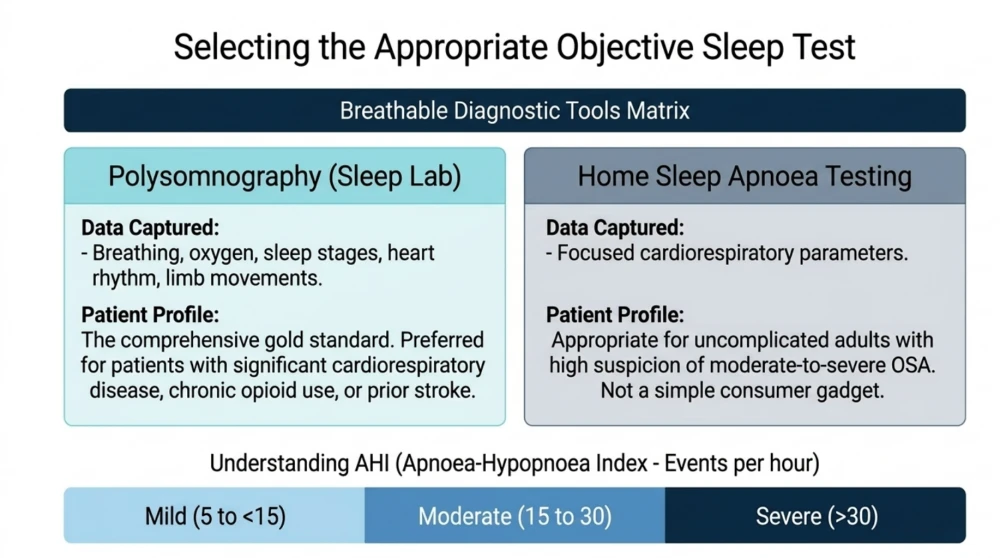
- Polysomnography performed in a sleep laboratory.
- Home sleep apnoea testing in appropriately selected adults.
Polysomnography remains the standard comprehensive diagnostic test. It can record breathing, oxygen levels, sleep stages, heart rhythm, limb movements, and other physiological parameters while the person sleeps.
Can a Home Sleep Study Diagnose Sleep Apnoea and High Blood Pressure?
Home sleep apnoea testing can be appropriate for uncomplicated adults who have signs and symptoms suggesting an increased risk of moderate-to-severe obstructive sleep apnoea.
However, a home test is not simply a consumer screening gadget. The American Academy of Sleep Medicine recommends that its use should follow a proper medical assessment and that the data should be appropriately reviewed and interpreted.
If a home sleep study is negative or inconclusive despite strong clinical suspicion, laboratory polysomnography may still be required.
Polysomnography is generally preferred over home testing in certain patients with significant cardiorespiratory disease, suspected hypoventilation, neuromuscular weakness affecting breathing, chronic opioid use, previous stroke, or severe insomnia.
What Does the Apnoea-Hypopnoea Index Mean?
Sleep studies commonly report the frequency of breathing disturbances during sleep. One widely used measurement is the apnoea-hypopnoea index (AHI).
The AHI represents the average number of apnoeas and hypopnoeas occurring per hour of sleep.
In adults, obstructive sleep apnoea is commonly classified approximately as:
- Mild: AHI 5 to less than 15 events per hour.
- Moderate: AHI 15 to 30 events per hour.
- Severe: AHI above 30 events per hour.
However, AHI should not be interpreted in isolation. Symptoms, oxygen desaturation, cardiovascular disease, sleep quality, and other clinical factors also influence treatment decisions.
Why Can Sleep Apnoea Cause High Morning Blood Pressure?
Some patients notice that their blood pressure is particularly high shortly after waking.
Blood pressure normally begins to rise as the body prepares for waking. But repeated obstructive events during the preceding night may produce additional sympathetic activation and blood pressure surges.
This can contribute to abnormal nighttime and early-morning blood pressure patterns in some people with sleep apnoea and high blood pressure.
Morning Blood Pressure Alone Cannot Diagnose Sleep Apnoea
A high morning reading has many possible explanations, including inadequate duration of medication action, poor sleep, stress, excess sodium, alcohol, kidney disease, or simply normal biological variability.
The pattern becomes more suggestive when morning hypertension occurs together with loud snoring, witnessed apnoeas, nighttime hypertension, or resistant hypertension.
Why 24-Hour Blood Pressure Monitoring Can Be Useful
Ambulatory blood pressure monitoring can provide information that is impossible to obtain from occasional clinic measurements.
A portable monitor measures blood pressure repeatedly during normal daytime activities and while the patient sleeps.
This allows clinicians to evaluate whether blood pressure falls appropriately during sleep.
Sleep Apnoea and High Blood Pressure May Produce a Non-Dipping Pattern
Normally, blood pressure decreases during sleep. When this expected reduction is blunted, the pattern is called non-dipping.
If nighttime blood pressure becomes higher rather than lower, it may be described as reverse dipping.
Obstructive sleep apnoea is one possible contributor to these patterns, although they can occur with several other medical conditions.
The 2024 ESC hypertension guideline specifically recommends considering obstructive sleep apnoea in patients with non-dipping or reverse-dipping patterns, particularly when obesity or other suggestive features are present.
What Is the Connection Between Aldosterone, Sleep Apnoea and High Blood Pressure?
Primary aldosteronism is another important secondary cause of resistant hypertension. Interestingly, aldosterone excess, fluid retention, obesity, resistant hypertension, and obstructive sleep apnoea can overlap.
Aldosterone promotes sodium and water retention. Fluid redistribution during sleep may potentially contribute to tissue accumulation around the upper airway in susceptible individuals, while sleep apnoea itself may interact with neurohormonal pathways involved in blood pressure regulation.
Therefore, discovering sleep apnoea should not automatically end the investigation of resistant hypertension.
Finding Sleep Apnoea Does Not Exclude Other Causes of Resistant Hypertension
A patient can have more than one contributor to uncontrolled blood pressure.
Depending on the clinical situation, evaluation may still need to consider:
- Primary aldosteronism.
- Chronic kidney disease.
- Renal artery disease.
- Thyroid dysfunction.
- Medication-related hypertension.
- Excess sodium intake.
- Alcohol intake.
This is why sleep apnoea and high blood pressure should be considered as part of a comprehensive assessment rather than as an isolated diagnosis.
Can Treating Sleep Apnoea Lower Blood Pressure?
Yes, treating obstructive sleep apnoea can lower blood pressure in some patients, but expectations need to be realistic.
Continuous positive airway pressure, better known as CPAP, is one of the principal treatments for obstructive sleep apnoea.
The device provides positive airway pressure through a mask, helping prevent the upper airway from repeatedly collapsing during sleep.
CPAP can substantially reduce apnoea events when used appropriately. Its effect on blood pressure is generally more modest than its effect on nighttime breathing.
How Much Can CPAP Reduce Blood Pressure?
The blood pressure response varies considerably between individuals.
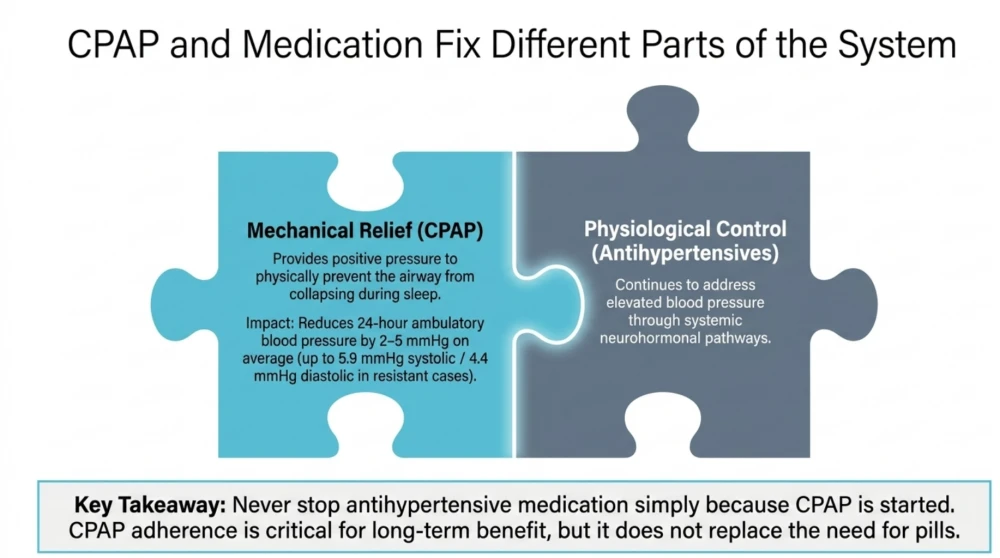
The 2025 ACC/AHA hypertension guideline notes that randomised trials have generally found short-term reductions in office and ambulatory blood pressure of approximately 2–5 mmHg with CPAP, including in people with resistant hypertension.
However, patients with resistant hypertension may sometimes experience larger reductions. A 2024 meta-analysis involving 12 trials and 718 participants with obstructive sleep apnoea and resistant hypertension found that CPAP was associated with an average reduction of approximately 5.9 mmHg in 24-hour systolic blood pressure and 4.4 mmHg in 24-hour diastolic blood pressure.
These are averages, not promises. Some people respond substantially, while others experience relatively little change.
Why CPAP Adherence Matters in Sleep Apnoea and High Blood Pressure
A CPAP machine sitting beside the bed does not treat sleep apnoea.
It needs to be used consistently.
Blood pressure response appears to be influenced partly by how regularly and for how long CPAP is used each night. The 2025 ACC/AHA guideline highlights long-term data in resistant hypertension showing better ambulatory blood pressure outcomes among patients who were adherent to CPAP therapy.
If CPAP feels uncomfortable, the solution should not automatically be to abandon treatment. Mask fit, pressure settings, nasal congestion, dryness, and other practical issues can often be addressed with the treating sleep team.
CPAP Does Not Replace Blood Pressure Medicines
This is one of the most important messages about sleep apnoea and high blood pressure.
Someone diagnosed with sleep apnoea should not stop antihypertensive medication simply because CPAP has been started.
CPAP treats the nighttime airway obstruction. Antihypertensive medicines address the elevated blood pressure through other physiological pathways.
As sleep apnoea is treated and lifestyle factors improve, blood pressure may fall enough for medication requirements to change in some individuals. But any reduction should be based on documented blood pressure readings and medical review.
Does CPAP Prevent Heart Attacks and Strokes?
CPAP is highly effective at treating obstructive breathing events and can improve daytime sleepiness and sleep-related symptoms in appropriately selected patients.
However, it would be inaccurate to promise that CPAP automatically prevents cardiovascular events.
The 2025 ACC/AHA hypertension guideline notes that current evidence does not support using CPAP specifically as a treatment proven to prevent cardiovascular events or mortality in adults with moderate-to-severe obstructive sleep apnoea.
This distinction matters because treatment should be evidence-based rather than oversold.
Can Weight Loss Improve Sleep Apnoea and High Blood Pressure?
For people with overweight or obesity, weight reduction can improve both obstructive sleep apnoea and blood pressure.
Excess fat around the neck can contribute to upper-airway narrowing, while abdominal and visceral fat are strongly associated with hypertension, insulin resistance, and other cardiometabolic abnormalities.
Reducing excess body fat can therefore address several contributors simultaneously.
Weight Loss Should Complement, Not Delay, Sleep Apnoea Treatment
A person with clinically significant obstructive sleep apnoea should not necessarily be told to lose weight first and return months later.
Weight management takes time, and sleep-disordered breathing continues every night in the meantime.
Depending on severity and clinical circumstances, appropriate sleep apnoea treatment, blood pressure management, nutrition, physical activity, and weight management may need to proceed together.
Why Lifestyle Still Matters When You Take Several BP Medicines
People with resistant hypertension sometimes assume that lifestyle measures no longer matter because they already require multiple medicines.
That is not correct.
Important measures may include:
- Reducing excessive dietary sodium.
- Maintaining an appropriate body weight.
- Regular aerobic physical activity.
- Resistance exercise where appropriate.
- Limiting excessive alcohol.
- Avoiding smoking.
- Improving overall diet quality.
- Taking prescribed medicines consistently.
- Addressing obstructive sleep apnoea when present.
These measures should not be viewed as alternatives to medication. In someone with sleep apnoea and high blood pressure, the most effective strategy often addresses several contributing factors simultaneously.
What Should Happen When Blood Pressure Remains High Despite Medicines?
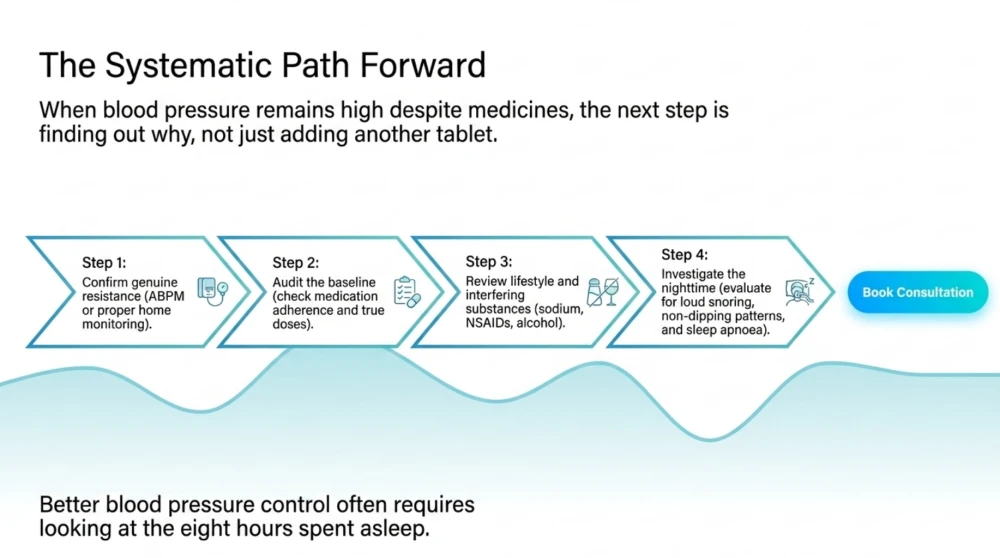
The next step should be systematic rather than simply adding medicines indefinitely.
First, confirm that blood pressure is genuinely uncontrolled. Review home readings or consider ambulatory blood pressure monitoring when appropriate.
Second, confirm medication adherence and check whether the treatment combination and doses are appropriate.
Third, review lifestyle factors and medicines or substances that can increase blood pressure.
Finally, investigate secondary causes when the clinical pattern suggests them.
If the patient snores heavily, has witnessed breathing pauses, feels excessively sleepy, has resistant hypertension, or shows abnormal nighttime blood pressure patterns, obstructive sleep apnoea deserves particular consideration.
Sometimes better blood pressure control requires looking beyond the prescription and examining what happens during the eight hours the patient spends asleep.
How to Monitor Blood Pressure Properly at Home
Before assuming that medicines are failing, blood pressure needs to be measured correctly. Poor technique can produce readings that are consistently higher than the true value and may lead to unnecessary concern or overtreatment.
For people with suspected sleep apnoea and high blood pressure, home blood pressure monitoring can be especially useful because it provides information outside the clinic and helps identify whether readings remain elevated across different times of day.
Use the Right Cuff Size
A cuff that is too small can overestimate blood pressure. This is particularly important in people with larger upper arms.
Use a validated upper-arm blood pressure monitor and make sure the cuff size is appropriate for your arm circumference.
Rest Before Measuring
Sit quietly for about five minutes before checking blood pressure. Avoid measuring immediately after climbing stairs, rushing, exercising, smoking, drinking caffeine, or having an emotional argument.
Position Matters
Sit with your back supported, feet flat on the floor, legs uncrossed, and the arm supported at heart level.
Small errors in posture can change the reading enough to affect interpretation.
Take More Than One Reading
A single measurement is less useful than a pattern. Taking two readings about one minute apart and recording the average can provide a more reliable estimate.
For several days, many clinicians advise checking blood pressure in the morning and evening under similar conditions. The exact schedule should be individualised.
Why Morning Readings Matter in Sleep Apnoea and High Blood Pressure
Morning blood pressure can provide useful information because obstructive sleep apnoea affects the cardiovascular system overnight.
If repeated airway obstruction causes sympathetic activation, blood pressure may remain elevated into the early morning hours.
However, morning hypertension is not specific to sleep apnoea. Medication timing, poor sleep, kidney disease, stress, excess sodium intake, alcohol, and other factors may also contribute.
Look for a Pattern, Not One Bad Morning
One unusually high reading after a poor night of sleep does not diagnose anything.
The relationship between sleep apnoea and high blood pressure becomes more clinically meaningful when repeated morning hypertension occurs alongside loud snoring, witnessed apnoeas, resistant hypertension, or abnormal nighttime blood pressure patterns.
Other Causes of High Blood Pressure That Should Not Be Missed
Obstructive sleep apnoea is important, but it is only one possible contributor to resistant hypertension.
A systematic evaluation should also consider other secondary causes, especially when blood pressure remains uncontrolled despite an appropriate treatment plan.
Primary Aldosteronism
Primary aldosteronism is one of the most important and underdiagnosed causes of secondary hypertension.
It should be considered particularly in people with resistant hypertension, low potassium, adrenal abnormalities, or early-onset hypertension.
Kidney Disease
Chronic kidney disease can both cause and worsen hypertension. Evaluation may include serum creatinine, eGFR, urine albumin, and other tests depending on the clinical picture.
Renovascular Disease
Narrowing of the arteries supplying the kidneys can contribute to difficult-to-control hypertension in selected patients.
Thyroid Disorders
Both hyperthyroidism and hypothyroidism can affect blood pressure, although the pattern may differ.
Medicines and Substances
Several medications and substances can raise blood pressure or make it harder to control.
Examples include:
- NSAID painkillers.
- Certain decongestants.
- Some hormonal treatments.
- Corticosteroids.
- Stimulants.
- Excess alcohol.
- High-sodium supplements or products.
This is why identifying sleep apnoea and high blood pressure should not stop the search for other contributing factors when the clinical picture suggests them.
Common Myths About Sleep Apnoea and High Blood Pressure
Myth 1: If I Do Not Feel Sleepy, I Cannot Have Sleep Apnoea
This is incorrect. Some patients with obstructive sleep apnoea do not report obvious daytime sleepiness.
Snoring, witnessed breathing pauses, resistant hypertension, non-dipping blood pressure, and morning headaches may still justify evaluation.
Myth 2: CPAP Will Cure My High Blood Pressure
CPAP can lower blood pressure in some patients, especially when sleep apnoea is significant and treatment is used consistently.
However, the average reduction is usually modest, and many people still need antihypertensive medicines.
Myth 3: Only People With Obesity Have Sleep Apnoea
Obesity is a major risk factor, but normal-weight adults can also develop obstructive sleep apnoea because of airway anatomy, ageing, jaw structure, nasal obstruction, or other factors.
Myth 4: Snoring Means I Definitely Have Sleep Apnoea
Snoring is an important clue, but it is not diagnostic. Some people have primary snoring without clinically important apnoea.
Myth 5: More BP Medicines Are Always the Answer
Additional medication may be necessary, but persistent hypertension should also prompt assessment of measurement technique, adherence, lifestyle factors, secondary causes, and sleep-disordered breathing.
When Sleep Apnoea and High Blood Pressure Need Medical Review
Medical review becomes particularly important when blood pressure remains above target despite several medicines or when sleep-related symptoms are prominent.
Discuss further evaluation if you have:
- Resistant hypertension.
- Loud snoring most nights.
- Witnessed pauses in breathing.
- Choking or gasping during sleep.
- Morning headaches.
- Excessive daytime sleepiness.
- Repeated nighttime awakenings.
- Nighttime or early-morning hypertension.
- A non-dipping blood pressure pattern.
These features do not prove that obstructive sleep apnoea is the cause, but they justify closer assessment.
When High Blood Pressure Requires Urgent Attention
Not every high reading is an emergency. However, very high blood pressure associated with symptoms may require urgent medical assessment.
Seek prompt care if severe hypertension occurs with:
- Chest pain.
- Severe shortness of breath.
- Confusion.
- New weakness or numbness.
- Speech difficulty.
- Severe visual disturbance.
- Seizure.
These symptoms should not be attributed to sleep apnoea or managed by simply taking an extra tablet without medical advice.
Practical Lifestyle Steps That Support Both Sleep and Blood Pressure
Managing sleep apnoea and high blood pressure often requires several strategies working together rather than one intervention.
Reduce Excess Sodium
High sodium intake can make blood pressure harder to control. Restaurant meals, packaged snacks, pickles, sauces, processed meats, and ready-made foods are common hidden sources.
Increase Physical Activity
Regular walking, aerobic exercise, and resistance training can improve blood pressure, insulin sensitivity, cardiovascular fitness, and body composition.
Address Excess Body Fat When Relevant
For people with overweight or obesity, sustainable weight loss may improve both obstructive sleep apnoea and hypertension.
Limit Alcohol
Alcohol can worsen snoring and upper-airway collapse while also increasing blood pressure in some people.
Prioritise Medication Adherence
Even the best treatment plan cannot work if medicines are taken irregularly. Missed doses are a common reason for apparent treatment resistance.
Treat Sleep Apnoea When It Is Confirmed
CPAP, weight management, positional therapy, oral appliances, or other approaches may be recommended depending on severity, anatomy, symptoms, and specialist assessment.
Key Takeaways About Sleep Apnoea and High Blood Pressure
- Sleep apnoea and high blood pressure are closely linked, particularly in resistant hypertension.
- Obstructive sleep apnoea can repeatedly activate the sympathetic nervous system and contribute to abnormal nighttime blood pressure patterns.
- Loud snoring, witnessed apnoeas, morning headaches, and daytime sleepiness are important clues.
- Not every patient with uncontrolled hypertension has sleep apnoea, and not every snorer has OSA.
- STOP-BANG can help screen for risk but does not diagnose sleep apnoea.
- Home sleep testing or polysomnography may be required to confirm the diagnosis.
- CPAP can reduce blood pressure modestly on average, with potentially greater benefit in resistant hypertension, but it does not usually replace antihypertensive medication.
- True resistant hypertension should be distinguished from poor measurement, missed medicines, white-coat effect, excess sodium intake, and other forms of pseudo-resistance.
- Other secondary causes such as primary aldosteronism and kidney disease may need evaluation even when sleep apnoea is present.
- Controlling blood pressure often requires medication, sleep treatment, nutrition, physical activity, weight management, and regular monitoring to work together.
You can book a consultation here:
Book an Appointment
References
- McEvoy JW, et al. 2025 ACC/AHA Guideline for the Prevention, Detection, Evaluation, and Management of High Blood Pressure in Adults. Journal of the American College of Cardiology. 2025.
- McEvoy JW, et al. 2024 ESC Guidelines for the Management of Elevated Blood Pressure and Hypertension. European Heart Journal. 2024.
- American Academy of Sleep Medicine. Clinical Practice Guidance and Position Statements on Diagnostic Testing for Adult Obstructive Sleep Apnoea. Current guidance accessed 2026.
- American Heart Association. Obstructive Sleep Apnoea and Cardiovascular Disease: Scientific Statement. Circulation.
- Hu X, et al. Continuous Positive Airway Pressure and Blood Pressure in Patients With Resistant Hypertension and Obstructive Sleep Apnoea: Systematic Review and Meta-analysis. 2024.
- European Respiratory Society. Clinical Guidance on Obstructive Sleep Apnoea. Updated guidance accessed 2026.
Written by Dr. Pankaj Kumar, General & Lifestyle Physician, Dwarka, New Delhi