














- 23rd October 2026
Table of Contents
- Thyroid Antibodies Positive but TSH Normal: Should You Be Worried?
- What Are Thyroid Antibodies?
- What Is Anti-TPO Antibody?
- What Are Anti-Thyroglobulin Antibodies?
- Anti-TPO vs Anti-Tg: What Is the Difference?
- What Does a Normal TSH Actually Tell Us?
- What Does Euthyroid Mean?
- Can Hashimoto's Thyroiditis Be Present With Normal TSH?
- Why Can Thyroid Antibodies Be Positive When TSH Is Normal?
- Does a High Anti-TPO Level Mean Severe Thyroid Disease?
- Can Thyroid Antibodies Be Positive in Healthy People?
- Who Is More Likely to Have Positive Thyroid Antibodies?
- Can Thyroid Antibodies Cause Symptoms When TSH Is Normal?
- Positive Anti-TPO With Normal TSH and Fatigue
- Positive Thyroid Antibodies With Normal TSH and Weight Gain
- Positive Thyroid Antibodies With Normal TSH and Hair Loss
- How to Interpret Different Thyroid Test Combinations
- Can Positive Thyroid Antibodies Eventually Lead to Hypothyroidism?
- Does Positive Anti-TPO Mean Hypothyroidism Is Inevitable?
- Clinical Example: Anti-TPO Positive but TSH Normal
- Thyroid Antibodies Positive but TSH Normal: Is Treatment Necessary?
- Why Levothyroxine Is Usually Not Prescribed for Positive Anti-TPO With Normal TSH
- What Happens if TSH Becomes Elevated Later?
- How Often Should TSH Be Checked When Thyroid Antibodies Are Positive?
- Should Anti-TPO Antibodies Be Repeated Every Year?
- Thyroid Antibody Monitoring: Which Tests Are Actually Useful?
- Is Thyroid Ultrasound Necessary When Anti-TPO Is Positive?
- What Does a Heterogeneous Thyroid Mean on Ultrasound?
- Thyroid Antibodies Positive but TSH Normal During Pregnancy
- How Frequently Should TSH Be Monitored in Pregnancy?
- Positive Anti-TPO and Difficulty Conceiving: Is There a Connection?
- Positive Thyroid Antibodies and Recurrent Miscarriage
- Thyroid Antibodies After Delivery: What Is Postpartum Thyroiditis?
- Can Diet Reduce Thyroid Antibodies?
- Should Patients With Positive Anti-TPO Avoid Gluten?
- Does Selenium Reduce Anti-TPO Antibodies?
- Should Iodine Be Taken When Thyroid Antibodies Are Positive?
- Do Vitamin D, Zinc or Other Supplements Treat Thyroid Autoimmunity?
- Common Supplements and Thyroid Antibodies: What Does the Evidence Suggest?
- Can Stress Cause Thyroid Antibodies to Become Positive?
- Can Thyroid Antibodies Become Negative Naturally?
- Do Positive Thyroid Antibodies Increase the Risk of Other Autoimmune Diseases?
- What if Anti-TPO Is Positive but TSH Is Low?
- What if Anti-TPO Is Positive but TSH Is at the Upper End of Normal?
- Can Biotin Supplements Affect Thyroid Test Results?
- Thyroid Antibodies Positive but TSH Normal: What Happens in the Long Term?
- What Is the Risk of Developing Hypothyroidism?
- Which Factors Increase the Risk of Future Hypothyroidism?
- Can Hashimoto's Remain Stable Without Medication?
- What Is a Practical Follow-Up Plan for Positive Thyroid Antibodies?
- Follow-Up According to Clinical Situation
- What Symptoms Should Prompt Earlier Thyroid Testing?
- When Should a Patient Be Referred to an Endocrinologist?
- Does a Positive Anti-TPO Result Require Lifelong Monitoring?
- What if Anti-TPO Is Positive but TSH Has Remained Normal for Ten Years?
- Can Lifestyle Changes Prevent Hypothyroidism?
- Should Patients Avoid Cabbage, Cauliflower, Broccoli and Soy?
- Can Weight Loss Reduce Thyroid Antibodies?
- Can Patients Exercise Normally With Positive Thyroid Antibodies?
- Can Thyroid Antibodies Affect Cholesterol or Blood Sugar When TSH Is Normal?
- Can Thyroid Antibodies Be Positive in Children and Adolescents?
- Clinical Example 1: Positive Anti-TPO With Normal TSH and No Symptoms
- Clinical Example 2: Positive Anti-TPO With Normal TSH and Persistent Fatigue
- Clinical Example 3: Positive Anti-TPO and Gradually Rising TSH
- Clinical Example 4: Positive Anti-TPO During Pregnancy
- Common Myths About Positive Thyroid Antibodies
- Myth 1: Positive Anti-TPO Means I Have Hypothyroidism
- Myth 2: A Very High Antibody Level Means Severe Thyroid Damage
- Myth 3: Thyroid Medicine Must Be Started Immediately
- Myth 4: Antibodies Must Become Negative for Me to Be Healthy
- Myth 5: Selenium or Iodine Can Cure Hashimoto's
- Myth 6: Every Antibody-Positive Patient Needs Ultrasound
- Myth 7: Positive Antibodies Explain All Fatigue and Weight Gain
- Myth 8: Hypothyroidism Is Inevitable
- Frequently Asked Questions About Thyroid Antibodies Positive but TSH Normal
- What I Explain to Patients With Positive Thyroid Antibodies and Normal TSH
- Key Takeaways: Thyroid Antibodies Positive but TSH Normal
- Thyroid Consultation in Dwarka, Delhi
- Scientific References and Clinical Guidelines
Thyroid Antibodies Positive but TSH Normal: Should You Be Worried?
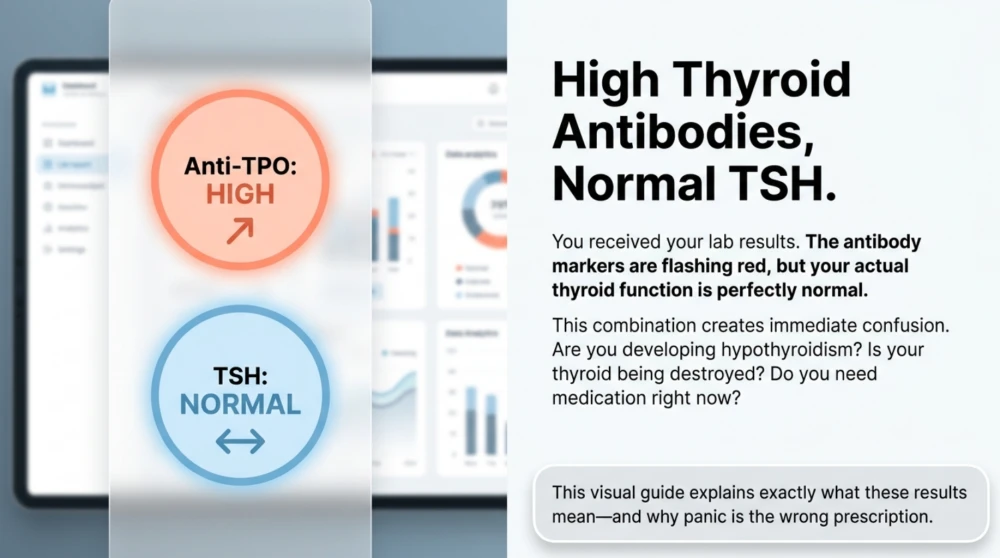
Many patients undergo thyroid testing because of fatigue, weight gain, hair fall, menstrual irregularities, difficulty losing weight or a family history of thyroid disease. Sometimes, the laboratory report reveals an unexpected finding: thyroid antibodies are elevated, but thyroid-stimulating hormone (TSH) remains within the normal reference range.
This combination often creates confusion.
Patients may wonder whether they already have hypothyroidism, whether they need thyroid medication or whether the positive antibody result means that their thyroid gland is being permanently damaged.
Some become particularly concerned when their anti-thyroid peroxidase (anti-TPO) antibody level is several times higher than the laboratory's reference limit, even though their TSH and free thyroxine (FT4) are normal.
The important point is that thyroid antibodies and thyroid function tests measure different aspects of thyroid health.
Thyroid antibodies provide information about possible autoimmune activity directed against thyroid-related proteins. TSH and FT4 help assess whether the thyroid gland is currently producing an appropriate amount of hormone.
Therefore, positive thyroid antibodies do not automatically mean that thyroid hormone production has become insufficient.
Some individuals have thyroid autoantibodies for years while maintaining normal thyroid function. Others may develop thyroid dysfunction over time.
When thyroid antibodies are positive but TSH is normal, the result usually indicates a possible autoimmune thyroid tendency rather than an immediate need for thyroid hormone treatment.
However, interpretation depends on the antibody involved, the actual thyroid hormone results, the patient's symptoms, age, pregnancy status, medication history and other clinical factors.
What Are Thyroid Antibodies?
Thyroid antibodies are proteins produced by the immune system that recognise specific components associated with the thyroid gland.
Under normal circumstances, the immune system distinguishes the body's own tissues from potentially harmful external substances.
In autoimmune thyroid conditions, this recognition process becomes altered, and antibodies may develop against thyroid-related proteins.
These antibodies are useful markers of autoimmune thyroid disease, although their presence alone does not always establish the severity or functional consequences of the condition.
The two antibodies most frequently discussed in the evaluation of Hashimoto's thyroiditis are anti-thyroid peroxidase antibodies and anti-thyroglobulin antibodies.
Another group, TSH receptor antibodies, is more relevant when investigating certain forms of autoimmune hyperthyroidism, particularly Graves' disease.
What Is Anti-TPO Antibody?
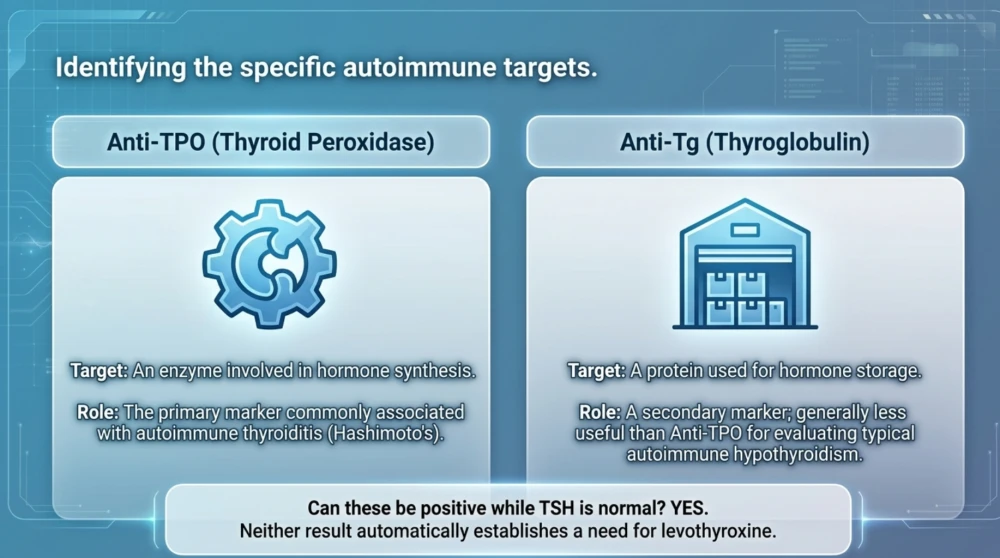
Thyroid peroxidase is an enzyme involved in thyroid hormone synthesis.
It participates in the biochemical processes through which iodine is incorporated into thyroid hormone precursors.
Anti-TPO antibodies are directed against this enzyme and are commonly associated with autoimmune thyroiditis.
They are frequently detected in people with Hashimoto's thyroiditis, but they may also occur in other autoimmune thyroid conditions and in some individuals who have no current thyroid dysfunction.
A positive anti-TPO result therefore supports the possibility of thyroid autoimmunity, but it should not be interpreted independently of TSH, FT4 and the clinical picture.
Anti-TPO Positive but TSH Normal: What Does It Mean?
If anti-TPO antibodies are positive while TSH and FT4 remain within the appropriate reference ranges, the individual may be described as having thyroid autoantibody positivity with preserved thyroid function.
In some patients, this finding is consistent with an early or euthyroid phase of autoimmune thyroiditis.
However, a positive anti-TPO result alone does not prove that significant thyroid damage has occurred.
Nor does it establish that hypothyroidism will inevitably develop.
The result is best understood as a marker that may influence future thyroid monitoring.
What Are Anti-Thyroglobulin Antibodies?
Thyroglobulin is a protein produced by thyroid follicular cells and used in the synthesis and storage of thyroid hormones.
Anti-thyroglobulin antibodies, often abbreviated as anti-Tg or TgAb, are directed against this protein.
They may be detected in autoimmune thyroiditis, sometimes alongside anti-TPO antibodies.
However, anti-Tg antibodies are generally less useful than anti-TPO antibodies as a standalone marker when evaluating typical autoimmune hypothyroidism.
Their interpretation also depends on why the test was ordered.
For example, anti-Tg antibodies have a separate clinical role in patients being monitored after treatment for differentiated thyroid cancer because they can interfere with thyroglobulin measurements.
That situation is different from an otherwise healthy person who has a positive anti-Tg result and normal TSH.
Anti-TPO vs Anti-Tg: What Is the Difference?
| Feature | Anti-TPO Antibody | Anti-Tg Antibody |
|---|---|---|
| Target | Thyroid peroxidase enzyme | Thyroglobulin protein |
| Common association | Autoimmune thyroiditis | Autoimmune thyroid disease |
| Role in Hashimoto's evaluation | Commonly used marker | May provide additional information in selected cases |
| Can be positive with normal TSH? | Yes | Yes |
| Does a positive result automatically require levothyroxine? | No | No |
Antibody results should always be interpreted using the laboratory's reference range and the clinical reason for testing.
What Does a Normal TSH Actually Tell Us?
TSH is produced by the pituitary gland and helps regulate thyroid hormone production.
When thyroid hormone availability decreases, TSH often rises as the pituitary attempts to stimulate the thyroid gland.
When thyroid hormone availability increases, TSH is usually suppressed.
In most individuals with an intact hypothalamic-pituitary-thyroid axis, TSH is a sensitive marker of thyroid function.
However, TSH must be interpreted using the appropriate reference interval and clinical circumstances.
For example, pregnancy, pituitary disease, acute illness and certain medications can change how thyroid function tests should be interpreted.
Does Normal TSH Mean the Thyroid Is Completely Healthy?
Not necessarily.
A normal TSH usually suggests that thyroid hormone regulation is functioning appropriately in the current clinical setting.
However, it does not exclude thyroid autoantibodies, thyroid nodules, structural thyroid abnormalities or every form of thyroid disease.
For example, an individual may have positive anti-TPO antibodies with normal TSH and FT4.
Another person may have a thyroid nodule despite completely normal thyroid function tests.
These are different clinical situations requiring different approaches.
What Does Euthyroid Mean?
The term euthyroid refers to a state in which thyroid hormone function is normal.
When a person has positive thyroid antibodies but normal thyroid function, the finding may be described as euthyroid thyroid autoimmunity.
In patients with compatible clinical findings, it may also be described as euthyroid autoimmune thyroiditis.
However, the term should not be used to imply that every antibody-positive person has clinically significant thyroid inflammation.
Some people have low-level antibody positivity without symptoms or evidence of impaired thyroid function.
Can Hashimoto's Thyroiditis Be Present With Normal TSH?
Yes.
Hashimoto's thyroiditis is an autoimmune thyroid disorder that can eventually cause hypothyroidism.
However, not everyone with Hashimoto's thyroiditis has reduced thyroid hormone production at the time of diagnosis.
Some patients maintain normal thyroid function for prolonged periods.
Others may gradually develop elevated TSH, followed in some cases by reduced FT4.
Therefore, Hashimoto's thyroiditis should not be considered synonymous with established hypothyroidism.
Hashimoto's Thyroiditis vs Hypothyroidism
Hashimoto's thyroiditis describes an autoimmune process affecting the thyroid gland.
Hypothyroidism describes a functional state in which thyroid hormone availability is insufficient.
Hashimoto's is a common cause of primary hypothyroidism, but it may exist before hypothyroidism develops.
Conversely, hypothyroidism can arise from causes other than Hashimoto's thyroiditis.
This distinction is important because treatment decisions depend primarily on thyroid function and clinical circumstances rather than antibody positivity alone.
Why Can Thyroid Antibodies Be Positive When TSH Is Normal?
Several explanations are possible.
The immune system may have developed antibodies against thyroid proteins without causing enough functional damage to reduce hormone production.
The thyroid gland may still have sufficient functional capacity to maintain normal hormone levels.
Alternatively, antibody positivity may be present without clinically significant autoimmune thyroid disease.
Low-level antibody positivity can also be influenced by assay characteristics and laboratory-specific reference limits.
For this reason, a positive result should be evaluated in context rather than interpreted as proof of progressive thyroid destruction.
Does a High Anti-TPO Level Mean Severe Thyroid Disease?
Not necessarily.
Patients sometimes become concerned when their anti-TPO value is substantially above the laboratory's upper reference limit.
However, antibody concentration does not provide a simple, reliable measure of the amount of thyroid tissue damage or the severity of hypothyroidism.
A person with markedly elevated anti-TPO antibodies may have normal thyroid function.
Another person with a lower antibody level may have established hypothyroidism.
Therefore, treatment should not be determined solely by the antibody number.
Is Anti-TPO 500 More Dangerous Than Anti-TPO 100?
Not automatically.
Although higher antibody concentrations may be associated with autoimmune thyroid disease, comparing individual values does not reliably establish disease severity or determine treatment requirements.
Results may also differ between laboratory assays.
The most clinically relevant questions are whether thyroid function is normal, whether symptoms or structural abnormalities are present and whether the patient has circumstances requiring closer monitoring.
Can Thyroid Antibodies Be Positive in Healthy People?
Yes.
Thyroid autoantibodies are detected in a proportion of people who have normal thyroid function and no apparent thyroid-related symptoms.
Antibody positivity is more common in women and becomes more frequent with increasing age.
It may also be more common in people with a family history of autoimmune thyroid disease or certain other autoimmune conditions.
However, a positive result does not guarantee that clinically important thyroid disease will develop.
This is one reason why routine antibody screening is not recommended for every asymptomatic person.
Who Is More Likely to Have Positive Thyroid Antibodies?
Thyroid autoimmunity is influenced by genetic, immunological and environmental factors.
Individuals with a family history of autoimmune thyroid disease may have an increased likelihood of thyroid antibody positivity.
Some autoimmune conditions, including type 1 diabetes and coeliac disease, are associated with a higher prevalence of autoimmune thyroid disorders.
However, the presence of one autoimmune condition does not mean that thyroid dysfunction is inevitable.
Clinical evaluation and appropriate screening remain important.
Can Thyroid Antibodies Cause Symptoms When TSH Is Normal?
This is an important and sometimes controversial question.
Some studies have reported associations between thyroid autoimmunity and symptoms such as fatigue or reduced quality of life, even when thyroid function tests are normal.
However, these associations do not establish that thyroid antibodies directly cause the symptoms.
Fatigue, hair loss, weight changes, mood symptoms and difficulty concentrating are common and may arise from many different conditions.
Therefore, it is not appropriate to assume that positive thyroid antibodies explain every symptom in a patient with normal TSH and FT4.
Other possible causes should be assessed according to the clinical presentation.
Positive Anti-TPO With Normal TSH and Fatigue
Consider a patient who reports persistent tiredness and discovers that anti-TPO antibodies are elevated while TSH and FT4 are normal.
The antibody result may indicate thyroid autoimmunity, but it does not establish thyroid hormone deficiency.
Fatigue may be related to sleep disturbance, anaemia, iron deficiency, mood disorders, medication effects or other medical conditions.
Starting levothyroxine solely to treat fatigue in a biochemically euthyroid patient is generally not supported by established clinical guidance.
Instead, the clinician should assess the symptoms comprehensively and monitor thyroid function when appropriate.
Positive Thyroid Antibodies With Normal TSH and Weight Gain
Weight gain is frequently attributed to thyroid disease, but its causes are often multifactorial.
When thyroid hormone function is normal, positive antibodies alone do not establish that reduced thyroid hormone production is responsible for weight gain.
Changes in energy intake, physical activity, sleep, medications, body composition and metabolic health may be relevant.
Therefore, weight management should not be delayed while waiting for antibody levels to become negative.
A comprehensive assessment may be more useful than treating an isolated antibody result.
Positive Thyroid Antibodies With Normal TSH and Hair Loss
Hair loss has several possible causes, including androgenetic alopecia, telogen effluvium, nutritional deficiencies, stress-related factors and certain medical conditions.
Thyroid dysfunction can contribute to hair changes, but positive thyroid antibodies with normal thyroid hormone function do not automatically establish a thyroid-related cause.
Evaluation should consider the pattern and duration of hair loss, menstrual history, nutritional status and other relevant findings.
Thyroid hormone treatment should not be prescribed solely because anti-TPO antibodies are positive in a patient with normal thyroid function.

How to Interpret Different Thyroid Test Combinations
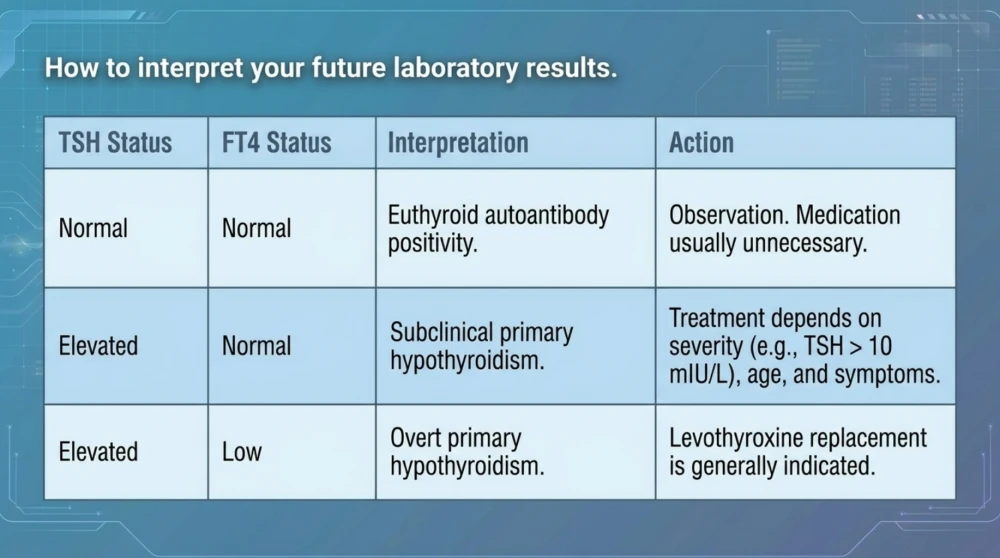
| TSH | FT4 | Thyroid Antibodies | Possible Interpretation |
|---|---|---|---|
| Normal | Normal | Positive | Euthyroid thyroid autoantibody positivity |
| Elevated | Normal | Positive or negative | May indicate subclinical primary hypothyroidism |
| Elevated | Low | Positive or negative | Consistent with overt primary hypothyroidism |
| Suppressed | Elevated | Antibody pattern varies | Suggests thyrotoxicosis; cause requires evaluation |
| Low or inappropriately normal | Low | May be unrelated | May suggest central hypothyroidism or another cause; specialist evaluation may be required |
This table provides general interpretation patterns and does not replace clinical assessment. Pregnancy, acute illness, medication effects and laboratory interference may alter the interpretation of thyroid function tests.
Can Positive Thyroid Antibodies Eventually Lead to Hypothyroidism?
Yes, but not in every individual.
Thyroid antibody positivity is associated with an increased likelihood of future thyroid dysfunction compared with antibody-negative individuals.
However, the risk is not uniform.
Baseline TSH, antibody status, age, sex, iodine exposure and other clinical factors may influence the probability of progression.
For example, an individual with positive anti-TPO antibodies and a TSH value near the upper end of the reference range may have a different risk profile from someone with positive antibodies and a consistently lower-normal TSH.
Nevertheless, a single laboratory result cannot reliably predict when or whether hypothyroidism will develop.
This is why periodic thyroid function monitoring is generally more useful than repeatedly measuring antibody concentrations.
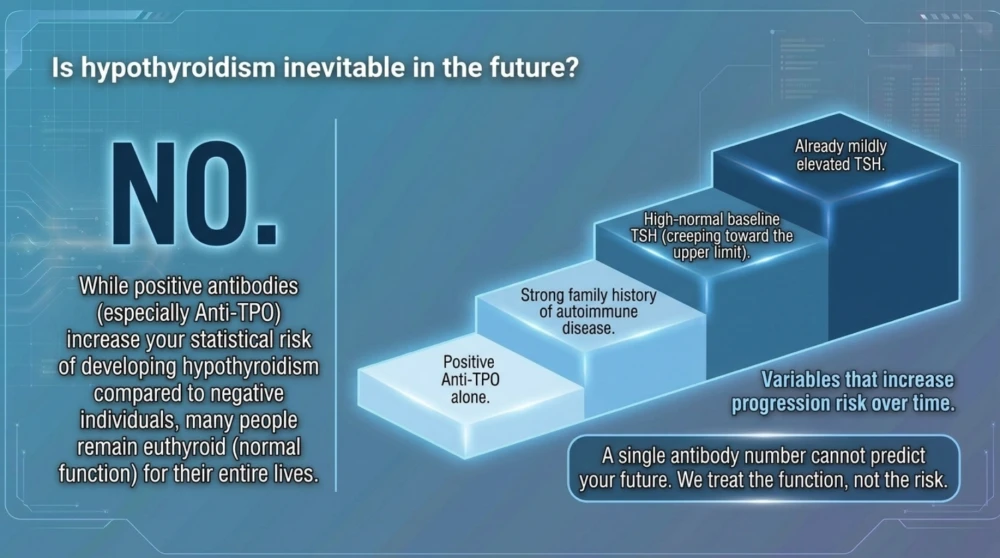
Does Positive Anti-TPO Mean Hypothyroidism Is Inevitable?
No.
Some antibody-positive individuals remain euthyroid for many years.
Others develop subclinical hypothyroidism, and a proportion may eventually develop overt hypothyroidism.
The rate of progression varies substantially between populations and clinical circumstances.
Therefore, patients should not be told that a positive antibody result guarantees future thyroid failure.
Instead, the finding should prompt an appropriate discussion about monitoring and symptoms that may justify reassessment.
Clinical Example: Anti-TPO Positive but TSH Normal
Consider a hypothetical 36-year-old woman who undergoes thyroid testing because of a family history of hypothyroidism.
Her TSH is 2.4 mIU/L, FT4 is within the laboratory reference range and anti-TPO antibodies are elevated.
She has no significant thyroid-related symptoms and is not pregnant or planning pregnancy.
These results indicate preserved thyroid function with thyroid antibody positivity.
In this situation, immediate levothyroxine treatment would generally not be indicated solely because the antibody test is positive.
However, periodic TSH monitoring may be appropriate because thyroid autoimmunity is associated with an increased risk of future hypothyroidism.
If symptoms develop or clinical circumstances change, reassessment may be needed earlier.
This is a hypothetical example for patient education and does not represent an individual diagnosis or treatment recommendation.
Thyroid Antibodies Positive but TSH Normal: Is Treatment Necessary?
One of the most common questions patients ask after receiving a positive anti-TPO or anti-thyroglobulin antibody report is whether they should immediately start thyroid medication.
In most non-pregnant adults who have normal TSH and free T4 levels, positive thyroid antibodies alone do not justify starting levothyroxine.
This is because levothyroxine replaces thyroid hormone. It does not directly treat the underlying autoimmune process or reliably eliminate thyroid antibodies.
When the thyroid gland is already producing sufficient hormone, additional thyroid hormone may provide no benefit and can potentially cause harm.
Excess thyroid hormone exposure can produce palpitations, tremors, sleep disturbances and other symptoms. Persistent overtreatment may increase the risk of atrial fibrillation and bone loss, particularly in susceptible individuals.
Therefore, the decision to prescribe levothyroxine should be based on thyroid function, clinical circumstances and established treatment indications rather than antibody positivity alone.
For most euthyroid adults, the appropriate approach is observation and periodic thyroid function testing rather than immediate medication.
Why Levothyroxine Is Usually Not Prescribed for Positive Anti-TPO With Normal TSH
Levothyroxine is a synthetic form of thyroxine, also called T4. It is primarily used to replace insufficient thyroid hormone production.
In overt primary hypothyroidism, TSH is generally elevated and free T4 is low. Levothyroxine is usually indicated because the thyroid gland is not producing enough hormone.
However, when TSH and free T4 are normal, thyroid hormone production is generally adequate.
Although positive anti-TPO antibodies may indicate autoimmune thyroiditis, they do not necessarily indicate hormone deficiency.
Prescribing levothyroxine simply to reduce antibody levels or prevent hypothetical future hypothyroidism is not routinely recommended for otherwise euthyroid, non-pregnant adults.
Can Thyroid Medicine Prevent Hashimoto's From Progressing?
There is insufficient evidence to recommend routine levothyroxine treatment solely to prevent future hypothyroidism in euthyroid individuals with positive thyroid antibodies.
Some patients remain euthyroid for years without treatment, while others gradually develop thyroid dysfunction.
Periodic TSH testing helps identify clinically meaningful changes so that treatment can be introduced when indicated.
The objective is not to suppress thyroid antibodies at any cost. It is to maintain normal thyroid hormone function and identify patients who require treatment.
What Happens if TSH Becomes Elevated Later?
If a previously euthyroid patient develops an elevated TSH, the next step is to determine whether the abnormality is persistent and whether free T4 remains normal.
A mildly elevated TSH with normal free T4 is generally described as subclinical hypothyroidism.
An elevated TSH with low free T4 is consistent with overt primary hypothyroidism, assuming the results fit the clinical context.
Treatment decisions for subclinical hypothyroidism are more individualised than those for overt hypothyroidism.
Factors such as the degree and persistence of TSH elevation, age, symptoms, cardiovascular risk, pregnancy status and thyroid antibody positivity may influence management.
In many non-pregnant adults, persistent TSH elevation of 10 mIU/L or higher is an important threshold at which levothyroxine is generally considered, although treatment still requires individual assessment.
For milder TSH elevations, observation and repeat testing may be appropriate.
How Often Should TSH Be Checked When Thyroid Antibodies Are Positive?
There is no single monitoring interval that is appropriate for every antibody-positive patient.
For an otherwise well, non-pregnant adult with normal TSH and free T4, checking TSH approximately once a year is a reasonable approach in many clinical settings.
However, this is not a universal requirement.
Patients with TSH values approaching the upper reference limit, new symptoms, relevant medication changes or other clinical risk factors may need earlier reassessment.
Pregnant women and women planning pregnancy require separate consideration because thyroid hormone requirements and interpretation of TSH differ during pregnancy.
Should TSH Be Repeated Every Three Months?
Not routinely in every euthyroid, antibody-positive individual.
Frequent testing without a clinical indication may create unnecessary anxiety and healthcare expenditure.
However, a shorter monitoring interval may be appropriate if TSH is changing, pregnancy is involved or the patient has another condition affecting thyroid function.
Monitoring should be individualised rather than determined by the antibody number alone.

Should Anti-TPO Antibodies Be Repeated Every Year?
Usually not.
Once anti-TPO antibody positivity has been established, repeatedly measuring the antibody concentration generally adds little to routine management.
Antibody levels may fluctuate over time without corresponding changes in thyroid function.
A falling antibody value does not necessarily mean that autoimmune thyroid disease has resolved.
Similarly, an increasing antibody concentration does not automatically mean that levothyroxine should be started.
For most patients, TSH is more useful than serial antibody measurements for monitoring the development of primary hypothyroidism.
Thyroid Antibody Monitoring: Which Tests Are Actually Useful?
| Test | Clinical Role | Routine Repetition |
|---|---|---|
| TSH | Monitors thyroid function in most patients with an intact pituitary-thyroid axis | Often useful periodically |
| Free T4 | Clarifies abnormal TSH results and selected clinical situations | As clinically indicated |
| Anti-TPO | Supports evaluation of autoimmune thyroid disease | Usually unnecessary once positivity is established |
| Anti-Tg | Additional autoimmune information in selected situations | Usually unnecessary for routine euthyroid monitoring |
| Thyroid ultrasound | Evaluates structural abnormalities when indicated | Not routinely required solely for antibody positivity |
Is Thyroid Ultrasound Necessary When Anti-TPO Is Positive?
Many patients assume that a positive anti-TPO report should automatically be followed by a thyroid ultrasound.
However, ultrasound is not routinely necessary when thyroid antibodies are positive, thyroid function is normal and there is no clinical suspicion of a structural thyroid abnormality.
Ultrasound provides information about the thyroid gland's size, appearance and the presence of nodules.
It does not directly determine whether the gland is producing sufficient thyroid hormone.
Therefore, ultrasound should be ordered to answer a structural clinical question rather than simply because an antibody level is elevated.
When Is Thyroid Ultrasound Appropriate?
Ultrasound may be appropriate when examination identifies a thyroid nodule, asymmetrical enlargement or another suspicious structural finding.
It may also be considered when there are symptoms suggesting a compressive thyroid abnormality, such as persistent swallowing difficulty or other concerning neck symptoms.
The decision depends on the clinical assessment.
In patients without palpable abnormalities or other structural concerns, routine ultrasound screening may identify incidental nodules that do not require treatment but lead to unnecessary investigations.
What Does a Heterogeneous Thyroid Mean on Ultrasound?
Some ultrasound reports describe the thyroid gland as heterogeneous or hypoechoic.
These appearances may be associated with thyroiditis, including autoimmune thyroiditis.
However, ultrasound findings are not perfectly specific.
A heterogeneous thyroid appearance does not automatically indicate hypothyroidism.
Likewise, the presence of positive antibodies and a heterogeneous ultrasound appearance does not establish that medication is necessary when thyroid function is normal.
The report should be interpreted alongside examination and biochemical results.
Thyroid Antibodies Positive but TSH Normal During Pregnancy
Pregnancy is one of the most important situations in which positive thyroid antibodies require additional clinical attention.
Thyroid physiology changes during pregnancy, and thyroid hormone requirements may increase.
Pregnancy-specific TSH reference ranges should be used when available.
When such ranges are unavailable, interpretation should follow appropriate clinical guidance rather than applying a single non-pregnant threshold indiscriminately.
Women with positive anti-TPO antibodies have an increased likelihood of developing thyroid dysfunction during pregnancy compared with antibody-negative women.
Therefore, monitoring may be more frequent even when initial thyroid function is normal.
Does Every Pregnant Woman With Positive Anti-TPO Need Levothyroxine?
No.
Positive anti-TPO antibodies alone do not automatically establish an indication for levothyroxine when thyroid function is normal.
Randomised trials have not demonstrated a consistent improvement in live-birth outcomes from routine levothyroxine treatment in euthyroid thyroid-antibody-positive women attempting conception.
However, treatment recommendations may differ when TSH is elevated, thyroid dysfunction is established or particular pregnancy-related circumstances are present.
Decisions should follow current obstetric and endocrine guidance and be individualised.
How Frequently Should TSH Be Monitored in Pregnancy?
Women who are euthyroid but positive for thyroid peroxidase or thyroglobulin antibodies may require closer monitoring during pregnancy.
American Thyroid Association guidance recommends checking TSH when pregnancy is confirmed and approximately every four weeks until mid-pregnancy in antibody-positive euthyroid women.
Additional testing may be appropriate later in pregnancy or when clinical circumstances change.
Monitoring schedules should be coordinated with the treating obstetrician or endocrinologist.
Positive Anti-TPO and Difficulty Conceiving: Is There a Connection?
Thyroid autoimmunity has been associated with certain reproductive outcomes in observational studies.
However, association does not necessarily establish that thyroid antibodies directly cause infertility.
Women with fertility concerns should undergo an appropriate evaluation that considers age, ovulatory function, reproductive history, partner factors and other relevant conditions.
Thyroid function is an important component of this assessment, but antibody positivity alone should not be assumed to explain infertility.
Should Levothyroxine Be Given Before IVF if Anti-TPO Is Positive?
Evidence does not support routine levothyroxine treatment solely because thyroid antibodies are positive when thyroid function is normal.
Clinical trials involving euthyroid antibody-positive women undergoing assisted reproduction have not consistently demonstrated improved live-birth outcomes with levothyroxine.
However, treatment may be indicated when hypothyroidism or clinically relevant TSH elevation is present.
Women undergoing fertility treatment should have thyroid results reviewed by their fertility and endocrine care teams.
Positive Thyroid Antibodies and Recurrent Miscarriage
Thyroid antibody positivity has been associated with miscarriage in observational research.
However, this does not prove that antibodies are the direct cause of pregnancy loss in an individual patient.
Importantly, trials of levothyroxine in euthyroid thyroid-antibody-positive women have not demonstrated a reliable improvement in live-birth outcomes.
Therefore, recurrent pregnancy loss requires a comprehensive evaluation rather than assuming that positive thyroid antibodies provide the complete explanation.
Thyroid hormone treatment is appropriate when indicated by thyroid function and clinical circumstances, not simply as an attempt to make antibody levels negative.
Thyroid Antibodies After Delivery: What Is Postpartum Thyroiditis?
Postpartum thyroiditis is a form of thyroid inflammation that can occur after pregnancy.
It is more common in women with thyroid autoantibodies, particularly anti-TPO antibodies.
Some affected women experience a temporary phase of increased thyroid hormone release, followed by a phase of hypothyroidism.
Others experience only one phase.
Thyroid function may recover, but some women develop persistent hypothyroidism.
Therefore, women with positive thyroid antibodies who develop symptoms after delivery may require thyroid function testing.
Can Diet Reduce Thyroid Antibodies?
Patients frequently search for dietary strategies that promise to reduce anti-TPO or anti-Tg antibodies.
However, there is no established diet that reliably eliminates thyroid autoimmunity or prevents hypothyroidism in every antibody-positive individual.
A balanced diet can support general health and help prevent nutritional deficiencies.
However, dietary advice should not be presented as a cure for Hashimoto's thyroiditis.
Unnecessarily restrictive diets may cause nutritional problems, particularly when multiple food groups are eliminated without a clear medical indication.
Should Patients With Positive Anti-TPO Avoid Gluten?
Not routinely.
Coeliac disease is more common among people with autoimmune thyroid disease than in the general population.
Patients with confirmed coeliac disease require a gluten-free diet.
However, there is insufficient evidence to recommend gluten avoidance for every person with positive thyroid antibodies and normal thyroid function.
Some small studies have reported changes in antibody levels after dietary interventions, but these findings do not establish meaningful long-term clinical benefits for all patients.
Patients with symptoms or risk factors suggesting coeliac disease should undergo appropriate evaluation before starting a gluten-free diet, because removing gluten can affect diagnostic testing.
Does Selenium Reduce Anti-TPO Antibodies?
Selenium is involved in several enzymes important for thyroid hormone metabolism and antioxidant defence.
Some clinical studies have reported reductions in thyroid antibody concentrations with selenium supplementation.
However, evidence regarding meaningful clinical outcomes, such as prevention of hypothyroidism or improvement in symptoms, remains uncertain.
A reduction in antibody concentration does not necessarily translate into improved thyroid function or better long-term health outcomes.
Routine selenium supplementation is therefore not recommended solely because anti-TPO antibodies are positive.
Excess selenium intake can also cause toxicity.
Can Too Much Selenium Be Harmful?
Yes.
Excessive selenium exposure can cause gastrointestinal symptoms, hair and nail abnormalities, neurological symptoms and other adverse effects.
Patients should not combine multiple selenium-containing supplements without reviewing their total intake.
Supplementation should be based on a clear clinical indication rather than an attempt to normalise an antibody report.
Should Iodine Be Taken When Thyroid Antibodies Are Positive?
Iodine is essential for thyroid hormone synthesis.
However, more iodine is not necessarily better.
Both iodine deficiency and excessive iodine exposure can affect thyroid function.
In susceptible individuals, excessive iodine intake may contribute to thyroid dysfunction.
Therefore, high-dose iodine supplements, kelp products or iodine-containing thyroid boosters should not be used without medical advice.
Pregnancy has specific iodine requirements, but supplementation should follow appropriate obstetric guidance.
Do Vitamin D, Zinc or Other Supplements Treat Thyroid Autoimmunity?
Several micronutrients have been investigated in relation to thyroid autoimmunity.
However, evidence does not support routinely prescribing vitamin D, zinc or other supplements solely to treat positive thyroid antibodies in otherwise euthyroid individuals.
Identified nutritional deficiencies should be corrected according to established clinical indications.
However, correcting a deficiency is different from claiming that supplementation cures autoimmune thyroid disease.
Patients should be cautious about products marketed as thyroid detoxification or antibody-reversal treatments.
Common Supplements and Thyroid Antibodies: What Does the Evidence Suggest?
| Supplement or Diet | Evidence | Practical Recommendation |
|---|---|---|
| Selenium | May reduce antibody levels in some studies; clinical benefit uncertain | Not routinely recommended solely for antibody positivity |
| Vitamin D | Evidence for treating thyroid autoimmunity remains insufficient | Correct deficiency when clinically indicated |
| High-dose iodine | Excess intake may worsen thyroid dysfunction in susceptible people | Avoid unsupervised high-dose supplementation |
| Gluten-free diet | Necessary for coeliac disease; not established for all antibody-positive patients | Use when medically indicated |
| Herbal thyroid boosters | No reliable evidence of routine benefit; possible contamination or excess iodine | Avoid unregulated products |
Can Stress Cause Thyroid Antibodies to Become Positive?
Stress affects several physiological systems, including neuroendocrine and immune pathways.
However, it is not scientifically accurate to conclude that ordinary psychological stress directly causes positive thyroid antibodies in an individual patient.
Autoimmune thyroid disease develops through complex interactions involving genetic susceptibility and environmental influences.
Stress management may improve sleep, wellbeing and quality of life, but it should not be presented as a proven method for reversing thyroid autoimmunity.
Can Thyroid Antibodies Become Negative Naturally?
Antibody concentrations may fluctuate, and some individuals may eventually have results below a laboratory's positivity threshold.
However, this does not necessarily mean that an autoimmune tendency has permanently disappeared.
Similarly, persistent antibody positivity does not automatically mean that thyroid function is deteriorating.
For most patients, the clinically important outcome is maintenance of normal thyroid hormone function rather than achieving a negative antibody report.
Do Positive Thyroid Antibodies Increase the Risk of Other Autoimmune Diseases?
Autoimmune thyroid disease may coexist with other autoimmune conditions, including type 1 diabetes, coeliac disease and certain autoimmune disorders.
However, positive thyroid antibodies alone do not mean that a patient has another autoimmune disease.
Additional investigations should be guided by symptoms, medical history and relevant risk factors.
Routine broad autoimmune screening in an otherwise asymptomatic individual is generally not necessary solely because anti-TPO is positive.
What if Anti-TPO Is Positive but TSH Is Low?
A low TSH changes the clinical interpretation.
It may indicate thyroid hormone excess, depending on FT4, FT3 and the clinical circumstances.
Possible causes include Graves' disease, thyroiditis, autonomous thyroid nodules and medication-related effects.
Anti-TPO antibodies can occur in more than one autoimmune thyroid condition.
Therefore, a positive anti-TPO result should not automatically be labelled Hashimoto's hypothyroidism when TSH is suppressed.
Further evaluation may include FT4, FT3 and TSH receptor antibodies when clinically indicated.
What if Anti-TPO Is Positive but TSH Is at the Upper End of Normal?
Patients with positive thyroid antibodies and a TSH value near the upper reference limit may have a higher likelihood of developing hypothyroidism over time than those with lower baseline TSH values.
However, a high-normal TSH result does not automatically establish hypothyroidism.
Laboratory reference intervals, age, pregnancy status, symptoms and previous results must be considered.
Periodic monitoring may be appropriate, but treatment should not be initiated solely because TSH is near the upper boundary of the reference range.
Can Biotin Supplements Affect Thyroid Test Results?
Yes.
Biotin, sometimes taken in high doses for hair or nail concerns, can interfere with certain laboratory immunoassays.
Depending on the test method, this interference may produce misleading thyroid function or antibody results.
Patients should inform their doctor and laboratory about biotin supplements before testing.
The appropriate interval for withholding biotin depends on the dose and laboratory assay, so patients should follow laboratory-specific advice.
Thyroid Antibodies Positive but TSH Normal: What Happens in the Long Term?
For most patients who discover that their thyroid antibodies are positive while TSH remains normal, the greatest concern is not the current laboratory report but what it might mean for their future health.
They often ask whether their thyroid gland will eventually stop functioning, whether medication will become necessary and whether they can do anything to prevent hypothyroidism.
These are reasonable questions because thyroid autoantibody positivity is associated with an increased risk of future thyroid dysfunction.
However, the presence of thyroid antibodies does not mean that hypothyroidism is inevitable.
Some individuals remain euthyroid for many years, while others develop gradually increasing TSH levels or clinically significant hypothyroidism.
The likelihood of progression depends on several factors, including baseline TSH, antibody status, age, sex and other clinical circumstances.
When thyroid antibodies are positive but TSH is normal, the long-term approach is generally to monitor thyroid function rather than assume that treatment will eventually be required.
What Is the Risk of Developing Hypothyroidism?
Longitudinal population studies have demonstrated that thyroid antibody positivity increases the likelihood of developing hypothyroidism.
However, estimates vary according to the population studied, baseline thyroid function, antibody measurement methods and duration of follow-up.
One frequently cited community study, the Whickham Survey, demonstrated that thyroid autoantibodies and elevated TSH were important predictors of future hypothyroidism.
The combination of thyroid antibodies and an already elevated TSH was associated with a greater risk than antibody positivity alone.
However, findings from historical population studies should not be interpreted as an exact prediction for an individual patient.
A woman with normal TSH, no symptoms and positive anti-TPO antibodies may have a substantially different risk profile from a patient whose TSH is already mildly elevated.
Therefore, risk assessment should consider the complete clinical picture rather than a single antibody result.
Which Factors Increase the Risk of Future Hypothyroidism?
Several characteristics may influence the probability that an antibody-positive person will develop thyroid dysfunction.
Baseline TSH is particularly important. Even when TSH remains within the laboratory reference range, values closer to the upper limit may be associated with a greater likelihood of future hypothyroidism in some populations.
Persistent thyroid autoantibody positivity, family history and other autoimmune conditions may also be relevant.
However, these factors do not establish that thyroid failure will occur.
| Clinical Factor | Possible Significance | Practical Implication |
|---|---|---|
| Positive anti-TPO antibodies | Marker associated with thyroid autoimmunity | Consider periodic thyroid function monitoring |
| High-normal baseline TSH | May be associated with greater future hypothyroidism risk | Interpret trends and clinical context |
| Family history | May indicate increased susceptibility | Review symptoms and monitoring needs |
| Other autoimmune conditions | May coexist with autoimmune thyroid disease | Assess according to the specific condition |
| Pregnancy | Increased thyroid hormone requirements | Closer thyroid function monitoring |
| Certain medications | May alter thyroid function | Medication-specific monitoring |
Can Hashimoto's Remain Stable Without Medication?
Yes.
Some patients with autoimmune thyroiditis maintain normal thyroid function for prolonged periods and never require thyroid hormone replacement during the period of observation.
Others eventually develop hypothyroidism.
Therefore, the presence of Hashimoto's thyroiditis does not automatically establish a lifelong requirement for levothyroxine.
Medication becomes necessary when thyroid hormone replacement is clinically indicated.
Until then, periodic assessment is generally more appropriate than preventive treatment in otherwise euthyroid, non-pregnant adults.
What Is a Practical Follow-Up Plan for Positive Thyroid Antibodies?
A useful follow-up strategy begins with confirming that thyroid function is normal and determining whether the patient has symptoms, pregnancy-related considerations or other relevant clinical findings.
For many asymptomatic, non-pregnant adults with normal TSH and FT4, periodic TSH testing is sufficient.
Testing approximately once a year may be reasonable, although the interval should be adjusted according to the clinical situation.
If new symptoms develop, TSH changes or a medication affecting thyroid function is introduced, reassessment may be appropriate earlier.
Routine repeated anti-TPO testing is generally unnecessary because antibody concentration does not reliably guide treatment decisions.
Follow-Up According to Clinical Situation
| Clinical Situation | Suggested Approach | Important Consideration |
|---|---|---|
| Normal TSH, positive anti-TPO, no symptoms | Periodic TSH monitoring | Medication usually unnecessary |
| Normal TSH with persistent symptoms | Assess other possible causes | Do not assume antibodies explain symptoms |
| TSH becomes elevated | Repeat and assess FT4 as appropriate | Treatment depends on severity and context |
| Pregnancy with positive antibodies | Closer TSH monitoring | Use pregnancy-appropriate reference ranges |
| Thyroid nodule or enlargement | Clinical examination and ultrasound when indicated | Structural assessment is separate from hormone testing |
| Abnormal FT4 with non-elevated TSH | Evaluate for assay interference or central causes | May require specialist assessment |
What Symptoms Should Prompt Earlier Thyroid Testing?
Patients with positive thyroid antibodies should be aware of symptoms that may justify reassessment.
These include persistent unexplained fatigue, increasing sensitivity to cold, constipation, dry skin, changes in menstrual patterns and other symptoms compatible with hypothyroidism.
However, these symptoms are not specific to thyroid disease.
They may also arise from nutritional deficiencies, sleep disturbances, medications, menopause, mental health conditions or other medical problems.
Therefore, the development of symptoms should prompt appropriate clinical evaluation rather than an automatic assumption that hypothyroidism has developed.
When Should a Patient Be Referred to an Endocrinologist?
Most straightforward cases of positive anti-TPO antibodies with normal thyroid function can be assessed and monitored in primary care.
However, specialist evaluation may be appropriate when thyroid results are difficult to interpret or when additional clinical complexity is present.
Examples include suspected central hypothyroidism, unexplained discordance between TSH and FT4, significant thyroid enlargement, suspicious nodules or complex pregnancy-related thyroid disease.
Patients with suspected Graves' disease, unusual thyroid hormone patterns or difficult treatment decisions may also benefit from endocrinology consultation.
Referral should be based on clinical need rather than the magnitude of the antibody level alone.
Does a Positive Anti-TPO Result Require Lifelong Monitoring?
Thyroid autoantibody positivity may remain relevant over time because it is associated with an increased likelihood of thyroid dysfunction.
However, the appropriate duration and frequency of monitoring should be individualised.
In many patients, periodic TSH assessment can be incorporated into routine clinical follow-up.
More frequent testing may be needed during pregnancy, after medication changes or when symptoms develop.
The objective is to identify clinically meaningful thyroid dysfunction without creating unnecessary testing or anxiety.
What if Anti-TPO Is Positive but TSH Has Remained Normal for Ten Years?
Long-term stability is reassuring because it demonstrates that thyroid function has remained preserved during the period observed.
However, it does not guarantee that hypothyroidism can never develop.
Future risk depends on individual factors, including age, baseline TSH trends and other clinical circumstances.
Patients with stable results generally do not require treatment solely because antibodies remain detectable.
Periodic thyroid function monitoring may still be reasonable.
Can Lifestyle Changes Prevent Hypothyroidism?
Healthy lifestyle habits support general health, but there is no proven lifestyle intervention that reliably prevents autoimmune hypothyroidism in every antibody-positive individual.
A balanced diet, regular physical activity, adequate sleep and avoidance of unnecessary supplements can contribute to overall wellbeing.
Maintaining appropriate iodine intake is important, but excessive iodine exposure should be avoided.
Correcting established nutritional deficiencies may also be appropriate.
However, lifestyle interventions should not be described as a guaranteed way to reverse Hashimoto's thyroiditis or make thyroid antibodies disappear.
Should Patients Avoid Cabbage, Cauliflower, Broccoli and Soy?
Some patients with positive thyroid antibodies are advised to avoid cruciferous vegetables and soy products because of concerns about thyroid function.
However, ordinary dietary consumption of these foods is generally compatible with thyroid health when iodine intake is adequate.
There is no established reason for an otherwise euthyroid patient to eliminate cabbage, cauliflower or broccoli solely because anti-TPO antibodies are positive.
Soy foods can also form part of a balanced diet.
For patients taking levothyroxine, certain foods and supplements may affect medication absorption, making consistent administration and appropriate spacing important.
That issue is different from recommending complete food avoidance in someone who is not taking thyroid medication.
Can Weight Loss Reduce Thyroid Antibodies?
Weight management may improve metabolic health in patients with overweight or obesity.
However, evidence does not establish that weight loss reliably eliminates thyroid autoantibodies or prevents autoimmune hypothyroidism.
Some studies have reported associations between body composition, inflammatory markers and thyroid-related measurements.
Nevertheless, these findings should not be interpreted as proof that reducing body weight will cure thyroid autoimmunity.
Weight management should be recommended when appropriate for overall health rather than solely to change antibody concentrations.
Can Patients Exercise Normally With Positive Thyroid Antibodies?
Yes, in most cases.
When thyroid function is normal and no other medical limitation exists, positive thyroid antibodies alone do not require restriction of physical activity.
Walking, resistance training, aerobic exercise and other suitable activities can support cardiovascular, metabolic and musculoskeletal health.
However, patients with significant symptoms or other medical conditions may require individual assessment.
Exercise should not be avoided simply because an anti-TPO result is elevated.
Can Thyroid Antibodies Affect Cholesterol or Blood Sugar When TSH Is Normal?
Established hypothyroidism can influence lipid metabolism and other metabolic processes.
However, positive thyroid antibodies with normal thyroid hormone function do not automatically explain elevated cholesterol, insulin resistance or abnormal blood glucose.
These conditions require assessment based on their own risk factors and clinical findings.
For example, a patient with normal TSH and elevated LDL cholesterol should not assume that thyroid autoimmunity is the only reason for the lipid abnormality.
Appropriate cardiovascular and metabolic risk management remains important.
Can Thyroid Antibodies Be Positive in Children and Adolescents?
Yes.
Autoimmune thyroiditis can occur in children and adolescents, particularly in those with certain autoimmune conditions or a family history of thyroid disease.
However, interpretation requires age-appropriate reference ranges and consideration of growth, development and clinical findings.
Children with thyroid enlargement, abnormal thyroid function or other concerning features may require paediatric endocrine assessment.
Adult monitoring and treatment recommendations should not be applied automatically to children.
Clinical Example 1: Positive Anti-TPO With Normal TSH and No Symptoms
Consider a hypothetical 32-year-old woman who undergoes thyroid testing during a routine health evaluation.
Her anti-TPO antibodies are elevated, but TSH and FT4 are normal.
She has no significant symptoms, no thyroid enlargement and no immediate pregnancy plans.
In this situation, levothyroxine would generally not be indicated solely because anti-TPO is positive.
Periodic TSH monitoring and clinical review would usually be more appropriate.
Clinical Example 2: Positive Anti-TPO With Normal TSH and Persistent Fatigue
A hypothetical 41-year-old woman reports tiredness, hair fall and difficulty concentrating.
Her TSH and FT4 are normal, but anti-TPO antibodies are positive.
Although thyroid autoimmunity may be present, the symptoms do not establish thyroid hormone deficiency.
Clinical assessment may identify other contributors, such as poor sleep, iron deficiency, medication effects or perimenopausal symptoms.
The management plan should address the actual causes rather than automatically starting thyroid hormone replacement.
Clinical Example 3: Positive Anti-TPO and Gradually Rising TSH
Consider a hypothetical 45-year-old patient whose TSH has gradually increased over several years.
Her earlier results were within the reference range, but a recent report shows mildly elevated TSH with normal FT4.
Positive anti-TPO antibodies increase the likelihood that autoimmune thyroiditis contributes to the change.
However, a single mildly elevated TSH result may require confirmation.
Treatment decisions depend on the degree and persistence of TSH elevation, symptoms, age and other clinical factors.
Not every patient with mildly elevated TSH requires immediate medication.
Clinical Example 4: Positive Anti-TPO During Pregnancy
A hypothetical woman discovers that anti-TPO antibodies are positive during early pregnancy.
Her thyroid function is currently within the appropriate pregnancy-specific reference range.
Although immediate levothyroxine treatment may not be necessary, closer TSH monitoring is important because thyroid hormone requirements can change during pregnancy.
Management should be coordinated with her obstetrician and, when appropriate, an endocrinologist.
These examples are hypothetical and intended for educational purposes. They do not replace individual medical assessment.
Common Myths About Positive Thyroid Antibodies
Myth 1: Positive Anti-TPO Means I Have Hypothyroidism
False. Anti-TPO positivity may indicate thyroid autoimmunity, but hypothyroidism is determined by thyroid hormone function and clinical context.
Myth 2: A Very High Antibody Level Means Severe Thyroid Damage
False. Antibody concentration does not reliably measure the severity of thyroid dysfunction.
Myth 3: Thyroid Medicine Must Be Started Immediately
False. Levothyroxine is usually unnecessary when TSH and FT4 are normal in an otherwise euthyroid, non-pregnant adult.
Myth 4: Antibodies Must Become Negative for Me to Be Healthy
False. Many people remain healthy and euthyroid despite persistent antibody positivity.
Myth 5: Selenium or Iodine Can Cure Hashimoto's
False. There is no reliable evidence that routine supplementation cures autoimmune thyroiditis. Excessive intake may cause harm.
Myth 6: Every Antibody-Positive Patient Needs Ultrasound
False. Ultrasound is generally reserved for appropriate structural indications.
Myth 7: Positive Antibodies Explain All Fatigue and Weight Gain
False. These symptoms have multiple possible causes and should not automatically be attributed to thyroid autoimmunity when thyroid function is normal.
Myth 8: Hypothyroidism Is Inevitable
False. Some antibody-positive individuals remain euthyroid for many years.
Frequently Asked Questions About Thyroid Antibodies Positive but TSH Normal
1. What does it mean if anti-TPO is positive but TSH is normal?
It usually indicates thyroid autoantibody positivity with preserved thyroid function. It may be associated with autoimmune thyroiditis, but it does not automatically mean hypothyroidism is present.
2. Do I need thyroid medicine if anti-TPO is positive?
Usually not when TSH and FT4 are normal in an otherwise euthyroid, non-pregnant adult. Treatment depends on thyroid function and individual clinical circumstances.
3. Can Hashimoto's disease exist with normal TSH?
Yes. Autoimmune thyroiditis can be present before thyroid hormone production becomes insufficient.
4. Is anti-TPO 500 dangerous?
The number alone does not determine disease severity or treatment requirements. Results should be interpreted using the laboratory reference range and thyroid function tests.
5. Can positive thyroid antibodies become negative?
Antibody levels may fluctuate and occasionally fall below the laboratory threshold. However, becoming antibody-negative is not necessary for maintaining normal thyroid function.
6. How often should I repeat my TSH?
For many asymptomatic, non-pregnant adults, testing approximately once a year may be reasonable. The interval should be adjusted according to symptoms, previous results and clinical circumstances.
7. Should anti-TPO antibodies be repeated every year?
Usually not. Serial antibody measurements generally do not guide routine treatment decisions once positivity has been established.
8. Can positive thyroid antibodies cause weight gain?
Positive antibodies alone do not establish thyroid hormone deficiency. Weight gain should be assessed according to thyroid function and other possible contributing factors.
9. Can I become pregnant with positive anti-TPO antibodies?
Yes. Many women with positive thyroid antibodies conceive successfully. Thyroid function should be assessed appropriately, and monitoring during pregnancy may need to be more frequent.
10. Should I take selenium to reduce anti-TPO?
Routine selenium supplementation is not recommended solely to reduce thyroid antibodies because meaningful clinical benefit remains uncertain and excessive intake can be harmful.
11. Is a gluten-free diet necessary for Hashimoto's?
Not routinely. A gluten-free diet is necessary for confirmed coeliac disease but is not established as a universal treatment for autoimmune thyroiditis.
12. Does positive anti-TPO mean I will develop hypothyroidism?
No. Antibody positivity increases the likelihood of future thyroid dysfunction, but some individuals remain euthyroid for many years.
13. Is thyroid ultrasound necessary if TSH is normal?
Not routinely. Ultrasound is generally considered when examination or symptoms suggest a structural thyroid abnormality.
14. Can I exercise normally if my thyroid antibodies are positive?
Yes, in most cases. Positive antibodies with normal thyroid function do not independently require exercise restriction.
15. When should I consult a doctor for positive thyroid antibodies?
Consult a doctor when thyroid function becomes abnormal, symptoms develop, pregnancy is planned or confirmed, or a thyroid nodule or enlargement is suspected.
What I Explain to Patients With Positive Thyroid Antibodies and Normal TSH
When a patient consults me with elevated anti-TPO or anti-Tg antibodies but normal thyroid function tests, I explain that the antibody result and thyroid hormone production are not the same thing.
Positive antibodies may indicate autoimmune thyroid activity, but they do not automatically establish hypothyroidism.
I review the patient's symptoms, family history, previous thyroid reports, medications and relevant medical conditions.
When TSH and FT4 are normal, I generally explain why immediate thyroid hormone treatment may not be necessary.
I also discuss the importance of periodic thyroid function monitoring and the circumstances in which earlier reassessment may be required.
For patients with fatigue, weight gain, hair loss or other symptoms, I emphasise that these complaints deserve proper evaluation rather than being attributed automatically to thyroid antibodies.
The objective is to identify clinically meaningful thyroid dysfunction while avoiding unnecessary medication, repeated antibody testing and unproven supplements.
Key Takeaways: Thyroid Antibodies Positive but TSH Normal
- Positive thyroid antibodies do not automatically mean hypothyroidism.
- Anti-TPO antibodies are commonly associated with autoimmune thyroiditis.
- Normal TSH and FT4 generally indicate preserved thyroid function.
- Levothyroxine is usually unnecessary solely for antibody positivity.
- High antibody concentrations do not reliably measure disease severity.
- Some patients remain euthyroid for many years.
- Periodic TSH monitoring is generally more useful than repeated antibody testing.
- Thyroid ultrasound is not routinely required without structural indications.
- Pregnancy requires closer thyroid function monitoring.
- Selenium, iodine and restrictive diets are not established cures for thyroid autoimmunity.
- Fatigue, weight gain and hair loss should not automatically be attributed to positive antibodies.
- Treatment decisions should be based on thyroid function and individual clinical circumstances.
Thyroid Consultation in Dwarka, Delhi
If your thyroid antibody report shows elevated anti-TPO or anti-thyroglobulin antibodies but your TSH is normal, a medical consultation can help clarify what the results mean.
Dr. Pankaj Kumar, General & Lifestyle Physician, provides consultations for general medical conditions, thyroid disorders, diabetes, weight management and metabolic health in Dwarka, New Delhi.
Assessment may include reviewing previous thyroid reports, symptoms, medication history and the need for appropriate follow-up testing or specialist referral.
Clinic location: Doctors Lane, Sector 6, Dwarka, opposite Dhanwantari Labs, New Delhi.
Consultations: In-clinic and online consultations are available.
Book a Consultation Enquire on WhatsApp
Scientific References and Clinical Guidelines
- National Institute for Health and Care Excellence (NICE). Thyroid Disease: Assessment and Management (NG145). NICE Thyroid Disease Guideline.
- American Thyroid Association. Hashimoto's Thyroiditis. American Thyroid Association Patient Information.
- Alexander EK, Pearce EN, Brent GA, et al. 2017 Guidelines of the American Thyroid Association for the Diagnosis and Management of Thyroid Disease During Pregnancy and the Postpartum. Thyroid. 2017;27(3):315–389. DOI: 10.1089/thy.2016.0457.
- Vanderpump MPJ, Tunbridge WMG, French JM, et al. The Incidence of Thyroid Disorders in the Community: A Twenty-Year Follow-Up of the Whickham Survey. Clinical Endocrinology. 1995;43(1):55–68. DOI: 10.1111/j.1365-2265.1995.tb01894.x.
- Dhillon-Smith RK, Middleton LJ, Sunner KK, et al. Levothyroxine in Women with Thyroid Peroxidase Antibodies before Conception. New England Journal of Medicine. 2019;380:1316–1325. DOI: 10.1056/NEJMoa1812537.
- Wang H, Gao H, Chi H, et al. Effect of Levothyroxine on Miscarriage Among Women With Normal Thyroid Function and Thyroid Autoimmunity Undergoing In Vitro Fertilization and Embryo Transfer: A Randomized Clinical Trial. JAMA. 2017;318(22):2190–2198. DOI: 10.1001/jama.2017.18249.
- American Thyroid Association. Thyroid Function Tests. ATA Thyroid Function Test Information.
- European Thyroid Association. Clinical Guidelines and Scientific Publications. European Thyroid Association.
Medical disclaimer: This article is intended for general health education and does not replace individual medical advice. Thyroid antibody results should be interpreted alongside thyroid function tests, symptoms, medical history and relevant clinical circumstances. Pregnancy, abnormal thyroid function and complex thyroid disorders may require specialist evaluation. Do not start or stop thyroid medication or supplements without appropriate medical advice.
Written by Dr. Pankaj Kumar , General & Lifestyle Physician, Dwarka, New Delhi