















- 26th March 2026
Table of Contents
- Why Morning Blood Pressure Readings Are Important
- What Happens in the Morning: The Blood Pressure Surge Explained
- Why Morning BP Is Linked to Higher Risk
- Common Real-Life Patterns You Should Notice
- Morning vs Evening BP: What It Tells You
- How to Measure Morning Blood Pressure Correctly
- What You Should Do Based on Morning Readings
- Warning Signs You Should Not Ignore
- References
- Take the Next Step
Why Morning Blood Pressure Readings Are Important
Understanding why morning blood pressure readings are important can change how you monitor and manage your health. Many people check their BP randomly during the day, but the morning reading gives the most clinically meaningful information.
When you wake up, your body undergoes a natural physiological shift. Hormones rise, heart rate increases, and blood vessels respond to prepare you for activity. This transition phase is critical because it can reveal hidden hypertension that may not be visible at other times of the day.
In fact, many patients have normal BP in the afternoon but elevated readings in the morning. This pattern is often missed if BP is not measured at the right time. From a clinical perspective, morning BP is a strong predictor of cardiovascular risk. It reflects how your body handles the transition from rest to activity. If you are already managing metabolic health conditions, structured monitoring becomes even more important.
What Happens in the Morning: The Blood Pressure Surge Explained
To understand why morning blood pressure readings are important, you need to understand what is known as the “morning surge.” This is a natural rise in blood pressure that occurs within the first few hours after waking up.
During sleep, your blood pressure is usually lower. But as you wake up, your body releases hormones like cortisol and adrenaline. These hormones prepare your body for activity by increasing heart rate and tightening blood vessels.
This leads to a sharp rise in blood pressure. In healthy individuals, this rise is controlled and moderate. However, in people with hypertension or metabolic imbalance, this surge can be exaggerated. A clinical study has shown that excessive morning BP surge is associated with higher cardiovascular risk, especially stroke.
Why Morning BP Is Linked to Higher Risk
One of the key reasons why morning blood pressure readings are important is because most serious cardiovascular events tend to occur in the early hours of the day. Heart attacks, strokes, and sudden cardiac events are more common in the morning. This is not a coincidence. It is directly related to the physiological changes happening in the body during this time.
Increased blood pressure combined with higher heart rate and clotting tendency creates a vulnerable period for the cardiovascular system. Another large study highlights that morning hypertension is a stronger predictor of cardiovascular events compared to office BP readings.
Common Real-Life Patterns You Should Notice
In real-life situations, many patients show patterns that explain why morning blood pressure readings are important.
- Normal BP during the day but high readings in the morning
- Higher BP after waking compared to bedtime readings
- Sudden spikes in BP during early hours
- Symptoms like mild headache or uneasiness in the morning
These patterns often indicate uncontrolled or masked hypertension. If BP is checked only during clinic visits or random times, these important patterns may be missed.
Morning vs Evening BP: What It Tells You
| Time | What It Reflects | Clinical Importance |
|---|---|---|
| Morning | Hormonal surge and vascular response | Predicts cardiovascular risk |
| Evening | Post-activity state | Reflects lifestyle impact |
| Night | Resting BP | Shows baseline control |
Another important study shows that abnormal morning BP patterns are associated with poor long-term BP control. This is why morning monitoring should be a routine part of blood pressure management, especially in patients with borderline or diagnosed hypertension.
How to Measure Morning Blood Pressure Correctly
Now that you understand why morning blood pressure readings are important, the next step is measuring them correctly. Incorrect technique can give misleading values and reduce the usefulness of monitoring.
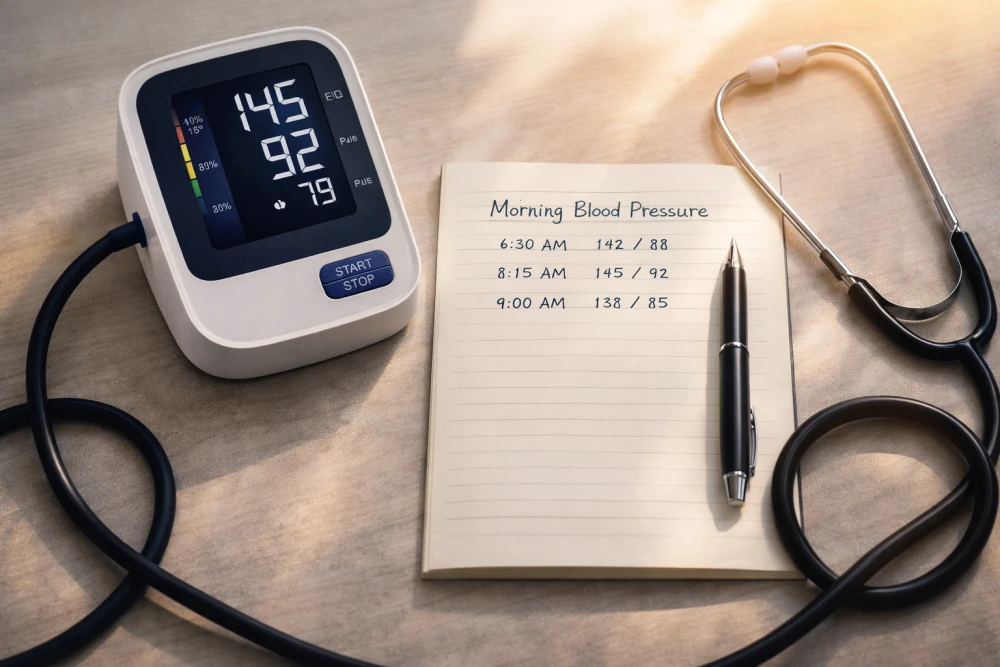
- Measure within 1 hour of waking: Preferably before breakfast and before taking medications.
- Empty your bladder: A full bladder can increase BP readings.
- Rest for 5 minutes: Sit quietly before measurement.
- Maintain correct posture: Back supported, feet flat, arm at heart level.
- Avoid talking or movement: Stay relaxed during measurement.
- Take 2 readings: Record the average for better accuracy.
Following a consistent routine ensures that your readings truly reflect your cardiovascular status. If you are unsure about your readings or patterns, you can explore my clinical approach here: About Dr. Pankaj Kumar.
What You Should Do Based on Morning Readings
Understanding why morning blood pressure readings are important is useful only if you act on it. Here is how to interpret and respond to your readings.
- Normal range: Continue healthy lifestyle and routine monitoring.
- Borderline readings: Improve diet, activity, and stress control.
- Consistently high readings: Seek medical evaluation and structured management.
- Large morning spikes: May require medication timing adjustment.
A clinical study shows that controlling morning BP specifically improves overall cardiovascular outcomes.
For structured support and personalized plans, you can explore: Program details here.
You can also directly book a consultation here: Consultation Link.
Warning Signs You Should Not Ignore
Even though morning readings provide early clues, certain signs indicate that immediate attention is needed.
- Morning BP consistently above 140/90 mmHg
- Sudden spikes above 160/100 mmHg
- Morning headaches or dizziness
- Associated diabetes or kidney disease
- Irregular or inconsistent readings with symptoms
The World Health Organization emphasizes the importance of early detection and control of hypertension to reduce long-term risks (WHO report).
Key Takeaway
Understanding why morning blood pressure readings are important helps detect hidden hypertension early. Morning BP reflects your body’s most vulnerable phase and provides critical insight into cardiovascular risk. Regular monitoring and timely action can prevent serious complications.
References
- Morning BP surge and risk
- Morning hypertension and cardiovascular events
- Morning BP variability study
- Impact of controlling morning BP
- WHO hypertension fact sheet
Take the Next Step
This information is for educational purposes only and should not replace professional medical advice. Always consult a qualified doctor for personalized care.
You can book a consultation here: Book Appointment
Written by Dr. Pankaj Kumar, General & Lifestyle Physician, Dwarka, New Delhi