











- 23rd March 2026
Table of Contents
- What Is Insulin Resistance
- What Is Fatty Liver
- The Core Connection
- The Science Explained Simply: Why This Connection Happens
- What This Means in Real Life
- Understanding Your Blood Reports Correctly
- Early Warning Signs Most People Ignore
- What I Recommend in Clinic: How to Break This Cycle
- 1. Reduce Meal Frequency
- 2. Improve Food Composition
- 3. Focus on Belly Fat Reduction
- 4. Add Strength Training
- 5. Sleep and Stress Optimization
- When You Should Not Ignore This Condition
- Key Takeaway: One Problem, Two Manifestations
- References
- Take the Next Step
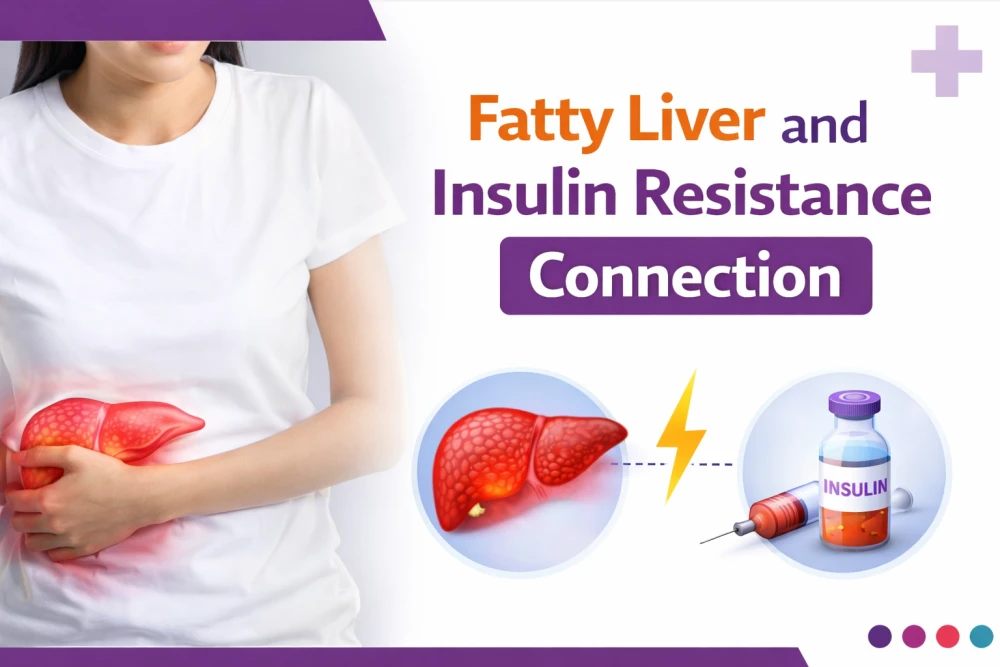
The fatty liver insulin resistance connection is one of the most important yet misunderstood aspects of metabolic health. Many patients come with fatty liver on ultrasound but normal sugar reports. Others are told they have insulin resistance or prediabetes, but their liver is never evaluated.
This creates a false impression that these are separate diseases. In reality, they are part of the same metabolic process. If you have belly fat, borderline glucose levels, high triglycerides, or difficulty losing weight, there is a strong possibility that both insulin resistance and fatty liver are developing together silently.
In clinical practice, I often explain this as a “single problem showing up in two places.” The body is no longer handling energy properly, and the liver becomes one of the first organs to reflect this imbalance.
This is exactly why a structured and root-cause-based approach becomes more effective than treating individual reports.
What Is Insulin Resistance
Insulin is a hormone that helps glucose enter your cells to be used as energy. After meals, insulin rises and ensures that blood sugar stays under control.
In insulin resistance, your cells stop responding efficiently. The body compensates by producing more insulin. This keeps blood sugar normal initially, but the underlying problem continues to worsen. This is why many people with insulin resistance still have “normal” reports in early stages. The problem is hidden in high insulin levels.
Over time, this leads to:
- Increased abdominal fat
- Elevated triglycerides
- Low energy after meals
- Difficulty losing weight despite effort.
These early changes are part of a broader metabolic disturbance often explained under conditions like metabolic syndrome and are strongly linked to fatty liver development.
What Is Fatty Liver
Fatty liver, or non-alcoholic fatty liver disease, means excess fat accumulation inside liver cells in people who do not consume significant alcohol. A common misconception is that fatty liver is mainly caused by alcohol. In reality, the most common cause today is metabolic dysfunction, especially insulin resistance.
In early stages, fatty liver does not cause symptoms. Liver enzymes may remain normal. Many cases are detected incidentally during routine ultrasound. However, this stage is not harmless. It is a warning signal.
Fat accumulation in the liver reflects deeper metabolic imbalance. If ignored, it can progress to inflammation, fibrosis, and long-term complications. This is why I always tell patients to treat fatty liver as an early metabolic alarm, not just a liver issue. You can explore how early metabolic correction works in real patients through the clinical outcomes portfolio.
The Core Connection
To understand the fatty liver insulin resistance connection, you need to understand how your body handles excess energy. When insulin resistance develops, glucose cannot be efficiently used by cells. The body then converts excess glucose into fat. This fat starts accumulating not only under the skin but also inside organs, especially the liver.
This process is supported by clinical evidence showing that insulin resistance directly increases liver fat production through metabolic pathways such as de novo lipogenesis. You can read a detailed explanation in this recent metabolic review on insulin resistance and fatty liver.
At the same time:
- The liver increases fat production
- Fat breakdown reduces
- Fat export becomes inefficient
This leads to progressive fat accumulation inside liver cells. So insulin resistance drives fatty liver formation. And once fatty liver develops, it starts worsening insulin resistance further. This creates a self-perpetuating cycle.
The Science Explained Simply: Why This Connection Happens
To understand the fatty liver insulin resistance connection properly, you need to look at how the body manages energy on a daily basis. When you eat frequently, especially refined carbohydrates or sugary foods, insulin levels remain elevated. Over time, cells become less responsive, leading to insulin resistance.
Now your body is forced to store excess energy elsewhere. The liver becomes the primary site. The liver starts converting excess glucose into fat through a process known as de novo lipogenesis. This is not a minor pathway. It becomes dominant in insulin-resistant states.
Scientific evidence clearly shows that insulin resistance increases liver fat production while simultaneously reducing fat breakdown. This dual effect accelerates fat accumulation inside the liver, as explained in this study on insulin resistance and liver fat accumulation.
At the same time, fat from abdominal stores is continuously delivered to the liver. This is why people with central obesity are at much higher risk.
Why Fatty Liver Makes Insulin Resistance Worse
The relationship does not stop here. Once fatty liver develops, it actively worsens insulin resistance.
A fatty liver becomes metabolically dysfunctional. It continues releasing glucose into the bloodstream even when it is not required. This forces the pancreas to produce even more insulin.
This leads to:
- Higher fasting insulin levels
- Gradual increase in fasting glucose
- Increased risk of type 2 diabetes
This bidirectional relationship is well established. Fatty liver is not just a consequence of insulin resistance, it also contributes to its progression.
What This Means in Real Life
Patients rarely present saying “I have insulin resistance” or “I have fatty liver.” They come with symptoms that seem unrelated.
Common patterns include:
- Gradual weight gain
- Difficulty losing belly fat
- Sleepiness after meals
- Borderline blood sugar levels
- Mild elevation in liver enzymes
- High triglycerides
These are not separate issues. They are manifestations of the same metabolic imbalance.
This is why treating reports individually often fails. A combined approach is required. You can understand this better through the structured approach explained in the lifestyle modification framework used in clinical practice.
Why Fatty Liver Happens Without Alcohol
One of the most common misconceptions is that fatty liver occurs only due to alcohol. In reality, metabolic causes are far more common today.
Excess calorie intake, frequent eating, sedentary lifestyle, poor sleep, and stress all contribute to insulin resistance. Once insulin resistance sets in, fat accumulation in the liver becomes inevitable. This is why non-alcoholic fatty liver disease is increasing even in young individuals.
Large population studies have shown a strong association between metabolic syndrome and fatty liver, reinforcing the fact that this is primarily a metabolic condition rather than a liver-specific disease. You can explore this association in this study on metabolic syndrome and fatty liver.
Understanding Your Blood Reports Correctly
Looking at individual values is often misleading. You need to interpret patterns.
| Parameter | Clinical Meaning |
|---|---|
| Fasting glucose borderline | Early insulin resistance |
| Triglycerides elevated | Impaired fat metabolism |
| ALT or SGPT mildly raised | Possible fatty liver involvement |
| Increased waist circumference | Visceral fat and metabolic risk |
Even mild abnormalities across multiple parameters strongly suggest metabolic dysfunction. This is why a detailed evaluation rather than isolated treatment is important. If you want to understand how this is assessed clinically, you can review the approach explained on the doctor profile page.
Early Warning Signs Most People Ignore
Both insulin resistance and fatty liver develop silently, but there are early warning signs.
You should pay attention to:
- Persistent belly fat
- Dark patches around neck or underarms
- Post-meal fatigue Cravings for sweets
- Gradual unexplained weight gain
- Low energy levels
These signs often appear years before diabetes is diagnosed.
Why Weight Loss Alone Often Fails
Many patients try dieting or gym workouts but struggle to see results. The reason is that insulin resistance keeps the body in fat storage mode.
You may reduce calories, but if insulin sensitivity is not improving, fat loss, especially from the liver and abdomen, remains difficult. This is why a targeted metabolic correction approach works better than general weight loss strategies.
What I Recommend in Clinic: How to Break This Cycle
Once you understand the fatty liver insulin resistance connection, the treatment approach becomes much clearer. The goal is not to treat fatty liver separately or insulin resistance separately. The goal is to correct the underlying metabolic dysfunction.
In my clinical practice, I focus on improving insulin sensitivity first. When insulin function improves, liver fat naturally starts reducing.
Here are the key steps that consistently work:
1. Reduce Meal Frequency
Frequent eating keeps insulin levels elevated throughout the day. Even small snacks can delay metabolic recovery. Structured meal timing allows insulin levels to fall, enabling the body to use stored fat more effectively.
2. Improve Food Composition
Refined carbohydrates and ultra-processed foods are major drivers of insulin resistance. A balanced approach with adequate protein, healthy fats, and fiber helps stabilize glucose and insulin levels.
This is one of the core principles used in the Lifestyle Modification Program, where diet is tailored based on metabolic status rather than generic plans.
3. Focus on Belly Fat Reduction
Not all weight loss is equal. Reduction in visceral fat is more important than overall weight. Belly fat is strongly linked to both insulin resistance and fatty liver.
4. Add Strength Training
Muscle improves glucose utilization. Increasing muscle activity directly improves insulin sensitivity. Even moderate resistance training 3 to 4 times per week can produce significant metabolic benefits.
5. Sleep and Stress Optimization
Poor sleep and chronic stress increase cortisol levels, which worsen insulin resistance. This is often underestimated but plays a major role in long-term recovery.
Clinical evidence consistently shows that structured lifestyle intervention can significantly improve fatty liver and insulin resistance together.
When You Should Not Ignore This Condition
Early stages are reversible, but progression can occur if ignored.
You should take this seriously if:
- Blood sugar levels are gradually increasing
- Liver enzymes remain elevated
- Ultrasound shows moderate or severe fatty liver
- There is a family history of diabetes
- Weight is increasing despite efforts
In such cases, a proper medical evaluation becomes important rather than self-management. If you want a structured evaluation of your metabolic status, you can opt for a personalized consultation where your reports, lifestyle, and risk factors are assessed together.
Key Takeaway: One Problem, Two Manifestations
The fatty liver insulin resistance connection explains why these two conditions frequently occur together.
Insulin resistance increases fat production and storage in the liver. Fatty liver then worsens insulin resistance.
This creates a continuous cycle that can eventually lead to diabetes, metabolic syndrome, and long-term complications.
The most important point is that both conditions are reversible in early stages with proper lifestyle correction.
References
Insulin resistance and NAFLD pathophysiology
Insulin resistance and liver fat accumulation
NAFLD clinical mechanisms
Metabolic syndrome and fatty liver
Lifestyle intervention in fatty liver
Take the Next Step
If you have fatty liver, insulin resistance, or difficulty losing weight, it is important to address the root cause early.
You can learn more about my approach on the About page or review real patient transformations in the clinical portfolio.
This information is for educational purposes only and should not replace professional medical advice.
You can book a consultation here: Book Appointment
Written by Dr. Pankaj Kumar, General & Lifestyle Physician, Dwarka, New Delhi