
















- 11th February 2026
Table of Contents
India is currently facing a hidden public health crisis that goes beyond what we see on the scale. Most of us think of excess weight only in terms of heart health or how we look, but it is actually a primary factor in how your body defends itself against everyday germs. At Dr. Pankaj Kumar Medical and Lifestyle Clinic, we believe that managing your weight is a strategic move to keep your immune system sharp and ready for action.
Our nation faces a "perfect storm" known as the Double Burden of Disease. We are battling traditional infections like tuberculosis while simultaneously seeing a surge in modern lifestyle diseases. A unique part of this Indian context is the "Leany-Fat" baby phenomenon. Many Indians are born with low birth weight due to early malnutrition, which epigenetically predisposes them to obesity and diabetes later in life.
This combination of early-life factors and modern lifestyle habits creates a fragile internal environment. When your metabolic health is compromised, your body struggles to mount an effective defense against pathogens. This vulnerability begins with the way extra body fat fundamentally changes your internal biology.
Why Extra Weight Makes it Harder to Fight Germs
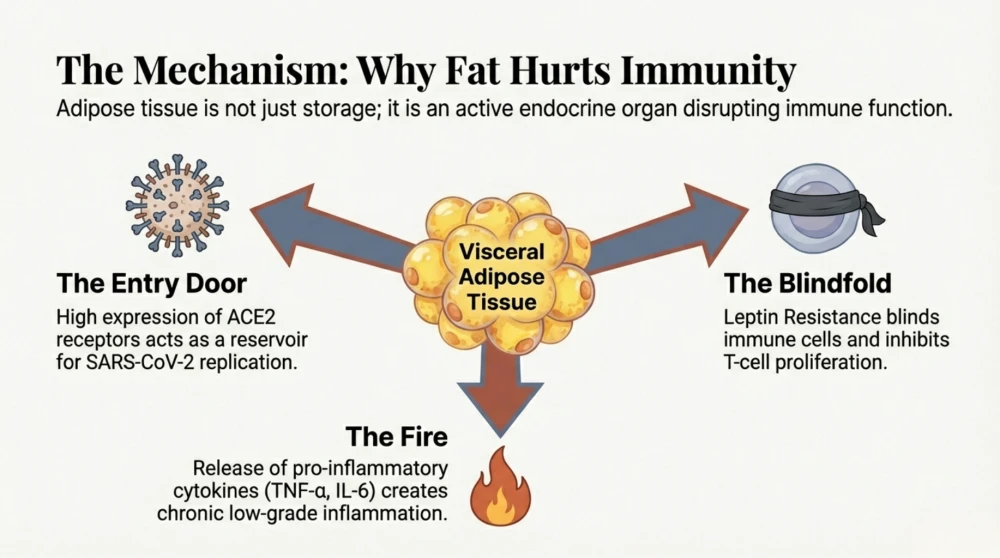
It is important to realize that body fat is not just stored energy; it is a biologically active organ that sends out constant chemical signals. When you carry extra weight, your body stays in a state of "chronic inflammation." You can think of this as a low-level "distraction" for your immune system. Because your defenses are busy responding to the inflammation caused by fat cells, they are less prepared to fight a real virus or bacteria.
This impaired immune regulation means your natural "guards" are weakened. Studies from the Lancet and research in South Gujarat show that this metabolic stress makes it much harder for your body to recognize and kill germs quickly. Instead of a fast, organized response, the immune system becomes sluggish and uncoordinated, allowing common infections to settle in and become more dangerous.
The risks are not limited to rare conditions. Routine illnesses like the flu, pneumonia, and urinary tract infections (UTIs) become far more threatening. In fact, if you are living with severe obesity, you face a three times higher risk of serious outcomes or death from these infections compared to someone at a healthy weight. This is a quiet emergency that is now driving up mortality numbers across India.
The Numbers in India: A Quiet Emergency
While Western countries have discussed obesity for years, the impact in India is unique because of our high existing burden of infectious diseases. In 2023, the Lancet reported a startling global statistic: obesity was linked to one in 10 infectious disease deaths worldwide. This metabolic crisis is no longer a "future" problem; it is a present-day reality that is claiming lives right now.
The 2023 data for India is even more sobering. Over 46,000 infectious disease deaths in our country were linked to obesity in a single year. This includes the silent progression of Metabolic-Associated Fatty Liver Disease (MASLD), which affects nearly one in three Indian adults. Driven by insulin resistance, this fatty liver condition acts as another "biological distraction" that prevents your immune system from protecting you.
Metabolic health also determines how well your body responds to medical prevention. The South Gujarat study found specific risks for vaccinated individuals:
- Obese individuals faced 4 times the risk of "breakthrough" COVID-19 infections compared to those with a healthy weight.
- This increased risk remained even for those who were fully vaccinated.
- Higher weight was directly linked to more severe symptoms and a greater need for hospital oxygen.
The Tuberculosis Paradox: A Special Concern for India
In India, we cannot talk about infections without talking about Tuberculosis (TB). There is a well-known "paradox" regarding TB and weight. Historically, being underweight has been the biggest risk for TB. However, the 2018 Lin et al. study explains that while having a higher BMI can show a protective effect, the rising rates of diabetes (often caused by obesity) create a dangerous "indirect pathway" that increases TB risk.
The science behind this paradox is fascinating. Fat cells produce Leptin, a hormone encoded by the "ob" gene that actually helps the immune system fight TB. Additionally, cholesterol-rich diets have been shown to help the body "sterilize" or clear the TB bacteria more effectively. This explains why being extremely thin is a major risk factor for contracting the disease.
However, we must find a balance. While some fat helps through the Leptin pathway, the "indirect effect" of obesity-driven diabetes is a major threat. High blood sugar levels weaken your immunity so much that any protective benefit of a higher BMI is often lost. For the Indian population, staying within a healthy range is the only way to avoid both the risk of being underweight and the risk of diabetes-related TB.
Who should be careful?
Health is not a one-size-fits-all matter, and we want you to be aware if you fall into a group that needs extra vigilance. Staying proactive is the best way to support your family's long-term wellness.
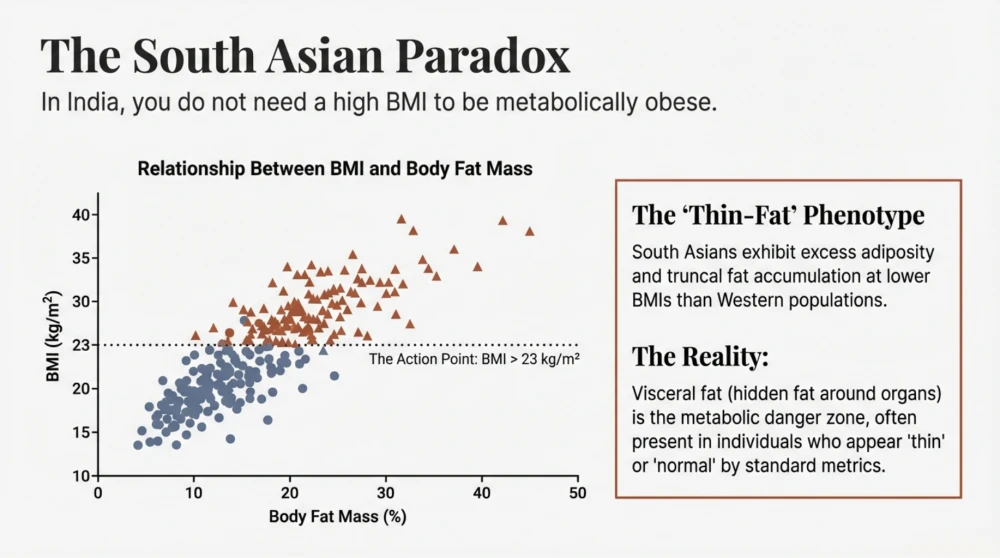
Individuals with a BMI over 25.0 must be cautious. While international standards often use 30.0 as the cutoff for obesity, the Indian threshold for obesity is lower at 25.0. If your BMI is above this mark, your immune system may already be facing metabolic stress.
Those with "silent" conditions like diabetes or fatty liver (MASLD) should prioritize regular check-ups. These conditions often progress without any pain or symptoms but significantly lower your ability to recover from the flu or pneumonia. Pregnant women are also a vulnerable group and should focus on metabolic health to protect both themselves and their babies.
Finally, be mindful of your cooking habits. If you frequently use "re-heated" or "re-used" cooking oils, you may be at risk. The RUCO initiative warns that when oil is heated repeatedly, it forms harmful Total Polar Compounds (TPC). If TPC levels exceed 25%, the oil becomes toxic, damaging your liver and heart, which further weakens your ability to fight off germs.
Key points
- Adopt the "Aaj Se Thoda Kam" approach by gradually reducing your daily intake of oil, sugar, and salt to lower internal inflammation.
- Engage in regular physical activity, such as walking or sports, to support the Fit India and Khelo India movements and boost your natural defenses.
- Prioritize weight management to help your vaccines work better; a healthy metabolic state ensures your body builds a stronger response to immunizations.
- Get early screenings for "silent" conditions like MASLD (fatty liver), especially if you have been diagnosed with insulin resistance or diabetes.
- Memorize the Indian BMI standards: In our population, Overweight starts at 23.0 and Obesity begins at 25.0.
Final Disclaimer
This article is for educational purposes only and is not a substitute for professional medical advice, diagnosis, or treatment. We are here to support your journey toward a stronger immune system and a healthier life at Dr. Pankaj Kumar Medical and Lifestyle Clinic.
You can book a consultation here: Book Appointment
Written by Dr. Pankaj Kumar, General & Lifestyle Physician, Dwarka, New Delhi