














- 16th February 2026
Table of Contents
For years, many of my patients followed the trend of ordering egg-white omelets, driven by a widespread phobia of dietary cholesterol. This "egg white only" movement prioritized a narrow view of heart health over total nutrient density. At the Dr. Pankaj Kumar Medical and Lifestyle Clinic, we emphasize a strategic shift back to the whole egg. Modern research indicates that by discarding the yolk, you are essentially throwing away the most bioavailable vitamins and minerals your body needs. In this guide, we will evaluate why the whole egg is making a scientific comeback and explore the specific nutritional treasures hidden within that golden center.
THE NUTRIENT POWERHOUSE: WHAT YOU GAIN IN THE YOLK
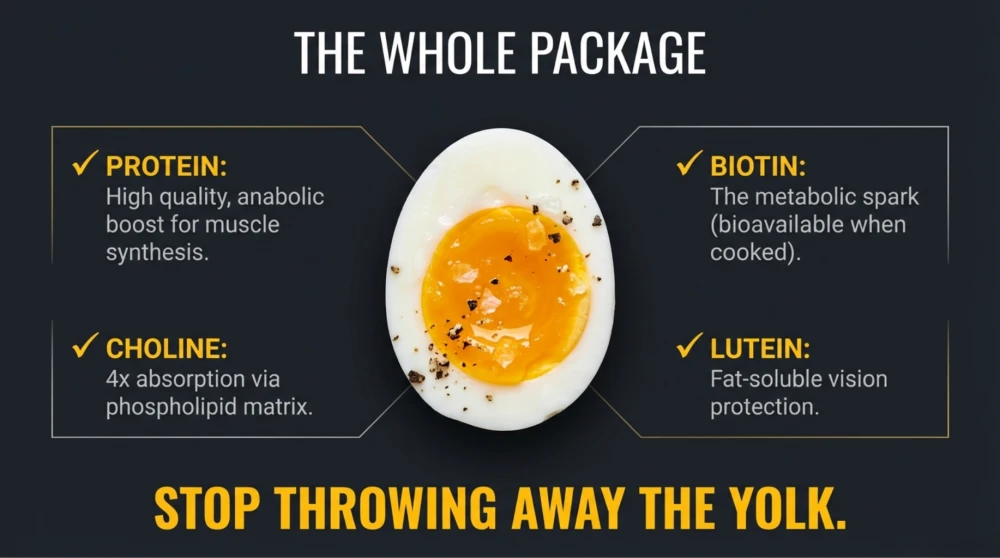
The yolk is where the vast majority of an egg's essential nutrients reside, including Biotin (B7), Choline, and the fat-soluble vitamins A, D, E, and K. In my clinical practice, I often remind patients that the "food matrix" of the yolk is far superior to synthetic supplements. For example, research by Smolders (2019) demonstrated that natural choline from egg yolk phospholipids is absorbed four times more effectively than the synthetic choline salts typically found in supplements.
This is particularly important when you consider that approximately 9 out of 10 adults in the U.S. currently have inadequate choline intake. Choline is essential for brain development and liver function. Furthermore, the yolk provides the carotenoids lutein and zeaxanthin (about 252 mcg). While these are present in small amounts, research shows they are more bioavailable and better utilized by the body when obtained from egg yolk than from other "richer" sources, providing significant support for eye health.
Regarding metabolism, the yolk is a prime source of Biotin (B7), which is vital for fatty acid synthesis and glucose regulation. While raw egg whites contain a glycoprotein called avidin that can block biotin absorption, the act of cooking the white neutralizes this effect. By consuming the whole, cooked egg, you ensure that the biotin in the yolk is fully available for your metabolism. This synergy between the white and the yolk is a perfect example of why nature's packaging is hard to beat.
CRACKING THE CHOLESTEROL MYTH
We are currently observing what clinical experts call the "Fifty Year Rehabilitation" of the egg. For decades, the public was told to limit dietary cholesterol to 300 mg per day. However, we now understand that for most individuals, the liver adjusts its own cholesterol production based on what you consume, maintaining a steady state. You might find it surprising that dietary cholesterol is not the primary driver of blood cholesterol levels for the average person.
The real "So What?" for your heart health is the intake of saturated fat, which is found in butter, ghee, and processed meats. Saturated fat is a much more significant driver of elevated LDL (bad) cholesterol than the cholesterol found in eggs. In fact, for patients with metabolic syndrome, egg consumption has been shown to improve the function of HDL (good) cholesterol, enhancing its capacity to clear excess cholesterol from the blood. A medium egg contains about 177 mg of cholesterol but only 1.3 g of saturated fat, making it a heart-safe choice when compared to common breakfast meats.
MUSCLE BUILDING AND SATIETY: WHY THE WHOLE EGG WINS
If you are focused on physical performance or weight management, the whole egg offers a clear advantage over isolated whites. A crossover study from the University of Illinois and the University of Toronto investigated resistance-trained men who were given an 18g dose of protein after exercise. The researchers found that the whole-egg group experienced a significantly greater increase in muscle protein synthesis than the group consuming an equivalent 18g of protein from egg whites alone.
While egg whites provide high-quality protein and the amino acid leucine, the yolk contains the "anabolic" vitamins, minerals, and fats that act as a trigger, signaling the body to use that protein more effectively for building strength. Additionally, the combination of fat and protein in the yolk provides a superior satiety effect. This helps you feel full longer and can reduce overall energy intake throughout the day, which is a key component of long-term weight management.
WHO SHOULD BE CAREFUL?
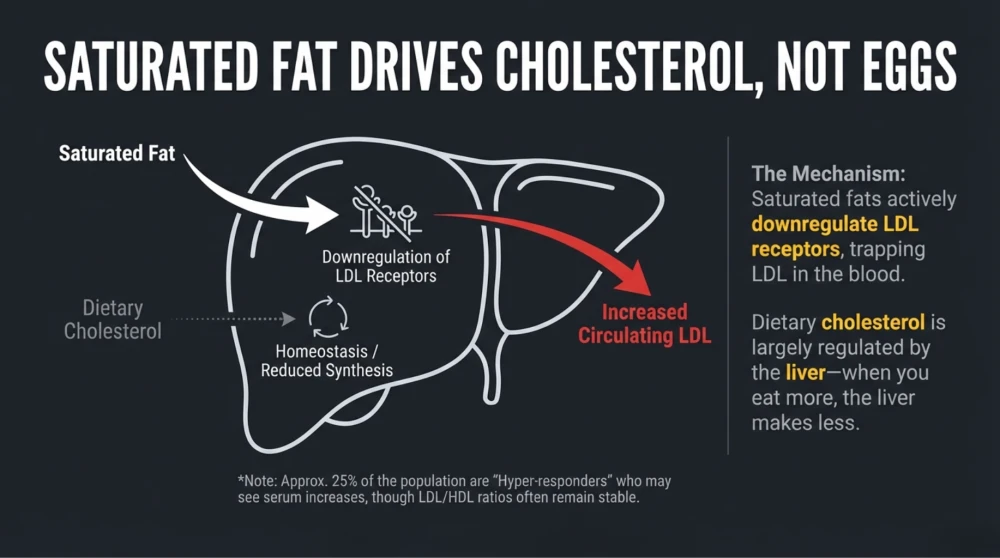
As your partner in health, I believe in providing realistic, tailored advice. While the general public can safely enjoy eggs, certain populations should monitor their intake as they would during a routine check-up. This includes "hyper-absorbers" of dietary cholesterol and individuals with Familial Hypercholesterolaemia (FH), who may experience a more pronounced LDL response to dietary intake.
Additionally, some observational studies have noted a higher risk of complications in individuals with poorly managed Type 2 Diabetes who consume seven or more eggs per week. For these specific groups, we recommend a clinical assessment to determine an appropriate intake level based on their unique metabolic and lipid profiles. For most everyone else, eggs remain one of the most affordable and high-quality protein sources available.
KEY POINTS
- Whole eggs promote greater muscle protein synthesis than egg whites alone, specifically shown in studies using an 18g protein dose.
- Choline from egg yolk phospholipids is absorbed four times more efficiently than synthetic choline salts, addressing a deficiency found in 9 out of 10 adults.
- The yolk provides highly bioavailable lutein and zeaxanthin, which are essential for maintaining eye health and visual function.
- Saturated fat from other foods is a much more significant driver of heart disease than the dietary cholesterol found in eggs.
- Cooking the whole egg protects Biotin (B7) absorption by neutralizing the avidin in the white, supporting healthy metabolism and gene regulation.
This guide is brought to you by the Dr. Pankaj Kumar Medical and Lifestyle Clinic, where we focus on science-based lifestyle changes for long-term health.
DISCLAIMER
Educational only, not a substitute for medical advice.
You can book a consultation here: Book Appointment
Written by Dr. Pankaj Kumar, General & Lifestyle Physician, Dwarka, New Delhi