
















- 18th February 2026
Table of Contents
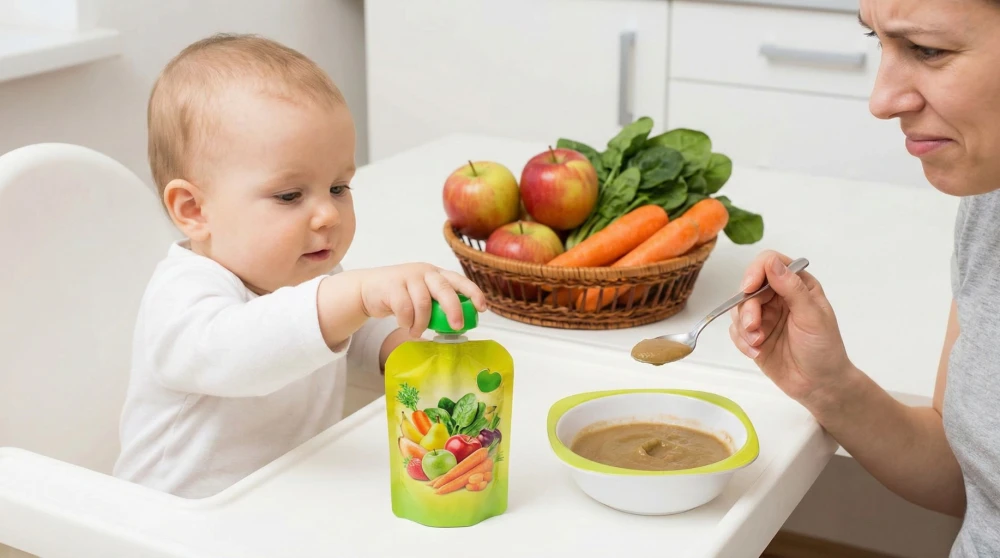
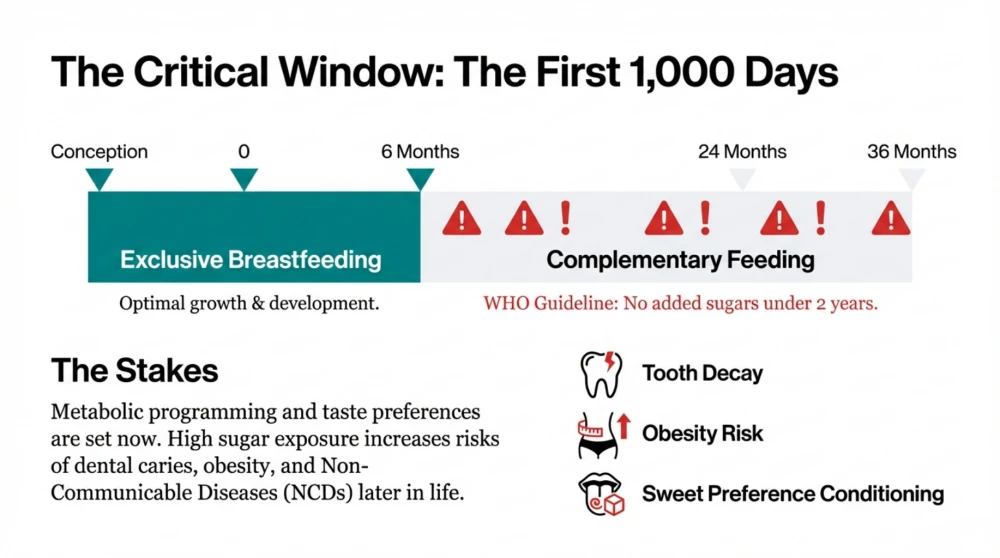
The first 1,000 days of life, spanning from conception to a child's second birthday, represent a critical window for physiological development. At Dr. Pankaj Kumar Medical and Lifestyle Clinic, we recognize this period as a "programming" phase where nutrition does more than fuel growth; it hardwires a child's metabolic health and lifelong taste preferences. Research indicates that clinical factors, such as breastfeeding for less than six months, are already linked to a higher risk of childhood obesity. While the colorful jars on supermarket shelves promise health and convenience, they often function as a strategic trap. Modern data reveals a stark disconnect between the wholesome imagery used in marketing and the clinical reality of what is inside the packaging.
The Hidden Sugar Problem
A landmark study by Hutchinson et al. (2021) signals a red flag for a child's future metabolic health. The research found that, on average, one-third of the energy in European commercial baby foods is derived from sugar. This creates a significant nutrient density gap. Many high-sugar purees also contain high water content, meaning infants receive fewer essential nutrients per spoonful while being overloaded with sweetness. Even "vegetable-only" purees, which many parents view as the gold standard for health, showed an average of 33% energy from sugar in certain markets like Norway.
These findings are particularly concerning when compared to international standards. The World Health Organization (WHO) recommends that sugar contribute less than 10% of total energy for older children, with a further preference for less than 5% to ensure optimal health. When commercial products regularly exceed these thresholds, they increase the long-term risk of dental caries and obesity. This discrepancy suggests that many processed baby foods are poorly aligned with the nutritional requirements of a developing infant.
Decoding "No Added Sugar"
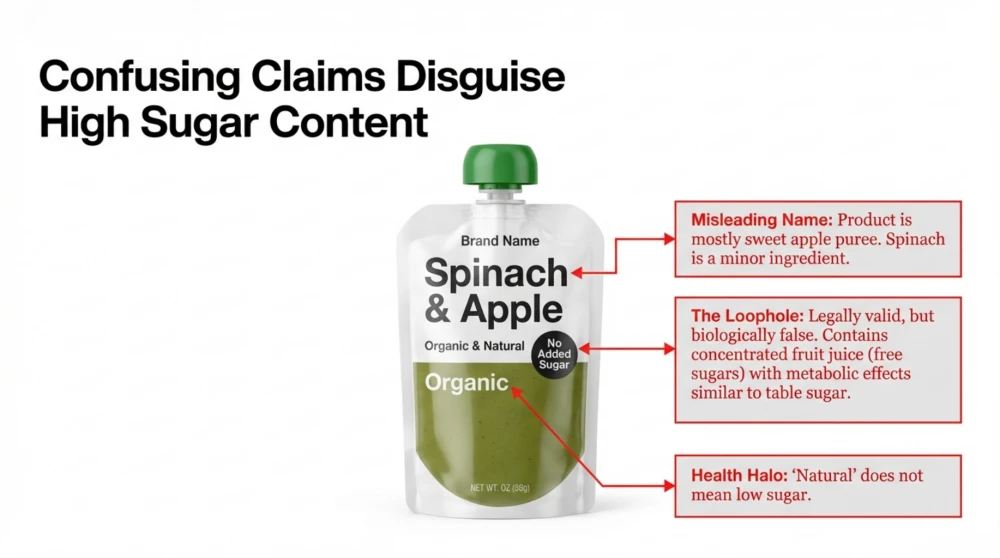
The claim "no added sugar" is one of the most common marketing tactics used to reassure parents, yet it is often functionally misleading. Manufacturers frequently use concentrated fruit juices and purees as hidden sweetening agents. While these ingredients are technically derived from fruit, the industrial manufacturing process involves intense maceration and heat treatment. This mechanical breakdown results in intrinsic sugars liberated from cell walls, transforming them into "free sugars" that behave more like syrup than whole fruit within the body.
By providing these concentrated free sugars, products program a child for a "sweet taste preference" very early in life. This early habituation is a major concern because it can lead to excessive energy intake and a clinical rejection of nutrient-dense, bitter-tasting foods later in childhood. Even if a product avoids table sugar, the biological impact of these liberated sugars remains the same.
When Savoury Isn't Savoury
Many parents select meal-type purees assuming they are introducing savory flavors like chicken or spinach. However, the data shows that fruit is used as a pervasive "filler" or flavor masker. In the UK market, up to 15% of savoury meal purees contain fruit. A common industry tactic involves using apple or banana as the largest single ingredient by weight without listing that fruit in the primary product name on the front of the pack.
This practice is intentionally designed to mask the naturally bitter or earthy notes of vegetables. If an infant is only exposed to vegetables that have been sweetened with fruit, they fail to develop the necessary palate for diverse, healthy whole foods. This prevents the child from learning to accept the authentic taste of essential greens, which is a vital step in establishing healthy eating patterns for the future.
The Pouch and Spout Problem
There is a growing clinical consensus to restrict the use of pouches with spouts for infants, especially as they approach the 12 month age marker. Sucking food from a spout allows for the rapid consumption of high-volume sugar with almost no effort. This delivery system bypasses the natural satiety cues associated with traditional feeding and may encourage overeating from a very young age.
Texture is a fundamental requirement for oral motor development. Relying on smooth purees and spouts past nine months can lead to oral motor development delay, as it discourages the development of vital chewing skills. Children must experience varied textures and "chunky" consistencies to transition successfully to a balanced diet. Over-reliance on smooth, pouch-delivered foods can result in the long-term rejection of complex food textures.
Who should be careful?
While every parent should prioritize nutritional transparency, certain populations require a more proactive approach for a healthy start. Infants with a history of reflux or those taking specific medications may be more sensitive to the acidity and high free-sugar content found in many commercial purees. Clinical evidence also suggests that monitoring nutritional intake during pregnancy is an essential first step in programming a child's future health.
Families with a known high risk for dental caries must be especially vigilant about the frequent use of pouches, as the "sucking" action bathes developing teeth in sugary liquids. For these children, prioritizing whole, home-prepared foods is a supportive way to ensure they meet developmental milestones without the risks of hidden sweeteners. Maintaining a focus on texture and variety will help these infants develop the oral skills and palate necessary for long-term wellness.
Key points
- Always read the full ingredient list to identify hidden fruit juice concentrates or purees used as primary ingredients.
- Prioritize single-ingredient vegetable purees to help your infant develop a diverse palate that accepts bitter and earthy flavors.
- Transition away from smooth purees and spouts by nine months to support essential oral motor development and chewing skills.
- Follow WHO guidelines by prioritizing exclusive breastfeeding for the first six months to reduce long-term obesity risks.
- Choose whole, minimally processed foods over commercial pouches whenever possible to ensure higher nutrient density and lower sugar intake.
Educational only, not a substitute for medical advice.
You can book a consultation here: Book Appointment
Written by Dr. Pankaj Kumar, General & Lifestyle Physician, Dwarka, New Delhi