
















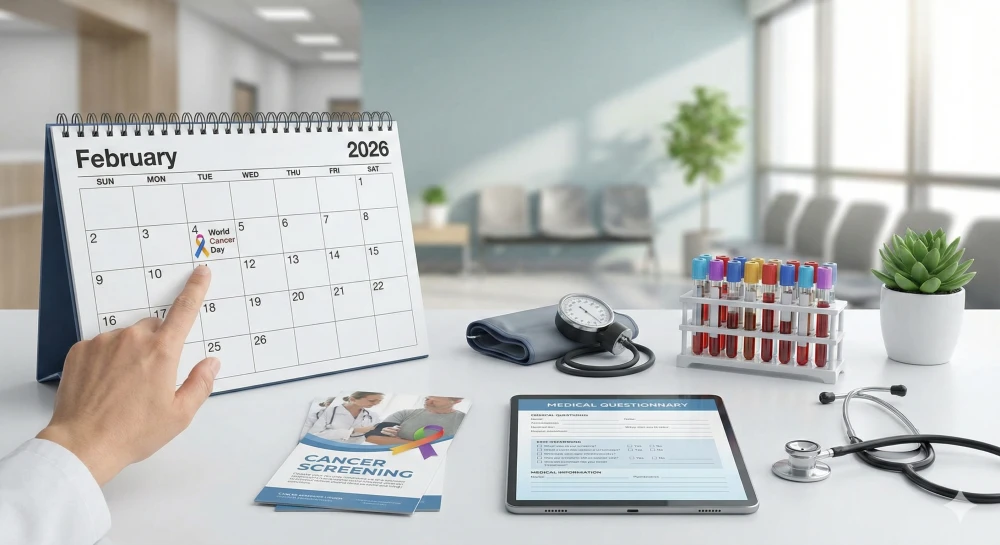
- 4th February 2026
Every February 4, the global community unites for World Cancer Day. The 2026 theme is "United by Unique," a reminder that every person's health story is different. At Dr. Pankaj Kumar Medical and Lifestyle Clinic, we believe your health journey is yours to lead, and we are here to provide the map.
A people-centered approach means looking beyond the disease to see the person. While every journey is unique, the first step is always early detection. Catching abnormalities early is the most powerful tool we have for ensuring you stay healthy for years to come.
THE CORE PILLARS OF EARLY DETECTION
Early detection saves lives on a massive scale. Data from the American Cancer Society for 2025-2026 shows that screening and prevention have averted about 4.75 million deaths since 1970. This represents 8 out of every 10 deaths prevented in major cancer types.
There is a vital difference between "preventative" and "detective" care. For colorectal and cervical health, tests can find and allow for the removal of abnormalities before they even become cancerous. Catching these quiet signs early is a life-changing advantage.
BREAST AND CERVICAL SCREENINGS: NEW GUIDELINES FOR 2026
For 2026, breast cancer guidelines emphasize personalized care. Women at average risk should start mammograms between ages 40 and 50. Because everyone is unique, new coverage now includes extra imaging like MRI or ultrasound if needed due to specific risk profiles or breast density.
These screenings should happen at least every two years, though your provider may recommend they occur as frequently as every year. At Dr. Pankaj Kumar Medical and Lifestyle Clinic, we help you decide the frequency that best fits your individual health history.
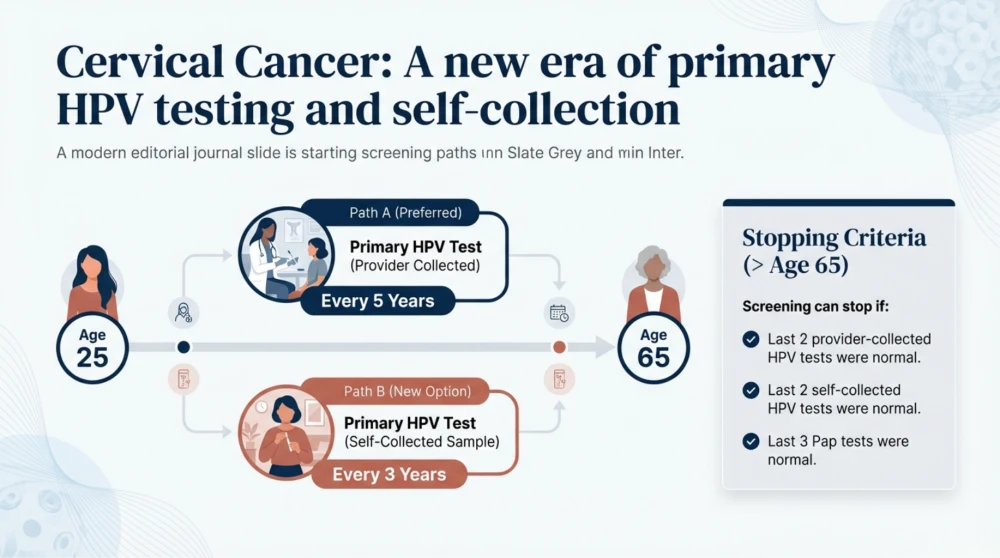
Cervical cancer guidelines have also been updated for those aged 25 to 65. The primary HPV test is now the preferred choice every five years. A new option for 2026 is the self-collected vaginal sample, which can be done every three years to give you more agency over your care.
If a self-collected cervical test result is abnormal, it is critical to know that a follow-up provider-led test or specialized exam is required to complete the process. This ensures that any unique concerns are addressed with the highest level of clinical accuracy.
COLORECTAL AND LUNG SCREENINGS: CATCHING THE QUIET SIGNS
Most people should begin colorectal screening soon after turning 45. You can choose yearly stool-based tests or a colonoscopy every 10 years. These tests are essential because they find polyps - small growths that can be removed before they ever turn into cancer.
If a stool-based test or virtual colonoscopy shows an abnormal result, a traditional colonoscopy is required as a follow-up. This "detective" step is what allows us to stop cancer in its tracks by removing polyps during the procedure itself.
Lung cancer screening is vital for those with a history of smoking. Currently, only 14 percent of the 18.91 million eligible high-risk adults are up to date on these scans. If you are in this high-risk group, this simple check can find signs before you even feel a symptom.
PROSTATE, SKIN, AND ORAL SCREENINGS: THE POWER OF OBSERVATION
For men aged 50 and older, the PSA blood test is the standard tool for prostate screening. Because every man's risk is different, we encourage a conversation with your provider to see if this check is right for your specific health goals.
Skin cancer screening is something you can do at home using the "ABCDE Rule." Watch your moles for Asymmetry, ragged Borders, Color changes, a Diameter larger than 6mm, or any sign that the spot is evolving in size or shape.
Do not overlook oral health checks during your regular visits. These are especially important for individuals with higher risk factors, such as those who use tobacco or alcohol. Simple observation during a clinic visit is often the best way to catch oral issues early.
MANAGING SCANXIETY AND SCREENING STRESS
It is common to feel "scanxiety," which is the distress felt before or after a medical scan. In fact, 73 percent of adults report feeling worried when thinking about routine screenings. Managing this stress is a key part of taking care of your whole self.
To make your next visit easier, try these four human-centered tips:
- Request a step-by-step walkthrough of the scan from your provider.
- Bring a supportive friend or family member to sit in the waiting room.
- Practice deep breathing techniques to stay in the present moment.
- Treat yourself afterward with a favorite meal or activity to stay positive.
WHO SHOULD BE CAREFUL?
Most screenings are very safe, but your unique conditions might change how we perform them. For example, if you have active acid reflux, it is important to tell your doctor, as this can affect how you prepare for a colorectal screening or colonoscopy.
Please share if you are pregnant, taking specific medications, or managing pre-existing conditions. At Dr. Pankaj Kumar Medical and Lifestyle Clinic, we often find that a simple conversation about these factors makes the screening process much more comfortable.
KEY POINTS
- Screening and prevention have saved over 4.7 million lives since 1970.
- Breast screenings should start between ages 40-50 and occur every 1-2 years.
- Colorectal screening starts at age 45 and can actually prevent cancer by removing polyps.
- Only 14 percent of eligible high-risk adults are currently up to date on lung cancer scans.
- Managing scanxiety with support and self-rewards makes it easier to stay on top of your health.
DISCLAIMER:
Educational only, not a substitute for medical advice.
At Dr. Pankaj Kumar Medical and Lifestyle Clinic, we are here to support your unique health journey. Your health is yours to lead, and we are honored to help you find the way.
You can book a consultation here: Book Appointment
Written by Dr. Pankaj Kumar, General & Lifestyle Physician, Dwarka, New Delhi