
















.webp)
- 21st April 2026
Table of Contents
- Fat gain is not just about how much you eat, but how your daily habits shape your metabolism
- The Body Is Always Deciding: Store or Burn
- Frequent Snacking and Continuous Eating
- High Refined Carbohydrate Intake
- Late-Night Eating Patterns
- Low Protein and Poor Meal Composition
- Sedentary Lifestyle Despite “Being Busy”
- Poor Sleep Patterns
- Chronic Stress and Cortisol
- Irregular Eating Patterns
- Why These Habits Go Unnoticed
- What Should You Change to Reduce Fat Storage?
- 1. Space Your Meals Properly
- 2. Improve Meal Quality
- 3. Stay Physically Active Throughout the Day
- 4. Fix Sleep and Stress
- 5. Maintain Consistency
- Why Understanding the Pattern Is Important
- Practical Take-Home Message
Fat gain is not just about how much you eat, but how your daily habits shape your metabolism
Many people believe that fat gain happens only because of overeating or lack of exercise. However, in clinical practice, it is often the small, repeated daily habits that gradually push the body toward fat storage.
These habits may seem harmless in isolation, but over time they alter hormones, metabolism, and energy balance, making fat accumulation more likely.
The Body Is Always Deciding: Store or Burn
At any given moment, your body is either using energy or storing it. This decision is largely influenced by hormones, especially insulin.
When insulin levels remain elevated for long periods, the body shifts toward storing energy as fat. Certain daily habits unknowingly keep insulin high throughout the day.
Frequent Snacking and Continuous Eating
Eating frequently, even in small amounts, triggers repeated insulin release. When this happens throughout the day, the body rarely enters a fat-burning state.
Over time, this pattern promotes fat storage, even if total calorie intake does not seem excessive.
High Refined Carbohydrate Intake
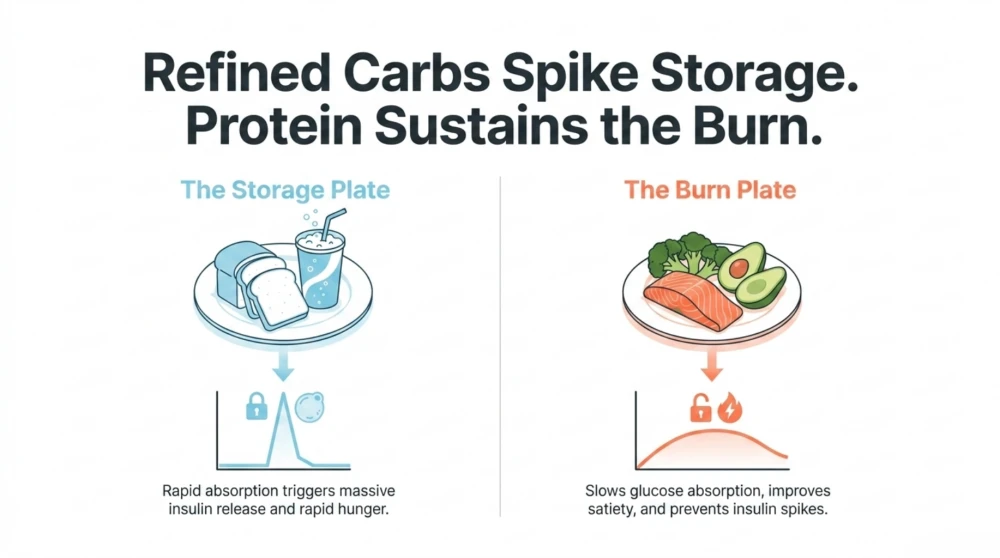
Foods like white bread, biscuits, sugary beverages, and packaged snacks are rapidly absorbed and cause sharp spikes in blood sugar. This leads to a strong insulin response.
Repeated spikes not only increase fat storage but also contribute to insulin resistance over time.
Late-Night Eating Patterns
The body’s metabolism follows a natural rhythm. In the evening, insulin sensitivity decreases, meaning the body handles glucose less efficiently.
Late-night meals or snacking therefore lead to higher glucose levels and greater fat storage compared to the same meal earlier in the day.
Low Protein and Poor Meal Composition
Meals that lack adequate protein and fiber are less satisfying and lead to quicker hunger. When meals are dominated by refined carbohydrates, blood sugar rises rapidly and then falls, triggering cravings and repeated eating.
This cycle increases total calorie intake and keeps insulin levels elevated, both of which promote fat storage over time.
Sedentary Lifestyle Despite “Being Busy”
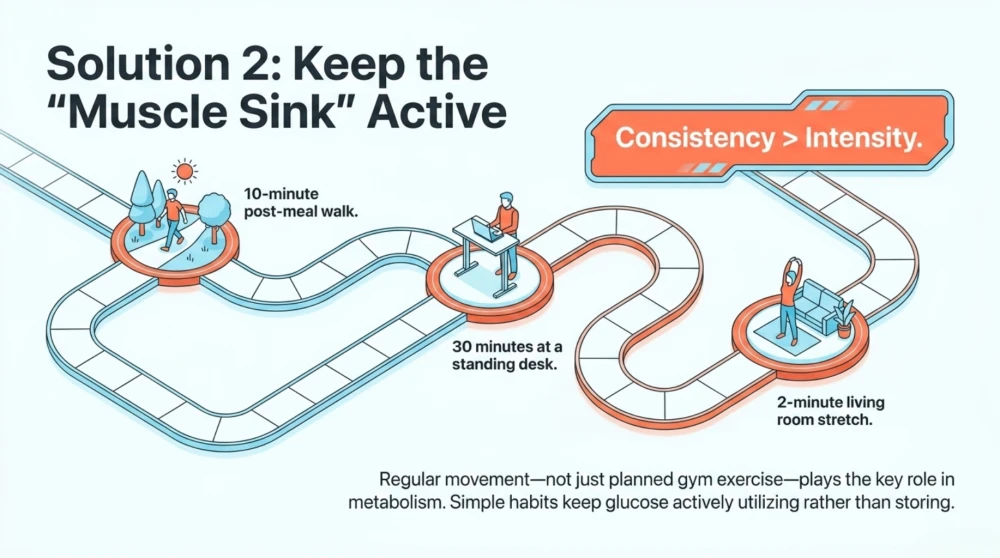
Many people feel active because they are busy throughout the day, but actual physical movement may still be limited. Long sitting hours reduce muscle activity, which plays a key role in glucose utilization.
When muscles are not actively using glucose, more of it gets stored as fat, especially in the abdominal area.
Poor Sleep Patterns
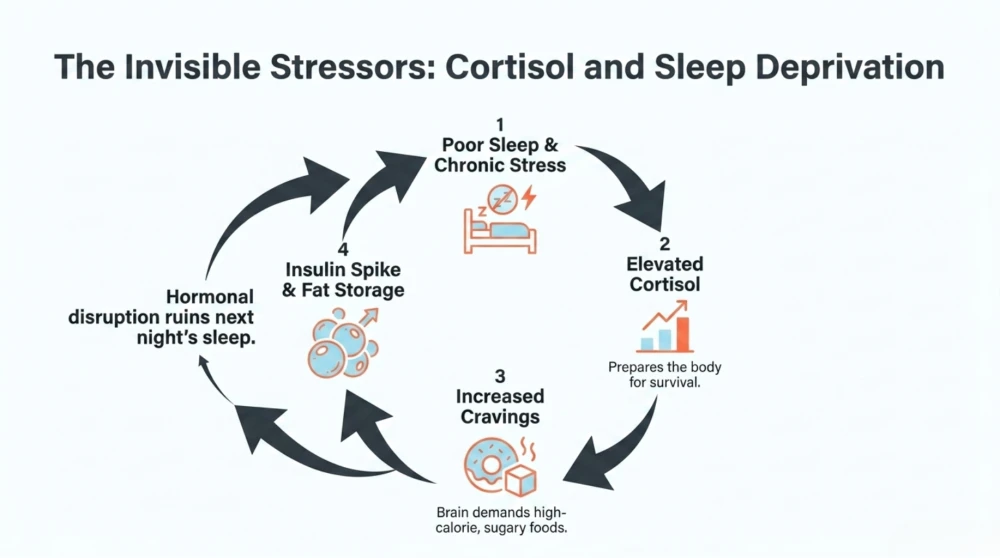
Sleep is often underestimated in weight management. Inadequate or poor-quality sleep disrupts hormones that regulate hunger and satiety, leading to increased appetite and reduced control over food choices.
At the same time, poor sleep reduces insulin sensitivity, making the body more prone to storing fat.
Chronic Stress and Cortisol
Stress triggers the release of cortisol, a hormone that prepares the body for survival situations. When stress becomes chronic, cortisol remains elevated and promotes fat storage, particularly around the abdomen.
It also increases cravings for high-calorie, sugary foods, further worsening the cycle.
Irregular Eating Patterns
Skipping meals followed by overeating or eating at inconsistent times disrupts metabolic balance. The body struggles to maintain stable energy levels and often compensates by storing more fat when food becomes available.
Consistency in meal timing plays an important role in metabolic efficiency.
Why These Habits Go Unnoticed
These habits are common and socially normalized, which is why they often go unrecognized. Individually, each factor may seem minor, but together they create a strong environment for fat storage.
Over months and years, this leads to gradual weight gain that feels unexplained.
What Should You Change to Reduce Fat Storage?
The solution is not extreme dieting or excessive exercise. Instead, the focus should be on correcting daily patterns that influence metabolism consistently over time.
1. Space Your Meals Properly
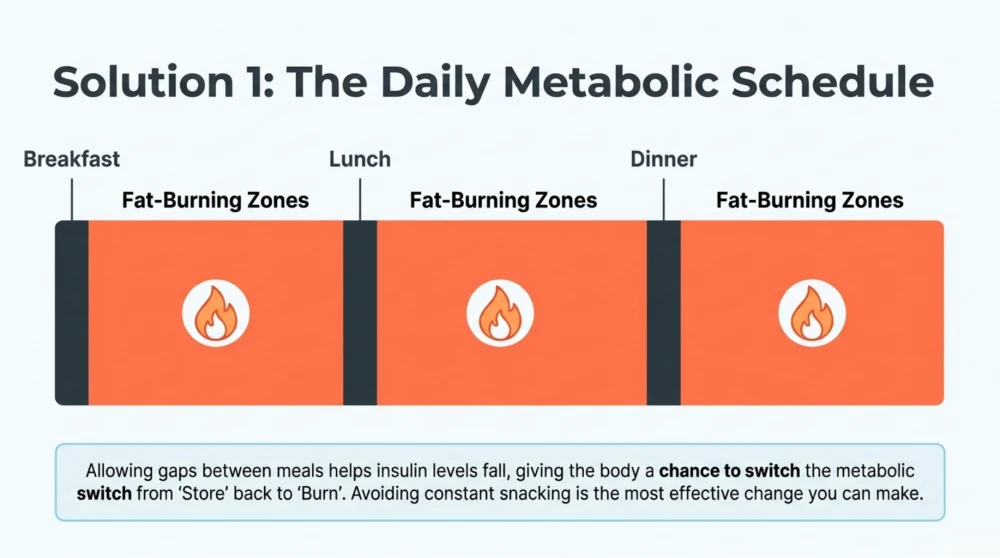
Allowing gaps between meals helps insulin levels fall, giving the body a chance to switch from storage mode to fat-burning mode. Avoiding constant snacking is one of the simplest yet most effective changes.
2. Improve Meal Quality
Each meal should include a balance of protein, fiber, and healthy fats. This slows glucose absorption, improves satiety, and reduces unnecessary calorie intake throughout the day.
3. Stay Physically Active Throughout the Day
Regular movement, not just planned exercise, plays a key role in metabolism. Simple habits like walking after meals or reducing sitting time can significantly improve glucose utilization.
4. Fix Sleep and Stress
Improving sleep quality and managing stress levels helps restore hormonal balance. This reduces cravings, improves insulin sensitivity, and lowers the tendency to store fat.
5. Maintain Consistency
Consistency matters more than intensity. Small, sustainable changes practiced daily are far more effective than short-term strict plans.
Why Understanding the Pattern Is Important
Fat storage is rarely caused by a single factor. It is usually the result of multiple small habits interacting over time. Identifying and correcting these patterns is the key to long-term success.
Once these habits are aligned, the body naturally shifts toward better metabolic balance and fat utilization.
Practical Take-Home Message
Daily habits like frequent snacking, poor sleep, high refined carbohydrate intake, and low physical activity quietly promote fat storage. These patterns often go unnoticed but have a strong long-term impact.
Correcting these habits does not require extreme measures. Simple, consistent lifestyle adjustments can significantly improve metabolic health.
You can book a consultation here: Book Appointment
Written by Dr. Pankaj Kumar, General & Lifestyle Physician, Dwarka, New Delhi