














- 7th April 2026
Table of Contents
- Why Blood Pressure Increases: A Simple Explanation
- The Role of Diet in BP Management
- 1. Rajma (Kidney Beans)
- 2. Black Beans: The Inflammation Fighters
- 3. Chickpeas: The Global Heart Protector
- Practical Tips: Unlocking the Benefits
- Common Mistakes & Safety Warnings
- Takeaways for Your Next Grocery Run
- Take the Next Step
Hypertension, or high blood pressure, remains the leading cause of premature death across the globe. It is the primary driver behind heart failure, strokes, and chronic kidney disease. As a physician and diet doctor, I often refer to it as the "silent" killer because it rarely announces itself with symptoms until the damage to your cardiovascular system is already well underway.
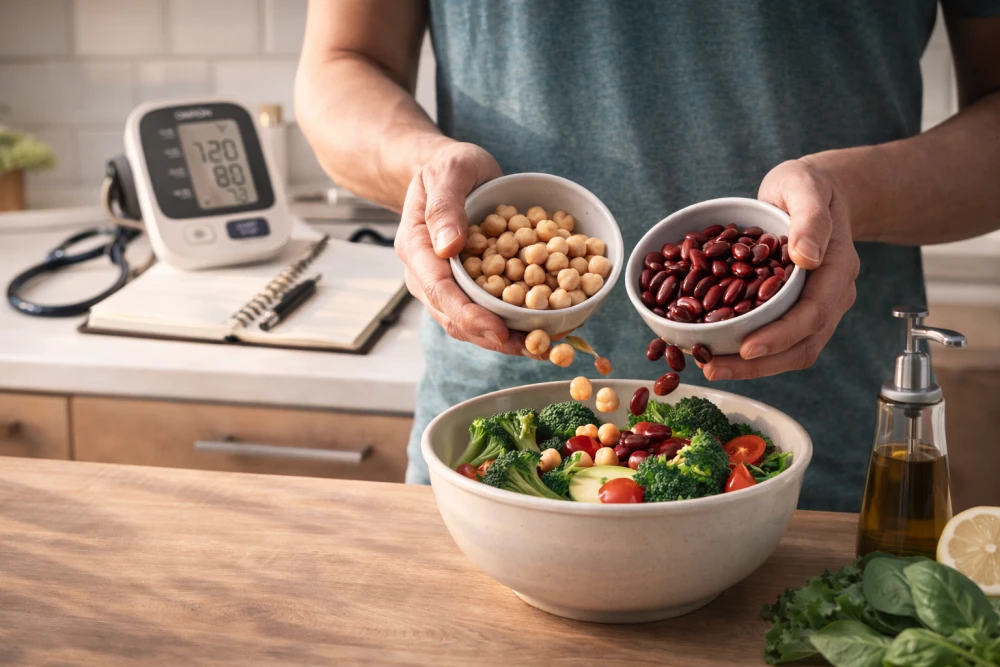
While pharmaceutical intervention is often a necessity, I frequently "prescribe" specific dietary changes as a primary line of defense. My most common recommendation? Legumes. These humble plants contain specialized natural "biopeptides" and a specific profile of minerals that act as biological tools to help regulate your blood pressure from the inside out.
This is where proper interpretation becomes important. You can understand the clinical perspective here: About Dr. Pankaj Kumar.
Why Blood Pressure Increases: A Simple Explanation
To manage your blood pressure, you first need to understand the Renin-Angiotensin-Aldosterone System (RAAS). Think of the RAAS as your body’s internal thermostat for fluid and pressure.
A central player in this system is the Angiotensin I-converting enzyme, or ACE. To visualize how this works, think of ACE as a pressure-cooker valve. When the system is triggered, ACE flips the valve from "vent" to "seal," rapidly converting inactive signals into a potent "constrictor" (Angiotensin II). This causes your blood vessels to tighten, creating massive internal pressure. When ACE activity is too high, your "pipes" stay constricted, leading to chronic hypertension.
The Role of Diet in BP Management
Most patients focus solely on reducing sodium, but that is only half the battle. While high sodium intake forces the body to retain water and increase pressure, a diet rich in the "Mineral Trio"—Potassium, Calcium, and Magnesium—does the opposite. These minerals help your body synthesize "vasodilators" like nitric oxide, which tell your blood vessels to relax.
Legumes offer a sophisticated three-pronged attack:
- Potassium: Essential for balancing sodium and supporting heart and kidney function.
- Fiber: Improves "arterial compliance"—preventing your arteries from becoming like stiff, old garden hoses—while aiding in weight management.
- Bioactive Peptides: Natural compounds "encrypted" within legume proteins that act as natural inhibitors of ACE and Renin.
1. Rajma (Kidney Beans)
Known scientifically as Phaseolus vulgaris, kidney beans are a clinical powerhouse, consisting of 20–30% high-quality protein. They are particularly rich in arginine, an amino acid vital for vascular health.
- ACE Inhibition: Clinical data shows that kidney bean hydrolysates can reach a staggering 80% ACE inhibition activity, mimicking the mechanism of common blood pressure medications.
- The Potassium Factor: According to Cleveland Clinic data, just a half-cup of cooked kidney beans provides 359 mg of potassium.
- The "Natural Brake": These beans support the production of GABA (gamma-aminobutyric acid). I describe GABA to my patients as a "natural brake" on the system; it helps lower pressure by regulating vasopressin, the hormone responsible for tightening your vessels.
- Cardiologist’s Pro-Tip: Do not discard the cooking water (aquafaba) if you prepared the beans with low sodium. It contains many of the minerals leached during the cooking process.
2. Black Beans: The Inflammation Fighters
Black beans (Phaseolus vulgaris L.) are extraordinary sources of fiber and anthocyanins—the dark pigments that provide potent antioxidant protection.
Beyond their fiber, black beans contain bioactive compounds that improve insulin resistance, a condition inextricably linked to hypertension. By reducing systemic inflammation, these beans improve arterial compliance. Regular consumption ensures your vessels stay flexible and elastic rather than stiffening with age.
3. Chickpeas: The Global Heart Protector
Chickpeas (Cicer arietinum) are a staple of human nutrition worldwide for a reason. They are specifically recognized for their potent ACE-inhibiting potential.
When chickpeas are processed through fermentation, their soluble protein content increases significantly. This makes the heart-healthy peptides more "bioavailable," meaning your body can more easily absorb and use them to maintain healthy pressure levels.
Practical Tips: Unlocking the Benefits
In my clinic, I advise patients that how you prepare your beans is just as important as the beans themselves. To "decrypt" the most effective biopeptides, follow these steps:
- The Overnight Soak: Always soak dry beans overnight. This not only reduces the complex sugars that cause gassiness but also prepares the proteins for better enzymatic breakdown.
- Unlock the Peptides: Methods like sprouting (germination) or fermentation (using beneficial bacteria like L. plantarum or B. subtilis) actually activate the hidden heart-healing compounds. These methods make the beans far more effective at inhibiting ACE than simply boiling them.
- Consistency is Key: Your gut microbiome is an adaptive system. If you experience gas initially, do not stop. Within a few weeks of regular consumption, your gut bacteria will adapt, and the discomfort will resolve.
Common Mistakes & Safety Warnings
- The G6PD Warning: This is a critical medical distinction. Individuals with G6PD deficiency must strictly avoid Fava beans (broad beans). Consuming them can trigger "favism," a life-threatening condition where red blood cells break down, potentially leading to kidney failure.
- The "Salt Trap": Be wary of "Surf and Turf" style bean dishes. For instance, while clams are high in potassium, they are often served in high-sodium broths or dipped in butter (which is loaded with unhealthy saturated fats). This negates the cardiovascular benefits of the beans.
- Rinse Your Canned Beans: If you must use canned beans, look for "no salt added" labels and rinse them thoroughly under cold water to remove up to 40% of the sodium content.
Transitioning from animal proteins to legumes is a scientifically sound strategy for heart health. With protein levels of 17–40%, legumes easily compete with meat (18–25%) while providing the added benefits of fiber and minerals. While drugs like Captopril or Aliskiren are vital for many, food-derived peptides offer high specificity and low toxicity. You have the power to take control of your vascular health starting in your pantry.
Takeaways for Your Next Grocery Run
- Hit Your Mineral Targets: Potassium is your heart's best friend. Aim for a daily target of 2,600 mg (women) to 3,400 mg (men).
- Choose Natural Inhibitors: Rajma and Chickpeas contain natural "ACE inhibitors" that provide a natural alternative to synthetic drugs, which can sometimes cause coughs or rashes.
- Prep for Potency: Soak and sprout your beans to unlock the "encrypted" peptides that actively heal your arteries.
- Safety First: Always check labels for hidden sodium and strictly avoid Fava beans if you have a G6PD deficiency.
Take the Next Step
This information is for educational purposes only and should not replace professional medical advice. Always consult a qualified doctor for personalized care.
You can book a consultation here: Book Appointment
Written by Dr. Pankaj Kumar, General & Lifestyle Physician, Dwarka, New Delhi