
















- 31st March 2026
Table of Contents
- Why Knowing When to Check Thyroid Levels Matters
- Symptoms That Indicate You Should Check Thyroid Levels
- Who Should Get Thyroid Testing Done Regularly
- Why Thyroid Tests May Look Normal Initially
- Common Real-Life Patterns That Should Alert You
- What I Recommend in Clinical Practice
- Warning Signs That Need Immediate Attention
- References
- Take the Next Step
Why Knowing When to Check Thyroid Levels Matters
Understanding when to check thyroid levels is important because thyroid disorders often develop silently. Many people live with symptoms for months or even years before getting tested.
The challenge is that early thyroid symptoms are subtle and easily confused with everyday lifestyle issues. Fatigue is blamed on work, weight gain on diet, and mood changes on stress. Because of this, testing is often delayed until symptoms become more noticeable or start affecting daily life.
In clinical practice, many patients come for testing only after significant changes in energy levels, weight, or menstrual patterns. By that time, the condition is already established. If you are unsure whether your symptoms need evaluation, a structured approach can help: About Dr. Pankaj Kumar.
Early recognition and timely testing can prevent progression and simplify management.
Symptoms That Indicate You Should Check Thyroid Levels
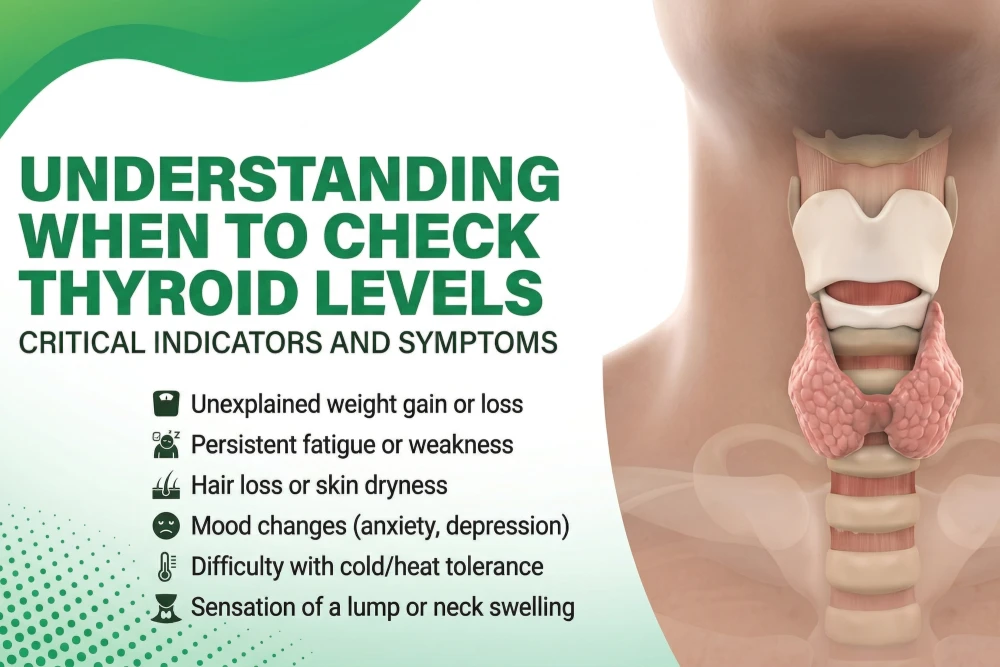
One of the most practical ways to understand when to check thyroid levels is by recognizing symptom patterns. These symptoms may appear mild initially but tend to persist or gradually worsen.
- Persistent fatigue despite adequate sleep
- Unexplained weight gain or difficulty losing weight
- Hair thinning or excessive hair fall
- Feeling unusually cold or sensitive to temperature changes
- Low mood, irritability, or reduced motivation
These symptoms are often ignored because they overlap with common lifestyle issues. However, their persistence should not be dismissed. A clinical study highlights that early thyroid dysfunction often presents with nonspecific symptoms, leading to delayed diagnosis.
Who Should Get Thyroid Testing Done Regularly
Apart from symptoms, certain groups should be more proactive in deciding when to check thyroid levels.
- Women, especially after the age of 30
- Individuals with a family history of thyroid disorders
- Patients with diabetes or metabolic syndrome
- Women with menstrual irregularities or PCOS
- People with unexplained fatigue or weight changes
Routine screening in these groups helps detect issues early, even before symptoms become severe. Research shows that thyroid disorders are frequently underdiagnosed due to lack of early screening.
Why Thyroid Tests May Look Normal Initially
Another important aspect of understanding when to check thyroid levels is knowing that tests may not always show clear abnormalities in early stages.
In early thyroid dysfunction:
- TSH may remain within the normal range
- T3 and T4 levels may fluctuate
- Borderline values may be overlooked
This can lead to a false sense of reassurance, even when symptoms are present. Studies indicate that subclinical thyroid dysfunction can exist even when routine test values appear normal.
Common Real-Life Patterns That Should Alert You
In clinical practice, certain patterns clearly indicate when to check thyroid levels.
- Symptoms persisting for several weeks or months
- Gradual worsening of fatigue or weight gain
- Lifestyle changes not improving symptoms
- Multiple mild symptoms occurring together
| Situation | Common Interpretation | Recommended Action |
|---|---|---|
| Fatigue for months | Work stress | Check thyroid levels |
| Weight gain without reason | Diet issue | Evaluate thyroid function |
| Hair fall with fatigue | Stress | Consider thyroid testing |
Another study emphasizes that early recognition of symptom patterns can significantly improve diagnosis and outcomes. This is why relying only on severe symptoms is not the right approach. Early testing based on patterns is more effective.
What I Recommend in Clinical Practice
Once you understand when to check thyroid levels, the next step is taking a structured and practical approach. In clinical practice, decisions are not based on a single symptom or one test, but on a combination of patterns.
Here is a practical approach I recommend:
- Start with a basic thyroid profile: Include TSH, T3, and T4
- Repeat testing if symptoms persist: Early dysfunction may not appear immediately
- Track your symptoms: Note fatigue, mood, weight, and hair changes
- Evaluate lifestyle factors: Sleep, stress, and diet influence thyroid function
- Do not ignore borderline results: Trends over time are more important than a single value
- Combine testing with clinical assessment: Lab values should match symptoms
- Follow a structured plan: Avoid random testing without interpretation
You can understand this structured approach here: Program overview.
For personalized evaluation and guidance: Consultation Link.
Warning Signs That Need Immediate Attention
While deciding when to check thyroid levels, certain warning signs should prompt immediate evaluation.
- Severe fatigue affecting daily life
- Rapid or unexplained weight changes
- Significant hair loss with other symptoms
- Persistent low mood or cognitive issues
- Palpitations or irregular heartbeat
A clinical reference highlights that early diagnosis and appropriate treatment can prevent complications and improve long-term outcomes.
Key Takeaway
Knowing when to check thyroid levels helps detect problems early, when they are easier to manage. Do not wait for severe symptoms. Persistent fatigue, weight changes, or mood disturbances are enough reasons to consider testing. A structured approach combining symptoms, lifestyle, and lab values gives the most reliable results.
References
- Subclinical thyroid dysfunction evidence
- Underdiagnosis of thyroid disorders
- Importance of early recognition
- Early thyroid dysfunction presentation
- Thyroid disorder clinical overview
Take the Next Step
This information is for educational purposes only and should not replace professional medical advice. Always consult a qualified doctor for personalized care.
You can book a consultation here: Book Appointment
Written by Dr. Pankaj Kumar, General & Lifestyle Physician, Dwarka, New Delhi