















- 9th April 2026
Table of Contents
- That “small” evening snack is often not small for your metabolism
- Metabolism Is Not the Same Throughout the Day
- Why Evening Snacking Feels So “Irresistible”
- Evening Snacking and Hormonal Disruption
- How Evening Snacking Starts a Metabolic Cycle
- Impact on Blood Sugar and Insulin Sensitivity
- Why Evening Snacking Promotes Weight Gain
- The Role of Food Choices in Evening Snacking
- Real-Life Patterns That Make Evening Snacking Worse
- Evening Snacking and Sleep Disruption
- Who Is Most at Risk?
- How to Manage Evening Snacking Without Extreme Restrictions
- 1. Fix Your Daytime Eating First
- 2. Set a “Kitchen Closing Time”
- 3. Create a Post-Dinner Routine
- 4. Improve Sleep Timing
- 5. If Needed, Choose Smarter Snacks
- What Most People Get Wrong
- Take-Home Messages
- References
That “small” evening snack is often not small for your metabolism
Most people believe that metabolism depends only on what they eat. But in clinical practice, I consistently see another factor playing a major role - when people eat.
Evening snacking looks harmless. A biscuit with tea, a handful of namkeen, a small dessert after dinner, or something while watching mobile or TV. Individually, these seem insignificant.
But when this becomes a daily pattern, it starts affecting hormones, insulin response, fat storage, and sleep quality. This is where the real problem begins.
Metabolism Is Not the Same Throughout the Day
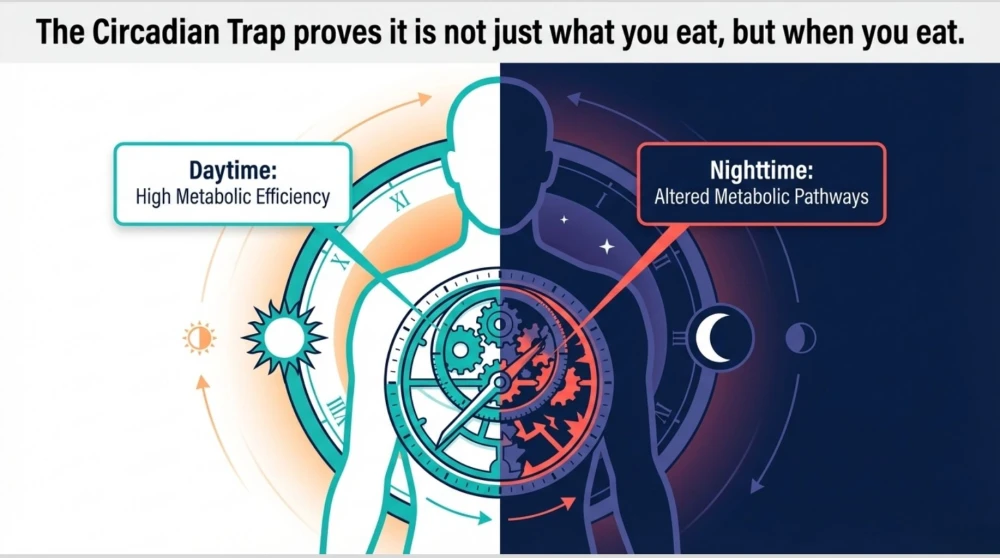
Human metabolism follows a biological clock known as the circadian rhythm. This means your body processes food differently in the morning compared to late evening.
During the daytime:
- Insulin works more efficiently
- Glucose is utilized better
- Energy expenditure is relatively higher
During the late evening and night:
- Insulin sensitivity reduces
- Glucose clearance slows down
- Fat storage tendency increases
So the same food eaten at night may have a very different metabolic impact compared to earlier in the day. A recent study has shown that late eating is associated with poorer glucose tolerance, independent of total calories consumed.
Why Evening Snacking Feels So “Irresistible”
If evening snacking is harmful, then why is it so common? Because it is not just about hunger. It is a mix of biology, behavior, and environment.
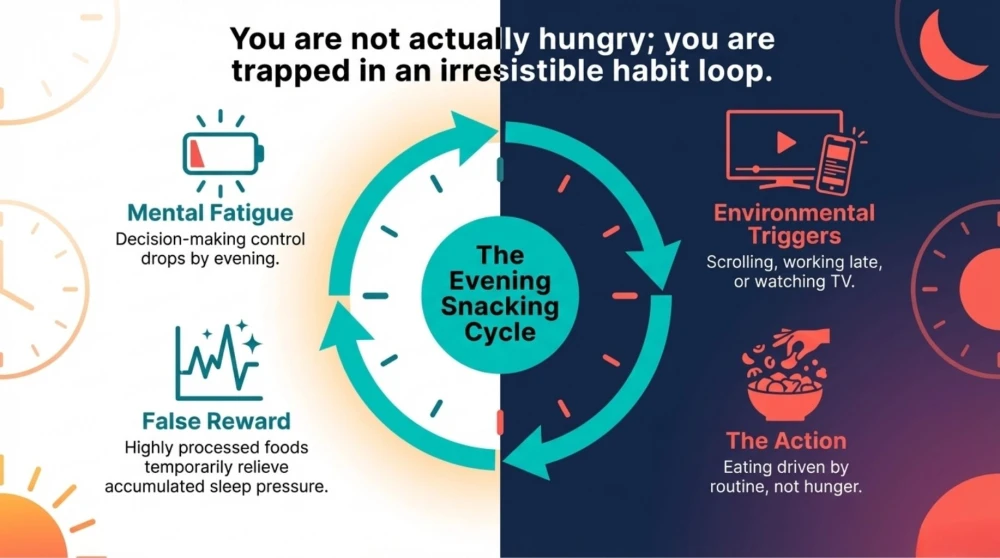
By evening, several things happen:
- Mental fatigue reduces decision-making control
- Stress levels accumulate through the day
- Sleep pressure starts building
- Highly processed foods become more rewarding
At the same time, common triggers include:
- Watching TV or scrolling on phone
- Working late hours
- Eating dinner too early or too late
- Emotional eating after a stressful day
This combination creates a habit loop where eating is no longer driven by hunger, but by routine and cues.
Evening Snacking and Hormonal Disruption
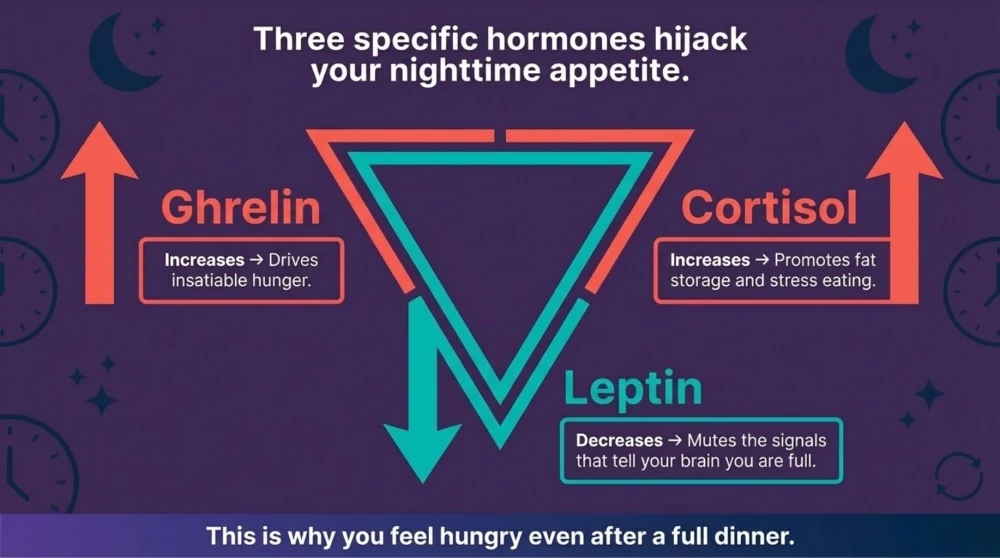
One of the most important effects of late snacking is its impact on appetite-regulating hormones.
- Ghrelin increases - leading to more hunger
- Leptin decreases - reducing satiety signals
- Cortisol increases - promoting fat storage
This creates a situation where:
- You feel hungry even after dinner
- You crave sugary or high-calorie foods
- You tend to overeat without realizing
This is why many people say, “I am not hungry during the day, but I feel very hungry at night.” That is not normal hunger. That is a hormonal and behavioral pattern.
How Evening Snacking Starts a Metabolic Cycle
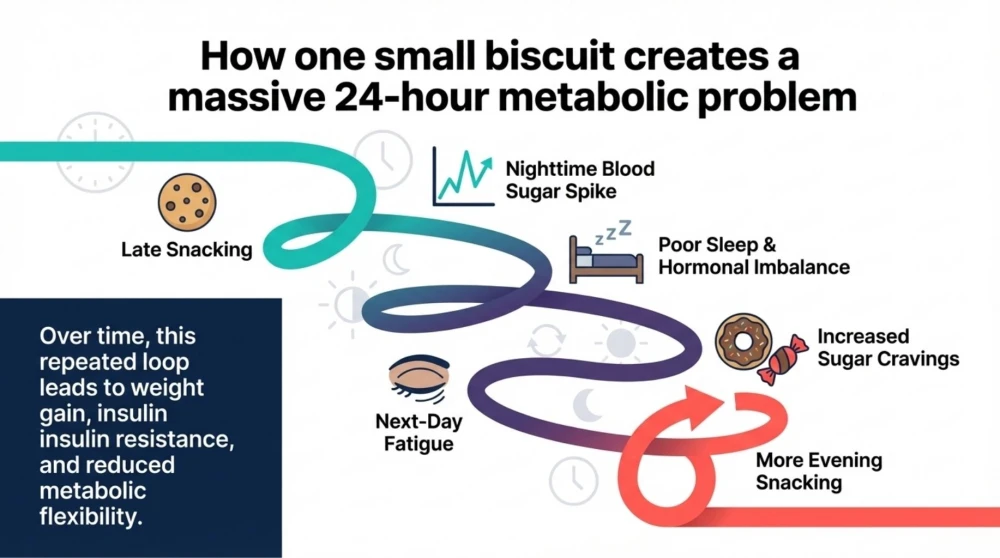
The real issue is not one snack. It is the cycle it creates:
- Late snacking → higher blood sugar at night
- Poor sleep → hormonal imbalance
- Next day fatigue → poor food choices
- Increased cravings → more evening snacking
Over time, this leads to:
- Weight gain
- Insulin resistance
- Increased abdominal fat
- Reduced metabolic flexibility
This is how a simple habit slowly converts into a metabolic problem.
To understand how daily habits influence long-term health, you can explore the doctor-supervised lifestyle modification program.
Impact on Blood Sugar and Insulin Sensitivity
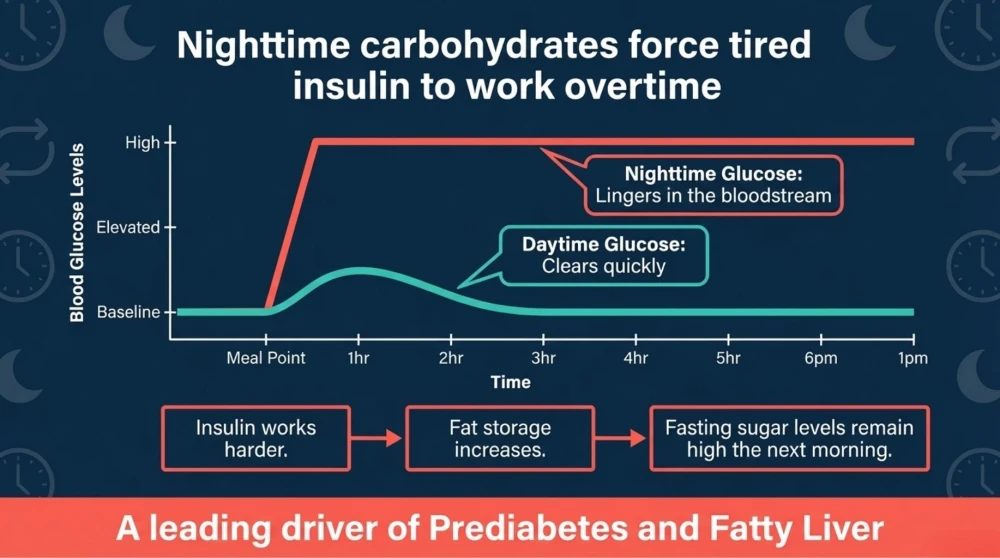
One of the most clinically important effects of evening snacking is its impact on blood sugar control. When you eat late, especially carbohydrate-rich or processed foods, your body is already in a state where insulin efficiency is reduced. This means:
- Glucose remains in the bloodstream for longer
- Insulin needs to work harder
- Fat storage increases
Over time, this repeated pattern contributes to insulin resistance. A study has shown that late eating is associated with poorer glucose tolerance and altered metabolic pathways, even when calorie intake is the same.
This is why many patients with:
- Prediabetes
- Type 2 diabetes
- Fatty liver
often show higher fasting sugar levels despite “controlled” diets.
Why Evening Snacking Promotes Weight Gain
Weight gain due to evening snacking is not just about extra calories. It is a combination of multiple metabolic factors.
- Lower energy expenditure at night
- Higher calorie intake due to mindless eating
- Hormonal imbalance increasing hunger
- Reduced fat oxidation
Even if total calories appear similar, late eating shifts the body toward fat storage mode. This is why people often notice:
- Gradual weight gain
- Increase in belly fat
- Difficulty losing weight despite dieting
The Role of Food Choices in Evening Snacking
Another critical factor is what you eat during evening snacking.
Most evening snacks are:
- High in refined carbohydrates
- Rich in sugar
- High in unhealthy fats
- Low in protein and fiber
Examples include:
- Biscuits and cookies
- Chips and namkeen
- Sweets and desserts
- Processed ready-to-eat foods
These foods are easy to overconsume and provide low satiety, leading to excess calorie intake without satisfaction. This combination of poor timing and poor food quality accelerates metabolic damage.
Real-Life Patterns That Make Evening Snacking Worse
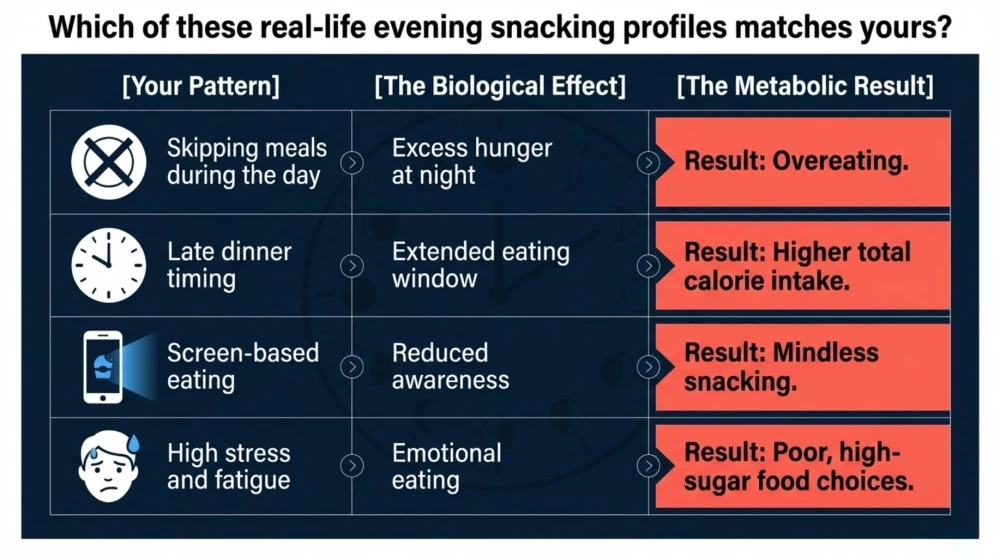
| Pattern | What Happens | Result |
|---|---|---|
| Skipping meals during the day | Excess hunger at night | Overeating |
| Late dinner timing | Extended eating window | Higher calorie intake |
| Screen-based eating | Reduced awareness | Mindless snacking |
| Stress and fatigue | Emotional eating | Poor food choices |
These patterns are extremely common in modern work culture and are one of the major drivers of lifestyle diseases.
Evening Snacking and Sleep Disruption
Another overlooked issue is the effect of late eating on sleep quality.
Eating close to bedtime can:
- Delay sleep onset
- Reduce deep sleep quality
- Cause acid reflux or discomfort
Poor sleep further worsens:
- Insulin resistance
- Hunger hormones
- Next-day cravings
This creates a vicious cycle:
- Late eating → poor sleep
- Poor sleep → increased hunger
- Increased hunger → more evening snacking
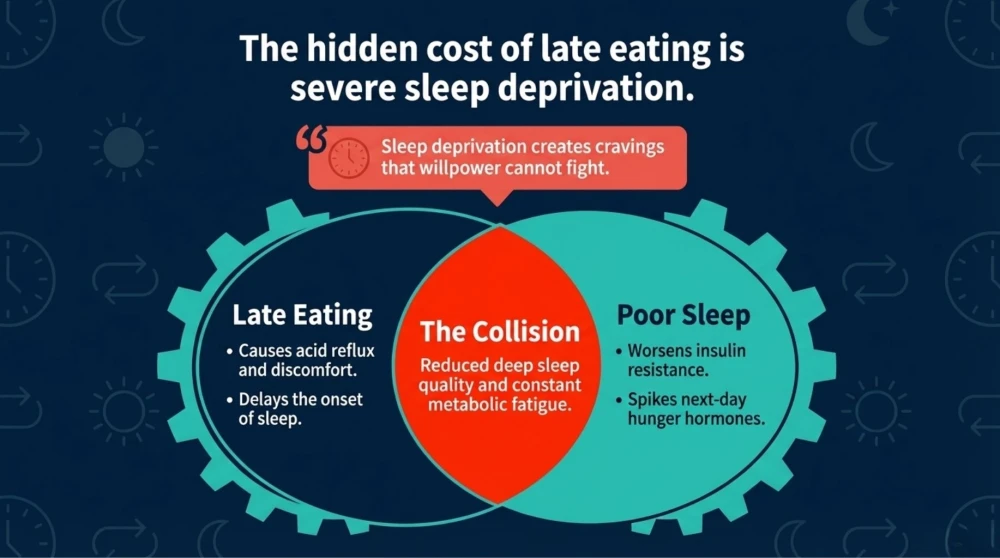
This is one of the most common patterns seen in patients with weight gain and metabolic issues.
Who Is Most at Risk?
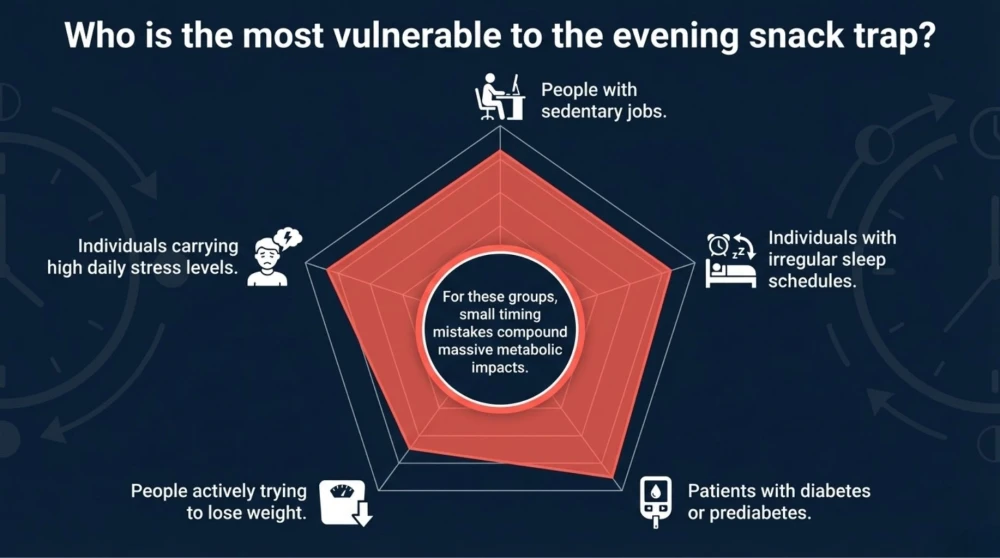
Evening snacking affects everyone, but certain groups are at higher risk:
- People with sedentary jobs
- Individuals with irregular sleep schedules
- Patients with diabetes or prediabetes
- People trying to lose weight
- Those with high stress levels
In these individuals, even small lifestyle mistakes can accumulate and lead to significant metabolic impact.
How to Manage Evening Snacking Without Extreme Restrictions
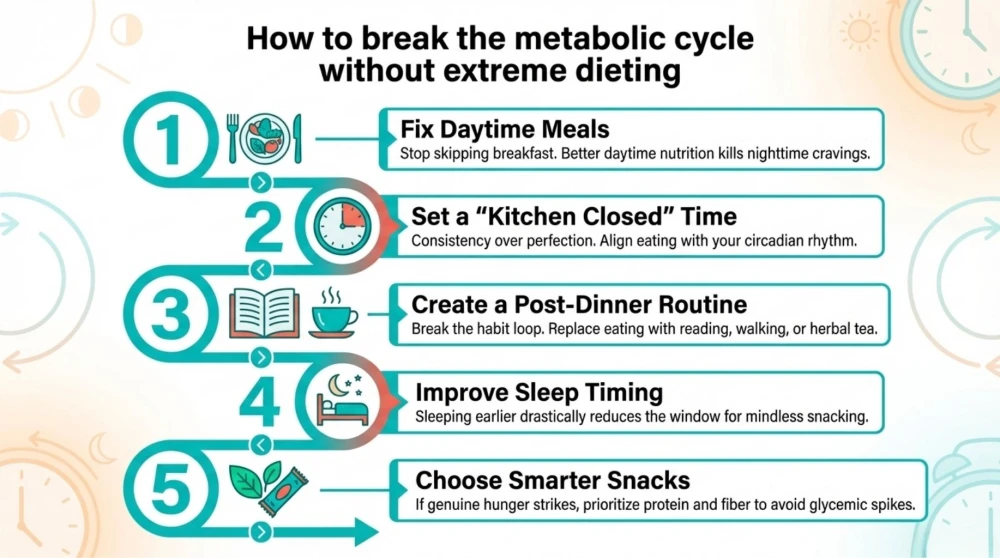
The goal is not to completely eliminate evening eating. The goal is to control the pattern so it does not disrupt metabolic health. In clinical practice, the most effective strategy is not strict dieting, but correcting daily structure.
1. Fix Your Daytime Eating First
Most evening cravings are not due to real hunger. They are the result of:
- Skipping breakfast
- Eating very small meals during the day
- Long gaps between meals
When daytime nutrition improves, evening cravings automatically reduce.
2. Set a “Kitchen Closing Time”
A simple and highly effective strategy is to define a fixed time after which no food is consumed.
- Reduces mindless eating
- Improves discipline
- Aligns with circadian rhythm
Consistency matters more than perfection here.
3. Create a Post-Dinner Routine
Many people snack not because of hunger, but because of habit.
Replace the trigger with:
- Herbal tea
- Light walking
- Reading or relaxation activity
This helps break the automatic association between “evening” and “eating”.
4. Improve Sleep Timing
Late sleep increases the window available for snacking. By sleeping earlier:
- Snacking opportunities reduce
- Hormonal balance improves
- Next-day appetite control becomes easier
5. If Needed, Choose Smarter Snacks
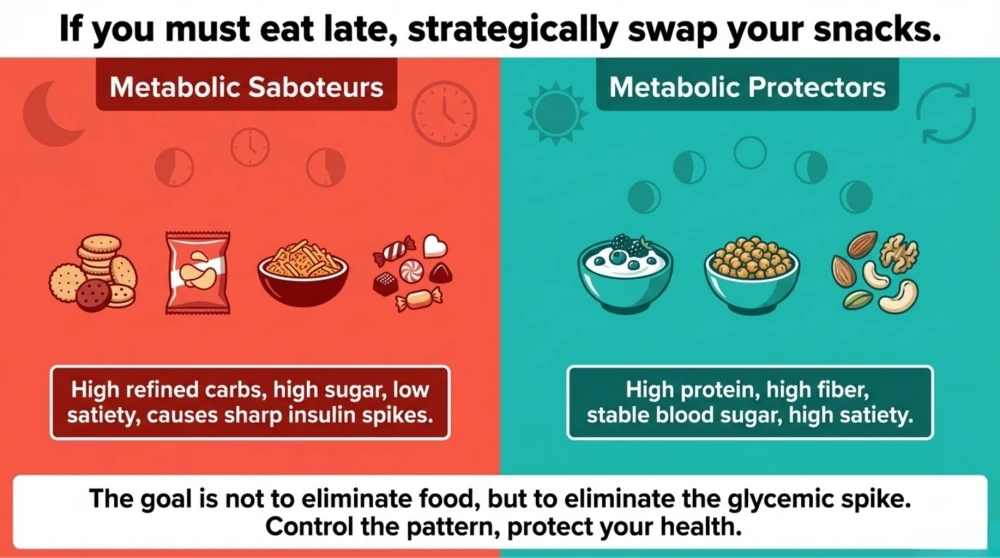
If you genuinely feel hungry, avoid high-sugar or processed snacks. Better options include:
- Curd or yogurt
- Roasted chana
- Handful of nuts
- Protein-based light snack
The idea is to reduce glycemic spikes and improve satiety.
What Most People Get Wrong
A common mistake is focusing only on calories.
People say:
- “I only ate a little”
- “Total calories are the same”
But metabolism is influenced by:
- Timing of food
- Hormonal response
- Sleep quality
- Food composition
Ignoring these factors leads to confusion when weight loss does not happen despite “dieting”.
Take-Home Messages
- Evening snacking becomes harmful when it is frequent and unstructured
- Late eating reduces insulin sensitivity and promotes fat storage
- Most evening hunger is driven by habits, not true nutritional need
- Improving daytime meals is the most effective way to reduce night cravings
- Consistency in routine is more important than strict restrictions
References
- Late eating and metabolic effects study (2022)
- Meal timing and metabolic outcomes (2024)
- Night eating and health risks (2024)
- Meal timing and obesity (2024)
- Circadian rhythm and metabolism (2025)
You can book a consultation here: Book Appointment
Written by Dr. Pankaj Kumar, General & Lifestyle Physician, Dwarka, New Delhi