
















- 30th March 2026
Table of Contents
- How Thyroid Fatigue and Mood Changes Are Connected
- How Thyroid Hormones Affect Energy and Brain Function
- Why Fatigue Feels Different in Thyroid Disorders
- How Thyroid Affects Mood and Mental Health
- Common Patterns Seen in Patients
- What I Recommend in Clinical Practice
- Warning Signs You Should Not Ignore
- References
- Take the Next Step
How Thyroid Fatigue and Mood Changes Are Connected
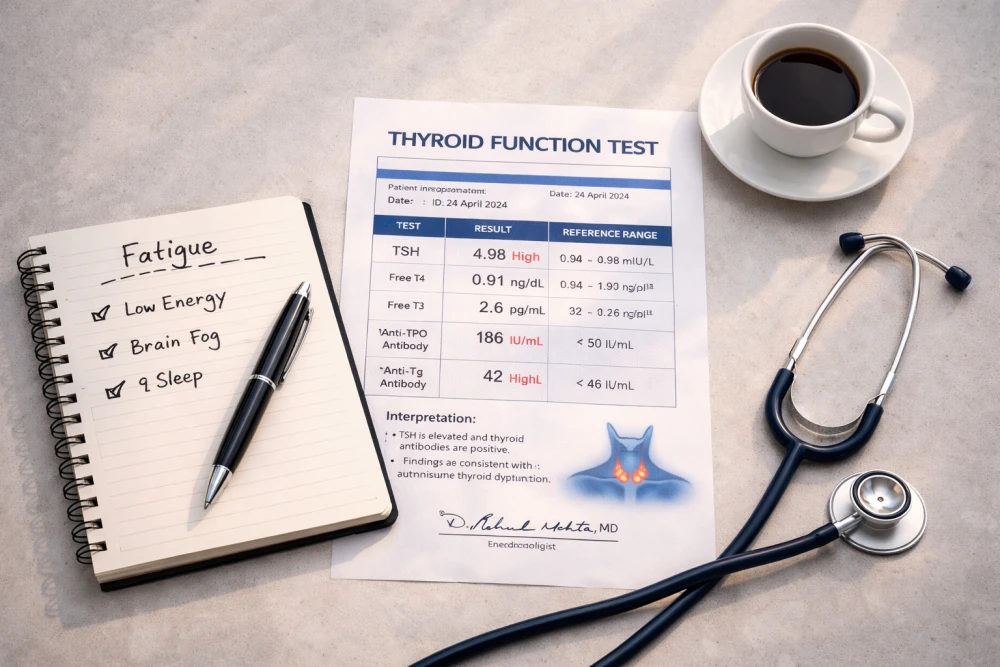
Understanding thyroid fatigue and mood changes is important because these are often the earliest signs of thyroid dysfunction. Many people experience persistent tiredness, low motivation, or mood swings without realizing that the thyroid may be the underlying cause.
The thyroid gland controls your metabolism, but its effects go far beyond weight. It directly influences your energy levels, brain function, and emotional balance. When thyroid hormone levels are even slightly off, the body’s systems slow down or become imbalanced. This can lead to fatigue, reduced mental clarity, and noticeable changes in mood.
In clinical practice, patients often report symptoms like “constant tiredness,” “lack of motivation,” or “feeling low without reason.” These symptoms are frequently overlooked or attributed to stress or lifestyle. If these symptoms persist, it is important to look deeper. A structured lifestyle and metabolic approach can help identify underlying issues.
How Thyroid Hormones Affect Energy and Brain Function
To understand thyroid fatigue and mood changes, you need to look at how thyroid hormones work inside the body. The thyroid produces hormones that regulate how quickly your cells use energy. This process directly affects both physical energy and mental function.
When thyroid hormone levels are low, the body’s metabolic rate slows down. As a result, cells produce less energy, leading to persistent fatigue. This is why people with thyroid dysfunction often feel tired even after adequate rest. The issue is not lack of sleep, but reduced energy production at the cellular level.
A clinical study highlights that reduced thyroid hormone levels are associated with fatigue and reduced physical performance.
Why Fatigue Feels Different in Thyroid Disorders
Fatigue related to thyroid fatigue and mood changes is not the same as normal tiredness. It has specific characteristics:
- Persistent tiredness throughout the day
- Low energy even after proper sleep
- Difficulty starting or completing tasks
- Feeling physically and mentally drained
This type of fatigue often affects daily productivity and quality of life.
How Thyroid Affects Mood and Mental Health
Another important aspect of thyroid fatigue and mood changes is its impact on mental health. Thyroid hormones influence neurotransmitters in the brain, including serotonin and dopamine.
When hormone levels are imbalanced:
- Mood may become low or depressed
- Motivation can decrease
- Anxiety or irritability may increase
- Concentration and memory can be affected
Research shows that thyroid dysfunction is associated with mood disorders and cognitive changes.
Common Patterns Seen in Patients
In clinical practice, thyroid fatigue and mood changes often appear in recognizable patterns.
- Feeling tired without a clear reason
- Reduced interest in daily activities
- Unexplained low mood or irritability
- Difficulty focusing or remembering things
- Gradual decline in energy levels
These symptoms are often ignored for long periods because they are attributed to stress or lifestyle.
| Symptom | Common Assumption | Possible Cause |
|---|---|---|
| Fatigue | Work stress | Low thyroid function |
| Low mood | Emotional stress | Hormonal imbalance |
| Poor concentration | Lack of sleep | Thyroid-related cognitive effect |
Another study suggests that early recognition of these symptoms can help prevent progression and improve quality of life. This is why persistent fatigue and mood changes should not be ignored, especially if they do not improve with routine lifestyle changes.
What I Recommend in Clinical Practice
If you are experiencing persistent thyroid fatigue and mood changes, a structured and practical approach is essential. In clinic, the focus is not just on lab values but on symptom patterns, lifestyle, and metabolic health.
Here are key steps I recommend to patients:
- Do a complete thyroid profile: Include TSH, T3, and T4, not just a single parameter
- Repeat testing if needed: Early-stage dysfunction may not appear in one test
- Correct sleep patterns: Sleep directly influences hormonal balance
- Stabilize meal timing: Avoid long gaps that worsen fatigue and hormonal fluctuations
- Focus on protein intake: Helps support metabolism and energy levels
- Manage stress actively: Chronic stress worsens both fatigue and mood changes
- Stay physically active: Even moderate activity improves energy regulation
- Track symptoms over time: Patterns often reveal more than a single test
You can understand this structured approach in detail here: Program overview.
For a personalized evaluation, you can consult directly: Consultation Link.
Warning Signs You Should Not Ignore
While thyroid fatigue and mood changes are often gradual, certain signs require prompt medical attention.
- Severe fatigue affecting daily activities
- Persistent low mood or depressive symptoms
- Rapid weight changes without clear cause
- Hair loss along with energy decline
- Palpitations or irregular heartbeat
A clinical reference emphasizes that early diagnosis and treatment of thyroid disorders can prevent complications and improve long-term outcomes.
Key Takeaway
Thyroid fatigue and mood changes are often early signs of hormonal imbalance that are easy to overlook. These symptoms are not just lifestyle-related but may reflect underlying thyroid dysfunction. Recognizing patterns early and taking structured action can prevent long-term complications and significantly improve quality of life.
References
- Thyroid hormone and fatigue study
- Thyroid and mood disorders
- Cognitive impact of thyroid dysfunction
- Importance of early recognition
- Thyroid disorder clinical overview
Take the Next Step
This information is for educational purposes only and should not replace professional medical advice. Always consult a qualified doctor for personalized care.
You can book a consultation here: Book Appointment
Written by Dr. Pankaj Kumar, General & Lifestyle Physician, Dwarka, New Delhi