











- 14th April 2026
Table of Contents
- We are moving from treating disease to preventing it
- What Is Lifestyle Medicine?
- The Core Problem: Root Cause vs Symptom Control
- Why Chronic Diseases Are Rising Rapidly
- Why Patients Are No Longer Satisfied with Symptom-Based Care
- The Early Advantage of Lifestyle Intervention
- How Lifestyle Medicine Improves Clinical Outcomes
- Can Lifestyle Medicine Reduce Medication Dependence?
- Why Lifestyle Medicine Focuses on Sustainability
- The Role of Behavior Change in Healthcare
- Common Myths About Lifestyle Medicine
- Why Healthcare Systems Are Adapting This Approach
- The Future of Healthcare: From Treatment to Prevention
- Integration with Modern Medical Practice
- Why a Doctor-Guided Approach Matters
- Take-Home Messages
- References
We are moving from treating disease to preventing it
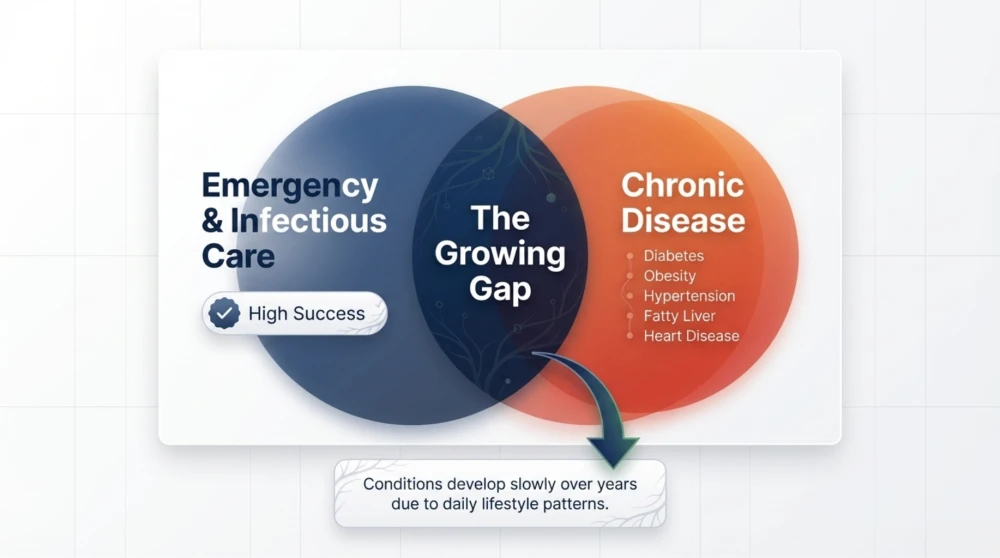
Modern healthcare has achieved remarkable success in managing infections, emergencies, and surgical conditions. However, when it comes to chronic diseases, the system is facing a growing challenge.
Conditions like diabetes, obesity, hypertension, fatty liver, and heart disease are increasing globally. These are not sudden illnesses. They develop slowly over years due to daily lifestyle patterns.
Yet, most healthcare models still focus on:
- Diagnosing disease after it develops
- Managing symptoms with medication
- Controlling complications
This creates a gap between disease management and disease prevention. This gap is exactly where lifestyle medicine is transforming modern healthcare.
What Is Lifestyle Medicine?
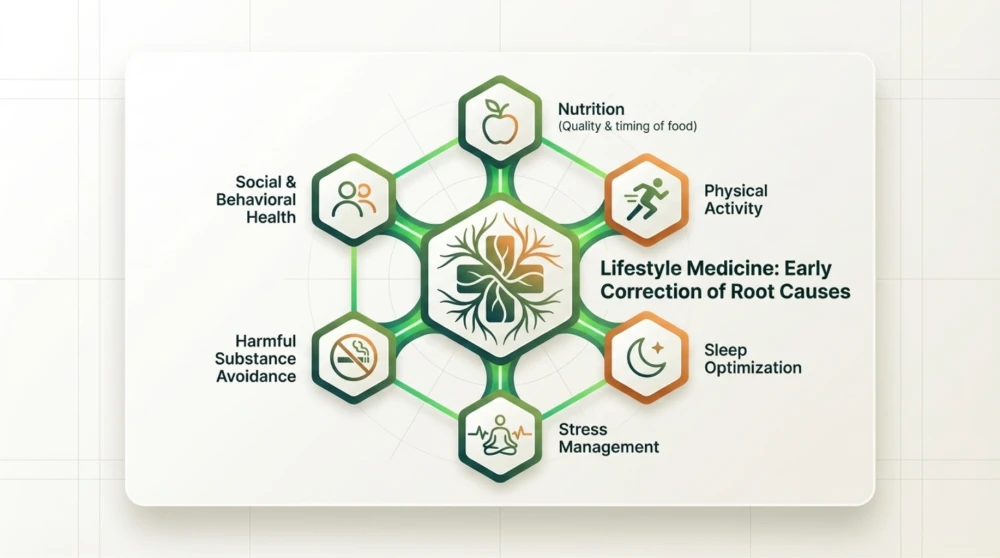
Lifestyle medicine is a medical discipline that focuses on preventing, managing, and sometimes reversing disease through scientifically structured lifestyle interventions.
It is built on six core pillars:
- Nutrition (quality and timing of food)
- Physical activity
- Sleep optimization
- Stress management
- Avoidance of harmful substances
- Social and behavioral health
Unlike conventional care, which often starts after disease appears, lifestyle medicine focuses on early correction of root causes.
The Core Problem: Root Cause vs Symptom Control
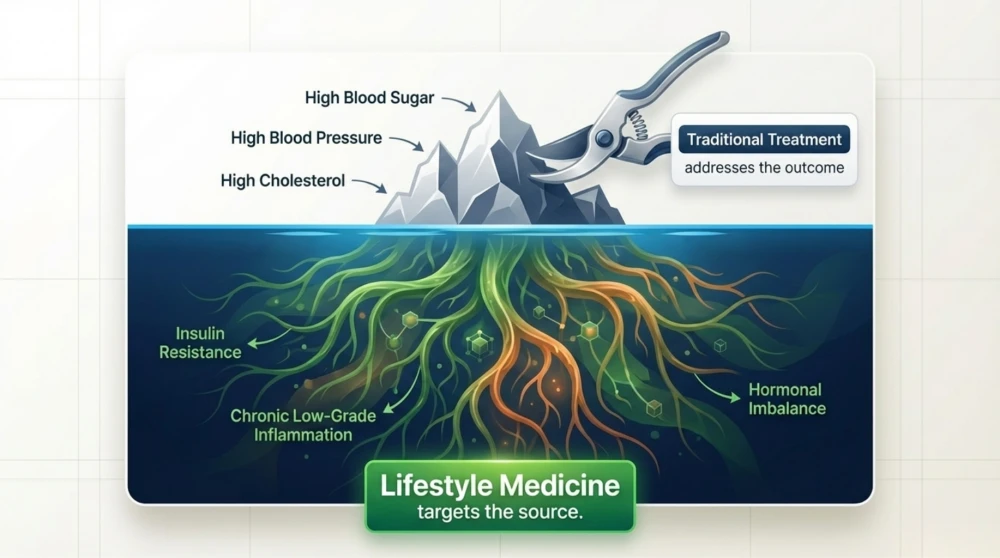
Most chronic diseases share common underlying mechanisms:
- Insulin resistance
- Chronic low-grade inflammation
- Hormonal imbalance
Traditional treatment often addresses the outcome:
- High blood sugar → glucose-lowering drugs
- High blood pressure → antihypertensives
- High cholesterol → statins
These treatments are important, but they do not always address the underlying cause. Lifestyle medicine targets the source of the problem, not just the result.
Why Chronic Diseases Are Rising Rapidly
The rise in lifestyle diseases is closely linked to modern living patterns:
- Long sitting hours
- Ultra-processed food consumption
- Poor sleep schedules
- High stress levels
These factors disrupt metabolism gradually. The damage is silent but progressive. You can explore this further here: modern work culture and lifestyle diseases.
Why Patients Are No Longer Satisfied with Symptom-Based Care
Patients today are more aware and informed than before. They are asking important questions:
- Why did I develop this condition?
- Can it be reversed?
- Do I have to take medication lifelong?
This shift in patient mindset is one of the strongest drivers behind the growth of lifestyle medicine. People are now looking for long-term solutions, root cause treatment, and better quality of life.
The Early Advantage of Lifestyle Intervention
One of the biggest strengths of lifestyle medicine is timing. Most diseases go through a silent phase before diagnosis:
- Prediabetes before diabetes
- Early fatty liver before liver damage
- Borderline BP before hypertension
At this stage:
- Symptoms are absent
- Damage is minimal
- Reversal is possible
This is where lifestyle medicine has maximum impact. You can read more about this here: why early health evaluation matters.
How Lifestyle Medicine Improves Clinical Outcomes
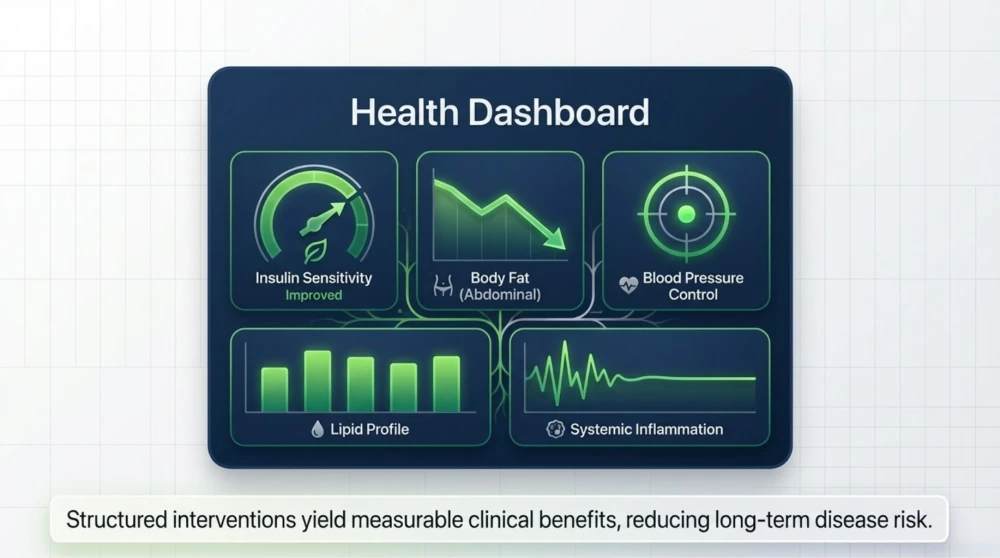
Lifestyle medicine is not a theoretical concept. It has measurable clinical benefits across multiple metabolic conditions. Structured lifestyle interventions can lead to:
- Improved insulin sensitivity
- Reduction in body fat (especially abdominal fat)
- Better blood pressure control
- Improved lipid profile
- Reduced systemic inflammation
A growing body of clinical evidence supports that targeted lifestyle changes can significantly improve metabolic parameters and reduce long-term disease risk.
Can Lifestyle Medicine Reduce Medication Dependence?
One of the most important benefits patients notice is a gradual reduction in medication dependence when lifestyle correction is applied consistently. This does not mean medications are unnecessary. They are often essential, especially in moderate to advanced disease.
However, with proper lifestyle intervention:
- Dosage requirements may reduce
- Disease progression can slow down
- Some early conditions may reverse
For example:
- Prediabetes may return to normal range
- Early type 2 diabetes may improve significantly
- Fatty liver may reverse in early stages
The key factor is early and consistent intervention.
Why Lifestyle Medicine Focuses on Sustainability
A major limitation of conventional advice is that it is often not sustainable. Patients are commonly advised:
- Strict diets
- Intense exercise routines
- Short-term programs
These approaches often fail because they are difficult to maintain. Lifestyle medicine emphasizes:
- Practical changes
- Gradual improvement
- Habit formation
This ensures long-term adherence, which is essential for lasting results.
The Role of Behavior Change in Healthcare
One of the most powerful aspects of lifestyle medicine is its focus on behavior. Health outcomes are strongly influenced by daily habits:
- What you eat
- How much you move
- How well you sleep
- How you manage stress
Changing these habits requires:
- Awareness
- Consistency
- Structured guidance
This is why doctor-guided programs often achieve better results than self-directed attempts. You can explore this structured approach here: why structured lifestyle programs work.
Common Myths About Lifestyle Medicine
| Myth | Reality |
|---|---|
| It works slowly | Early improvements can be seen within weeks |
| It is only about diet | It includes sleep, stress, activity, and behavior |
| It replaces medical treatment | It complements and strengthens medical care |
Why Healthcare Systems Are Adapting This Approach
Healthcare systems worldwide are under increasing pressure due to:
- Rising chronic disease burden
- High long-term treatment costs
- Increasing patient load
Lifestyle medicine offers a scalable solution by:
- Reducing disease incidence
- Improving long-term outcomes
- Lowering healthcare costs
This is why it is being integrated into modern healthcare models globally.
The Future of Healthcare: From Treatment to Prevention
Healthcare is gradually shifting from a reactive model to a proactive one. Earlier, the focus was diagnose disease, treat symptoms, and prevent complications. Now, the focus is evolving toward:
- Early risk detection
- Root cause correction
- Disease prevention and reversal
Lifestyle medicine plays a central role in this transition.
Integration with Modern Medical Practice
Lifestyle medicine does not replace conventional medicine. It strengthens it. The ideal approach is integrated care:
- Medication for control when needed
- Lifestyle intervention for long-term correction
This combination improves outcomes significantly compared to either approach alone.
Why a Doctor-Guided Approach Matters
Lifestyle advice is widely available today, but not all of it is accurate or suitable for every individual. Medical supervision ensures:
- Personalized planning based on lab reports
- Safe medication adjustments
- Monitoring of progress and response
This is particularly important for conditions like diabetes, hypertension, thyroid disorders, and fatty liver. A structured, doctor-led approach improves both safety and effectiveness.
Take-Home Messages
- Most chronic diseases are strongly influenced by daily lifestyle patterns
- Early intervention offers the best chance of prevention and reversal
- Lifestyle medicine focuses on root cause, not just symptom control
- Consistency matters more than intensity
- Medical supervision improves long-term outcomes
References
- Lifestyle Medicine and Chronic Disease Prevention (2021)
- Effect of Lifestyle Intervention on Type 2 Diabetes (2021)
- Impact of Diet and Physical Activity on Metabolic Health (2022)
- Lifestyle Modification and Cardiovascular Risk Reduction (2022)
- Role of Sleep and Stress in Metabolic Disorders (2023)
You can book a consultation here: Book Appointment
Written by Dr. Pankaj Kumar, General & Lifestyle Physician, Dwarka, New Delhi