












- 22nd April 2026
Table of Contents
- Weight loss slows not because your effort failed, but because your body adapts
- The Body Is Designed to Resist Weight Loss
- Reduction in Metabolic Rate
- Loss of Both Fat and Muscle
- Hormonal Adaptation
- Hidden Increase in Calorie Intake
- Decrease in Daily Activity (NEAT)
- Adaptation to Exercise Routine
- Water Retention and Fluctuations
- Psychological Fatigue
- Why Plateaus Are a Normal Phase
- How to Break a Weight Loss Plateau
- 1. Reassess Your Calorie Intake
- 2. Focus on Muscle Preservation
- 3. Increase Activity, Not Just Exercise
- 4. Modify Your Exercise Routine
- 5. Improve Sleep and Stress Management
- Why Patience Is Important
- Practical Take-Home Message
Weight loss slows not because your effort failed, but because your body adapts
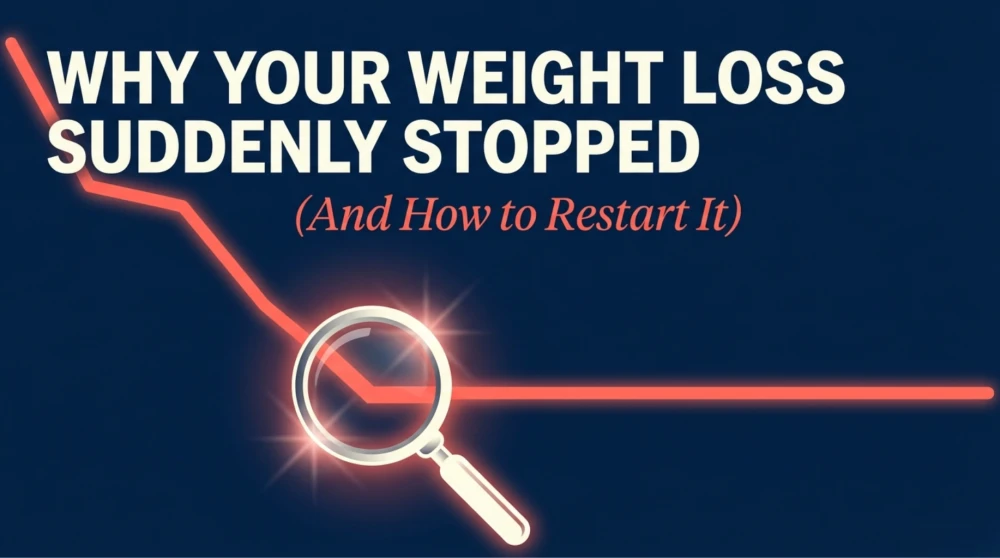
One of the most frustrating experiences during dieting is when weight loss suddenly stops despite continuing the same effort. Many people initially lose weight, feel motivated, and then hit a phase where the scale does not move.
This phase is called a weight loss plateau. It is not a mistake or failure. It is a natural physiological response of the body.
The Body Is Designed to Resist Weight Loss
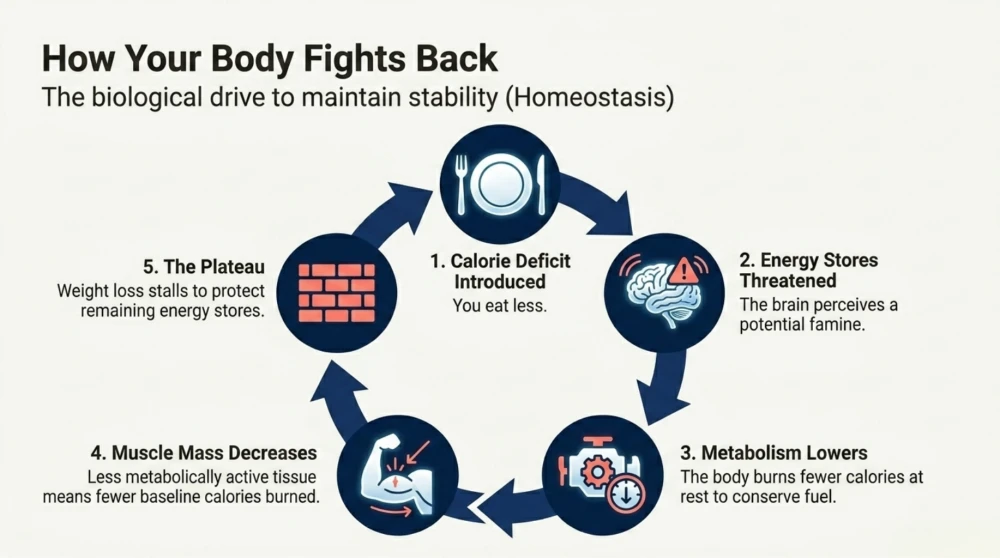
From a biological perspective, the body tries to maintain stability. When calorie intake reduces, the body does not simply continue losing weight indefinitely. Instead, it adapts to protect energy stores.
This adaptation slows down further weight loss and creates a plateau.
Reduction in Metabolic Rate
As weight decreases, the body requires fewer calories to function. This means the same diet that initially created a calorie deficit may no longer be sufficient over time.
Additionally, the body actively lowers its metabolic rate to conserve energy, making fat loss slower.
Loss of Both Fat and Muscle
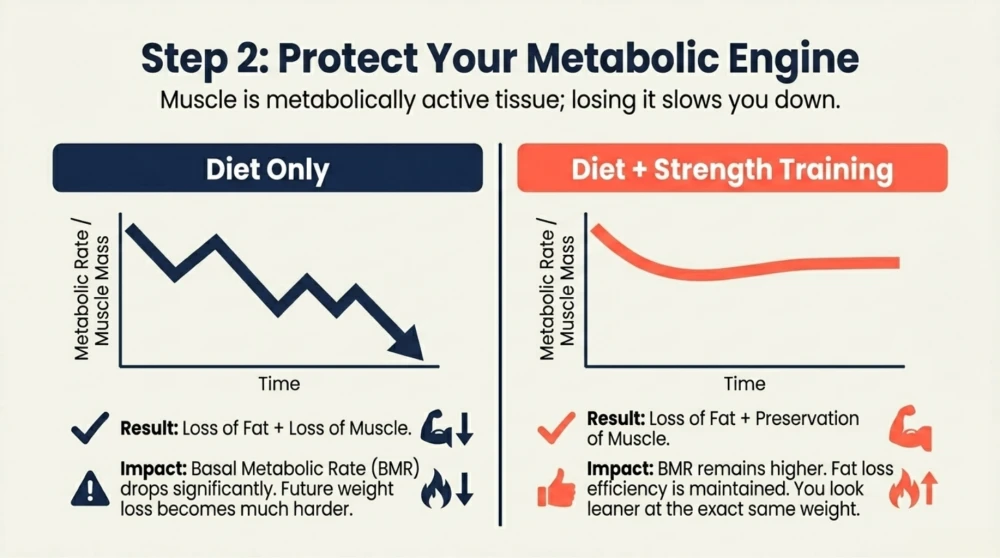
During dieting, weight loss does not come only from fat. Some amount of muscle is also lost, especially if protein intake and strength training are inadequate.
Since muscle is metabolically active, losing muscle further reduces calorie burn, contributing to a plateau.
Hormonal Adaptation
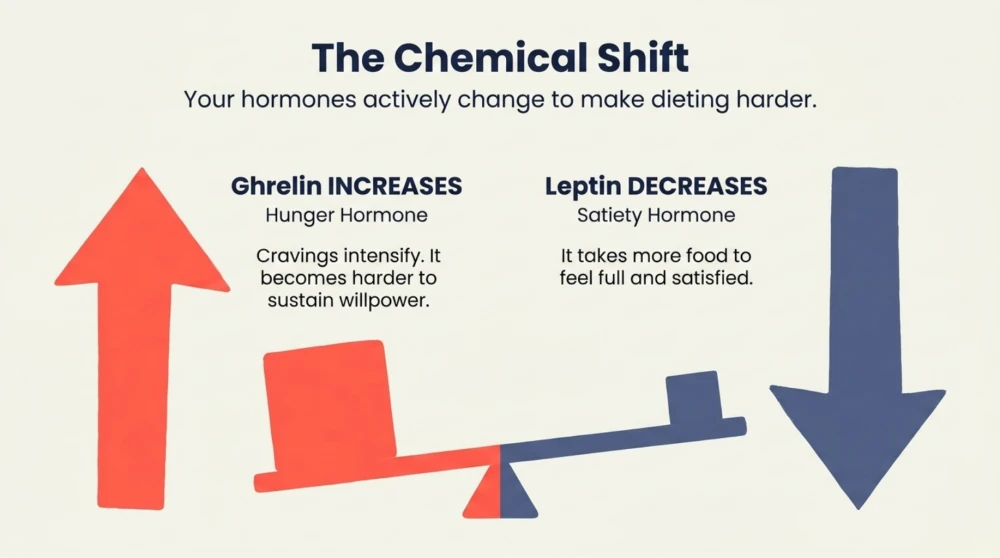
Hormones regulating hunger and metabolism change during dieting. Hunger hormones increase, while satiety hormones decrease. This makes it harder to sustain the same level of control.
These changes are part of the body’s survival mechanism.
Hidden Increase in Calorie Intake
Over time, people often become less strict with their diet without realizing it. Small changes like slightly larger portions, extra snacks, or “just a bite” here and there can gradually increase calorie intake.
Even minor increases can eliminate the calorie deficit, making weight loss stall despite feeling that the same routine is being followed.
Decrease in Daily Activity (NEAT)
Non-exercise activity thermogenesis (NEAT), which includes daily movements like walking, standing, and general activity, often decreases during dieting.
As energy intake reduces, the body subconsciously conserves energy by reducing movement. This lowers total calorie expenditure without the person noticing it.
Adaptation to Exercise Routine
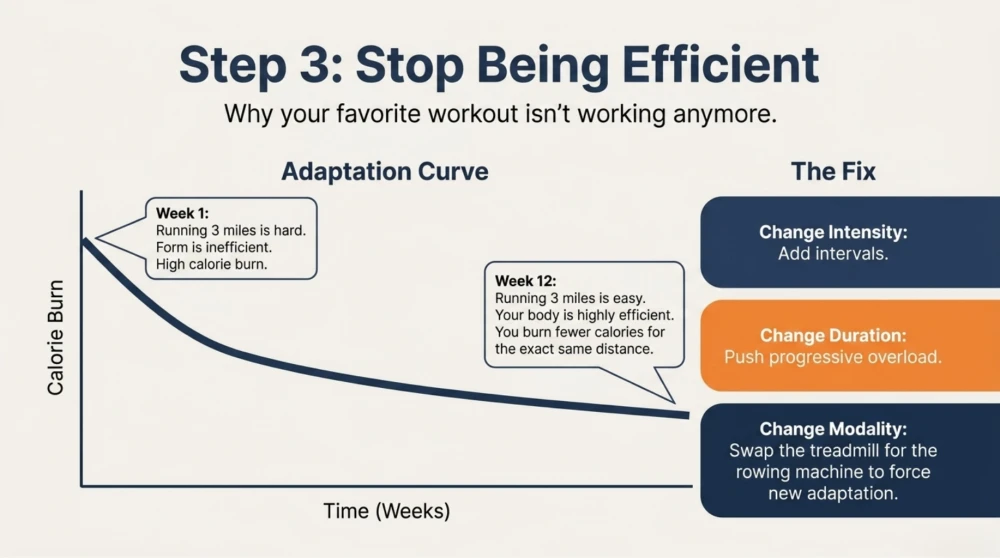
When the same exercise routine is repeated over time, the body becomes more efficient at performing it. This means fewer calories are burned for the same activity compared to when you first started.
Without progression or variation, exercise loses some of its impact on weight loss.
Water Retention and Fluctuations
Sometimes the plateau is not actual fat stagnation but temporary water retention. Factors like stress, high sodium intake, hormonal changes, or poor sleep can cause the body to hold water.
This can mask fat loss on the weighing scale and create the impression that progress has stopped.
Psychological Fatigue
Sustaining a calorie deficit over long periods can lead to mental fatigue. This may result in reduced consistency, occasional overeating, or loss of motivation.
These subtle changes can contribute to a plateau without being obvious.
Why Plateaus Are a Normal Phase
A plateau is not a sign that the diet is ineffective. It indicates that the body has adapted to the current routine. This is expected in any long-term weight loss process.
Understanding this helps reduce frustration and allows for a more structured approach to overcoming it.
How to Break a Weight Loss Plateau
The key to overcoming a plateau is not to drastically cut calories further, but to understand what has changed and adjust your approach accordingly. Small, targeted changes are usually more effective than extreme measures.
1. Reassess Your Calorie Intake
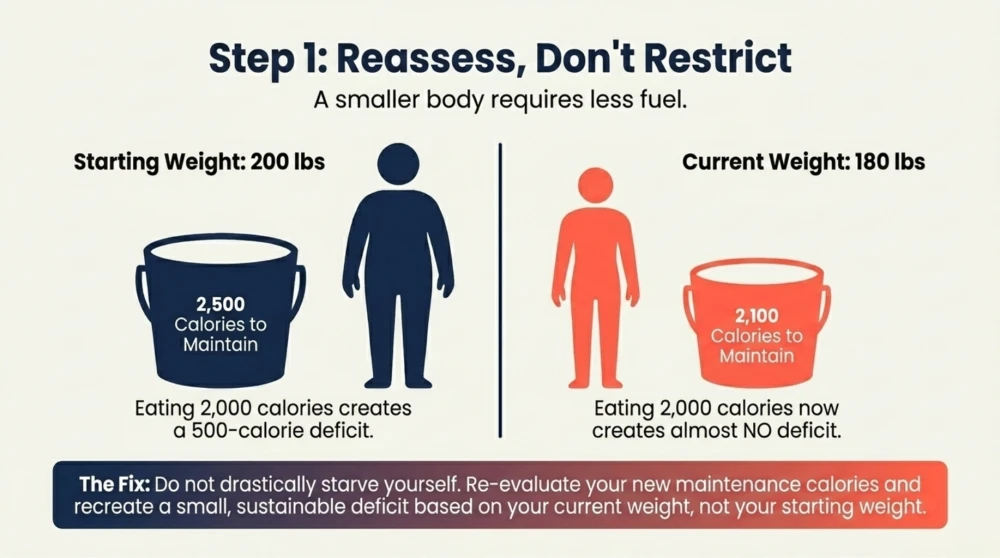
As your body weight decreases, your calorie needs also reduce. Re-evaluating portion sizes and food choices can help recreate a calorie deficit without excessive restriction.
2. Focus on Muscle Preservation
Increasing protein intake and incorporating strength training helps maintain muscle mass. This supports metabolic rate and improves fat loss efficiency.
3. Increase Activity, Not Just Exercise
Improving overall daily movement, such as walking more or reducing sitting time, can significantly increase calorie expenditure. This is often more sustainable than adding intense workouts.
4. Modify Your Exercise Routine
Changing intensity, duration, or type of exercise prevents the body from adapting completely. Progressive overload or variation helps maintain effectiveness.
5. Improve Sleep and Stress Management
Sleep and stress directly affect hormones related to hunger and fat storage. Addressing these factors can help break a plateau without changing diet significantly.
Why Patience Is Important
Weight loss is not a linear process. Plateaus are part of the journey and often indicate that the body is adjusting to a new state. Reacting with extreme restriction can be counterproductive.
A steady and consistent approach leads to more sustainable results.
Practical Take-Home Message
Weight loss plateaus occur due to metabolic adaptation, reduced calorie needs, and changes in daily habits. They are a normal phase, not a failure.
Making small, structured adjustments in diet, activity, and lifestyle can help restart progress effectively.
You can book a consultation here: Book Appointment
Written by Dr. Pankaj Kumar, General & Lifestyle Physician, Dwarka, New Delhi