












- 26th September 2026
Table of Contents
- Exercising but Not Losing Weight Does Not Automatically Mean Exercise Is Failing
- What Does Your Weighing Scale Actually Measure?
- What Is Body Recomposition?
- Why Waist Circumference Can Tell You Something the Scale Cannot
- Can Exercise Reduce Visceral Fat Without Major Weight Loss?
- Why Visceral Fat Matters So Much
- Exercise Can Improve Insulin Sensitivity Before Major Weight Loss Occurs
- Can Blood Sugar Improve Without Losing Weight?
- Why HbA1c May Improve Even if Your Weight Barely Changes
- Exercise Can Improve Blood Pressure Without Major Weight Loss
- Exercise Can Improve Triglycerides and Lipid Metabolism
- Your Heart Can Become Fitter Without the Scale Moving
- What Happens to Resting Heart Rate?
- Exercise Can Improve Muscle Strength Without Changing Body Weight
- Why Muscle Preservation Matters During Weight Loss
- Can Muscle Gain Hide Fat Loss on the Scale?
- Why Does Weight Sometimes Increase When You Start Exercising?
- Muscle Glycogen Also Holds Water
- Daily Weight Is Noisy Data
- One Kilogram of Scale Change Is Not Necessarily One Kilogram of Fat
- How Should You Track Weight More Meaningfully?
- What Else Should You Track Besides Weight?
- Can You Become Metabolically Healthier Without Becoming Lighter?
- But Does This Mean Weight Loss Does Not Matter?
- Why Exercise Alone Often Produces Less Weight Loss Than People Expect
- Do Not “Eat Back” Every Exercise Calorie
- Exercise Is Much More Than a Calorie-Burning Tool
- Why Are You Exercising but Not Losing Weight?
- Exercise Does Not Guarantee a Calorie Deficit
- Compensatory Eating Is Easy to Miss
- Watch Liquid Calories
- Should You Trust the Calories Burned on Your Smartwatch?
- What Is NEAT?
- Your Workout May Increase While the Rest of Your Movement Decreases
- What Is Metabolic Adaptation?
- Can Exercise Slow Your Metabolism?
- Why Does the Scale Sometimes Stop Moving After Starting Strength Training?
- But Do Not Blame Everything on Muscle Gain
- How Can You Tell if You Are Losing Fat Without Losing Weight?
- How Should You Measure Waist Circumference?
- What About Body-Fat Scales?
- Can DEXA Measure Body Composition Better?
- Why Can Exercise Cause Temporary Water Retention?
- Why Does Carbohydrate Intake Change Scale Weight?
- Salt Can Change the Scale Too
- Why Menstrual-Cycle Changes Matter
- Constipation Can Affect Body Weight
- Cardio or Strength Training: Which Is Better for Fat Loss?
- Does More Cardio Always Mean More Weight Loss?
- Why Resistance Training Matters During a Calorie Deficit
- How Much Protein Do You Need?
- Should Protein Be Spread Across the Day?
- Does Exercising on an Empty Stomach Burn More Fat?
- Does Sweating More Mean You Are Burning More Fat?
- Does Soreness Mean the Workout Was Effective?
- Should You Exercise Every Day to Lose Weight?
- What if You Are Doing 10,000 Steps but Not Losing Weight?
- What About Short Walks After Meals?
- Why Sleep Can Affect Your Weight-Loss Efforts
- Can Stress Prevent Weight Loss?
- Can Medicines Make Weight Loss More Difficult?
- Is Hypothyroidism the Reason You Cannot Lose Weight?
- What About PCOS?
- When Should You Actually Change Your Programme?
- Do Not Respond to a Plateau by Starving Yourself
- How Do You Know Whether Your Exercise Programme Is Actually Working?
- 1. Start With the Weight Trend, Not Today's Weight
- 2. Measure Your Waist
- 3. Consider Waist-to-Height Ratio
- 4. Monitor Blood Pressure
- 5. Look at Glucose and HbA1c When Relevant
- 6. Check Triglycerides and the Overall Lipid Profile
- 7. Fatty Liver Can Improve Without Dramatic Weight Loss
- 8. Track Your Resting Heart Rate
- 9. Track Your Cardiorespiratory Fitness
- 10. VO₂ Max Is Not Just an Athlete's Number
- 11. Measure Strength
- A Better Metabolic Progress Dashboard
- What Is a Realistic Amount of Weight Loss From Exercise Alone?
- What if You Exercise Regularly but Eat Poorly?
- Can You Be Fit and Still Have Obesity?
- When Should a Weight-Loss Plateau Be Investigated?
- Is Insulin Resistance Preventing You From Losing Weight?
- Is Cortisol Blocking Your Weight Loss?
- Do You Need More Exercise or Less Food?
- A Practical 12-Week Progress Dashboard
- A Practical Exercise Framework for Metabolic Health
- If Fat Loss Is Also the Goal, Add These Principles
- Common Myths About Exercising but Not Losing Weight
- Myth 1: If the Scale Is Not Falling, Exercise Is Not Working
- Myth 2: Muscle Weighs More Than Fat
- Myth 3: Stable Weight Always Means I Am Gaining Muscle and Losing Fat
- Myth 4: Sweating More Means More Fat Loss
- Myth 5: Fasted Cardio Burns More Body Fat Over Time
- Myth 6: Cardio Is for Fat Loss and Weights Are Only for Muscle
- Myth 7: Ten Thousand Steps Guarantees Weight Loss
- Myth 8: Exercise Allows Me to Eat Whatever I Want
- Myth 9: A Weight-Loss Plateau Means My Metabolism Has Stopped
- Myth 10: Only Weight Loss Improves Metabolic Health
- When the Scale Is Not Moving, Ask These 10 Questions
- Key Takeaways
- References
Exercising but Not Losing Weight? Your Metabolic Health May Still Be Improving
You have been walking regularly.
You have started strength training.
You are exercising four or five days a week.
Your clothes may even fit slightly better.
But when you step on the weighing scale, almost nothing has changed.
For many people, this is frustrating.
They begin to wonder:
“If I am exercising but not losing weight, is all this effort actually doing anything?”
Very often, the answer is yes.
One of the biggest mistakes we make when judging the benefits of exercise is assuming that body weight is the only meaningful outcome.
Your weighing scale measures your total body mass.
It does not tell you directly what is happening to your visceral fat, muscle, insulin sensitivity, blood glucose, blood pressure, triglycerides, cardiorespiratory fitness or liver fat.
Some of these can improve even when your weight changes very little.
That does not mean weight is irrelevant. For someone with obesity, losing excess body weight can produce substantial metabolic benefits.
But weight loss and metabolic improvement are related without being exactly the same thing.
Exercising but Not Losing Weight Does Not Automatically Mean Exercise Is Failing
Imagine that someone starts exercising at a body weight of 82 kg.
Eight weeks later, the scale still shows 81.5 kg.
At first glance, the programme may appear unsuccessful.
But what if during those eight weeks:
- Waist circumference decreased by 4 cm.
- Fasting glucose improved.
- Triglycerides fell.
- Blood pressure improved.
- Walking pace increased.
- Resting heart rate decreased.
- Strength improved substantially.
- The person can now climb three flights of stairs without stopping.
Would it be reasonable to say that nothing happened simply because body weight decreased by only half a kilogram?
No.
The weighing scale is useful, but it is only one measurement.
What Does Your Weighing Scale Actually Measure?
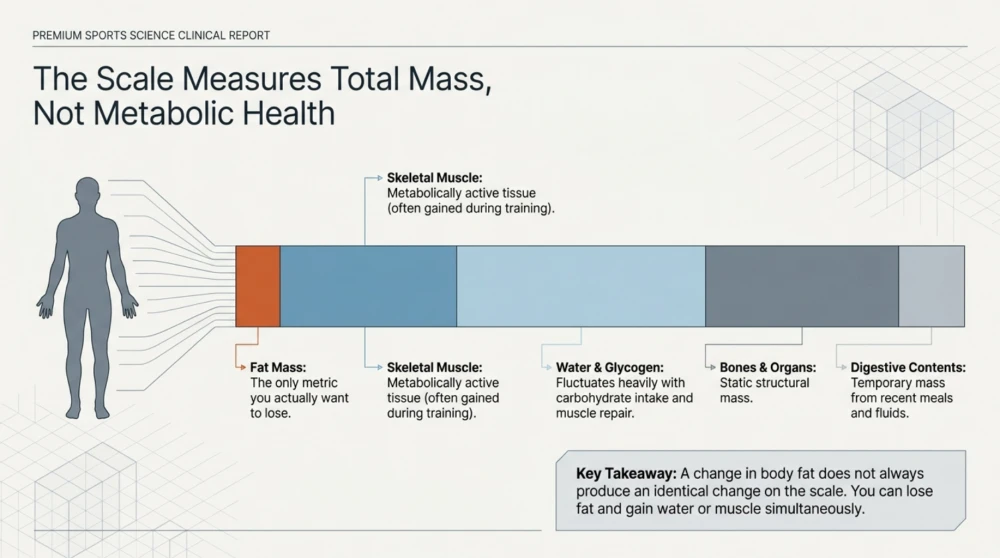
A standard weighing scale measures total body mass.
That number includes much more than body fat.
Your body weight includes:
- Fat mass.
- Skeletal muscle.
- Body water.
- Bones.
- Organs.
- Glycogen stored in muscle and liver.
- Food and fluid currently inside the digestive system.
Therefore, a change in body fat does not always produce an identical change on the scale.
Your Weight Can Stay Similar While Your Body Composition Changes
Suppose a person loses some fat while maintaining or gaining a modest amount of lean tissue through resistance training.
Total body weight may change relatively little even though body composition has improved.
This is one reason people who are exercising but not losing weight should avoid judging progress from body weight alone.
What Is Body Recomposition?
Body recomposition refers to a change in the proportions of fat mass and lean tissue rather than simply a change in total body weight.
For example, imagine a hypothetical person whose body composition changes like this:
| Measurement | Before | After |
|---|---|---|
| Body weight | 80 kg | 79.5 kg |
| Fat mass | 28 kg | 25 kg |
| Lean mass | 52 kg | 54.5 kg |
| Waist circumference | 101 cm | 95 cm |
This example is deliberately simplified, and real-world body-composition measurements have limitations.
But it demonstrates an important principle.
A scale showing almost no weight loss does not necessarily mean there has been no fat loss.
Why Waist Circumference Can Tell You Something the Scale Cannot
For metabolic health, where fat is stored matters.
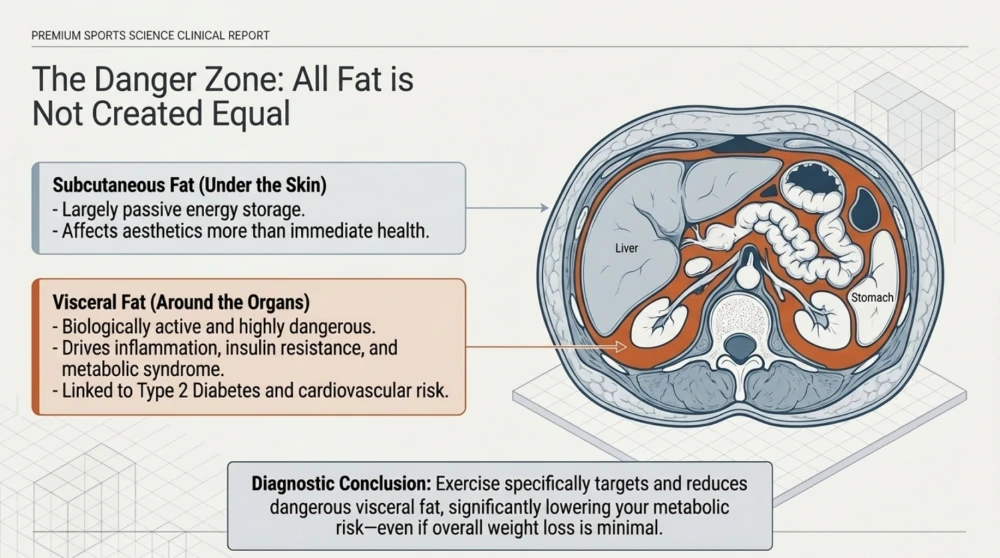
Fat stored around the abdominal organs—called visceral adipose tissue—is metabolically different from much of the subcutaneous fat stored beneath the skin.
Higher visceral adiposity is strongly associated with insulin resistance, type 2 diabetes, dyslipidaemia and cardiovascular risk.
A Smaller Waist Can Be Meaningful Even if Weight Is Similar
If someone has been exercising consistently and their waist circumference falls while body weight remains relatively stable, that may represent an important improvement in body composition and central adiposity.
This is why I would not assess a metabolic lifestyle programme using body weight alone.
Can Exercise Reduce Visceral Fat Without Major Weight Loss?
Yes.
Research supports the concept that exercise can reduce abdominal and visceral adiposity even when overall weight loss is relatively modest.
This matters because visceral fat is closely linked with metabolic disease.
The goal should therefore not always be interpreted as:
“How many kilograms did I lose?”
A more useful question can sometimes be:
“What kind of tissue am I losing, and what is happening to my metabolic risk?”
Why Visceral Fat Matters So Much
Adipose tissue is not simply passive energy storage.
Visceral adipose tissue is biologically active and is associated with altered fatty-acid metabolism, inflammatory signalling and insulin resistance.
Excess visceral fat is commonly seen alongside:
- Prediabetes.
- Type 2 diabetes.
- High triglycerides.
- Low HDL cholesterol.
- Hypertension.
- Fatty liver.
- Metabolic syndrome.
Reducing central adiposity can therefore be metabolically valuable even when the total change in body weight appears disappointing.
Exercise Can Improve Insulin Sensitivity Before Major Weight Loss Occurs
This is one of the most important reasons not to judge exercise solely from the scale.
Skeletal muscle is a major site for glucose disposal.
When muscles contract during exercise, they increase their demand for energy and glucose.
Regular exercise also improves several mechanisms involved in insulin action.
Think of Muscle as a Major Metabolic Organ
Muscle is not useful only for appearance or physical strength.
It plays a major role in glucose metabolism.
After eating carbohydrates, insulin helps glucose move from the bloodstream into tissues, including skeletal muscle.
Regularly active muscle generally handles glucose more effectively than chronically inactive muscle.
Can Blood Sugar Improve Without Losing Weight?
Yes.
Physical activity can improve insulin sensitivity and glucose regulation even without dramatic weight reduction.
This is particularly relevant for people with insulin resistance, prediabetes or type 2 diabetes.
Post-Meal Activity Can Be Particularly Useful
Muscle contractions increase glucose utilisation.
This is one reason walking after meals can help reduce post-meal glucose excursions in many people.
You do not need to lose one kilogram during the walk for your muscles to have used glucose.
The metabolic effect occurs because you moved.
Why HbA1c May Improve Even if Your Weight Barely Changes
HbA1c reflects average glucose exposure over the preceding several weeks, with greater influence from more recent glucose levels.
If regular exercise improves insulin sensitivity and reduces glucose excursions, HbA1c can improve even if the person's body weight does not fall dramatically.
Of course, the magnitude of improvement varies according to diabetes severity, medications, diet, exercise volume and other factors.
Exercise Can Improve Blood Pressure Without Major Weight Loss
Regular aerobic activity is associated with improved blood pressure regulation.
Exercise influences vascular function, autonomic regulation and other cardiovascular mechanisms.
Weight reduction can further improve blood pressure when excess weight is present, but it is not the only pathway through which exercise helps.
Imagine This Scenario
A patient starts walking regularly and adds two resistance-training sessions per week.
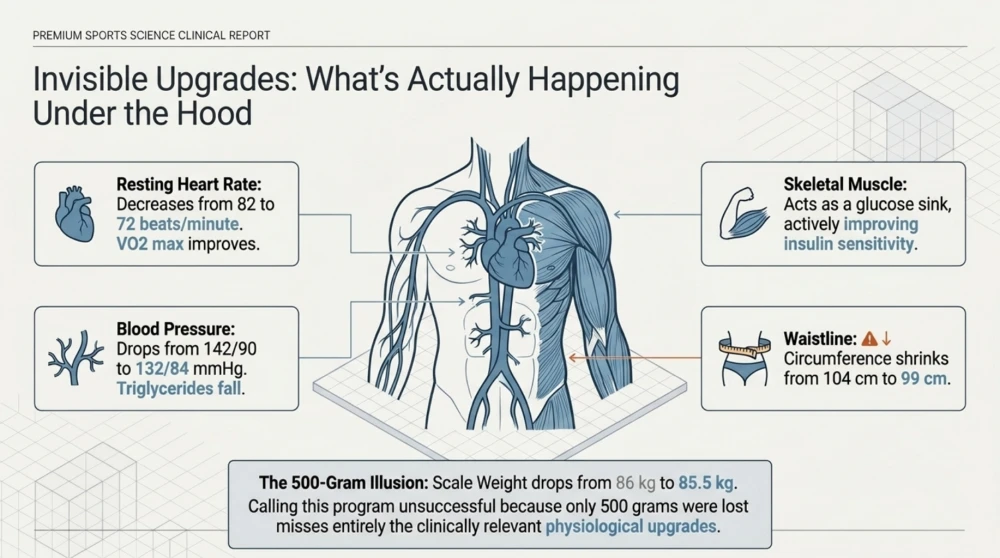
Body weight: 86 kg → 85.5 kg
Waist: 104 cm → 99 cm
Blood pressure: 142/90 → 132/84 mmHg
Resting heart rate: 82 → 72 beats/minute
Walking tolerance: substantially improved
Calling this programme unsuccessful because only 500 grams were lost would miss most of the clinically relevant improvement.
Exercise Can Improve Triglycerides and Lipid Metabolism
Regular physical activity influences lipid metabolism as well.
Responses vary among individuals, but exercise can contribute to lower triglycerides and improvements in other aspects of the lipid profile.
These effects become particularly important when exercise is combined with improved dietary quality, weight management and control of diabetes.
Your Heart Can Become Fitter Without the Scale Moving
Cardiorespiratory fitness describes the ability of the cardiovascular and respiratory systems to deliver oxygen to working muscles and the ability of those muscles to use it.
One commonly discussed measure is VO₂ max or VO₂ peak.
Regular aerobic training can improve cardiorespiratory fitness even when weight loss is modest.
Fitness Is a Health Outcome in Its Own Right
If you previously became breathless after climbing one flight of stairs but can now climb three, something important has changed physiologically.
Your cardiovascular system has adapted.
Your muscles have adapted.
Your exercise capacity has improved.
The weighing scale cannot display any of these adaptations.
What Happens to Resting Heart Rate?
With consistent aerobic training, the cardiovascular system often becomes more efficient.
In some people, resting heart rate gradually decreases as fitness improves.
This does not happen identically in everyone because heart rate is also influenced by medications, stress, sleep, hydration, illness and many other factors.
But improved exercise tolerance and cardiovascular fitness are meaningful outcomes even without major weight loss.
Exercise Can Improve Muscle Strength Without Changing Body Weight
Resistance training produces neurological and muscular adaptations.
You may notice that:
- Weights that initially felt heavy become easier.
- You can perform more repetitions.
- You can get up from the floor more easily.
- Climbing stairs becomes easier.
- Carrying groceries requires less effort.
- Your posture and physical confidence improve.
These are genuine physiological improvements.
Why Muscle Preservation Matters During Weight Loss
When people lose body weight through calorie restriction, the lost weight is not necessarily 100% fat.
Some lean tissue can also be lost.
Resistance exercise provides an important stimulus to preserve muscle during weight reduction, particularly when combined with adequate protein intake.
The Lowest Possible Body Weight Is Not the Goal
Consider two people who both lose 10 kg.
One loses predominantly fat while preserving most of their muscle.
The other loses substantial muscle along with fat.
The number on the scale may look identical, but the physiological result is not.
This is particularly important after the age of 40, when preservation of muscle mass and strength becomes increasingly relevant for long-term metabolic and functional health.
Can Muscle Gain Hide Fat Loss on the Scale?
It can contribute, especially in people who are new to resistance training, returning after a long break or training progressively.
But this explanation should not be exaggerated.
Most people do not suddenly gain several kilograms of muscle within a few weeks.
If someone's weight has not changed for months, we should not automatically assume that large muscle gains are perfectly offsetting large amounts of fat loss.
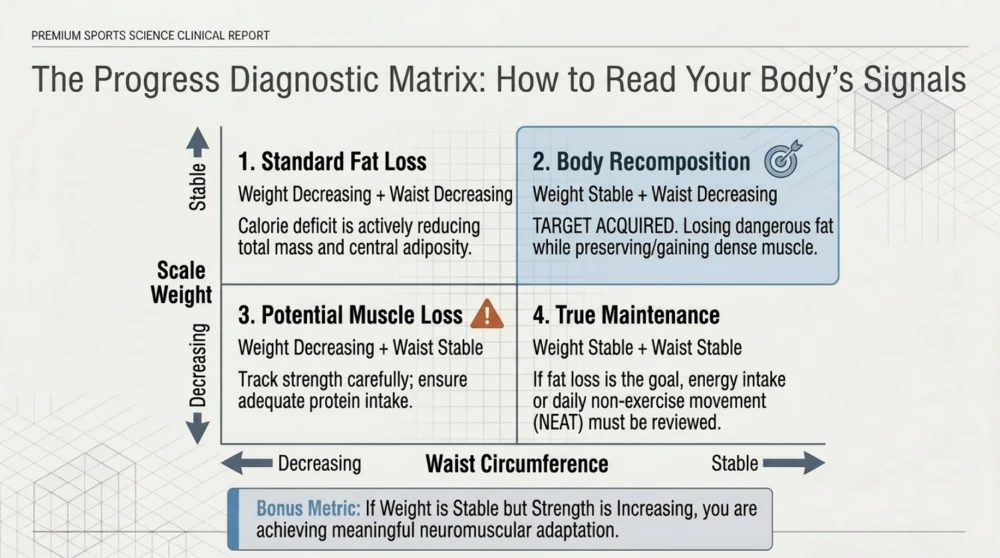
Waist and Body-Composition Trends Can Help
If weight is stable but waist circumference is clearly decreasing and strength is increasing, body recomposition becomes a more plausible explanation.
If both weight and waist circumference are increasing, the explanation is likely different.
Why Does Weight Sometimes Increase When You Start Exercising?
Short-term changes in body weight can occur even when someone has started losing fat.
One reason is water.
Exercise—particularly a new resistance-training programme—creates stress within muscle tissue followed by repair and adaptation.
Temporary changes in inflammation and tissue water can influence scale weight.
Muscle Glycogen Also Holds Water
Carbohydrate is stored in muscle partly as glycogen.
When glycogen storage increases, additional water is stored with it.
A person who begins exercising regularly may therefore experience changes in glycogen and associated water storage.
This can temporarily obscure small changes in body fat on the scale.
Daily Weight Is Noisy Data
Body weight can fluctuate from one day to another because of:
- Salt intake.
- Carbohydrate intake.
- Hydration.
- Menstrual-cycle-related fluid changes.
- Constipation.
- Food still present in the digestive tract.
- Alcohol intake.
- Changes in glycogen.
- Recent exercise.
This is why comparing Tuesday's weight with Wednesday's weight often tells you very little about fat loss.
One Kilogram of Scale Change Is Not Necessarily One Kilogram of Fat
This is an important concept.
If your weight increases by 1.5 kg after a restaurant meal, you almost certainly did not gain 1.5 kg of body fat overnight.
Much of the difference may reflect food volume, sodium, carbohydrate-associated water and fluid balance.
The same principle works in the opposite direction.
A dramatic overnight weight reduction is not necessarily dramatic overnight fat loss.
How Should You Track Weight More Meaningfully?
If body weight is an important goal, look at the trend rather than individual readings.
Measure under reasonably consistent conditions—for example, in the morning after using the toilet and before breakfast.
A weekly average can be more informative than reacting emotionally to each daily fluctuation.
What Else Should You Track Besides Weight?
For someone exercising but not losing weight, I would consider a broader progress dashboard.
| Measure | What It Can Tell You |
|---|---|
| Body-weight trend | Whether total body mass is changing over time |
| Waist circumference | Useful practical marker of central adiposity |
| Strength | Whether muscular performance is improving |
| Walking or running pace | Practical indicator of functional and aerobic improvement |
| Resting heart rate | Can provide additional information about cardiovascular adaptation when interpreted appropriately |
| Blood pressure | Important cardiovascular health marker |
| HbA1c or glucose | Can show changes in glucose regulation when clinically relevant |
| Triglycerides and lipid profile | Provides information about metabolic and cardiovascular risk |
| Exercise capacity | Shows whether everyday physical tasks are becoming easier |
Can You Become Metabolically Healthier Without Becoming Lighter?
Yes.
This is the central message of this article.
Regular physical activity can improve cardiorespiratory fitness, muscular fitness, glucose regulation, blood pressure and several other health outcomes even when the reduction in body weight is smaller than expected.
WHO guidance therefore recommends physical activity because of its broad health benefits—not merely because it burns calories.
For adults, the general recommendation is at least 150–300 minutes of moderate-intensity aerobic activity per week, or an equivalent amount of vigorous activity, together with muscle-strengthening activity on at least two days per week.
But Does This Mean Weight Loss Does Not Matter?
No.
This is an equally important part of the discussion.
If someone has obesity and excess adiposity, meaningful weight loss can produce additional benefits for diabetes risk, blood pressure, fatty liver, mobility, sleep apnoea and other obesity-related conditions.
Saying that exercise is beneficial without weight loss should never be interpreted as saying that excess adiposity is irrelevant.
Both Ideas Can Be True
Exercise can improve your health even before major weight loss occurs.
And:
If excess body fat is contributing to disease, reducing it may provide additional health benefits.
These statements are complementary, not contradictory.
Why Exercise Alone Often Produces Less Weight Loss Than People Expect
People frequently overestimate how many calories exercise burns and underestimate how easily those calories can be replaced through food.
A workout may feel physically demanding, creating the impression that a very large energy deficit has been generated.
But body-weight regulation is more complicated.
Appetite may increase. Food intake may rise unconsciously. Some people move less during the rest of the day after a demanding workout.
The body can also adapt to changes in energy expenditure.
This Does Not Make Exercise Pointless
It simply explains why: exercise for health and exercise as the only strategy for substantial weight loss are not exactly the same thing. When meaningful fat loss is the goal, dietary energy intake usually needs attention as well.
Do Not “Eat Back” Every Exercise Calorie
Another common problem is compensatory eating.
A person walks for 45 minutes and then assumes they have earned a large snack, sweetened coffee or restaurant meal.
The additional intake can easily offset the energy expended during exercise.
Wearable devices can also overestimate or underestimate energy expenditure, so treating the displayed calorie number as an exact food allowance is unreliable.
Exercise Is Much More Than a Calorie-Burning Tool
This may be the most important mindset change.
If exercise is viewed only as a way to burn calories, its success will always be judged by the scale.
But exercise is also a stimulus that tells the body to adapt.
The heart becomes better conditioned.
Muscles become stronger.
Glucose handling can improve.
Exercise capacity increases.
Physical function improves.
Central adiposity can decrease.
These adaptations have health value whether or not the scale rewards you immediately.
Why Are You Exercising but Not Losing Weight?
Once we accept that exercise can improve metabolic health without producing dramatic weight loss, another question becomes important:
Why isn't the scale moving?
Sometimes the answer is encouraging: you may be losing fat while preserving or gaining some lean tissue.
Sometimes temporary water retention is masking progress.
But sometimes there is simply not enough sustained energy deficit to produce meaningful weight loss.
These possibilities should not be confused with one another.
Exercise Does Not Guarantee a Calorie Deficit
Body fat is stored energy.
To lose substantial amounts of body fat over time, energy expenditure needs to exceed energy intake sufficiently and consistently.
Exercise increases energy expenditure, but that does not automatically mean the person finishes the day in an energy deficit.
Consider a Common Scenario
Someone starts walking briskly for 45 minutes every evening.
After the walk, they feel hungrier than usual.
They add a handful of nuts, a protein bar and a large latte because these foods appear “healthy.”
The foods themselves are not necessarily unhealthy.
But the additional energy intake may replace much or all of the energy expended during the walk.
The exercise still has cardiovascular and metabolic benefits.
But the expected weight loss may not occur.
Compensatory Eating Is Easy to Miss
Exercise can influence appetite differently among individuals.
Some people experience little change in hunger. Others become noticeably hungrier.
There can also be psychological compensation:
“I exercised today, so I can eat this.”
This can happen without conscious overeating.
Healthy Foods Still Contain Energy
Some nutritious foods are particularly energy dense.
Examples include:
- Nuts and nut butters.
- Seeds.
- Cheese.
- Granola.
- Protein bars.
- Large smoothies.
- Dried fruit.
- Avocado.
- Cooking oils.
There is no reason to automatically eliminate these foods.
The issue is portion size when fat loss is an important goal.
Watch Liquid Calories
Liquid calories are another common reason people remain exercising but not losing weight.
Sweetened coffee, fruit juice, smoothies, shakes, soft drinks and alcohol can contribute considerable energy without producing the same fullness as a solid meal.
Even a “fitness” drink can become relevant if it is consumed after every workout despite being unnecessary for the person's training intensity.
Should You Trust the Calories Burned on Your Smartwatch?
Use them cautiously.
Smartwatches and fitness trackers are useful for monitoring activity patterns, steps, heart rate and exercise behaviour.
But estimates of exercise energy expenditure are not precise enough to be treated as an exact calorie budget.
A Watch Showing 600 Calories Does Not Mean You Earned 600 Calories of Food
The estimate depends on algorithms using information such as heart rate, movement, age, sex and body size.
Error varies by device, activity and individual.
Using every displayed exercise calorie as permission to eat an equivalent amount can interfere with weight-loss efforts.
What Is NEAT?
NEAT stands for non-exercise activity thermogenesis.
It refers to energy expended during activities that are not formal exercise, sleeping or eating.
This includes ordinary daily movement such as:
- Walking around the office.
- Standing.
- Household activities.
- Shopping.
- Taking stairs.
- Moving between rooms.
- General occupational movement.
NEAT can differ considerably between individuals and from one day to another.
Your Workout May Increase While the Rest of Your Movement Decreases
This is an easily overlooked form of compensation.
Suppose you start doing a demanding morning workout.
You feel tired afterwards.
You then spend more of the day sitting, use the lift instead of the stairs and avoid your usual evening walk.
Your structured exercise has increased, but some of your spontaneous daily movement has decreased.
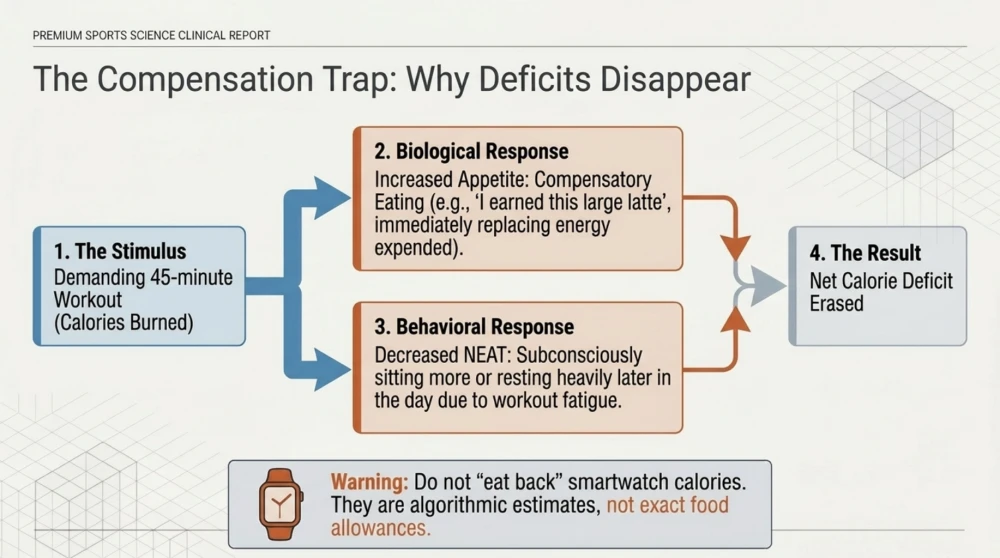
This Can Reduce the Expected Change in Total Energy Expenditure
It does not mean that the workout had no benefit.
It means that daily energy expenditure is influenced by much more than the calories used during one exercise session.
What Is Metabolic Adaptation?
As body weight decreases, the body generally requires less energy to maintain itself and to move a smaller body.
Energy expenditure can also decrease somewhat beyond what would be predicted from changes in body size and composition.
This phenomenon is often referred to as adaptive thermogenesis or metabolic adaptation.
Your Metabolism Is Not “Broken”
The phrase “my metabolism is damaged” is often used when weight loss slows.
That usually oversimplifies the physiology.
Energy requirements are dynamic.
As weight falls, calorie needs change. Appetite may increase, spontaneous activity can change and the energy cost of moving a lighter body decreases.
Weight-loss plateaus are therefore biologically understandable.
Can Exercise Slow Your Metabolism?
Exercise itself should not generally be viewed as something that damages metabolism.
Resistance training can be particularly useful during weight loss because it provides a stimulus to preserve lean tissue.
Severe calorie restriction combined with inadequate protein and no resistance exercise is much more concerning for unnecessary lean-mass loss.
Why Does the Scale Sometimes Stop Moving After Starting Strength Training?
Resistance training can temporarily increase scale weight through several mechanisms.
One is increased water associated with muscle repair and adaptation.
Another is glycogen storage.
Over a longer period, beginners may also gain some lean tissue.
This Can Partially Mask Fat Loss
For example, if a person loses 2 kg of fat but gains some lean tissue and carries slightly more glycogen-associated water, the scale will not display the full amount of fat lost.
That is why waist circumference, strength and longer-term weight trends can provide additional context.
But Do Not Blame Everything on Muscle Gain
This deserves emphasis.
When someone has been exercising but not losing weight for six months, it is tempting to say:
“You must be gaining muscle.”
Sometimes that is partly true.
But muscle gain is relatively slow for most adults and varies substantially according to training experience, programme quality, protein intake, age and other factors.
If body weight and waist circumference are both unchanged for many months, large fat loss hidden entirely by equivalent muscle gain becomes less likely.
How Can You Tell if You Are Losing Fat Without Losing Weight?
No single home measurement is perfect, but several trends together can provide useful evidence.
| What You Notice | Possible Interpretation |
|---|---|
| Weight stable, waist decreasing | Consistent with improving central adiposity/body composition |
| Weight stable, clothes looser | May indicate changes in body dimensions or composition |
| Weight stable, strength increasing | Shows meaningful neuromuscular adaptation, though it does not prove fat loss |
| Weight stable, waist stable | Substantial fat loss becomes less certain; review other measures and energy balance |
| Weight increasing, waist decreasing | Body recomposition may be occurring, particularly with progressive resistance training |
| Weight and waist both increasing | Increasing total and central adiposity becomes more likely and intake/activity should be reviewed |
How Should You Measure Waist Circumference?
Consistency is more important than repeatedly changing technique.
Use a non-stretchable measuring tape and measure at the same anatomical location each time, under similar conditions.
Keep the tape horizontal and snug without compressing the skin.
Measure after a normal expiration rather than deliberately sucking in the abdomen.
Do Not Measure Your Waist Every Day
Daily measurements can vary because of bloating, food intake, bowel contents and technique.
Periodic measurement under standardised conditions is usually more informative.
What About Body-Fat Scales?
Many home scales estimate body fat using bioelectrical impedance analysis.
These devices can be convenient, but their readings are influenced by hydration and other factors.
A single displayed body-fat percentage should therefore not be treated as a precise laboratory measurement.
Trends May Be More Useful Than Individual Numbers
If you use the same device under similar conditions, longer-term trends may provide additional information.
But avoid interpreting a change from 31.2% to 30.7% as if the instrument can measure such a small biological change with certainty.
Can DEXA Measure Body Composition Better?
Dual-energy X-ray absorptiometry can estimate fat mass, lean soft tissue and bone mineral content and is more informative than a standard weighing scale.
However, DEXA is not necessary for routine weight management in most people.
Even DEXA measurements are subject to methodological and biological variability.
For routine clinical monitoring, weight trend, waist circumference, metabolic markers and functional progress are often sufficient.
Why Can Exercise Cause Temporary Water Retention?
If you suddenly increase training volume—particularly resistance training, running or unfamiliar exercise—muscle tissue experiences microscopic stress.
The repair process involves local inflammatory responses and changes in fluid distribution.
This can temporarily increase water weight.
The effect is particularly noticeable when someone begins a new programme after being sedentary.
This Is Not the Same as Gaining Fat
If your scale rises after a hard training session, do not immediately assume that the workout somehow caused fat gain.
Short-term body-weight changes are dominated by water, glycogen and gastrointestinal contents much more than changes in fat tissue.
Why Does Carbohydrate Intake Change Scale Weight?
Carbohydrate is stored as glycogen in the liver and skeletal muscle.
Glycogen is stored together with water.
When carbohydrate intake or glycogen storage increases, scale weight can therefore rise because of associated water.
This is one reason body weight may increase after a high-carbohydrate restaurant meal without representing equivalent fat gain.
Salt Can Change the Scale Too
A high-sodium meal can temporarily increase fluid retention in susceptible individuals.
Restaurant meals, packaged foods and takeaways may contain considerably more sodium than expected.
Someone may therefore weigh more the morning after eating out even if their long-term fat-loss trend remains unchanged.
Why Menstrual-Cycle Changes Matter
For many women, body weight fluctuates across the menstrual cycle because of changes in fluid balance, gastrointestinal symptoms and appetite.
The magnitude varies substantially between individuals.
This can temporarily hide an underlying downward fat-loss trend.
Compare Trends, Not Isolated Days
If weight reliably rises during a particular part of the cycle and falls afterwards, comparing similar phases across successive cycles may provide more useful information than reacting to a few days of higher readings.
Constipation Can Affect Body Weight
Yes.
The contents of the gastrointestinal tract contribute to total scale weight.
Constipation can therefore temporarily increase body weight and abdominal measurements.
Again, this is not equivalent to gaining the same amount of body fat.
Cardio or Strength Training: Which Is Better for Fat Loss?
This question creates an unnecessary competition between two useful forms of exercise.
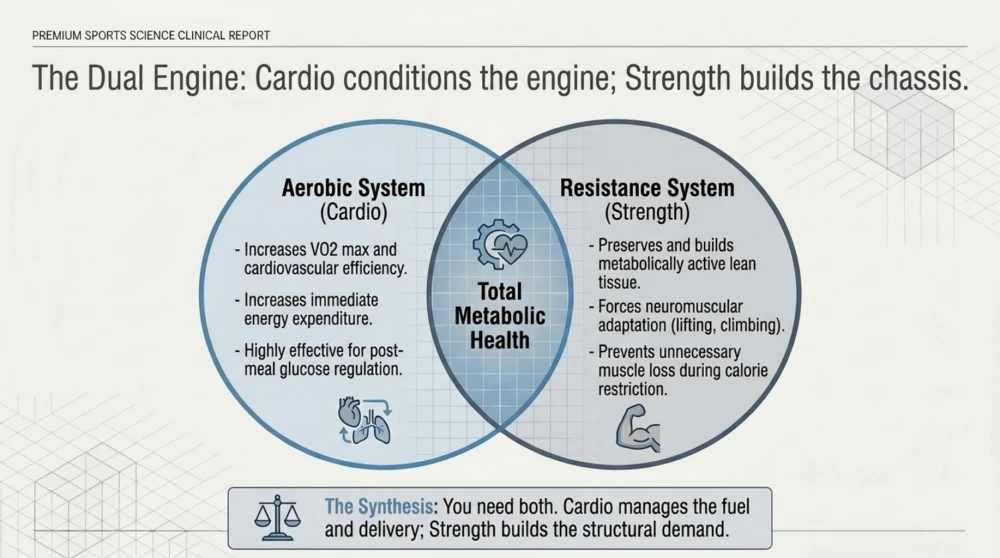
Aerobic exercise can substantially increase energy expenditure and improve cardiorespiratory fitness.
Resistance training improves strength and helps preserve or increase lean tissue.
For many adults, combining them is more useful than choosing only one.
Think of Them as Complementary
| Exercise Type | Major Benefits |
|---|---|
| Walking and other moderate aerobic exercise | Cardiorespiratory fitness, energy expenditure, glucose regulation and accessibility |
| Higher-intensity aerobic training | Time-efficient cardiovascular stimulus and improvement in aerobic capacity when appropriate |
| Resistance training | Strength, muscle preservation, functional capacity and body composition |
| Combination programme | Allows both cardiovascular and muscular adaptations |
Does More Cardio Always Mean More Weight Loss?
No.
Increasing aerobic exercise can increase energy expenditure, but the relationship with weight loss is not perfectly linear.
Appetite, compensatory eating, fatigue and changes in non-exercise activity can alter the final energy deficit.
There is also a practical limit to how much exercise a person can sustainably perform.
More Is Not Automatically Better
A programme that produces exhaustion, injury and excessive hunger may be less sustainable than a moderate programme maintained consistently for months.
Why Resistance Training Matters During a Calorie Deficit
If you are deliberately losing weight, you generally want as much of that reduction as reasonably possible to come from excess fat rather than useful lean tissue.
Resistance training tells the body that skeletal muscle is still required.
Adequate dietary protein provides amino acids needed to support that tissue.
Protein and Resistance Training Work Together
Protein alone does not replace the training stimulus.
Resistance training without adequate nutrition is also not ideal.
The combination becomes particularly important during weight reduction, after middle age and during treatment strategies that produce substantial appetite suppression.
How Much Protein Do You Need?
There is no single protein target appropriate for every adult.
Requirements depend on body size, age, activity level, total calorie intake, training programme, kidney function and clinical circumstances.
Physically active adults and people trying to preserve muscle during weight loss often benefit from protein intakes above the minimum requirement.
However, very high protein intake is not automatically better, and people with certain kidney conditions require individualised advice.
Should Protein Be Spread Across the Day?
For muscle preservation and training adaptation, distributing meaningful amounts of high-quality protein across meals can be more practical than consuming very little during the day and almost all protein at dinner.
This is especially relevant in Indian diets where breakfast can sometimes be predominantly carbohydrate with relatively little protein.
Does Exercising on an Empty Stomach Burn More Fat?
Fasted exercise may increase the proportion of fat being oxidised during a particular exercise session under some conditions.
But that does not automatically translate into greater long-term body-fat loss.
Long-term fat loss depends on energy balance and metabolic adaptation across days and weeks, not simply which fuel predominated during one workout.
Fasted Cardio Is Not a Metabolic Shortcut
If you enjoy exercising before breakfast and tolerate it well, that may be perfectly reasonable.
But there is no need to force yourself to train hungry because you believe fat loss is impossible after eating.
Does Sweating More Mean You Are Burning More Fat?
No.
Sweating is primarily a thermoregulatory mechanism.
A hot room, humid weather or extra clothing can make you sweat more without meaningfully increasing fat loss.
The immediate reduction on the scale after heavy sweating mainly represents fluid loss.
It returns when hydration is restored.
Does Soreness Mean the Workout Was Effective?
Not necessarily.
Delayed-onset muscle soreness commonly occurs after unfamiliar or unusually demanding exercise, particularly eccentric exercise.
But a productive workout does not need to leave you unable to walk comfortably the following day.
Progressive overload and consistent training matter more than chasing soreness.
Should You Exercise Every Day to Lose Weight?
Daily movement is valuable, but hard training every day is unnecessary for most people.
Recovery is part of the adaptation process.
A sustainable programme can combine structured exercise with regular everyday movement.
For example, someone may perform resistance training two or three times per week while walking on most days.
What if You Are Doing 10,000 Steps but Not Losing Weight?
Ten thousand steps is a useful activity target for some people, but it is not a biological threshold at which fat loss automatically begins.
Someone can walk 10,000 steps and still consume enough energy to maintain or gain weight.
Conversely, increasing from 2,500 to 7,000 steps may represent a major health improvement for a previously sedentary individual even though they have not reached 10,000.
Steps Are an Activity Metric, Not a Weight-Loss Guarantee
Use them to monitor movement rather than treating them as permission to ignore dietary intake.
What About Short Walks After Meals?
Short bouts of activity after meals can be metabolically useful, particularly for post-meal glucose regulation.
This is important because an activity does not have to produce substantial calorie expenditure to have a physiological benefit.
A 10–15 minute post-meal walk may contribute relatively little to immediate scale weight change while still helping muscles utilise glucose.
Why Sleep Can Affect Your Weight-Loss Efforts
Exercise and nutrition receive most of the attention, but inadequate sleep can complicate weight management.
Sleep restriction can influence hunger, food choices, energy levels and the ability to exercise consistently.
Untreated obstructive sleep apnoea can also leave a person exhausted despite spending adequate hours in bed.
Someone Who Is Constantly Tired May Move Less Without Realising It
This can reduce daily activity and make dietary adherence more difficult.
If someone snores loudly, has witnessed breathing pauses and wakes unrefreshed, sleep apnoea deserves consideration rather than simply advising more exercise.
Can Stress Prevent Weight Loss?
Stress does not violate the basic principles of energy balance, but it can influence behaviours that determine energy balance.
Chronic stress may contribute to:
- Emotional eating.
- Frequent snacking.
- Alcohol consumption.
- Poor sleep.
- Reduced activity.
- Difficulty maintaining structured meals.
Therefore, stress management can be relevant even though “high cortisol” should not be used as a universal explanation for every weight-loss plateau.
Can Medicines Make Weight Loss More Difficult?
Yes.
Some medications can influence appetite, fluid balance or body weight.
Examples can include certain psychiatric medicines, corticosteroids and some medications used for diabetes or neurological conditions.
The effect varies substantially according to the drug and patient.
Do Not Stop Medication to Lose Weight
If medication-associated weight gain is suspected, discuss it with the prescribing doctor.
Sometimes alternatives are available; sometimes the medication remains necessary and weight management needs to work around it.
Is Hypothyroidism the Reason You Cannot Lose Weight?
Untreated hypothyroidism can contribute to weight gain and make weight management more difficult.
But it should not become the default explanation for every plateau.
When thyroid hormone levels are appropriately treated and normalised, persistent obesity usually has additional determinants.
What About PCOS?
PCOS is commonly associated with insulin resistance and can make weight management more challenging for some women.
But women with PCOS can still improve metabolic health substantially through exercise even before major weight loss occurs.
Resistance training, aerobic activity, nutrition, sleep and appropriate medical management can all contribute.
When Should You Actually Change Your Programme?
Do not change everything because the scale has failed to move for five days.
But if your goal includes fat loss and there has been no meaningful change in weight trend or waist circumference over several weeks despite good adherence, review the programme objectively.
Ask These Questions
- Has my average body weight actually changed over the last four to eight weeks?
- Has my waist circumference changed?
- Am I eating larger portions because I am exercising?
- Am I consuming calories through beverages?
- Do weekends undo much of my weekday calorie deficit?
- Am I relying on smartwatch calorie estimates?
- Has my daily movement decreased outside the gym?
- Am I getting adequate protein?
- Am I doing resistance training?
- Am I sleeping adequately?
- Has my strength or fitness improved?
- Are there medications or medical conditions that deserve review?
Do Not Respond to a Plateau by Starving Yourself
A weight-loss plateau does not automatically mean calories need to be cut dramatically.
A very aggressive reduction can increase hunger, impair training performance and make it harder to obtain adequate protein and micronutrients.
For some people it can also increase the risk of losing lean tissue.
Small Adjustments Are Often More Sustainable
The appropriate change may involve reducing calorie-dense extras, improving portion control, increasing daily movement or making the exercise programme more progressive.
The solution should depend on what is actually limiting progress.
How Do You Know Whether Your Exercise Programme Is Actually Working?
If you are exercising but not losing weight, the answer should not come from the weighing scale alone.
A good exercise programme creates physiological adaptations. Some may eventually contribute to weight loss, while others improve health independently of major changes in body weight.
The most useful approach is to track several outcomes together.
I would broadly look at four areas:
- Body composition and central adiposity.
- Metabolic health.
- Cardiovascular fitness.
- Muscle strength and physical function.
If several of these are moving in the right direction, meaningful progress may be occurring even when body weight is changing slowly.
1. Start With the Weight Trend, Not Today's Weight
Body weight remains useful.
The mistake is interpreting every individual measurement as a change in body fat.
A better approach is to weigh under reasonably similar conditions and examine the trend across several weeks.
Why Weekly Averages Can Be Helpful
Imagine these morning measurements:
78.2, 77.8, 78.5, 77.9, 78.1, 77.6 and 78.0 kg.
It would be difficult to interpret each fluctuation individually.
The average provides a cleaner estimate of the underlying trend.
Compare averages over time rather than becoming concerned about every temporary increase.
2. Measure Your Waist
Waist circumference is one of the simplest additional measurements for someone trying to improve metabolic health.
It provides practical information about central adiposity that body weight alone cannot provide.
Weight Stable but Waist Decreasing?
This can be encouraging.
It may indicate improvement in abdominal adiposity or body composition, particularly when accompanied by improved fitness and strength.
If both weight and waist circumference remain unchanged for months despite a specific goal of losing excess fat, however, it is reasonable to review energy intake and activity.
3. Consider Waist-to-Height Ratio
Waist circumference can also be interpreted relative to height.
Waist-to-height ratio is calculated by dividing waist circumference by height using the same units.
For example:
Waist = 90 cm
Height = 175 cm
Waist-to-height ratio = 90 ÷ 175 = 0.51
A Simple Public-Health Message
A waist circumference below approximately half of height is commonly used as a simple risk-screening message.
However, it should be viewed as a practical screening tool rather than a diagnostic boundary that suddenly separates healthy from unhealthy individuals.
Blood pressure, glucose, lipids, smoking, fitness, family history and other risk factors still matter.
4. Monitor Blood Pressure
Exercise can improve blood pressure even without dramatic weight loss.
If your average home blood pressure changes from 142/90 mmHg to 130/82 mmHg after several months of regular activity and other lifestyle changes, that is clinically meaningful progress.
The scale cannot show it.
Measure BP Properly
Use a validated upper-arm monitor, an appropriate cuff size and standardised measurement technique.
A single low or high reading is less informative than a properly collected series of measurements.
5. Look at Glucose and HbA1c When Relevant
For someone with prediabetes or type 2 diabetes, glucose markers can provide another window into metabolic improvement.
Exercise increases glucose utilisation by skeletal muscle and improves insulin sensitivity.
Therefore, glycaemic control can improve even when weight loss is smaller than expected.
Do Not Judge Diabetes Progress Only by Kilograms
A person whose weight falls only modestly but whose HbA1c, waist circumference, physical activity and fitness improve may have achieved meaningful metabolic progress.
Medication changes must also be considered when interpreting glucose improvement.
6. Check Triglycerides and the Overall Lipid Profile
Exercise, dietary changes, improved glucose control and changes in body composition can influence triglycerides and other lipid measurements.
The response varies between individuals.
Rather than expecting exercise to produce one particular cholesterol result, interpret the complete lipid profile within overall cardiovascular risk.
7. Fatty Liver Can Improve Without Dramatic Weight Loss
Exercise has an important role in metabolic dysfunction-associated steatotic liver disease, or MASLD.
Physical activity can reduce liver fat and improve cardiometabolic health even when total body-weight reduction is modest.
This does not mean weight reduction is unimportant in someone with excess adiposity.
Greater sustained weight loss can provide additional liver benefits.
Your Liver Does Not Know What the Bathroom Scale Says
The liver responds to changes in energy balance, insulin sensitivity, fatty-acid metabolism, physical activity and overall metabolic health.
Therefore, a person can improve hepatic metabolism before achieving a dramatic visual transformation.
8. Track Your Resting Heart Rate
Regular aerobic training can improve cardiovascular efficiency.
For some people, resting heart rate gradually decreases as fitness improves.
However, resting heart rate is affected by many other factors, including:
- Stress.
- Sleep.
- Illness.
- Hydration.
- Caffeine.
- Temperature.
- Medications.
Use it as one trend rather than as a stand-alone score of health.
9. Track Your Cardiorespiratory Fitness
One of the most important benefits of exercise is improved cardiorespiratory fitness.
This can be assessed formally using exercise testing or estimated through various field and wearable-based methods.
But you can also notice improvement practically.
Ask Yourself:
- Can I walk the same distance faster?
- Can I climb more stairs without stopping?
- Can I exercise longer at the same perceived effort?
- Does my heart rate recover more quickly after activity?
- Can I maintain a brisk walking pace more comfortably?
These changes matter even if your weight is unchanged.
10. VO₂ Max Is Not Just an Athlete's Number
VO₂ max or VO₂ peak reflects the body's ability to transport and utilise oxygen during exercise.
Higher cardiorespiratory fitness is strongly associated with better long-term health outcomes.
Regular aerobic training can improve VO₂-related fitness even without substantial weight loss.
Do Not Become Obsessed With the Smartwatch Estimate
Some wearable devices estimate VO₂ max using heart rate, pace and other information.
This can be useful for observing trends, but it is not equivalent to laboratory cardiopulmonary exercise testing.
Use the number as one indicator rather than an absolute diagnosis of fitness.
11. Measure Strength
If you are doing resistance training, track performance.
For example:
- How much weight can you safely lift?
- How many controlled repetitions can you perform?
- Can you perform a squat or sit-to-stand more easily?
- Has grip strength improved?
- Can you carry heavier everyday objects comfortably?
Increasing strength is a genuine adaptation even when the scale remains unchanged.
A Better Metabolic Progress Dashboard
| Marker | What Improvement May Look Like | What the Scale May Miss |
|---|---|---|
| Waist circumference | Gradual reduction | Reduction in central adiposity |
| Blood pressure | Lower average BP when previously elevated | Improved cardiovascular risk profile |
| HbA1c/glucose | Improved glycaemic control | Improved glucose regulation |
| Triglycerides | Reduction when initially elevated | Changes in lipid metabolism |
| Resting heart rate | Potential downward trend with aerobic adaptation | Cardiovascular conditioning |
| Walking pace | Faster pace at similar effort | Improved functional fitness |
| Strength | Progressive increase | Neuromuscular and muscular adaptation |
| Liver fat | May decrease with regular exercise and broader metabolic improvement | Organ-level metabolic change |
| Daily function | Stairs, walking and daily tasks become easier | Improved physical capacity |
What Is a Realistic Amount of Weight Loss From Exercise Alone?
This varies substantially.
Exercise programmes frequently produce less weight loss than people expect from simple calorie calculations.
Some individuals lose substantial weight. Others lose relatively little despite completing similar exercise programmes.
Differences in food intake, appetite compensation, starting body composition, exercise dose, NEAT and biological responses all contribute.
This Is Why Exercise Should Not Carry the Entire Weight-Loss Programme
For someone with obesity who needs clinically meaningful fat loss, exercise works best as part of a broader strategy that also addresses nutrition, eating behaviour, sleep and appropriate medical treatment when indicated.
What if You Exercise Regularly but Eat Poorly?
Exercise cannot reliably compensate for unrestricted energy intake.
A person can be physically fit and still carry excess body fat.
Likewise, someone can improve cardiovascular fitness while their weight increases because calorie intake remains above expenditure.
Exercise and nutrition perform overlapping but different roles.
Can You Be Fit and Still Have Obesity?
Yes.
A person with obesity can have substantially better cardiorespiratory fitness than another person of similar body weight.
That fitness difference matters.
But improved fitness does not necessarily eliminate all of the health risks associated with excess adiposity.
Avoid the False Choice Between Fitness and Fat Loss
The goal does not need to be:
“Should I become fitter or should I lose excess fat?”
For many people, the better goal is:
Improve fitness while progressively reducing excess adiposity and preserving muscle.
When Should a Weight-Loss Plateau Be Investigated?
A short plateau is normal.
A few days or even a couple of weeks without visible scale change does not necessarily require any investigation.
However, if weight management has become unusually difficult or there are additional symptoms, medical review can be appropriate.
Consider Medical Assessment If Weight Difficulty Occurs With:
- Marked fatigue.
- Cold intolerance.
- Constipation and other symptoms suggesting hypothyroidism.
- Irregular menstrual cycles or features suggesting PCOS.
- Loud snoring, witnessed apnoeas or significant daytime sleepiness.
- Rapid unexplained weight gain.
- New oedema or swelling.
- Use of medications associated with weight gain.
- Features suggesting another endocrine or medical disorder.
Routine endocrine testing for every person who reaches a weight plateau is not necessary. Testing should be guided by clinical history and examination.
Is Insulin Resistance Preventing You From Losing Weight?
Insulin resistance is strongly associated with obesity and metabolic disease, but the statement that insulin resistance makes fat loss impossible is misleading.
People with insulin resistance can lose fat.
Exercise is particularly valuable because skeletal muscle activity improves glucose utilisation and insulin sensitivity.
Dietary energy balance, food quality, physical activity, sleep and appropriate treatment of associated conditions all remain important.
Is Cortisol Blocking Your Weight Loss?
Cortisol is an essential hormone involved in the stress response and many normal physiological functions.
Chronic stress can certainly affect sleep, appetite, food choices and activity.
But attributing every unexplained plateau to “high cortisol” without clinical evidence is not appropriate.
True endocrine disorders causing pathological cortisol excess have additional clinical features and require proper medical evaluation.
Do You Need More Exercise or Less Food?
Sometimes the answer is neither.
The programme may simply need better structure.
For example, a person might benefit more from maintaining their current walking programme, adding progressive resistance training and reducing calorie-dense evening snacks than from adding another hour of exhausting cardio.
Identify the Actual Bottleneck
If activity is already high but food intake has increased substantially, address nutrition.
If diet is reasonable but daily movement is extremely low outside the gym, address movement.
If strength training is absent during weight loss, add it where appropriate.
If poor sleep is driving hunger and exhaustion, address sleep.
If adherence is inconsistent every weekend, increasing weekday exercise may not solve the problem.
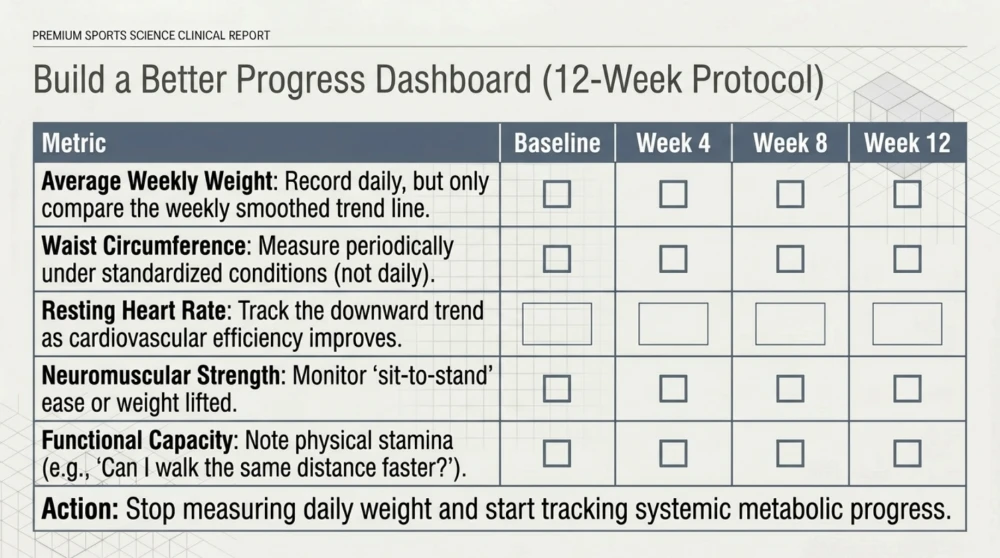
A Practical 12-Week Progress Dashboard
Instead of asking only “How much weight did I lose?”, consider reviewing progress across several domains.
| Measure | Baseline | Week 4 | Week 8 | Week 12 |
|---|---|---|---|---|
| Average body weight | Record | Review | Review | Compare |
| Waist circumference | Record | Optional | Measure | Compare |
| Walking pace or fitness marker | Record | Review | Review | Compare |
| Strength marker | Record | Review | Review | Compare |
| Blood pressure if relevant | Record average | Review trend | Review trend | Compare |
| Metabolic blood tests | As clinically indicated | Usually not necessary this frequently | According to clinical need | Consider reassessment where appropriate |
The exact monitoring schedule should be individualised. Someone with diabetes, hypertension or medication changes may need different follow-up from an otherwise healthy person exercising for general fitness.
A Practical Exercise Framework for Metabolic Health
For most adults, the aim should be to combine aerobic activity, resistance training and everyday movement rather than searching for one perfect exercise.
Aerobic Activity
Work progressively toward approximately 150–300 minutes of moderate-intensity aerobic activity per week, or an appropriate equivalent of vigorous activity.
Resistance Training
Include muscle-strengthening activity involving major muscle groups on at least two days per week where medically and physically appropriate.
Daily Movement
Reduce prolonged sitting and remain physically active outside structured workouts.
Progress Gradually
Increase exercise volume and intensity according to fitness, medical status and recovery rather than suddenly moving from inactivity to an extreme programme.
If Fat Loss Is Also the Goal, Add These Principles
- Create a sustainable rather than extreme energy deficit.
- Prioritise adequate protein according to individual requirements.
- Include resistance training to help preserve muscle.
- Use aerobic activity to improve fitness and increase activity-related energy expenditure.
- Maintain daily movement outside formal exercise.
- Limit unnecessary liquid calories.
- Be aware of calorie-dense “healthy” foods and portion sizes.
- Do not automatically eat back smartwatch exercise calories.
- Protect sleep.
- Review alcohol intake.
- Track trends rather than daily fluctuations.
Common Myths About Exercising but Not Losing Weight
Myth 1: If the Scale Is Not Falling, Exercise Is Not Working
False.
Exercise can improve cardiorespiratory fitness, insulin sensitivity, blood pressure, strength and other aspects of metabolic health independently of major weight loss.
Myth 2: Muscle Weighs More Than Fat
A kilogram of muscle and a kilogram of fat obviously weigh the same.
What differs is their density and volume.
Muscle tissue occupies less space than the same mass of fat tissue.
This is one reason body dimensions can change even when total body weight changes relatively little.
Myth 3: Stable Weight Always Means I Am Gaining Muscle and Losing Fat
False.
Body recomposition is possible, but it should not be used automatically to explain every plateau.
If weight and waist circumference remain unchanged for months, reassessment is reasonable.
Myth 4: Sweating More Means More Fat Loss
False.
Sweat primarily represents fluid loss used for temperature regulation.
Myth 5: Fasted Cardio Burns More Body Fat Over Time
Not necessarily.
Using more fat as fuel during a particular exercise session does not automatically translate into greater long-term fat loss.
Myth 6: Cardio Is for Fat Loss and Weights Are Only for Muscle
Oversimplified.
Aerobic and resistance exercise both have important metabolic roles, and combining them is useful for many adults.
Myth 7: Ten Thousand Steps Guarantees Weight Loss
False.
Steps measure movement, not energy balance.
Myth 8: Exercise Allows Me to Eat Whatever I Want
Not if meaningful fat loss is the goal.
Exercise cannot reliably compensate for chronically excessive energy intake.
Myth 9: A Weight-Loss Plateau Means My Metabolism Has Stopped
False.
Energy requirements change during weight loss, and biological compensation can occur, but metabolism does not simply switch off.
Myth 10: Only Weight Loss Improves Metabolic Health
False.
Physical activity can produce clinically relevant metabolic and cardiovascular benefits even before substantial weight reduction occurs.
When the Scale Is Not Moving, Ask These 10 Questions
- Has my average weight genuinely plateaued, or am I reacting to daily fluctuations?
- Has my waist circumference decreased?
- Has my strength improved?
- Has my cardiovascular fitness improved?
- Are my blood pressure, glucose or triglycerides improving?
- Am I compensating for exercise by eating more?
- Have liquid calories, snacks or weekend meals increased?
- Has my movement outside the gym decreased?
- Am I sleeping adequately?
- Is there a medical or medication-related reason that deserves assessment?
Key Takeaways
- Being exercising but not losing weight does not automatically mean your exercise programme is failing.
- The weighing scale measures total body mass, not visceral fat, insulin sensitivity, cardiovascular fitness or strength.
- Exercise can reduce visceral and liver fat even when overall weight reduction is relatively modest.
- Insulin sensitivity and glucose regulation can improve independently of major weight loss.
- Blood pressure can improve with regular physical activity.
- Cardiorespiratory fitness is an important health outcome in its own right.
- Resistance training helps improve strength and preserve lean tissue during weight loss.
- A decreasing waist circumference with stable weight can provide useful evidence of improving body composition.
- Temporary water retention, glycogen, salt intake, menstrual-cycle changes and gastrointestinal contents can mask fat loss on the scale.
- Exercise calorie estimates from smartwatches should not be treated as exact food allowances.
- Exercise can increase appetite, and some people unconsciously compensate by eating more or moving less during the rest of the day.
- If both weight and waist remain unchanged for a prolonged period and fat loss is required, overall energy intake and activity should be reviewed.
- Weight loss still matters when excess adiposity is contributing to diabetes, fatty liver, sleep apnoea, hypertension or other disease.
- The goal is not to choose between fitness and weight loss. When appropriate, aim to improve fitness, reduce excess fat and preserve muscle simultaneously.
References
- World Health Organization. WHO Guidelines on Physical Activity and Sedentary Behaviour. Recommendations for aerobic physical activity, muscle-strengthening exercise and reduction of sedentary behaviour in adults.
- American College of Sports Medicine. Evidence-based guidance regarding exercise prescription, cardiorespiratory fitness, resistance training, body composition and weight management.
- American Diabetes Association. Standards of Care in Diabetes. Recommendations concerning physical activity, exercise, weight management and cardiometabolic risk reduction in people with diabetes.
- European Association for the Study of the Liver, European Association for the Study of Diabetes and European Association for the Study of Obesity. Clinical practice guidance for metabolic dysfunction-associated steatotic liver disease, including physical activity and weight-management strategies.
- Ross R, et al. Peer-reviewed evidence examining exercise-induced reductions in abdominal and visceral adipose tissue with and without substantial changes in body weight.
- Swift DL, Johannsen NM, Lavie CJ, Earnest CP, Church TS. The Role of Exercise and Physical Activity in Weight Loss and Maintenance. Progress in Cardiovascular Diseases.
- Peer-reviewed systematic reviews and meta-analyses examining aerobic exercise, resistance exercise, visceral adiposity, insulin sensitivity, blood pressure and cardiometabolic health.
- Peer-reviewed literature examining adaptive thermogenesis, compensatory eating, non-exercise activity thermogenesis and individual variability in weight response to exercise.
Medical note: This article provides general health information and does not replace individual medical assessment. Exercise recommendations should be adapted to age, baseline fitness, cardiovascular risk, musculoskeletal limitations, medications and existing medical conditions. People with significant symptoms or established cardiovascular, metabolic or other chronic disease may require individualised exercise and weight-management advice.