














- 3rd June 2026
Table of Contents
- Food Cravings Are Not the Same as Hunger
- Why Food Cravings Make Weight Loss Difficult
- Why Modern Food Environments Encourage Cravings
- Why Refined Carbohydrates Can Increase Cravings
- Why Poor Sleep Often Leads to Stronger Cravings
- Why Stress Frequently Triggers Food Cravings
- Why Processed Foods Can Reinforce Craving Cycles
- Why Food Cravings Often Reflect a Larger Metabolic Picture
- Why Emotional Eating and Food Cravings Often Occur Together
- How Insulin Resistance Can Increase Food Cravings
- Why Food Cravings Often Become Stronger at Night
- Why Gut Health May Influence Cravings
- Why Belly Fat and Cravings Frequently Occur Together
- Why Restrictive Diets Often Trigger More Cravings
- Why Modern Lifestyles Create Constant Craving Triggers
- Why Cravings Are Usually a Symptom Rather Than the Main Problem
- How to Reduce Food Cravings Naturally
- Why Protein Is One of the Most Effective Tools for Appetite Control
- Why Meal Timing Can Influence Cravings
- Why Sleep Is One of the Most Underrated Solutions for Cravings
- Why Physical Activity Can Help Reduce Cravings
- Why Managing Stress Is Essential for Craving Control
- Why Highly Restrictive Diets Rarely Work Long-Term
- Why Cravings Often Improve When Metabolic Health Improves
- Why Sustainable Lifestyle Structure Matters Most
- Key Takeaways: What You Should Remember
Many people begin a weight-loss journey feeling motivated and determined. They clean up their diet, start exercising, reduce sugary foods, and commit to making healthier choices. For a few days or even a few weeks, everything may go according to plan. Then cravings begin to appear.
A strong desire for sweets after dinner. The urge to snack during office work. Sudden thoughts about chips, chocolates, ice cream, bakery products, or fast food despite having eaten recently. For many individuals, these cravings become one of the biggest barriers to long-term success.
The frustrating part is that cravings often appear even when a person is genuinely committed to losing weight. This frequently creates guilt and self-blame.
Many individuals conclude that they simply lack discipline. Others believe they have weak willpower. However, cravings are usually much more complex than that.
This is exactly why understanding why food cravings make weight loss difficult is important for anyone trying to achieve sustainable fat loss and better metabolic health.
Food Cravings Are Not the Same as Hunger
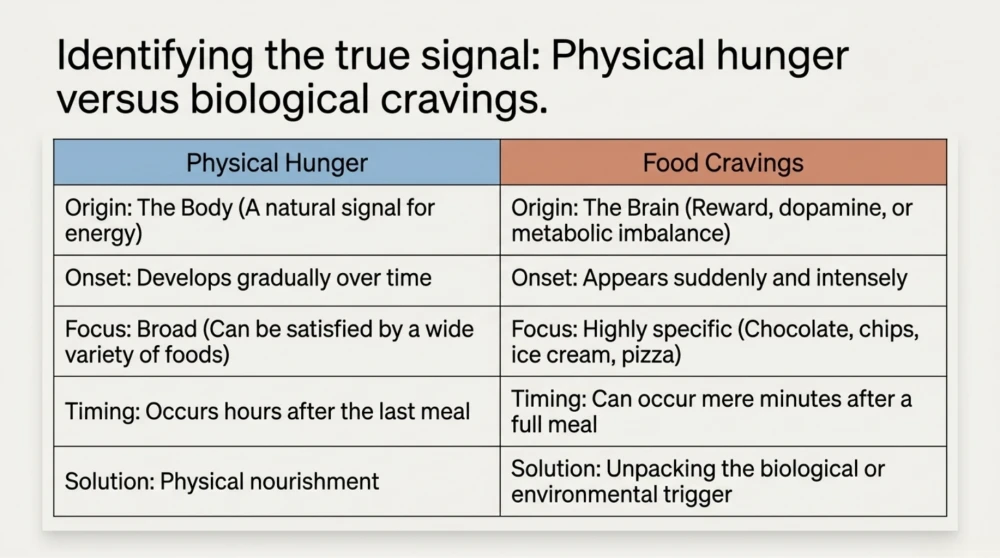
One of the most important concepts people need to understand is that hunger and cravings are different biological experiences. Hunger is the body's natural signal that energy and nourishment are needed.
It usually develops gradually and can generally be satisfied by a wide variety of foods. Cravings behave very differently. Cravings tend to be highly specific.
Instead of wanting food in general, a person may specifically want:
- Chocolate
- Ice cream
- Chips
- Cake
- Pizza
- Sugary beverages
Cravings may appear even shortly after a meal when the body has already received sufficient calories. This is why managing cravings often requires understanding the biological and lifestyle factors driving them rather than simply trying harder to resist them.
Why Food Cravings Make Weight Loss Difficult
Weight loss depends on creating a sustainable pattern of healthy eating over time. Food cravings often interfere with this consistency.
Many individuals successfully maintain healthy eating habits during breakfast and lunch but struggle later in the day when cravings become stronger. Even relatively small indulgences can gradually affect progress.
Examples include:
- A sweet tea with biscuits
- A small packet of chips
- A dessert after dinner
- A sugary coffee beverage
- Repeated snacking during work hours
Individually, these choices may not seem significant. However, when repeated daily, they can contribute substantial additional calories over weeks and months.
This often slows fat loss and may even contribute to gradual weight gain.
Why Modern Food Environments Encourage Cravings
Human biology evolved in environments where highly rewarding foods were relatively scarce. Today, the situation is completely different.
People are surrounded by food cues almost continuously. Advertisements, social media content, food delivery apps, office snacks, convenience stores, and packaged foods constantly stimulate appetite.
The brain receives repeated reminders about food even when physical hunger is absent. As a result, many individuals experience cravings simply because food is highly visible and easily accessible.
This is one reason cravings have become much more common in modern lifestyles than they were in previous generations.
Why Refined Carbohydrates Can Increase Cravings
One major contributor to cravings is the frequent consumption of highly refined carbohydrates.
Examples include:
- White bread
- Bakery products
- Sugary cereals
- Sweet beverages
- Desserts
- Packaged snacks
These foods are often digested rapidly.
Many individuals experience a temporary feeling of satisfaction followed by:
- Energy crashes
- Renewed hunger
- Increased cravings
- Reduced satiety
Over time, this pattern can create a cycle where the body repeatedly seeks quick sources of energy throughout the day. This often makes dietary consistency much more difficult.
Why Poor Sleep Often Leads to Stronger Cravings
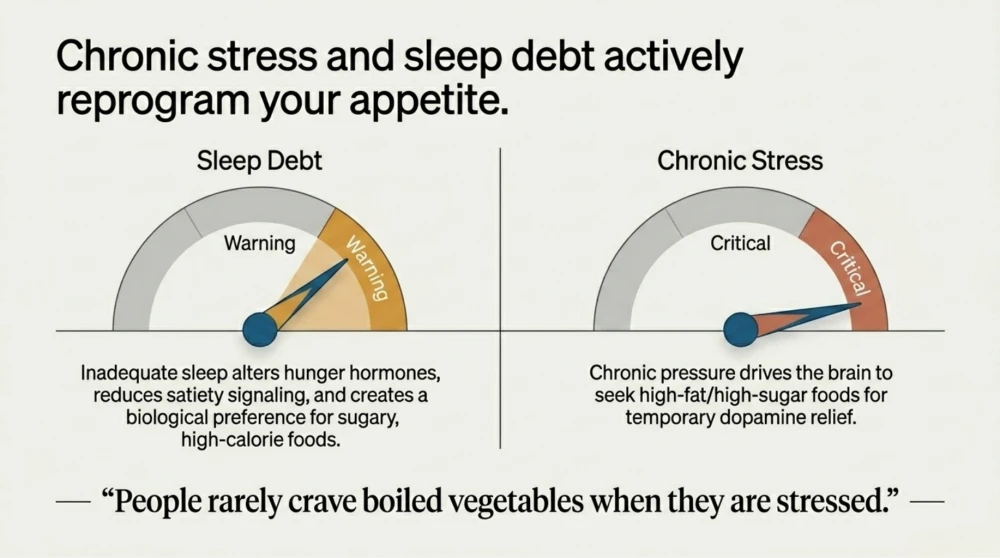
Sleep plays a critical role in appetite regulation. Many people notice that after a poor night's sleep, cravings become stronger the following day. This observation is supported by growing scientific evidence.
Sleep influences several hormones involved in:
- Hunger regulation
- Satiety signaling
- Energy balance
- Food reward pathways
When sleep becomes inadequate, individuals often experience:
- Greater appetite
- More cravings
- Reduced meal satisfaction
- Increased preference for sugary foods
At the same time, fatigue reduces motivation to prepare healthy meals and maintain physical activity. This combination frequently contributes to excess calorie intake.
If you want to understand this relationship further, you may also explore why poor sleep can make weight loss more difficult.
Why Stress Frequently Triggers Food Cravings
Another major contributor to cravings is chronic stress. Modern lifestyles expose people to continuous pressure from work, finances, family responsibilities, deadlines, and digital overload.
Many individuals unconsciously use food as a coping mechanism during stressful periods. Interestingly, people rarely crave boiled vegetables when stressed.
Instead, cravings usually involve foods that are:
- High in sugar
- High in fat
- Highly processed
- Easy to consume quickly
These foods often provide temporary emotional comfort.
However, repeated stress eating can gradually contribute to:
- Weight gain
- Belly fat accumulation
- Poor metabolic health
- Loss of dietary consistency
This is why stress management often becomes an important part of successful weight management.
Why Processed Foods Can Reinforce Craving Cycles
Many ultra-processed foods are intentionally designed to be highly rewarding.
They often contain combinations of:
- Sugar
- Salt
- Fat
- Flavor enhancers
that strongly stimulate pleasure and reward pathways in the brain. While enjoyable, these foods often provide relatively poor satiety compared with minimally processed alternatives.
Many individuals therefore find themselves wanting more shortly after eating them. Over time, repeated exposure can strengthen craving patterns and make healthier foods seem less appealing by comparison.
Why Food Cravings Often Reflect a Larger Metabolic Picture
One of the biggest misconceptions is viewing cravings as an isolated problem.
In reality, cravings frequently reflect interaction between multiple factors including:
- Sleep quality
- Stress levels
- Blood sugar regulation
- Food quality
- Digestive health
- Lifestyle habits
This is why successful long-term weight management often requires addressing the broader metabolic environment rather than relying solely on willpower.
Why Emotional Eating and Food Cravings Often Occur Together
One of the biggest misconceptions about cravings is that they are always caused by physical hunger. In reality, many cravings are driven by emotions rather than nutritional needs.
Modern life exposes people to continuous emotional demands. Work pressure, family responsibilities, financial concerns, relationship issues, and constant digital stimulation can create significant psychological stress.
During these periods, food often becomes more than a source of nourishment. It becomes a source of comfort.
Many individuals notice that after a difficult day they automatically reach for foods such as:
- Chocolate
- Ice cream
- Chips
- Fast food
- Desserts
The goal is rarely physical nourishment. Instead, the brain is seeking temporary emotional relief.
Unfortunately, while comfort eating may improve mood briefly, the effect is usually short-lived. The underlying stress remains unchanged, while calorie intake gradually increases.
Over time, repeated emotional eating can significantly slow weight-loss progress.
How Insulin Resistance Can Increase Food Cravings
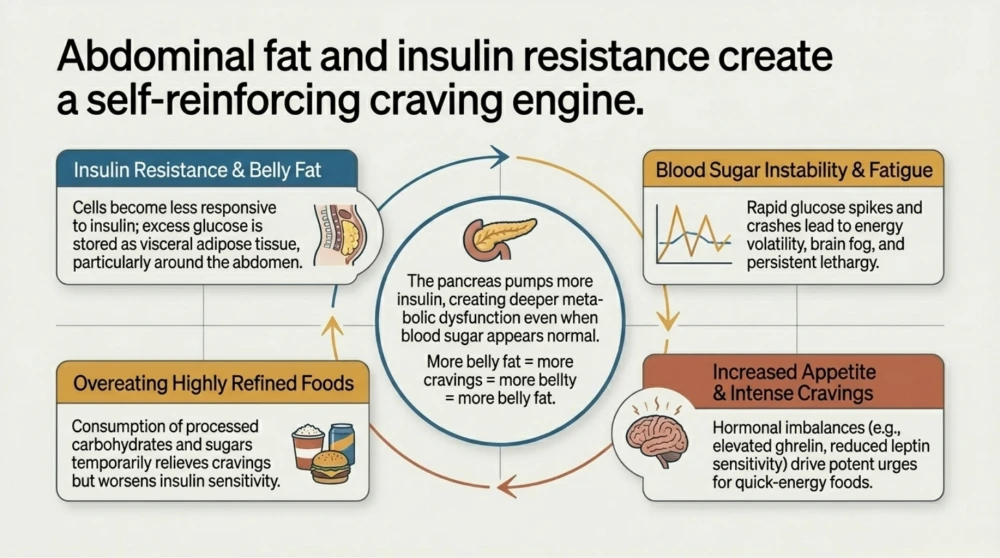
Another important but often overlooked contributor to cravings is insulin resistance. Insulin resistance develops when the body's cells become less responsive to insulin signals.
Initially, the pancreas compensates by producing more insulin. During this stage, blood sugar levels may still appear relatively normal, but metabolic dysfunction is already developing underneath.
Many individuals with insulin resistance experience:
- Frequent hunger
- Cravings for carbohydrates
- Fatigue after meals
- Energy crashes
- Belly fat accumulation
This creates a frustrating cycle. Cravings encourage consumption of highly refined foods. These foods worsen blood sugar instability, which then promotes further cravings.
Many people interpret this as a willpower problem when it may actually reflect deeper metabolic dysfunction.
This is one reason cravings are commonly seen in individuals with:
- Prediabetes
- Fatty liver
- Metabolic syndrome
- Abdominal obesity
Why Food Cravings Often Become Stronger at Night
A common pattern observed in clinical practice is that cravings become significantly stronger during the evening. Many individuals maintain reasonable control throughout the day but struggle after dinner.
There are several reasons for this. First, decision fatigue accumulates throughout the day. By evening, mental energy is often lower. Resisting temptation becomes harder simply because the brain is tired.
Second, many people use food as a reward after a long day. They may unconsciously think: "I've worked hard today. I deserve a treat."
Third, late-night screen exposure frequently increases exposure to food-related content and advertisements, which can stimulate appetite even in the absence of hunger.
Over time, these repeated behaviors create strong habits that make nighttime cravings increasingly predictable.
Why Gut Health May Influence Cravings
The digestive system and brain communicate continuously through complex biological pathways. This relationship is often referred to as the gut-brain axis.
Modern research suggests that digestive health may influence:
- Appetite regulation
- Food preferences
- Satiety signals
- Metabolic health
Many individuals with digestive complaints such as:
- Bloating
- Irregular bowel habits
- Digestive discomfort
- Post-meal fatigue
also report difficulties managing cravings. While cravings are never caused by a single factor, digestive health is increasingly recognized as one piece of the broader metabolic puzzle.
This is why addressing digestive health often becomes an important component of sustainable weight management.
Why Belly Fat and Cravings Frequently Occur Together
Many individuals who struggle with cravings also notice increasing abdominal fat. This relationship is not accidental.
Belly fat is strongly associated with:
- Insulin resistance
- Inflammation
- Poor metabolic flexibility
- Blood sugar instability
These same metabolic disturbances can increase appetite and cravings. As cravings increase, calorie intake often rises. As calorie intake rises, belly fat accumulation may increase further.
The result becomes a self-reinforcing cycle: More cravings → More overeating → More belly fat → Worse metabolic health → More cravings.
This helps explain why cravings often become increasingly difficult to manage over time.
Why Restrictive Diets Often Trigger More Cravings
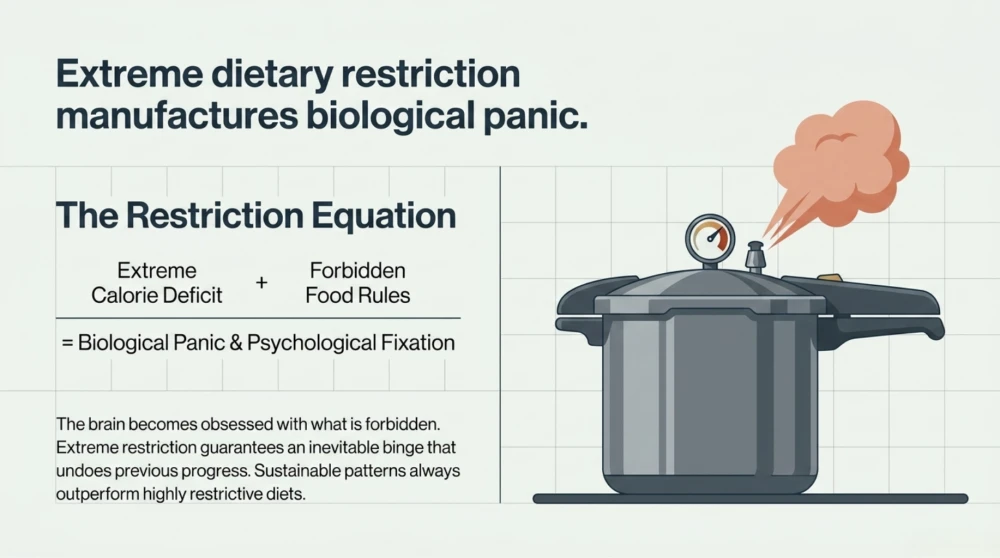
One of the biggest mistakes many people make during weight loss is becoming excessively restrictive. They eliminate numerous foods suddenly, drastically reduce calorie intake, and attempt to follow unrealistic eating plans.
Initially, motivation may be high enough to sustain the approach. However, extreme restriction often creates psychological and biological pressure. The brain becomes increasingly focused on the foods that are being forbidden.
As a result, cravings often intensify. Eventually, many individuals experience episodes of overeating or binge eating that undo much of their earlier progress. This is one reason sustainable eating patterns generally outperform highly restrictive diets in the long term.
Why Modern Lifestyles Create Constant Craving Triggers
Many adults live in environments that continuously stimulate appetite. Food delivery applications, social media, workplace snacks, convenience stores, and advertising create almost constant exposure to highly palatable foods.
Unlike previous generations, modern individuals rarely need to seek food actively. Food seeks them. This constant exposure makes cravings more frequent and creates additional challenges for those trying to lose weight.
Successful weight management therefore often requires not only changing food choices but also managing the environment that triggers cravings.
Why Cravings Are Usually a Symptom Rather Than the Main Problem
Perhaps the most important lesson is that cravings are rarely the root cause of weight gain.
More often, cravings reflect deeper influences such as:
- Poor sleep
- Stress overload
- Insulin resistance
- Digestive dysfunction
- Highly processed diets
- Irregular eating patterns
When these factors improve, cravings often become easier to manage naturally. This is why focusing only on resisting cravings may produce limited success. Understanding why cravings occur in the first place is often far more effective.
How to Reduce Food Cravings Naturally
Once people understand the factors that drive cravings, the next question naturally becomes: "How can I reduce cravings without feeling deprived all the time?"
The good news is that cravings often improve when the underlying metabolic environment becomes healthier. Many people spend years fighting cravings directly without addressing the factors that are triggering them.
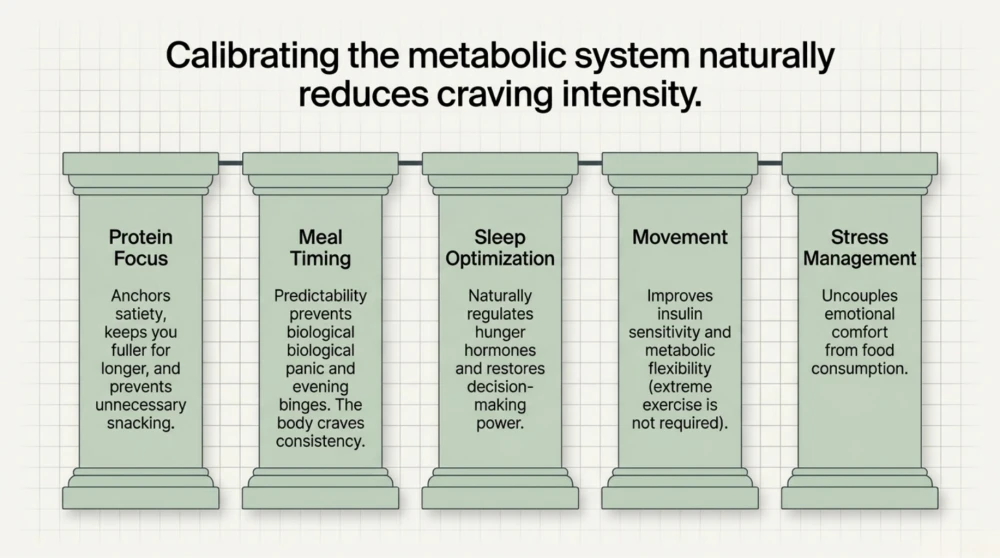
In reality, cravings usually become easier to manage when sleep improves, blood sugar becomes more stable, meals become more satisfying, and stress becomes more manageable.
The goal is not to eliminate cravings completely. The goal is to reduce their frequency, intensity, and ability to disrupt healthy eating habits.
Why Protein Is One of the Most Effective Tools for Appetite Control
One of the most common dietary mistakes during weight loss is eating too little protein. Many individuals focus heavily on reducing calories while paying very little attention to satiety. Protein plays an important role in helping people feel fuller for longer after meals.
Adequate protein intake often helps:
- Reduce hunger between meals
- Improve meal satisfaction
- Reduce unnecessary snacking
- Support muscle preservation during weight loss
When meals are dominated by refined carbohydrates but contain very little protein, hunger and cravings often return much sooner. This is one reason individuals frequently feel hungry shortly after eating highly processed meals.
Why Meal Timing Can Influence Cravings
Many people unintentionally create cravings through irregular eating patterns. Skipping meals, delaying meals excessively, or going long periods without eating may initially appear helpful for reducing calorie intake.
However, for many individuals these strategies backfire. Extreme hunger often reduces decision-making quality and increases the likelihood of overeating later. Many people therefore find themselves eating reasonably well during the day but losing control in the evening.
Maintaining a structured eating pattern often improves:
- Satiety
- Energy stability
- Portion control
- Craving management
The body generally responds better to consistency than unpredictability.
Why Sleep Is One of the Most Underrated Solutions for Cravings
Many people search for supplements, detox plans, or appetite suppressants while completely ignoring sleep. Yet sleep is one of the strongest biological regulators of appetite.
When sleep quality improves, many individuals notice:
- Reduced hunger
- Fewer cravings
- Better food choices
- Improved energy levels
In contrast, sleep deprivation frequently increases the desire for calorie-dense foods. Many people who struggle with evening cravings are also struggling with inadequate sleep.
This is one reason improving sleep often produces benefits that extend far beyond energy and recovery.
Why Physical Activity Can Help Reduce Cravings
Most people think of exercise primarily as a way to burn calories. However, regular movement also influences appetite regulation and metabolic health.
Physical activity helps improve:
- Insulin sensitivity
- Blood sugar stability
- Stress management
- Mood regulation
- Metabolic flexibility
As these factors improve, cravings often become easier to manage. Importantly, this does not require extreme exercise.
Consistent moderate activity such as walking, cycling, resistance training, or swimming often provides significant benefits.
The goal is creating a metabolically healthier body rather than simply burning calories.
Why Managing Stress Is Essential for Craving Control
Many cravings are triggered by emotional rather than physical needs. When stress becomes chronic, the brain frequently seeks quick sources of comfort and reward.
Food becomes an easy and highly accessible solution. Unfortunately, this creates a pattern where eating temporarily relieves stress but does not solve the underlying problem.
Over time, repeated emotional eating can contribute to:
- Weight gain
- Belly fat accumulation
- Poor dietary consistency
- Guilt and frustration
This is why long-term weight management often improves when stress management becomes part of the strategy.
If you want to understand this relationship further, you may also explore why stress and lifestyle diseases often occur together.
Why Highly Restrictive Diets Rarely Work Long-Term
One of the biggest mistakes people make is assuming that stricter diets automatically produce better results. In reality, highly restrictive approaches often increase food obsession and cravings. The brain naturally becomes more focused on foods that are perceived as forbidden.
This can create a cycle of:
- Restriction
- Cravings
- Overeating
- Guilt
- More restriction
Many individuals spend years trapped in this pattern. Sustainable weight management usually works better when people learn how to build realistic eating habits rather than relying on extreme dietary rules.
Why Cravings Often Improve When Metabolic Health Improves
One important observation in clinical practice is that cravings often become easier to manage when metabolic health improves.
As insulin sensitivity improves, sleep becomes better, physical activity increases, and dietary quality improves, many individuals report:
- Reduced cravings
- Better appetite control
- Improved meal satisfaction
- Less emotional eating
This highlights an important point. Cravings are often a symptom of metabolic imbalance rather than the primary problem itself. Addressing the underlying causes usually produces more sustainable results than relying solely on willpower.
Why Sustainable Lifestyle Structure Matters Most
Long-term success rarely comes from a single dietary trick or appetite-suppressing strategy. Instead, it usually develops when multiple lifestyle factors begin supporting each other.
These include:
- Consistent sleep
- Adequate protein intake
- Regular movement
- Stress management
- Structured meal patterns
- Better metabolic health
This is exactly why structured approaches such as the Lifestyle Modification Program focus on improving the overall metabolic environment rather than simply suppressing cravings.
Key Takeaways: What You Should Remember
- Food cravings are different from physical hunger.
- Poor sleep, stress, insulin resistance, and processed foods commonly increase cravings.
- Frequent cravings can significantly slow weight-loss progress.
- Protein-rich meals often improve satiety and reduce unnecessary snacking.
- Structured meal timing helps stabilize appetite.
- Regular physical activity supports healthier appetite regulation.
- Managing stress is often essential for reducing emotional eating.
- Sustainable lifestyle habits work better than extreme restriction.
You can book a consultation here:
Book Appointment
Written by Dr. Pankaj Kumar, General & Lifestyle Physician, Dwarka, New Delhi