

















- 9th September 2026
Table of Contents
- Why Does the Body Need Vitamin B12?
- How Are Metformin and Vitamin B12 Deficiency Connected?
- Does Everyone Taking Metformin Develop Vitamin B12 Deficiency?
- Who Is More Likely to Develop Vitamin B12 Deficiency While Taking Metformin?
- 7 Symptoms of Vitamin B12 Deficiency Patients Taking Metformin Should Recognise
- Symptom 1: Persistent Tiredness or Unusual Fatigue
- Symptom 2: Numbness or Tingling in the Hands and Feet
- Symptom 3: Weakness or Reduced Exercise Capacity
- Symptom 4: Balance Problems or Difficulty Walking
- Symptom 5: A Sore, Red or Smooth Tongue
- Symptom 6: Pale Skin, Breathlessness or Palpitations
- Symptom 7: Memory, Concentration or Mood Changes
- The Most Important Clue May Be a Combination of Symptoms
- Vitamin B12 Deficiency Can Be Mistaken for Diabetic Neuropathy
- Can Vitamin B12 Deficiency Occur Without Anaemia?
- Do Not Stop Metformin Because You Are Worried About Vitamin B12
- Who Should Be Tested for Vitamin B12 While Taking Metformin?
- When Should Vitamin B12 Be Checked After Starting Metformin?
- What Blood Test Is Used to Check Vitamin B12?
- Why the Complete Blood Count Is Useful
- Why Vitamin B12 Deficiency May Be Hidden by Iron Deficiency
- What Is Methylmalonic Acid?
- What About Homocysteine?
- Serum B12 Is Not the Entire Diagnosis
- Metformin May Not Be the Only Reason Vitamin B12 Is Low
- Vegetarian Diets, Metformin and Vitamin B12 Deficiency
- Do Fermented Foods Provide Enough Vitamin B12?
- Do Acid-Suppressing Medicines Also Affect Vitamin B12?
- Should Everyone Taking Metformin Take Vitamin B12 Supplements?
- Can Too Much Vitamin B12 Be Harmful?
- How Is Confirmed Vitamin B12 Deficiency Treated?
- When Might Vitamin B12 Injections Be Preferred?
- How Long Does Vitamin B12 Treatment Continue?
- How Quickly Do Symptoms Improve After Vitamin B12 Treatment?
- Should Metformin Be Stopped if Vitamin B12 Deficiency Is Confirmed?
- Do Not Assume Every Neuropathy in a Metformin User Is B12 Deficiency
- The Goal Is Early Recognition, Not Fear of Metformin
- Does the Dose of Metformin Affect Vitamin B12 Deficiency Risk?
- Vitamin B12 Neuropathy vs Diabetic Neuropathy: Can You Tell the Difference?
- Symptoms Alone May Not Reliably Separate Them
- A Person With Diabetes Can Have More Than One Cause of Neuropathy
- Can Vitamin B12 Treatment Prevent Diabetic Neuropathy?
- What Should Be Monitored After Starting Vitamin B12 Treatment?
- Why Treating the Cause Matters as Much as Replacing Vitamin B12
- Vitamin B12 Foods for Indian Patients Taking Metformin
- Vitamin B12 Sources for Non-Vegetarians
- Vitamin B12 Sources for Vegetarians
- Vitamin B12 for Vegan Patients
- Can Food Alone Correct Metformin-Associated Vitamin B12 Deficiency?
- Should Vitamin B12 Be Combined With Folate?
- Does Calcium Prevent Metformin-Related Vitamin B12 Deficiency?
- When Vitamin B12 Symptoms Need More Urgent Assessment
- Seven Symptoms Worth Remembering
- Common Myths About Metformin and Vitamin B12 Deficiency
- Myth 1: Everyone Taking Metformin Will Become Vitamin B12 Deficient
- Myth 2: You Should Stop Metformin if Your Vitamin B12 Is Low
- Myth 3: Normal Haemoglobin Means Vitamin B12 Deficiency Is Impossible
- Myth 4: Every Tingling Sensation in a Metformin User Is B12 Deficiency
- Myth 5: Every Patient on Metformin Needs Vitamin B12 Injections
- Myth 6: A Multivitamin Is Enough to Treat Severe B12 Deficiency
- Myth 7: Once Vitamin B12 Becomes Normal, Treatment Can Always Be Stopped
- A Practical Checklist for Patients Taking Metformin
- Metformin Is Still an Important Medicine
- Key Takeaways: Metformin and Vitamin B12 Deficiency
- References
Metformin and Vitamin B12 Deficiency: 7 Symptoms Patients Should Recognise
Metformin is one of the most widely used medicines for type 2 diabetes. It is also prescribed in selected people with prediabetes and is sometimes used as part of the management of polycystic ovary syndrome (PCOS) and insulin resistance.
For most people, metformin is an effective and well-established medicine. However, there is one long-term effect that patients can easily overlook: metformin and vitamin B12 deficiency are associated, particularly with prolonged treatment and in people who already have other risk factors for low vitamin B12.
The problem is not that every person taking metformin will become vitamin B12 deficient. Many people take it for years without developing clinically important deficiency.
The concern is that vitamin B12 deficiency can develop gradually, and some of its symptoms—tiredness, weakness, numbness, tingling, memory problems or difficulty walking—may be mistakenly attributed to diabetes, ageing, stress or diabetic neuropathy.
This distinction matters because prolonged vitamin B12 deficiency can affect both blood formation and the nervous system. If neurological deficiency is allowed to continue for too long, recovery may be incomplete even after vitamin B12 is replaced.
Understanding the relationship between metformin and vitamin B12 deficiency therefore does not mean becoming afraid of metformin. It means recognising a known, monitorable and treatable nutritional complication of long-term therapy.
Why Does the Body Need Vitamin B12?
Vitamin B12, also known as cobalamin, is an essential water-soluble vitamin.
It plays an important role in DNA synthesis, red blood cell formation and normal neurological function. It is also involved in biochemical pathways required for normal cellular metabolism.
Unlike many nutrients that are widely distributed across plant and animal foods, naturally occurring vitamin B12 is found predominantly in animal-derived foods.
Important dietary sources include:
- Milk and dairy products.
- Eggs.
- Fish and seafood.
- Chicken and meat.
- Liver and other organ meats.
- Vitamin B12-fortified foods.
People following vegan diets therefore need particular attention to reliable fortified foods or vitamin B12 supplementation.
Vitamin B12 Deficiency Can Affect More Than Haemoglobin
Many patients associate vitamin B12 deficiency only with anaemia.
That is an incomplete picture.
Vitamin B12 deficiency can affect red blood cells, peripheral nerves, the spinal cord and cognitive or psychological function.
Importantly, neurological symptoms can sometimes occur even without obvious anaemia.
This is why a normal haemoglobin result should not automatically exclude vitamin B12 deficiency when the clinical picture is suggestive.
How Are Metformin and Vitamin B12 Deficiency Connected?
Long-term metformin therapy has been consistently associated with lower circulating vitamin B12 concentrations and an increased risk of biochemical vitamin B12 deficiency.
The relationship has been demonstrated in clinical studies, systematic reviews and long-term follow-up data. Current diabetes guidance therefore advises consideration of vitamin B12 monitoring in people receiving chronic metformin treatment, particularly when symptoms or additional risk factors are present.
Metformin Appears to Reduce Vitamin B12 Absorption
The precise mechanism is probably multifactorial.
Vitamin B12 from food must pass through several stages before it can be absorbed. It is released from food, interacts with binding proteins, attaches to intrinsic factor produced by the stomach and is eventually absorbed in the terminal part of the small intestine.
Metformin appears to interfere with this absorption process.
One proposed mechanism involves interference with calcium-dependent binding of the intrinsic factor–vitamin B12 complex to receptors in the terminal ileum.
Other mechanisms involving intestinal motility, bile acids and changes in the gastrointestinal environment have also been proposed.
The practical result is more important than the exact molecular explanation: in susceptible people, chronic metformin exposure can gradually reduce vitamin B12 stores.

Does Everyone Taking Metformin Develop Vitamin B12 Deficiency?
No.
This is an important point because discussions about metformin and vitamin B12 deficiency can easily become unnecessarily alarming.
The risk is not uniform.
Studies have reported widely varying rates of vitamin B12 deficiency because populations, metformin doses, treatment duration, laboratory definitions and vitamin B12 cut-offs differ substantially between studies.
Recent reviews continue to support the association, particularly with longer exposure and higher metformin doses, but they also highlight considerable variability in reported prevalence.
Risk Generally Becomes More Relevant With Longer Treatment
Vitamin B12 stores in the body are relatively large, so deficiency may take considerable time to become clinically apparent.
This helps explain why someone may tolerate metformin well for several years before low vitamin B12 becomes apparent.
Longer treatment duration is therefore an important part of the history.
The 2026 ADA Standards recommend periodic assessment in long-term metformin users and specifically include vitamin B12 assessment in the comprehensive evaluation of people who have been taking metformin for more than five years.
Who Is More Likely to Develop Vitamin B12 Deficiency While Taking Metformin?
Metformin should not be considered the only possible cause of low vitamin B12.
A patient may have several risk factors operating simultaneously.
Risk deserves greater attention in people with:
- Long-duration metformin therapy.
- Higher metformin doses.
- Low baseline vitamin B12 stores.
- Vegetarian or particularly vegan dietary patterns without reliable B12 intake.
- Older age.
- Previous stomach or small-bowel surgery.
- Conditions that interfere with intestinal absorption.
- Pernicious anaemia or autoimmune gastritis.
- Other medicines or conditions that may contribute to vitamin B12 deficiency.
Someone who combines several of these factors may deserve closer attention than a person who has recently started a modest dose of metformin and has no other B12 risk factors.
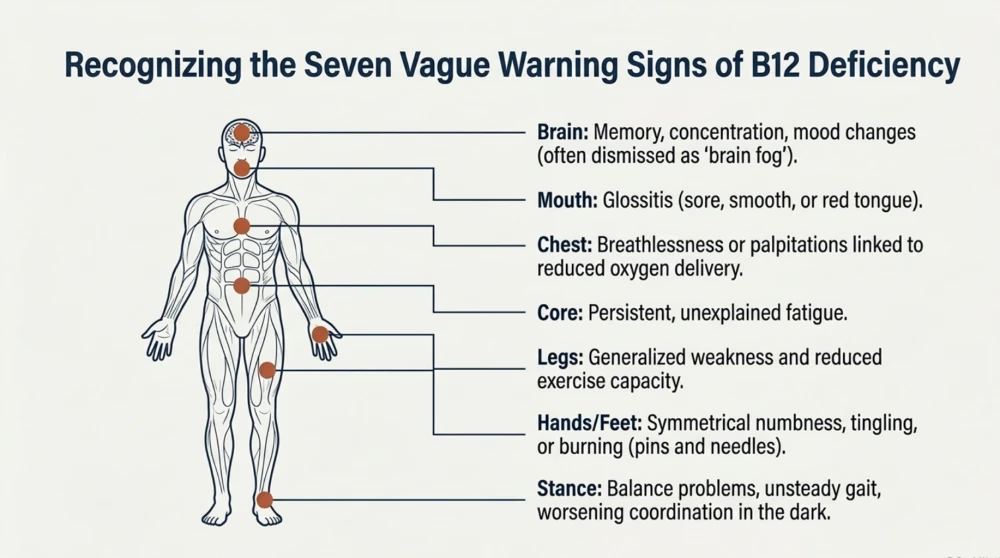
7 Symptoms of Vitamin B12 Deficiency Patients Taking Metformin Should Recognise
Vitamin B12 deficiency does not always produce dramatic symptoms initially.
The earliest changes can be vague and easy to ignore. Symptoms also overlap with many other conditions, so none of the following proves that vitamin B12 deficiency is present.
However, recognising these seven patterns can help determine when testing is appropriate.
Symptom 1: Persistent Tiredness or Unusual Fatigue
Fatigue is one of the least specific symptoms in medicine.
Someone with diabetes may feel tired because of high glucose, low glucose, poor sleep, sleep apnoea, thyroid disease, anaemia, infection, depression, kidney disease, medication effects or many other causes.
Vitamin B12 deficiency belongs on that list.
Why Vitamin B12 Deficiency Can Cause Fatigue
Vitamin B12 is required for normal red blood cell production.
When deficiency becomes significant, ineffective blood cell production can eventually lead to megaloblastic anaemia. Reduced oxygen-carrying capacity may contribute to tiredness, reduced exercise tolerance, breathlessness or weakness.
But a patient does not necessarily need severe anaemia before feeling unwell.
If persistent unexplained fatigue develops after years of metformin use, particularly when accompanied by other symptoms described below, vitamin B12 status is worth considering.
Symptom 2: Numbness or Tingling in the Hands and Feet
This is one of the most clinically important symptoms because it can easily be mistaken for diabetic peripheral neuropathy.
Patients may describe:
- Pins and needles.
- Tingling.
- Numbness.
- Burning sensations.
- Altered sensation in the feet.
- A feeling that the feet are covered by socks even when they are not.
These symptoms can certainly occur because of diabetic neuropathy, but vitamin B12 deficiency can also damage peripheral nerves.
Do Not Automatically Blame Every Tingling Sensation on Diabetes
This is particularly relevant in someone taking metformin for many years.
If new neuropathic symptoms develop, or previously stable neuropathy appears to worsen, it is reasonable to consider vitamin B12 deficiency among the possible causes.
Current ADA guidance specifically highlights peripheral neuropathy as a reason to consider vitamin B12 assessment in people taking metformin.
There is another important reason to make this distinction.
Improving glucose control is important for diabetic neuropathy, but it will not correct a coexisting vitamin B12 deficiency. If both problems are present, both need to be recognised.
Symptom 3: Weakness or Reduced Exercise Capacity
Some patients do not describe their problem as tiredness. Instead, they notice that ordinary activities have become harder.
Walking the same distance feels more difficult. Climbing stairs requires more effort. They may feel that their legs lack strength or that they tire unusually quickly during exercise.
Again, this symptom is not specific to vitamin B12 deficiency.
Weakness Needs a Broader Assessment
Possible causes include anaemia, loss of muscle mass, low calorie or protein intake, vitamin D deficiency, thyroid disorders, heart or lung disease, neurological conditions, poorly controlled diabetes and many other problems.
However, in a patient taking long-term metformin, B12 deficiency should remain part of the differential diagnosis—especially when weakness occurs together with numbness, tingling, pallor or changes in balance.
Symptom 4: Balance Problems or Difficulty Walking
More significant vitamin B12 deficiency can affect neurological pathways involved in sensation, position awareness and movement.
A patient may begin feeling unsteady while walking or notice that balance is poorer in the dark or when visual cues are reduced.
Some people describe their legs as heavy, awkward or less coordinated than before.
Balance Problems Should Not Be Dismissed as Normal Ageing
There are many possible causes of an unsteady gait, including inner-ear disorders, medications, vision problems, neurological disease, diabetic neuropathy and muscle weakness.
Vitamin B12 deficiency is particularly important because prolonged neurological injury may become difficult to reverse completely.
New gait disturbance, progressive weakness or significant loss of balance therefore deserves medical assessment rather than simply taking an over-the-counter vitamin supplement and waiting.
Symptom 5: A Sore, Red or Smooth Tongue
Vitamin B12 deficiency can sometimes affect the mouth and tongue.
The tongue may become painful, inflamed, unusually smooth or red—a condition known as glossitis.
Some patients may also report mouth discomfort or altered taste.
Oral Symptoms Are Not Specific to Vitamin B12 Deficiency
Iron deficiency, folate deficiency, infections, dry mouth, dental problems and several other conditions can produce oral symptoms.
Nevertheless, a sore or smooth tongue occurring alongside fatigue, anaemia or neurological symptoms can provide another clue.
Symptom 6: Pale Skin, Breathlessness or Palpitations
When vitamin B12 deficiency progresses sufficiently to cause anaemia, patients may develop symptoms related to reduced oxygen delivery.
These can include pallor, shortness of breath on exertion, awareness of the heartbeat, dizziness or reduced exercise tolerance.
These symptoms should not automatically be assumed to be caused by vitamin B12 deficiency.
Breathlessness and Palpitations Need Appropriate Evaluation
Heart disease, lung disease, iron deficiency, thyroid disease, arrhythmias and many other conditions can cause similar symptoms.
New or significant breathlessness, chest discomfort, fainting or persistent palpitations deserves medical assessment rather than self-treatment with vitamin B12.
Symptom 7: Memory, Concentration or Mood Changes
Vitamin B12 deficiency can also produce neuropsychiatric symptoms.
Some people report difficulty concentrating, forgetfulness, irritability or changes in mood.
In more substantial deficiency, neurological and cognitive effects can become more pronounced.
Brain Fog Does Not Automatically Mean Vitamin B12 Deficiency
Poor sleep, anxiety, depression, thyroid disorders, medications, menopause, sleep apnoea, glucose fluctuations and numerous other factors can affect concentration and memory.
Therefore, cognitive symptoms should not be used to self-diagnose vitamin B12 deficiency.
But when such symptoms appear together with long-term metformin exposure, anaemia or neurological symptoms, checking vitamin B12 may be clinically appropriate.
The Most Important Clue May Be a Combination of Symptoms
One symptom alone rarely provides the answer.
Fatigue alone is extremely common. Tingling alone can have many explanations. A sore tongue alone may be unrelated.
But consider a patient who has been taking metformin for eight years and gradually develops fatigue, numb feet, poorer balance and macrocytic anaemia.
The combination changes the level of suspicion considerably.
This is why metformin and vitamin B12 deficiency should be approached clinically rather than by simply matching one symptom to one disease.
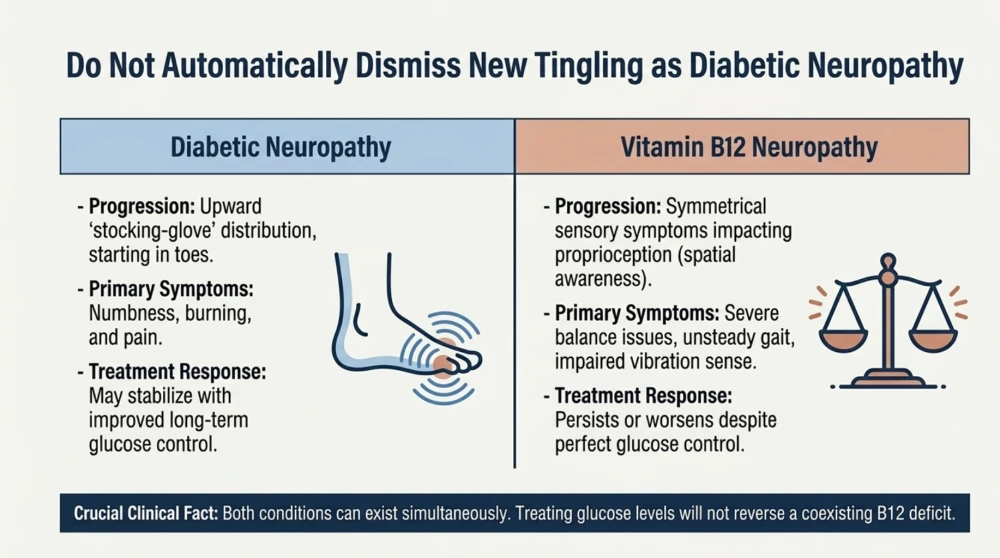
Vitamin B12 Deficiency Can Be Mistaken for Diabetic Neuropathy
This deserves particular emphasis.
Peripheral neuropathy is a recognised complication of diabetes. Vitamin B12 deficiency can also produce peripheral neurological symptoms. A patient taking metformin may potentially have either condition—or both simultaneously.
Automatically labelling numbness and tingling as “diabetic neuropathy” can therefore miss a treatable contributor.
Recent reviews continue to highlight neurological complications as an important consequence of metformin-associated B12 deficiency.
Good Glucose Control Does Not Exclude B12-Related Neuropathy
Suppose a patient's HbA1c has improved substantially, but numbness and tingling continue to progress.
That does not prove vitamin B12 deficiency, but it should encourage consideration of other causes rather than assuming that all neuropathy in a person with diabetes must be caused by glucose.
Vitamin B12 measurement is relatively straightforward and may identify an important reversible contributor.
Can Vitamin B12 Deficiency Occur Without Anaemia?
Yes.
This is one of the most important messages for patients and clinicians.
Vitamin B12 deficiency is sometimes imagined as a simple sequence:
Low B12 → macrocytic anaemia → neurological symptoms.
Real clinical presentations are not always so orderly.
Neurological manifestations can occur without obvious macrocytic anaemia, and changes in the complete blood count may be subtle or absent.
A Normal Haemoglobin Does Not Completely Rule Out Vitamin B12 Deficiency
This becomes particularly relevant when someone has neurological symptoms.
If a patient on long-term metformin develops persistent numbness, tingling, gait disturbance or other suggestive neurological symptoms, vitamin B12 assessment should not necessarily be abandoned simply because haemoglobin is normal.
Do Not Stop Metformin Because You Are Worried About Vitamin B12
Perhaps the most important practical message is this: do not stop metformin on your own because you have read that it can lower vitamin B12.
Metformin can provide important benefits in appropriately selected patients. Vitamin B12 deficiency, when it occurs, can usually be investigated and treated without automatically abandoning an otherwise useful medicine.
The appropriate response to a recognised and manageable adverse effect is generally monitoring and treatment—not unnecessary discontinuation of effective therapy.
The next question is therefore not whether everyone should stop metformin. It is who should be tested, which blood tests are useful, what B12 levels actually mean, and how confirmed deficiency should be treated.
Who Should Be Tested for Vitamin B12 While Taking Metformin?
Not every person who starts metformin needs frequent vitamin B12 testing from the first few months of treatment. The risk generally becomes more relevant with longer exposure, higher doses and the presence of additional factors that can reduce vitamin B12 intake or absorption.
A more useful approach is risk-based monitoring.
Vitamin B12 testing deserves particular consideration when a person taking metformin develops unexplained anaemia, numbness, tingling, burning sensations, weakness, balance problems or other symptoms compatible with vitamin B12 deficiency.
Testing may also be appropriate in long-term metformin users even before obvious symptoms develop, particularly when additional risk factors are present.
Patients Who Deserve Closer Attention
The possibility of metformin and vitamin B12 deficiency becomes more relevant in people with:
- Several years of metformin treatment.
- Higher daily metformin doses.
- Previous low or borderline vitamin B12 levels.
- Vegetarian or vegan dietary patterns with inadequate reliable B12 intake.
- Older age.
- Unexplained anaemia or macrocytosis.
- New or worsening peripheral neuropathy.
- Previous gastric or intestinal surgery.
- Conditions associated with malabsorption.
- Pernicious anaemia or autoimmune gastritis.
- Other medicines or conditions that may impair vitamin B12 status.
The presence of several risk factors together strengthens the reason for testing.
When Should Vitamin B12 Be Checked After Starting Metformin?
There is no universal rule requiring every patient to have vitamin B12 measured at exactly 6 months, 12 months or another fixed interval after starting metformin.
This is important because online advice sometimes creates the impression that a single mandatory testing schedule applies to everyone.
Current recommendations favour periodic assessment during long-term therapy, particularly when anaemia, neuropathy or other risk factors are present.
Symptoms Should Override the Calendar
If someone develops numbness, tingling, unexplained anaemia or gait disturbance after taking metformin, there is little sense in delaying investigation simply because the next routine screening test is not due.
Conversely, someone who recently started metformin and has no symptoms or additional B12 risk factors may not need repeated testing at short intervals.
Monitoring should therefore reflect treatment duration, dose, diet, age, previous B12 results, symptoms and the wider medical history.
What Blood Test Is Used to Check Vitamin B12?
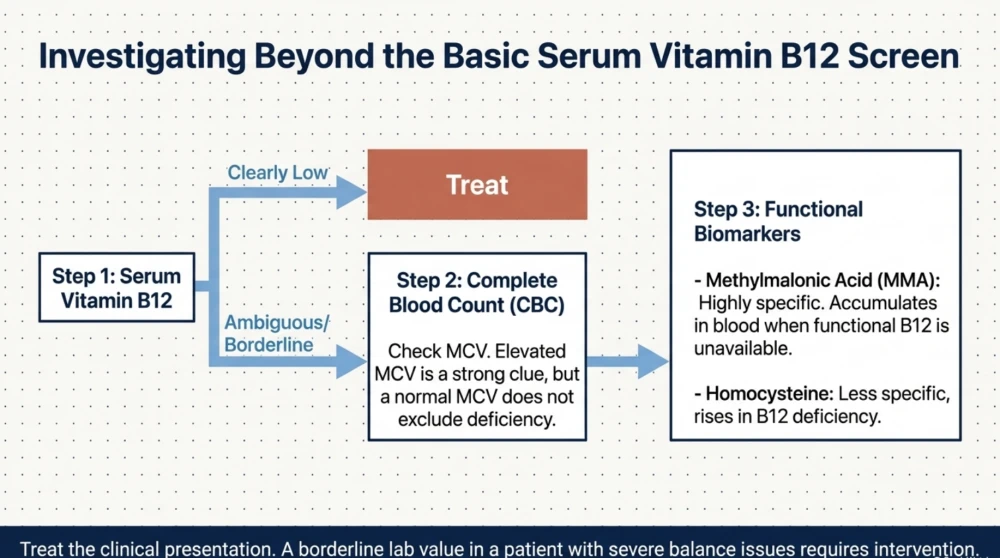
The usual starting investigation is a serum vitamin B12 concentration.
This test is widely available and useful, but interpretation is not always as simple as dividing results into “normal” and “deficient.”
Different laboratories may use different assays, units and reference ranges. A value that is clearly very low is usually easier to interpret than one sitting close to the lower limit of the laboratory range.
Borderline Vitamin B12 Results Need Clinical Context
A patient may have symptoms suggestive of deficiency while serum vitamin B12 is borderline rather than frankly low.
In such cases, the result should be interpreted alongside:
- Symptoms and neurological examination.
- Complete blood count.
- Mean corpuscular volume or MCV.
- Dietary history.
- Metformin exposure.
- Other medicines.
- Previous gastrointestinal surgery or disease.
- Other laboratory investigations when indicated.
Simply declaring every borderline value “normal” can miss clinically relevant deficiency, while treating every low-normal result as definite disease can lead to unnecessary supplementation and investigation.
Why the Complete Blood Count Is Useful
Vitamin B12 deficiency can interfere with normal DNA synthesis in developing blood cells.
Classically, this can produce megaloblastic anaemia with enlarged red blood cells.
A complete blood count may therefore show reduced haemoglobin and an increased MCV.
Macrocytosis Can Be an Important Clue
MCV represents the average size of circulating red blood cells.
An elevated MCV can occur in vitamin B12 deficiency, but it is not specific. Folate deficiency, alcohol use, liver disease, hypothyroidism, certain medications and bone marrow disorders can also cause macrocytosis.
Similarly, a normal MCV does not completely exclude vitamin B12 deficiency.
This is especially important when neurological symptoms are present.
Why Vitamin B12 Deficiency May Be Hidden by Iron Deficiency
Real patients do not always have one nutritional deficiency at a time.
Iron deficiency tends to produce smaller red blood cells, while vitamin B12 deficiency classically produces larger cells.
If both deficiencies occur together, the effects on red-cell size may partly offset each other.
As a result, the MCV may appear relatively normal despite clinically important nutritional deficiency.
Do Not Rely on MCV Alone
A normal MCV should therefore not be used as the sole reason to dismiss vitamin B12 deficiency in a symptomatic patient taking long-term metformin.
Haemoglobin, ferritin or iron studies where indicated, serum B12, symptoms and the wider clinical picture should be considered together.
What Is Methylmalonic Acid?
Vitamin B12 is required for the metabolism of methylmalonic acid, commonly abbreviated as MMA.
When functional vitamin B12 availability becomes inadequate, MMA can accumulate.
Measurement of methylmalonic acid can therefore be useful when serum vitamin B12 is borderline or when the laboratory result does not fit the clinical picture.
MMA Can Help Clarify an Uncertain B12 Result
For example, suppose someone taking metformin for several years develops progressive tingling and their serum B12 is close to the lower end of the reference interval.
In an appropriate clinical setting, an elevated MMA may provide additional evidence supporting functional vitamin B12 deficiency.
However, MMA also has limitations. Kidney dysfunction can increase methylmalonic acid, making interpretation more difficult.
It is therefore not a perfect stand-alone test either.
What About Homocysteine?
Vitamin B12 participates in the conversion of homocysteine to methionine. When vitamin B12 is deficient, homocysteine concentrations may rise.
Homocysteine can therefore provide another biochemical clue in uncertain cases.
However, elevated homocysteine is not specific for vitamin B12 deficiency.
High Homocysteine Has Several Possible Causes
Folate deficiency, vitamin B6 status, kidney function, genetic factors, hypothyroidism and other influences can affect homocysteine concentrations.
For this reason, methylmalonic acid is generally more specific for vitamin B12 deficiency than homocysteine, although neither should be interpreted without clinical context.
Serum B12 Is Not the Entire Diagnosis
Laboratory medicine often creates an understandable desire for a single definitive number.
Vitamin B12 deficiency does not always work that way.
A clearly low serum B12 concentration in someone with compatible symptoms is relatively straightforward. Borderline results, neurological presentations and coexisting nutritional deficiencies can be more complicated.
The most useful interpretation therefore combines biochemical evidence with the patient's symptoms, medication history, diet and examination.
Metformin May Not Be the Only Reason Vitamin B12 Is Low
Finding a low vitamin B12 level in someone taking metformin does not prove that metformin is the sole cause.
This distinction becomes particularly important when deficiency is severe, recurrent or unexpectedly difficult to correct.
Other Causes of Vitamin B12 Deficiency Include
- Low dietary intake.
- Vegan diets without adequate supplementation or fortified foods.
- Pernicious anaemia.
- Autoimmune gastritis.
- Previous bariatric or gastric surgery.
- Removal or disease of the terminal ileum.
- Crohn's disease affecting relevant intestinal regions.
- Other gastrointestinal malabsorption disorders.
- Certain medications.
Identifying the cause matters because it can influence both the treatment strategy and how long vitamin B12 replacement is required.
Vegetarian Diets, Metformin and Vitamin B12 Deficiency
This issue deserves particular attention in India, where vegetarian diets are common.
Vitamin B12 is naturally concentrated in animal-derived foods. Milk and dairy products can provide vitamin B12 for lacto-vegetarians, while eggs contribute in people who include them.
However, actual intake varies enormously.
A Vegetarian Diet Does Not Automatically Mean B12 Deficiency
Some vegetarians consume adequate amounts of dairy and fortified foods, while others have relatively little reliable B12 intake.
Vegan diets require even greater attention because unfortified plant foods are not dependable sources of physiologically meaningful vitamin B12.
Someone with relatively low dietary B12 intake who also takes metformin for many years may therefore have more than one contributor to deficiency.
Do Fermented Foods Provide Enough Vitamin B12?
Fermented foods are sometimes promoted online as natural alternatives to vitamin B12 supplementation.
This can be misleading.
Foods such as idli, dosa batter, fermented vegetables or other traditional fermented foods should not automatically be assumed to provide a reliable amount of biologically active vitamin B12 sufficient to prevent deficiency.
Do Not Depend on Unreliable Plant Sources for B12
People following vegan diets should use reliable vitamin B12-fortified foods or supplementation rather than depending on unverified claims about fermented foods, spirulina or similar products.
This becomes particularly important when another risk factor such as long-term metformin therapy is present.
Do Acid-Suppressing Medicines Also Affect Vitamin B12?
Long-term use of acid-suppressing medicines, particularly proton pump inhibitors, has also been associated with lower vitamin B12 status in some patients.
Gastric acid helps release food-bound vitamin B12 during digestion.
Reducing stomach acid for prolonged periods may therefore contribute to impaired absorption of food-bound B12 in susceptible individuals.
Metformin Plus Other Risk Factors Can Matter More Than Metformin Alone
A patient taking metformin and a proton pump inhibitor for many years, eating little animal-derived food and having a previous borderline B12 result may deserve closer monitoring than someone with none of those additional factors.
This illustrates why medication review should be part of the assessment rather than looking at metformin in isolation.
Should Everyone Taking Metformin Take Vitamin B12 Supplements?
Not necessarily.
The association between metformin and vitamin B12 deficiency does not automatically mean that every person prescribed metformin needs lifelong high-dose vitamin B12 supplementation.
Some people will maintain adequate vitamin B12 status through diet and normal body stores despite long-term metformin treatment.
Others may become deficient and require replacement.
Testing and Risk Assessment Can Guide Supplementation
A more individualised approach considers:
- Current vitamin B12 level.
- Symptoms.
- Metformin dose and duration.
- Dietary intake.
- Previous deficiency.
- Other causes of malabsorption.
- Other medications.
Routine low-dose supplementation may sometimes be considered in high-risk dietary situations, but this is different from assuming that every metformin user requires therapeutic-dose B12.
Can Too Much Vitamin B12 Be Harmful?
Vitamin B12 has a wide safety margin, and high-dose oral preparations are commonly used when clinically indicated.
Nevertheless, the fact that a vitamin is generally safe does not mean supplementation should replace diagnosis.
If someone has progressive numbness, weakness, gait disturbance or anaemia, simply buying a multivitamin can delay investigation of the actual problem.
Treating Yourself Can Also Alter Later Blood Tests
Once a person starts taking high-dose vitamin B12, serum concentrations may rise rapidly.
This can make subsequent interpretation more difficult if the original deficiency was never documented.
When significant symptoms are present, obtaining appropriate investigations before prolonged self-treatment is generally preferable, provided treatment of suspected serious deficiency is not unnecessarily delayed.
How Is Confirmed Vitamin B12 Deficiency Treated?
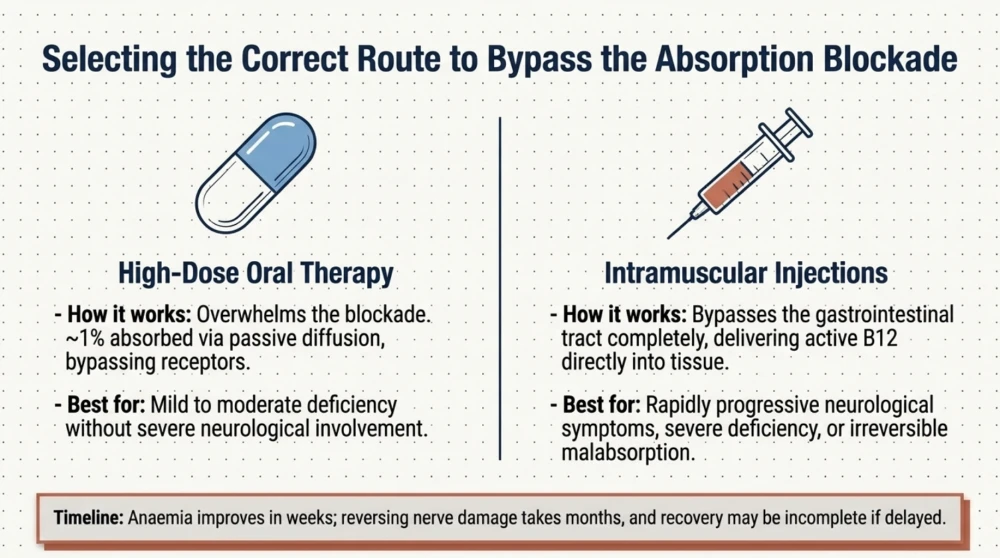
Vitamin B12 replacement can be given orally or by injection.
The appropriate route depends on the severity and cause of deficiency, the presence of neurological symptoms, the ability to absorb oral vitamin B12, adherence and local clinical practice.
Both approaches can be effective in appropriately selected patients.
Oral Vitamin B12 Can Work Even When Absorption Is Reduced
At sufficiently high oral doses, a small proportion of vitamin B12 can be absorbed through passive diffusion independently of the usual intrinsic factor-mediated pathway.
This is why high-dose oral vitamin B12 can successfully treat many patients, including some with impaired conventional absorption.
The exact dose and duration should be determined according to the clinical situation rather than copied from a generic supplement label.
When Might Vitamin B12 Injections Be Preferred?
Intramuscular vitamin B12 may be preferred when deficiency is severe, neurological involvement is substantial, absorption is significantly impaired, adherence to oral treatment is uncertain, or rapid reliable replacement is clinically important.
Local guidelines and the underlying cause also influence the decision.
Neurological Symptoms Deserve Prompt Attention
Progressive gait disturbance, significant weakness, sensory loss or other substantial neurological manifestations should not be managed casually with an occasional multivitamin tablet.
These patients need proper evaluation and timely treatment.
The longer neurological vitamin B12 deficiency remains untreated, the greater the concern that recovery may be incomplete.
How Long Does Vitamin B12 Treatment Continue?
The answer depends largely on why deficiency occurred.
If deficiency resulted from a temporary dietary problem that has been permanently corrected, replacement requirements may differ from those of someone with irreversible malabsorption.
A patient who continues long-term metformin may also continue to have the medication-related risk factor.
Some Patients Need Long-Term Replacement
Pernicious anaemia and certain forms of permanent gastrointestinal malabsorption generally require ongoing vitamin B12 replacement.
Other patients may need treatment followed by reassessment and a maintenance strategy.
The decision should therefore be based on the underlying cause rather than stopping supplementation automatically as soon as the laboratory value enters the reference range.
How Quickly Do Symptoms Improve After Vitamin B12 Treatment?
Different abnormalities recover at different speeds.
Biochemical markers and blood-cell production can begin responding relatively quickly after adequate replacement. Anaemia usually improves progressively over subsequent weeks.
Neurological recovery is less predictable.
Nerve Symptoms May Take Longer to Improve
Numbness, tingling, balance problems and other neurological manifestations may improve gradually over weeks or months.
If nerve damage has been severe or present for a prolonged period, recovery may be incomplete.
This is one of the strongest reasons to recognise metformin and vitamin B12 deficiency before neurological symptoms become advanced.
Should Metformin Be Stopped if Vitamin B12 Deficiency Is Confirmed?
Usually, vitamin B12 deficiency does not automatically require stopping metformin.
If metformin remains clinically appropriate, vitamin B12 deficiency can generally be treated while the medicine is continued.
This principle is important because patients sometimes discontinue diabetes medication after reading about B12 deficiency online.
Treat the Deficiency Without Losing the Benefit of Useful Therapy
The decision to continue, adjust or stop metformin should be based on the overall clinical indication, tolerability, kidney function, glucose management and other relevant factors—not simply on the presence of a correctable vitamin deficiency.
If B12 deficiency develops, identify other contributing causes, replace vitamin B12 appropriately and establish a monitoring plan.
Do Not Assume Every Neuropathy in a Metformin User Is B12 Deficiency
The opposite diagnostic error is also possible.
Once patients learn about the relationship between metformin and vitamin B12 deficiency, every tingling sensation may be attributed to low B12.
Peripheral neuropathy has many potential causes.
Other Causes of Neuropathy May Include
- Long-standing diabetes.
- Alcohol-related nerve damage.
- Hypothyroidism.
- Kidney disease.
- Other nutritional deficiencies.
- Certain medications.
- Nerve compression.
- Spinal disorders.
- Autoimmune or neurological disease.
Vitamin B12 testing can identify an important treatable contributor, but it should form part of an appropriate neurological and metabolic assessment when symptoms persist.
The Goal Is Early Recognition, Not Fear of Metformin
Metformin-associated reduction in vitamin B12 is a well-recognised clinical issue, but it is also one that can usually be managed effectively.
The practical strategy is straightforward: recognise who is at greater risk, pay attention to neurological and haematological symptoms, test when appropriate, investigate unexplained or severe deficiency, and replace vitamin B12 adequately when deficiency is confirmed.
That approach allows patients to receive the metabolic benefits of metformin when it remains indicated without ignoring a potentially important nutritional consequence of long-term treatment.
Does the Dose of Metformin Affect Vitamin B12 Deficiency Risk?
The relationship between metformin and vitamin B12 deficiency appears to be influenced not only by how long metformin is taken but also by the amount of metformin exposure.
Research has generally found a greater likelihood of low vitamin B12 with higher metformin doses and longer treatment duration. This does not mean that a particular daily dose will inevitably cause deficiency. It means that dose and duration are useful pieces of information when deciding who deserves closer monitoring.
Think About Cumulative Exposure Rather Than One Prescription
A patient who has taken metformin for a few months has a different exposure history from someone who has taken it continuously for ten years.
Similarly, someone taking a relatively high daily dose for many years may deserve more attention to vitamin B12 status than someone with short-term exposure and no other risk factors.
Diet, age, baseline B12 stores, gastrointestinal health and other medicines can modify this risk considerably.
Vitamin B12 Neuropathy vs Diabetic Neuropathy: Can You Tell the Difference?
This is one of the most clinically important questions surrounding metformin and vitamin B12 deficiency.
Diabetic peripheral neuropathy commonly produces numbness, tingling, burning or altered sensation, usually beginning in the feet. Vitamin B12 deficiency can produce some of the same symptoms.
There is therefore substantial overlap.
Symptoms Alone May Not Reliably Separate Them
Diabetic distal symmetrical polyneuropathy often begins gradually in both feet and progresses upwards in a “stocking” distribution. The hands may become involved later.
Vitamin B12 deficiency can also cause symmetrical sensory symptoms, but additional findings such as impaired position or vibration sensation, gait disturbance, balance problems, weakness or other neurological abnormalities may increase suspicion.
None of these findings is sufficiently specific to make the diagnosis without appropriate assessment.
More importantly, the two conditions can coexist.
A Person With Diabetes Can Have More Than One Cause of Neuropathy
Finding diabetes should not end the investigation when the presentation is atypical, rapidly progressive or accompanied by other clues to vitamin B12 deficiency.
Similarly, finding low B12 does not prove that every neurological symptom is caused by B12 deficiency.
The clinically useful approach is to identify and treat reversible contributors while continuing appropriate management of diabetes and other causes of neuropathy.
Can Vitamin B12 Treatment Prevent Diabetic Neuropathy?
Vitamin B12 replacement is important when deficiency is present. But this does not mean that high-dose vitamin B12 has been established as a universal method of preventing diabetic neuropathy in everyone with diabetes.
Diabetic neuropathy is multifactorial. Long-term glucose exposure, duration of diabetes, blood pressure, lipid abnormalities, smoking, kidney disease and other metabolic factors can contribute.
Correct Deficiency, but Do Not Promise a Neuropathy Cure
If vitamin B12 deficiency contributes to neurological symptoms, correcting the deficiency is appropriate and may improve symptoms or prevent further B12-related neurological injury.
However, established diabetic neuropathy may persist despite normalisation of vitamin B12.
Patients should therefore be cautious about supplements advertised as treatments capable of “reversing diabetic neuropathy” simply because they contain vitamin B12.
What Should Be Monitored After Starting Vitamin B12 Treatment?
Follow-up should answer two questions: is the deficiency being corrected, and is the patient improving clinically?
The appropriate monitoring plan depends on the initial severity of deficiency, presence of anaemia or neurological symptoms, treatment route and underlying cause.
Blood Counts May Show an Earlier Response Than Nerve Symptoms
When vitamin B12 deficiency has caused anaemia, haematological improvement generally occurs progressively after adequate replacement.
Neurological recovery may take substantially longer.
Follow-up may therefore include a combination of:
- Clinical improvement in fatigue and weakness.
- Neurological symptoms and examination where relevant.
- Haemoglobin and complete blood count.
- MCV when previously abnormal.
- Vitamin B12 or additional biochemical testing when clinically useful.
- Assessment of whether the original cause of deficiency remains present.
Repeating laboratory tests too soon or too frequently does not necessarily provide useful information. Follow-up should be individualised.
Why Treating the Cause Matters as Much as Replacing Vitamin B12
Suppose a patient receives vitamin B12 injections, their laboratory value rises and treatment is then stopped without asking why deficiency occurred.
If the underlying problem remains, deficiency may eventually recur.
That underlying problem could be continued metformin exposure, inadequate dietary intake, pernicious anaemia, gastrointestinal surgery or another cause of malabsorption.
Recurrent Deficiency Deserves an Explanation
Repeatedly treating a low B12 result without understanding its cause may lead to unnecessary cycles of deficiency and replacement.
Persistent or recurrent deficiency should therefore prompt review of diet, medicines, gastrointestinal history and other relevant conditions.
Vitamin B12 Foods for Indian Patients Taking Metformin
Food can contribute significantly to maintaining vitamin B12 status when absorption is adequate.
However, dietary treatment alone may not be sufficient once clinically important deficiency has developed, particularly when absorption is impaired.
Vitamin B12 Sources for Non-Vegetarians
Reliable natural sources include fish, eggs, chicken, meat and organ meats. Milk, curd, paneer and other dairy foods also contribute vitamin B12.
There is no need to consume organ meat or large quantities of animal food simply to obtain B12 if an otherwise balanced diet provides adequate intake.
Vitamin B12 Sources for Vegetarians
For lacto-vegetarians, milk, curd, paneer and other dairy products can contribute B12. People who consume eggs have another useful source.
The actual amount obtained depends on portion size, frequency of consumption and the B12 content of the food.
People with limited intake of these foods may need fortified foods or supplementation.
Vitamin B12 for Vegan Patients
A well-planned vegan diet can provide many nutrients, but vitamin B12 requires deliberate attention.
Reliable B12-fortified foods or supplementation should be used rather than depending on unfortified plant foods.
Claims that spirulina, mushrooms, fermented vegetables or other plant products reliably provide enough active vitamin B12 should not replace established sources.
Can Food Alone Correct Metformin-Associated Vitamin B12 Deficiency?
Not always.
Improving dietary intake is sensible when intake is inadequate, but metformin and vitamin B12 deficiency involves impaired absorption in at least some patients.
Once laboratory-confirmed deficiency has developed—especially when accompanied by anaemia or neurological symptoms—therapeutic replacement may be required.
Food Is Maintenance; Treatment May Require More
There is an important difference between obtaining enough vitamin B12 to meet ordinary nutritional requirements and treating depleted body stores.
A patient with substantial deficiency should not delay appropriate treatment while attempting to correct the problem solely by eating more curd, eggs or fish.
Should Vitamin B12 Be Combined With Folate?
Folate and vitamin B12 deficiencies can both cause megaloblastic changes, but they are not interchangeable nutrients.
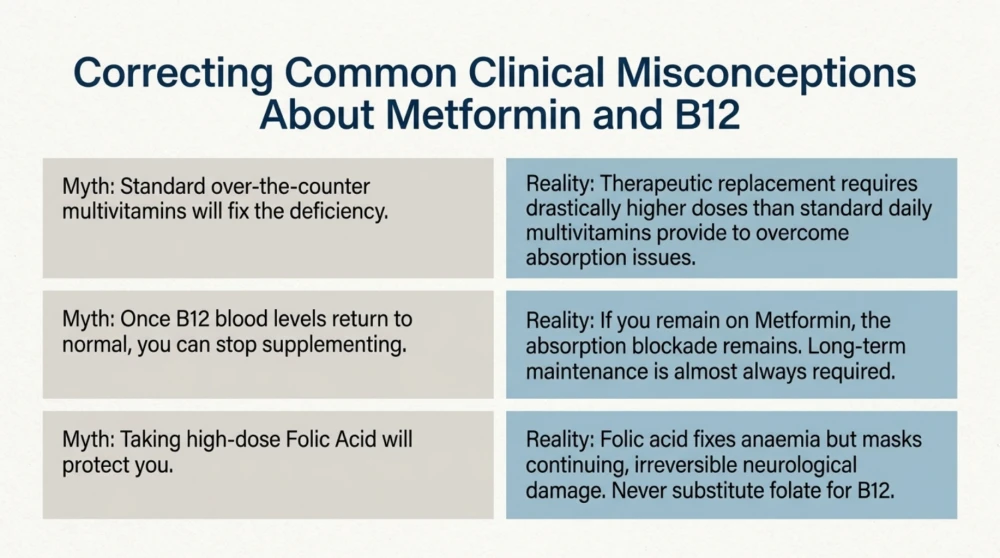
Folic acid can improve some of the blood abnormalities associated with B12 deficiency without correcting the underlying neurological problem.
This is one reason unexplained macrocytic anaemia deserves appropriate investigation.
Do Not Use Folic Acid to Mask Undiagnosed B12 Deficiency
If vitamin B12 deficiency is possible, especially when neurological symptoms are present, simply taking high-dose folic acid without clarifying B12 status may be inappropriate.
When both deficiencies are present, both can be treated appropriately.
Does Calcium Prevent Metformin-Related Vitamin B12 Deficiency?
Because one proposed mechanism of metformin-associated B12 malabsorption involves calcium-dependent absorption of the intrinsic factor–B12 complex, calcium has been investigated as a possible modifier.
However, this should not be interpreted as a recommendation that everyone taking metformin should start calcium supplements to prevent vitamin B12 deficiency.
Routine calcium supplementation carries its own considerations and should be based on dietary intake, bone health and individual clinical indications rather than used as an unproven shortcut for B12 monitoring.
When Vitamin B12 Symptoms Need More Urgent Assessment
Mild tiredness developing gradually over several months is different from rapidly progressive neurological dysfunction.
Prompt medical assessment is particularly important if a person taking metformin develops:
- Progressive difficulty walking.
- Marked loss of balance.
- Significant muscle weakness.
- Rapidly worsening numbness.
- Loss of bladder or bowel control.
- New confusion or substantial cognitive change.
- Severe breathlessness or chest discomfort.
- Fainting.
- Severe or unexplained anaemia.
These symptoms should not automatically be assumed to result from vitamin B12 deficiency. Several neurological, cardiovascular and haematological conditions can produce similar presentations and may require urgent investigation.
Seven Symptoms Worth Remembering
If you take metformin long term, remember these seven possible symptoms of vitamin B12 deficiency:
- Persistent fatigue that is unusual or unexplained.
- Numbness or tingling in the hands or feet.
- Weakness or reduced exercise tolerance.
- Balance problems or difficulty walking.
- A sore, red or unusually smooth tongue.
- Pallor, breathlessness or palpitations associated with anaemia.
- Changes in concentration, memory or mood.
None of these symptoms proves vitamin B12 deficiency, but they provide a reason to consider appropriate evaluation—particularly when several occur together.
Common Myths About Metformin and Vitamin B12 Deficiency
Myth 1: Everyone Taking Metformin Will Become Vitamin B12 Deficient
No. Metformin increases the risk, particularly with longer treatment and other risk factors, but many patients maintain adequate vitamin B12 levels.
Myth 2: You Should Stop Metformin if Your Vitamin B12 Is Low
Usually not. When metformin remains clinically appropriate, vitamin B12 deficiency can generally be treated while metformin continues.
Myth 3: Normal Haemoglobin Means Vitamin B12 Deficiency Is Impossible
No. Neurological vitamin B12 deficiency can occur without obvious anaemia.
Myth 4: Every Tingling Sensation in a Metformin User Is B12 Deficiency
No. Diabetes itself and many neurological, nutritional, endocrine and mechanical conditions can cause tingling and numbness.
Myth 5: Every Patient on Metformin Needs Vitamin B12 Injections
No. Many people do not require treatment at all, and when replacement is necessary, high-dose oral vitamin B12 can be effective in appropriately selected patients.
Myth 6: A Multivitamin Is Enough to Treat Severe B12 Deficiency
Not necessarily. Therapeutic replacement may require substantially different doses from those contained in an ordinary multivitamin, particularly when neurological manifestations or significant depletion are present.
Myth 7: Once Vitamin B12 Becomes Normal, Treatment Can Always Be Stopped
No. The duration of replacement depends on the underlying cause. Permanent malabsorption or persistent risk factors may require long-term treatment or monitoring.
A Practical Checklist for Patients Taking Metformin
- Do not stop metformin simply because it can reduce vitamin B12 levels.
- Tell your doctor how long you have been taking metformin and your current dose.
- Mention persistent numbness, tingling, weakness or balance problems rather than assuming they are normal diabetes symptoms.
- Discuss vitamin B12 testing if you have unexplained anaemia or peripheral neuropathy.
- Long-term metformin use deserves periodic consideration of vitamin B12 status, particularly when additional risk factors are present.
- If you are vegetarian or vegan, make sure your diet contains reliable sources of vitamin B12.
- Do not rely on unfortified plant or fermented foods as dependable B12 sources.
- If B12 is low, consider whether metformin is the only explanation or whether another cause needs investigation.
- Do not self-treat progressive neurological symptoms with supplements alone.
- If deficiency is confirmed, follow the prescribed replacement and monitoring plan.
Metformin Is Still an Important Medicine
Discussion of metformin and vitamin B12 deficiency should not create the impression that metformin is an unsafe medicine that should be avoided.
Metformin has decades of clinical experience behind it and remains an important glucose-lowering treatment for many people with type 2 diabetes.
The B12 association is better viewed as a recognised adverse effect that clinicians and patients should know how to monitor and manage.
Good Medicine Includes Monitoring for Predictable Problems
Almost every effective long-term medication has potential adverse effects or monitoring requirements.
Recognising these effects allows treatment to become safer rather than automatically making the treatment inappropriate.
For metformin, awareness of vitamin B12 status is particularly valuable because deficiency is detectable and treatable.
Key Takeaways: Metformin and Vitamin B12 Deficiency
Long-term metformin treatment can reduce vitamin B12 levels in some patients.
The risk appears more relevant with longer treatment, higher metformin exposure and additional risk factors for B12 deficiency.
Vitamin B12 deficiency can cause both haematological and neurological problems. Importantly, nerve symptoms can occur even without obvious anaemia.
Numbness and tingling deserve particular attention because vitamin B12 deficiency can be mistaken for diabetic neuropathy.
Serum vitamin B12 is usually the initial test. Complete blood count, MCV and, in selected uncertain cases, methylmalonic acid or other investigations may help clarify the diagnosis.
Confirmed deficiency can often be treated without stopping metformin.
Oral vitamin B12 is effective for many patients, while injections may be preferred in selected cases such as substantial neurological disease, severe deficiency or significant malabsorption.
The objective is not to make patients afraid of metformin. It is to recognise and treat a manageable complication before prolonged deficiency causes avoidable harm.
References
- American Diabetes Association Professional Practice Committee. Standards of Care in Diabetes—2026. Current recommendations concerning diabetes management, metformin therapy and consideration of periodic vitamin B12 assessment during long-term treatment.
- de Jager J, Kooy A, Lehert P, et al. Long-term treatment with metformin in patients with type 2 diabetes and risk of vitamin B12 deficiency: randomised placebo-controlled trial. BMJ. 2010;340:c2181.
- Aroda VR, Edelstein SL, Goldberg RB, et al. Long-term metformin use and vitamin B12 deficiency in the Diabetes Prevention Program Outcomes Study. Journal of Clinical Endocrinology & Metabolism. 2016;101(4):1754-1761.
- Medicines and Healthcare products Regulatory Agency. Metformin and reduced vitamin B12 levels: updated advice for monitoring patients at risk. Drug Safety Update. 2022.
- National Institute for Health and Care Excellence. Current guidance on recognition, investigation and management of vitamin B12 deficiency in adults.
- National Institutes of Health, Office of Dietary Supplements. Vitamin B12 Fact Sheet for Health Professionals. Current information on vitamin B12 sources, absorption, deficiency and supplementation.
- Current systematic reviews and meta-analyses evaluating the association between metformin dose, duration of therapy, vitamin B12 concentrations, deficiency and peripheral neuropathy in people with diabetes.
Written by Dr. Pankaj Kumar , General & Lifestyle Physician, Dwarka, New Delhi