

















- 2nd September 2026
Table of Contents
- Why Night-Shift Eating Is Different From Eating During the Day
- What Is Insulin Resistance?
- Metabolic Problem 1: Night-Shift Eating May Worsen Glucose Tolerance
- Metabolic Problem 2: Night-Shift Eating Can Promote Insulin Resistance
- Metabolic Problem 3: Night-Shift Eating May Increase Hunger and Food Cravings
- Metabolic Problem 4: Night-Shift Eating May Contribute to Weight Gain
- Metabolic Problem 5: Night-Shift Eating May Promote Visceral Fat
- Metabolic Problem 6: Night-Shift Eating May Affect Triglycerides
- Metabolic Problem 7: Night-Shift Eating May Increase Fatty Liver Risk
- Metabolic Problem 8: Night-Shift Eating May Increase Long-Term Diabetes Risk
- Night-Shift Eating Is Only Part of the Problem
- Should Night-Shift Workers Stop Eating at Night Completely?
- What Should You Eat Before a Night Shift?
- Should You Eat Between 1 AM and 3 AM?
- Protein Can Make Night-Shift Eating Easier to Structure
- Do You Need to Avoid Carbohydrates During a Night Shift?
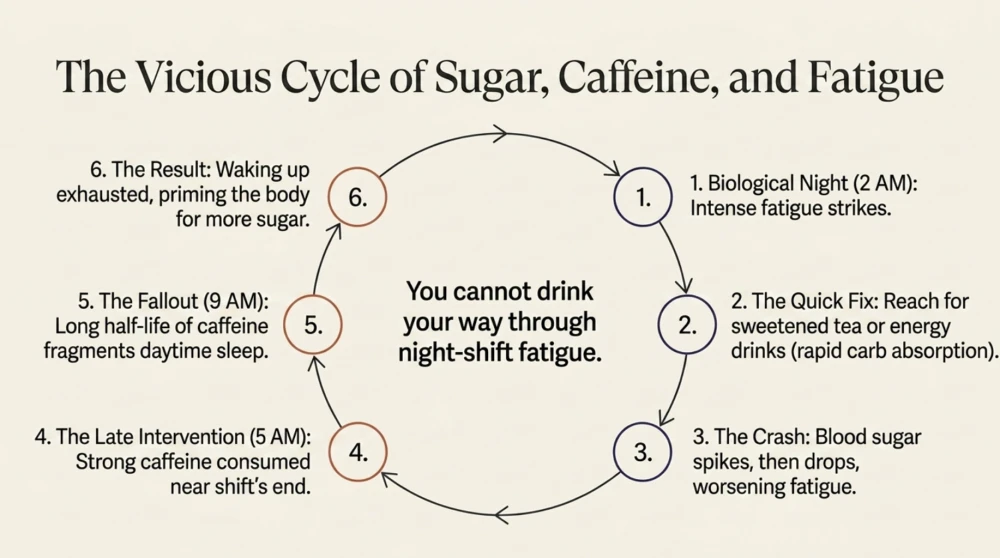
- Why Sugary Drinks Are a Particular Problem During Night Shifts
- Caffeine Helps Alertness, but Timing Matters
- What Should You Eat After Finishing a Night Shift?
- Daytime Sleep Is Part of the Treatment
- What About Rotating Night Shifts?
- Exercise Can Help Counter Some Metabolic Effects of Shift Work
- Walking After Meals May Be Particularly Practical
- A Practical Night-Shift Eating Schedule
- 6:30–7:30 PM: Main Pre-Shift Meal
- 10 PM–Midnight: Hydration and Early-Shift Caffeine if Needed
- 1–3 AM: Small Meal if Hungry
- 3–6 AM: Avoid Continuous Grazing
- 7–8 AM: End of Shift
- After Waking: Restart Normal Meal Structure
- Night-Shift Eating With Prediabetes Requires More Attention
- Night-Shift Eating With Diabetes Needs an Individual Plan
- There Is No Single Perfect Night-Shift Diet
- Should Night-Shift Workers Get Metabolic Tests More Often?
- HbA1c Can Help Identify Gradual Changes in Glucose Control
- Should You Measure Fasting Insulin to Detect Night-Shift Insulin Resistance?
- Can Continuous Glucose Monitoring Help With Night-Shift Eating?
- Night-Shift Eating, Triglycerides and Fatty Liver Often Overlap
- Do Not Forget Sleep Apnoea in Night-Shift Workers
- Permanent Night Shift and Rotating Shifts Create Different Challenges
- What if You Work Only One or Two Night Shifts Occasionally?
- Can Time-Restricted Eating Help Night-Shift Workers?
- Does Melatonin Solve the Metabolic Effects of Night Work?
- What Should You Do on Your Days Off?
- Common Myths About Night-Shift Eating and Insulin Resistance
- Myth 1: Any Food Eaten After Midnight Turns Into Fat
- Myth 2: Night-Shift Workers Should Completely Avoid Carbohydrates
- Myth 3: The Best Strategy Is to Fast Throughout Every Night Shift
- Myth 4: Coffee Can Replace Sleep
- Myth 5: If Fasting Sugar Is Normal, Night Shifts Are Not Affecting Metabolism
- Myth 6: Fruit Is a Better Choice Than Any Other Night Food, So Quantity Does Not Matter
- Myth 7: Night Work Inevitably Causes Diabetes
- Myth 8: You Cannot Improve Metabolic Health Unless You Stop Working Nights
- A Practical Metabolic Checklist for Night-Shift Workers
- When Should a Night-Shift Worker See a Doctor?
- Key Takeaways: Night-Shift Eating and Insulin Resistance
- References
Night-Shift Eating and Insulin Resistance: 8 Metabolic Problems to Watch
Working through the night creates a metabolic challenge that goes far beyond feeling tired the next morning. Your body has an internal biological clock that influences sleep, hormones, digestion, body temperature, appetite, insulin sensitivity, and the way nutrients are processed across the 24-hour day.
When you stay awake and eat during hours when the body is biologically prepared for sleep, these systems can become misaligned. This is one reason night-shift eating has become an important area of research in diabetes, obesity, and metabolic health.
This does not mean that every nurse, doctor, security worker, factory employee, driver, call-centre worker, or other night-shift employee will develop diabetes. Genetics, body composition, physical activity, sleep, diet quality, smoking, medications, and many other factors influence individual risk.
However, long-term shift work—particularly when it includes disrupted sleep and frequent night-shift eating—can create conditions that favour insulin resistance, weight gain, abnormal glucose regulation, and other metabolic problems.
The practical question is therefore not simply, “Should night workers stop eating?” Someone working an eight- or twelve-hour overnight shift may genuinely need food. A better question is how meal timing, meal size, food quality, sleep, and circadian disruption can be managed to reduce unnecessary metabolic stress.
Why Night-Shift Eating Is Different From Eating During the Day
The human body does not process an identical meal exactly the same way at every hour of the day.
Our metabolism follows circadian rhythms. These approximately 24-hour biological cycles are coordinated by a central clock in the brain and by peripheral clocks in tissues such as the liver, pancreas, muscle, and gastrointestinal tract.
Light exposure is a powerful signal for the central circadian clock. Food timing also provides timing information to peripheral metabolic systems.
During a night shift, these signals can conflict. The brain receives artificial light and remains awake, while food arrives during a biological period when the body would normally expect fasting and sleep.
Night-Shift Eating Can Create Circadian Misalignment
Night-shift eating therefore involves more than consuming calories late at night. It often occurs in the setting of circadian misalignment.
A worker may sleep during daylight hours, wake in the afternoon, eat dinner in the evening, consume another substantial meal at 1 or 2 AM, snack at 4 AM, and then eat breakfast before going to sleep.
Even if the total calorie intake looks reasonable on paper, the timing of those calories may not align well with normal metabolic rhythms.
This does not mean calories stop mattering. Energy balance remains fundamental to body weight. But meal timing may influence glucose responses, appetite, sleep, and other aspects of metabolic health independently of calorie quantity.
What Is Insulin Resistance?
Insulin is a hormone produced by the pancreas. One of its major roles is helping regulate blood glucose by facilitating glucose uptake and controlling glucose production by the liver.
In insulin resistance, tissues such as skeletal muscle, liver, and adipose tissue become less responsive to insulin's actions.
The pancreas may initially compensate by producing more insulin. Blood glucose can therefore remain apparently normal for some time despite worsening insulin resistance.
Eventually, if pancreatic beta cells cannot maintain sufficient compensation, glucose levels may rise and prediabetes or type 2 diabetes can develop.
How Night-Shift Eating May Influence Insulin Resistance
Several mechanisms may connect shift work and night-shift eating with insulin resistance:
- Circadian misalignment.
- Reduced or fragmented sleep.
- Eating during the biological night.
- Altered cortisol and other hormonal rhythms.
- Changes in appetite regulation.
- Reduced physical activity.
- Greater exposure to convenience foods and sugary snacks.
- Weight gain and accumulation of visceral fat over time.
These factors often occur together, making it difficult to separate the metabolic effect of meal timing from the overall lifestyle associated with chronic night work.
Metabolic Problem 1: Night-Shift Eating May Worsen Glucose Tolerance
One of the most important concerns with night-shift eating is glucose regulation.
Insulin sensitivity and glucose tolerance vary according to circadian timing. In general, the body tends to handle a glucose load less effectively during the biological night than during the daytime.
This means an identical carbohydrate-rich meal may produce a different glucose response depending on when it is consumed.
A 2 AM Meal May Not Behave Like a 2 PM Meal
Imagine eating a large plate of rice, a sweetened drink, and dessert at 2 PM. Now imagine consuming exactly the same meal at 2 AM during a night shift.
The calories and carbohydrate content have not changed, but the metabolic environment has.
Circadian changes in insulin sensitivity, pancreatic function, hormones, sleep pressure, and activity can influence the glucose response.
This is why repeated large carbohydrate-heavy meals during the biological night may be particularly undesirable for someone who already has insulin resistance or prediabetes.
Metabolic Problem 2: Night-Shift Eating Can Promote Insulin Resistance
Repeated circadian disruption has been associated with reduced insulin sensitivity in experimental studies.
Sleep restriction can add another layer of metabolic stress. A night worker may therefore face both circadian misalignment and insufficient restorative sleep.
The combination may make glucose regulation progressively more difficult, especially when accompanied by weight gain or low physical activity.
Normal Fasting Sugar Does Not Always Mean Normal Insulin Sensitivity
Early insulin resistance can exist while fasting glucose remains within the laboratory reference range.
The pancreas may simply be producing more insulin to keep glucose controlled.
Over time, post-meal glucose may begin rising before fasting glucose becomes clearly abnormal.
This is one reason a night-shift worker with increasing abdominal obesity, elevated triglycerides, fatty liver, or a strong family history of diabetes should not assume that one normal fasting glucose result guarantees ideal metabolic health.
Metabolic Problem 3: Night-Shift Eating May Increase Hunger and Food Cravings
Working when the body expects sleep can alter normal appetite regulation.
Sleep deprivation itself can influence hunger, reward-driven eating, and food choices. At the same time, night-shift environments often make highly processed snacks more accessible than balanced meals.
A tired worker may therefore reach for biscuits, sweets, chips, instant noodles, sweetened tea, energy drinks, or vending-machine foods—not necessarily because of true physiological hunger but because fatigue and environmental cues encourage eating.
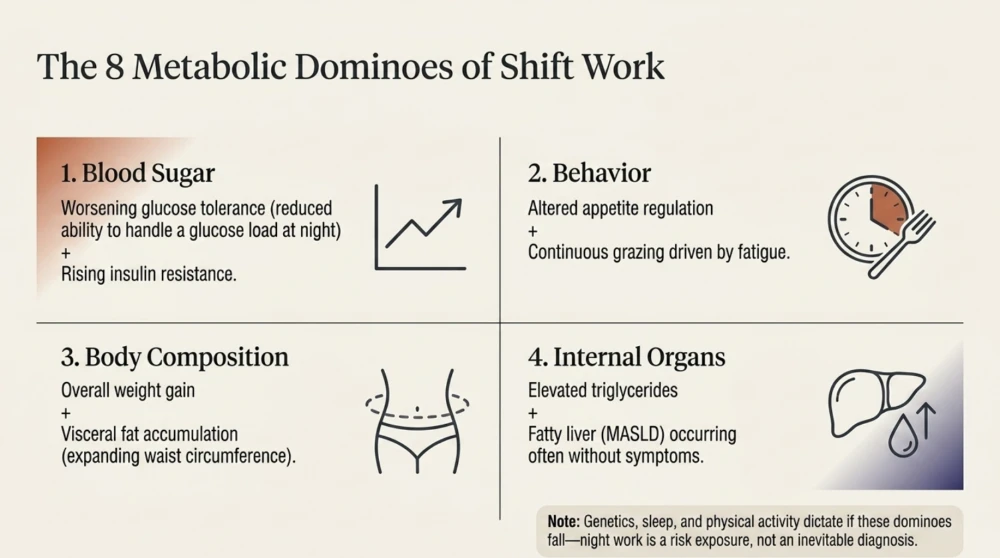
Night-Shift Eating Can Become Continuous Grazing
One of the easiest patterns to develop is eating small amounts throughout the entire shift.
For example:
- Tea and biscuits at 10 PM.
- A full meal at midnight.
- Namkeen at 2 AM.
- Sweetened coffee at 3 AM.
- Another snack at 5 AM.
- Breakfast at 7 AM before sleeping.
No individual item may seem excessive, but together they can create a long eating window and considerable calorie intake.
Therefore, improving night-shift eating often requires addressing eating frequency as well as individual food choices.
Metabolic Problem 4: Night-Shift Eating May Contribute to Weight Gain
Weight gain during shift work is not caused by meal timing alone. Total calorie intake remains critically important.
However, night work can create several conditions that make a sustained calorie surplus easier to develop.
Short sleep may increase appetite. Fatigue can reduce spontaneous physical activity. Convenient night-time foods are often calorie dense. Eating opportunities may extend across both the night shift and the daytime hours surrounding it.
The Problem May Be a Longer Eating Window
A day worker might eat between 8 AM and 8 PM.
A night worker may begin eating with family at 7 PM, snack throughout the shift, eat breakfast after work at 8 AM, sleep for a few hours, wake in the afternoon, and start eating again.
The result can be a very long daily eating window with few genuinely food-free hours.
Over weeks and months, even a modest excess in daily energy intake can contribute to weight gain.
Metabolic Problem 5: Night-Shift Eating May Promote Visceral Fat
Body weight tells only part of the metabolic story.
Visceral fat—the fat stored around internal abdominal organs—is particularly important because it is strongly associated with insulin resistance and cardiometabolic risk.
Chronic sleep disruption, circadian misalignment, reduced physical activity, excess calorie intake, and weight gain can create an environment that favours worsening body composition.
Waist Circumference Matters in Night-Shift Workers
Someone may gain only a few kilograms over several years of shift work but notice a much larger change around the waist.
This can be metabolically relevant.
Monitoring waist circumference alongside weight, blood pressure, glucose, and lipids can therefore provide useful information for people exposed to long-term night work.
A gradually increasing waistline should not automatically be dismissed as a normal consequence of ageing or employment.
Metabolic Problem 6: Night-Shift Eating May Affect Triglycerides
Triglyceride levels are influenced by genetics, body weight, insulin sensitivity, alcohol, calorie intake, carbohydrate quality, and several other factors.
Shift workers who consume frequent refined carbohydrates, sugary drinks, and excess calories may be particularly vulnerable to elevated triglycerides.
Insulin resistance itself can also alter lipid metabolism and increase hepatic production of triglyceride-rich particles.
Sugary Drinks Can Quietly Worsen Night-Shift Eating
Beverages deserve special attention.
Night workers sometimes depend on repeated sweetened tea, coffee, soft drinks, or energy drinks to stay alert.
Liquid calories are easy to overlook because they do not always produce the same fullness as a solid meal.
Several sweetened drinks consumed across a shift can add substantial sugar and calories without feeling like “food.”
Metabolic Problem 7: Night-Shift Eating May Increase Fatty Liver Risk
Metabolic dysfunction-associated steatotic liver disease, or MASLD, is closely connected with insulin resistance, abdominal obesity, elevated triglycerides, and type 2 diabetes.
Night-shift work does not automatically cause fatty liver, but the metabolic changes associated with chronic circadian disruption can contribute to the same risk environment.
Excess calorie intake, weight gain, visceral fat accumulation, insulin resistance, and poor-quality diets can all promote liver fat accumulation.
Fatty Liver Can Occur Without Symptoms
This is particularly important because fatty liver frequently causes no obvious symptoms.
A night-shift worker may feel generally well while gradually developing increasing waist circumference, higher triglycerides, prediabetes, and liver fat.
Normal liver enzymes also do not reliably exclude fatty liver.
Risk should therefore be assessed from the broader metabolic picture rather than waiting for liver-related symptoms to appear.
Metabolic Problem 8: Night-Shift Eating May Increase Long-Term Diabetes Risk
Observational research has associated long-term rotating and night-shift work with an increased risk of type 2 diabetes.
This does not prove that night-shift eating alone causes diabetes. Shift work combines several exposures—including sleep disruption, circadian misalignment, altered eating patterns, occupational stress, and differences in physical activity.
Nevertheless, the association is clinically important, particularly for workers who already have additional diabetes risk factors.
Night-Shift Eating Matters More When Other Diabetes Risks Are Present
Risk deserves greater attention when night-shift work occurs alongside:
- Overweight or obesity.
- Increasing waist circumference.
- A strong family history of type 2 diabetes.
- Previous gestational diabetes.
- PCOS.
- Fatty liver.
- High triglycerides.
- Hypertension.
- Prediabetes.
- Low physical activity.
These factors can overlap rather than acting independently.
Night-Shift Eating Is Only Part of the Problem
It would be too simplistic to tell every night worker that their metabolic risk comes from eating after midnight.
Sleep duration and quality may be equally important. A person who finishes work at 7 AM but repeatedly sleeps only four or five hours before family or daytime responsibilities begin may experience chronic sleep restriction.
That can affect appetite, insulin sensitivity, recovery, blood pressure, mood, and food choices.
Night-Shift Eating and Sleep Need to Be Managed Together
Improving food quality while continuing to sleep four hours per day addresses only part of the problem.
Similarly, achieving seven hours of daytime sleep while consuming sugary drinks and ultra-processed snacks throughout every shift is not an ideal metabolic strategy.
A practical approach to shift-work health therefore needs to address night-shift eating, sleep, physical activity, light exposure, caffeine, body composition, and metabolic screening together.
Should Night-Shift Workers Stop Eating at Night Completely?
Not necessarily.
Experimental research suggests that restricting food intake during the biological night may reduce some of the glucose disruption caused by simulated night work. This is scientifically interesting and may eventually help refine shift-work nutrition strategies.
But real-world implementation is more complicated.
A healthcare worker doing a twelve-hour overnight shift, a driver travelling through the night, or a security worker performing physically demanding duties may not find complete overnight fasting practical or appropriate.
The First Goal Is to Improve Night-Shift Eating, Not Create Another Extreme Diet
For many people, a more realistic starting point is to:
- Eat a balanced meal before the shift.
- Avoid making the middle of the night the time for the day's largest meal.
- Reduce continuous grazing.
- Choose protein- and fibre-containing foods when a night meal or snack is needed.
- Limit sugary drinks and repeated sweetened tea or coffee.
- Avoid a large meal immediately before daytime sleep when possible.
The ideal strategy depends on shift duration, workload, medications, diabetes status, sleep timing, and individual tolerance.
The goal is not perfection. It is to reduce the metabolic burden created when circadian disruption, inadequate sleep, excess calories, and poorly structured night-shift eating occur together.
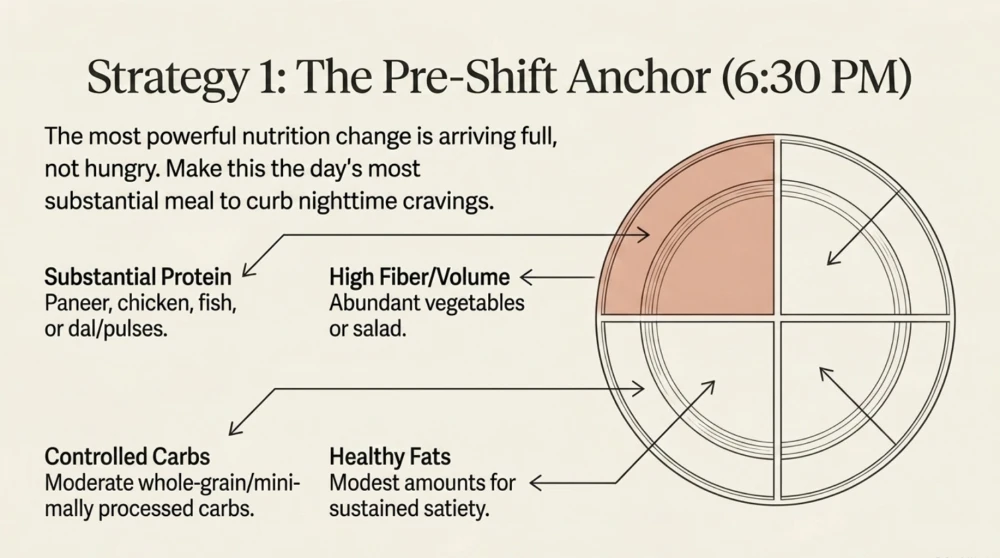
What Should You Eat Before a Night Shift?
For many night-shift workers, the most useful nutrition change is surprisingly simple: make the meal before work a proper meal rather than arriving at the shift hungry and depending on snacks throughout the night.
A balanced pre-shift meal can provide protein, fibre, vegetables, and a controlled portion of carbohydrate while the body is still closer to its normal daytime or evening metabolic phase.
This may also make it easier to keep night-shift eating lighter during the biological night.
A Practical Pre-Shift Meal Structure
A useful meal can be built around four components:
- A substantial protein source.
- Plenty of vegetables or salad.
- A moderate portion of whole-grain or minimally processed carbohydrate.
- A modest amount of healthy fat.
For an Indian meal, this could mean dal with vegetables and roti, paneer with sabzi and a controlled portion of rice, chicken or fish with vegetables and roti, or another combination appropriate to the person's dietary preferences.
The exact portion depends on body size, activity, diabetes status, medications, and overall calorie requirements.
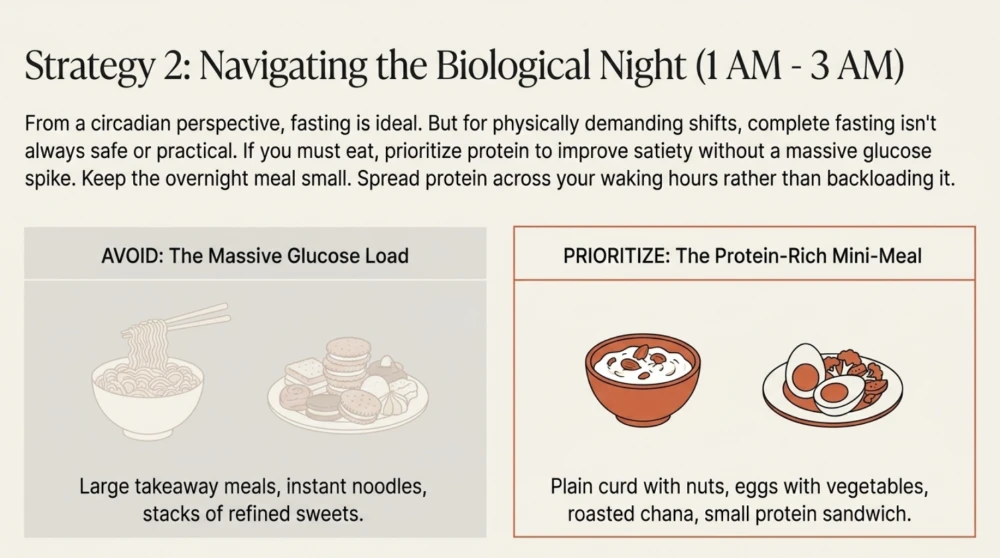
Should You Eat Between 1 AM and 3 AM?
This is one of the most practical questions about night-shift eating.
From a circadian perspective, the middle of the biological night is generally not an ideal time for a large calorie-dense meal. Glucose tolerance tends to be poorer at night, and experimental studies of simulated night work suggest that shifting food intake away from the biological night may reduce some of the adverse glucose effects of circadian misalignment.
However, that does not mean every night worker must fast completely from midnight until morning.
A person performing demanding clinical work, driving for many hours, operating machinery, or doing physical labour may require food during the shift.
If You Need to Eat at Night, Consider a Smaller Meal
Instead of making 2 AM the time for the largest meal of the day, consider keeping the overnight meal relatively small and balanced.
For example, depending on individual requirements, options could include:
- Plain curd with a small portion of nuts and seeds.
- Paneer with vegetables.
- Eggs with vegetables.
- A small dal or bean-based meal.
- Unsweetened yoghurt with an appropriate high-fibre accompaniment.
- A small whole-grain sandwich with a protein-rich filling.
- Roasted chana with another appropriate protein source.
The purpose is not to create a rigid list of “allowed” night foods. It is to reduce the combination of large portions, refined carbohydrates, excess calories, and continuous grazing.
Protein Can Make Night-Shift Eating Easier to Structure
Protein deserves particular attention in shift workers trying to control appetite or lose weight.
A meal based mainly on biscuits, bread, noodles, rice, sweets, or sugary beverages can provide considerable energy without much protein.
Adding an appropriate protein source generally improves the nutritional quality and satiety of the meal.
Spread Protein Across Your Waking Period
Rather than eating very little protein throughout the shift and trying to compensate with one enormous meal later, distribute protein across the major meals in your waking period.
Depending on dietary preference, useful sources can include:
- Eggs.
- Milk and curd.
- Paneer.
- Fish.
- Chicken and other lean meats.
- Soya and tofu.
- Dal and pulses.
- Beans and chickpeas.
Protein requirements differ considerably between individuals, particularly with age, kidney disease, physical activity, calorie restriction, and resistance training. There is therefore no single high-protein target appropriate for every night-shift worker.
Do You Need to Avoid Carbohydrates During a Night Shift?
No.
Insulin resistance does not mean that all carbohydrates must be eliminated, and night-shift eating does not need to become a ketogenic diet.
What matters is the amount, quality, combination, and timing of carbohydrate.
A large serving of refined carbohydrate eaten alone at 2 AM is metabolically different from a smaller portion of minimally processed carbohydrate combined with protein, vegetables, and fibre.
Carbohydrate Quality Still Matters at Night
Instead of relying heavily on refined flour products, sweets, sweetened drinks, biscuits, or large portions of white rice, meals can be structured around more nutrient-dense carbohydrate sources when appropriate.
Examples include whole grains, pulses, beans, vegetables, and whole fruit.
Portion size remains important. A food does not become metabolically neutral simply because it is labelled “healthy” or “whole grain.”
Why Sugary Drinks Are a Particular Problem During Night Shifts
Sweetened tea and coffee deserve more attention than they usually receive.
One cup may contain only a modest amount of sugar. But repeated cups throughout a long shift can accumulate into a significant carbohydrate and calorie load.
Energy drinks and soft drinks can add even more.
Do Not Drink Your Way Through Night-Shift Fatigue
When tiredness appears at 2 or 3 AM, the solution often becomes another coffee, another tea, or an energy drink.
If each beverage contains sugar, the worker may unknowingly consume a substantial amount of rapidly absorbed carbohydrate during the biological night.
Water, unsweetened beverages, or progressively reducing added sugar can substantially change this pattern without requiring an extreme diet.
Caffeine Helps Alertness, but Timing Matters
Caffeine can be useful for maintaining alertness during a night shift. The problem is not necessarily caffeine itself but when and how much is consumed.
Caffeine has a relatively long half-life. A strong coffee taken toward the end of the shift may still be exerting an effect when the person reaches home and tries to sleep.
This can create a cycle:
Poor daytime sleep → greater fatigue during the next shift → more caffeine → poorer subsequent sleep.
Use Caffeine Earlier in the Shift When Possible
For many workers, concentrating caffeine earlier in the shift and reducing it several hours before planned sleep may be more sensible than drinking caffeinated beverages continuously until the journey home.
Individual sensitivity varies considerably. Some people metabolise caffeine relatively quickly, while others remain affected for many hours.
Coffee and tea also become nutritionally different beverages when large quantities of sugar, syrups, cream, or high-calorie additions are included.
What Should You Eat After Finishing a Night Shift?
The end-of-shift meal creates another common dilemma.
After working all night, someone may be physically and mentally exhausted but also extremely hungry. A large breakfast may feel rewarding.
However, eating a heavy meal immediately before lying down can worsen reflux, bloating, and sleep discomfort in some people.
It can also extend the total daily eating window if substantial calories have already been consumed throughout the night.
Do You Need Breakfast Before Daytime Sleep?
Not necessarily.
If a worker has eaten adequately during the shift and is not hungry, there is no metabolic requirement to eat another full breakfast simply because it is morning.
If hunger would interfere with sleep, a smaller meal or snack may be more appropriate than a large breakfast.
For example, a modest protein-containing option may be sufficient for some people.
Someone taking insulin or glucose-lowering medicines that can cause hypoglycaemia requires an individualised plan and should not simply skip meals based on general advice.
Daytime Sleep Is Part of the Treatment
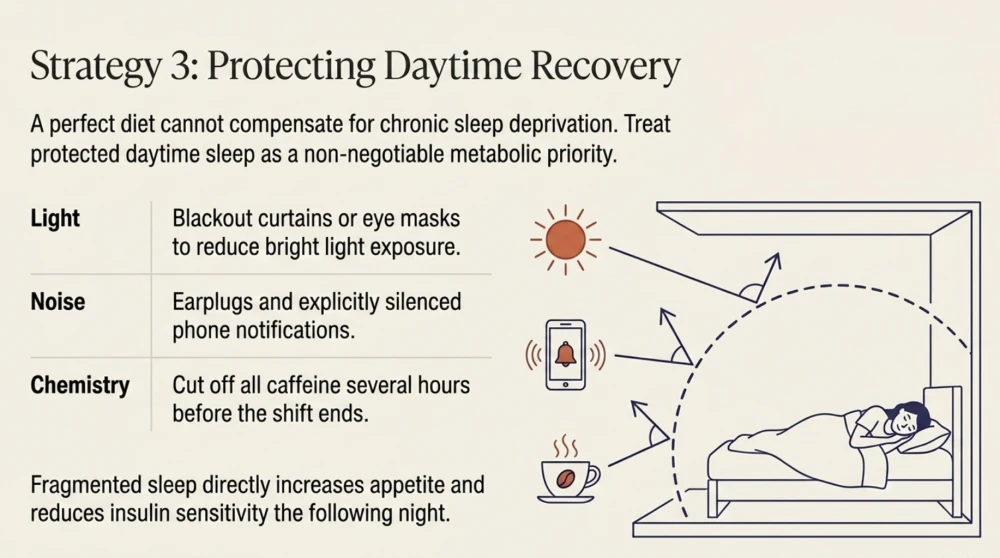
A perfect diet cannot fully compensate for chronic sleep deprivation.
Adults working nights should treat protected daytime sleep as a metabolic priority rather than an optional recovery activity.
The sleep environment matters because daylight, household noise, telephone notifications, and family responsibilities can make daytime sleep shorter and more fragmented than normal night-time sleep.
Protect Your Main Sleep Period After a Night Shift
Practical measures may include:
- Using blackout curtains or an eye mask.
- Keeping the bedroom cool and quiet.
- Using earplugs or another noise-reduction strategy if appropriate.
- Silencing unnecessary phone notifications.
- Reducing bright-light exposure when preparing for sleep.
- Avoiding caffeine close to the planned sleep period.
- Discussing protected sleep time with family members when possible.
These measures may seem unrelated to night-shift eating, but better sleep can influence hunger, food choices, insulin sensitivity, and the amount of caffeine required during the next shift.
What About Rotating Night Shifts?
Rotating schedules can be particularly difficult because the body has little opportunity to establish a consistent routine.
A worker might perform day shifts for several days, switch to nights, and then return to mornings shortly afterwards.
Meal timing and sleep timing consequently move back and forth as well.
Do Not Try to Create a Perfect Circadian Diet for an Unpredictable Roster
When work schedules change frequently, a rigid clock-based diet may become impractical.
Instead, use a few consistent principles:
- Have a substantial balanced meal before the shift when possible.
- Keep the biological-night eating period lighter.
- Avoid continuous snacking.
- Maintain protein intake.
- Limit liquid calories.
- Protect the main sleep period.
- Keep physical activity in the routine.
A workable imperfect routine is often better than a theoretically perfect schedule that cannot be maintained.
Exercise Can Help Counter Some Metabolic Effects of Shift Work
Skeletal muscle is one of the body's major sites of glucose disposal.
Regular physical activity and resistance training can improve insulin sensitivity and help preserve muscle during weight loss.
This makes exercise particularly valuable for night-shift workers concerned about insulin resistance.
When Should a Night-Shift Worker Exercise?
There is no universally ideal exercise time for every shift worker.
Training should fit around sleep rather than repeatedly sacrificing sleep to complete a workout.
Some people prefer exercising after waking in the afternoon or evening before work. Others find a shorter session before the shift more practical.
Very intense exercise immediately before planned daytime sleep may interfere with sleep in some individuals, although responses vary.
The most useful exercise schedule is generally one that can be maintained without chronically reducing sleep duration.
Walking After Meals May Be Particularly Practical
Not every metabolic intervention needs to involve a gym.
Short periods of light activity after eating can reduce post-meal glucose excursions compared with remaining completely sedentary.
For someone working in a hospital, office, call centre, control room, or security environment, even brief walking opportunities may therefore be useful.
Break Up Long Periods of Sitting
Some night-shift workers spend eight to twelve hours almost continuously seated.
Regularly standing, walking, taking stairs when appropriate, or performing brief movement breaks can increase daily activity without requiring a separate hour-long exercise session.
These small amounts of movement do not replace structured exercise, but they can complement it.
A Practical Night-Shift Eating Schedule
There is no universal timetable because night shifts vary. Someone working from 8 PM to 8 AM has different requirements from someone working from 11 PM to 6 AM.
However, consider a person working approximately 8 PM to 8 AM. A practical structure might look like this:
6:30–7:30 PM: Main Pre-Shift Meal
Make this one of the more substantial meals of the waking period.
Include protein, vegetables, a controlled portion of carbohydrate, and an appropriate amount of fat.
10 PM–Midnight: Hydration and Early-Shift Caffeine if Needed
Water should remain the main source of hydration. If caffeine is useful for alertness, earlier use is generally preferable to repeated doses toward the end of the shift.
1–3 AM: Small Meal if Hungry
Instead of a large takeaway meal, choose a smaller protein- and fibre-containing option.
If you are comfortable without food and your medical situation allows it, there is no requirement to eat simply because colleagues are taking a meal break.
3–6 AM: Avoid Continuous Grazing
This is often the period when sleepiness becomes intense and repeated tea, biscuits, sweets, or vending-machine snacks appear.
Plan ahead so fatigue does not automatically become a reason to eat.
7–8 AM: End of Shift
If you are going home to sleep and are not hungry, another large meal may be unnecessary.
If hunger is likely to prevent sleep, consider a smaller meal rather than a heavy breakfast.
After Waking: Restart Normal Meal Structure
After the main sleep period, have a balanced meal and begin the next waking cycle rather than attempting to compensate for poor overnight eating with prolonged starvation.
Night-Shift Eating With Prediabetes Requires More Attention
Someone who already has prediabetes has less metabolic flexibility than someone with completely normal glucose regulation.
Large refined-carbohydrate meals during the night, repeated sugary beverages, weight gain, and chronic sleep deprivation can make glucose management more difficult.
This does not mean a night-shift worker with prediabetes must resign from night duty.
Monitor the Trend, Not Just One Blood Sugar Reading
Useful parameters may include:
- Body weight.
- Waist circumference.
- Blood pressure.
- Fasting glucose.
- HbA1c.
- Lipid profile.
- Other investigations according to individual risk.
A gradual rise in several metabolic markers is more informative than waiting until fasting glucose finally crosses the diagnostic threshold for diabetes.
Night-Shift Eating With Diabetes Needs an Individual Plan
Diabetes adds another level of complexity because meal timing may interact with medication timing.
This is particularly important with insulin and medicines capable of causing hypoglycaemia.
Someone who changes from day duty to night duty may simultaneously change sleep, meals, physical activity, and medication timing.
Do Not Simply Skip Meals if Your Medicines Can Cause Hypoglycaemia
General advice to minimise overnight food intake cannot be applied blindly to every person with diabetes.
If insulin or another glucose-lowering medicine has been planned around particular meals, suddenly fasting through the shift could increase the risk of hypoglycaemia.
Shift workers with diabetes may therefore need an individual plan covering meal timing, medication timing, glucose monitoring, hypoglycaemia prevention, exercise, and transitions between day and night duty.
There Is No Single Perfect Night-Shift Diet
The metabolic challenge of night work cannot be solved by identifying one “superfood,” eliminating all carbohydrates, or fasting for a fixed number of hours.
The strongest practical strategy is usually to improve several variables simultaneously.
Eat a substantial balanced meal before work. Keep overnight food smaller when practical. Prioritise protein and minimally processed foods. Reduce sugary beverages and continuous grazing. Time caffeine so it does not unnecessarily disrupt subsequent sleep. Stay physically active and protect the main sleep period.
Most importantly, evaluate the entire 24-hour pattern rather than judging one meal in isolation.
Night-shift eating becomes particularly problematic when it exists alongside inadequate sleep, excess calories, increasing abdominal fat, low physical activity, and worsening glucose regulation. Improving those factors together is likely to be far more useful than simply declaring that nobody should ever eat after midnight.
Should Night-Shift Workers Get Metabolic Tests More Often?
Night-shift work does not automatically mean that someone needs an extensive panel of blood tests every few months. However, long-term night work can become more clinically relevant when it is accompanied by weight gain, increasing waist circumference, poor sleep, hypertension, fatty liver, abnormal lipids, or a strong family history of diabetes.
In these situations, metabolic screening can help identify changes before obvious symptoms appear.
The purpose is not to label night workers as unhealthy. It is to recognise that chronic circadian disruption, inadequate sleep, reduced physical activity, and poorly structured night-shift eating can overlap with established risk factors for insulin resistance and type 2 diabetes.
Useful Metabolic Checks for Night-Shift Workers
Depending on age, weight, medical history, family history, medications, and previous results, assessment may include:
- Body weight and BMI.
- Waist circumference.
- Blood pressure.
- Fasting plasma glucose.
- HbA1c.
- Lipid profile, including triglycerides.
- Liver enzymes when clinically appropriate.
- Assessment for fatty liver according to individual metabolic risk.
Additional investigations should be selected according to the clinical situation rather than ordering every available metabolic test simply because someone works at night.
HbA1c Can Help Identify Gradual Changes in Glucose Control
HbA1c reflects average glycaemic exposure over approximately the preceding two to three months, with greater influence from more recent glucose levels.
For a night-shift worker, this can be useful because a single fasting glucose measurement provides only one snapshot.
Someone may have normal fasting glucose but gradually worsening post-meal glucose regulation or insulin resistance.
Do Not Interpret HbA1c in Isolation
HbA1c is extremely useful, but it is not perfect.
Anaemia, iron deficiency, altered red-cell survival, haemoglobin variants, kidney disease, pregnancy, recent blood loss, and several other conditions can affect its interpretation.
If HbA1c appears inconsistent with measured glucose levels, the discrepancy should be investigated rather than automatically assuming that one result must be correct.
Should You Measure Fasting Insulin to Detect Night-Shift Insulin Resistance?
This is a common question because insulin resistance can develop before glucose becomes abnormal.
Fasting insulin and calculations such as HOMA-IR are widely used in research and sometimes in clinical practice, but they are not universally standardised diagnostic tests for insulin resistance in routine individual care.
There is no single fasting insulin cut-off that should be applied to everyone.
Look at the Whole Metabolic Picture
Instead of becoming focused on one insulin number, consider whether several features are appearing together:
- Increasing waist circumference.
- Elevated triglycerides.
- Low HDL cholesterol.
- Rising fasting glucose.
- Increasing HbA1c.
- Hypertension.
- Fatty liver.
- Weight gain.
This broader metabolic pattern is often more clinically useful than repeatedly measuring fasting insulin without a clear reason.
Can Continuous Glucose Monitoring Help With Night-Shift Eating?
Continuous glucose monitoring, or CGM, can reveal how glucose changes throughout the day and night.
For someone with diabetes, CGM can be extremely valuable, particularly when working irregular shifts, exercising at unusual times, or using medicines that can cause hypoglycaemia.
It can also reveal whether particular overnight meals are followed by large glucose excursions.
CGM Can Show Patterns, but It Does Not Diagnose Every Metabolic Problem
A CGM trace should be interpreted in context.
A temporary glucose rise after eating is physiologically normal. The goal is not to create a completely flat glucose line.
For people without diabetes, routine long-term CGM use solely to optimise every food choice is not established as necessary medical care.
If CGM is used, it should ideally answer a meaningful question rather than create anxiety about every small glucose fluctuation.
Night-Shift Eating, Triglycerides and Fatty Liver Often Overlap
Insulin resistance rarely exists as an isolated laboratory abnormality.
Over time, increasing abdominal fat, elevated triglycerides, impaired glucose regulation, hypertension, and metabolic dysfunction-associated steatotic liver disease can occur together.
For a night worker, night-shift eating may contribute to this metabolic environment when it involves excess calories, refined carbohydrates, sugary drinks, inadequate sleep, and low physical activity.
Normal Liver Enzymes Do Not Rule Out Fatty Liver
Fatty liver frequently causes no symptoms, and ALT and AST may remain within the laboratory reference range.
Therefore, normal liver enzymes alone should not be used to conclude that metabolically at-risk individuals cannot have liver fat accumulation.
Assessment for MASLD should instead consider the person's overall cardiometabolic risk and appropriate investigations.
Do Not Forget Sleep Apnoea in Night-Shift Workers
Not all fatigue during a night shift is caused by the shift itself.
Obstructive sleep apnoea can cause fragmented sleep, daytime sleepiness, morning headaches, impaired concentration, and metabolic abnormalities.
Obesity is an important risk factor, although sleep apnoea can also occur in people who are not obese.
Snoring and Excessive Sleepiness Deserve Attention
A night-shift worker who snores loudly, has witnessed pauses in breathing during sleep, wakes choking or gasping, or remains excessively sleepy despite adequate opportunity to sleep may need assessment for obstructive sleep apnoea.
This is particularly important for drivers, machine operators, healthcare workers, and others whose impaired alertness could affect safety.
Treating diet while ignoring significant sleep apnoea would leave an important health and occupational risk unaddressed.
Permanent Night Shift and Rotating Shifts Create Different Challenges
Someone who permanently works nights may eventually establish a relatively predictable sleep and eating routine, although complete biological adaptation to night work is difficult for many people because daytime light and social schedules continue to influence the circadian system.
Rotating shifts create another challenge because sleep and meals repeatedly move between daytime and night-time schedules.
Consistency Helps When Your Work Schedule Allows It
If shifts are predictable, try to create some consistency around:
- The main sleep period.
- The main pre-shift meal.
- Overnight meal or snack timing.
- Caffeine timing.
- Exercise.
- Wake-up time on consecutive night shifts.
The goal is not to force an artificial routine when employment or family responsibilities make it impossible. Even partial consistency may be more practical than allowing every night shift to become completely unstructured.
What if You Work Only One or Two Night Shifts Occasionally?
Occasional night duty requires a different strategy from years of permanent shift work.
If someone works a night shift only occasionally, trying to completely reverse the sleep-wake cycle may not be practical.
Instead, the priority may be preparing with adequate sleep, avoiding excessive caffeine, planning food in advance, and recovering appropriately afterwards.
One Bad Night of Eating Is Not the Main Problem
Metabolic health is determined by repeated patterns rather than a single imperfect night.
If an occasional emergency shift results in an unusual meal at 3 AM, there is little value in becoming anxious about one episode.
The greater concern is a pattern repeated hundreds of times over months or years: inadequate sleep, sugary beverages, large overnight meals, weight gain, increasing waist circumference, and declining physical activity.
Can Time-Restricted Eating Help Night-Shift Workers?
Time-restricted eating attempts to confine calorie intake to a defined daily window.
There is growing interest in whether meal timing can improve metabolic health, but night-shift workers are a particularly complicated population because their behavioural day and biological day may not align.
Experimental studies suggest that avoiding or reducing food intake during the biological night may improve glucose responses during simulated night work.
However, long-term real-world evidence is not yet strong enough to prescribe one universal fasting window for every shift worker.
Avoid Turning Night-Shift Eating Into Extreme Fasting
Someone who works a physically demanding twelve-hour shift should not assume that a prolonged fast is automatically metabolically superior.
Similarly, people taking insulin or medicines that can cause hypoglycaemia require individualised advice before making major changes to meal timing.
A practical first step is often to shorten an unnecessarily long eating window and reduce overnight grazing rather than immediately adopting an extreme fasting schedule.
Does Melatonin Solve the Metabolic Effects of Night Work?
No.
Melatonin is involved in circadian signalling and sleep timing, but taking a supplement does not cancel the metabolic effects of chronic sleep disruption, poor diet, inadequate physical activity, or circadian misalignment.
Melatonin can also interact with individual sleep schedules and should not be treated as a universal sleeping tablet for every night worker.
Supplements Cannot Replace a Shift-Work Strategy
The same applies to magnesium, herbal sleep products, “metabolism boosters,” glucose-lowering supplements, and detox products.
No supplement can substitute for adequate sleep opportunity, appropriate meal structure, physical activity, weight management, and treatment of established metabolic disease.
What Should You Do on Your Days Off?
Days off can become surprisingly difficult for permanent night workers.
Some people continue their night schedule, while others immediately return to sleeping at night because they want to spend daytime hours with family.
There is no perfect solution that fits every occupation and household.
Avoid Large Swings in Both Sleep and Food Timing When Possible
Repeatedly switching between completely opposite schedules can increase circadian disruption.
If your employment pattern permits some consistency in sleep timing, maintaining an overlapping sleep period between working and non-working days may help.
Meal timing can then be structured around the waking period without turning the day off into unrestricted eating.
Common Myths About Night-Shift Eating and Insulin Resistance
Myth 1: Any Food Eaten After Midnight Turns Into Fat
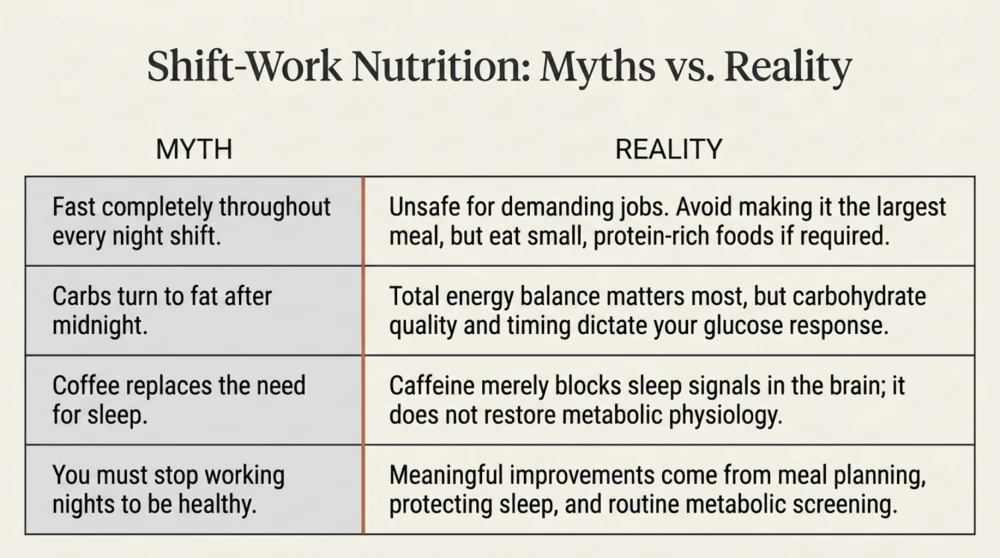
No. The body does not automatically convert every calorie eaten after midnight into body fat.
Total energy balance remains fundamental. However, eating during the biological night may influence glucose tolerance and can make overeating easier in some shift-work environments.
Myth 2: Night-Shift Workers Should Completely Avoid Carbohydrates
No. Carbohydrate quantity, quality, meal composition, and timing matter. Eliminating an entire macronutrient is not necessary for most people.
Myth 3: The Best Strategy Is to Fast Throughout Every Night Shift
Not necessarily. Avoiding large overnight meals may be metabolically useful, but complete overnight fasting is not practical or appropriate for everyone.
Myth 4: Coffee Can Replace Sleep
No. Caffeine can temporarily improve alertness, but it cannot reproduce the physiological functions of adequate sleep.
Myth 5: If Fasting Sugar Is Normal, Night Shifts Are Not Affecting Metabolism
No. Metabolic deterioration can involve increasing waist circumference, triglycerides, fatty liver, blood pressure, or post-meal glucose before fasting glucose becomes clearly abnormal.
Myth 6: Fruit Is a Better Choice Than Any Other Night Food, So Quantity Does Not Matter
Whole fruit can certainly be part of a healthy diet, but it still contributes carbohydrate and calories. A very large fruit-only meal is not automatically a balanced night-shift meal.
Myth 7: Night Work Inevitably Causes Diabetes
No. Night work is a risk exposure, not a diagnosis. Genetics, body composition, sleep, diet, activity, smoking, medications, and many other factors influence whether diabetes eventually develops.
Myth 8: You Cannot Improve Metabolic Health Unless You Stop Working Nights
No. Changing shift patterns may not even be an option for many workers. Meaningful improvements can still be made through sleep protection, meal planning, exercise, weight management, reduced sugary drinks, and appropriate metabolic screening.
A Practical Metabolic Checklist for Night-Shift Workers
- Plan your main meal: Have a balanced meal before the night shift when practical.
- Keep overnight eating lighter: Avoid making 1–3 AM the time for the day's largest meal.
- Prioritise protein: Include an appropriate protein source in major meals.
- Choose carbohydrate carefully: Prefer minimally processed, fibre-containing foods and control portions.
- Reduce liquid calories: Watch repeated sweetened tea, coffee, soft drinks, and energy drinks.
- Avoid continuous grazing: Planned eating is generally easier to control than snacking throughout an eight- or twelve-hour shift.
- Time caffeine: Use it strategically rather than continuously until the end of the shift.
- Protect sleep: Daytime sleep is a metabolic priority, not simply recovery from tiredness.
- Stay active: Include resistance training, aerobic activity, walking, and movement breaks according to ability.
- Watch your waist: Increasing abdominal fat may provide an early signal of deteriorating metabolic health.
- Check metabolic markers: Glucose, HbA1c, blood pressure, and lipids should be assessed according to individual risk.
- Consider sleep apnoea: Loud snoring, witnessed apnoeas, and excessive sleepiness deserve evaluation.
When Should a Night-Shift Worker See a Doctor?
Night work itself does not require medical treatment. However, clinical assessment is sensible when metabolic or sleep-related problems begin appearing.
Consider seeking medical advice if you develop persistent excessive sleepiness, unexplained episodes of faintness, recurrent hypoglycaemia, increasing blood pressure, substantial unexplained weight change, or symptoms suggestive of sleep apnoea.
Assessment is also worthwhile when routine testing shows rising glucose, HbA1c in the prediabetes or diabetes range, markedly elevated triglycerides, fatty liver, or several metabolic abnormalities occurring together.
Prediabetes Is an Opportunity to Act Early
Prediabetes should not be interpreted as an inevitable transition to diabetes.
It identifies an opportunity to address body weight where appropriate, abdominal fat, diet quality, physical activity, sleep, smoking, and other metabolic risk factors before glucose regulation deteriorates further.
For a night-shift worker, restructuring night-shift eating and protecting sleep can become part of that broader prevention strategy.
Key Takeaways: Night-Shift Eating and Insulin Resistance
Night-shift eating is not simply about calories consumed after midnight. It occurs within a different circadian environment, often alongside disrupted sleep and altered activity.
The eight metabolic problems to watch are:
- Worsening glucose tolerance.
- Insulin resistance.
- Increased hunger and food cravings.
- Weight gain.
- Visceral fat accumulation.
- Elevated triglycerides.
- Fatty liver risk.
- Increased long-term risk of type 2 diabetes.
These outcomes are not inevitable. Risk depends on the overall pattern of sleep, diet, body composition, physical activity, genetics, and other health factors.
References
- American Diabetes Association. Standards of Care in Diabetes—2026. Guidance on screening, prevention, lifestyle management, glucose monitoring, and treatment of diabetes.
- National Institute for Occupational Safety and Health. Current resources on shift work, long working hours, sleep, fatigue, and worker health.
- National Heart, Lung, and Blood Institute. Current clinical information on circadian rhythm, sleep deficiency, obstructive sleep apnoea, and cardiometabolic health.
- Scheer FAJL, Hilton MF, Mantzoros CS, Shea SA. Adverse metabolic and cardiovascular consequences of circadian misalignment. Proceedings of the National Academy of Sciences. 2009;106(11):4453-4458.
- Morris CJ, Yang JN, Garcia JI, et al. Endogenous circadian system and circadian misalignment impact glucose tolerance via separate mechanisms in humans. Proceedings of the National Academy of Sciences. 2015;112(17):E2225-E2234.
- Chellappa SL, Qian J, Vujovic N, et al. Daytime eating prevents internal circadian misalignment and glucose intolerance in night work. Science Advances. 2021;7(49):eabg9910.
- Current peer-reviewed literature on shift work, circadian disruption, sleep restriction, insulin sensitivity, obesity, and type 2 diabetes risk.
Written by Dr. Pankaj Kumar, General & Lifestyle Physician, Dwarka, New Delhi