












- 22nd September 2026
Table of Contents
- What Does Ferritin Actually Tell Us?
- Iron Deficiency Develops Before Iron-Deficiency Anaemia
- Does Low Ferritin Always Mean Iron Deficiency?
- What Ferritin Level Is Considered Low?
- Why Can Low Ferritin Cause Symptoms Before Anaemia?
- 8 Possible Symptoms of Low Ferritin With Normal Haemoglobin
- 1. Persistent Fatigue and Low Energy
- 2. Reduced Exercise Tolerance
- 3. Poor Concentration or “Brain Fog”
- 4. Hair Shedding
- 5. Restless Legs
- 6. Headaches or Dizziness
- 7. Shortness of Breath or Palpitations With Activity
- 8. Weakness, Irritability or Reduced Work Capacity
- Eight Symptoms at a Glance
- Why Does Ferritin Become Low in the First Place?
- Heavy Menstrual Bleeding Is a Common Cause
- Pregnancy and Previous Pregnancies Can Affect Iron Stores
- Dietary Iron Intake Can Be Inadequate
- Rapid Weight Loss Can Change Nutritional Intake
- Poor Iron Absorption Is Another Possibility
- Could Acid-Suppressing Medicines Matter?
- Blood Donation Can Gradually Deplete Iron Stores
- What About Gastrointestinal Blood Loss?
- Ferritin Is Not the Only Test That Matters
- What Is Transferrin Saturation?
- Can You Have Normal MCV and Still Be Iron Deficient?
- Do Not Treat the Ferritin Number Without Treating the Cause
- How Should You Interpret Ferritin When Haemoglobin Is Normal?
- What Does a Ferritin of 10 Mean?
- What About a Ferritin of 20?
- Is Ferritin Below 30 Iron Deficiency?
- What Does a Ferritin of 50 Mean?
- What About Ferritin of 100?
- A Practical Way to Understand Ferritin Values
- Why Can Inflammation Make Ferritin Misleading?
- What Is Transferrin Saturation?
- What Does a Transferrin Saturation Below 20% Mean?
- Absolute Iron Deficiency Versus Functional Iron Deficiency
- Hepcidin: The Hormone Behind Iron Availability
- Heavy Periods: How Much Menstrual Bleeding Is Too Much?
- What About PCOS and Low Ferritin?
- When Should Gastrointestinal Blood Loss Be Considered?
- Can Coeliac Disease Cause Low Ferritin Before Anaemia?
- Should Everyone With Low Ferritin Undergo Endoscopy?
- Iron-Rich Foods: What Should You Actually Eat?
- Practical Iron Sources in an Indian Diet
- Is Spinach Enough to Correct Low Ferritin?
- Does Beetroot Increase Haemoglobin or Ferritin?
- What About Pomegranate?
- Vitamin C and Iron Absorption
- Tea and Coffee Can Reduce Iron Absorption
- Calcium Can Also Interact With Iron Absorption
- How Is Low Ferritin With Normal Haemoglobin Treated?
- Oral Iron Is Often the First Treatment
- Why Is Alternate-Day Iron Discussed So Often?
- Should Iron Be Taken on an Empty Stomach?
- Why Do Iron Tablets Cause Constipation?
- What if Oral Iron Is Not Working?
- When Is Intravenous Iron Considered?
- How Long Does It Take to Restore Ferritin?
- Should Ferritin Be Rechecked?
- Do You Need to Reach a Ferritin of 100?
- Could Too Much Iron Be Harmful?
- A Practical Approach to Low Ferritin With Normal Haemoglobin
- How Quickly Do Symptoms Improve After Treating Low Ferritin?
- Does Treating Iron Deficiency Without Anaemia Improve Fatigue?
- Low Ferritin and Hair Loss: How Strong Is the Connection?
- Do You Need Ferritin Above 70 or 100 for Hair Growth?
- Low Ferritin and Restless Legs: A Different Situation
- Iron Deficiency in Athletes
- Iron Deficiency During Weight Loss Deserves Attention
- Low Ferritin During Pregnancy
- What About Low Ferritin After Childbirth?
- When Does Low Ferritin Need Further Investigation?
- Which Gastrointestinal Warning Signs Matter?
- Can Haemorrhoids Explain Low Ferritin?
- What if You Have Low Ferritin but No Symptoms?
- What if You Have Symptoms but Ferritin Is Normal?
- Can Ferritin Be High and You Still Have Iron Restriction?
- Should Everyone Get Ferritin Tested for Fatigue?
- Common Myths About Low Ferritin With Normal Haemoglobin
- Myth 1: Normal Haemoglobin Means You Cannot Be Iron Deficient
- Myth 2: Any Ferritin Below 100 Is Iron Deficiency
- Myth 3: Ferritin of 30 Is Normal Because My Laboratory Says So
- Myth 4: Beetroot and Pomegranate Can Correct Iron Deficiency
- Myth 5: Spinach Is the Best Treatment for Low Ferritin
- Myth 6: Everyone With Low Ferritin Needs Intravenous Iron
- Myth 7: More Iron Tablets Will Correct Ferritin Faster
- Myth 8: Once Ferritin Becomes Normal, the Problem Is Solved Forever
- A Practical Monitoring Checklist
- Questions to Ask When Ferritin Is Low but Haemoglobin Is Normal
- Key Takeaways: Low Ferritin With Normal Haemoglobin
- References
Low Ferritin With Normal Haemoglobin: 8 Symptoms of Hidden Iron Deficiency
Your haemoglobin is normal.
So you are told that your blood report is fine.
But you continue to feel unusually tired. Your concentration is poor. Exercise feels harder than it used to. Your hair may be shedding more, or your legs become uncomfortable when you try to sleep.
Then someone checks your iron studies and discovers that your ferritin is low.
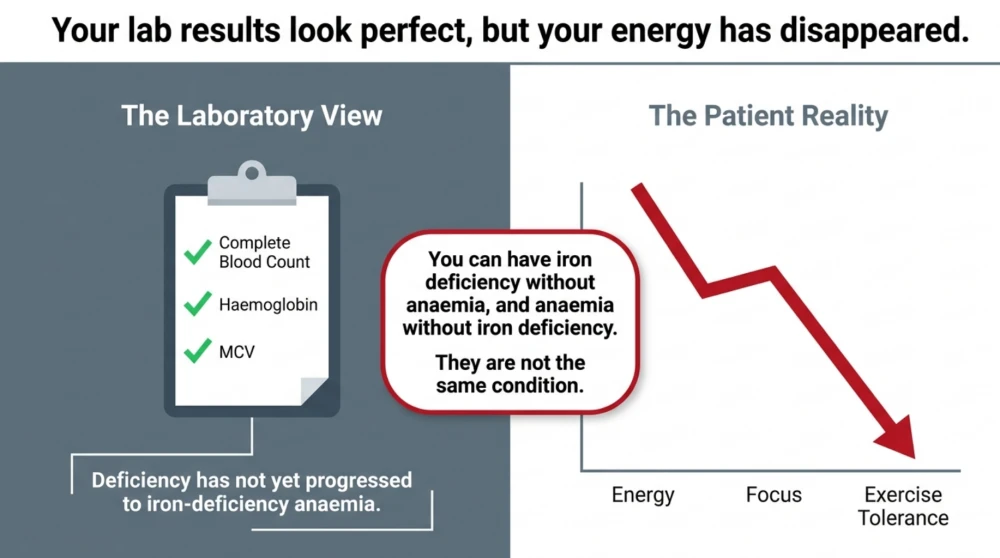
This is an important situation because low ferritin with normal haemoglobin can occur when the body's iron stores have become depleted but the deficiency has not yet progressed to iron-deficiency anaemia.
It is commonly described as iron deficiency without anaemia or non-anaemic iron deficiency.
It is also a useful reminder that iron deficiency and anaemia are not interchangeable terms.
You can have anaemia without iron deficiency, and you can have iron deficiency without anaemia.
What Does Ferritin Actually Tell Us?
Ferritin is a protein that stores iron.
A serum ferritin test therefore provides useful information about the body's iron reserves.
Haemoglobin, on the other hand, is the iron-containing protein inside red blood cells responsible for carrying oxygen.
The distinction between these two measurements explains why someone can have low iron stores while haemoglobin remains within the laboratory reference range.
Think of Ferritin as the Iron Reserve
Imagine that you have money in a savings account and money available for today's expenses.
Your savings can become progressively depleted while you continue paying today's bills.
For a period of time, everything appears to function normally—but the reserve is disappearing.
Iron deficiency can develop in a somewhat similar sequence.
The body may initially draw upon stored iron while maintaining haemoglobin production. If iron loss continues or intake and absorption remain inadequate, the deficiency can eventually interfere with red blood cell production and haemoglobin may fall.
Iron Deficiency Develops Before Iron-Deficiency Anaemia
Iron deficiency is better understood as a continuum rather than an on/off condition.
In the earlier stage, iron stores decline.
Ferritin may fall while haemoglobin remains normal.
As deficiency progresses, iron availability for red blood cell production becomes increasingly restricted. Eventually, haemoglobin can fall sufficiently for iron-deficiency anaemia to develop.
Waiting for Haemoglobin to Fall Can Miss Earlier Deficiency
This is why checking only a complete blood count may occasionally miss clinically relevant iron depletion.
A person can have a haemoglobin value inside the laboratory reference range and still have depleted iron stores.
Does Low Ferritin Always Mean Iron Deficiency?
A genuinely low ferritin is strongly supportive of depleted iron stores.
However, interpretation should consider the laboratory method, clinical setting and other iron indices.
Ferritin is especially useful because low concentrations are generally quite specific for iron deficiency.
The Bigger Diagnostic Problem Is Often a Ferritin That Looks Normal
Ferritin is also an acute-phase reactant.
Inflammation, infection and several chronic diseases can increase ferritin.
Therefore, a patient can occasionally have iron deficiency even though ferritin does not appear particularly low.
In these circumstances, additional information such as transferrin saturation and markers of inflammation can become useful.
What Ferritin Level Is Considered Low?
This question appears simple but has a more nuanced answer.
Different clinical contexts and guidelines use different thresholds. A very low ferritin strongly supports iron deficiency, while values in an intermediate range need to be interpreted alongside symptoms, transferrin saturation, inflammation, age, sex and underlying medical conditions.
In routine adult clinical practice, a ferritin below approximately 30 micrograms/L is commonly used as a useful indicator of depleted iron stores in the absence of significant inflammation.
Do Not Treat 30 as a Magical Universal Cut-Off
Ferritin interpretation becomes more complicated when inflammation is present because inflammation can artificially increase ferritin.
Different thresholds are also used in conditions such as chronic kidney disease, inflammatory bowel disease and heart failure.
Restless legs syndrome is another example in which iron assessment and treatment thresholds may differ from those used simply to diagnose uncomplicated iron deficiency.
This is why a ferritin result should be interpreted clinically rather than labelled “normal” or “abnormal” solely from one number.
Why Can Low Ferritin Cause Symptoms Before Anaemia?
Iron does much more than participate in haemoglobin production.
It is involved in mitochondrial energy metabolism, cellular enzymes, neurological function and several other biological processes.
Therefore, depletion of iron stores can potentially affect symptoms and function before haemoglobin falls into the anaemic range.
But Symptoms Are Not Specific to Iron Deficiency
This point is equally important.
Fatigue, poor concentration, hair loss, headache and reduced exercise tolerance have many possible causes.
Low ferritin can be relevant, but the presence of these symptoms alone does not prove iron deficiency.
Laboratory evidence and the clinical context should support the diagnosis.
8 Possible Symptoms of Low Ferritin With Normal Haemoglobin
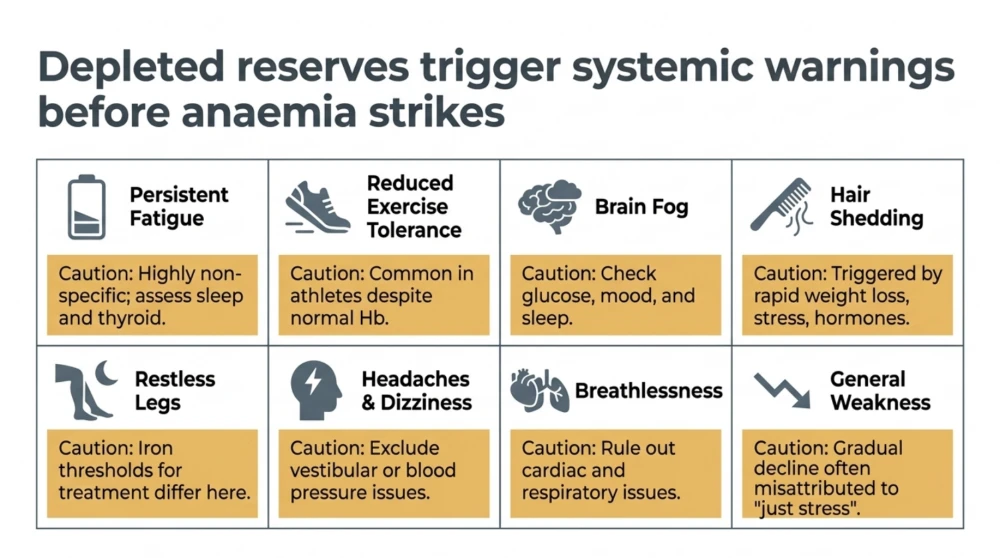
Symptoms vary considerably. Some people with depleted iron stores feel completely well, while others report symptoms before anaemia develops.
Here are eight commonly discussed manifestations.
1. Persistent Fatigue and Low Energy
Fatigue is probably the symptom most consistently associated with iron deficiency without anaemia.
You may technically have enough haemoglobin to remain outside the anaemic range yet still feel that your normal energy has disappeared.
This can present as persistent tiredness, reduced stamina or feeling disproportionately exhausted after an ordinary day.
“My Haemoglobin Is Normal, So Why Am I Tired?”
This is precisely why ferritin can be useful in selected patients with unexplained fatigue.
Iron is involved in mitochondrial energy production as well as haemoglobin synthesis.
Clinical trials suggest that iron replacement can reduce subjective fatigue in some non-anaemic adults with documented iron deficiency, although improvements in objective exercise performance have been less consistent.
At the same time, fatigue is extremely nonspecific.
Sleep deprivation, hypothyroidism, depression, inadequate calorie intake, vitamin deficiencies, chronic disease, sleep apnoea and many other conditions can produce similar symptoms.
2. Reduced Exercise Tolerance
You may notice that exercise feels more difficult even though haemoglobin is still normal.
A workout that previously felt comfortable may become disproportionately tiring. You may struggle to maintain your usual training intensity or feel that recovery takes longer.
Athletes Can Develop Iron Deficiency Before Anaemia
Iron status deserves particular attention in endurance athletes and menstruating athletes because requirements and losses may be higher.
But reduced performance should not automatically lead to iron supplementation.
Training load, calorie intake, sleep, infection, thyroid function and other nutritional deficiencies also need consideration.
3. Poor Concentration or “Brain Fog”
Some people with iron deficiency without anaemia describe difficulty concentrating, reduced mental stamina or a vague sensation of brain fog.
They may find it harder to maintain attention during work or study.
Brain Fog Is Not a Diagnosis
Poor concentration can occur with sleep deprivation, anxiety, depression, thyroid disease, medication effects, glucose disturbances and numerous other conditions.
Low ferritin should therefore be considered one possible contributor rather than automatically being blamed for every cognitive symptom.
4. Hair Shedding
Hair loss is one of the most common reasons people independently request a ferritin test.
Iron deficiency can be associated with diffuse hair shedding, but the relationship between ferritin concentrations and hair loss is more complicated than many social-media posts suggest.
Low Ferritin Is Not the Only Cause of Hair Loss
Diffuse hair shedding can occur after rapid weight loss, significant illness, childbirth, severe psychological stress, restrictive dieting and several other physiological stresses.
Thyroid disease, scalp disorders and androgenetic hair loss can also contribute.
Therefore, finding low ferritin may identify one correctable factor without necessarily explaining the entire problem.
5. Restless Legs
Restless legs syndrome produces an uncomfortable urge to move the legs, usually becoming worse during rest and often more troublesome in the evening or at night.
Iron status has an important relationship with restless legs syndrome, and ferritin is commonly assessed when the condition is suspected.
Restless Legs Can Occur Without Anaemia
This is a good example of why haemoglobin alone does not fully describe iron status.
Someone can have normal haemoglobin but low or suboptimal iron stores relevant to restless legs symptoms.
Importantly, treatment thresholds used in restless legs syndrome may be higher than the ferritin level conventionally used to identify uncomplicated iron deficiency.
6. Headaches or Dizziness
Headache and dizziness are often associated with anaemia, but some patients with iron depletion report these symptoms even before overt anaemia develops.
However, both symptoms are highly nonspecific.
Dizziness can result from dehydration, low blood pressure, vestibular disorders, medications, glucose disturbances and anxiety, while headaches have an equally broad differential diagnosis.
Do Not Diagnose Iron Deficiency From Dizziness Alone
If ferritin is low, iron deficiency may be relevant. But recurrent dizziness, particularly with fainting, neurological symptoms or palpitations, deserves assessment on its own merits.
7. Shortness of Breath or Palpitations With Activity
These symptoms are much more characteristic once significant anaemia develops, but some people with iron deficiency without anaemia report reduced exercise tolerance, breathlessness or awareness of the heartbeat.
Iron is important for skeletal and cardiac muscle metabolism as well as oxygen-related cellular processes.
Do Not Assume Breathlessness Is “Just Low Ferritin”
Breathlessness and palpitations can indicate cardiac, respiratory, thyroid and other medical conditions.
If symptoms are new, significant or occur with chest discomfort, fainting or marked tachycardia, they require appropriate evaluation irrespective of the ferritin result.
8. Weakness, Irritability or Reduced Work Capacity
Iron deficiency without anaemia may present less dramatically as a general decline in physical or mental performance.
A patient may describe feeling weak, irritable or less productive rather than reporting one specific symptom.
This gradual change can easily be attributed to a busy lifestyle, poor sleep or stress.
Symptoms Often Overlap With Other Conditions
This overlap explains why non-anaemic iron deficiency can be missed—but it also explains why low ferritin should not become a universal explanation for nonspecific symptoms.
The diagnosis is strongest when symptoms, laboratory findings and a plausible cause of iron deficiency fit together.
Eight Symptoms at a Glance
| Possible Symptom | What You May Notice | Important Caution |
|---|---|---|
| 1. Fatigue | Persistent tiredness despite normal haemoglobin | Fatigue has many other causes |
| 2. Reduced exercise tolerance | Usual exercise feels harder | Training, sleep and nutrition also matter |
| 3. Poor concentration | Reduced attention or mental stamina | Not specific to iron deficiency |
| 4. Hair shedding | Diffuse increase in hair fall | Other nutritional, hormonal and dermatological causes are common |
| 5. Restless legs | Urge to move the legs, often worse at night | Requires clinical assessment; iron thresholds differ in this setting |
| 6. Headache or dizziness | Recurrent nonspecific symptoms | Many other causes should be considered |
| 7. Breathlessness or palpitations | Symptoms particularly noticeable with activity | Significant symptoms require broader evaluation |
| 8. Weakness or reduced productivity | General decline in physical or mental performance | Consider sleep, thyroid, nutrition and chronic illness too |
Why Does Ferritin Become Low in the First Place?
Finding low ferritin with normal haemoglobin is only the first half of the diagnosis.
The next question is more important:
Why are the iron stores low?
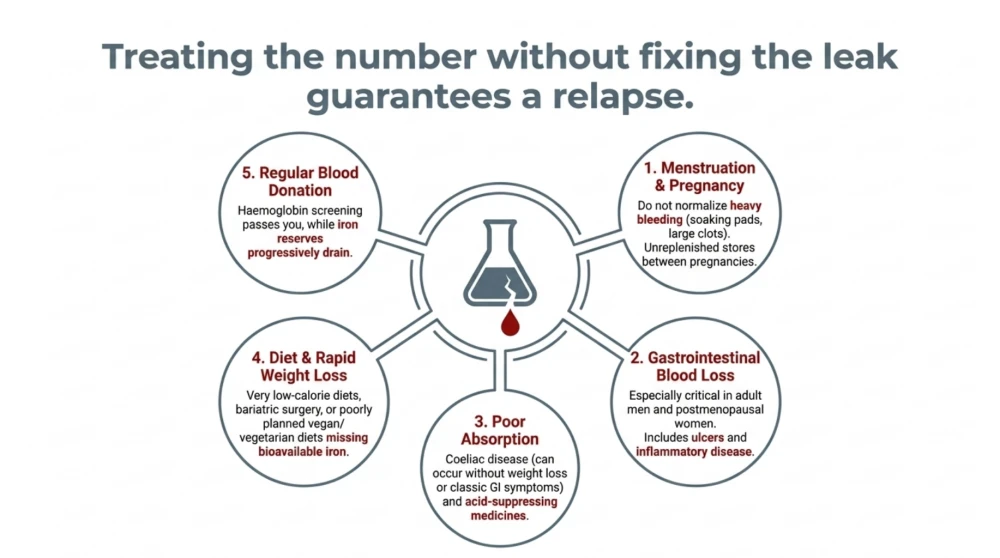
Simply prescribing iron without considering the cause can correct the laboratory value temporarily while the underlying problem continues.
Heavy Menstrual Bleeding Is a Common Cause
Menstrual blood loss is an important cause of iron deficiency in premenopausal women.
Someone can lose iron month after month while haemoglobin remains normal for a considerable period.
Do Not Normalise Excessive Menstrual Blood Loss
Many women assume that very heavy periods are simply their normal pattern.
Repeatedly soaking through sanitary products, needing frequent changes, passing large clots or having prolonged heavy bleeding deserves assessment.
Replacing iron without addressing substantial ongoing blood loss can lead to recurrent deficiency.
Pregnancy and Previous Pregnancies Can Affect Iron Stores
Iron requirements increase substantially during pregnancy.
Repeated pregnancies, particularly when iron stores are not fully replenished between them, can contribute to depleted reserves.
Iron assessment during pregnancy requires pregnancy-specific interpretation and should be managed with appropriate antenatal guidance.
Dietary Iron Intake Can Be Inadequate
Iron deficiency can develop when intake repeatedly fails to meet requirements.
This can occur with restrictive dieting, very low-calorie diets or poorly planned diets that contain little bioavailable iron.
Vegetarian Diet Does Not Automatically Mean Iron Deficiency
A well-planned vegetarian diet can provide iron.
However, plant-derived non-haem iron is generally absorbed less efficiently than haem iron from animal sources, and meal composition influences absorption.
People following vegetarian or vegan diets may therefore need greater attention to iron-rich foods and overall dietary planning.
Rapid Weight Loss Can Change Nutritional Intake
People undergoing substantial weight loss sometimes reduce food intake so aggressively that iron, protein and other micronutrients become inadequate.
This may occur with restrictive diets, after bariatric surgery or when appetite becomes markedly reduced during medical weight-loss treatment.
Hair shedding and fatigue during rapid weight loss should therefore not automatically be blamed on calorie deficit alone.
Poor Iron Absorption Is Another Possibility
Eating enough iron does not guarantee that enough is absorbed.
Conditions affecting the stomach or small intestine can interfere with iron absorption.
Coeliac disease is one important example.
Inflammatory gastrointestinal disorders, previous gastrointestinal surgery and other conditions can also alter iron absorption.
Iron Deficiency Can Occasionally Be the Clue That Leads to a Gastrointestinal Diagnosis
This is why recurrent or unexplained iron deficiency deserves more than repeated supplementation.
The clinical context determines whether further gastrointestinal investigation is appropriate.
Could Acid-Suppressing Medicines Matter?
Gastric acidity helps the absorption of non-haem iron.
Long-term use of potent acid-suppressing medication can contribute to impaired iron absorption in some susceptible individuals, although it is not the explanation for every low ferritin result.
Do not stop prescribed medication independently; instead, review whether it remains necessary and whether it may be relevant to the overall clinical picture.
Blood Donation Can Gradually Deplete Iron Stores
Regular blood donors lose iron each time they donate.
Haemoglobin screening before donation may remain acceptable even while iron stores progressively fall.
This makes ferritin particularly relevant in some frequent donors.
What About Gastrointestinal Blood Loss?
Chronic gastrointestinal blood loss can produce iron deficiency.
Possible sources range from relatively common benign conditions to clinically important gastrointestinal disease.
The probability and appropriate investigation depend heavily on age, sex, symptoms and medical history.
Iron Deficiency in an Adult Man or Postmenopausal Woman Deserves Particular Attention
Menstrual blood loss cannot explain iron deficiency in these groups.
Therefore, unexplained iron deficiency should prompt consideration of gastrointestinal and other sources of blood loss rather than simply recommending an iron-rich diet indefinitely.
Ferritin Is Not the Only Test That Matters
When iron deficiency is suspected, the complete picture can include:
- Complete blood count.
- Haemoglobin.
- Mean corpuscular volume or MCV.
- Mean corpuscular haemoglobin or MCH.
- Serum ferritin.
- Serum iron.
- Transferrin or total iron-binding capacity.
- Transferrin saturation.
- Inflammatory markers in selected situations.
Serum Iron Alone Is a Poor Test for Diagnosing Iron Deficiency
Serum iron can fluctuate considerably and should not usually be interpreted by itself.
Ferritin and transferrin saturation, interpreted alongside the blood count and clinical setting, are generally more informative.
What Is Transferrin Saturation?
Transferrin is a major iron-transport protein in blood.
Transferrin saturation estimates the proportion of iron-binding sites occupied by iron.
A low transferrin saturation can support iron deficiency, particularly when ferritin interpretation is complicated by inflammation or chronic disease.
Can You Have Normal MCV and Still Be Iron Deficient?
Yes.
Microcytosis—small red blood cells—is commonly associated with established iron-deficiency anaemia, but earlier iron deficiency can exist while MCV remains within the reference range.
Therefore, normal haemoglobin and normal MCV do not automatically prove that iron stores are adequate.
Do Not Treat the Ferritin Number Without Treating the Cause
One of the most important lessons from low ferritin with normal haemoglobin is that ferritin is a clue, not the final diagnosis.
A menstruating woman with heavy periods, a frequent blood donor, a person on a severely restrictive diet and a postmenopausal adult with unexplained iron deficiency may all have a similar ferritin value—but the investigation and management should not necessarily be identical.
How Should You Interpret Ferritin When Haemoglobin Is Normal?
Finding low ferritin with normal haemoglobin often creates confusion because the laboratory report may show one result in red and another comfortably inside the normal range.
The simplest explanation is that ferritin and haemoglobin are measuring different parts of iron physiology.
Ferritin provides information about stored iron. Haemoglobin tells us whether enough haemoglobin is currently present in circulating red blood cells.
Iron stores can therefore become depleted before haemoglobin falls sufficiently to meet the definition of anaemia.
Ferritin Should Not Be Interpreted as an Isolated Number
Age, sex, pregnancy, menstrual history, inflammation, kidney disease, gastrointestinal disease and other medical conditions can change how a ferritin result should be interpreted.
This is why the question should not simply be, “Is my ferritin inside the laboratory range?”
A better question is:
“Does this ferritin value, together with my transferrin saturation, blood count, symptoms and clinical circumstances, indicate depleted or unavailable iron?”
What Does a Ferritin of 10 Mean?
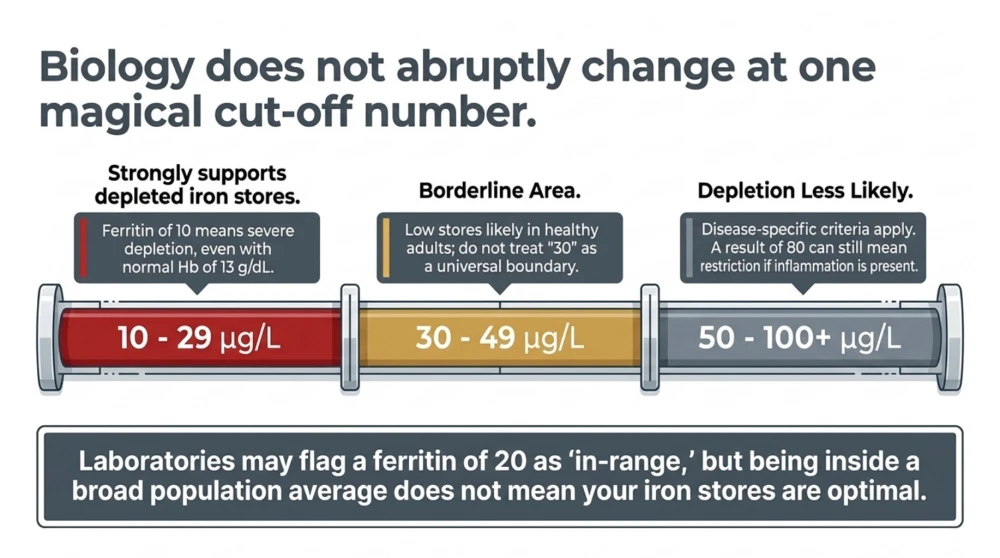
In an adult, a ferritin around 10 µg/L strongly supports depleted iron stores.
This remains important even when haemoglobin is normal.
A patient with ferritin of 10 and haemoglobin of 13 g/dL should therefore not automatically be reassured that iron status is normal simply because anaemia has not yet developed.
This Is Iron Deficiency Without Anaemia
If the clinical context supports the result, this represents the stage in which iron stores are depleted but haemoglobin production remains sufficiently preserved to stay within the reference range.
The next task is not only replacing iron—it is identifying why iron stores became depleted.
What About a Ferritin of 20?
A ferritin around 20 µg/L may also represent low body iron stores, particularly in an otherwise healthy adult without inflammation.
This is where relying solely on a laboratory's broad reference range can become misleading.
Some laboratories may display a ferritin around 20 as technically within range, but being inside a population reference interval does not necessarily mean that iron stores are optimal or that iron deficiency has been excluded.
Is Ferritin Below 30 Iron Deficiency?
A ferritin below approximately 30 µg/L is commonly considered supportive of low iron stores in routine clinical practice when significant inflammation is absent.
However, it should not be converted into a rigid rule that every ferritin of 29 requires treatment while every ferritin of 31 is completely normal.
Biology Does Not Change at One Exact Number
Ferritin exists on a continuum.
A result should be interpreted alongside transferrin saturation, blood count, symptoms, inflammatory status and the probability of ongoing iron loss.
What Does a Ferritin of 50 Mean?
A ferritin around 50 µg/L is very different from a ferritin of 10, but interpretation still depends on context.
In an otherwise healthy person without inflammation, a ferritin around 50 generally makes substantial absolute iron depletion less likely.
But ferritin can rise during inflammation.
Therefore, someone with chronic inflammatory disease can occasionally have restricted iron availability despite a ferritin value that would look reassuring in a healthy person.
What About Ferritin of 100?
A ferritin around 100 µg/L usually argues against uncomplicated absolute iron depletion in an otherwise healthy person.
However, chronic inflammatory disorders create a different situation.
Ferritin may be elevated because of inflammation while circulating iron availability remains inadequate.
That is why disease-specific definitions are used in conditions such as chronic kidney disease, inflammatory bowel disease and heart failure.
Do Not Apply One Ferritin Cut-Off to Every Disease
The ferritin threshold used for an otherwise healthy menstruating woman should not automatically be applied to someone with chronic kidney disease or active inflammatory bowel disease.
The clinical context changes interpretation.
A Practical Way to Understand Ferritin Values
| Ferritin Result | Possible Interpretation | Important Qualification |
|---|---|---|
| Around 10 µg/L | Strongly supports depleted iron stores | Look for the underlying cause even if haemoglobin is normal |
| Around 20 µg/L | Low iron stores are likely in many otherwise healthy adults | Interpret with clinical context and other iron indices |
| Around 30 µg/L | Borderline area depending on context | Do not use 30 as a universal biological boundary |
| Around 50 µg/L | Absolute depletion becomes less likely in an otherwise healthy adult | Inflammation can produce a falsely reassuring ferritin |
| Around 100 µg/L | Usually inconsistent with simple severe depletion in a healthy adult | Disease-specific criteria apply in inflammatory conditions, CKD, heart failure and other settings |
These examples are intended to explain interpretation rather than provide universal treatment thresholds.
Why Can Inflammation Make Ferritin Misleading?
Ferritin is an acute-phase protein.
When inflammation occurs, ferritin can increase independently of the amount of usable stored iron.
This creates an important diagnostic problem.
A low ferritin remains very useful for identifying depleted stores, but a normal or moderately elevated ferritin does not always exclude iron deficiency when significant inflammation is present.
This Is Where CRP Can Help
C-reactive protein, or CRP, is one marker of inflammation.
If CRP is elevated, ferritin should be interpreted more cautiously.
CRP does not diagnose iron deficiency itself. Instead, it helps provide context for deciding whether inflammation may be influencing the ferritin result.
What Is Transferrin Saturation?
Transferrin transports iron through the bloodstream.
Transferrin saturation, often abbreviated as TSAT, estimates how much of transferrin's iron-carrying capacity is actually occupied.
A low transferrin saturation suggests that relatively little circulating iron is available for tissues and red blood cell production.
Why TSAT Becomes Useful When Ferritin Is Difficult to Interpret
Imagine a patient with chronic inflammation whose ferritin is 80 µg/L.
If ferritin were interpreted alone, iron deficiency might appear unlikely.
But if transferrin saturation is also low, the possibility of iron restriction becomes much more relevant.
This is one reason iron studies should sometimes be interpreted as a pattern rather than relying on ferritin alone.
What Does a Transferrin Saturation Below 20% Mean?
A transferrin saturation below approximately 20% is commonly used as evidence of iron restriction in several clinical settings.
Again, interpretation depends on the underlying condition.
TSAT should not simply replace ferritin with another isolated number.
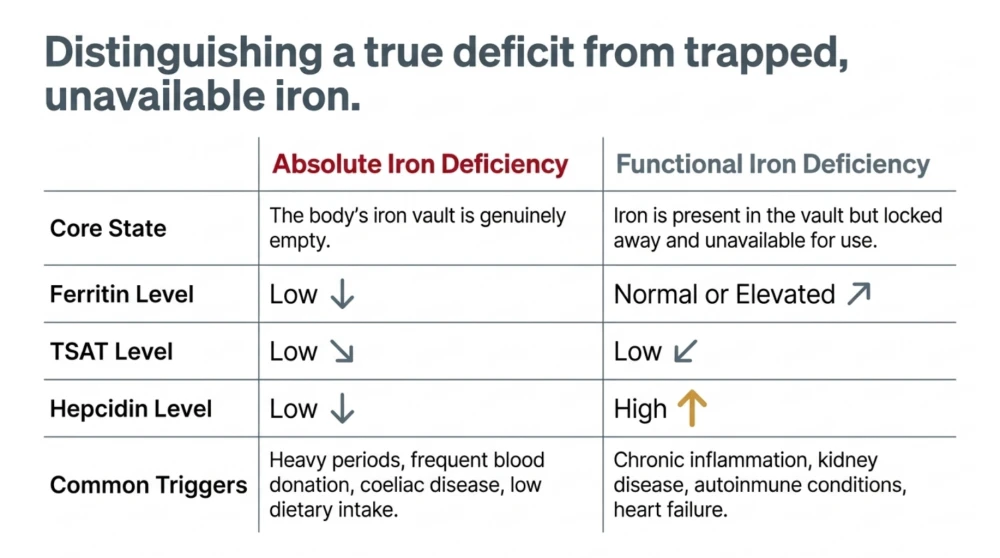
Absolute Iron Deficiency Versus Functional Iron Deficiency
This distinction explains many apparently confusing blood reports.
Absolute Iron Deficiency
In absolute iron deficiency, the body's actual iron stores are depleted.
Ferritin is typically low.
Common causes include chronic blood loss, inadequate intake, pregnancy, blood donation and impaired absorption.
Functional Iron Deficiency
In functional iron deficiency, iron may be present in storage sites but is not adequately available for use.
This commonly occurs in inflammatory states.
Inflammation increases the hormone hepcidin, which reduces intestinal iron absorption and restricts the release of stored iron into circulation.
Ferritin can therefore be normal or elevated while transferrin saturation remains low.
Hepcidin: The Hormone Behind Iron Availability
Hepcidin is produced primarily by the liver and plays a central role in controlling iron metabolism.
When hepcidin rises, it reduces iron absorption from the intestine and limits release of iron from storage cells.
Inflammation can increase hepcidin.
This Helps Explain Anaemia of Chronic Inflammation
The body may contain iron, but the iron becomes less accessible for haemoglobin production and other physiological functions.
This mechanism is quite different from losing iron through heavy menstrual bleeding or gastrointestinal bleeding.
Heavy Periods: How Much Menstrual Bleeding Is Too Much?
Menstrual blood loss is one of the most important causes of low ferritin with normal haemoglobin in premenopausal women.
Because the loss happens gradually every month, iron stores may fall long before haemoglobin becomes frankly abnormal.
Clues That Menstrual Loss May Be Excessive
- Periods lasting longer than expected.
- Needing very frequent changes of pads or tampons.
- Bleeding through clothes or bedding.
- Passing large blood clots.
- Needing double protection because of heavy flow.
- Menstrual bleeding that interferes with normal daily activity.
The cause of heavy menstrual bleeding may itself require assessment.
Iron tablets can replenish iron, but they do not explain or correct abnormal uterine bleeding.
What About PCOS and Low Ferritin?
PCOS does not automatically cause iron deficiency.
In fact, menstrual patterns vary considerably in PCOS.
Some women have infrequent periods and relatively little menstrual iron loss, while others experience episodes of prolonged or heavy bleeding.
It is the actual bleeding pattern—not simply the diagnosis of PCOS—that determines whether menstrual blood loss is likely to contribute to low ferritin.
When Should Gastrointestinal Blood Loss Be Considered?
Iron lost through the gastrointestinal tract can gradually deplete stores.
The likelihood of an important gastrointestinal source depends on age, sex, medications, symptoms, family history and whether another convincing explanation exists.
Potential contributors include gastrointestinal ulcers, inflammatory disease and other sources of chronic bleeding.
Men and Postmenopausal Women Need Particular Attention
Unexplained iron deficiency in an adult man or postmenopausal woman should not simply be attributed to poor diet without considering occult blood loss and other causes.
However, non-anaemic iron deficiency is not identical to established iron-deficiency anaemia, and the need for invasive gastrointestinal investigation should be individualised according to additional risk factors and clinical indications.
Can Coeliac Disease Cause Low Ferritin Before Anaemia?
Yes.
Coeliac disease can interfere with iron absorption in the proximal small intestine.
Iron deficiency may occasionally be an important clue even when classic gastrointestinal symptoms such as chronic diarrhoea are absent.
Not Everyone With Coeliac Disease Is Underweight
A person can have coeliac disease with normal weight or overweight and relatively subtle gastrointestinal symptoms.
Therefore, recurrent unexplained iron deficiency—particularly when oral iron produces an inadequate response—may justify considering malabsorption depending on the clinical picture.
Should Everyone With Low Ferritin Undergo Endoscopy?
No.
The appropriate investigation depends on age, sex, menstrual history, gastrointestinal symptoms, family history, degree and recurrence of iron deficiency and other clinical findings.
A young woman with clearly documented heavy menstrual bleeding represents a very different clinical scenario from an older man with unexplained iron deficiency and altered bowel habits.
Investigation should follow the clinical probability of the underlying cause.
Iron-Rich Foods: What Should You Actually Eat?
Diet matters, particularly when low intake contributes to iron deficiency.
But dietary iron exists in two broad forms: haem iron and non-haem iron.
Haem Iron
Haem iron is found in animal foods such as meat, poultry and fish.
It is generally absorbed more efficiently than non-haem iron.
Non-Haem Iron
Non-haem iron is found in plant foods and fortified foods.
Important Indian dietary sources can include legumes, lentils, chickpeas, beans, soy foods, certain seeds, whole grains and green leafy vegetables.
These foods remain nutritionally valuable, but absorption of non-haem iron is influenced more strongly by the rest of the meal.
Practical Iron Sources in an Indian Diet
| Food Type | Examples | Practical Point |
|---|---|---|
| Meat and poultry | Appropriate portions of meat and chicken | Provide haem iron, which is relatively well absorbed |
| Fish | Different fish according to availability and preference | Can contribute iron together with protein |
| Lentils and pulses | Dal, chana, rajma, lobia and whole moong | Useful non-haem iron sources that also provide fibre and protein |
| Soy foods | Soybeans, tofu and other minimally processed soy foods | Can contribute iron and protein in vegetarian diets |
| Seeds | Sesame and selected other seeds | Nutrient-dense but calorie-dense, so portions matter |
| Green vegetables | Amaranth leaves and other leafy vegetables | Useful as part of a varied diet but should not be the sole treatment for significant deficiency |
Is Spinach Enough to Correct Low Ferritin?
Usually not when genuine iron deficiency is established.
Spinach contains iron, but much of it is non-haem iron and its absorption is limited by compounds such as oxalates.
It is an excellent vegetable, but it should not be promoted as a medicinal replacement for iron therapy when substantial deficiency requires treatment.
Does Beetroot Increase Haemoglobin or Ferritin?
Beetroot is nutritious, but it is frequently given an exaggerated reputation as an iron treatment.
Eating beetroot does not provide the amount of absorbable iron required to reliably correct established iron deficiency.
The Colour Red Does Not Mean a Food Builds Blood
Food colour is not a useful method for estimating iron content.
Beetroot can certainly remain part of a healthy diet, but a person with significant low ferritin should not depend on beetroot juice as the primary treatment.
What About Pomegranate?
Pomegranate provides useful nutrients, but it is not a particularly concentrated iron replacement.
The same principle applies: nutritious foods should be valued for what they actually provide rather than being marketed as substitutes for appropriate iron therapy.
Vitamin C and Iron Absorption
Vitamin C can enhance absorption of non-haem iron from food by helping maintain iron in a more absorbable form.
Combining plant-based iron sources with vitamin-C-rich foods can therefore be a sensible dietary strategy.
For example, a meal containing dal or chana can be combined with suitable vitamin-C-rich vegetables or fruit.
But Do You Need a Vitamin C Tablet With Every Iron Tablet?
Not necessarily.
Although vitamin C can improve non-haem iron absorption physiologically, clinical evidence does not establish that routine vitamin C supplementation is required for every patient taking oral iron.
A balanced diet providing adequate vitamin C is usually reasonable unless there is another indication for supplementation.
Tea and Coffee Can Reduce Iron Absorption
Polyphenols in tea and coffee can inhibit absorption of non-haem iron when consumed close to an iron-containing meal or oral iron dose.
This matters particularly for someone whose iron intake is already marginal.
You Do Not Necessarily Need to Give Up Tea
The practical strategy is timing.
Avoid taking tea or coffee together with an oral iron tablet, and consider separating them from iron-rich meals when improving iron absorption is a priority.
Calcium Can Also Interact With Iron Absorption
Large calcium-containing meals or calcium supplements taken simultaneously with iron can reduce iron absorption under some circumstances.
If oral iron is being used, medication and supplement timing can therefore be reviewed rather than swallowing iron together with every other morning tablet.
How Is Low Ferritin With Normal Haemoglobin Treated?
Treatment has two objectives.
The first is to replenish iron stores.
The second—and often more important—is to identify and address why those stores became depleted.
If heavy menstrual bleeding continues every month, repeated iron supplementation may only temporarily refill a leaking reservoir.
Oral Iron Is Often the First Treatment
Common oral preparations include ferrous sulphate, ferrous fumarate and ferrous gluconate.
The important number is not simply the total tablet weight but the amount of elemental iron it provides.
Different iron salts contain different proportions of elemental iron.
More Iron Is Not Necessarily Better
Traditional treatment often involved iron several times per day.
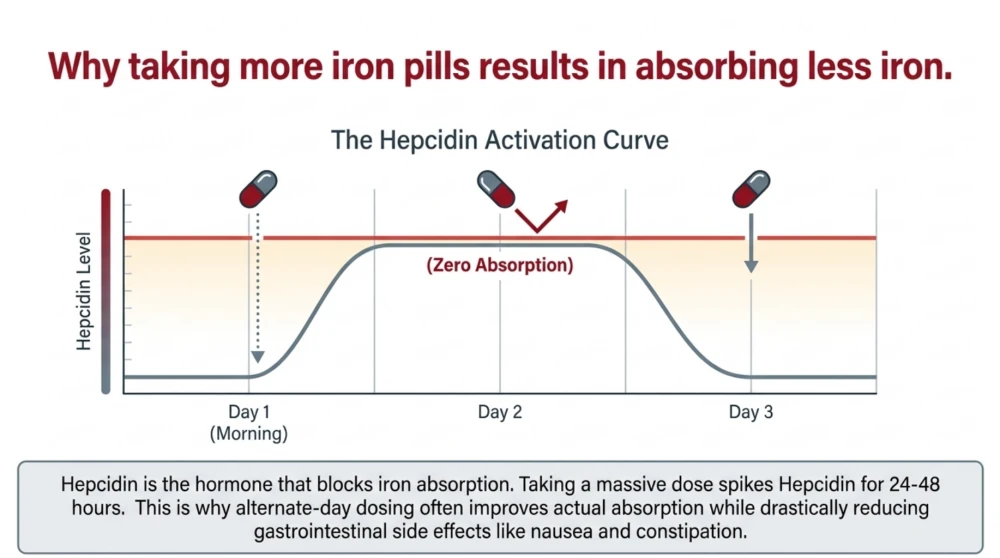
We now understand that larger and more frequent doses can increase gastrointestinal adverse effects and stimulate hepcidin, potentially reducing fractional absorption of subsequent doses.
For many patients, a simpler once-daily or alternate-day regimen may be easier to tolerate.
Why Is Alternate-Day Iron Discussed So Often?
After an oral iron dose, hepcidin can rise temporarily.
Because hepcidin reduces intestinal iron absorption, taking another iron dose while hepcidin remains elevated may reduce the fraction absorbed.
Studies in iron-depleted women have demonstrated improved fractional iron absorption with alternate-day dosing compared with consecutive-day dosing under certain conditions.
Alternate-Day Treatment Is Not Automatically Superior for Everyone
Absorption studies and clinical outcomes are not identical questions.
The best regimen depends on the severity of deficiency, presence or absence of anaemia, gastrointestinal tolerance, ongoing losses and treatment goals.
Some patients do well with daily treatment; others tolerate alternate-day dosing better.
Should Iron Be Taken on an Empty Stomach?
Iron salts are generally absorbed better away from food.
But taking iron on an empty stomach can also increase nausea, abdominal discomfort and other gastrointestinal symptoms.
Perfect Absorption Is Useless if the Patient Stops the Tablet
If fasting administration produces significant side effects, the regimen may need to be adjusted.
Real-world treatment has to balance absorption with adherence and tolerability.
Why Do Iron Tablets Cause Constipation?
Oral iron commonly produces gastrointestinal adverse effects, including nausea, abdominal discomfort, constipation and dark stools.
These effects are one of the main reasons patients discontinue treatment.
Black Stool After Oral Iron Can Be Expected
Iron can darken the stool considerably.
However, genuinely tarry stool accompanied by weakness, abdominal symptoms or suspected gastrointestinal bleeding should not automatically be dismissed as an iron side effect.
What if Oral Iron Is Not Working?
Failure of ferritin or haemoglobin to improve as expected should prompt reassessment rather than simply increasing the dose indefinitely.
Possible explanations include:
- Poor adherence because of gastrointestinal side effects.
- Ongoing menstrual or gastrointestinal blood loss.
- Incorrect diagnosis.
- Malabsorption.
- Coeliac disease or gastrointestinal disease.
- Inflammation and increased hepcidin.
- Medication interactions.
- Insufficient duration of treatment.
When Is Intravenous Iron Considered?
Intravenous iron bypasses gastrointestinal absorption.
It may be considered when oral iron is not tolerated, is ineffective, is unlikely to be absorbed adequately or when iron replacement is required more rapidly in an appropriate clinical setting.
Intravenous treatment should not simply be chosen because it appears faster or more modern.
Normal Haemoglobin Does Not Automatically Mean You Need IV Iron
For uncomplicated low ferritin with normal haemoglobin, the cause, severity, symptoms, oral treatment tolerance and clinical context should determine the approach.
Many patients can be managed successfully without intravenous therapy.
How Long Does It Take to Restore Ferritin?
Iron stores do not refill immediately.
Symptoms may begin improving before iron stores are completely replenished, while ferritin may require weeks or months to recover depending on the degree of depletion, treatment regimen, absorption and ongoing iron loss.
This is why treatment should not necessarily be stopped simply because the patient feels better after two weeks.
Should Ferritin Be Rechecked?
Yes, in appropriate patients.
Follow-up testing helps determine whether treatment is actually replenishing iron stores and whether deficiency is recurring.
The timing depends on the severity of deficiency, treatment used and clinical situation.
Do Not Check Ferritin Every Few Days
Iron stores change over a longer time scale.
Repeated testing at excessively short intervals usually adds little useful information.
Do You Need to Reach a Ferritin of 100?
Not universally.
There is no evidence-based rule that every otherwise healthy adult must achieve ferritin above 100 µg/L.
This is a common example of laboratory optimisation advice spreading beyond the clinical setting in which a particular threshold may be relevant.
Treatment targets should depend on the diagnosis and clinical context rather than a universal social-media target.
Could Too Much Iron Be Harmful?
Yes.
Iron is essential, but unnecessary supplementation is not harmless.
Excessive iron can cause gastrointestinal adverse effects and, in susceptible conditions, contribute to iron overload.
Long-term supplementation should therefore have a clear indication rather than being taken indefinitely because fatigue occasionally occurs.
A Practical Approach to Low Ferritin With Normal Haemoglobin
| Step | What to Consider |
|---|---|
| 1 | Confirm whether ferritin genuinely indicates depleted iron stores. |
| 2 | Review haemoglobin, MCV, MCH and the complete blood count. |
| 3 | Consider transferrin saturation and inflammation when ferritin interpretation is uncertain. |
| 4 | Look for menstrual, gastrointestinal, dietary or blood-donation-related iron loss. |
| 5 | Consider malabsorption when clinically appropriate. |
| 6 | Improve dietary iron intake and meal composition. |
| 7 | Use oral iron when indicated, with a regimen that balances absorption and tolerability. |
| 8 | Reassess response and investigate persistent or recurrent deficiency rather than supplementing indefinitely. |
How Quickly Do Symptoms Improve After Treating Low Ferritin?
Once low ferritin with normal haemoglobin has been identified and appropriate iron treatment started, one of the first questions patients ask is, “How long will it take before I feel better?”
There is no universal timeline.
Improvement depends on how depleted the iron stores were, what caused the deficiency, whether blood loss is continuing, how well oral iron is absorbed, treatment adherence and whether the symptoms were actually caused by iron deficiency in the first place.
Symptoms and Ferritin Do Not Always Improve at the Same Speed
Some patients notice an improvement in fatigue within several weeks, while restoration of iron stores may take considerably longer.
Other patients have a clear improvement in ferritin but little change in symptoms. In that situation, another cause of fatigue, hair loss, poor concentration or exercise intolerance should be considered rather than continuing to increase iron indefinitely.
Does Treating Iron Deficiency Without Anaemia Improve Fatigue?
This is one of the better-studied symptoms of non-anaemic iron deficiency.
Randomised clinical trials suggest that iron replacement can reduce subjective fatigue in some iron-deficient people whose haemoglobin remains normal.
The evidence for improvement in objective exercise performance is less consistent.
This Distinction Is Important
Feeling less tired and demonstrating a measurable improvement in VO₂ max or athletic performance are not necessarily the same outcome.
Iron replacement should therefore be used to correct documented deficiency—not as a general performance enhancer for anyone who feels tired.
Low Ferritin and Hair Loss: How Strong Is the Connection?
Hair shedding is one of the most common reasons patients become concerned about ferritin.
Iron deficiency can be associated with diffuse hair loss, particularly when iron stores are clearly depleted. However, there is no universally accepted ferritin value at which hair loss begins or a guaranteed ferritin target at which hair regrowth occurs.
Hair Loss Usually Needs a Broader Assessment
Telogen effluvium, one of the common causes of diffuse shedding, can occur after:
- Rapid weight loss.
- Severe calorie restriction.
- Acute illness or fever.
- Surgery.
- Pregnancy and childbirth.
- Major physiological or psychological stress.
- Thyroid abnormalities.
- Nutritional deficiencies.
Androgenetic hair loss and scalp disorders can coexist with these conditions.
Therefore, correcting low ferritin with normal haemoglobin is reasonable when genuine iron deficiency is present, but it does not guarantee that every case of hair shedding will stop.
Do You Need Ferritin Above 70 or 100 for Hair Growth?
There is no universally established evidence-based requirement that every person with hair loss must raise ferritin above 70 or 100 µg/L.
Specific numerical targets are frequently circulated online, but the evidence is not strong enough to make these universal goals.
Treat Deficiency Rather Than Chasing an Arbitrary Number
If ferritin is genuinely low, correct the deficiency and identify its cause.
If ferritin has normalised but significant hair loss continues, investigate the hair loss rather than indefinitely increasing iron supplementation.
Low Ferritin and Restless Legs: A Different Situation
Restless legs syndrome deserves special attention because iron plays an important role in its pathophysiology.
The condition typically produces an urge to move the legs accompanied by uncomfortable sensations. Symptoms usually worsen during rest, improve temporarily with movement and become more prominent during the evening or night.
Normal Haemoglobin Does Not Exclude Iron-Related Restless Legs
Current sleep-medicine guidance recommends assessing iron studies in patients with clinically significant restless legs syndrome.
Importantly, iron thresholds used when treating restless legs may be higher than the thresholds used simply to diagnose depleted systemic iron stores.
This does not mean that everyone should maintain ferritin at these higher levels. It means that disease-specific treatment thresholds should not be confused with universal ferritin targets.
Iron Deficiency in Athletes
Athletes, particularly endurance athletes and menstruating female athletes, can develop iron deficiency before anaemia appears.
Potential contributors include inadequate dietary intake, menstrual blood loss, increased iron requirements and exercise-associated mechanisms affecting iron balance.
An athlete may therefore have normal haemoglobin but depleted iron stores.
Do Not Automatically Supplement Every Athlete With Iron
Fatigue and declining performance can also result from inadequate calorie intake, insufficient carbohydrate, poor sleep, overtraining, infection, thyroid disorders and other medical conditions.
Iron supplementation should ideally follow evidence of deficiency rather than being routinely prescribed as a performance supplement.
Iron Deficiency During Weight Loss Deserves Attention
This has become particularly relevant as more people undertake aggressive calorie restriction or use medical treatments that markedly reduce appetite.
When food intake decreases substantially, total intake of iron, protein, vitamin B12, folate and other micronutrients can also fall.
A patient may be pleased with rapid weight loss while simultaneously developing fatigue, hair shedding and nutritional inadequacy.
Eating Less Is Not the Same as Eating Better
A well-designed weight-loss programme should create an appropriate energy deficit while preserving nutritional quality.
Protein, iron, fibre, essential fats and micronutrients remain important even when total calorie intake is lower.
Low Ferritin During Pregnancy
Iron requirements increase considerably during pregnancy because of expansion of maternal red-cell mass, placental requirements and the developing fetus.
Iron deficiency can therefore develop before significant anaemia becomes apparent.
Pregnancy also requires pregnancy-specific interpretation of laboratory values and treatment decisions.
Do Not Self-Treat Pregnancy Based on an Internet Ferritin Target
Iron requirements, supplementation and follow-up should be discussed with the obstetric or medical team responsible for antenatal care.
What About Low Ferritin After Childbirth?
Pregnancy may already have reduced iron stores, and blood loss during delivery can further increase iron depletion.
Postpartum fatigue is common for many reasons, including sleep disruption, recovery from childbirth and the demands of caring for a newborn.
Iron deficiency may be one contributor and should be assessed when clinically appropriate rather than assuming that severe fatigue is simply part of motherhood.
When Does Low Ferritin Need Further Investigation?
Finding low ferritin is not the end of the diagnostic process.
Further evaluation becomes particularly important when:
- There is no obvious explanation for iron deficiency.
- Iron deficiency repeatedly returns after apparently successful treatment.
- Oral iron produces little biochemical response despite appropriate use.
- There are gastrointestinal symptoms.
- There is unexplained weight loss.
- There is evidence of gastrointestinal bleeding.
- There is a significant change in bowel habits.
- The patient is an adult man or postmenopausal woman with unexplained iron deficiency.
- There is suspicion of coeliac disease or another malabsorptive disorder.
Which Gastrointestinal Warning Signs Matter?
Iron deficiency can occasionally be the first clue to chronic gastrointestinal blood loss.
This does not mean that every person with low ferritin with normal haemoglobin has serious gastrointestinal disease.
However, certain accompanying symptoms deserve attention.
| Finding | Why It Matters |
|---|---|
| Visible blood in stool | Requires assessment of the source of gastrointestinal bleeding |
| Black, tarry stool without an obvious explanation | Can indicate upper gastrointestinal bleeding |
| Persistent change in bowel habits | May justify gastrointestinal assessment depending on age and clinical context |
| Unexplained weight loss | Makes an underlying gastrointestinal or systemic disorder more important to exclude |
| Persistent abdominal symptoms | May suggest gastrointestinal disease or malabsorption |
| Recurrent unexplained iron deficiency | Suggests continuing blood loss, impaired absorption or another unresolved cause |
Can Haemorrhoids Explain Low Ferritin?
Haemorrhoids can bleed, but visible haemorrhoids should not automatically be assumed to explain iron deficiency—particularly when blood loss is substantial, recurrent or the overall clinical picture raises concern for another gastrointestinal source.
Attributing all rectal bleeding to piles without appropriate assessment can delay identification of other conditions.
What if You Have Low Ferritin but No Symptoms?
Iron deficiency can be asymptomatic.
The absence of fatigue, hair loss or restless legs does not necessarily make genuinely depleted iron stores irrelevant.
The decision to treat depends on the degree of deficiency, its cause, risk of progression and the individual's clinical circumstances.
The Cause Still Matters Even if You Feel Fine
A ferritin of 10 µg/L caused by regular blood donation requires a different discussion from the same result caused by unexplained gastrointestinal blood loss.
Symptoms are only one part of the assessment.
What if You Have Symptoms but Ferritin Is Normal?
This is the opposite problem.
Do not assume that fatigue, hair loss or brain fog must still be caused by iron deficiency simply because those symptoms appear on lists of low-ferritin symptoms.
If iron studies are genuinely adequate, look for another explanation.
Consider the Broader Differential Diagnosis
Depending on the symptoms and clinical history, possibilities can include:
- Sleep deprivation.
- Obstructive sleep apnoea.
- Hypothyroidism.
- Vitamin B12 or folate deficiency.
- Inadequate calorie or protein intake.
- Depression or anxiety disorders.
- Medication effects.
- Chronic inflammatory disease.
- Diabetes and other metabolic disorders.
- Cardiovascular or respiratory disease when exercise intolerance or breathlessness is prominent.
Can Ferritin Be High and You Still Have Iron Restriction?
Yes, particularly in inflammatory conditions.
Ferritin can increase as part of the acute-phase response, which is why an apparently normal or elevated ferritin cannot always exclude restricted iron availability.
Transferrin saturation and the overall clinical setting become particularly useful in these circumstances.
Should Everyone Get Ferritin Tested for Fatigue?
Not necessarily.
Fatigue is extremely common and has many causes.
Ferritin testing becomes particularly reasonable when iron deficiency is clinically plausible—for example, with heavy menstrual bleeding, pregnancy, frequent blood donation, restrictive dietary intake, gastrointestinal disease or previous iron deficiency.
The broader clinical assessment should determine which investigations are appropriate.
Common Myths About Low Ferritin With Normal Haemoglobin
Myth 1: Normal Haemoglobin Means You Cannot Be Iron Deficient
False.
Iron stores can become depleted before haemoglobin falls. This is the fundamental reason low ferritin with normal haemoglobin can occur.
Myth 2: Any Ferritin Below 100 Is Iron Deficiency
False.
There is no universal rule requiring every healthy adult to maintain ferritin above 100 µg/L.
Diagnostic and treatment thresholds vary according to clinical circumstances.
Myth 3: Ferritin of 30 Is Normal Because My Laboratory Says So
Not necessarily.
Laboratory reference ranges and clinical decision thresholds are not always identical. Ferritin around this level needs interpretation in the context of symptoms, inflammation and other iron indices.
Myth 4: Beetroot and Pomegranate Can Correct Iron Deficiency
False.
Both can be part of a nutritious diet, but neither provides enough reliably absorbable iron to serve as the primary treatment for established iron deficiency.
Myth 5: Spinach Is the Best Treatment for Low Ferritin
False.
Spinach contains non-haem iron but is not a substitute for appropriate iron replacement when clinically significant deficiency is present.
Myth 6: Everyone With Low Ferritin Needs Intravenous Iron
False.
Many patients can be treated successfully with oral iron. Intravenous iron is appropriate in selected clinical situations rather than simply because it raises ferritin faster.
Myth 7: More Iron Tablets Will Correct Ferritin Faster
Not necessarily.
Excessive dosing can worsen gastrointestinal adverse effects, and iron absorption is influenced by hepcidin. A tolerable, evidence-based regimen is generally more useful than taking multiple tablets and discontinuing treatment because of side effects.
Myth 8: Once Ferritin Becomes Normal, the Problem Is Solved Forever
Not if the cause remains untreated.
Heavy menstrual bleeding, gastrointestinal blood loss, frequent blood donation or malabsorption can cause iron deficiency to recur.
A Practical Monitoring Checklist
| What to Review | Why It Matters |
|---|---|
| Haemoglobin and complete blood count | Determines whether anaemia has developed and provides red-cell indices |
| Ferritin | Provides information about iron stores |
| Transferrin saturation | Helps assess circulating iron availability, particularly when ferritin is difficult to interpret |
| CRP when clinically relevant | Provides context when inflammation may be elevating ferritin |
| Menstrual history | Identifies a common source of chronic iron loss |
| Diet and recent weight loss | Identifies inadequate intake or restrictive eating |
| Blood donation | Repeated donation can progressively deplete iron stores |
| Gastrointestinal symptoms | May indicate blood loss or impaired absorption |
| Response to treatment | Persistent deficiency may indicate continuing loss, poor adherence or malabsorption |
Questions to Ask When Ferritin Is Low but Haemoglobin Is Normal
- Does my ferritin genuinely indicate depleted iron stores?
- Do I need a complete iron profile including transferrin saturation?
- Could inflammation be affecting my ferritin result?
- Are my periods heavy enough to explain the iron loss?
- Could my diet or recent weight loss be contributing?
- Do I need evaluation for gastrointestinal blood loss or malabsorption?
- Which oral iron preparation and schedule is appropriate for me?
- When should my blood tests be repeated?
- How long should iron treatment continue?
- What should be done if ferritin falls again after treatment?
Key Takeaways: Low Ferritin With Normal Haemoglobin
- Low ferritin with normal haemoglobin can represent genuine iron deficiency before iron-deficiency anaemia develops.
- A normal haemoglobin does not prove that iron stores are adequate.
- Fatigue is one of the better-supported symptoms of non-anaemic iron deficiency, although fatigue has many other causes.
- Reduced exercise tolerance, poor concentration, hair shedding and restless legs may also occur, but these symptoms are not specific to iron deficiency.
- A very low ferritin strongly supports depleted iron stores.
- Inflammation can raise ferritin and occasionally conceal iron deficiency.
- Transferrin saturation can provide useful additional information when ferritin is difficult to interpret.
- Heavy menstrual bleeding is an important cause of iron deficiency in premenopausal women.
- Unexplained or recurrent iron deficiency may require assessment for gastrointestinal blood loss or impaired absorption.
- Dietary sources of iron are valuable, but beetroot, pomegranate and spinach should not be relied upon to correct substantial deficiency.
- Oral iron is frequently sufficient, while intravenous iron has specific indications.
- There is no universal requirement for every healthy adult to maintain ferritin above 70 or 100 µg/L.
- Restless legs syndrome is a special situation in which disease-specific iron thresholds may be used.
- The long-term solution is not merely to raise ferritin but to identify and correct the reason iron stores became depleted.
References
- World Health Organization. Guidance on the use of serum ferritin concentrations for assessing iron status in individuals and populations.
- British Society of Gastroenterology. Guidelines for the management of iron deficiency anaemia in adults, including interpretation of ferritin and additional iron indices when a falsely normal ferritin is suspected.
- American Academy of Sleep Medicine. Clinical practice guideline for treatment of restless legs syndrome and periodic limb movement disorder, including disease-specific assessment of iron status.
- Systematic review of randomised controlled trials evaluating iron supplementation for fatigue and physical capacity in non-anaemic iron-deficient adults.
- Systematic review and meta-analysis evaluating intravenous iron therapy in adults with non-anaemic iron deficiency.
- Peer-reviewed literature concerning oral iron absorption, hepcidin physiology, daily versus alternate-day dosing and gastrointestinal tolerability.
- Peer-reviewed clinical literature concerning iron deficiency in menstruating women, athletes, pregnancy, gastrointestinal blood loss and malabsorptive disorders.
Medical note: This article provides general educational information and does not replace individual medical assessment. Ferritin should be interpreted alongside haemoglobin, the complete blood count, transferrin saturation, inflammatory status and the patient's clinical circumstances. Unexplained or recurrent iron deficiency, gastrointestinal bleeding, significant weight loss or other concerning symptoms require appropriate medical evaluation.
Written by Dr. Pankaj Kumar , General & Lifestyle Physician, Dwarka, New Delhi