









- 19th September 2026
Table of Contents
- What Are Post-Meal Palpitations?
- Why Does Heart Rate Normally Change After Eating?
- Heart Racing After Meals: Look at the Timing
- Reason 1: A Large or Heavy Meal
- Try Looking at Portion Size Before Eliminating Multiple Foods
- Reason 2: Rapid Changes in Blood Glucose and Insulin
- Reactive Hypoglycaemia Is Frequently Overdiagnosed
- Reason 3: Caffeine and Other Stimulants
- Energy Drinks Deserve Separate Attention
- Reason 4: Alcohol With or After Meals
- Reason 5: Postprandial Hypotension
- Heart Racing Plus Dizziness After Meals Deserves More Attention
- Reason 6: Dehydration or Reduced Circulating Volume
- More Water Is Not Always the Answer
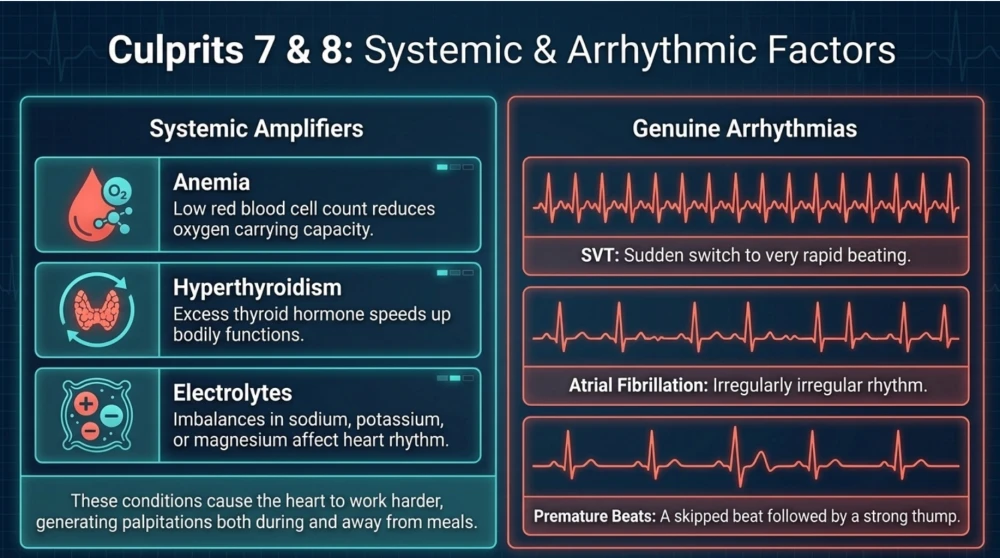
- Reason 7: Anaemia, Thyroid Disease or Other Metabolic Problems
- Reason 8: A Genuine Cardiac Arrhythmia
- Regular Versus Irregular Palpitations
- Can Anxiety Cause Heart Racing After Meals?
- What About Acid Reflux and Gas?
- Eight Reasons for Heart Racing After Meals at a Glance
- When Is Heart Racing After Meals an Emergency?
- What Should You Record When Palpitations Happen?
- The Most Important Message
- How Are Post-Meal Palpitations Evaluated?
- Why a 12-Lead ECG Is Often the Starting Point
- When Is a Holter Monitor Useful?
- Capturing the Rhythm During Symptoms Is the Key
- Can a Smartwatch Detect the Cause?
- What Blood Tests May Be Useful for Recurrent Palpitations?
- Why Thyroid Testing May Be Relevant
- Electrolytes and Palpitations
- Could Low Blood Sugar Be Causing Heart Racing After Meals?
- Whipple's Triad Helps Prevent Overdiagnosis of Hypoglycaemia
- Can a Continuous Glucose Monitor Diagnose Reactive Hypoglycaemia?
- What Is Idiopathic Postprandial Syndrome?
- How Meal Composition May Influence Glucose-Related Symptoms
- Can Postprandial Hypotension Cause Palpitations?
- Large Carbohydrate-Rich Meals Can Worsen Postprandial Hypotension
- Could POTS Cause Heart Racing After Meals?
- How Is POTS Assessed?
- Diabetes Can Affect Autonomic Regulation
- Can GERD or Bloating Cause Palpitations?
- Can Spicy Food Trigger Heart Racing?
- Food Allergy Is a Different Situation
- Medicines Can Be Hidden Contributors
- What Can You Try if Heart Racing After Meals Is Mild and There Are No Red Flags?
- 1. Reduce Very Large Meals
- 2. Eat More Slowly
- 3. Review Caffeine
- 4. Avoid Energy Drinks
- 5. Review Alcohol Intake
- 6. Maintain Appropriate Hydration
- 7. Improve Meal Structure
- 8. Keep a Symptom Diary
- Should You Lie Down When the Heart Starts Racing?
- Should You Exercise Immediately After Eating?
- When Does a Cardiologist Need to Be Involved?
- What Tests Might Be Considered Beyond an ECG?
- A Practical Pattern-Based Approach
- Do Not Chase a Single Explanation Too Early
- The Main Lesson
- What Heart Rate After Eating Is Considered Too High?
- Sinus Tachycardia Versus an Abnormal Heart Rhythm
- Could It Be Supraventricular Tachycardia?
- Could an Irregular Heartbeat Be Atrial Fibrillation?
- What Are Premature Beats?
- Can Eating Too Fast Make Palpitations Worse?
- Should You Eat Smaller Meals?
- How Should You Structure Meals if Blood Sugar Fluctuations Seem to Trigger Symptoms?
- Should You Avoid Sugar Completely?
- What if Palpitations Occur Two to Four Hours After a Sweet Meal?
- What if Palpitations Occur With Dizziness Soon After Eating?
- Could Salt Help Post-Meal Palpitations?
- Can Weight Loss Improve Post-Meal Palpitations?
- Sleep Apnoea Is Another Condition Worth Remembering
- When Is Heart Racing After Meals an Emergency?
- When Should Recurrent Palpitations Be Checked Even Without an Emergency?
- A Simple Home Monitoring Checklist
- Five Questions to Ask Your Doctor
- Common Myths About Heart Racing After Meals
- Myth 1: It Is Always Gas
- Myth 2: It Must Be Reactive Hypoglycaemia
- Myth 3: A Normal ECG Means There Cannot Be an Arrhythmia
- Myth 4: Any Heart Rate Above 100 After Eating Is Dangerous
- Myth 5: All Caffeine Must Be Stopped
- Myth 6: A Smartwatch Can Diagnose the Problem
- Myth 7: Anxiety Means the Palpitations Are Imaginary
- Myth 8: If It Happens Only After Food, It Cannot Be a Heart Problem
- Practical Steps That May Reduce Post-Meal Palpitations
- Key Takeaways: Heart Racing After Meals
- References
Heart Racing After Meals: 8 Reasons You May Experience Post-Meal Palpitations
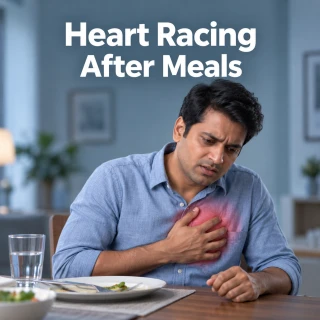
You finish lunch, sit down for a few minutes and suddenly become aware of your heartbeat.
It may feel faster than usual. Sometimes it pounds strongly in the chest or neck. At other times there is a brief flutter, an extra beat or the sensation that the heart has skipped a beat.
If this repeatedly happens after eating, it can understandably be worrying.
Heart racing after meals is often related to normal digestive and circulatory responses, meal composition, stimulants, dehydration or increased awareness of the heartbeat. But recurrent post-meal palpitations can occasionally be related to an arrhythmia, blood-pressure problem, metabolic abnormality or another medical condition.
The timing and character of the symptoms therefore matter.
A heartbeat that becomes mildly faster immediately after a large meal is different from an abrupt episode of very rapid regular palpitations lasting 20 minutes. Similarly, palpitations occurring two or three hours after a carbohydrate-heavy meal with sweating and trembling raise different questions from an irregular heartbeat after alcohol.
Understanding these patterns can help determine when simple changes may be enough and when medical evaluation is appropriate.
What Are Post-Meal Palpitations?
Palpitations describe an increased awareness of the heartbeat.
People describe them in different ways:
- Heart racing.
- Strong or pounding heartbeat.
- Fluttering in the chest.
- Skipped beats.
- An extra beat followed by a pause.
- Heart beating in the throat or neck.
- A suddenly irregular heartbeat.
Importantly, feeling palpitations does not necessarily mean the heart rate is extremely high.
Sometimes the rate is normal but each heartbeat feels unusually forceful. Premature beats can also produce a sensation of skipping or thumping without sustained tachycardia.
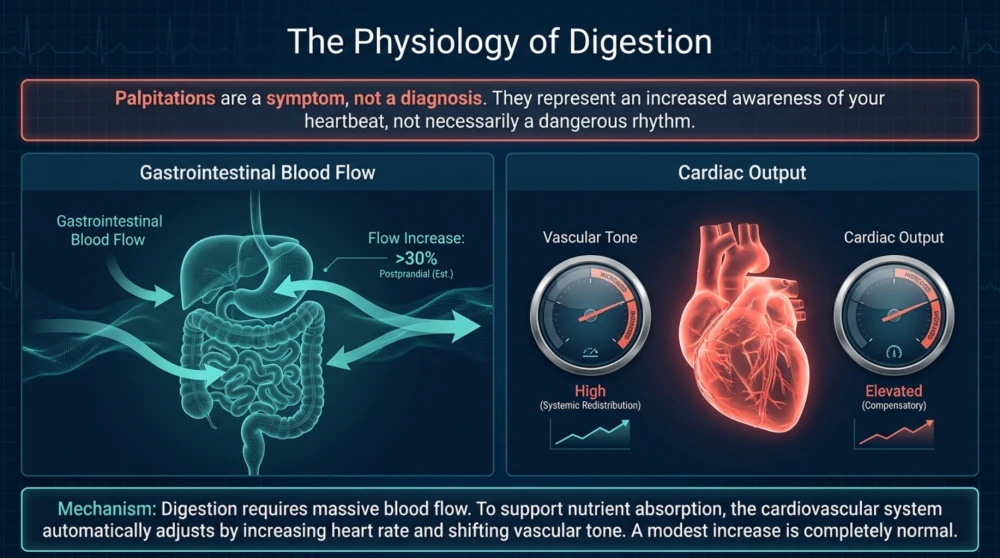
Palpitations Are a Symptom, Not a Diagnosis
The sensation alone cannot tell us whether the rhythm is normal sinus tachycardia, premature atrial or ventricular beats, supraventricular tachycardia, atrial fibrillation or simply increased awareness of a normal heartbeat.
That distinction becomes important when symptoms are frequent, prolonged or associated with warning signs.
Why Does Heart Rate Normally Change After Eating?
Digestion requires blood flow.
After a meal, blood flow to the gastrointestinal tract increases to support digestion and nutrient absorption. The cardiovascular system adjusts through changes in vascular tone, cardiac output and autonomic nervous-system activity.
A modest increase in heart rate can therefore occur after eating without representing disease.
Meal Size Can Influence the Response
A small balanced meal and a very large restaurant meal do not create identical physiological demands.
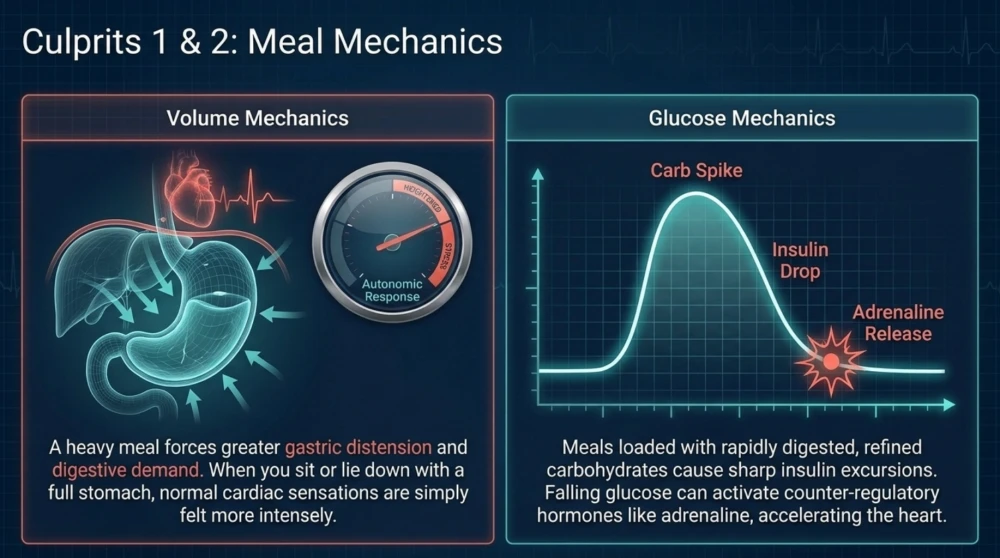
The larger meal produces greater gastric distension and requires more digestive activity. Meals containing large amounts of rapidly absorbed carbohydrate can also produce substantial glucose, insulin and autonomic responses.
For some people, these normal physiological changes become noticeable as palpitations.
Heart Racing After Meals: Look at the Timing
One of the most useful clues is when the symptoms begin.
| Timing | Possible Clues |
|---|---|
| During or immediately after eating | Large meal, stimulants, alcohol, autonomic response, heightened heartbeat awareness |
| 30–90 minutes after eating | Digestive/circulatory response, post-meal blood-pressure changes or glucose-related effects |
| Approximately 2–4 hours later | Consider true postprandial hypoglycaemia when compatible symptoms and documented low glucose are present |
| Sudden episodes unrelated to meal size | An arrhythmia may need consideration |
| After alcohol, coffee or energy drinks | Possible stimulant or alcohol-related trigger |
This timing is not diagnostic by itself, but it can help guide evaluation.
Reason 1: A Large or Heavy Meal
One of the simplest explanations for heart racing after meals is meal size.
A very large meal increases digestive demand and can produce more noticeable cardiovascular and autonomic changes than a smaller meal.
People may particularly notice this after restaurant meals, buffets, celebrations or eating rapidly after being hungry for many hours.
Rich Meals Can Also Increase Symptom Awareness
Large fatty or spicy meals can produce gastric fullness, reflux and bloating.
When the stomach is distended and someone sits or lies down after eating, normal cardiac sensations may become more noticeable.
This does not mean gas is physically “pressing on the heart” and causing every palpitation. Gastrointestinal discomfort and cardiac rhythm disorders are separate issues and should not automatically be confused.
Try Looking at Portion Size Before Eliminating Multiple Foods
If symptoms occur predominantly after very large meals but not after smaller portions of the same foods, total meal size may be more relevant than one specific ingredient.
Smaller meals, slower eating and avoiding extreme overeating can be useful initial observations.
Reason 2: Rapid Changes in Blood Glucose and Insulin
Meals containing large amounts of rapidly digested carbohydrate can produce a substantial rise in blood glucose followed by an insulin response.
This does not mean that every increase in heart rate after carbohydrate is caused by insulin resistance or a “sugar crash.”
However, glucose-related changes can contribute to symptoms in some individuals.
A High-Carbohydrate Meal Is Not Automatically Dangerous
The response depends on the amount and type of carbohydrate, what else is eaten with it, the person's glucose regulation, medications and individual physiology.
A meal containing large portions of refined rice, sweets and a sugary drink is metabolically different from a measured portion of carbohydrate combined with protein, vegetables and other fibre-rich foods.
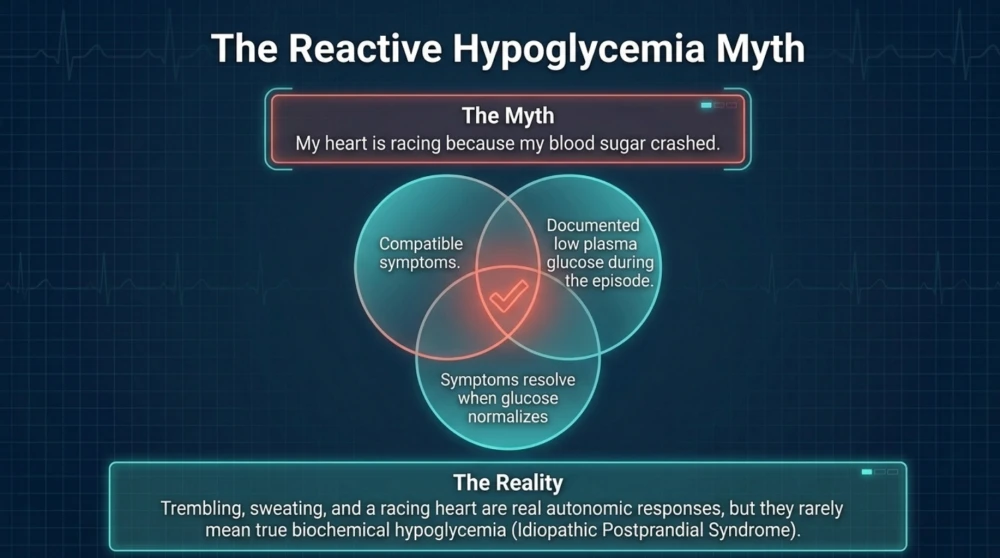
Reactive Hypoglycaemia Is Frequently Overdiagnosed
People who experience palpitations, weakness or anxiety after eating sometimes assume that their blood sugar has fallen too low.
True reactive, or postprandial, hypoglycaemia means that blood glucose actually becomes abnormally low after a meal. When it occurs, symptoms commonly develop several hours after eating rather than immediately after the first few bites.
Palpitations can occur because falling glucose activates counter-regulatory hormones such as adrenaline.
Symptoms Alone Do Not Prove Hypoglycaemia
Trembling, sweating, hunger, anxiety and a racing heart can resemble hypoglycaemia, but the same symptoms can occur for other reasons.
When true hypoglycaemia is suspected, it is important to establish whether symptoms actually coincide with low glucose and improve when glucose normalises.
Simply feeling shaky after a meal is not enough to diagnose reactive hypoglycaemia.
Reason 3: Caffeine and Other Stimulants
Sometimes the trigger is not the food but the drink consumed with it.
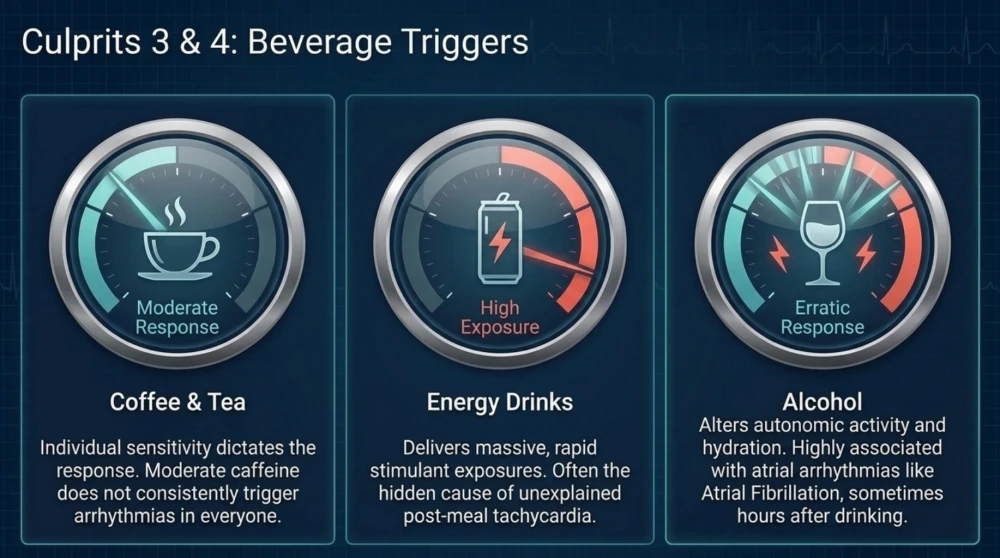
Coffee, strong tea, cola and energy drinks contain caffeine, while chocolate also contains methylxanthines such as theobromine.
People vary considerably in their sensitivity to these substances.
Caffeine Does Not Cause Palpitations in Everyone
It is overly simplistic to tell every patient with palpitations to permanently stop coffee.
Moderate caffeine consumption does not consistently trigger clinically important arrhythmias in most people.
But an individual who repeatedly notices symptoms after strong coffee or energy drinks may still benefit from reducing the amount and observing whether the pattern changes.
Energy Drinks Deserve Separate Attention
Some energy drinks contain large amounts of caffeine together with other stimulant ingredients.
Consuming several rapidly can produce a much larger stimulant exposure than an ordinary cup of tea or coffee.
If palpitations repeatedly occur after energy drinks, avoiding the trigger is more sensible than trying to “build tolerance.”
Reason 4: Alcohol With or After Meals
Alcohol is another potential trigger that is easy to overlook because symptoms may be attributed to the food consumed at the same time.
Alcohol can influence autonomic activity, hydration and cardiac electrophysiology.
Higher alcohol intake has also been associated with atrial arrhythmias, particularly atrial fibrillation.
The Palpitation May Not Start Immediately
Alcohol-related rhythm symptoms can occur during drinking or later.
Therefore, someone experiencing an irregular heartbeat after a restaurant dinner should consider the entire meal—including alcohol—rather than assuming that spicy food was responsible.
Reason 5: Postprandial Hypotension
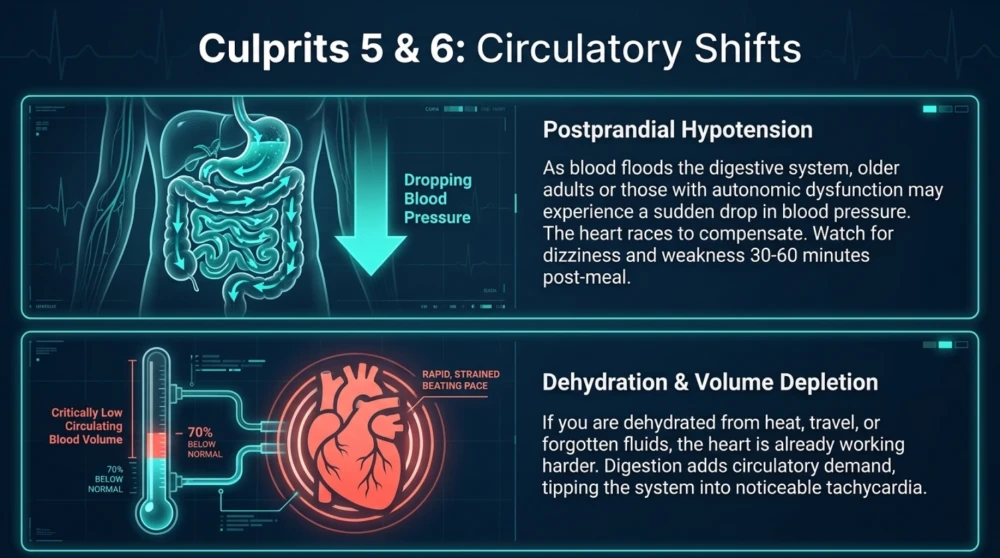
Blood pressure can fall after eating in some people, a phenomenon called postprandial hypotension.
It occurs particularly in older adults and in people with disorders affecting autonomic regulation, including some individuals with diabetes or neurological disease.
As blood is redistributed toward the digestive system, the cardiovascular system normally compensates to maintain blood pressure.
If compensation is inadequate, blood pressure can fall.
What Does Postprandial Hypotension Feel Like?
Symptoms may include:
- Light-headedness.
- Dizziness.
- Weakness.
- Blurred or dim vision.
- Feeling faint.
- Occasionally falls or loss of consciousness.
A person may also become more aware of changes in heart rate or heartbeat during the episode.
Heart Racing Plus Dizziness After Meals Deserves More Attention
If the main complaint is not simply a pounding heartbeat but recurrent dizziness or near-fainting after meals, blood pressure should be considered as part of the assessment.
In selected patients, measuring blood pressure before and after meals can help demonstrate the pattern.
This is especially relevant in older adults and people taking blood-pressure medicines or living with autonomic dysfunction.
Reason 6: Dehydration or Reduced Circulating Volume
When circulating blood volume is reduced, the heart may compensate by beating faster.
Dehydration can therefore contribute to tachycardia and palpitations.
This may become particularly noticeable after a meal because digestion creates additional circulatory demands.
Think About the Whole Day, Not Just the Meal
A person may have spent the morning travelling, working outdoors, exercising or simply forgetting to drink fluids.
When palpitations occur after lunch, lunch may appear to be the cause even though dehydration began several hours earlier.
Vomiting, diarrhoea, fever, excessive sweating and some medications can further contribute to volume depletion.
More Water Is Not Always the Answer
Adequate hydration is important, but forcing excessive amounts of water is unnecessary and can be inappropriate in people with certain heart, kidney or electrolyte disorders.
Hydration advice should therefore match the individual's circumstances.
Reason 7: Anaemia, Thyroid Disease or Other Metabolic Problems
Sometimes meals merely reveal a tendency to palpitations that is already present.
Anaemia can increase heart rate because the cardiovascular system has to compensate for reduced oxygen-carrying capacity.
Excess thyroid hormone can also produce a rapid heartbeat or increase susceptibility to palpitations.
Electrolyte abnormalities may affect cardiac rhythm as well.
Look for Symptoms Outside Mealtimes
If palpitations also occur while walking, climbing stairs, resting or trying to sleep, the meal may not be the primary problem.
Associated fatigue, pallor, breathlessness, unexplained weight change, tremor, heat intolerance or other systemic symptoms can provide useful clues.
Reason 8: A Genuine Cardiac Arrhythmia
Most post-meal palpitations are not caused by a dangerous heart rhythm.
Nevertheless, recurrent palpitations should not automatically be attributed to digestion, acidity or anxiety without considering arrhythmia.
Possible rhythm disturbances include premature atrial or ventricular beats, supraventricular tachycardia, atrial fibrillation and other tachyarrhythmias.
The Way the Episode Starts Can Provide a Clue
Normal sinus tachycardia often accelerates and slows relatively gradually.
Some arrhythmias are described differently: the heart suddenly switches from normal to very rapid beating and later stops almost as abruptly.
This history is not sufficient to diagnose the rhythm, but it is useful information to give your doctor.
Regular Versus Irregular Palpitations
Try to notice whether the heartbeat feels fast and regular, irregularly irregular, or mostly normal with occasional skipped or extra beats.
These sensations can correspond to different rhythm patterns.
Again, symptoms alone cannot reliably identify an arrhythmia. Recording the actual rhythm during an episode is much more informative.
Can Anxiety Cause Heart Racing After Meals?
Yes, anxiety can cause palpitations, but it should not become the default explanation before basic clinical assessment.
There is also a feedback loop.
A person notices one unusually strong heartbeat, becomes frightened, releases more adrenaline, feels the heart accelerate further and becomes even more focused on the sensation.
Symptoms Can Be Real Even When Anxiety Contributes
Saying that anxiety contributes to palpitations does not mean the patient is imagining them.
The autonomic response is physiologically real.
At the same time, recurrent symptoms—particularly those with dizziness, syncope, chest discomfort or an abnormal rhythm—deserve appropriate medical assessment rather than automatic attribution to anxiety.
What About Acid Reflux and Gas?
Reflux and bloating commonly occur after meals and can create chest sensations that patients interpret as cardiac symptoms.
However, “gas” should not be used as a universal explanation for a racing or irregular heartbeat.
Chest Symptoms Can Overlap
Burning behind the breastbone after a heavy meal may suggest reflux, while a fluttering or rapid pulse suggests palpitations.
But symptoms are not always easy to distinguish, particularly when chest discomfort is present.
New, severe or concerning chest symptoms should be assessed appropriately rather than self-diagnosed as acidity.
Eight Reasons for Heart Racing After Meals at a Glance
| Possible Reason | Clue |
|---|---|
| 1. Large or heavy meal | More likely after unusually large portions or overeating |
| 2. Glucose-related changes | May follow high-carbohydrate meals; true reactive hypoglycaemia generally requires documented low glucose with compatible symptoms |
| 3. Caffeine/stimulants | Coffee, energy drinks or other stimulants around the meal |
| 4. Alcohol | Symptoms during or after drinking, sometimes with irregular rhythm |
| 5. Postprandial hypotension | Dizziness, weakness or faintness after eating, particularly in susceptible adults |
| 6. Dehydration | Low fluid intake, heat exposure, sweating, vomiting or diarrhoea |
| 7. Anaemia, thyroid or metabolic causes | Palpitations may also occur away from meals |
| 8. Cardiac arrhythmia | Sudden recurrent fast or irregular episodes, especially with other cardiac symptoms |
When Is Heart Racing After Meals an Emergency?
Palpitations accompanied by certain symptoms require urgent medical assessment.
Seek immediate medical attention if palpitations occur with:
- Chest pain, pressure or significant chest discomfort.
- Fainting or loss of consciousness.
- Severe shortness of breath.
- Marked dizziness or near-fainting.
- Acute low blood pressure or severe weakness.
- Signs of heart failure.
- A sustained very rapid heartbeat with significant symptoms.
Palpitations associated with syncope, ischaemic chest pain, haemodynamic instability or signs of heart failure are recognised high-risk features requiring urgent evaluation.
What Should You Record When Palpitations Happen?
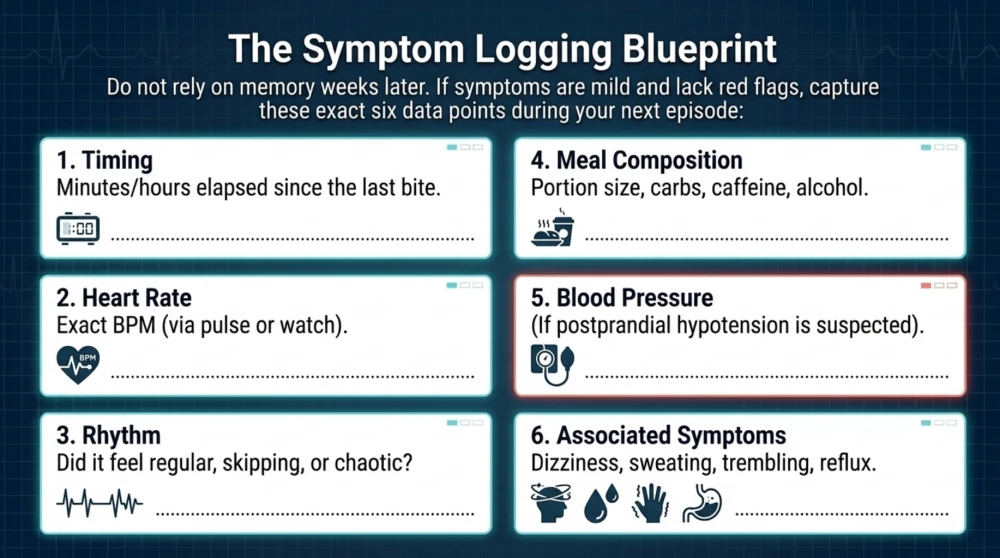
A short symptom diary can provide surprisingly useful information.
Record what you ate and drank, when the symptoms began, how long they lasted and whether the pulse felt regular or irregular.
Also note associated symptoms such as sweating, trembling, dizziness, breathlessness or chest discomfort.
Check the Pulse if You Can Do So Safely
If possible, note the heart rate during the episode rather than several minutes later after it has settled.
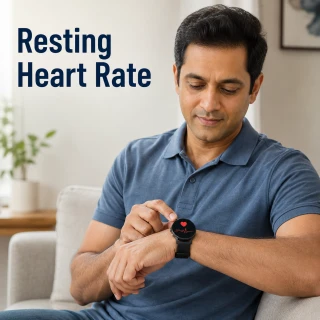
A smartwatch or consumer ECG device may sometimes capture useful rhythm information, but wearable alerts are not a substitute for clinical diagnosis.
The Most Important Message
Heart racing after meals has many possible explanations.
Sometimes it reflects a normal cardiovascular response made more noticeable by a large meal. In other cases, caffeine, alcohol, dehydration, glucose changes or a fall in post-meal blood pressure may contribute.
And occasionally, the meal is simply the setting in which a genuine arrhythmia becomes noticeable.
The key is not to assume that every episode is caused by “gas,” anxiety, insulin resistance or reactive hypoglycaemia.
Timing, heart rate, rhythm, associated symptoms and recurrence provide much more useful information.
How Are Post-Meal Palpitations Evaluated?
If heart racing after meals happens repeatedly, the goal is not simply to prove that the heart rate increased. The more important question is what rhythm was actually occurring when the symptoms appeared.
Some people have normal sinus tachycardia—the heart's normal rhythm running faster in response to digestion, dehydration, anxiety or another physiological trigger. Others experience premature beats that feel like skipping or thumping. A smaller group may have a genuine arrhythmia such as supraventricular tachycardia or atrial fibrillation.
Because these sensations can feel surprisingly similar, the history and an actual rhythm recording are often more informative than the patient's description alone.
Start With the Pattern
A useful evaluation asks several simple questions:
- How soon after eating does the episode begin?
- Does it happen after every meal or only certain meals?
- How long does it last?
- Does the heartbeat feel regular or irregular?
- Does it gradually accelerate or suddenly switch on?
- What is the heart rate during the episode?
- Are dizziness, sweating, trembling, chest discomfort or breathlessness present?
- Does it also happen away from meals?
- Are caffeine, alcohol, nicotine or energy drinks involved?
- Which medicines and supplements are being taken?
This information can substantially narrow the possibilities before extensive testing is considered.
Why a 12-Lead ECG Is Often the Starting Point
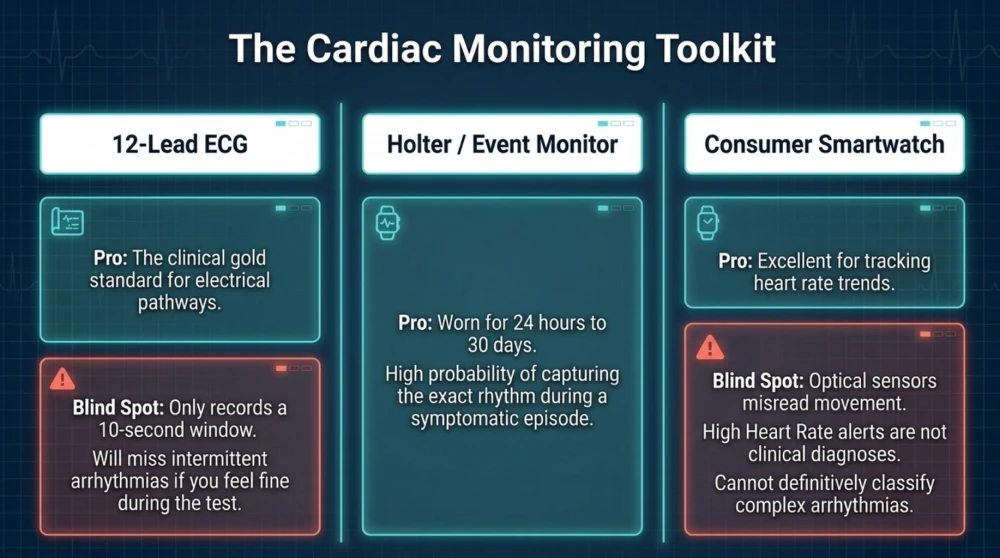
An electrocardiogram, or ECG, records the electrical activity of the heart.
It can identify atrial fibrillation and other rhythm abnormalities and may reveal conduction abnormalities or other findings that help guide further evaluation.
A Normal ECG Does Not Completely Rule Out an Intermittent Arrhythmia
This is an important limitation.
If the palpitation occurs for ten minutes after dinner but the ECG is performed the next morning when the person feels completely normal, the rhythm responsible for the episode may no longer be present.
This is why intermittent symptoms sometimes require ambulatory rhythm monitoring.
When Is a Holter Monitor Useful?
A Holter monitor continuously records cardiac rhythm, commonly over 24–48 hours or sometimes longer depending on the device.
It is particularly useful when symptoms occur frequently enough that there is a reasonable chance of capturing an episode during the monitoring period.
Match the Monitor to the Frequency of Symptoms
If palpitations occur every day, short-term continuous monitoring may be sufficient.
If symptoms occur only once every two or three weeks, a 24-hour recording can easily miss them. Longer patch monitors or event-based monitoring may then provide a better chance of establishing a symptom-rhythm correlation.
Capturing the Rhythm During Symptoms Is the Key
Suppose someone reports that the heart rate becomes 130 beats per minute after dinner.
The number alone does not establish the diagnosis.
A heart rate of 130 could represent sinus tachycardia, atrial flutter with variable conduction, supraventricular tachycardia or another rhythm depending on the circumstances.
Seeing the electrical rhythm during the episode provides much more information than the rate alone.
Can a Smartwatch Detect the Cause?
Wearable devices have made it much easier for patients to observe their heart rate.
Some smartwatches can also record a single-lead ECG, which may capture useful information during symptoms.
But consumer devices have limitations.
A Heart-Rate Alert Is Not the Same as an ECG Diagnosis
Optical heart-rate sensors can be affected by movement, skin contact and signal quality. Automated rhythm classifications can also be inconclusive or incorrect.
A wearable recording can therefore be useful information to show a doctor, but an alert saying “high heart rate” should not automatically be interpreted as a particular arrhythmia.
What Blood Tests May Be Useful for Recurrent Palpitations?
Blood testing should be guided by the clinical picture rather than ordering every available test.
Depending on symptoms and medical history, evaluation may include a complete blood count, thyroid function and electrolytes. Glucose testing may be relevant when symptoms suggest abnormal glucose regulation.
Why Check a Complete Blood Count?
Anaemia can cause a faster heartbeat, reduced exercise tolerance, fatigue and breathlessness.
Iron deficiency is particularly relevant in menstruating women and people with gastrointestinal blood loss or inadequate iron intake.
If palpitations occur not only after meals but also during ordinary activity, anaemia becomes one of several possible explanations worth considering.
Why Thyroid Testing May Be Relevant
Excess thyroid hormone can increase heart rate and predispose susceptible people to rhythm abnormalities.
Other clues may include tremor, heat intolerance, unexplained weight loss, increased sweating, frequent bowel movements or anxiety-like symptoms.
Thyroid testing is therefore reasonable when the history suggests it, but every isolated episode of post-meal palpitations does not require an extensive thyroid investigation.
Electrolytes and Palpitations
Potassium, magnesium, calcium and other electrolytes participate in normal cardiac electrical activity.
Abnormalities can occur with vomiting, diarrhoea, kidney disease, certain medications, excessive alcohol intake and other illnesses.
Clinically significant electrolyte abnormalities can increase susceptibility to arrhythmias.
Do Not Self-Treat Every Palpitation With Potassium or Magnesium
Taking electrolyte supplements without knowing whether a deficiency exists is not necessarily harmless.
Excess potassium can itself become dangerous, particularly in people with kidney disease or those taking certain blood-pressure or heart medicines.
Supplementation should therefore be based on an appropriate clinical reason.
Could Low Blood Sugar Be Causing Heart Racing After Meals?
It is possible, but true postprandial hypoglycaemia should be demonstrated rather than assumed.
When blood glucose falls sufficiently, the body releases counter-regulatory hormones such as adrenaline. This can produce trembling, sweating, hunger, anxiety and palpitations.
However, these symptoms are nonspecific.
The Timing Provides an Important Clue
True postprandial hypoglycaemia generally develops within several hours after eating rather than immediately after the meal.
If the heart starts racing five minutes after the first few bites, reactive hypoglycaemia is usually not the most convincing explanation.
Whipple's Triad Helps Prevent Overdiagnosis of Hypoglycaemia
When investigating suspected hypoglycaemia in someone who is not being treated for diabetes, clinicians look for three elements:
- Symptoms compatible with hypoglycaemia.
- A genuinely low plasma glucose concentration during those symptoms.
- Improvement when glucose is raised.
This combination is known as Whipple's triad.
Without documented low glucose, symptoms such as shaking and palpitations should not automatically be labelled reactive hypoglycaemia.
Can a Continuous Glucose Monitor Diagnose Reactive Hypoglycaemia?
Continuous glucose monitors can reveal glucose trends and may help identify whether symptoms consistently occur when glucose is falling.
However, interstitial glucose readings are not identical to plasma glucose, and sensor accuracy becomes particularly important at low glucose levels.
A CGM “Low” Should Be Interpreted Carefully
A low sensor reading in someone without diabetes does not automatically establish a hypoglycaemic disorder.
If clinically significant hypoglycaemia is suspected, appropriate confirmation and medical evaluation may still be necessary.
What Is Idiopathic Postprandial Syndrome?
Some people develop symptoms resembling hypoglycaemia after meals despite glucose not reaching the biochemical hypoglycaemic range.
Symptoms may include shakiness, anxiety, weakness, sweating and palpitations.
This pattern has sometimes been described as idiopathic postprandial syndrome.
Symptoms Are Real Even When Glucose Is Not Truly Low
The absence of biochemical hypoglycaemia does not mean that the patient is imagining the symptoms.
It means the mechanism may involve autonomic responses or other physiological factors rather than true hypoglycaemia.
This distinction prevents unnecessary treatment with repeated sugar intake, which can sometimes perpetuate an unhelpful cycle.
How Meal Composition May Influence Glucose-Related Symptoms
Large amounts of rapidly absorbed carbohydrate consumed without much protein or fibre can produce larger glucose and insulin excursions than a more balanced meal.
For someone who repeatedly experiences symptoms after such meals, modifying meal structure may be reasonable.
Build the Meal Instead of Simply Removing Carbohydrates
A practical approach is to combine carbohydrate with protein, vegetables or other fibre-rich foods and appropriate amounts of fat.
For example, instead of eating a large quantity of refined rice by itself, the meal can include a measured rice portion together with dal, vegetables, curd or another protein source.
This does not require eliminating carbohydrate entirely.
Can Postprandial Hypotension Cause Palpitations?
Yes, particularly when palpitations occur together with dizziness, weakness or near-fainting after eating.
Postprandial hypotension refers to an excessive fall in blood pressure after a meal.
It is more common in older adults and people with autonomic dysfunction, hypertension, diabetes and certain neurological conditions.
Blood Pressure Can Be More Informative Than Blood Sugar in This Pattern
If someone repeatedly becomes light-headed 30–60 minutes after lunch, measuring only glucose may miss the problem.
Blood pressure before the meal and at intervals afterward can sometimes demonstrate a reproducible fall.
Large Carbohydrate-Rich Meals Can Worsen Postprandial Hypotension
Meal size and composition can influence the postprandial blood-pressure response.
In susceptible individuals, smaller and more frequent meals may reduce symptoms compared with very large meals.
Medication timing and hydration may also require review by the treating clinician.
Do Not Adjust Blood-Pressure Medicines on Your Own
If dizziness repeatedly occurs after meals, it can be tempting to skip or reduce antihypertensive medication.
This can produce uncontrolled blood pressure at other times of the day.
The pattern should instead be documented and discussed with the prescribing doctor.
Could POTS Cause Heart Racing After Meals?
Postural orthostatic tachycardia syndrome, or POTS, is an autonomic disorder characterised by an excessive increase in heart rate on standing in the absence of orthostatic hypotension, together with chronic orthostatic symptoms.
Some people with POTS report worsening tachycardia and other symptoms after meals, particularly large meals.
Post-Meal Tachycardia Alone Does Not Mean POTS
POTS is an orthostatic syndrome. The relationship between symptoms and standing is central to the diagnosis.
A person whose heart rate rises only after eating but has no chronic orthostatic symptoms should not be labelled with POTS solely because of post-meal tachycardia.
How Is POTS Assessed?
Evaluation generally examines heart rate and blood pressure responses to moving from lying to standing, together with the clinical history.
In adults, a sustained heart-rate increase of at least 30 beats per minute within 10 minutes of standing is one component of commonly used diagnostic criteria, provided significant orthostatic hypotension is absent and other explanations for sinus tachycardia have been excluded.
Diagnosis requires more than simply seeing a high heart rate on a smartwatch.
Diabetes Can Affect Autonomic Regulation
Long-standing diabetes can damage autonomic nerves involved in cardiovascular regulation.
Cardiovascular autonomic neuropathy may alter resting heart rate and the normal heart-rate and blood-pressure responses to posture, exercise and meals.
Do Not Assume Every Person With Diabetes and Palpitations Has Neuropathy
Arrhythmia, medication effects, dehydration, hypoglycaemia, anaemia and other causes still need consideration.
Autonomic neuropathy is one possibility within a broader clinical assessment.
Can GERD or Bloating Cause Palpitations?
Gastro-oesophageal reflux and bloating frequently coexist with palpitations because both can occur after meals.
Gastric distension can also make chest sensations more noticeable.
However, it is important not to turn this association into the claim that gas is routinely causing cardiac arrhythmias.
“It's Just Gas” Can Be a Risky Assumption
Reflux can cause burning or discomfort behind the breastbone, and bloating can create upper-abdominal pressure.
But new chest pressure, exertional discomfort, severe breathlessness or palpitations with fainting should not be dismissed as acidity.
Can Spicy Food Trigger Heart Racing?
Spicy food may produce warmth, sweating, reflux or gastrointestinal discomfort and can make some people more aware of their heartbeat.
But chilli itself is not a universal cause of arrhythmia.
If symptoms occur only after a particular food, keeping a structured diary and testing the association is more useful than unnecessarily eliminating a long list of foods.
Food Allergy Is a Different Situation
If palpitations occur after eating together with hives, swelling of the lips or tongue, wheezing, difficulty breathing, vomiting or faintness, an allergic reaction must be considered.
Severe allergic reactions can progress rapidly and require emergency treatment.
Medicines Can Be Hidden Contributors
Several medications can increase heart rate or make palpitations more noticeable.
Examples can include some decongestants, bronchodilators, thyroid hormone when excessive, certain psychiatric medicines and stimulant medications.
Weight-loss products and pre-workout supplements may also contain stimulants.
“Natural” Supplements Can Contain Stimulants Too
Herbal weight-loss, energy and fat-burning products should not automatically be assumed to be cardiovascularly neutral.
If palpitations began after starting a new medicine or supplement, review the exact ingredients and timing with a clinician or pharmacist.
What Can You Try if Heart Racing After Meals Is Mild and There Are No Red Flags?
When serious causes have not been identified and symptoms are mild, several practical changes may help clarify triggers.
1. Reduce Very Large Meals
Try moderate portions rather than consuming most of the day's calories in one sitting.
2. Eat More Slowly
Rapid eating can encourage overeating and make gastric fullness more pronounced.
3. Review Caffeine
Look at the actual dose and timing rather than automatically assuming all caffeine must be eliminated.
4. Avoid Energy Drinks
These can deliver substantial stimulant doses and are unnecessary for most people experiencing unexplained palpitations.
5. Review Alcohol Intake
Pay particular attention if episodes occur after restaurant dinners or evening drinking.
6. Maintain Appropriate Hydration
Consider whether symptoms follow long periods without fluid, exercise, heat exposure or gastrointestinal illness.
7. Improve Meal Structure
Combine carbohydrate with protein and fibre rather than repeatedly consuming large amounts of refined carbohydrate alone.
8. Keep a Symptom Diary
Record the meal, drinks, symptoms, heart rate, timing and duration. A reproducible pattern is much more informative than trying to remember episodes several weeks later.
Should You Lie Down When the Heart Starts Racing?
There is no universal answer because the cause matters.
If symptoms are related to orthostatic intolerance, lying down may reduce symptoms. But lying flat immediately after a large meal can aggravate gastro-oesophageal reflux.
If the episode involves chest pain, fainting, severe breathlessness or persistent marked tachycardia, the priority is appropriate medical assessment rather than experimenting with body position.
Should You Exercise Immediately After Eating?
Light activity such as an easy walk after meals is well tolerated by many people and can improve post-meal glucose handling.
Strenuous exercise immediately after a large meal may be uncomfortable and is unnecessary for managing post-meal glucose.
If exertion itself provokes palpitations, chest discomfort or unusual breathlessness, that pattern deserves medical evaluation.
When Does a Cardiologist Need to Be Involved?
Not every episode of heart racing after meals requires a cardiology consultation.
However, specialist evaluation becomes more important when symptoms are recurrent and unexplained, an abnormal ECG is present, a documented arrhythmia is suspected, or palpitations occur with syncope or significant cardiovascular symptoms.
Known structural heart disease or a concerning family history may also lower the threshold for further cardiac assessment.
What Tests Might Be Considered Beyond an ECG?
Further investigation depends on the clinical findings rather than following one standard package for everyone.
Possible tests may include:
- Ambulatory ECG monitoring.
- Echocardiography when structural heart disease is suspected.
- Exercise testing in selected patients with exertional symptoms.
- Blood tests directed by the clinical history.
- Orthostatic heart-rate and blood-pressure measurements.
- Glucose evaluation when clinically indicated.
The objective is to answer a specific clinical question rather than collect as many reports as possible.
A Practical Pattern-Based Approach
| Pattern | What May Be Worth Checking |
|---|---|
| Palpitations immediately after very large meals | Meal size, caffeine, alcohol, stimulants and actual heart rhythm |
| Palpitations with dizziness 30–90 minutes after eating | Post-meal blood pressure, medications, hydration and autonomic function |
| Shaking, sweating and palpitations 2–4 hours after eating | Document whether genuine hypoglycaemia accompanies symptoms |
| Sudden rapid regular heartbeat that starts and stops abruptly | Rhythm recording to assess for paroxysmal tachyarrhythmia |
| Irregular heartbeat after alcohol | Rhythm assessment and review of alcohol exposure |
| Palpitations both after meals and during ordinary activity | Anaemia, thyroid disease, medications, dehydration, arrhythmia and other systemic causes |
| Tachycardia mainly on standing and worse after meals | Orthostatic heart rate and blood pressure; autonomic disorders if clinically appropriate |
Do Not Chase a Single Explanation Too Early
A common mistake is deciding on the diagnosis before documenting what is actually happening.
Someone reads about reactive hypoglycaemia and assumes every post-meal palpitation is caused by low sugar. Another person blames acidity. Someone else assumes anxiety, insulin resistance or POTS.
Each of these may be relevant in the right clinical context, but none should become the automatic explanation.
Measure What Is Happening During the Episode
When practical, the most useful information may be remarkably simple:
- Heart rate.
- Heart rhythm.
- Blood pressure.
- Timing after the meal.
- Associated symptoms.
- Glucose when genuine hypoglycaemia is suspected.
Once these pieces are available, the differential diagnosis often becomes much clearer.
The Main Lesson
Recurrent heart racing after meals should be evaluated according to the pattern rather than blamed automatically on food.
A normal ECG between episodes is reassuring in some respects but cannot exclude every intermittent arrhythmia. When symptoms recur, capturing the rhythm during an episode through appropriately selected ambulatory monitoring can be particularly valuable.
At the same time, not every palpitation is cardiac disease.
Meal size, stimulants, alcohol, dehydration, postprandial hypotension, glucose-related symptoms, medicines, anaemia, thyroid disease and autonomic disorders can all contribute in the right circumstances.
The safest approach is therefore neither to panic about every increase in heart rate nor to dismiss recurrent symptoms as gas or anxiety.
What Heart Rate After Eating Is Considered Too High?
There is no single heart-rate number after eating that separates normal physiology from disease.
For most adults, the normal resting heart rate is generally between 60 and 100 beats per minute. A modest increase after eating can occur as part of the normal circulatory and autonomic response to digestion.
What matters is not simply whether the heart rate reaches 90, 100 or 110 beats per minute. The context matters: baseline heart rate, meal size, hydration, caffeine, medicines, anxiety, fever, anaemia, physical activity and the actual cardiac rhythm all influence interpretation.
A Heart Rate Above 100 Does Not Automatically Mean an Arrhythmia
Tachycardia simply means a heart rate above 100 beats per minute in an adult at rest. Sinus tachycardia can occur as a normal response to many physiological stresses.
The more important question in someone experiencing heart racing after meals is why the heart rate increased and whether the rhythm remains sinus rhythm.
Sinus Tachycardia Versus an Abnormal Heart Rhythm
Sinus tachycardia originates from the heart's normal pacemaker, the sinoatrial node.
The rhythm remains organised but becomes faster because the body is responding to a physiological or medical stimulus.
Possible triggers include dehydration, fever, pain, anxiety, anaemia, hyperthyroidism, low blood pressure, certain medicines and stimulants.
Sinus Tachycardia Often Speeds Up and Slows Down Gradually
A person may notice the pulse moving from 75 to 90 and then 105 beats per minute before gradually settling again.
Some paroxysmal arrhythmias behave differently.
The patient may describe sitting normally when the heart suddenly switches into a very rapid rhythm and then, several minutes later, abruptly returns to normal.
This distinction is not diagnostic by itself, but it is useful when deciding what rhythm monitoring may be needed.
Could It Be Supraventricular Tachycardia?
Supraventricular tachycardia, or SVT, refers to a group of rapid rhythms arising above the ventricles.
Episodes may produce sudden, fast and often regular palpitations. Some patients describe the sensation as if a switch has suddenly been turned on inside the chest.
SVT is not specifically a post-meal disorder, but if episodes repeatedly happen around meals, eating may appear to be the trigger.
The ECG During the Episode Is More Useful Than Guessing From Symptoms
Symptoms can suggest SVT, but confirmation generally requires recording the rhythm.
This is one reason ambulatory ECG monitoring becomes useful when recurrent episodes cannot be captured during an office visit.
Could an Irregular Heartbeat Be Atrial Fibrillation?
Atrial fibrillation is an arrhythmia in which electrical activity in the atria becomes disorganised, producing an irregular ventricular rhythm.
Some people experience obvious palpitations, while others have mild symptoms or none at all.
Alcohol is a recognised potential trigger for atrial fibrillation in susceptible people, which makes it relevant when palpitations follow dinners involving significant alcohol intake.
A Smartwatch Warning Should Be Confirmed
Consumer devices can sometimes identify a pattern suspicious for atrial fibrillation, but automated alerts are screening tools rather than a complete clinical diagnosis.
A tracing suggestive of atrial fibrillation should be reviewed appropriately rather than ignored—or treated solely on the basis of a watch notification.
What Are Premature Beats?
Not every palpitation is sustained tachycardia.
Premature atrial contractions and premature ventricular contractions are early heartbeats that can produce a sensation of fluttering, skipping or a forceful thump.
The pause following a premature beat can make the next normal beat feel particularly strong.
People Often Describe Premature Beats as “My Heart Stopped for a Second”
The heart has usually not stopped. The altered timing of the premature beat and subsequent pause creates the sensation.
Occasional premature beats are common, but frequent or symptomatic ectopic beats may require evaluation depending on the clinical context and underlying heart health.
Can Eating Too Fast Make Palpitations Worse?
Rapid eating often leads to larger portions before normal satiety signals have time to develop.
It can also increase gastric distension and make post-meal discomfort more noticeable.
If symptoms occur mainly after meals eaten quickly, slowing the pace of eating is a simple intervention worth trying.
Give the Meal Time
Instead of finishing a large meal in ten minutes, eat more slowly, chew properly and allow normal satiety cues to develop.
This may reduce both overeating and the uncomfortable fullness that can make heartbeat sensations more noticeable.
Should You Eat Smaller Meals?
For some people with recurrent post-meal symptoms, reducing the size of very large meals can help.
This can be particularly relevant when symptoms seem related to gastric fullness or postprandial blood-pressure changes.
Smaller Meals Do Not Mean Constant Snacking
There is no need to eat every two hours unless there is a specific reason.
Repeated calorie-dense snacking can increase total energy intake and may worsen weight and metabolic health.
The objective is simply to avoid unusually large meals when those meals consistently provoke symptoms.
How Should You Structure Meals if Blood Sugar Fluctuations Seem to Trigger Symptoms?
Start by improving the overall meal rather than removing all carbohydrates.
A balanced meal generally combines a protein source with vegetables or other fibre-rich foods and an appropriate portion of carbohydrate.
For an Indian Meal, Think in Components
A meal might include dal, paneer, curd, eggs, fish or chicken as a meaningful protein source; vegetables or salad for fibre; and an appropriate amount of roti, rice or another carbohydrate according to individual requirements.
This usually provides a more balanced glucose response than a meal dominated by refined carbohydrate, sweets and a sugary beverage.
Should You Avoid Sugar Completely?
Frequent consumption of sugar-sweetened beverages and large amounts of refined carbohydrate is worth reducing for general metabolic health.
But treating every palpitation by banning all sugar is unlikely to solve the problem unless glucose-related physiology is genuinely involved.
The diagnosis should guide the intervention.
What if Palpitations Occur Two to Four Hours After a Sweet Meal?
This pattern raises the possibility of postprandial hypoglycaemia, particularly if symptoms include sweating, trembling, hunger and weakness.
But symptoms alone still do not prove low blood glucose.
Document the Glucose During Symptoms
When clinically appropriate, demonstrating that glucose is genuinely low during symptoms is far more informative than assuming that every “sugar crash” represents hypoglycaemia.
Repeated self-treatment with sweets whenever the heart races can create unnecessary glucose fluctuations and additional calorie intake if glucose was never actually low.
What if Palpitations Occur With Dizziness Soon After Eating?
Postprandial hypotension should be considered, particularly in older adults and people with autonomic dysfunction.
The useful measurement in this situation may be blood pressure rather than glucose.
Measure the Pattern
If advised by a clinician, blood pressure can be compared before and after meals to determine whether symptoms coincide with a meaningful fall.
Medication review may also be important, especially in someone taking antihypertensive medicines.
Could Salt Help Post-Meal Palpitations?
Increasing salt is sometimes recommended online for low blood pressure or POTS.
This is not appropriate advice for everyone.
People with hypertension, kidney disease, heart failure or other conditions may need sodium restriction rather than additional salt.
Treat the Diagnosis, Not the Internet Trend
If autonomic dysfunction or symptomatic hypotension is confirmed, fluid and sodium strategies can be individualised by the treating clinician.
Do not deliberately consume large quantities of salt simply because your heart rate increases after eating.
Can Weight Loss Improve Post-Meal Palpitations?
There is no guarantee because palpitations have many possible causes.
However, when obesity contributes to sleep apnoea, hypertension, diabetes, reflux or poor cardiorespiratory fitness, appropriate weight management can improve several underlying health problems.
It should not replace rhythm evaluation when an arrhythmia is suspected.
Sleep Apnoea Is Another Condition Worth Remembering
Obstructive sleep apnoea is associated with hypertension and cardiac arrhythmias, including atrial fibrillation.
A patient presenting with palpitations who also has loud snoring, witnessed pauses in breathing, morning headaches or excessive daytime sleepiness may warrant assessment for sleep apnoea.
The Meal May Not Be the Main Problem
When several cardiovascular and metabolic risk factors coexist, focusing exclusively on what was eaten can distract from the broader health picture.
When Is Heart Racing After Meals an Emergency?
Most brief palpitations are not medical emergencies. Certain associated symptoms, however, should change the level of concern.
Urgent medical assessment is appropriate when palpitations are accompanied by:
- Chest pain or pressure.
- Fainting or loss of consciousness.
- Severe or worsening shortness of breath.
- Marked dizziness or near-fainting.
- Signs of haemodynamic instability.
- New neurological symptoms.
- A persistent very rapid heartbeat associated with significant symptoms.
Do Not Drive Yourself if You Are Faint or Seriously Unwell
If severe symptoms are occurring, seek emergency medical assistance rather than trying to reach a clinic independently.
When Should Recurrent Palpitations Be Checked Even Without an Emergency?
Arrange medical evaluation when episodes are becoming more frequent, lasting longer, occurring without an obvious trigger or interfering with normal activity.
Assessment is also important when there is known heart disease, an abnormal ECG, significant family history, syncope or symptoms during exertion.
A Simple Home Monitoring Checklist
If symptoms are brief and there are no emergency warning signs, recording a few details can make the eventual medical consultation much more productive.
| Record | Why It Helps |
|---|---|
| Meal and portion size | Identifies whether large meals repeatedly trigger symptoms |
| Coffee, tea, energy drinks and alcohol | Identifies possible stimulant or alcohol-related triggers |
| Time symptoms started | Helps distinguish immediate post-meal symptoms from later glucose-related symptoms |
| Heart rate | Documents the magnitude of tachycardia |
| Regular or irregular pulse | Provides a clue about the rhythm |
| Duration | Helps select appropriate rhythm monitoring |
| Blood pressure when relevant | Useful when dizziness or postprandial hypotension is suspected |
| Associated symptoms | Chest pain, breathlessness, sweating, shaking or faintness change the differential diagnosis |
Five Questions to Ask Your Doctor
- Does this sound like sinus tachycardia, premature beats or a possible arrhythmia?
- Should the rhythm be captured with a Holter, patch or event monitor?
- Do I need testing for anaemia, thyroid disease or electrolyte abnormalities?
- Should my blood pressure or glucose be measured during symptoms?
- Could any of my medicines, supplements, caffeine or alcohol be contributing?
Common Myths About Heart Racing After Meals
Myth 1: It Is Always Gas
False. Gastrointestinal symptoms can coexist with palpitations, but recurrent tachycardia or irregular heartbeat should not automatically be labelled as gas.
Myth 2: It Must Be Reactive Hypoglycaemia
False. True hypoglycaemia requires appropriate biochemical evidence during compatible symptoms.
Myth 3: A Normal ECG Means There Cannot Be an Arrhythmia
False. An ECG records only the rhythm present during the recording. Intermittent arrhythmias may require ambulatory monitoring.
Myth 4: Any Heart Rate Above 100 After Eating Is Dangerous
False. Sinus tachycardia can occur for many benign or reversible reasons. The rhythm, duration, trigger and associated symptoms determine clinical significance.
Myth 5: All Caffeine Must Be Stopped
False. Individual sensitivity varies, and moderate caffeine does not consistently trigger arrhythmias in everyone. Excessive stimulant intake and energy drinks deserve greater caution.
Myth 6: A Smartwatch Can Diagnose the Problem
False. Wearables can provide valuable information and sometimes record useful ECG tracings, but they do not replace clinical interpretation.
Myth 7: Anxiety Means the Palpitations Are Imaginary
False. Anxiety produces genuine autonomic changes that can increase heart rate and awareness of the heartbeat. However, new or concerning symptoms should still be assessed appropriately.
Myth 8: If It Happens Only After Food, It Cannot Be a Heart Problem
False. A meal-associated pattern does not exclude an arrhythmia. The rhythm needs to be documented when suspicion remains.
Practical Steps That May Reduce Post-Meal Palpitations
- Avoid unusually large meals if they repeatedly provoke symptoms.
- Eat more slowly.
- Maintain appropriate hydration.
- Review coffee, strong tea, energy drinks and other stimulants.
- Reduce or avoid alcohol when it appears to trigger palpitations.
- Build balanced meals containing protein and fibre rather than relying heavily on refined carbohydrates.
- Do not repeatedly treat symptoms with sugar unless low glucose has actually been demonstrated or there is a clear clinical indication.
- Review new medicines, supplements and pre-workout products.
- Keep a record of heart rate, timing and associated symptoms.
- Seek medical assessment for recurrent, prolonged or concerning episodes.
Key Takeaways: Heart Racing After Meals
- Heart racing after meals can occur because of normal digestive responses, large meals, stimulants, alcohol, dehydration, postprandial hypotension, metabolic problems or cardiac arrhythmias.
- Palpitations describe a sensation; they do not identify the actual heart rhythm.
- The timing of symptoms provides important clues.
- Symptoms occurring several hours after eating should not automatically be called reactive hypoglycaemia without evidence of low glucose.
- Palpitations with dizziness after eating may warrant assessment of post-meal blood pressure.
- A normal resting ECG cannot exclude every intermittent arrhythmia.
- Ambulatory ECG monitoring can help establish a symptom-rhythm correlation when episodes recur.
- Smartwatches can provide useful information but should not be treated as definitive diagnostic devices.
- Anaemia, thyroid disease, dehydration, medicines and stimulants are important non-cardiac contributors.
- Chest pain, syncope, severe breathlessness or significant persistent tachycardia requires prompt medical assessment.
References
- American Heart Association. Clinical and patient guidance on arrhythmias, tachycardia, atrial fibrillation and premature contractions.
- American College of Cardiology. Contemporary guidance and clinical resources concerning cardiac rhythm disorders and ambulatory rhythm assessment.
- European Society of Cardiology. Clinical guidelines addressing supraventricular tachycardia, atrial fibrillation, syncope and cardiovascular rhythm disorders.
- American Family Physician. Evidence-based clinical approaches to the evaluation of palpitations in primary care.
- Endocrine Society. Clinical guidance concerning evaluation of hypoglycaemic disorders and the importance of documenting Whipple's triad in people without diabetes.
- Heart Rhythm Society and collaborating professional organisations. Consensus guidance concerning postural tachycardia syndrome and related autonomic disorders.
- Peer-reviewed clinical literature concerning postprandial hypotension, autonomic cardiovascular responses to meals, ambulatory ECG monitoring and wearable rhythm technologies.
Medical note: This article provides general educational information. Recurrent palpitations should be evaluated according to the individual's symptoms, medical history, medications and cardiovascular risk. New palpitations accompanied by chest pain, syncope, severe breathlessness or significant haemodynamic symptoms require urgent medical assessment.
Written by Dr. Pankaj Kumar , General & Lifestyle Physician, Dwarka, New Delhi