

















- 3rd September 2026
Table of Contents
- What Is the Triglyceride-Glucose Index?
- How Is the Triglyceride-Glucose Index Calculated?
- Why Is the Triglyceride-Glucose Index Linked With Insulin Resistance?
- Can the Triglyceride-Glucose Index Reveal Hidden Insulin Resistance?
- What Is HOMA-IR and How Is It Different From the TyG Index?
- Is the Triglyceride-Glucose Index Better Than HOMA-IR?
- What Is a Normal Triglyceride-Glucose Index?
- Why Can Two People With the Same Fasting Glucose Have Different TyG Index Values?
- Can You Have a High Triglyceride-Glucose Index With Normal HbA1c?
- Who Might Find the Triglyceride-Glucose Index Most Informative?
- The TyG Index Is Better Viewed as a Metabolic Clue
- Why Can the Triglyceride-Glucose Index Become High?
- Triglyceride-Glucose Index and Visceral Fat
- Triglyceride-Glucose Index and Fatty Liver
- Normal Liver Enzymes Do Not Exclude Metabolic Dysfunction
- Triglyceride-Glucose Index and Metabolic Syndrome
- Triglyceride-Glucose Index and Prediabetes
- Can the Triglyceride-Glucose Index Predict Future Diabetes?
- Triglyceride-Glucose Index and Cardiovascular Risk
- Triglyceride-Glucose Index and PCOS
- What Is TyG-BMI?
- What Is TyG-Waist Circumference?
- When Can the Triglyceride-Glucose Index Be Misleading?
- 1. The Blood Sample Was Not Truly Fasting
- 2. Triglycerides Are Very High for Another Reason
- 3. Acute Illness or Physiological Stress Has Raised Glucose
- 4. Diabetes Is Already Poorly Controlled
- 5. Triglyceride-Lowering Treatment Has Changed the Number
- Should You Calculate the Triglyceride-Glucose Index From Every Lipid Report?
- Should You Track the TyG Index Over Time?
- Can You Lower the Triglyceride-Glucose Index Naturally?
- The Triglyceride-Glucose Index Should Lead to Better Questions, Not More Anxiety
- What Should You Do if Your Triglyceride-Glucose Index Is High?
- Three Examples Show Why TyG Needs Context
- Example 1: Normal Glucose but High Triglycerides
- Example 2: Borderline Glucose and Borderline Triglycerides
- Example 3: High TyG in Established Diabetes
- Can Normal-Weight People Have a High Triglyceride-Glucose Index?
- Lean Fatty Liver and the Triglyceride-Glucose Index
- How Can You Improve a High Triglyceride-Glucose Index?
- 1. Reduce Excess Visceral Fat
- 2. Reduce Added Sugars and Refined Carbohydrates
- 3. Review Alcohol Intake
- 4. Increase Fibre-Rich Foods
- 5. Prioritise Adequate Protein
- Exercise Is One of the Most Important Tools for Insulin Sensitivity
- Do Not Ignore Sleep When Trying to Improve Insulin Resistance
- Could Medication Be Needed?
- How Quickly Can the Triglyceride-Glucose Index Improve?
- Should You Repeat the TyG Index?
- When Should a High Triglyceride-Glucose Index Be Discussed With a Doctor?
- Common Myths About the Triglyceride-Glucose Index
- Myth 1: A TyG Index Above One Specific Number Proves Insulin Resistance
- Myth 2: A Normal TyG Index Means You Cannot Have Insulin Resistance
- Myth 3: TyG Is More Accurate Than Every Other Insulin Resistance Test
- Myth 4: TyG Can Diagnose Prediabetes
- Myth 5: TyG Can Diagnose Fatty Liver
- Myth 6: Everyone With a High TyG Needs Metformin
- Myth 7: Only People With Obesity Can Have a High TyG Index
- Myth 8: Lowering the TyG Number Is the Main Treatment Goal
- Key Takeaways: Triglyceride-Glucose Index and Insulin Resistance
- References
Triglyceride-Glucose Index: Can It Reveal Hidden Insulin Resistance?
You may have a normal fasting blood sugar and still wonder whether your metabolism is beginning to move in the wrong direction.
This is where the concept of “hidden insulin resistance” becomes relevant. Insulin resistance can develop gradually, sometimes years before fasting glucose reaches the diabetes range. During this early phase, the pancreas may compensate by producing more insulin, allowing glucose levels to remain apparently acceptable.
The triglyceride-glucose index , commonly called the TyG index, has attracted considerable interest as a simple way of identifying this metabolic risk.
Unlike tests that require an insulin measurement, the TyG index is calculated from two laboratory values that are already included in many routine health check-ups: fasting triglycerides and fasting glucose.
This makes the idea attractive. If two commonly available blood tests can provide additional information about insulin resistance, perhaps metabolic risk could be recognised earlier and at very little additional cost.
But there is an important limitation.
The triglyceride-glucose index is not a definitive diagnostic test for insulin resistance, and there is no universally accepted TyG cut-off that can classify every person as insulin sensitive or insulin resistant.
Understanding what the index can—and cannot—tell you is therefore more useful than simply calculating a number from your laboratory report.
What Is the Triglyceride-Glucose Index?
The triglyceride-glucose index is a mathematical index derived from fasting triglyceride and fasting glucose concentrations.
Both measurements are metabolically relevant.
Fasting glucose provides information about glucose regulation, while elevated triglycerides frequently accompany insulin resistance, excess liver fat, visceral adiposity, and other features of metabolic dysfunction.
Combining the two values produces a simple surrogate marker that has been studied as an indicator of insulin resistance and cardiometabolic risk.
Why Combine Triglycerides and Glucose?
Insulin resistance affects more than blood sugar .
In the liver, insulin resistance can coexist with increased glucose production and abnormalities in lipid metabolism. In adipose tissue, altered insulin action can increase the delivery of fatty acids to the liver. The liver may subsequently produce more triglyceride-rich lipoproteins.
This helps explain why elevated triglycerides and abnormal glucose regulation frequently occur together in people with metabolic syndrome.
The triglyceride-glucose index attempts to capture part of this relationship using routine laboratory measurements.
How Is the Triglyceride-Glucose Index Calculated?
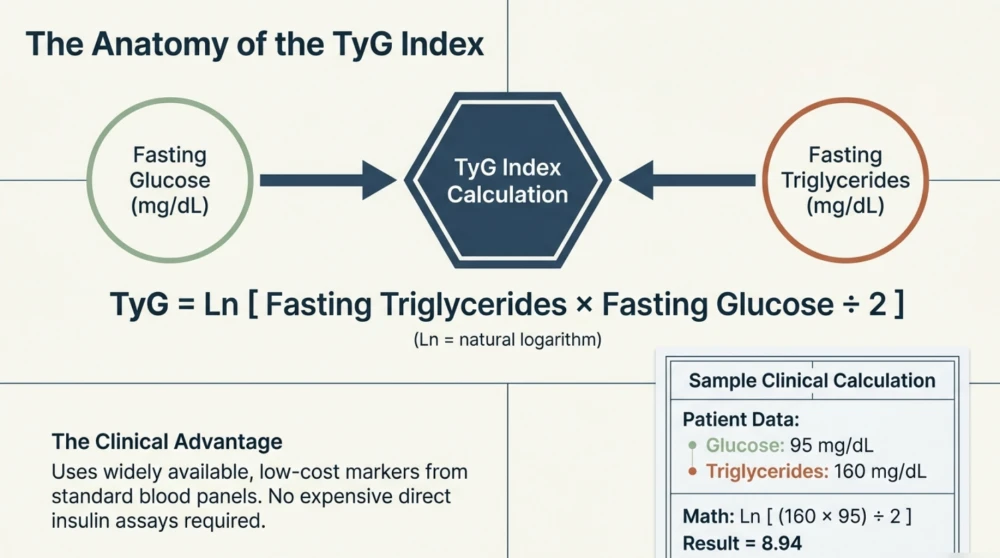
A commonly used formula is:
TyG index = Ln (fasting triglycerides (mg/dL) × fasting glucose (mg/dL) ÷ 2)
Here, “Ln” means the natural logarithm.
It is important to use the correct units and formula because different publications and calculators may use different transformations or reporting conventions.
Example of a Triglyceride-Glucose Index Calculation
Suppose a fasting laboratory report shows:
- Fasting glucose: 95 mg/dL
- Fasting triglycerides: 160 mg/dL
The calculation becomes:
TyG = Ln ((160 × 95) ÷ 2)
The resulting TyG index is approximately 8.94 .
The arithmetic is easy with a calculator. The difficult part is interpreting what that number means for a particular person.
Why Is the Triglyceride-Glucose Index Linked With Insulin Resistance?
To understand the usefulness of the TyG index, it helps to understand what happens during insulin resistance.
Insulin normally helps regulate glucose production by the liver, facilitates glucose uptake in tissues such as skeletal muscle, and influences fat metabolism.
When tissues become less responsive to insulin, the pancreas may compensate by secreting more insulin.
For a period of time, this compensation can keep glucose within the normal range.
Insulin Resistance Can Exist Before Prediabetes
This is one of the most important concepts in metabolic health.
A fasting glucose below the prediabetes threshold does not necessarily mean that insulin sensitivity is ideal.
Imagine that the body previously required a relatively modest amount of insulin to maintain fasting glucose at 90 mg/dL. Years later, substantially more insulin may be required to maintain approximately the same glucose concentration.
The glucose result looks reassuring, but the metabolic effort required to maintain it may have changed.
This compensated phase helps explain why researchers have looked for inexpensive surrogate markers of insulin resistance.
Can the Triglyceride-Glucose Index Reveal Hidden Insulin Resistance?
Potentially, but the wording needs to be precise.
Research has repeatedly found an association between a higher triglyceride-glucose index and insulin resistance. The TyG index has therefore emerged as a useful surrogate marker in epidemiological studies and as a possible screening tool.
However, it does not directly measure insulin action.
A high TyG index should therefore be interpreted as a metabolic signal rather than definitive proof that a person has insulin resistance.
The Triglyceride-Glucose Index Is a Surrogate Marker
This distinction matters.
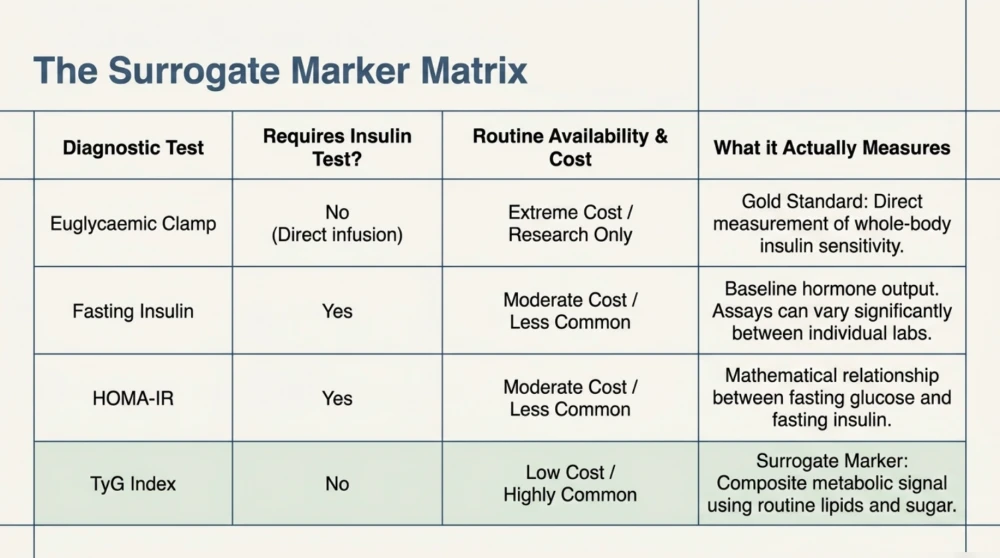
The gold-standard research method for assessing insulin sensitivity is the hyperinsulinaemic-euglycaemic clamp. It directly evaluates how effectively the body disposes of glucose under controlled insulin exposure.
But clamp testing is complex, expensive, time-consuming, and unsuitable for routine health screening.
This has led researchers to investigate simpler alternatives such as:
- HOMA-IR.
- Fasting insulin.
- Triglyceride-glucose index.
- Other metabolic indices derived from routine measurements.
None should be confused with a perfect direct measurement of whole-body insulin sensitivity.
What Is HOMA-IR and How Is It Different From the TyG Index?
HOMA-IR, or the Homeostatic Model Assessment of Insulin Resistance, is another widely used surrogate measure.
It is calculated using fasting glucose and fasting insulin.
The triglyceride-glucose index , in contrast, does not require an insulin measurement.
Why Is the Triglyceride-Glucose Index Convenient?
Fasting glucose and triglycerides are commonly measured during routine health checks.
Fasting insulin is not routinely included in many standard laboratory panels and may add cost. Insulin assays can also differ between laboratories, complicating universal interpretation of insulin-based indices.
TyG therefore has an important practical advantage: in many patients, all the information needed to calculate it already exists on the laboratory report.
That makes the index particularly interesting for population screening and epidemiological research.
Is the Triglyceride-Glucose Index Better Than HOMA-IR?
It would be premature to declare one universally superior.
Studies comparing the TyG index with HOMA-IR and other measures have produced encouraging results, but diagnostic performance varies according to population, ethnicity, age, body composition, laboratory methods, and the reference definition of insulin resistance.
The two indices also measure different biochemical relationships.
You Do Not Need to Choose One Number to Explain the Entire Metabolism
Metabolic health is too complex to reduce to a single index.
A clinician may gain more useful information by looking at the combination of:
- Waist circumference.
- Body weight and body composition.
- Blood pressure.
- Fasting glucose.
- HbA1c.
- Triglycerides.
- HDL cholesterol.
- Fatty liver.
- Family history.
- Physical activity.
- Sleep and sleep apnoea risk.
The triglyceride-glucose index can complement this picture rather than replacing it.
What Is a Normal Triglyceride-Glucose Index?
This is where online interpretation becomes problematic.
Many websites provide a single TyG cut-off and imply that values below it are normal while values above it prove insulin resistance.
The scientific literature does not support such a universal interpretation.
Different studies have identified different thresholds depending on the population studied and the method used to define insulin resistance.
There Is No Universal TyG Index Cut-Off for Insulin Resistance
Age, sex, ethnicity, body composition, diabetes status, and population characteristics can influence the optimal threshold.
Another source of confusion is that different formulas or transformations can produce TyG values on different numerical scales.
Therefore, a number copied from one research paper should not automatically be applied to every patient in India or elsewhere.
This is one of the most important limitations of the triglyceride-glucose index .
Why Can Two People With the Same Fasting Glucose Have Different TyG Index Values?
Consider two people who both have a fasting glucose of 95 mg/dL.
The first has triglycerides of 75 mg/dL, while the second has triglycerides of 220 mg/dL.
If you look only at fasting glucose, their results appear identical.
Their metabolic profiles clearly are not.
Triglycerides Can Add Information That Fasting Glucose Alone Misses
The person with triglycerides of 220 mg/dL may have several possible contributors, including insulin resistance, excess visceral fat, high refined-carbohydrate intake, alcohol intake, uncontrolled diabetes, hypothyroidism, certain medications, genetic lipid disorders, or other conditions.
The elevated triglyceride level therefore needs clinical interpretation.
The TyG index does not tell you which of these factors is responsible. What it does is combine the glucose and triglyceride signal into a single metabolic index.
Can You Have a High Triglyceride-Glucose Index With Normal HbA1c?
Yes.
HbA1c and the TyG index measure different aspects of metabolism.
HbA1c primarily reflects average glycaemic exposure over the preceding months. It does not directly measure insulin resistance.
The triglyceride-glucose index incorporates fasting triglycerides as well as glucose.
A Normal HbA1c Does Not Guarantee Ideal Metabolic Health
A person can have an HbA1c below the prediabetes threshold but still have abdominal obesity, high triglycerides, fatty liver, hypertension, or other features associated with insulin resistance.
This does not mean everyone with normal HbA1c needs additional insulin-resistance testing.
It means that glucose should be interpreted as one component of cardiometabolic health rather than the only component.
Who Might Find the Triglyceride-Glucose Index Most Informative?
The index may be particularly interesting when routine blood tests appear only mildly abnormal but the overall metabolic picture raises concern.
Examples include someone with:
- Increasing waist circumference.
- Overweight or obesity.
- Borderline fasting glucose.
- Elevated triglycerides.
- Low HDL cholesterol.
- Fatty liver.
- Prediabetes.
- PCOS.
- Hypertension.
- A strong family history of type 2 diabetes.
However, the triglyceride-glucose index should not be used to independently diagnose these conditions.
The TyG Index Is Better Viewed as a Metabolic Clue
The attraction of the TyG index is understandable. It is inexpensive, easy to calculate, and based on laboratory values already available for millions of people.
Research increasingly links higher TyG values with insulin resistance and a range of cardiometabolic outcomes.
But clinical usefulness depends on avoiding overinterpretation.
A high value does not prove insulin resistance. A low value does not guarantee perfect insulin sensitivity. And there is currently no single universally accepted threshold that can divide everyone into metabolically healthy and insulin-resistant categories.
Used appropriately, the triglyceride-glucose index may add another useful piece to the metabolic puzzle.
Why Can the Triglyceride-Glucose Index Become High?
A high triglyceride-glucose index can result from an increase in fasting triglycerides, fasting glucose, or both. Because these two measurements are influenced by many different biological and lifestyle factors, a high TyG index does not automatically tell you why the value is elevated.
Insulin resistance is an important possibility, particularly when the higher TyG index occurs alongside abdominal obesity, fatty liver, prediabetes, hypertension, or other features of metabolic syndrome.
But interpretation should not stop there.
Triglycerides can rise because of excess calorie intake, alcohol, poorly controlled diabetes , hypothyroidism, certain medications, genetic lipid disorders, kidney disease, and other conditions. Similarly, fasting glucose can rise because of diabetes, stress, illness, medications, and several endocrine or metabolic factors.
A High Triglyceride-Glucose Index Is a Signal, Not a Diagnosis
This is perhaps the most useful way to think about the TyG index.
If your triglyceride-glucose index is relatively high, the next question should not simply be, “How do I lower my TyG number?”
A better question is, “What is driving my triglycerides and glucose, and what does the rest of my metabolic profile look like?”
That distinction prevents the index from becoming another laboratory number treated in isolation.
Triglyceride-Glucose Index and Visceral Fat
Visceral fat is the fat stored within the abdominal cavity around internal organs. It is metabolically different from much of the subcutaneous fat stored immediately beneath the skin.
Excess visceral adiposity is strongly associated with insulin resistance, abnormal triglyceride metabolism, fatty liver, hypertension, and increased cardiometabolic risk.
For this reason, a higher TyG index occurring alongside an increasing waist circumference can be particularly informative.
Your Waist May Add Information That BMI Misses
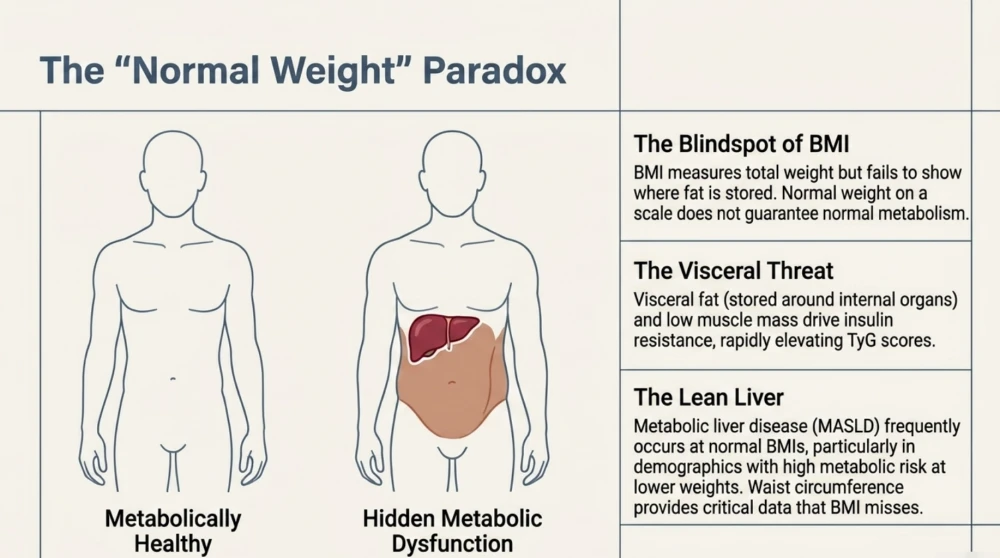
BMI remains useful for population-level assessment of body weight, but it does not directly show where body fat is stored.
Two people with the same BMI can have very different amounts of abdominal and visceral fat.
This is why waist circumference and waist-to-height ratio can add useful information when evaluating metabolic risk.
A person with only modest excess body weight but substantial central adiposity, elevated triglycerides, and a higher triglyceride-glucose index may have a very different metabolic profile from someone with the same BMI but a smaller waist and normal metabolic markers.
Triglyceride-Glucose Index and Fatty Liver
Metabolic dysfunction-associated steatotic liver disease, or MASLD, is closely linked with insulin resistance and visceral adiposity.
When insulin resistance develops, increased delivery of fatty acids to the liver, altered lipid metabolism, excess energy intake, and increased hepatic fat synthesis can contribute to accumulation of liver fat.
Because triglycerides and glucose are both involved in this metabolic environment, researchers have investigated the triglyceride-glucose index as a marker associated with fatty liver risk.
A Higher TyG Index Does Not Diagnose Fatty Liver
Associations between TyG and MASLD do not mean the index can replace appropriate liver assessment.
A person cannot be diagnosed with fatty liver simply because the TyG index is elevated.
Similarly, a lower TyG value does not prove that the liver contains no excess fat.
When fatty liver is clinically suspected, assessment may involve metabolic risk evaluation, liver enzymes, imaging, and fibrosis risk assessment depending on the individual's circumstances.
Normal Liver Enzymes Do Not Exclude Metabolic Dysfunction
Another common misconception is that normal ALT and AST prove that the liver is metabolically healthy.
They do not.
People with MASLD can have liver enzymes within the laboratory reference range.
This is particularly relevant when a person has central obesity, high triglycerides, prediabetes, diabetes, or other features of insulin resistance despite apparently reassuring liver enzymes.
Look Beyond a Single Liver Test
If a higher triglyceride-glucose index occurs alongside increasing waist circumference and other metabolic abnormalities, normal ALT alone should not end the assessment.
The need for further evaluation depends on the individual's overall risk rather than one isolated laboratory value.
Triglyceride-Glucose Index and Metabolic Syndrome
Metabolic syndrome describes a cluster of interconnected cardiometabolic abnormalities rather than a single disease.
Its major components include central obesity, abnormal glucose regulation, elevated triglycerides, reduced HDL cholesterol, and elevated blood pressure.
The overlap with the TyG index is obvious: two of these metabolic variables—triglycerides and glucose—are directly incorporated into its calculation.
TyG May Reflect Part of a Larger Metabolic Pattern
Consider someone with:
- Increasing abdominal obesity.
- Triglycerides of 210 mg/dL.
- Fasting glucose of 105 mg/dL.
- Low HDL cholesterol.
- Blood pressure of 142/90 mmHg.
- Ultrasound evidence of fatty liver.
The TyG index may be elevated, but the index is not the only reason to be concerned.
The entire metabolic pattern already suggests substantial cardiometabolic risk.
In such a situation, calculating the triglyceride-glucose index may reinforce the picture, but it should not distract from treating the modifiable risk factors themselves.
Triglyceride-Glucose Index and Prediabetes
Prediabetes is generally diagnosed using established glucose-based criteria such as fasting plasma glucose, HbA1c, or an oral glucose tolerance test when appropriate.
The TyG index is not part of the standard diagnostic definition of prediabetes.
However, a higher TyG index may provide additional metabolic information in someone whose glucose results are only mildly abnormal.
Do Not Use the TyG Index to Replace HbA1c or Glucose Testing
If someone's fasting glucose or HbA1c meets accepted criteria for prediabetes, calculating TyG is not required to confirm that diagnosis.
Conversely, a high TyG index should not be used to label someone as having prediabetes when established glucose criteria are normal.
TyG is better viewed as a supplementary marker of metabolic risk and possible insulin resistance.
Can the Triglyceride-Glucose Index Predict Future Diabetes?
Large observational studies have found that higher TyG values are associated with a greater risk of subsequently developing type 2 diabetes.
This relationship makes biological sense because insulin resistance can precede the development of persistent hyperglycaemia.
However, association is not the same as certainty.
A High TyG Index Does Not Mean Diabetes Is Inevitable
Someone with a high triglyceride-glucose index is not destined to develop diabetes.
Future risk depends on many factors, including:
- Genetics and family history.
- Age.
- Waist circumference.
- Body weight.
- Muscle mass.
- Physical activity.
- Diet quality.
- Sleep.
- Fatty liver.
- Medications.
- Pancreatic beta-cell function.
More importantly, many of these factors are modifiable.
An elevated metabolic-risk marker should therefore be treated as an opportunity for earlier intervention rather than as a prediction of inevitable disease.
Triglyceride-Glucose Index and Cardiovascular Risk
The TyG index has also been studied in relation to cardiovascular disease.
Observational research has associated higher TyG values with outcomes such as coronary artery disease, stroke, arterial stiffness, and cardiovascular events in various populations.
These findings are scientifically interesting, but they need careful interpretation.
The TyG Index Is Not a Replacement for Cardiovascular Risk Assessment
Cardiovascular risk depends on established factors including age, blood pressure, smoking, LDL cholesterol, diabetes, kidney disease, family history, and previous cardiovascular disease.
A higher triglyceride-glucose index does not replace assessment of these factors.
Someone with high LDL cholesterol should not ignore LDL treatment simply because their TyG index is favourable. Similarly, a person who smokes or has uncontrolled hypertension remains at increased cardiovascular risk even if the TyG number appears relatively low.
TyG may provide additional metabolic information, but it should not compete with established cardiovascular risk markers.
Triglyceride-Glucose Index and PCOS
Insulin resistance is common in polycystic ovary syndrome, although it is not present to the same degree in every woman with PCOS.
Because the triglyceride-glucose index is associated with insulin resistance, researchers have studied its potential role as a metabolic marker in women with PCOS.
Higher TyG values may identify a subgroup with greater metabolic abnormalities, particularly when central adiposity, dyslipidaemia, or abnormal glucose regulation is also present.
TyG Cannot Diagnose PCOS
PCOS is a clinical diagnosis based on established diagnostic criteria and appropriate exclusion of other causes.
A TyG calculation cannot determine whether someone has PCOS.
Likewise, a woman with PCOS and a relatively low TyG index may still require appropriate assessment of reproductive, hormonal, and metabolic health.
What Is TyG-BMI?
Researchers have attempted to improve the metabolic information provided by TyG by combining it with measures of body size.
One example is TyG-BMI , which combines the TyG index with body mass index.
The rationale is straightforward: insulin resistance is related not only to glucose and triglyceride metabolism but also to adiposity.
Does TyG-BMI Diagnose Insulin Resistance More Accurately?
Some studies have found TyG-BMI to perform well as a surrogate marker of insulin resistance in particular populations.
However, the same problem remains: performance and optimal thresholds vary between populations.
TyG-BMI is therefore primarily a research and risk-stratification tool rather than a universally accepted diagnostic test that every patient needs calculated.
What Is TyG-Waist Circumference?
Another variation combines the TyG index with waist circumference.
This can be conceptually attractive because waist circumference provides information about central adiposity, which is strongly related to insulin resistance.
Other related indices combine TyG with waist-to-height ratio.
More Complicated Indices Are Not Automatically Better for Routine Care
It is tempting to believe that adding more variables will always produce a more accurate diagnosis.
But a statistical index that performs well in a particular research dataset may not automatically have a validated clinical threshold applicable to everyone.
TyG-BMI, TyG-waist circumference, and TyG-waist-to-height ratio may be useful research tools, but their increasing complexity should not create false precision.
When Can the Triglyceride-Glucose Index Be Misleading?
The TyG index depends entirely on fasting triglycerides and fasting glucose. Anything that substantially alters either measurement can influence the result.
This means the number can become difficult to interpret in several situations.
1. The Blood Sample Was Not Truly Fasting
Triglycerides can rise after eating.
If the formula being used was validated with fasting triglycerides and glucose, applying it to a non-fasting sample may not provide an equivalent result.
Always check whether the laboratory values being entered match the conditions required by the formula.
2. Triglycerides Are Very High for Another Reason
Marked hypertriglyceridaemia can occur with genetic lipid disorders, excess alcohol intake, uncontrolled diabetes, hypothyroidism, kidney disease, and certain medications.
A high triglyceride-glucose index in these situations may not be interpretable simply as “more insulin resistance.”
The cause of the triglyceride elevation itself requires assessment.
3. Acute Illness or Physiological Stress Has Raised Glucose
Infection, acute illness, surgery, severe stress, and some medications can temporarily increase blood glucose.
A TyG index calculated during such a period may not represent the person's usual metabolic state.
4. Diabetes Is Already Poorly Controlled
If fasting glucose is substantially elevated because someone already has diabetes, the TyG index may also rise.
At that point, the clinically important issue is appropriate diabetes management rather than trying to use TyG to uncover “hidden” insulin resistance.
5. Triglyceride-Lowering Treatment Has Changed the Number
Medications and lifestyle interventions that lower triglycerides can reduce the TyG index.
This may represent genuine metabolic improvement in some cases, but it also illustrates why the number cannot be interpreted independently of treatment history.
Should You Calculate the Triglyceride-Glucose Index From Every Lipid Report?
Probably not.
Just because a calculation is easy does not mean it needs to become another routine target for every healthy person.
If fasting glucose, triglycerides, blood pressure, waist circumference, body weight, and other metabolic markers are all favourable, repeatedly calculating TyG may add little useful information.
The Triglyceride-Glucose Index Is Most Useful When It Answers a Clinical Question
For example, it may be informative when someone has several subtle metabolic abnormalities but has not yet developed overt diabetes.
A person with increasing abdominal fat, borderline glucose, elevated triglycerides, and fatty liver has a meaningful clinical question about insulin resistance and future metabolic risk.
In contrast, calculating TyG every few weeks in a metabolically healthy individual may create more numbers without improving health decisions.
Should You Track the TyG Index Over Time?
A falling TyG value can accompany improvements in fasting glucose and triglycerides after weight loss, dietary improvement, increased physical activity, or better diabetes control.
However, TyG has not been established as a universal treatment target in the way that HbA1c, blood pressure, LDL cholesterol, or triglyceride levels themselves may be used in appropriate clinical contexts.
Treat the Metabolic Problem, Not Just the Index
Suppose someone's triglyceride-glucose index improves after losing excess abdominal fat, becoming more physically active, improving diet quality, and reducing triglycerides.
That is encouraging.
But the objective was not simply to manipulate the formula.
The meaningful improvements are the changes in body composition, glucose regulation, lipid metabolism, fitness, and long-term cardiometabolic risk.
Can You Lower the Triglyceride-Glucose Index Naturally?
Because TyG is calculated from fasting glucose and triglycerides, interventions that improve these metabolic parameters may also reduce the index.
For someone with insulin resistance and excess body fat, useful strategies may include:
- Losing excess weight where appropriate.
- Reducing visceral and abdominal fat.
- Performing regular aerobic exercise.
- Including resistance training to preserve or increase muscle.
- Reducing excess refined carbohydrates and added sugars.
- Avoiding excessive alcohol intake.
- Increasing minimally processed, fibre-rich foods.
- Improving sleep duration and quality.
- Addressing obstructive sleep apnoea when present.
- Managing diabetes, thyroid disease, and other contributing conditions appropriately.
The appropriate strategy depends on why glucose or triglycerides are elevated.
Muscle Is Particularly Important in Insulin Resistance
Skeletal muscle is a major site of insulin-mediated glucose disposal.
This is one reason resistance training and preservation of muscle mass deserve a central place in metabolic health.
A weight-loss programme that focuses only on reducing kilograms while allowing substantial muscle loss may not be the ideal approach to improving insulin sensitivity.
Protein intake, resistance exercise, daily movement, sleep, and an appropriate calorie deficit should therefore be considered together.
The Triglyceride-Glucose Index Should Lead to Better Questions, Not More Anxiety
The greatest value of the TyG index may be its ability to draw attention to a metabolic pattern that deserves a closer look.
If the value is high, investigate why triglycerides or glucose are elevated. Look at waist circumference. Review weight trajectory, blood pressure, fatty liver risk, physical activity, sleep, diet, alcohol intake, medications, and family history.
If these factors are favourable, one calculated number should not create unnecessary alarm.
The triglyceride-glucose index is best understood as a relatively simple surrogate marker that may complement established metabolic assessment—not as a new disease, a perfect insulin-resistance test, or a number that everyone needs to optimise.
What Should You Do if Your Triglyceride-Glucose Index Is High?
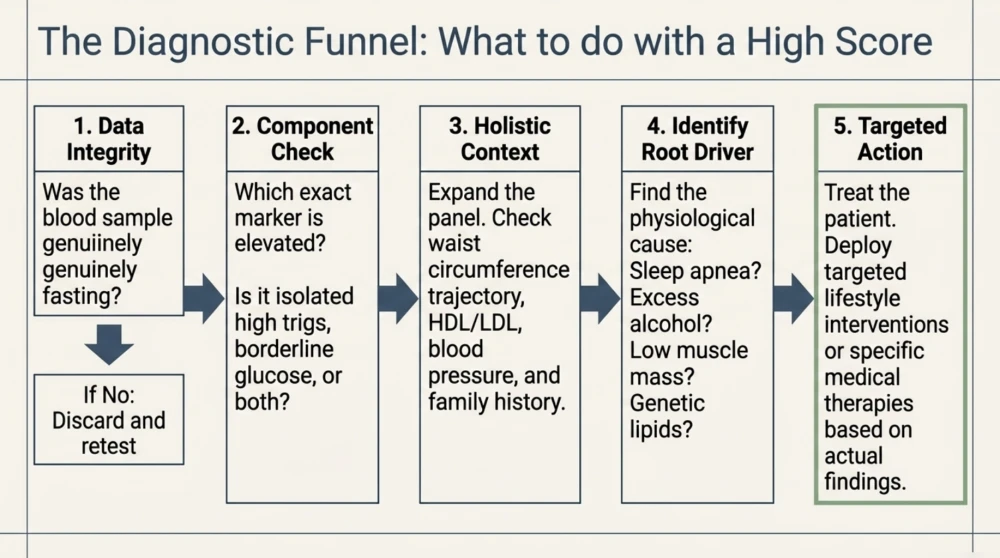
If you calculate your triglyceride-glucose index and find that it is higher than expected, the first step is not to panic or immediately start medication.
Remember that the TyG index is a surrogate metabolic marker rather than a diagnosis. The number needs to be interpreted alongside the actual fasting glucose and triglyceride values from which it was calculated.
The next step is to understand why one or both of those values are elevated and whether other features of insulin resistance are present.
Start With the Original Laboratory Results
Ask several basic questions:
- Was the blood sample genuinely fasting?
- Is fasting glucose elevated?
- Are triglycerides elevated?
- What is the HbA1c?
- What are the HDL and LDL cholesterol levels?
- Is blood pressure elevated?
- Has waist circumference been increasing?
- Is there evidence of fatty liver?
- Is there a family history of type 2 diabetes?
This information is generally more useful than focusing on the TyG number alone.
Three Examples Show Why TyG Needs Context
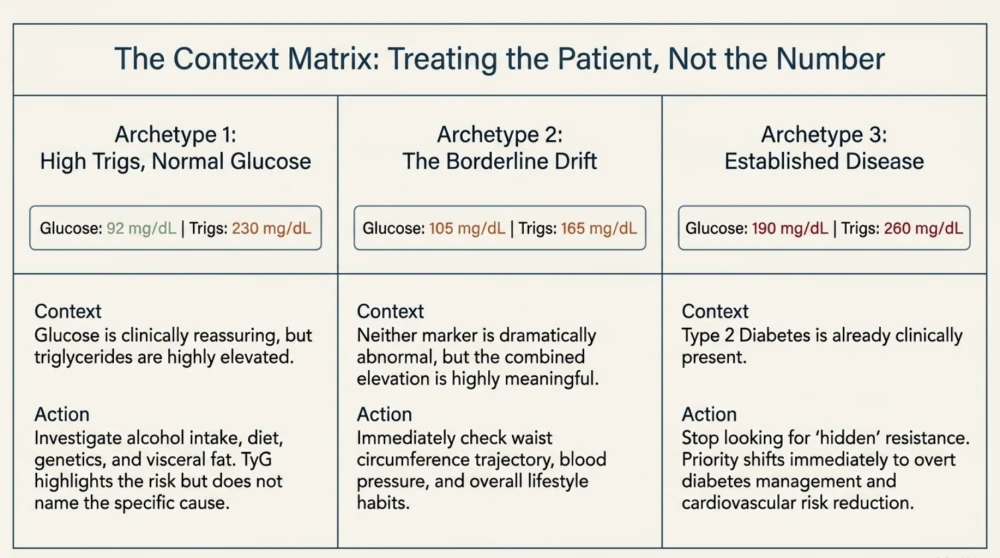
The same triglyceride-glucose index should not trigger exactly the same conclusion in every person. Laboratory results only become clinically meaningful when interpreted in context.
Example 1: Normal Glucose but High Triglycerides
Consider someone with fasting glucose of 92 mg/dL but triglycerides of 230 mg/dL.
The fasting glucose looks reassuring, but the triglycerides deserve attention. If the person also has abdominal obesity, fatty liver, low HDL cholesterol, hypertension, or a strong family history of diabetes, insulin resistance becomes an important possibility.
However, other causes of hypertriglyceridaemia should also be considered, including alcohol intake, hypothyroidism, medications, poorly structured diet, and genetic lipid disorders.
The TyG index may highlight metabolic risk, but it cannot identify the cause.
Example 2: Borderline Glucose and Borderline Triglycerides
Now consider someone with fasting glucose of 105 mg/dL and triglycerides of 165 mg/dL.
Neither result is dramatically abnormal, but together they may be more metabolically meaningful—particularly if waist circumference is increasing.
In this situation, HbA1c, blood pressure, HDL cholesterol, body composition, fatty liver risk, diet, exercise, sleep, and family history become important parts of the assessment.
Example 3: High TyG in Established Diabetes
Consider a person with fasting glucose of 190 mg/dL and triglycerides of 260 mg/dL who already has type 2 diabetes.
The TyG index will be high, but there is little value in describing this as “hidden insulin resistance.”
The immediate clinical priorities are appropriate diabetes management, triglyceride assessment, cardiovascular risk reduction, and investigation of other metabolic complications.
This illustrates an important principle: a biomarker is useful only when it helps answer a meaningful clinical question.
Can Normal-Weight People Have a High Triglyceride-Glucose Index?
Yes.
Insulin resistance is often associated with overweight and obesity, but body weight alone does not determine metabolic health.
A person with a BMI in the normal range can still have increased visceral fat, low muscle mass, fatty liver, abnormal triglycerides, or impaired glucose regulation.
Normal BMI Does Not Guarantee Normal Metabolism
This can be particularly relevant in South Asian populations, where metabolic risk may occur at lower BMI levels compared with some other populations.
Waist circumference, body-fat distribution, physical activity, muscle mass, family history, blood pressure, glucose, and lipid profile may therefore provide information that BMI alone cannot.
A normal-weight person with a higher triglyceride-glucose index should not automatically be told to lose large amounts of weight. The underlying metabolic pattern needs to be identified first.
Lean Fatty Liver and the Triglyceride-Glucose Index
Fatty liver is another condition commonly assumed to occur only in people with obesity.
That assumption is incorrect.
MASLD can occur in people whose BMI is within the conventional normal range. Visceral adiposity, genetics, low muscle mass, poor diet quality, physical inactivity, and insulin resistance can all contribute.
Waist and Muscle May Matter More Than the Scale Suggests
A person may weigh 65 kg year after year while gradually losing muscle and accumulating abdominal fat.
The bathroom scale may show almost no change, while metabolic health deteriorates.
This is why resistance training, physical activity, adequate protein intake, and attention to waist circumference can be valuable even when substantial weight loss is not required.
How Can You Improve a High Triglyceride-Glucose Index?
There is no medication specifically prescribed simply to “treat the TyG index.”
The objective is to identify and manage the factors responsible for elevated fasting glucose, elevated triglycerides, or both.
For someone whose higher TyG value reflects insulin resistance associated with excess abdominal fat and an unhealthy lifestyle pattern, several interventions may improve the underlying metabolic state.
1. Reduce Excess Visceral Fat
When overweight or obesity is present, even moderate weight reduction can improve insulin sensitivity, triglycerides, glucose regulation, blood pressure, and fatty liver risk.
The aim should generally be sustainable fat loss rather than the fastest possible reduction on the weighing scale.
A programme that preserves muscle while reducing excess fat is metabolically preferable to severe calorie restriction that produces substantial loss of lean tissue.
2. Reduce Added Sugars and Refined Carbohydrates
High intakes of sugar-sweetened beverages, sweets, desserts, and highly refined carbohydrate foods can make triglyceride and glucose control more difficult, particularly in someone who already has insulin resistance.
This does not mean every carbohydrate must be removed.
Whole grains, legumes, vegetables, whole fruit, and other minimally processed carbohydrate sources can remain part of a balanced diet according to individual requirements.
3. Review Alcohol Intake
Alcohol can significantly increase triglycerides in susceptible individuals.
If triglycerides are elevated, alcohol intake should therefore be specifically reviewed rather than assuming that the problem is entirely due to carbohydrate intake or insulin resistance.
Marked hypertriglyceridaemia deserves medical assessment because very high triglyceride levels can increase the risk of acute pancreatitis.
4. Increase Fibre-Rich Foods
Vegetables, legumes, pulses, whole grains, nuts, seeds, and whole fruit can improve overall dietary quality and help with satiety.
Fibre intake should usually be increased gradually, particularly in people who develop bloating when dietary fibre changes suddenly.
5. Prioritise Adequate Protein
Protein becomes particularly important during calorie restriction because preserving lean mass should be part of weight management.
Protein needs vary according to age, body composition, physical activity, kidney function, calorie intake, and other medical factors.
The goal is therefore not simply to prescribe a very-high-protein diet to everyone with insulin resistance.
Exercise Is One of the Most Important Tools for Insulin Sensitivity
Skeletal muscle plays a major role in glucose disposal.
When muscle contracts during physical activity, glucose uptake can increase through mechanisms that are not completely dependent on insulin. Regular exercise can also improve insulin sensitivity over time.
This is why physical activity deserves as much attention as diet when addressing a higher triglyceride-glucose index .
Aerobic Exercise and Resistance Training Do Different Jobs
Aerobic activities such as brisk walking, cycling, swimming, or jogging can improve cardiovascular fitness, energy expenditure, and metabolic health.
Resistance training helps preserve or increase skeletal muscle and strength.
For many adults, combining aerobic activity with resistance training provides broader benefits than relying exclusively on one form of exercise.
Walking After Meals Can Also Help
Short bouts of activity after meals can reduce post-meal glucose excursions compared with remaining sedentary.
This can be particularly practical for someone who cannot immediately commit to long exercise sessions.
Ten or fifteen minutes of walking after meals, regular movement breaks, taking stairs where practical, and increasing daily step count can complement structured exercise.
Do Not Ignore Sleep When Trying to Improve Insulin Resistance
Diet and exercise receive most of the attention in metabolic health, but sleep is also important.
Chronic sleep restriction and circadian disruption can adversely affect glucose regulation, appetite, food choices, and insulin sensitivity.
Someone who exercises regularly and eats reasonably well but sleeps only four or five hours most nights may still have an important modifiable metabolic risk factor.
Consider Obstructive Sleep Apnoea
Obstructive sleep apnoea deserves particular attention in people with obesity, resistant hypertension, excessive daytime sleepiness, loud snoring, witnessed breathing pauses during sleep, or morning headaches.
Sleep apnoea is associated with metabolic and cardiovascular problems and should not be dismissed as simply a snoring problem.
Could Medication Be Needed?
Possibly—but medication decisions should be based on the actual medical condition rather than the TyG index itself.
Someone with diabetes may need glucose-lowering therapy. A person with significant dyslipidaemia may require lipid-lowering treatment. Hypothyroidism may need thyroid hormone replacement. Obesity may warrant evidence-based weight-management treatment in appropriate patients.
Each of these decisions depends on established clinical indications.
Do Not Start Metformin Just Because the TyG Index Is High
One potential problem with self-calculated insulin-resistance scores is that people may assume a high result automatically means they need metformin or another glucose-lowering medicine.
That is not an appropriate use of the index.
Medication should be prescribed for a recognised indication after considering the person's glucose status, medical history, kidney function, cardiovascular risk, body weight, reproductive considerations where relevant, and other clinical factors.
How Quickly Can the Triglyceride-Glucose Index Improve?
Because the index depends on fasting triglycerides and fasting glucose, it can change when either of those measurements changes.
Triglycerides can respond relatively quickly to major changes in alcohol intake, diet, calorie balance, weight, glucose control, or medication.
Fasting glucose can also change with improvements in diabetes control, weight loss, physical activity, illness recovery, and medication.
Therefore, TyG can change over weeks or months.
A Lower TyG Does Not Automatically Prove Insulin Resistance Has Been “Reversed”
A fall in the triglyceride-glucose index may be encouraging, but the index is still a surrogate marker.
It should not be used to make absolute claims that insulin resistance has disappeared.
More useful evidence of metabolic improvement may include a combination of reduced waist circumference, improved fitness, lower triglycerides, better glucose regulation, improved blood pressure, healthier liver parameters, and improved body composition.
Should You Repeat the TyG Index?
If fasting glucose and triglycerides are being repeated for a legitimate clinical reason, the TyG index can also be recalculated.
However, there is generally little reason to order frequent blood tests solely to monitor TyG.
How often glucose and lipid testing is appropriate depends on the person's diagnosis, baseline results, treatment, age, and cardiovascular risk.
Do Not Turn the TyG Index Into Another Number to Chase
Metabolic health is already full of numbers: body weight, BMI, waist circumference, fasting glucose, HbA1c, triglycerides, HDL, LDL, blood pressure, liver enzymes, and sometimes CGM data.
Adding another number is useful only if it improves decision-making.
If a lower TyG comes from healthier triglycerides and glucose, that is encouraging. But improving the person's health remains more important than achieving a particular calculator score.
When Should a High Triglyceride-Glucose Index Be Discussed With a Doctor?
Medical evaluation becomes more important when a higher TyG index occurs alongside other metabolic abnormalities.
Examples include:
- Fasting glucose in the prediabetes or diabetes range.
- Elevated HbA1c.
- Persistently elevated triglycerides.
- Very high triglyceride levels.
- Increasing abdominal obesity.
- Fatty liver.
- Hypertension.
- PCOS with metabolic abnormalities.
- A strong family history of premature diabetes or cardiovascular disease.
- Unexpected metabolic abnormalities despite normal body weight.
These findings deserve assessment in their own right, regardless of the calculated TyG value.
Common Myths About the Triglyceride-Glucose Index
Myth 1: A TyG Index Above One Specific Number Proves Insulin Resistance
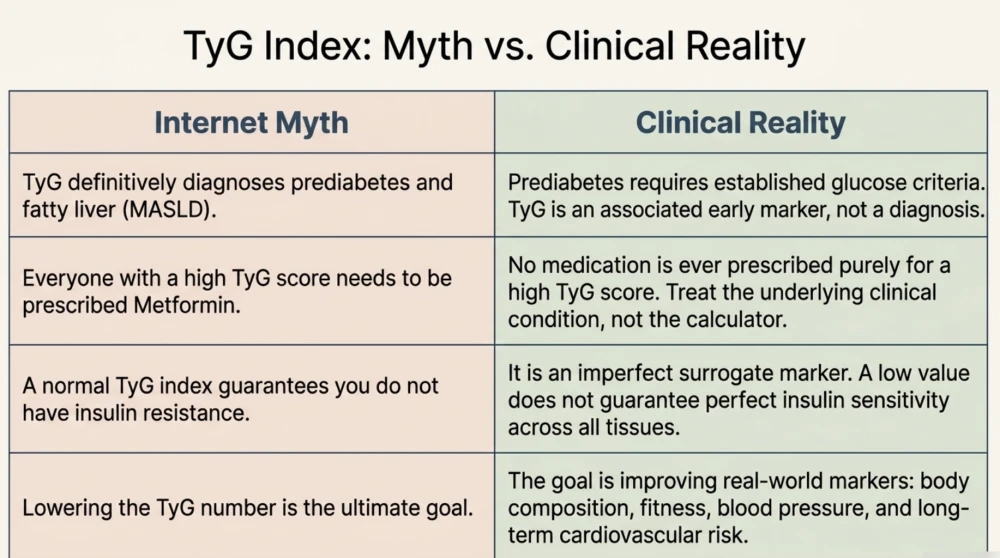
No. Published thresholds differ between populations, and there is currently no universally accepted clinical cut-off that diagnoses insulin resistance in everyone.
Myth 2: A Normal TyG Index Means You Cannot Have Insulin Resistance
No. TyG is an imperfect surrogate marker. A relatively favourable result does not guarantee ideal insulin sensitivity.
Myth 3: TyG Is More Accurate Than Every Other Insulin Resistance Test
No. Its performance varies according to the population and comparator used. It should not be presented as universally superior to all other methods.
Myth 4: TyG Can Diagnose Prediabetes
No. Prediabetes is diagnosed using established glucose-based criteria. TyG may provide additional metabolic information but does not replace them.
Myth 5: TyG Can Diagnose Fatty Liver
No. Higher TyG values are associated with MASLD in research, but the index cannot establish the diagnosis.
Myth 6: Everyone With a High TyG Needs Metformin
No. There is no medication prescribed simply because a TyG calculation is high. Treatment depends on the underlying clinical condition.
Myth 7: Only People With Obesity Can Have a High TyG Index
No. Normal-weight individuals can have insulin resistance, visceral adiposity, fatty liver, dyslipidaemia, or abnormal glucose regulation.
Myth 8: Lowering the TyG Number Is the Main Treatment Goal
No. The objective is to improve the underlying metabolic health—glucose regulation, triglycerides, body composition, fitness, blood pressure, liver health, and cardiovascular risk.
Key Takeaways: Triglyceride-Glucose Index and Insulin Resistance
The triglyceride-glucose index is a promising and practical surrogate marker of insulin resistance, but it is not a stand-alone diagnostic test.
- TyG is calculated using fasting triglycerides and fasting glucose.
- It does not require a fasting insulin measurement.
- A higher TyG index has been associated with insulin resistance in many studies.
- Higher values have also been associated with future type 2 diabetes, fatty liver, metabolic syndrome, and cardiovascular outcomes in observational research.
- There is no single universally accepted TyG threshold that diagnoses insulin resistance in every population.
- TyG should not replace fasting glucose, HbA1c, lipid assessment, blood pressure, waist measurement, or appropriate clinical evaluation.
- A high TyG value should prompt investigation of why triglycerides or glucose are elevated rather than treatment of the calculated number itself.
- Weight management where appropriate, resistance and aerobic exercise, better diet quality, adequate sleep, and treatment of underlying metabolic conditions may improve the factors contributing to a higher TyG.
References
- Guerrero-Romero F, Simental-Mendía LE, González-Ortiz M, et al. The product of triglycerides and glucose, a simple measure of insulin sensitivity: comparison with the euglycaemic-hyperinsulinaemic clamp. Journal of Clinical Endocrinology & Metabolism . 2010;95(7):3347-3351.
- Simental-Mendía LE, Rodríguez-Morán M, Guerrero-Romero F. The product of fasting glucose and triglycerides as surrogate for identifying insulin resistance in apparently healthy subjects. Metabolic Syndrome and Related Disorders . 2008;6(4):299-304.
- American Diabetes Association Professional Practice Committee. Standards of Care in Diabetes—2026 . Current recommendations for classification, screening, prevention, cardiovascular risk management, and treatment of diabetes.
- American Heart Association and American College of Cardiology. Current guidance and scientific statements on cardiovascular risk factors, triglycerides, obesity, and cardiometabolic health.
- European Association for the Study of the Liver, European Association for the Study of Diabetes, and European Association for the Study of Obesity. Current clinical practice guidance on metabolic dysfunction-associated steatotic liver disease.
- National Institute of Diabetes and Digestive and Kidney Diseases. Current clinical information on insulin resistance, prediabetes, type 2 diabetes, and metabolic liver disease.
- Current systematic reviews and meta-analyses evaluating the triglyceride-glucose index as a surrogate marker of insulin resistance and its associations with type 2 diabetes, MASLD, metabolic syndrome, and cardiovascular outcomes.
Written by Dr. Pankaj Kumar , General & Lifestyle Physician, Dwarka, New Delhi