















- 30th May 2026
Table of Contents
- Muscle Is More Than a Structure That Helps You Move
- Why Muscle Loss Often Begins Earlier Than Expected
- Why Muscle Loss Slows Metabolism
- Why Muscle Helps Control Blood Sugar
- Why Belly Fat Often Increases as Muscle Declines
- Why Sedentary Work Accelerates Muscle Loss
- Why Protein Intake Becomes More Important After 35
- Why Muscle Health and Metabolic Health Are Closely Connected
- Why Muscle Loss Increases the Risk of Insulin Resistance
- The Relationship Between Muscle Loss and Fatty Liver
- Why Hormonal Changes After 35 Matter
- Why Crash Dieting Often Makes the Problem Worse
- The Hidden Problem: Sarcopenic Obesity
- Why Many Adults Become "Skinny Fat"
- Why Strength Often Predicts Future Health Better Than Weight
- How to Preserve Muscle After 35
- Why Strength Training Becomes More Important With Age
- Why Protein Intake Becomes a Priority
- Why Sleep Is Critical for Muscle Recovery
- Why Physical Activity Throughout the Day Matters
- Why Muscle Preservation Supports Healthy Aging
- Why Muscle Health Supports Long-Term Weight Management
- Why Sustainable Lifestyle Structure Matters Most
- Key Takeaways: What You Should Remember
Many adults reach their mid-thirties and begin noticing subtle but frustrating changes in their body. Clothes fit differently despite eating similar foods. Weight seems easier to gain and harder to lose. Energy levels may not feel as stable as they once did. Physical activity that previously felt effortless now requires greater effort and recovery time.
Most people automatically blame aging itself. While aging certainly influences the body, one of the most important underlying changes is often overlooked completely: gradual muscle loss.
This process can begin earlier than many people realize and may quietly affect weight management, metabolic health, physical performance, and long-term disease risk. This is exactly why understanding why muscle loss after 35 can affect weight and metabolic health has become increasingly important in modern preventive healthcare.
Muscle Is More Than a Structure That Helps You Move
When people think about muscle, they often picture athletes, bodybuilders, or physical strength. However, muscle tissue plays a much larger role inside the body than simply helping movement.
Muscle is one of the most metabolically active tissues in the human body. It continuously participates in:
- Energy utilization
- Blood sugar regulation
- Insulin sensitivity
- Physical performance
- Metabolic flexibility
- Healthy aging
In simple terms, healthy muscle tissue helps the body handle food, regulate metabolism, and maintain physical independence. When muscle mass gradually declines, these metabolic benefits begin declining as well.
Why Muscle Loss Often Begins Earlier Than Expected
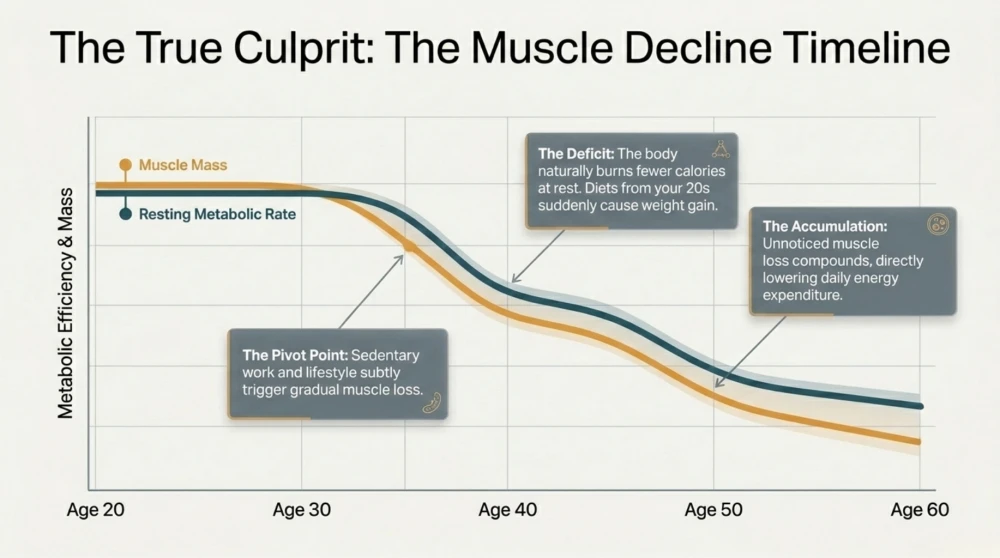
Many people assume significant muscle loss only becomes relevant in old age. In reality, muscle mass can begin gradually declining as early as the mid-thirties, particularly in individuals who become less physically active. This decline is usually slow and often goes unnoticed for years.
Unlike sudden illness or injury, muscle loss develops gradually through a combination of factors such as:
- Reduced physical activity
- Sedentary work patterns
- Poor protein intake
- Chronic stress
- Poor sleep quality
- Hormonal changes
Because the changes occur slowly, many people only recognize the problem after noticing increasing body fat, declining strength, or difficulty losing weight.
Why Muscle Loss Slows Metabolism
One of the most important consequences of declining muscle mass is a gradual reduction in metabolic efficiency. Muscle tissue requires energy even while the body is at rest. Although muscle is not the only factor influencing metabolic rate, it contributes significantly to daily energy expenditure.
When muscle mass decreases over time, the body naturally burns fewer calories throughout the day. This means that an individual who maintains the same eating habits they had in their twenties may gradually begin gaining weight in their late thirties and forties.
Many people mistakenly assume they are suddenly eating too much, when in reality part of the problem may be declining muscle mass combined with reduced physical activity. This is one reason weight gain often feels surprisingly easy after the age of 35.
Why Muscle Helps Control Blood Sugar
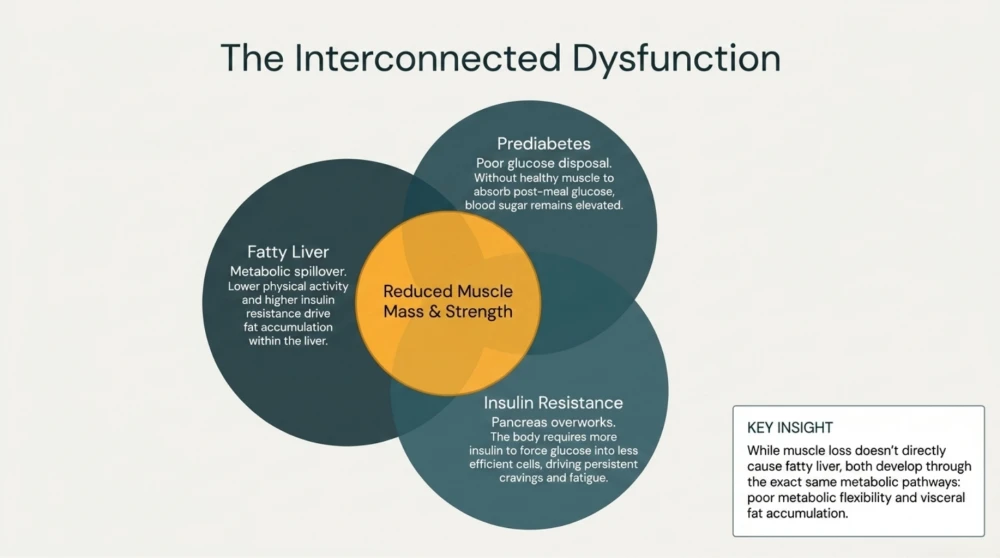
One of the most important metabolic roles of muscle tissue is glucose regulation. After eating, muscle acts as a major storage site for glucose. Healthy muscle tissue helps remove glucose from the bloodstream and utilize it efficiently for energy. When muscle mass declines, the body's ability to manage blood sugar efficiently may also decline.
Over time, this can contribute to:
- Insulin resistance
- Prediabetes
- Type 2 diabetes
- Metabolic dysfunction
This is one reason muscle preservation has become a major focus in modern metabolic medicine. Healthy muscle is not only important for strength. It is also important for healthy blood sugar control.
Why Belly Fat Often Increases as Muscle Declines
Many adults become frustrated when they notice increasing abdominal fat despite maintaining relatively similar body weight. One reason this occurs is that body composition can change even when the number on the scale remains relatively stable.
As muscle gradually decreases, body fat often increases. This means that two individuals with the same weight may have very different metabolic health depending on how much muscle and fat they carry.
Increasing abdominal fat is particularly important because it is strongly associated with:
- Insulin resistance
- Fatty liver
- Inflammation
- Cardiovascular disease
Many people therefore experience a gradual shift from a leaner body composition toward increased central obesity even without dramatic weight gain.
Why Sedentary Work Accelerates Muscle Loss
Modern work culture has dramatically changed how people move. Many professionals spend most of their day sitting in front of computers, attending meetings, driving, or working from home.
While these routines may seem harmless, prolonged inactivity significantly reduces the stimulus needed to maintain healthy muscle mass. The body follows a simple biological principle: tissue that is not regularly challenged gradually becomes less efficient.
Over years of sedentary living, many adults begin losing muscle while simultaneously gaining body fat. This combination creates a powerful driver of metabolic dysfunction.
If you want to understand this relationship further, you may also explore why sitting too long affects blood sugar levels.
Why Protein Intake Becomes More Important After 35
Another important factor influencing muscle preservation is dietary protein. Many adults consume adequate calories but insufficient high-quality protein.
Protein provides the building blocks needed for:
- Muscle repair
- Muscle maintenance
- Hormone production
- Metabolic recovery
As people age, the body often becomes slightly less efficient at stimulating muscle protein synthesis. This means maintaining muscle may require greater attention to protein intake than during younger years.
Unfortunately, many busy adults rely heavily on processed foods, refined carbohydrates, and irregular eating patterns while neglecting protein quality. Over time, this may accelerate age-related muscle decline.
Why Muscle Health and Metabolic Health Are Closely Connected
One of the biggest misconceptions in weight management is viewing muscle and metabolism as separate topics. In reality, they are deeply interconnected.
Muscle influences:
- Calorie expenditure
- Blood sugar regulation
- Insulin sensitivity
- Physical activity capacity
- Long-term metabolic resilience
This is why many adults who focus exclusively on weight loss while ignoring muscle preservation often struggle with long-term results. Healthy weight management is not simply about losing kilograms. It is about preserving and supporting metabolically active tissue while reducing excess body fat.
Why Muscle Loss Increases the Risk of Insulin Resistance
One of the most important but least understood consequences of muscle loss is its effect on insulin sensitivity. Most people associate insulin resistance only with sugar consumption or obesity. While these factors certainly contribute, muscle mass also plays a crucial role in how efficiently the body handles glucose.
After every meal, glucose enters the bloodstream and needs to be transported into cells where it can be used for energy. Skeletal muscle is one of the largest sites for glucose disposal in the body.
When healthy muscle mass is maintained, glucose can be stored and utilized efficiently. However, when muscle gradually declines, the body's capacity to handle glucose becomes less efficient.
As a result, the pancreas often needs to produce more insulin to achieve the same effect. Over time, this process contributes to worsening insulin resistance.
This is one reason many adults begin experiencing:
- Increasing belly fat
- Prediabetes
- Fatigue after meals
- Persistent cravings
- Difficulty losing weight
without realizing that declining muscle mass may be contributing to the problem.
The Relationship Between Muscle Loss and Fatty Liver
Another increasingly recognized metabolic connection is the relationship between muscle health and fatty liver disease. Fatty liver is often viewed purely as a liver condition, but it is actually a manifestation of broader metabolic dysfunction.
Individuals with reduced muscle mass frequently have:
- Higher insulin resistance
- Lower physical activity levels
- Poor metabolic flexibility
- Greater visceral fat accumulation
These same factors strongly contribute to fat accumulation within the liver. In clinical practice, many adults with fatty liver also demonstrate reduced muscle mass, reduced strength, and declining physical fitness.
This does not mean muscle loss directly causes fatty liver, but both conditions often develop through similar metabolic pathways.
Why Hormonal Changes After 35 Matter
Another reason muscle preservation becomes increasingly important after 35 is the gradual hormonal changes that occur with age. Both men and women experience shifts in hormone levels over time. These changes are usually subtle and gradual rather than dramatic.
Over the years, changes in hormones can influence:
- Muscle maintenance
- Body fat distribution
- Recovery capacity
- Exercise performance
- Energy levels
Combined with sedentary lifestyles and poor sleep, these hormonal changes can accelerate muscle loss and make fat accumulation easier. This is one reason many adults notice that the strategies that worked for weight control in their twenties become far less effective in their forties.
Why Crash Dieting Often Makes the Problem Worse
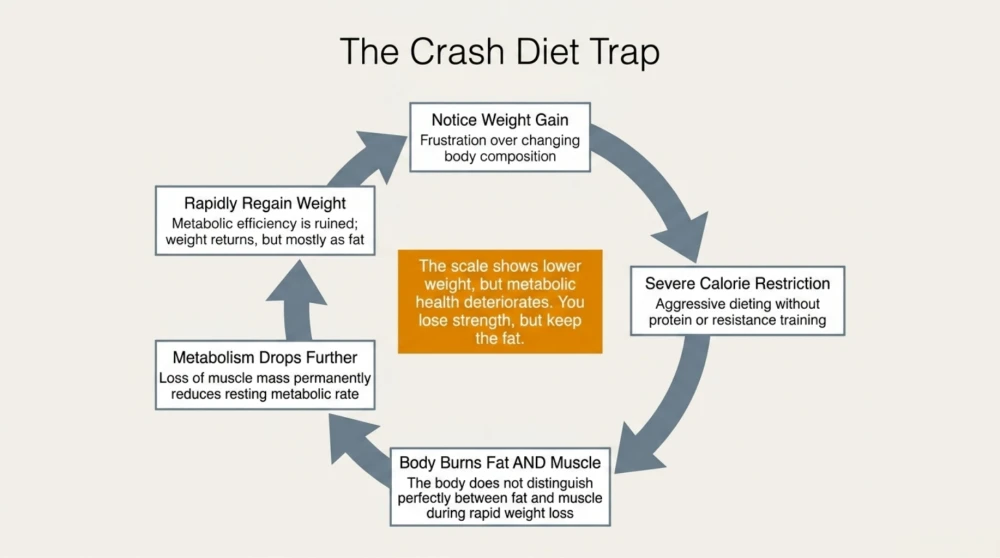
When people notice weight gain, their first reaction is often to cut calories aggressively. Unfortunately, extreme dieting can sometimes worsen body composition. The body does not distinguish perfectly between fat loss and muscle loss during rapid weight reduction.
When calorie restriction becomes severe, especially without adequate protein intake and resistance training, significant muscle loss may occur. This creates a dangerous situation. The scale may show lower weight, but metabolic health may not improve proportionally.
Many individuals therefore lose:
- Muscle mass
- Strength
- Physical performance
- Metabolic efficiency
while eventually regaining much of the lost weight later. This cycle is one reason repeated crash dieting often produces long-term frustration.
The Hidden Problem: Sarcopenic Obesity
One of the most overlooked body composition problems today is sarcopenic obesity.
This term refers to a situation where an individual has both:
- Reduced muscle mass
- Excess body fat
At first glance, the person may not appear severely overweight. In fact, some individuals have a body mass index (BMI) that falls within the normal range. However, their body composition tells a very different story.
They may have:
- High abdominal fat
- Low muscle mass
- Poor metabolic flexibility
- Reduced strength
- Higher insulin resistance
This is why body weight alone does not always reflect true metabolic health.
Why Many Adults Become "Skinny Fat"
The term "skinny fat" is commonly used to describe individuals who appear relatively lean but carry an unhealthy ratio of fat to muscle. These individuals often maintain a relatively stable weight for years and therefore assume they are metabolically healthy.
However, underneath the surface they may be gradually losing muscle while gaining visceral fat.
Many such individuals experience:
- Weakness
- Poor stamina
- Low exercise capacity
- Increasing waist circumference
- Prediabetes
- Fatty liver
despite not appearing obviously obese. This is why body composition has become far more important than weight alone when evaluating long-term health risk.
Why Strength Often Predicts Future Health Better Than Weight
Emerging research increasingly shows that muscle strength and physical function are powerful indicators of long-term health.
Adults who maintain healthy muscle mass and strength tend to have better:
- Metabolic health
- Blood sugar control
- Physical independence
- Recovery capacity
- Healthy aging outcomes
In contrast, declining strength often signals worsening metabolic resilience long before major disease develops. This is one reason preserving muscle should be viewed as an investment in future health rather than simply an athletic goal.
How to Preserve Muscle After 35
The encouraging news is that muscle loss after 35 is not inevitable. While some age-related changes do occur naturally, the speed and extent of muscle decline are strongly influenced by lifestyle choices.
In fact, many adults in their forties, fifties, and beyond maintain excellent muscle mass, strength, and metabolic health when they consistently support their body through proper nutrition, physical activity, recovery, and sleep.
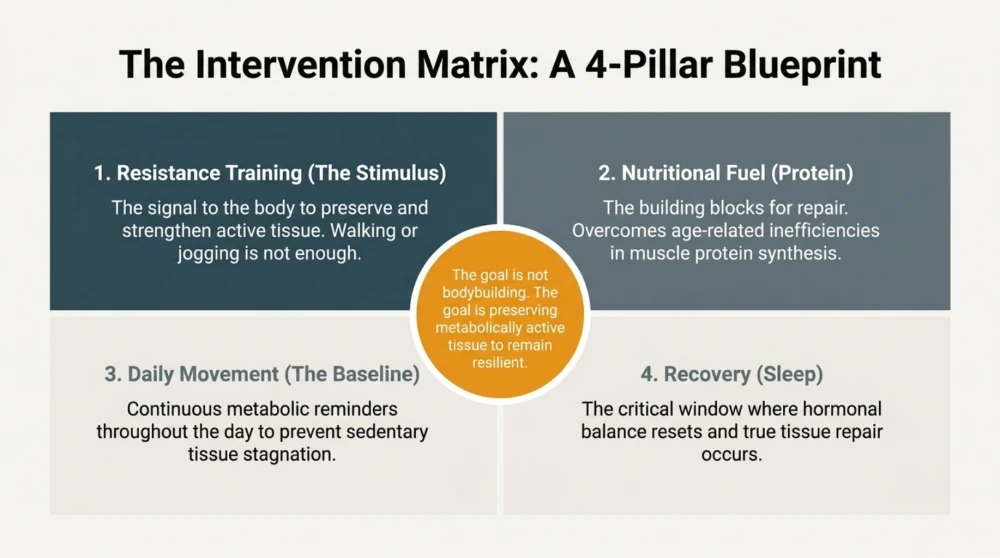
The goal is not becoming a bodybuilder or spending hours in the gym. The goal is preserving metabolically active tissue that helps the body remain healthy, functional, and resilient. This becomes increasingly important because muscle is one of the strongest protective factors against many modern lifestyle diseases.
Why Strength Training Becomes More Important With Age
If there is one intervention that consistently stands out for preserving muscle mass, it is resistance training. Many adults associate exercise primarily with walking, jogging, or calorie burning. While cardiovascular activity provides important health benefits, it does not stimulate muscle maintenance as effectively as resistance training.
Muscles need a reason to stay. When muscle tissue is challenged regularly through resistance-based activity, the body receives signals to preserve and strengthen that tissue.
This can include:
- Bodyweight exercises
- Resistance bands
- Weight training
- Functional strength exercises
- Supervised strength programs
Regular resistance training helps support:
- Muscle preservation
- Insulin sensitivity
- Bone health
- Physical performance
- Metabolic efficiency
Importantly, even two to three properly structured sessions per week can provide meaningful benefits.
Why Protein Intake Becomes a Priority
Exercise alone is not enough to preserve muscle. The body also requires adequate nutritional support, particularly protein. Protein provides amino acids that serve as the building blocks for muscle repair and maintenance.
Unfortunately, many adults consume diets that are rich in refined carbohydrates but relatively low in high-quality protein.
A typical day may include:
- Tea and biscuits for breakfast
- Refined snacks during the day
- Carbohydrate-heavy meals
- Minimal protein distribution
Over time, this pattern can make muscle preservation more difficult.
Including adequate protein at each meal often improves:
- Muscle maintenance
- Satiety
- Blood sugar stability
- Recovery after exercise
Many adults focus on reducing calories while completely ignoring protein quality. This frequently leads to loss of muscle along with body fat.
Why Sleep Is Critical for Muscle Recovery
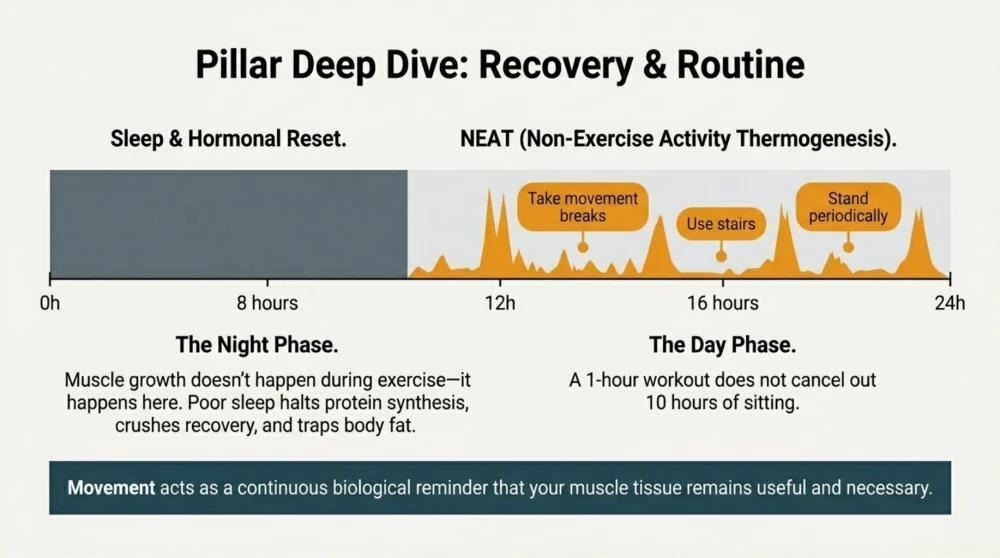
Many people think muscle growth and recovery occur during exercise. In reality, much of the recovery process occurs after exercise, particularly during sleep.
Healthy sleep supports:
- Muscle repair
- Hormonal balance
- Protein synthesis
- Recovery from physical activity
When sleep becomes chronically poor, the body struggles to fully recover from training and daily physical stress.
Many adults experiencing poor sleep also report:
- Reduced strength gains
- Persistent fatigue
- Slow recovery
- Increasing body fat
This is one reason sleep quality is increasingly recognized as a major pillar of healthy aging and metabolic health.
If you want to understand this relationship further, you may also explore why poor sleep can make weight loss more difficult.
Why Physical Activity Throughout the Day Matters
One common mistake is assuming that a single workout can compensate for an otherwise sedentary lifestyle. Even individuals who exercise regularly may spend most of the remaining day sitting. The body benefits from frequent movement throughout the day.
Simple habits such as:
- Walking regularly
- Taking movement breaks
- Using stairs
- Standing periodically
- Remaining physically active outside workouts
help maintain both muscle function and metabolic health. Movement acts as a continuous reminder to the body that muscle tissue remains useful and necessary.
Why Muscle Preservation Supports Healthy Aging
Muscle health is not only about appearance or athletic performance. It is one of the strongest predictors of healthy aging.
Adults who maintain muscle mass and strength tend to experience:
- Better mobility
- Greater independence
- Improved balance
- Better metabolic health
- Lower risk of frailty
As people age, preserving function often becomes more important than simply reducing body weight. A lighter body is not necessarily a healthier body if significant muscle loss has occurred.
This is why modern lifestyle medicine increasingly emphasizes body composition rather than focusing exclusively on the weighing scale.
Why Muscle Health Supports Long-Term Weight Management
Many weight-loss attempts fail because people focus entirely on reducing body weight without protecting muscle mass. When muscle is lost during dieting, several problems may occur simultaneously.
The body may experience:
- Lower metabolic rate
- Reduced strength
- Poor exercise capacity
- Greater weight regain risk
This is one reason many individuals repeatedly lose weight and regain it again. Long-term success usually comes from improving body composition rather than simply reducing kilograms.
Healthy weight management means:
- Reducing excess body fat
- Preserving muscle mass
- Improving metabolic flexibility
- Supporting sustainable habits
This approach typically produces far better long-term outcomes than aggressive calorie restriction alone.
Why Sustainable Lifestyle Structure Matters Most
One consistent observation in clinical practice is that people who maintain healthy muscle mass over decades rarely depend on a single strategy. Instead, they build a lifestyle that supports muscle health through multiple interconnected habits.
These habits often include:
- Regular strength training
- Adequate protein intake
- Consistent sleep
- Physical activity throughout the day
- Good metabolic health
This is exactly why structured approaches such as the Lifestyle Modification Program focus on long-term metabolic improvement rather than short-term weight loss alone.
Key Takeaways: What You Should Remember
- Muscle loss can begin gradually after the age of 35.
- Declining muscle mass may slow metabolism and increase body fat accumulation.
- Muscle plays a major role in insulin sensitivity and blood sugar regulation.
- Reduced muscle mass is associated with fatty liver, insulin resistance, and metabolic dysfunction.
- Crash dieting often accelerates muscle loss.
- Strength training and adequate protein intake help preserve muscle mass.
- Sleep and recovery are essential for maintaining healthy muscle tissue.
- Preserving muscle is one of the most effective strategies for healthy aging and long-term weight management.
You can book a consultation here:
Book Appointment
Written by Dr. Pankaj Kumar, General & Lifestyle Physician, Dwarka, New Delhi