












- 20th August 2026
Table of Contents
- What Is Resting Heart Rate?
- Resting Heart Rate and Fitness: Why Trained People Often Have a Lower Pulse
- Why Resting Heart Rate Can Rise When Fitness Declines
- Resting Heart Rate and Stress: Why Mental Pressure Can Raise Your Pulse
- Why Poor Sleep Can Increase Resting Heart Rate
- Resting Heart Rate and Metabolic Health
- Can Resting Heart Rate Predict Future Health Risk?
- Why Resting Heart Rate Can Rise During Illness
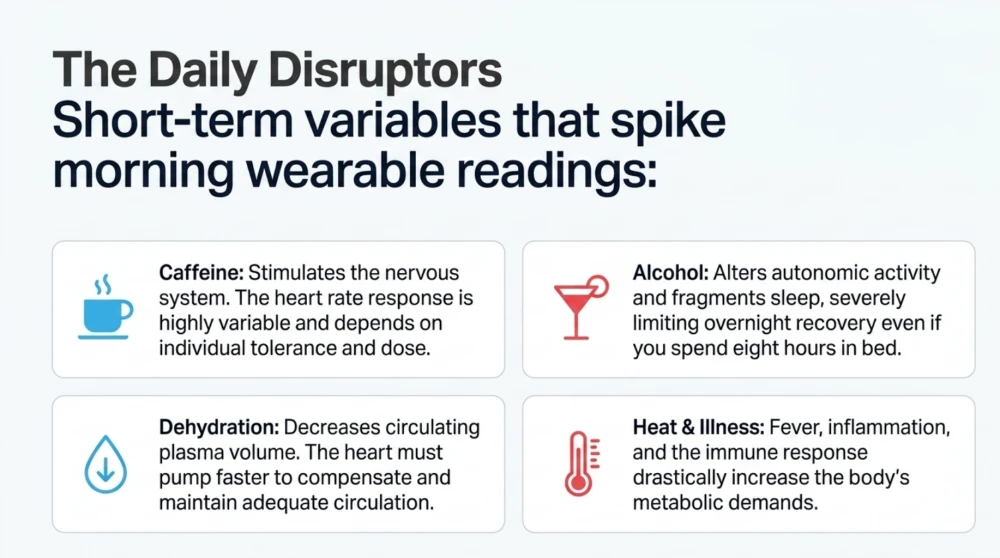
- Dehydration Can Increase Resting Heart Rate
- Can Caffeine Increase Resting Heart Rate?
- Alcohol Can Affect Resting Heart Rate and Recovery
- Resting Heart Rate and Thyroid Disorders
- Anaemia Can Make the Heart Beat Faster
- Medicines Can Change Resting Heart Rate
- Resting Heart Rate and Workout Recovery
- Does a High Resting Heart Rate Mean You Are Overtraining?
- Can Eating Too Little Increase Resting Heart Rate?
- How Accurate Are Smartwatches for Resting Heart Rate?
- Resting Heart Rate Is Different From Heart Rate Variability
- Why Your Resting Heart Rate May Be Higher Some Mornings
- Do You Need to Check Resting Heart Rate Every Day?
- What Is a Normal Resting Heart Rate?
- When Is Resting Heart Rate Considered Too High?
- When Is Resting Heart Rate Too Low?
- When Does an Abnormal Resting Heart Rate Need Urgent Attention?
- How Can You Improve Resting Heart Rate?
- Resting Heart Rate May Improve Before Major Weight Loss Occurs
- Can Weight Loss Reduce Resting Heart Rate?
- Improve Sleep if Your Resting Heart Rate Is Persistently Higher
- Stress Management Can Influence Resting Heart Rate
- Smoking and Nicotine Can Affect Resting Heart Rate
- Resting Heart Rate Is Not a Substitute for Blood Pressure
- Common Myths About Resting Heart Rate
- Myth 1: The Lower Your Resting Heart Rate, the Healthier You Are
- Myth 2: A Resting Heart Rate Under 100 Is Always Fine
- Myth 3: A High Resting Heart Rate Means You Have Heart Disease
- Myth 4: Athletes Should Always Have a Resting Heart Rate Below 60
- Myth 5: A Smartwatch Can Diagnose an Arrhythmia
- Myth 6: You Can Judge Metabolic Health From Resting Heart Rate Alone
- Myth 7: One High Morning Reading Means Something Is Wrong
- Key Takeaways About Resting Heart Rate
- References
Resting Heart Rate: What It Can Reveal About Fitness, Stress and Metabolic Health
Your resting heart rate is one of the simplest health measurements you can track. It takes only a few seconds to check, requires no laboratory test, and can sometimes provide useful clues about cardiovascular fitness, recovery, stress, sleep, illness, hydration, medication effects, and overall health.
However, a single number does not tell the whole story. A resting pulse of 58 beats per minute may be completely normal in a well-trained adult, while a similar number in someone taking certain medicines may have a different explanation. Likewise, a resting heart rate of 90 beats per minute may still fall within a conventional reference range but could deserve attention if it is persistently higher than that person’s usual baseline.
The most useful way to interpret resting heart rate is therefore not to chase an ideal number but to understand your personal pattern and the factors that can change it over time.
What Is Resting Heart Rate?
Resting heart rate is the number of times your heart beats per minute when your body is at rest and you are not exercising, emotionally stressed, or recovering from recent physical activity.
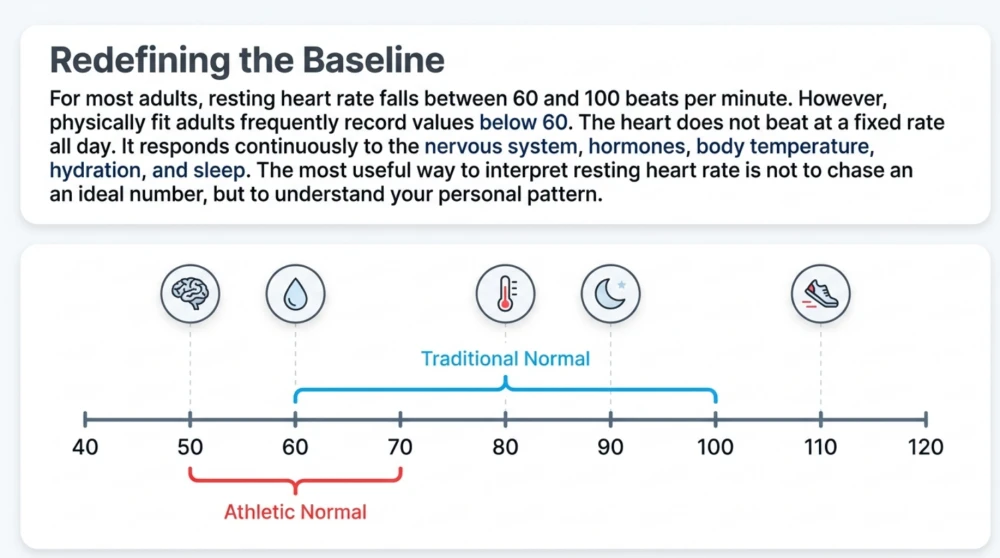
For many adults, resting heart rate commonly falls somewhere between 60 and 100 beats per minute. However, healthy physically fit adults may have values below 60, and the clinical meaning depends on symptoms, medications, age, fitness, and medical history.
The heart does not beat at a fixed rate all day. It responds continuously to the nervous system, hormones, body temperature, activity, hydration, sleep, and emotional state. This is why the same person may record different values at different times of day.
How to Measure Resting Heart Rate Properly
For a more consistent reading, measure your pulse when you are genuinely relaxed. Many people choose the morning, after waking and before caffeine, exercise, or a stressful start to the day.
You can measure the pulse at the wrist or neck, or use a validated wearable device. If you are counting manually, measure for 30 or 60 seconds and record the result.
Try to measure under similar conditions each time. A resting heart rate taken immediately after climbing stairs is not comparable with one measured after several minutes of quiet rest.
Resting Heart Rate and Fitness: Why Trained People Often Have a Lower Pulse
One of the strongest influences on resting heart rate is cardiorespiratory fitness.
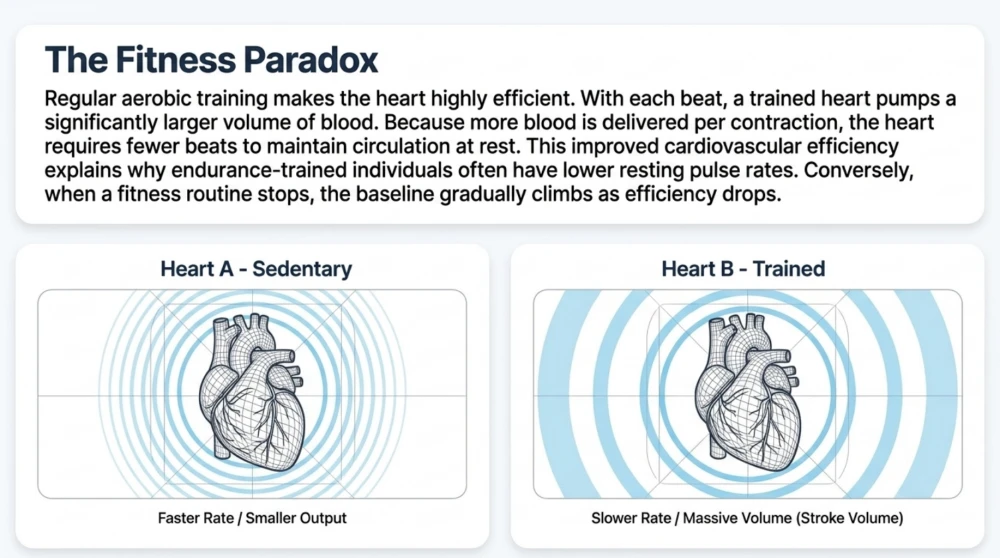
Regular aerobic training makes the heart more efficient. With each beat, a trained heart may pump a larger volume of blood. Because more blood is delivered per beat, the heart does not need to beat as frequently to maintain circulation at rest.
This is why endurance-trained individuals often have lower resting pulse rates than sedentary adults.
A lower resting heart rate in a healthy, asymptomatic, physically active person can therefore reflect improved cardiovascular efficiency.
Lower Resting Heart Rate Does Not Always Mean Better Fitness
This is an important limitation.
A low pulse can also occur because of certain medicines, electrical conduction problems in the heart, thyroid disorders, or other medical conditions.
If a low resting heart rate is accompanied by dizziness, fainting, unusual fatigue, breathlessness, chest discomfort, or exercise intolerance, it should not simply be celebrated as evidence of excellent fitness.
Context is always more important than the number alone.
Why Resting Heart Rate Can Rise When Fitness Declines
The opposite pattern can also occur. When regular exercise stops for several weeks or months, cardiorespiratory fitness may gradually decline.
The heart may need to beat more frequently to deliver the same amount of blood at rest, particularly if physical inactivity is accompanied by weight gain, poorer sleep, stress, or illness.
This means an increasing resting heart rate over time can sometimes reflect reduced fitness even when body weight has not changed dramatically.
For people tracking fitness progress, a gradual downward trend in resting pulse alongside improved exercise capacity can be a useful sign of adaptation.
Resting Heart Rate and Stress: Why Mental Pressure Can Raise Your Pulse
Your heart responds to psychological stress just as it responds to physical stress.
When you feel anxious, rushed, angry, worried, or under pressure, the sympathetic nervous system becomes more active. Stress hormones such as adrenaline increase heart rate and prepare the body for action.
This response is useful during a short-term challenge, but chronic stress can keep the nervous system in a more activated state.
As a result, some people notice that their resting heart rate remains several beats higher during particularly stressful weeks even though their exercise routine has not changed.
Resting Heart Rate Can Reflect Recovery From Stress
A single stressful meeting may temporarily increase your pulse, but the more useful information comes from the pattern.
If your usual morning resting heart rate is around 62 and it remains closer to 72 for several days during a period of poor sleep and high work pressure, the increase may indicate that your body is under greater physiological stress.
This does not diagnose anxiety or any medical condition. It simply shows that heart rate is sensitive to the balance between stress and recovery.
Why Poor Sleep Can Increase Resting Heart Rate
Sleep is one of the most important recovery periods for the cardiovascular and nervous systems.
During healthy sleep, parasympathetic activity increases and heart rate typically decreases. When sleep is short, fragmented, or poor quality, this normal recovery may be incomplete.
People who sleep badly often notice a higher morning resting heart rate, particularly after several nights of sleep restriction.
Poor sleep may also increase sympathetic nervous system activity, worsen blood pressure regulation, reduce exercise recovery, and influence appetite and glucose metabolism.
Sleep Apnoea Can Affect Resting Heart Rate and Cardiovascular Stress
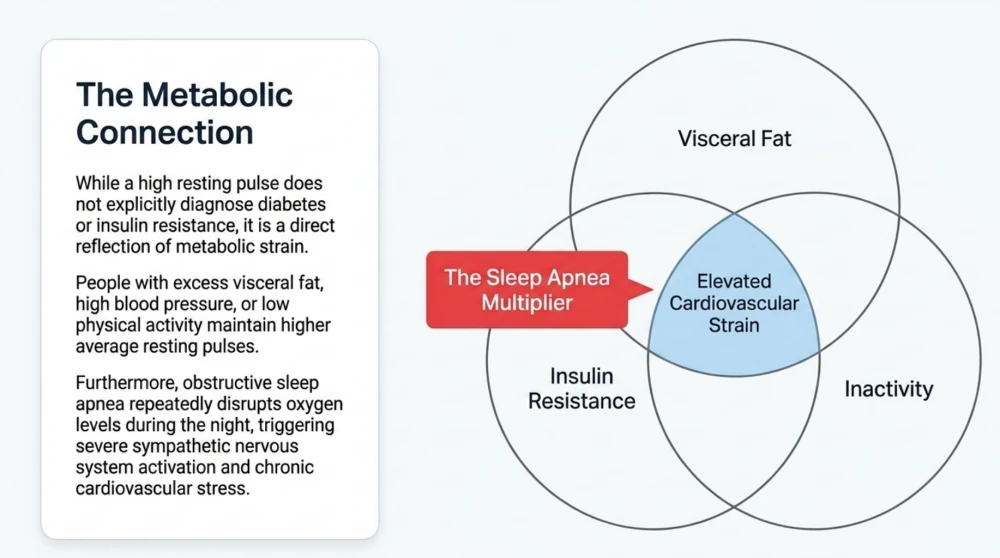
Obstructive sleep apnoea repeatedly disrupts breathing and oxygen levels during sleep. These episodes can activate the sympathetic nervous system and create repeated cardiovascular stress.
Someone with loud snoring, witnessed breathing pauses, morning headaches, daytime sleepiness, and an unusually high resting heart rate may therefore need evaluation for sleep-disordered breathing, particularly if high blood pressure or obesity is also present.
Resting pulse alone cannot diagnose sleep apnoea, but it can be one piece of the broader clinical picture.
Resting Heart Rate and Metabolic Health
Cardiovascular fitness and metabolic health are closely connected. People with obesity, insulin resistance, type 2 diabetes, fatty liver, high blood pressure, or low physical activity may have a higher average resting pulse than more metabolically healthy and physically active individuals.
This does not mean that a high resting heart rate proves someone has insulin resistance or diabetes. However, resting pulse can reflect some of the same underlying factors that influence metabolic health, including low fitness, excess visceral fat, chronic stress, poor sleep, and autonomic nervous system activity.
Why Resting Heart Rate May Rise With Visceral Fat and Inactivity
Visceral fat is metabolically active and often occurs alongside insulin resistance, higher blood pressure, poor cardiorespiratory fitness, and chronic inflammation.
At the same time, sedentary behaviour reduces cardiovascular conditioning.
These overlapping factors can contribute to a higher resting heart rate even before obvious symptoms appear.
Again, the value lies in looking at trends rather than treating one pulse measurement as a diagnosis.
Can Resting Heart Rate Predict Future Health Risk?
Large observational studies have found that a higher resting pulse is associated with increased cardiovascular and all-cause mortality risk. However, association does not mean that heart rate itself is always the cause.
A higher resting heart rate may partly reflect poorer fitness, smoking, chronic disease, autonomic imbalance, or other underlying risk factors.
This is why clinicians interpret resting pulse alongside blood pressure, symptoms, exercise capacity, medication use, ECG findings when indicated, and overall cardiovascular risk.
The Trend in Resting Heart Rate Is Often More Useful Than One Reading
Your personal baseline can be very informative.
If your resting heart rate normally stays between 58 and 64 beats per minute and suddenly remains in the mid-70s for several days, ask what has changed.
Possible explanations include:
- Poor sleep.
- Psychological stress.
- Recent illness.
- Dehydration.
- Heat exposure.
- Reduced training.
- Overreaching during exercise.
- Medication changes.
Often the cause is temporary. Persistent or unexplained changes, especially when accompanied by symptoms, deserve more attention.
Why Resting Heart Rate Can Rise During Illness
A sudden increase in resting heart rate does not necessarily mean your fitness has deteriorated. Infection and illness can temporarily increase the body's metabolic demands and activate the cardiovascular system.
Fever is a common example. As body temperature rises, heart rate often increases. Inflammation, reduced food intake, dehydration, pain, and the body's immune response can contribute as well.
This is why some people notice that their smartwatch shows an unusually high overnight or morning pulse shortly before they develop obvious symptoms of an infection.
A Higher Resting Heart Rate Can Be an Early Sign That Your Body Is Under Stress
Imagine your usual morning resting heart rate is around 60 to 65 beats per minute. Over two or three days it rises into the mid-70s despite no change in exercise.
If you then develop fever, sore throat, cough, diarrhoea, or another illness, the earlier increase becomes easier to explain.
However, heart rate is not specific enough to diagnose an infection. Many other factors can produce exactly the same change.
Dehydration Can Increase Resting Heart Rate
When you become dehydrated, circulating plasma volume can decrease. The cardiovascular system may compensate partly by increasing heart rate to maintain adequate circulation.
Mild dehydration may occur after prolonged exercise, heavy sweating, diarrhoea, vomiting, inadequate fluid intake, or spending substantial time in hot weather.
This is particularly relevant during Indian summers, when fluid losses can be significant even during ordinary daily activity.
Look Beyond Water Alone
If fluid losses have been substantial because of prolonged sweating, vomiting, or diarrhoea, replacing only plain water may not always address the entire problem. Electrolyte replacement may also be appropriate depending on the circumstances.
Conversely, there is no need for most healthy people to consume electrolyte drinks throughout the day simply because they exercise for a short period.
If your resting heart rate is unusually high after a long workout in hot weather, hydration status is one of several factors worth considering.
Can Caffeine Increase Resting Heart Rate?
Caffeine stimulates the nervous system, but its effect on heart rate varies considerably between individuals.
Some people can drink several cups of coffee without noticing a meaningful change in pulse. Others experience palpitations, tremulousness, anxiety, or a temporary increase in heart rate after a relatively modest dose.
Tolerance, dose, timing, sleep, medications, and individual sensitivity all influence the response.
Do Not Measure Resting Heart Rate Immediately After Coffee
If you want to monitor your baseline resting heart rate, measuring it under similar conditions each day provides more useful information.
A morning reading before tea, coffee, exercise, or a stressful commute is generally more comparable than measurements taken randomly throughout the day.
If palpitations repeatedly occur after high caffeine intake, reducing the dose and observing the response is reasonable.
Alcohol Can Affect Resting Heart Rate and Recovery
Alcohol can influence heart rate through several mechanisms, including changes in autonomic nervous system activity, sleep quality, hydration, and vascular function.
People using wearable devices sometimes notice a higher overnight and morning heart rate after drinking alcohol, even when they do not feel obviously unwell.
Alcohol can also fragment sleep. This means someone may spend eight hours in bed but still wake with poorer recovery and a higher resting heart rate than usual.
Your Wearable May Reveal Effects You Do Not Feel
A person may believe that two or three drinks have no effect because there is no hangover the next morning.
Yet their overnight heart rate may be higher and sleep quality poorer.
This does not mean every change recorded by a smartwatch is clinically important. But repeated patterns can help reveal how lifestyle behaviours affect individual recovery.
Resting Heart Rate and Thyroid Disorders
Thyroid hormones have important effects on cardiovascular function.
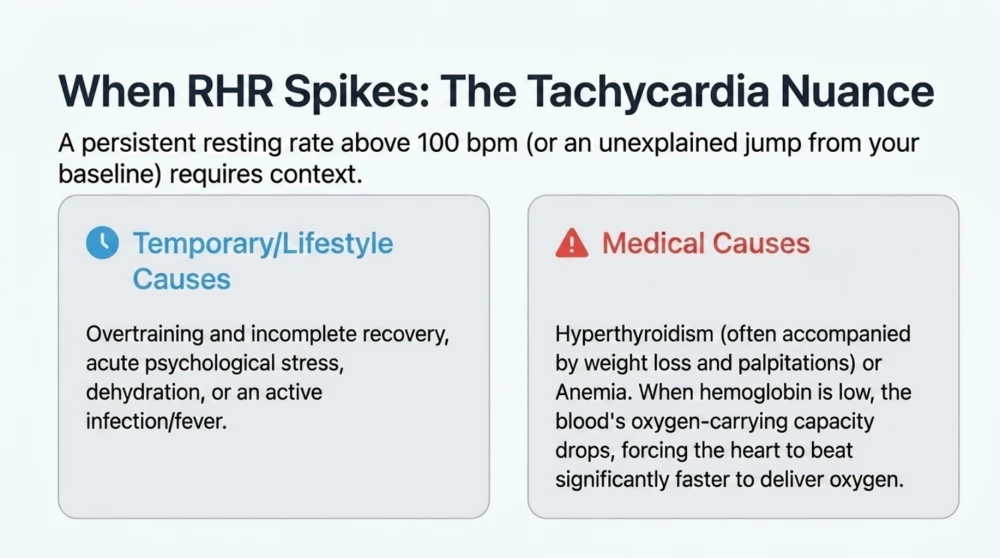
Hyperthyroidism can increase heart rate and may cause palpitations, tremor, heat intolerance, sweating, anxiety, weight loss, and increased bowel frequency.
Hypothyroidism may have the opposite effect in some people, contributing to a slower pulse along with fatigue, cold intolerance, constipation, dry skin, and other symptoms.
An Unexplained Change in Resting Heart Rate May Need Investigation
A persistent increase in resting heart rate accompanied by unexplained weight loss, tremor, heat intolerance, or palpitations should not simply be attributed to stress.
Similarly, a persistently slow pulse associated with fatigue or other symptoms deserves appropriate assessment.
Heart rate alone cannot diagnose thyroid disease, but it can provide another clue when interpreted alongside symptoms and thyroid-function testing.
Anaemia Can Make the Heart Beat Faster
Haemoglobin carries oxygen through the bloodstream. When significant anaemia is present, the blood's oxygen-carrying capacity is reduced.
The cardiovascular system may compensate by increasing cardiac output, which can include a faster heart rate.
Someone with anaemia may also experience fatigue, breathlessness during activity, weakness, dizziness, reduced exercise tolerance, or palpitations.
Do Not Assume Poor Fitness Is Always the Cause
If a previously active person suddenly finds that ordinary exercise feels much harder and their resting heart rate has increased, simply recommending more exercise may miss the problem.
Iron deficiency, blood loss, vitamin deficiencies, infection, thyroid disease, and other medical conditions may need consideration depending on the clinical history.
This is particularly relevant when the change is substantial, persistent, or accompanied by new symptoms.
Medicines Can Change Resting Heart Rate
Several commonly used medicines can influence heart rate.
Beta-blockers, for example, intentionally slow the heart rate and reduce its response to exercise. Some calcium-channel blockers can also reduce heart rate.
Other medicines, including certain decongestants, stimulants, thyroid medicines, inhalers, and some psychiatric medications, may increase heart rate in susceptible individuals.
Your Usual Heart Rate Targets May Change After Starting Medication
If you begin a medicine that affects heart rate, comparing your new numbers with your previous baseline may be misleading.
This is particularly important when using heart-rate zones during exercise.
Someone taking a beta-blocker may not achieve the heart rate predicted by a standard age-based exercise formula even when exercising appropriately.
Medication should not be stopped or adjusted simply because a wearable shows a lower or higher resting heart rate. Discuss unexpected changes with the prescribing clinician.
Resting Heart Rate and Workout Recovery
Athletes and recreational exercisers often use morning resting heart rate as one indicator of recovery.
After an unusually demanding workout, resting pulse may temporarily increase. This can reflect physical stress, incomplete recovery, dehydration, poor sleep, or a combination of these factors.
The number becomes more useful when interpreted alongside how you actually feel and perform.
A Higher Resting Heart Rate May Mean You Need More Recovery
Suppose your usual resting pulse is around 60 beats per minute. After several consecutive hard training days, it remains noticeably higher while you also experience heavy legs, poor sleep, irritability, reduced motivation, and declining exercise performance.
That pattern provides a stronger reason to reduce training intensity than the heart-rate number alone.
An easy day, additional sleep, adequate food, hydration, or temporary reduction in training load may be more useful than forcing another intense workout.
Does a High Resting Heart Rate Mean You Are Overtraining?
No.
True overtraining syndrome is more complex than one elevated pulse reading and generally involves prolonged performance impairment alongside other physiological and psychological symptoms.
Most recreational exercisers who feel exhausted after several hard sessions are more likely experiencing short-term inadequate recovery or excessive training load rather than established overtraining syndrome.
Resting Heart Rate Should Be One Part of Your Recovery Assessment
Consider several factors together:
- Your normal resting heart rate.
- Sleep duration and quality.
- Muscle soreness.
- Energy levels.
- Training performance.
- Mood and motivation.
- Hydration.
- Food and carbohydrate intake.
- Recent illness.
A consistent pattern across several indicators is more meaningful than a single abnormal number.
Can Eating Too Little Increase Resting Heart Rate?
Severe calorie restriction can create physiological stress, particularly when combined with heavy exercise.
However, the heart-rate response is not uniform. Some people undergoing prolonged energy restriction may develop a lower resting pulse, while others may experience increased heart rate under specific circumstances such as dehydration, illness, poor recovery, anxiety, or electrolyte disturbance.
Therefore, an elevated resting heart rate should not be used as a simple test for inadequate calorie intake.
Look for Other Signs of Inadequate Recovery
When intensive training is combined with insufficient food, other signs may include:
- Persistent fatigue.
- Declining exercise performance.
- Poor recovery.
- Frequent injuries.
- Sleep disturbance.
- Mood changes.
- Menstrual disturbances in women.
- Loss of strength or muscle.
These symptoms deserve attention even if resting heart rate remains within a conventional reference range.
How Accurate Are Smartwatches for Resting Heart Rate?
Modern wearable devices can be useful for monitoring trends in resting pulse, particularly when measurements are taken repeatedly under similar conditions.
Most wrist-worn devices use optical sensors that estimate heart rate from changes in blood flow beneath the skin.
They are generally more useful for observing patterns than for diagnosing heart rhythm disorders.
Do Not Treat Every Wearable Reading as a Medical Test
Movement, poor sensor contact, skin characteristics, device position, and technical limitations can produce inaccurate readings.
If your watch suddenly reports an unexpected value, check your pulse manually when possible and repeat the measurement after resting.
Persistent abnormalities or symptoms should be assessed clinically rather than relying entirely on the device.
Resting Heart Rate Is Different From Heart Rate Variability
Wearables increasingly display another measurement called heart rate variability, or HRV.
Despite the similar terminology, HRV and resting heart rate are not the same measurement.
Resting heart rate measures how many times the heart beats per minute. HRV measures variation in the time interval between consecutive heartbeats.
Both are influenced by autonomic nervous system activity, sleep, exercise, stress, illness, and recovery, but they should not be interpreted interchangeably.
Do Not Compare Your HRV With Someone Else's
HRV varies substantially between individuals and is affected by age, genetics, fitness, measurement method, and device algorithms.
As with resting heart rate, personal trends are generally more useful than competing with another person's wearable numbers.
Why Your Resting Heart Rate May Be Higher Some Mornings
A slightly higher reading on one morning is usually not a reason for alarm.
Common explanations include:
- A hard workout the previous day.
- Poor or insufficient sleep.
- Alcohol intake.
- Dehydration.
- Heat exposure.
- Psychological stress.
- Developing illness.
- Caffeine or stimulant use.
- Medication changes.
For women, hormonal changes across the menstrual cycle can also influence resting pulse.
Look at the Resting Heart Rate Trend Before Reacting
If your pulse is five or eight beats higher than usual on one morning but returns to baseline the next day, there may be little reason for concern if you feel well.
If it remains substantially above your personal baseline for several days, particularly without an obvious explanation, the change deserves more attention.
This is where tracking resting heart rate can become useful: not because every fluctuation predicts disease, but because you learn what is normal for your own body.
Do You Need to Check Resting Heart Rate Every Day?
Most people do not need to manually check their pulse every morning.
If you exercise regularly, are changing your fitness programme, or already use a wearable, observing the trend can provide useful information. But constant monitoring can become counterproductive if every small fluctuation causes anxiety.
Your resting heart rate is one health marker among many. Blood pressure, waist circumference, glucose regulation, lipid levels, cardiorespiratory fitness, strength, sleep, symptoms, and overall physical function may all provide important information about health.
Use Resting Heart Rate as a Signal, Not a Score
The objective is not to achieve the lowest possible number.
A healthy resting heart rate is one that is appropriate for your physiology, fitness, medications, and medical circumstances.
What matters most is whether an unexpected change has a reasonable explanation and whether it occurs with symptoms or other changes in health.
What Is a Normal Resting Heart Rate?
For most adults, a resting heart rate between 60 and 100 beats per minute is traditionally considered within the normal range. However, this broad range should not be interpreted as meaning that every value within it has exactly the same significance.
Age, cardiovascular fitness, medications, body temperature, hydration, sleep, emotional state, thyroid function, illness, and other factors can all influence resting pulse.
For this reason, your usual pattern may provide more useful information than comparing yourself with a single number found online.
Is a Resting Heart Rate of 50 to 60 Healthy?
It certainly can be.
Physically active adults, particularly people who regularly perform aerobic exercise, may have a resting heart rate below 60 beats per minute because the heart has become more efficient at pumping blood.
A resting pulse in the 50s in an asymptomatic, physically fit adult can therefore be entirely normal.
However, a low pulse should not automatically be interpreted as excellent fitness. Medications and certain heart, metabolic, or endocrine conditions can also slow the heart.
When Is Resting Heart Rate Considered Too High?
A resting heart rate persistently above 100 beats per minute in an adult is generally termed tachycardia. But the clinical importance depends on why the heart rate is elevated.
Exercise, fever, anxiety, dehydration, pain, anaemia, hyperthyroidism, stimulant use, medications, and cardiac rhythm disturbances can all increase heart rate.
This is why identifying the cause is more important than simply trying to lower the number.
A Resting Heart Rate Below 100 Can Still Deserve Attention
Suppose your usual resting heart rate has been around 60 to 65 beats per minute for years and it now remains around 85 to 90 without an obvious explanation.
The value is technically below the conventional tachycardia threshold, but the change from your personal baseline may still be meaningful.
It would be reasonable to consider recent illness, sleep, stress, hydration, medications, caffeine, alcohol, training load, and other symptoms rather than dismissing the change simply because the pulse remains below 100.
When Is Resting Heart Rate Too Low?
A heart rate below 60 beats per minute is commonly described as bradycardia, but this definition alone does not mean disease is present.
Many healthy athletes and physically active adults have resting rates in the 40s or 50s without symptoms.
Problems become more concerning when a slow resting heart rate is inappropriate for the person or is accompanied by symptoms suggesting inadequate cardiac output.
Symptoms Matter More Than the Number Alone
A low heart rate deserves more attention when associated with:
- Fainting or near-fainting.
- Persistent dizziness.
- Unusual weakness.
- Confusion.
- Breathlessness.
- Chest discomfort.
- Marked exercise intolerance.
Medication use also matters. Beta-blockers and some other cardiovascular medicines intentionally lower heart rate, so interpretation needs to account for treatment.
.webp)
When Does an Abnormal Resting Heart Rate Need Urgent Attention?
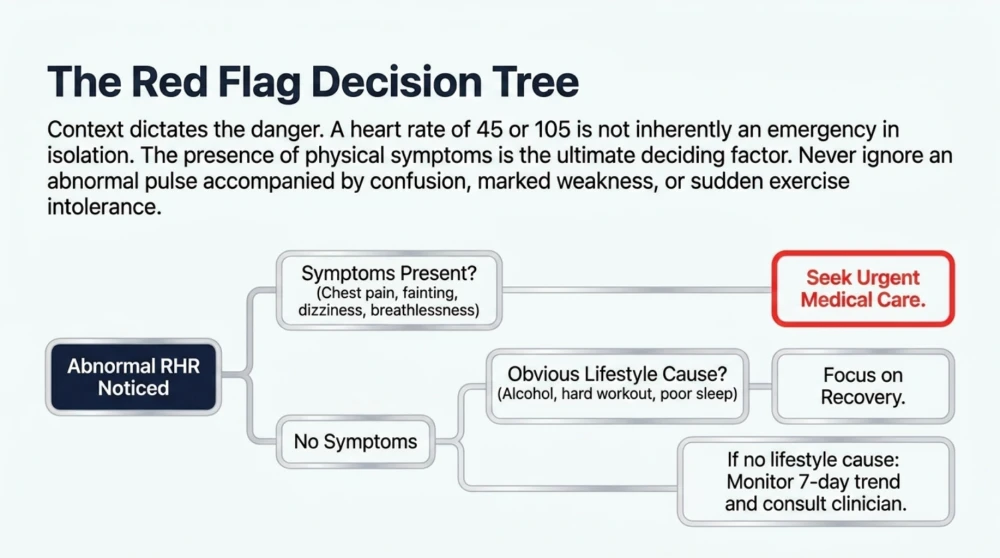
A high or low pulse becomes much more important when accompanied by significant symptoms.
Seek urgent medical assessment for an abnormal heart rate associated with symptoms such as chest pain, severe breathlessness, fainting, severe dizziness, confusion, or sudden significant weakness.
New sustained palpitations or a persistently very rapid or unusually slow pulse also deserve appropriate assessment, particularly when there is known heart disease.
An Irregular Pulse Is Different From Simply Having a Fast Pulse
Heart rhythm also matters.
A pulse can be 75 beats per minute but noticeably irregular. Conversely, a pulse can be 105 beats per minute while maintaining a regular rhythm.
An irregular pulse can occur for many reasons, ranging from premature beats to arrhythmias such as atrial fibrillation.
A smartwatch may sometimes flag an irregular rhythm, but a wearable notification is not the same as a medical diagnosis. An ECG or other rhythm assessment may be needed when clinically appropriate.
How Can You Improve Resting Heart Rate?
If a higher resting heart rate is related to poor cardiovascular conditioning or lifestyle factors, improving overall health can often improve the trend.
The goal should not be to force the pulse downward. Instead, work on the factors that influence cardiovascular efficiency and autonomic balance.
1. Build Aerobic Fitness
Regular aerobic activity is one of the most effective ways to improve cardiorespiratory fitness.
Depending on health status and preference, this can include:
- Brisk walking.
- Cycling.
- Swimming.
- Jogging.
- Dance-based exercise.
- Other sustained activities that appropriately raise heart rate.
As fitness improves, stroke volume can increase and the heart may need fewer beats to maintain circulation at rest.
2. Add Resistance Training
Strength training may not lower resting heart rate in exactly the same way as endurance exercise, but it provides important metabolic and functional benefits.
Preserving and building muscle improves strength, insulin sensitivity, physical function, and body composition.
A balanced programme that combines aerobic activity with resistance training is generally more useful for long-term health than focusing on one form of exercise alone.
Resting Heart Rate May Improve Before Major Weight Loss Occurs
Exercise benefits are not dependent on achieving an ideal body weight.
An adult with obesity may improve cardiorespiratory fitness, blood pressure, glucose regulation, and exercise capacity even while body weight remains above the conventional healthy BMI range.
A gradually decreasing resting heart rate alongside improved walking speed or exercise tolerance may be one sign of improved cardiovascular conditioning.
Fitness and Body Weight Are Not the Same Thing
This distinction is important.
Two people with exactly the same body weight can have very different cardiorespiratory fitness, muscle mass, visceral fat, blood pressure, glucose regulation, and resting pulse.
Weight is useful information, but it should not be treated as the only measure of metabolic health.
Can Weight Loss Reduce Resting Heart Rate?
When excess body fat is present, sustainable weight reduction may improve several factors that influence cardiovascular workload, including blood pressure, sleep apnoea, insulin resistance, physical mobility, and cardiorespiratory fitness.
However, the response varies, and weight loss should not be pursued simply to reach a particular heart-rate number.
Exercise, sleep improvement, reduced alcohol intake, smoking cessation, stress management, and treatment of underlying medical conditions can all influence resting heart rate independently of weight.
Improve Sleep if Your Resting Heart Rate Is Persistently Higher
People often focus on exercise while ignoring recovery.
If you repeatedly sleep five hours per night, train intensely, work under significant stress, and depend heavily on caffeine, adding another workout may not be the most useful intervention.
Improving sleep duration and consistency can support cardiovascular recovery and autonomic balance.
Do Not Ignore Snoring and Daytime Sleepiness
Loud habitual snoring, witnessed pauses in breathing, unrefreshing sleep, morning headaches, daytime sleepiness, resistant hypertension, and obesity can suggest obstructive sleep apnoea.
Sleep apnoea creates repeated sympathetic activation during the night and is associated with substantial cardiovascular and metabolic consequences.
An elevated resting heart rate cannot diagnose sleep apnoea, but sleep symptoms should not be ignored simply because someone appears to spend enough hours in bed.
Stress Management Can Influence Resting Heart Rate
Stress cannot always be removed from daily life. The aim is to improve how consistently the nervous system remains activated and how effectively recovery occurs.
Regular exercise, adequate sleep, relaxation techniques, breathing exercises, time outdoors, social connection, and appropriate psychological support can all contribute to stress management.
Some people notice their resting heart rate falls when a prolonged period of psychological stress resolves, even without a major change in body weight.
Do Not Try to Control Every Heartbeat
Constantly checking a smartwatch can itself increase anxiety.
If every temporary increase in pulse triggers repeated measurements and internet searches, monitoring may become counterproductive.
Use heart-rate data to identify trends rather than treating normal physiological variation as a problem that needs correction.
Smoking and Nicotine Can Affect Resting Heart Rate
Nicotine stimulates the sympathetic nervous system and can increase heart rate and blood pressure.
Smoking also substantially increases cardiovascular risk through mechanisms that extend far beyond its effect on pulse.
Smoking cessation is therefore far more important for cardiovascular health than attempting to improve resting heart rate while continuing tobacco exposure.
Resting Heart Rate Is Not a Substitute for Blood Pressure
Heart rate and blood pressure are related aspects of cardiovascular function, but they measure different things.
A person can have a normal resting pulse and significant hypertension. Another person may have a relatively high pulse while blood pressure remains normal.
Do not assume that a resting heart rate of 60 means your blood pressure must also be healthy.
Resting Heart Rate Is Also Not a Diabetes Test
Similarly, a high resting pulse does not diagnose insulin resistance, prediabetes, or diabetes.
These conditions require appropriate clinical and laboratory assessment.
Resting pulse can provide contextual information about fitness and metabolic health, but it should never replace blood glucose, HbA1c, blood pressure, lipid measurements, or other indicated investigations.
Common Myths About Resting Heart Rate
Myth 1: The Lower Your Resting Heart Rate, the Healthier You Are
Not always. A lower rate can reflect good cardiovascular fitness, but medications, electrical conduction abnormalities, and medical conditions can also cause bradycardia.
Myth 2: A Resting Heart Rate Under 100 Is Always Fine
Not necessarily. A persistent unexplained rise from your normal baseline can still deserve attention, particularly when accompanied by symptoms.
Myth 3: A High Resting Heart Rate Means You Have Heart Disease
No. Stress, fever, dehydration, anaemia, hyperthyroidism, caffeine, medications, poor sleep, and reduced fitness can all increase heart rate.
Myth 4: Athletes Should Always Have a Resting Heart Rate Below 60
No. Training responses vary, and there is no requirement for every fit person to achieve a particular resting pulse.
Myth 5: A Smartwatch Can Diagnose an Arrhythmia
Wearables can provide useful alerts and recordings, but abnormal findings may require confirmation with an ECG or appropriate medical evaluation.
Myth 6: You Can Judge Metabolic Health From Resting Heart Rate Alone
No. Metabolic health involves glucose regulation, blood pressure, lipid levels, body composition, liver health, physical fitness, sleep, and several other factors.
Myth 7: One High Morning Reading Means Something Is Wrong
Usually not. A hard workout, poor sleep, dehydration, alcohol, stress, heat, or developing illness can temporarily raise resting heart rate.
Key Takeaways About Resting Heart Rate
- Resting heart rate is a simple marker that can provide useful information about cardiovascular fitness, stress, recovery, illness, and general health.
- For most adults, 60 to 100 beats per minute is the conventional resting range, but individual context matters.
- A resting pulse below 60 can be normal in physically fit, asymptomatic adults.
- Regular aerobic exercise can lower resting pulse as cardiovascular efficiency improves.
- Poor sleep, psychological stress, fever, dehydration, alcohol, anaemia, thyroid disorders, and medications can change resting pulse.
- People with metabolic disorders may have a higher resting pulse on average, but heart rate cannot diagnose insulin resistance, diabetes, or fatty liver.
- Your personal trend is often more informative than one isolated reading.
- Wearables are useful for observing patterns but should not replace clinical assessment when readings are abnormal or symptoms are present.
- Chest pain, fainting, severe breathlessness, significant dizziness, or a markedly abnormal pulse requires prompt medical attention.
- The objective is not to achieve the lowest possible resting heart rate. The goal is better cardiovascular fitness and overall health.
References
- American Heart Association. All About Heart Rate (Pulse). Current clinical information accessed 2026.
- European Society of Cardiology. Clinical guidance and cardiovascular prevention recommendations. Current guidance accessed 2026.
- World Health Organization. Guidelines on Physical Activity and Sedentary Behaviour. Current guidance accessed 2026.
- American College of Sports Medicine. Guidance on exercise prescription, cardiorespiratory fitness and heart-rate assessment. Current guidance accessed 2026.
- American Academy of Sleep Medicine. Clinical information on obstructive sleep apnoea and cardiovascular health. Current guidance accessed 2026.
Written by Dr. Pankaj Kumar, General & Lifestyle Physician, Dwarka, New Delhi