










- 18th August 2026
Table of Contents
- Why Can Hair Loss During Weight Loss Happen?
- Cause 1: Rapid Weight Loss Can Trigger Telogen Effluvium
- Cause 2: Inadequate Protein Intake During Weight Loss
- Hair Loss During Weight Loss May Signal That the Diet Is Too Restrictive
- Protein Should Be Distributed Across the Day
- Cause 3: Iron Deficiency Can Contribute to Hair Shedding
- Normal Haemoglobin Does Not Always Mean Iron Stores Are Optimal
- Do Not Take Iron Just Because Your Hair Is Falling
- Cause 4: Zinc and Other Micronutrient Deficiencies
- Cause 5: Vitamin D Deficiency May Coexist With Hair Loss
- Cause 6: Thyroid Problems Can Be Mistaken for Diet-Related Hair Loss
- Cause 7: Weight-Loss Medicines, Appetite Suppression and Nutritional Intake
- Hair Loss After Weight Loss Is Often Telogen Effluvium
- Seven Causes of Hair Loss During Weight Loss at a Glance
- Is Hair Loss During Weight Loss Always Telogen Effluvium?
- How Is Telogen Effluvium Different From Pattern Hair Loss?
- When Does Hair Loss Suggest Something Other Than Telogen Effluvium?
- Which Blood Tests Are Useful for Hair Loss During Weight Loss?
- Ferritin and Hair Loss: What Does the Number Really Mean?
- Can Vitamin B12 Deficiency Cause Hair Loss?
- Vegetarian Diets and Hair Loss During Weight Loss
- How Much Protein Do You Need to Prevent Hair Loss During Weight Loss?
- GLP-1 Medicines and Hair Loss: What Does the Latest Evidence Show?
- Should You Stop Semaglutide or Tirzepatide Because of Hair Loss?
- Does Biotin Help Hair Loss During Weight Loss?
- Can Too Many Hair Supplements Actually Cause Problems?
- What Should You Do First When Hair Loss During Weight Loss Begins?
- When Should Hair Loss Be Assessed by a Dermatologist?
- How to Reduce Hair Loss During Weight Loss Without Stopping Progress
- Protein Is a Priority When Hair Loss During Weight Loss Develops
- Indian Protein Choices for Hair Loss During Weight Loss
- Protein Supplements Can Help, but They Are Not Mandatory
- Iron-Rich Foods Matter When Hair Loss During Weight Loss Is Linked to Deficiency
- Do Not Treat Hair Loss During Weight Loss With Random Supplements
- Resistance Training Helps Protect Muscle During Weight Loss
- What Actually Helps Telogen Effluvium Recover?
- Should You Use Minoxidil for Hair Loss During Weight Loss?
- Does Hair Oil Stop Hair Loss During Weight Loss?
- Be Gentle With Hair While Shedding Is Active
- Common Myths About Hair Loss During Weight Loss
- Myth 1: Hair Loss Means the Weight-Loss Programme Is Working
- Myth 2: Taking Biotin Will Fix Every Case
- Myth 3: Hair Loss Means You Need to Stop Losing Weight Completely
- Myth 4: Cutting Out Carbohydrates Will Stop Hair Loss
- Myth 5: Every Person With Hair Loss Needs Iron
- Myth 6: Hair Loss on a GLP-1 Medicine Proves the Drug Is Damaging Hair
- Myth 7: Telogen Effluvium Causes Permanent Baldness
- When Hair Loss During Weight Loss Needs Medical Evaluation
- Key Takeaways About Hair Loss During Weight Loss
- References
Hair Loss During Rapid Weight Loss: 7 Nutritional and Medical Causes
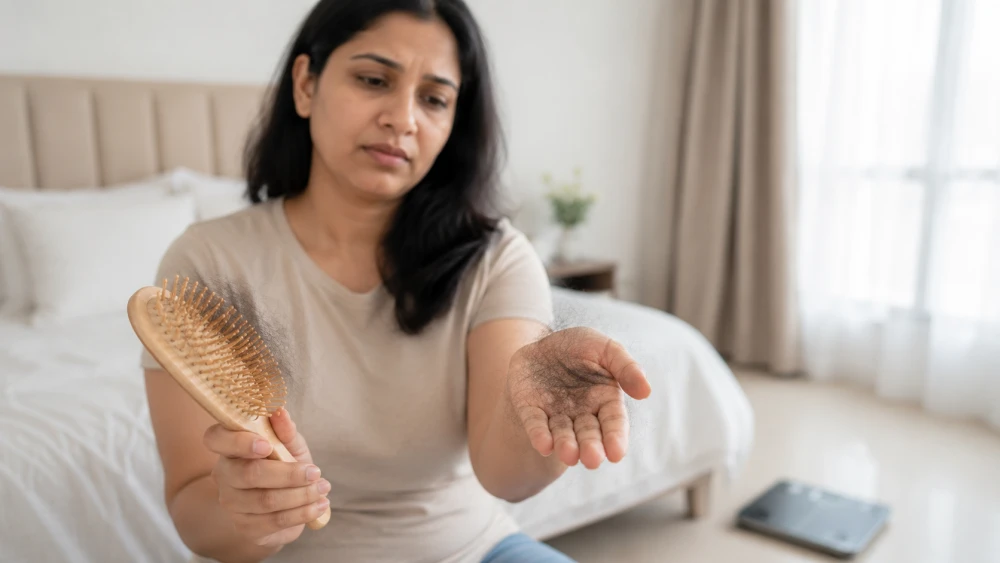
Losing weight can improve blood sugar, blood pressure, fatty liver, mobility, and overall metabolic health when excess body fat is present. But sometimes an unexpected problem appears a few months into the process: more hair in the shower, on the pillow, or in the hairbrush.
Hair loss during weight loss can be frightening, particularly when the weight-loss programme otherwise seems to be working well.
The first reaction is often to blame the diet, a weight-loss medicine, or a vitamin deficiency. Sometimes one of these is contributing. But hair shedding during weight reduction has several possible explanations, and taking a random hair supplement without identifying the cause may not solve the problem.
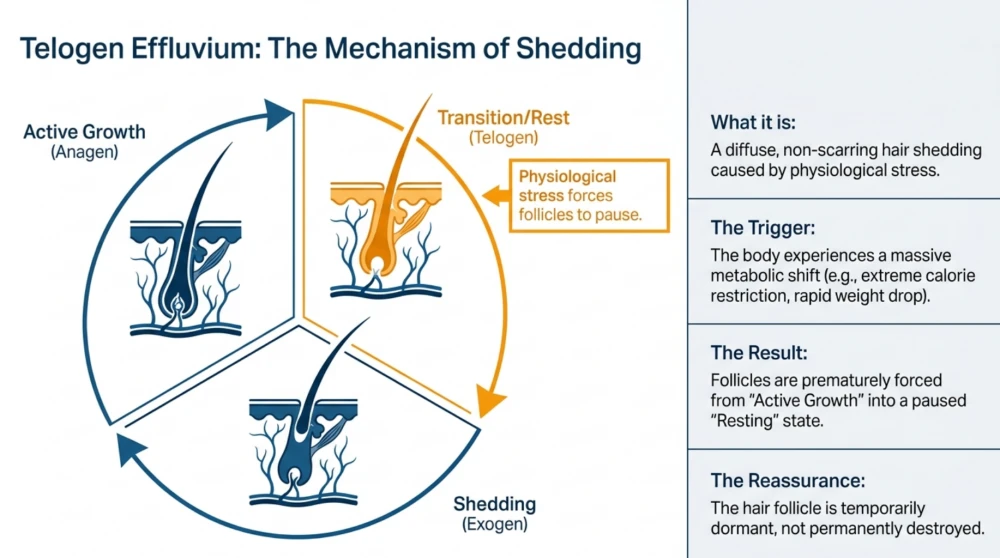
One of the most common explanations is telogen effluvium. This is a form of diffuse, non-scarring hair shedding that can occur after significant physiological stress, including substantial weight loss, severe calorie restriction, illness, surgery, or inadequate protein intake. Importantly, the shedding may not begin immediately. It commonly becomes noticeable several weeks to a few months after the triggering event.
Why Can Hair Loss During Weight Loss Happen?
Hair follicles continuously move through phases of growth, transition, rest, and shedding. Most scalp hairs are normally in the active growth phase.
When the body experiences a significant physiological stress, a larger-than-usual number of follicles can shift toward the resting phase. Those hairs are eventually shed, producing the sudden increase in hair fall known as telogen effluvium.
This helps explain an apparently confusing situation: someone may begin an aggressive diet in January but notice significant hair shedding only in March or April.
By then, the person may have forgotten how restrictive the first few weeks of the diet actually were.
Hair Loss During Weight Loss Is Often Delayed
This delay is clinically useful because it helps identify potential triggers.
If hair shedding begins today, it is worth looking back over the previous two to four months and asking:
- Was there rapid weight loss?
- Was calorie intake extremely low?
- Was protein intake inadequate?
- Was there a significant fever or infection?
- Was there surgery or hospitalisation?
- Was a new medicine started?
- Was there major psychological or physical stress?
The American Academy of Dermatology specifically identifies substantial weight loss as a recognised trigger for excessive hair shedding.
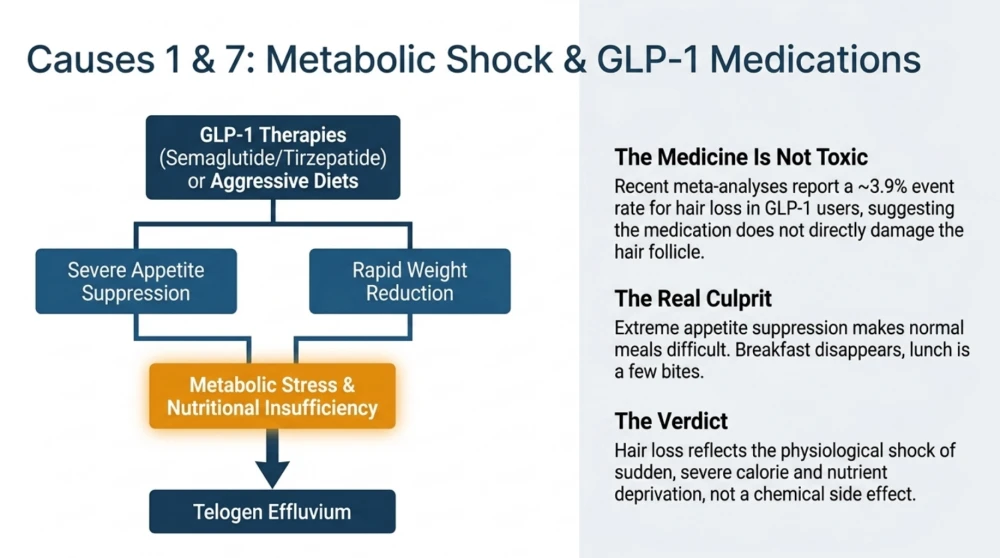
Cause 1: Rapid Weight Loss Can Trigger Telogen Effluvium
The first cause is the rate and magnitude of weight loss itself.
The body does not evaluate a diet according to whether it is fashionable, medically supervised, ketogenic, intermittent fasting, or labelled as a “detox.” It responds to the physiological consequences of the energy deficit.
If calorie intake falls dramatically and body weight decreases rapidly, the body experiences a substantial metabolic change. In susceptible individuals, this can disturb the normal hair-growth cycle and trigger telogen effluvium.
A 2024 retrospective study specifically examining weight-loss-associated telogen effluvium supports rapid weight reduction as a clinically relevant trigger for diffuse hair shedding.
Faster Weight Loss Is Not Always Better
People understandably enjoy seeing the weighing scale fall quickly. Losing several kilograms within a short period can feel like evidence that the programme is highly effective.
But the quality of weight loss matters.
If rapid weight reduction occurs alongside severe calorie restriction, muscle loss, weakness, inadequate protein intake, or hair loss during weight loss, the strategy deserves reassessment.
The objective should usually be sustainable reduction of excess body fat while preserving nutritional adequacy, muscle, physical function, and long-term adherence.
Cause 2: Inadequate Protein Intake During Weight Loss
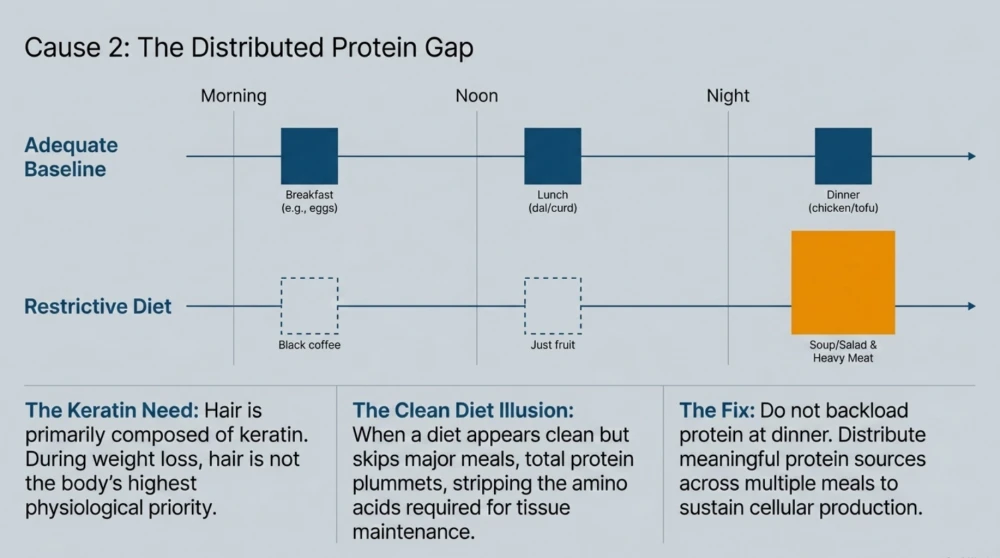
Hair is composed largely of keratin, a protein. Although hair is not the body's highest physiological priority, adequate dietary protein provides amino acids required for normal tissue maintenance and hair production.
During weight loss, protein becomes especially important because total food intake is already reduced.
A person may cut calories by eliminating breakfast, reducing lunch to fruit, and eating soup or salad for dinner. The diet may appear “clean,” but total protein intake can become surprisingly low.
Low protein intake is a recognised nutritional trigger for telogen effluvium and excessive hair shedding.
Hair Loss During Weight Loss May Signal That the Diet Is Too Restrictive
Consider someone who previously consumed eggs or paneer at breakfast, dal and curd at lunch, and another protein source at dinner.
After starting a highly restrictive diet, breakfast becomes black coffee, lunch becomes fruit, and dinner becomes vegetables.
Calories have fallen dramatically, but so has protein.
This pattern can also accelerate muscle loss. Therefore, hair shedding may not be the only nutritional consequence of an excessively restrictive programme.
Protein Should Be Distributed Across the Day
Rather than attempting to consume almost all daily protein at dinner, it is usually more practical to include a meaningful protein source at multiple meals.
Depending on dietary preference, examples include:
- Eggs.
- Curd or Greek yogurt.
- Paneer.
- Tofu.
- Soy foods.
- Dal and legumes.
- Fish.
- Chicken.
- Milk or an appropriate protein supplement when needed.
The appropriate quantity depends on body size, age, physical activity, kidney function, total calorie intake, and medical conditions. Simply recommending the same very-high-protein target to everyone is not appropriate.
Cause 3: Iron Deficiency Can Contribute to Hair Shedding
Iron deficiency is another important consideration when evaluating hair loss during weight loss.
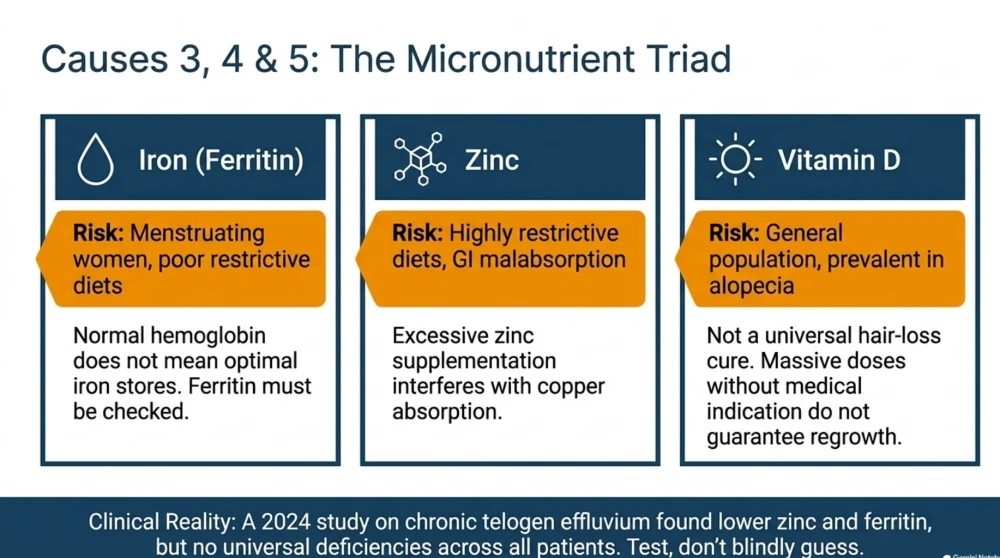
Iron stores may already be low before a person begins dieting, particularly in menstruating women, people with heavy menstrual bleeding, those following poorly planned restrictive diets, or individuals with gastrointestinal blood loss or impaired absorption.
Once food intake decreases, an existing marginal deficiency may become more apparent.
Recent evidence continues to support an association between lower ferritin and telogen effluvium, although the relationship is not sufficiently simple to justify giving iron supplements to everyone with hair loss. A 2026 systematic review and meta-analysis reported lower ferritin levels among patients with telogen effluvium compared with controls.
Normal Haemoglobin Does Not Always Mean Iron Stores Are Optimal
Haemoglobin and ferritin measure different things.
Someone can have haemoglobin within the laboratory reference range while iron stores are already reduced. This is why ferritin may be considered when iron deficiency is clinically suspected.
However, ferritin is also an acute-phase reactant and can rise with inflammation, infection, liver disease, and other conditions. The result therefore needs to be interpreted in clinical context rather than according to a single internet cutoff.
Do Not Take Iron Just Because Your Hair Is Falling
This is an important practical point.
Iron supplementation is useful when iron deficiency is present, but taking unnecessary iron is not a harmless strategy. Excess supplementation can cause gastrointestinal adverse effects and, in inappropriate circumstances, iron overload.
The cause of iron deficiency also matters. Repeatedly replacing iron without asking why it is low can miss heavy menstrual bleeding, gastrointestinal blood loss, malabsorption, or another underlying problem.
Cause 4: Zinc and Other Micronutrient Deficiencies
Zinc plays roles in cell division, protein synthesis, immune function, and normal hair-follicle biology. Deficiency can occur with highly restrictive diets, malabsorption, gastrointestinal disease, or inadequate dietary intake.
A 2024 case-control study investigating multiple biochemical markers in chronic telogen effluvium found significantly lower zinc levels in affected patients than controls. However, the same study did not find universal deficiencies across all the vitamins and minerals tested, reinforcing an important point: not every patient with hair shedding has multiple nutritional deficiencies.
Therefore, hair loss during weight loss should not automatically trigger a long list of supplements.
More Zinc Is Not Necessarily Better
Excessive zinc supplementation can interfere with copper absorption and create additional nutritional problems.
The sensible approach is to maintain a varied diet and investigate deficiency when history, symptoms, dietary pattern, or laboratory findings make it plausible.
Cause 5: Vitamin D Deficiency May Coexist With Hair Loss
Vitamin D deficiency is common, including among people who have never experienced hair loss. This makes interpretation difficult.
Several studies have nevertheless reported lower vitamin D levels or a higher prevalence of deficiency in people with different forms of non-scarring alopecia.
A 2024 systematic review and meta-analysis found that vitamin D deficiency was common among patients with several alopecia disorders. For telogen effluvium specifically, vitamin D levels were lower on average, although the evidence was heterogeneous and does not prove that vitamin D deficiency is the direct cause of every case of telogen effluvium.
Vitamin D Is Not a Universal Hair-Loss Treatment
This distinction matters because supplements are often marketed as though correcting vitamin D will automatically restore hair growth.
If someone is genuinely vitamin D deficient, correcting the deficiency is appropriate for general health. But taking large doses without testing or medical indication is not an evidence-based treatment for every case of hair loss during weight loss.
Cause 6: Thyroid Problems Can Be Mistaken for Diet-Related Hair Loss
Not every episode of hair shedding that occurs during weight loss is caused by the weight-loss programme.
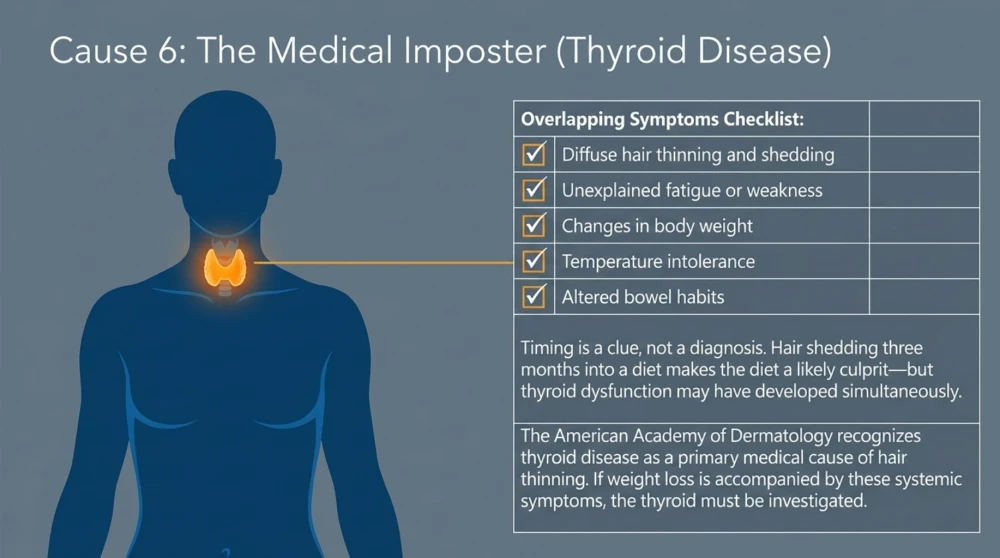
Thyroid disease can cause diffuse hair thinning and may produce other symptoms such as fatigue, changes in body weight, altered bowel habits, temperature intolerance, menstrual changes, or changes in skin texture.
The American Academy of Dermatology recognises thyroid disease as an important medical cause of hair thinning and shedding.
Hair Loss During Weight Loss Should Not Automatically Be Blamed on the Diet
Imagine someone who begins a weight-loss programme and develops hair shedding three months later.
It is tempting to assume the diet caused it.
But the person may also have developed thyroid dysfunction, iron deficiency, a recent infection, androgenetic alopecia, or another condition during the same period.
Timing provides clues, but it does not establish the diagnosis.
Cause 7: Weight-Loss Medicines, Appetite Suppression and Nutritional Intake
Hair loss has received increasing attention with the widespread use of GLP-1-based medicines such as semaglutide and tirzepatide.
The relationship needs careful interpretation.
A 2026 systematic review examining GLP-1 therapies and hair loss concluded that the available evidence suggests a multifactorial relationship. Rapid weight loss, substantial calorie restriction, nutritional insufficiency, and metabolic stress are plausible contributors, rather than assuming a direct toxic effect of the medicine on the hair follicle in every case.
GLP-1 Medicines Can Indirectly Affect Nutrition
For some people, appetite suppression becomes so strong that normal meals become difficult.
Breakfast may disappear completely. Lunch becomes a few bites. Protein-rich foods may feel difficult to tolerate. Persistent nausea or early fullness can reduce total food intake even further.
Under these circumstances, hair loss during weight loss may reflect the combined effects of rapid weight reduction, low calorie intake, inadequate protein, and possible micronutrient insufficiency.
The answer is not necessarily to stop an effective medicine immediately. Instead, the rate of weight loss, medication dose, dietary intake, protein adequacy, symptoms, and potential alternative causes should be reviewed with the prescribing clinician.
Hair Loss After Weight Loss Is Often Telogen Effluvium
One reassuring feature of acute telogen effluvium is that it is generally temporary once the triggering factor has resolved.
Unlike scarring forms of alopecia, the hair follicle is not permanently destroyed.
However, recovery is slow because hair follows a biological growth cycle. Even after nutrition improves or weight stabilises, shedding may take time to settle, and visible restoration of hair density takes longer still.
Do Not Expect Hair Shedding to Stop Overnight
If rapid weight loss occurred several months earlier, correcting the trigger today does not instantly return every follicle to its previous growth phase.
Patience is therefore important.
At the same time, persistent shedding, patchy hair loss, scalp inflammation, widening of the central part, or progressive patterned thinning should not simply be labelled as telogen effluvium. These features may indicate another type of hair disorder that deserves dermatological assessment.
Seven Causes of Hair Loss During Weight Loss at a Glance
- 1. Rapid weight loss and metabolic stress triggering telogen effluvium.
- 2. Inadequate protein intake during excessive calorie restriction.
- 3. Iron deficiency or depleted iron stores.
- 4. Zinc or other relevant micronutrient deficiencies in susceptible individuals.
- 5. Vitamin D deficiency occurring alongside hair-loss disorders.
- 6. Thyroid disease or another medical condition coinciding with weight loss.
- 7. Severe appetite suppression during weight-loss treatment, including GLP-1 therapy, leading to rapid weight loss or inadequate nutritional intake.
The important message is that hair loss during weight loss is not a diagnosis by itself. The pattern of hair loss, rate of weight reduction, dietary intake, medical history, medicines, and associated symptoms determine what should be investigated next.
Is Hair Loss During Weight Loss Always Telogen Effluvium?
No. Telogen effluvium is an important cause of hair loss during weight loss, particularly after rapid or substantial weight reduction, but it is not the only possibility.
This distinction matters because someone may already have early androgenetic alopecia, thyroid disease, iron deficiency, alopecia areata, or another hair disorder before starting a weight-loss programme. Rapid weight loss may then coincide with or worsen the visibility of an existing problem.
Recent research on weight-loss-associated telogen effluvium supports substantial weight reduction as a recognisable trigger for diffuse shedding. However, diagnosis still depends on the pattern, timing, history, scalp examination, and exclusion of other relevant causes.
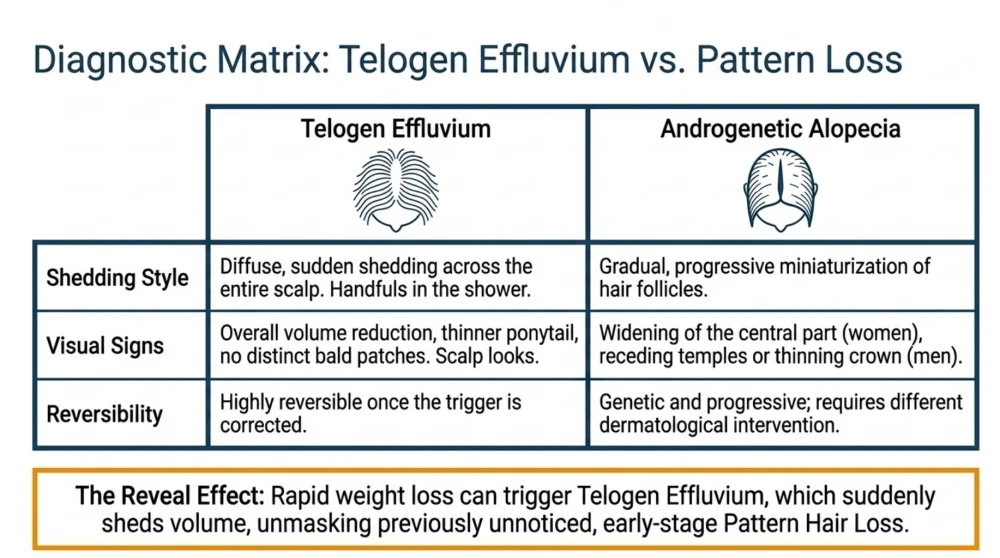
What Does Telogen Effluvium Usually Look Like?
Telogen effluvium typically causes diffuse shedding rather than one completely bald patch.
People often notice:
- More hair coming out during shampooing.
- Hair collecting on the pillow or floor.
- More strands in the comb or hairbrush.
- A general reduction in hair volume.
- A thinner ponytail.
- Increased scalp visibility when shedding is substantial.
The scalp itself usually looks relatively normal without significant scarring or inflammation.
Importantly, hair loss during weight loss caused by telogen effluvium often becomes noticeable several weeks to a few months after the nutritional or physiological stress rather than immediately.
How Is Telogen Effluvium Different From Pattern Hair Loss?
Androgenetic alopecia—commonly called male-pattern or female-pattern hair loss—behaves differently.
Rather than suddenly losing large numbers of hairs across the entire scalp, pattern hair loss usually develops gradually because genetically susceptible hair follicles become progressively smaller.
In women, this may appear as widening of the central part or reduced density over the top of the scalp. In men, recession around the temples and thinning over the crown are common patterns.
Hair Loss During Weight Loss Can Reveal Existing Pattern Hair Loss
The two conditions can occur together.
Someone with mild androgenetic alopecia may not notice significant thinning until an episode of telogen effluvium suddenly reduces overall hair density.
Once the excessive shedding settles, some hair density may recover, but the underlying pattern hair loss may remain visible.
This is one reason persistent hair loss during weight loss should not automatically be treated with vitamins without examining the scalp and considering the pattern of hair loss.
When Does Hair Loss Suggest Something Other Than Telogen Effluvium?
Certain features should prompt consideration of other diagnoses.
These include:
- Clearly defined bald patches.
- Progressive widening of the central part.
- Receding hairline.
- Scalp redness or significant scaling.
- Scalp pain or marked itching.
- Broken hairs rather than shedding from the root.
- Loss of eyebrows or eyelashes.
- Signs of scarring on the scalp.
These findings do not necessarily indicate something serious, but they make a simple diagnosis of weight-loss-induced telogen effluvium less certain.
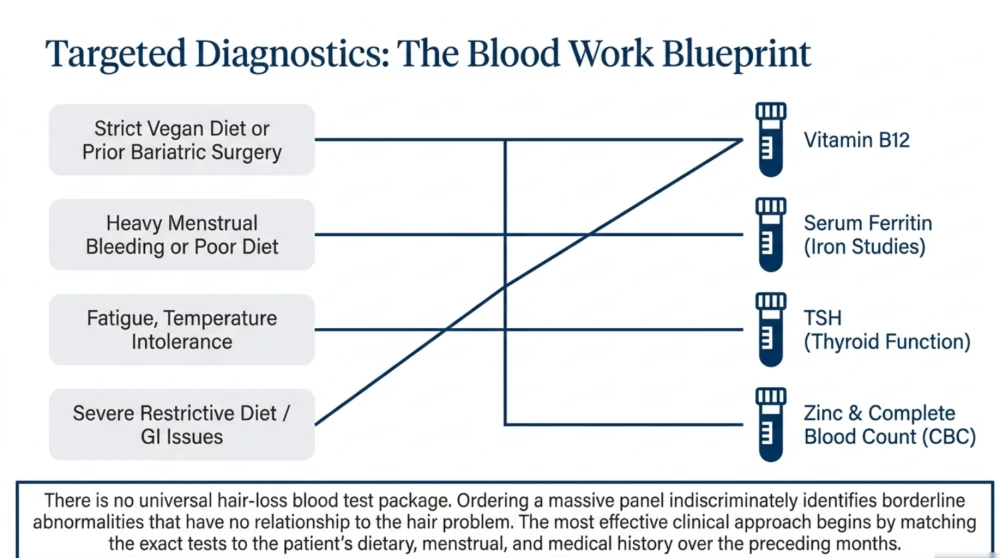
Which Blood Tests Are Useful for Hair Loss During Weight Loss?
There is no universal “hair-loss blood test package” that every patient requires.
The appropriate investigations should be guided by the medical history, diet, menstrual history, symptoms, examination findings, rate of weight loss, medications, and suspected nutritional deficiencies.
Depending on the clinical situation, investigations may include:
- Complete blood count.
- Serum ferritin and other iron studies when indicated.
- TSH, with additional thyroid testing where appropriate.
- Vitamin B12 in people at risk of deficiency.
- Vitamin D when clinically indicated.
- Zinc in selected patients with restrictive diets or other risk factors.
- Additional investigations when another medical disorder is suspected.
A 2024 study that measured haemoglobin, ferritin, vitamin B12, vitamin D, thyroid function, zinc, copper, biotin, and selenium in women with chronic telogen effluvium found significantly lower zinc levels but did not find deficiencies across all the nutrients tested. This reinforces the value of individualised testing rather than ordering or supplementing everything indiscriminately.
Do You Need Every Vitamin Test for Hair Loss During Weight Loss?
Usually not.
Ordering a very large panel simply because someone reports hair loss during weight loss can identify borderline abnormalities that may have little relationship to the actual hair problem.
A better clinical approach begins with asking what changed during the months before shedding started.
Was weight loss unusually rapid? Was protein intake adequate? Were entire food groups eliminated? Were menstrual periods heavy? Was there a recent illness? Is the patient taking a GLP-1 medicine? Are there symptoms suggesting thyroid disease?
The answers help determine which investigations are actually useful.
Ferritin and Hair Loss: What Does the Number Really Mean?
Ferritin is frequently discussed in online hair-loss communities, sometimes with claims that everyone needs to reach a particular “optimal” ferritin level before hair can grow.
The reality is more complicated.
Ferritin reflects iron stores, but interpretation depends on the clinical situation. Iron deficiency is an important and treatable cause of hair shedding, particularly when dietary intake is inadequate or there is ongoing blood loss.
However, ferritin is also influenced by inflammation, infection, obesity, and liver disease. A single number therefore needs clinical interpretation.
Find Out Why Iron Is Low
If iron deficiency is confirmed, correcting it is important. But treatment should not stop with prescribing an iron tablet.
The underlying reason may include:
- Heavy menstrual bleeding.
- Inadequate dietary iron.
- Gastrointestinal blood loss.
- Malabsorption.
- Repeated blood donation.
- Other medical conditions.
Finding and addressing the cause is more important than repeatedly taking supplements without investigation.
Can Vitamin B12 Deficiency Cause Hair Loss?
Vitamin B12 is essential for DNA synthesis and normal blood-cell production. Deficiency deserves treatment because it can cause anaemia and neurological complications.
However, the evidence linking isolated vitamin B12 deficiency directly to every case of telogen effluvium is much less straightforward.
In the 2024 study of chronic telogen effluvium, vitamin B12 levels were not significantly different between affected patients and controls.
Therefore, B12 should not automatically be prescribed as a hair-growth treatment.
Who Is More Likely to Develop B12 Deficiency During Weight Loss?
Testing may be particularly relevant in people with risk factors such as:
- Strict vegan diets without adequate supplementation.
- Very restrictive diets.
- Previous bariatric surgery.
- Malabsorption disorders.
- Long-term use of certain medicines that can affect B12 status.
When deficiency exists, it should be corrected irrespective of whether it is the sole explanation for the hair loss.
Vegetarian Diets and Hair Loss During Weight Loss
A vegetarian diet does not inherently cause hair loss.
Problems arise when a vegetarian weight-loss diet becomes so restrictive that it provides inadequate protein, iron, zinc, vitamin B12, calories, or other essential nutrients.
This is particularly relevant when people attempt to lose weight by eating mainly fruit, vegetables, soup, tea, and very small portions of cereals while eliminating many protein-rich foods.
Protein Sources for Vegetarian Weight Loss
Useful protein sources can include:
- Paneer.
- Greek yogurt or thick curd.
- Milk.
- Tofu.
- Soy chunks.
- Tempeh.
- Dal.
- Chickpeas.
- Rajma and other beans.
- Moong and other legumes.
People following vegan diets require additional attention to vitamin B12 because reliable natural plant sources are limited.
How Much Protein Do You Need to Prevent Hair Loss During Weight Loss?
There is no single protein number proven to prevent telogen effluvium in every person.
Protein requirements depend on body size, age, physical activity, lean mass, calorie deficit, medical conditions, and kidney function.
The practical message is that protein intake should not collapse simply because calories are being reduced.
Do Not Use Hair Loss as the Only Reason to Eat Extremely High Protein
If someone develops hair loss during weight loss, doubling or tripling protein intake without assessing the rest of the diet is not necessarily the solution.
The problem may instead be excessive calorie restriction, iron deficiency, thyroid disease, rapid weight loss, medication-related appetite suppression, or another hair disorder.
A balanced approach should provide adequate protein while also maintaining vegetables, fruit, healthy fats, whole grains or other appropriate carbohydrate sources, and sufficient micronutrients.
GLP-1 Medicines and Hair Loss: What Does the Latest Evidence Show?
This area has evolved rapidly because semaglutide and tirzepatide are now widely used for obesity and diabetes.
A 2026 systematic review found that semaglutide and tirzepatide had the strongest emerging signals for hair loss among GLP-1-based therapies. Telogen effluvium and androgenetic alopecia were the most frequently identified subtypes when the type of hair loss was reported, and rapid weight loss emerged as a plausible contributor.
A separate 2026 meta-analysis of nine interventional studies involving 4,114 GLP-1 users reported a statistically higher risk of hair loss compared with placebo, with an overall reported event rate of approximately 3.9%.
Does This Prove GLP-1 Medicines Directly Damage Hair Follicles?
No.
This distinction is important.
Recent reviews emphasise that causality and mechanisms remain incompletely established. Rapid weight reduction, reduced calorie intake, inadequate protein or micronutrient intake, metabolic stress, and underlying susceptibility may all contribute.
Therefore, hair loss during weight loss in someone taking semaglutide or tirzepatide should trigger a broader assessment rather than an automatic conclusion that the medicine is directly toxic to hair.
Should You Stop Semaglutide or Tirzepatide Because of Hair Loss?
Do not stop a prescribed medicine without discussing the situation with the clinician managing your treatment.
The first step is to assess:
- How rapidly weight is falling.
- How much the patient is actually eating.
- Daily protein intake.
- Whether nausea or vomiting is limiting nutrition.
- Possible iron or other nutritional deficiency.
- Thyroid status when clinically indicated.
- The pattern of hair loss.
- Whether another hair disorder may be present.
Sometimes the more important issue is not the medication itself but the degree of appetite suppression and resulting nutritional intake.
Very Low Appetite Deserves Attention
A patient who says, “The medicine is working brilliantly because I can hardly eat anything,” may actually require nutritional review.
Extreme appetite suppression is not the objective of obesity treatment.
If someone is consuming very little protein, losing weight extremely rapidly, becoming weaker, and developing hair loss during weight loss, the overall treatment strategy—including medication dose and rate of weight reduction—deserves reassessment.
Does Biotin Help Hair Loss During Weight Loss?
Biotin is probably the most heavily marketed “hair vitamin.”
True biotin deficiency can cause hair abnormalities, but deficiency is uncommon in people eating a varied diet.
More importantly, there is limited evidence that taking high-dose biotin improves hair growth in otherwise healthy people who are not deficient.
The 2024 chronic telogen effluvium study found no significant difference in serum or urinary biotin between affected patients and controls.
High-Dose Biotin Can Interfere With Blood Tests
This is an important safety issue.
High-dose biotin supplements can interfere with certain laboratory immunoassays and produce misleading test results.
This can affect some thyroid tests and other laboratory investigations. Therefore, patients should tell their doctor and laboratory if they are taking high-dose biotin supplements.
Buying biotin immediately after noticing hair loss during weight loss is therefore not automatically harmless or useful.
Can Too Many Hair Supplements Actually Cause Problems?
Yes.
The assumption that vitamins are harmless because they are “natural” is incorrect.
Taking multiple hair supplements simultaneously can result in unnecessarily high intake of several micronutrients.
Excessive supplementation with certain nutrients—including selenium and vitamin A—can itself be associated with hair loss.
High zinc intake over prolonged periods can also interfere with copper absorption.
Check the Labels Before Combining Supplements
A person may unknowingly take:
- A multivitamin.
- A hair-and-skin supplement.
- Separate biotin.
- Zinc.
- Vitamin D.
- Another “hair growth” powder or gummy.
Many of these products contain overlapping ingredients.
The result can be several times the intended dose without any evidence that the combination will improve hair growth.
What Should You Do First When Hair Loss During Weight Loss Begins?
Instead of immediately buying supplements, start by reviewing what has happened over the previous few months.
Ask yourself:
- How much weight have I lost?
- How quickly did I lose it?
- Have I dramatically reduced calories?
- Am I eating protein at most meals?
- Have I eliminated major food groups?
- Have I had a recent illness, fever, surgery, or severe stress?
- Are my menstrual periods unusually heavy?
- Have I started a new medicine?
- Do I have symptoms suggesting thyroid disease or anaemia?
This history often provides more useful information than ordering every vitamin test available.
When Should Hair Loss Be Assessed by a Dermatologist?
Many cases of acute telogen effluvium improve once the trigger resolves. However, medical or dermatological assessment becomes more important when:
- Hair shedding is severe or continues for several months.
- There are clearly defined bald patches.
- The central part is progressively widening.
- The hairline is receding.
- The scalp is painful, inflamed, very itchy, or scaly.
- There appears to be scarring.
- Eyebrows or eyelashes are also being lost.
- The diagnosis remains uncertain.
A dermatologist can examine the scalp and hair follicles more closely, often with dermoscopy, and determine whether hair loss during weight loss represents telogen effluvium, androgenetic alopecia, alopecia areata, or another condition.
The Good News: Telogen Effluvium Is Usually Reversible
If rapid weight loss or inadequate nutrition is the trigger, the hair follicle itself is generally not permanently destroyed.
Once the physiological stress improves, the hair cycle can gradually normalise.
However, recovery requires patience. Hair grows slowly, so visible improvement in density can lag well behind correction of the underlying trigger.
The priority should therefore be correcting the cause—not searching for a shampoo, serum, gummy, or supplement that promises instant regrowth.
How to Reduce Hair Loss During Weight Loss Without Stopping Progress
When hair shedding begins, many people assume they need to abandon their weight-loss programme completely. In most cases, the better approach is not to stop healthy weight management but to review whether the programme has become unnecessarily aggressive or nutritionally inadequate.
Hair loss during weight loss can be a sign that the body has experienced substantial physiological stress. The trigger may be rapid weight reduction itself, insufficient energy intake, inadequate protein, iron deficiency, another nutritional problem, thyroid disease, recent illness, or several factors occurring together.
The first priority is therefore to identify and correct the trigger rather than trying to force hair growth with shampoos, gummies, oils, or multiple supplements.
Slow Down Hair Loss During Weight Loss by Reviewing the Calorie Deficit
A weight-loss diet should create enough of an energy deficit to reduce excess body fat without turning everyday nutrition into semi-starvation. If someone is regularly skipping meals, feeling weak, struggling to exercise, and eating very little protein, the dietary deficit may be unnecessarily severe.
This is particularly relevant when weight loss has been very rapid. A more moderate approach may allow continued improvement in weight and metabolic health while reducing nutritional stress.
The appropriate rate of weight loss depends on starting body weight, treatment method, medical conditions, medications, and individual response. There is no single weekly number that guarantees protection against hair loss during weight loss.
Protein Is a Priority When Hair Loss During Weight Loss Develops
Protein should not disappear from the diet simply because calorie intake is being reduced. This is especially important when appetite is low because protein-rich foods can easily be displaced by tea, fruit, soup, salads, or very small carbohydrate-based meals.
A practical strategy is to include a meaningful protein source at breakfast, lunch, and dinner rather than attempting to compensate with one large serving late in the day.
Indian Protein Choices for Hair Loss During Weight Loss
For vegetarian diets, useful options can include:
- Paneer.
- Curd or Greek yogurt.
- Milk.
- Tofu.
- Soy chunks or other soy foods.
- Dal and legumes.
- Chickpeas and rajma.
- Moong dal chilla.
Non-vegetarian options may include eggs, fish, chicken, and other appropriate lean protein sources.
The amount should be individualised according to body size, age, activity, kidney function, total calorie intake, and medical conditions. Excessively high protein is not required simply because hair is shedding.
Protein Supplements Can Help, but They Are Not Mandatory
A protein supplement may be convenient when appetite is poor or normal meals cannot provide enough protein. However, it should usually supplement a balanced diet rather than replace most meals.
Whole foods provide nutrients that protein powder alone does not, including iron, zinc, calcium, healthy fats, fibre, and other vitamins and minerals depending on the food selected.
Iron-Rich Foods Matter When Hair Loss During Weight Loss Is Linked to Deficiency
If iron deficiency is confirmed, dietary intake deserves attention alongside appropriate medical treatment.
Vegetarian iron sources include lentils, beans, chickpeas, soy foods, sesame seeds, and leafy vegetables. Non-vegetarian sources include meat and other animal foods depending on dietary preference.
Combining plant-based iron sources with vitamin C-rich foods such as amla, guava, oranges, lemon, capsicum, or tomatoes can improve non-haem iron absorption.
Tea and Coffee Timing Can Matter
Tea and coffee contain compounds that can reduce absorption of non-haem iron when consumed with an iron-rich meal. People with documented iron deficiency may therefore benefit from separating tea or coffee from iron-rich meals and iron supplements.
This does not mean everyone experiencing hair loss during weight loss needs to stop drinking tea or coffee. The advice becomes more relevant when iron deficiency is actually present.
Do Not Treat Hair Loss During Weight Loss With Random Supplements
Hair-loss supplements are heavily marketed, and many contain combinations of biotin, zinc, selenium, iron, vitamin A, vitamin D, and several other nutrients.
The problem is that deficiency of one nutrient does not mean more of every nutrient will improve hair growth.
Some nutrients can cause harm when consumed excessively. High-dose supplements can also overlap with multivitamins and fortified foods, creating an intake much higher than expected.
Correct Deficiencies Rather Than Supplementing Blindly
A better approach is to identify deficiencies that are clinically plausible and correct them appropriately.
For example, iron should be addressed when iron deficiency is present. Vitamin B12 should be replaced when deficiency exists. Vitamin D deficiency should be treated appropriately for overall health. Zinc supplementation may be considered when deficiency or a strong clinical indication is identified.
This targeted approach is more rational than prescribing the same “hair vitamin package” to everyone with hair loss during weight loss.
Resistance Training Helps Protect Muscle During Weight Loss
Hair is usually the symptom that receives attention, but rapid weight reduction can also affect muscle mass. Preserving muscle should therefore be part of a well-designed weight-management programme.
Resistance training provides the body with a stimulus to retain and strengthen skeletal muscle while weight is being lost.
Depending on fitness level, resistance exercise may include:
- Chair squats or regular squats.
- Wall or incline push-ups.
- Resistance-band exercises.
- Dumbbell exercises.
- Weight machines.
- Progressive bodyweight training.
Hair Loss During Weight Loss May Be One Sign the Programme Needs a Broader Review
If someone is losing hair, becoming physically weaker, losing strength, eating very little protein, and losing weight extremely rapidly, the focus should extend beyond the scalp.
The programme may need modification to improve nutritional adequacy, preserve lean tissue, and make weight loss more sustainable.
Successful weight management should improve health and physical function rather than simply produce the fastest possible reduction on the weighing scale.
What Actually Helps Telogen Effluvium Recover?
For weight-loss-associated telogen effluvium, the most important intervention is correcting or removing the underlying trigger.
This may involve stabilising an excessive rate of weight loss, restoring adequate protein and calorie intake, correcting iron deficiency, treating thyroid disease, managing another medical illness, or reviewing medications when appropriate.
Once the trigger has resolved, hair follicles can gradually return to their normal growth cycle. However, this process is slow.
Recovery From Hair Loss During Weight Loss Requires Patience
Hair shedding may continue for some time even after nutrition improves because follicles that previously entered the resting phase still need to complete that part of their biological cycle.
New growth also takes time to become cosmetically noticeable. A new hair growing only a small distance each month cannot immediately replace the visible density lost during several months of shedding.
This is why constantly switching treatments every few weeks can create unnecessary anxiety. Hair recovery should usually be assessed over months rather than days.
Should You Use Minoxidil for Hair Loss During Weight Loss?
Minoxidil is an established treatment for certain forms of hair loss, particularly androgenetic alopecia. Its role in straightforward acute telogen effluvium is less clear because telogen effluvium often improves when the triggering factor resolves.
However, minoxidil may be considered by a dermatologist when pattern hair loss is also present or when the clinical situation justifies it.
It should not automatically be started simply because shedding occurred during a diet.
Correct Diagnosis Comes Before Hair-Growth Treatment
A person with androgenetic alopecia, alopecia areata, scalp inflammation, or scarring alopecia requires a different treatment strategy from someone with temporary telogen effluvium.
This is another reason persistent hair loss during weight loss deserves proper assessment when the pattern is uncertain.
Does Hair Oil Stop Hair Loss During Weight Loss?
Hair oil may make hair feel softer, reduce friction, and improve cosmetic manageability, but it cannot correct iron deficiency, thyroid dysfunction, inadequate protein intake, or telogen effluvium caused by rapid weight loss.
Similarly, changing shampoo is unlikely to correct a physiological hair-cycle disturbance.
Hair-care products can support the condition of the hair shaft, but the underlying follicle problem needs to be addressed at its cause.
Be Gentle With Hair While Shedding Is Active
Although gentle hair care cannot cure telogen effluvium, it may reduce unnecessary breakage and additional mechanical damage while shedding is active.
Helpful habits include:
- Avoiding very tight hairstyles.
- Reducing repeated high-heat styling.
- Being gentle while detangling wet hair.
- Avoiding unnecessary chemical treatments during severe shedding.
- Using a comfortable shampoo and conditioner appropriate for the scalp and hair type.
Normal washing does not cause telogen effluvium. Washing simply releases hairs that had already entered the shedding phase, which is why the shower can make the problem appear more dramatic.
Common Myths About Hair Loss During Weight Loss
Myth 1: Hair Loss Means the Weight-Loss Programme Is Working
No. Hair shedding is not a desirable marker of successful fat loss.
When it develops during aggressive weight reduction, nutritional adequacy and the rate of weight loss deserve review.
Myth 2: Taking Biotin Will Fix Every Case
True biotin deficiency is uncommon, and routine high-dose biotin has not been shown to solve every case of telogen effluvium.
High-dose biotin may also interfere with certain laboratory tests.
Myth 3: Hair Loss Means You Need to Stop Losing Weight Completely
Not necessarily.
If excess body fat is contributing to diabetes, fatty liver, hypertension, or other metabolic conditions, appropriate weight reduction remains beneficial. The weight-loss strategy may simply need to become more nutritionally balanced and less aggressive.
Myth 4: Cutting Out Carbohydrates Will Stop Hair Loss
There is no evidence that removing all carbohydrates is a specific treatment for telogen effluvium.
An excessively restrictive diet can actually make nutritional adequacy more difficult.
Myth 5: Every Person With Hair Loss Needs Iron
Iron deficiency is important, but iron should generally be supplemented when deficiency or another appropriate indication is established rather than prescribed automatically.
Myth 6: Hair Loss on a GLP-1 Medicine Proves the Drug Is Damaging Hair
Not necessarily. Rapid weight reduction, decreased calorie intake, reduced protein intake, nutritional deficiencies, and physiological stress may all contribute. Medication-related hair shedding should therefore be evaluated in context.
Myth 7: Telogen Effluvium Causes Permanent Baldness
Acute telogen effluvium is usually non-scarring, meaning the follicles are not permanently destroyed. Once the trigger improves, hair growth can recover, although visible restoration of density takes time.
When Hair Loss During Weight Loss Needs Medical Evaluation
Mild temporary shedding after substantial weight reduction may settle once the underlying trigger is corrected. However, evaluation becomes more important when hair loss is severe, prolonged, or atypical.
Consider medical or dermatological assessment if:
- Shedding continues for several months without improvement.
- Hair loss is clearly patchy.
- The central part continues widening.
- The hairline is progressively receding.
- The scalp is painful, inflamed, or severely itchy.
- There is visible scarring.
- Eyebrows or eyelashes are also being lost.
- Hair loss occurs with marked weakness, fatigue, or other systemic symptoms.
- The diagnosis is uncertain.
Seek Evaluation When Hair Loss During Weight Loss Occurs With Other Symptoms
Associated symptoms can provide important clues.
For example:
- Heavy menstrual bleeding may suggest iron deficiency.
- Cold intolerance and constipation may suggest hypothyroidism.
- Palpitations and heat intolerance may suggest hyperthyroidism.
- Persistent vomiting may indicate inadequate nutrition or a medication-related problem.
- Severe weakness may indicate that calorie or nutrient intake has become inadequate.
The aim is not to investigate every possible disease in every patient but to use the clinical pattern to guide appropriate testing.
Key Takeaways About Hair Loss During Weight Loss
- Hair loss during weight loss is commonly related to telogen effluvium after rapid or substantial weight reduction.
- Hair shedding often begins weeks to months after the triggering event, so look back at recent dieting, illness, surgery, stress, and medication changes.
- Inadequate protein intake can occur easily when calorie intake becomes extremely low.
- Iron deficiency is an important treatable cause, but iron supplements should not automatically be given to everyone with hair loss.
- Vitamin D, zinc, vitamin B12, and other nutrients should be evaluated according to clinical risk rather than supplemented indiscriminately.
- Thyroid disease and other medical causes can occur at the same time as weight loss and should not be overlooked.
- GLP-1 treatment may coincide with hair shedding, but rapid weight loss and reduced nutritional intake may contribute, so causality should not be assumed from timing alone.
- Resistance training and adequate protein help protect muscle while weight is being lost.
- Telogen effluvium is generally temporary once the trigger is corrected, but visible hair recovery takes time.
- Patchy loss, scalp inflammation, progressive patterned thinning, scarring, or persistent shedding deserves dermatological assessment.
References
- Kang DH, et al. Telogen Effluvium Associated With Weight Loss: Clinical Characteristics and Relationship With Weight Reduction. 2024.
- Mozaffarian D, et al. Nutritional Priorities to Support GLP-1 Therapy for Obesity: A Joint Advisory From the American College of Lifestyle Medicine, American Society for Nutrition, Obesity Medicine Association, and The Obesity Society. 2025.
- American Academy of Dermatology Association. Hair Shedding and Telogen Effluvium: Causes and Clinical Guidance. Current guidance accessed 2026.
- Thamotharan N, et al. Assessment of Serum Ferritin Levels in Female Patients With Telogen Effluvium. 2025.
- Nagendran P, et al. Controversies of Micronutrient Supplementation in Hair Loss. 2024.
Written by Dr. Pankaj Kumar, General & Lifestyle Physician, Dwarka, New Delhi