














- 23rd April 2026
Table of Contents
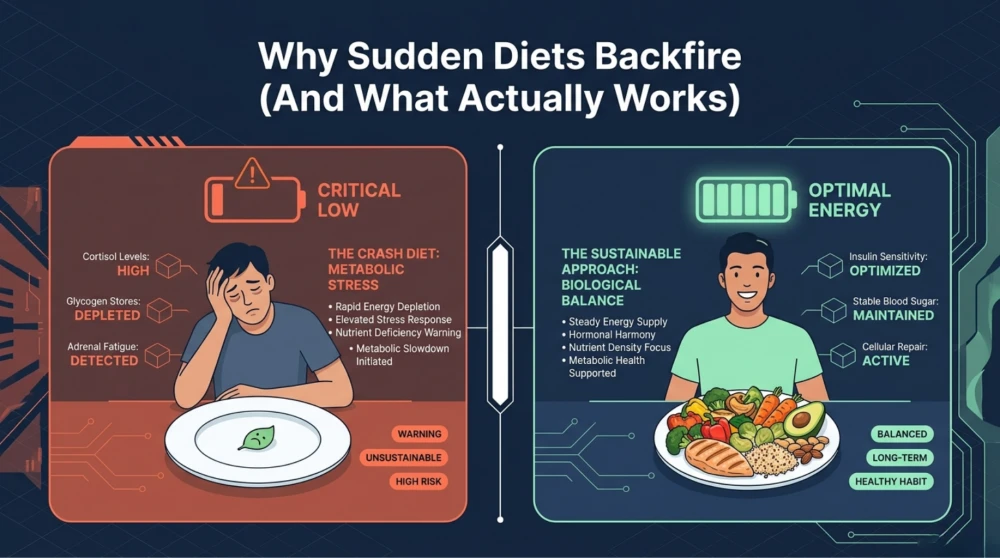
- Why Sudden Diet Changes Often Backfire
- The Core Problem: Sudden Change vs Biological Stability
- 1. Metabolic Adaptation: The Biggest Hidden Barrier
- Why This Matters in Real Life
- 2. Hormonal Changes: Why Hunger Suddenly Increases
- The Link Between Hormones and Cravings
- 3. Blood Sugar Instability: Energy Crash Cycle
- Why Blood Sugar Balance Is Critical
- 4. Gut Microbiome Shock: Why Digestion Gets Disturbed
- 5. Muscle Loss Instead of Fat Loss: A Hidden Danger
- 6. Psychological Resistance: The Brain Pushes Back
- 7. Stress Response and Cortisol: The Silent Blocker
- Connecting the Dots: Why Sudden Diets Fail
- What Actually Works: A Smarter Approach to Diet Changes
- 1. Gradual Calorie Adjustment Instead of Sudden Restriction
- 2. Prioritize Protein Intake
- 3. Balance Blood Sugar Through Meal Composition
- 4. Avoid Extreme Food Elimination
- 5. Introduce Strength Training Early
- 6. Improve Sleep and Stress Management
- 7. Focus on Consistency, Not Perfection
- Key Takeaways: What You Should Remember
- When Should You Seek Professional Help?
Why Sudden Diet Changes Often Backfire
One of the most common situations I see in my clinic is this: a patient starts a strict diet with full motivation, cuts down calories aggressively, removes multiple food groups, and expects quick results. But within a few days or weeks, things don’t go as planned.
Instead of steady progress, they begin to notice fatigue, constant hunger, irritability, bloating, or even weight stagnation. This leads to confusion and frustration. Many people then assume that either their body is “not responding” or something is wrong with their metabolism.
The reality is simpler and more scientific. Your body is not resisting you—it is protecting you.
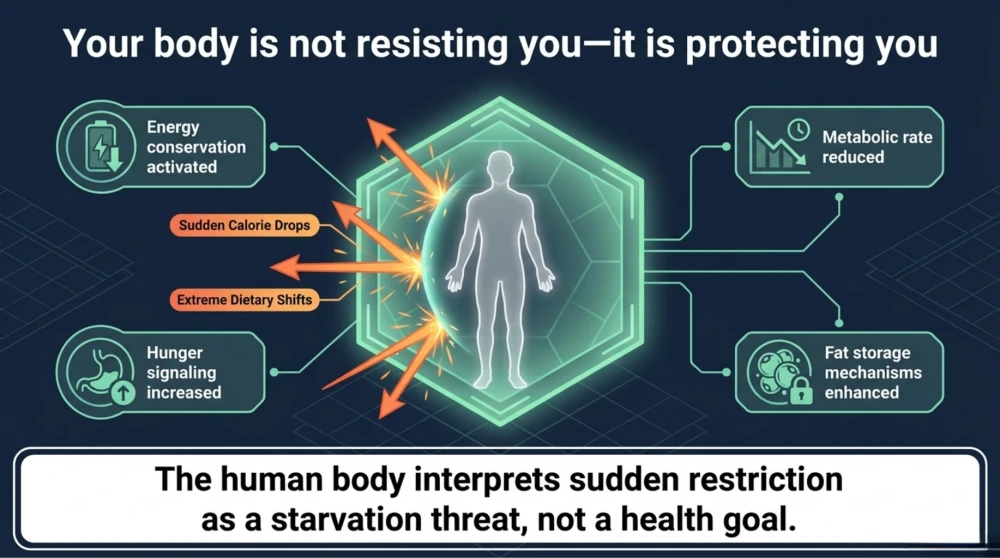
Understanding why your body resists sudden diet changes is critical if you want sustainable fat loss, better metabolic health, and long-term results. The human body is designed to maintain internal balance. Any sudden or extreme shift—especially related to food intake—is perceived as a stress signal.
This is why crash dieting, extreme calorie restriction, or sudden dietary overhauls often fail despite strong initial motivation.
The Core Problem: Sudden Change vs Biological Stability
Your body functions on a principle called homeostasis, which means maintaining internal stability. This includes maintaining body weight, energy levels, blood sugar balance, and hormonal equilibrium.
When you suddenly reduce your calorie intake or drastically change your diet pattern, your body interprets it as a potential threat. From an evolutionary perspective, this could mean food scarcity or starvation.
As a response, your body activates multiple defense mechanisms:
- Energy conservation
- Increased hunger signals
- Reduced metabolic rate
- Enhanced fat storage mechanisms
This is the primary reason why low calorie diets often fail long term. The more aggressively you try to lose weight, the more strongly your body tries to maintain its current state.
1. Metabolic Adaptation: The Biggest Hidden Barrier
Metabolic adaptation is one of the most important reasons behind diet resistance. When calorie intake drops suddenly, your body reduces the amount of energy it burns.
This includes:
- Lowering basal metabolic rate (BMR)
- Reducing physical activity subconsciously
- Decreasing thermogenesis (heat production)
In simple terms, your body becomes more efficient at surviving on fewer calories.
This explains why many people initially lose a small amount of weight and then hit a plateau very quickly. At that point, even strict dieting does not produce further results.
Patients often say, “I am eating very little, but still not losing weight.”
In most cases, this is not an exaggeration. It is a direct result of metabolic slowdown.
Why This Matters in Real Life
If you continue to push your body with more restriction, the situation may worsen:
- Further metabolic slowdown
- Increased fatigue
- Muscle loss instead of fat loss
- Higher chances of weight regain later
This is exactly why structured approaches like the Lifestyle Modification Program focus on gradual, sustainable changes rather than extreme restrictions.
2. Hormonal Changes: Why Hunger Suddenly Increases
Another major reason your body resists sudden diet changes is hormonal imbalance, especially involving hunger and satiety hormones.
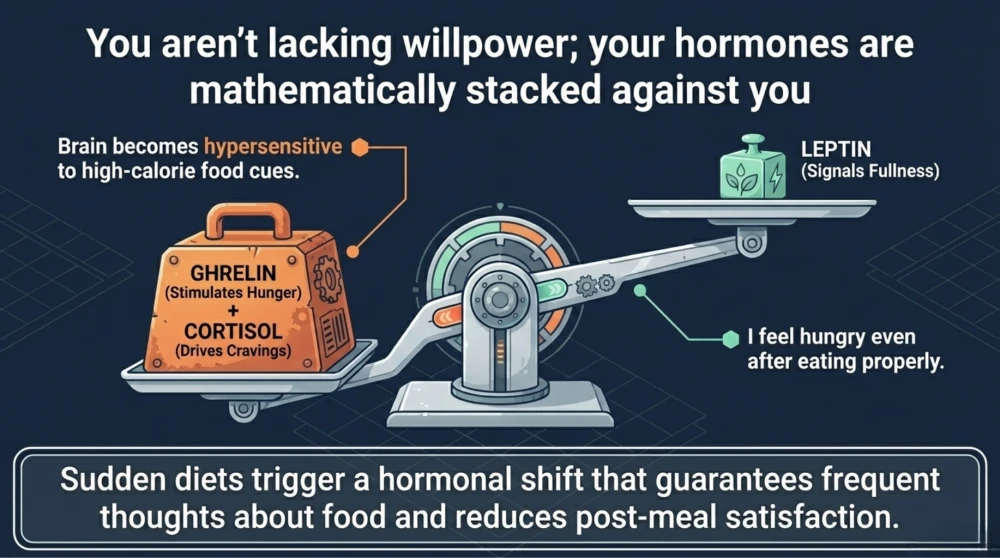
When you abruptly reduce food intake, the body responds by altering key hormones:
- Ghrelin increases – This hormone stimulates hunger, making you feel the need to eat more frequently.
- Leptin decreases – This hormone signals fullness, so lower levels mean you feel less satisfied after meals.
- Cortisol increases – Stress hormone that can increase cravings and promote fat storage.
This hormonal shift explains a very common complaint:
“I feel hungry even after eating properly.”
This is not a lack of discipline. It is your body trying to restore balance.
The Link Between Hormones and Cravings
As ghrelin rises and leptin falls, your brain becomes more sensitive to food cues. This leads to:
- Cravings for high-calorie foods
- Frequent thoughts about food
- Difficulty maintaining diet consistency
Over time, this increases the risk of binge eating or breaking the diet completely.
3. Blood Sugar Instability: Energy Crash Cycle
Sudden diet changes often disrupt blood sugar balance, especially if the diet is poorly structured.
For example, if someone reduces overall food intake but still consumes meals high in refined carbohydrates and low in protein, blood sugar levels can fluctuate significantly.
This creates a cycle:
- Rapid rise in blood sugar after meals
- Quick drop in blood sugar within 2–3 hours
- Sudden hunger and fatigue
This is one of the key reasons why people feel tired or sleepy after meals.
If you want to understand this deeper, you can read about why post-meal sugar matters more than you think.
Why Blood Sugar Balance Is Critical
Unstable blood sugar not only affects energy levels but also impacts fat storage. Frequent spikes and crashes can promote insulin resistance over time, making weight loss even more difficult.
This is particularly important for individuals who already have early metabolic issues but may not yet show abnormal results in routine reports.
4. Gut Microbiome Shock: Why Digestion Gets Disturbed
Your digestive system is not just a simple food-processing unit. It is a highly adaptive ecosystem made up of trillions of bacteria, collectively known as the gut microbiome. These bacteria are influenced by your regular eating pattern, food choices, meal timing, and even stress levels.
When you introduce sudden diet changes, especially drastic ones like cutting carbohydrates completely, switching to high-fiber diets overnight, or eliminating entire food groups, your gut does not get enough time to adapt.
This can lead to what I call a “microbiome shock response.”
Common Symptoms Patients Experience
- Bloating and abdominal discomfort
- Gas formation
- Irregular bowel movements (constipation or loose stools)
- Feeling heavy after meals
Many patients interpret this as: “This diet is not suiting me.”
But in reality, the issue is not the diet itself—it is the speed of change.
Why Gradual Change Works Better
Your gut bacteria need time to adjust to new food patterns. A gradual increase in fiber, protein, or fat allows beneficial bacteria to grow and adapt, improving digestion instead of disrupting it.
This is why structured plans that introduce dietary changes step by step are far more sustainable than sudden, extreme shifts.
5. Muscle Loss Instead of Fat Loss: A Hidden Danger
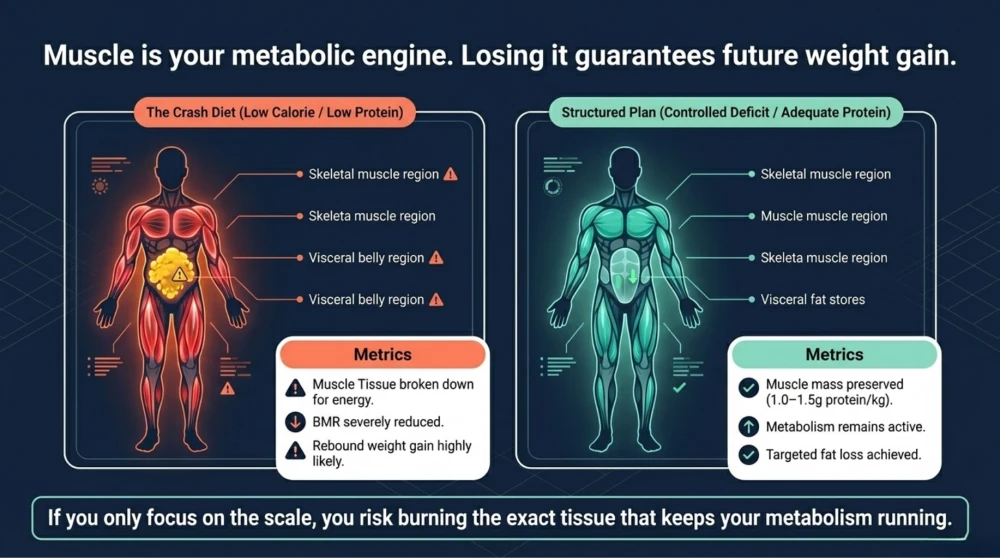
One of the biggest mistakes people make during sudden dieting is focusing only on calorie reduction without considering nutrient balance.
When your body receives very low calories—especially with inadequate protein intake—it may start breaking down muscle tissue for energy instead of burning fat efficiently.
Why This Is a Problem
- Muscle is metabolically active and helps burn calories
- Loss of muscle slows down metabolism
- Fat loss becomes more difficult over time
- Weight regain becomes easier after stopping the diet
This explains why some people lose weight initially but then regain it quickly, often with increased fat percentage.
Clinical Observation
In many cases, patients come after multiple failed diets with reduced muscle mass and slower metabolism. At this stage, even small calorie excess leads to rapid weight gain.
This is exactly why I emphasize fat loss over weight loss in clinical practice.
A balanced approach involving adequate protein, resistance training, and controlled calorie deficit is essential.
6. Psychological Resistance: The Brain Pushes Back
Dieting is not just a physical process—it is deeply psychological.
When you suddenly impose strict dietary rules, eliminate favorite foods, or follow rigid meal plans, the brain interprets it as restriction and deprivation. This triggers a natural resistance.
How Psychological Resistance Shows Up
- Constant cravings for restricted foods
- Obsessive thoughts about eating
- Emotional eating episodes
- Difficulty maintaining consistency
This is why many people follow a strict diet for a few days and then suddenly break it with overeating.
The “All or Nothing” Trap
Sudden diet changes often create an “all or nothing” mindset:
- Either perfect diet adherence
- Or complete loss of control
This cycle leads to repeated failures and reduces long-term confidence.
Instead, sustainable progress comes from flexible and realistic dietary patterns that can be followed consistently.
7. Stress Response and Cortisol: The Silent Blocker
Sudden dieting, especially when aggressive, acts as a stressor on the body. This leads to increased levels of cortisol, the primary stress hormone.
Elevated cortisol has several metabolic effects:
- Increased fat storage, especially around the abdomen
- Water retention leading to temporary weight gain
- Increased appetite and cravings
- Disturbed sleep patterns
This is one of the reasons why some people notice increased belly fat despite dieting.
Stress + Dieting = Counterproductive Outcome
When dieting is combined with poor sleep, work stress, or lack of physical activity, the negative impact becomes even stronger.
Instead of improving health, the body enters a state of metabolic stress, making fat loss more difficult.
Connecting the Dots: Why Sudden Diets Fail
If you look at all these factors together, a clear pattern emerges.
Sudden diet changes trigger multiple responses simultaneously:
- Metabolic slowdown
- Hormonal imbalance
- Blood sugar instability
- Gut disturbance
- Muscle loss
- Psychological resistance
- Stress hormone activation
This combination creates a strong resistance against fat loss and sustainable health improvement.
This is why many people feel that “nothing is working” despite trying different diets.
The problem is not lack of effort. The problem is the approach.
What Actually Works: A Smarter Approach to Diet Changes
Now that you understand why your body resists sudden diet changes, the next important question is: what should you do instead?
The answer is not more restriction. It is a structured, gradual, and scientifically aligned approach.
In clinical practice, I focus on making the body accept the change rather than forcing it.
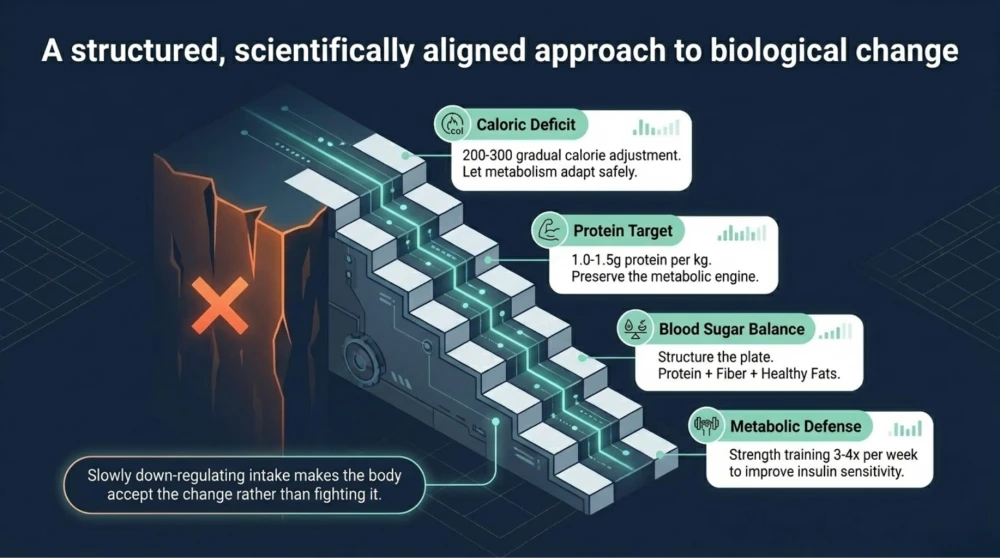
1. Gradual Calorie Adjustment Instead of Sudden Restriction
Instead of cutting calories drastically, reduce them step by step.
This allows:
- Metabolism to adapt slowly
- Energy levels to remain stable
- Hormonal balance to be maintained
A sudden 800–1000 calorie drop can trigger resistance, while a gradual 200–300 calorie adjustment works much better.
2. Prioritize Protein Intake
Protein plays a key role in preserving muscle mass and maintaining satiety.
Adequate protein intake helps:
- Prevent muscle loss
- Improve metabolic rate
- Reduce cravings
For most individuals, 1.0–1.5 g protein per kg body weight is a reasonable starting point, adjusted based on clinical condition.
3. Balance Blood Sugar Through Meal Composition
Instead of focusing only on calories, focus on meal quality.
A balanced plate should include:
- Protein source (paneer, eggs, dal, chicken)
- Fiber (vegetables, salads)
- Controlled carbohydrates
- Healthy fats
This helps maintain stable blood sugar levels and prevents energy crashes.
4. Avoid Extreme Food Elimination
Suddenly removing entire food groups often leads to cravings and poor sustainability.
Instead:
- Reduce portion sizes gradually
- Replace unhealthy options with better alternatives
- Allow flexibility in the diet
This improves long-term adherence significantly.
5. Introduce Strength Training Early
Exercise is not just for burning calories. It plays a crucial role in preserving muscle mass.
Even basic resistance training 3–4 times per week can:
- Prevent metabolic slowdown
- Improve insulin sensitivity
- Support fat loss
6. Improve Sleep and Stress Management
Without adequate sleep, even the best diet may fail.
Key targets:
- 7–8 hours of sleep
- Consistent sleep timing
- Reduced screen exposure before bed
Lowering stress helps reduce cortisol levels and supports fat loss.
7. Focus on Consistency, Not Perfection
The biggest shift patients need to make is this:
Consistency is more important than perfection.
A moderate plan followed for months is far more effective than an extreme plan followed for a few days.
Key Takeaways: What You Should Remember
- Your body resists sudden diet changes as a survival mechanism
- Metabolic slowdown is the most important reason for weight loss resistance
- Hormonal changes increase hunger and reduce satisfaction
- Gut disturbances and muscle loss can worsen outcomes
- Stress and cortisol can block fat loss
- Gradual, structured changes work better than extreme dieting
- Consistency is the key to long-term success
When Should You Seek Professional Help?
If you are experiencing the following, it is important to seek medical guidance:
- Repeated weight loss failures
- Persistent fatigue despite dieting
- Bloating or digestive discomfort
- Normal reports but ongoing symptoms
- Difficulty controlling hunger
These may indicate underlying metabolic issues such as insulin resistance or hormonal imbalance.
You can book a consultation here: Book Appointment
Written by Dr. Pankaj Kumar, General & Lifestyle Physician, Dwarka, New Delhi