

















- 28th May 2026
Table of Contents
- Energy Production Inside the Body Is Extremely Complex
- Why Poor Sleep Is One of the Biggest Hidden Causes of Low Energy
- Why Blood Sugar Imbalance Commonly Causes Fatigue
- Why Nutritional Deficiencies Frequently Cause Weakness
- Why Thyroid Imbalance Can Cause Constant Fatigue
- Why Stress Quietly Drains Energy
- Why Sedentary Lifestyle Can Also Reduce Energy
- Why Constant Weakness Should Be Viewed Holistically
- Why Anemia Commonly Causes Persistent Weakness
- Why Weakness After Meals Should Not Be Ignored
- The Connection Between Fatty Liver and Low Energy
- Why Modern Burnout Often Feels Physical
- Why Younger Adults Now Commonly Experience Chronic Fatigue
- Why Excessive Caffeine Use Can Mask Underlying Fatigue
- Why Weakness Should Never Be Treated Only Symptomatically
- What Actually Helps Improve Long-Term Energy Levels
- Why Sleep Recovery Is Essential for Energy Restoration
- Why Nutrition Strongly Influences Energy Production
- Why Exercise Actually Improves Energy Instead of Draining It
- Why Stress Recovery Is Critical for Energy
- Why Sedentary Lifestyle and Fatigue Reinforce Each Other
- Why Sustainable Lifestyle Structure Matters Most
- Key Takeaways: What You Should Remember
- When Should Constant Weakness Be Properly Evaluated?
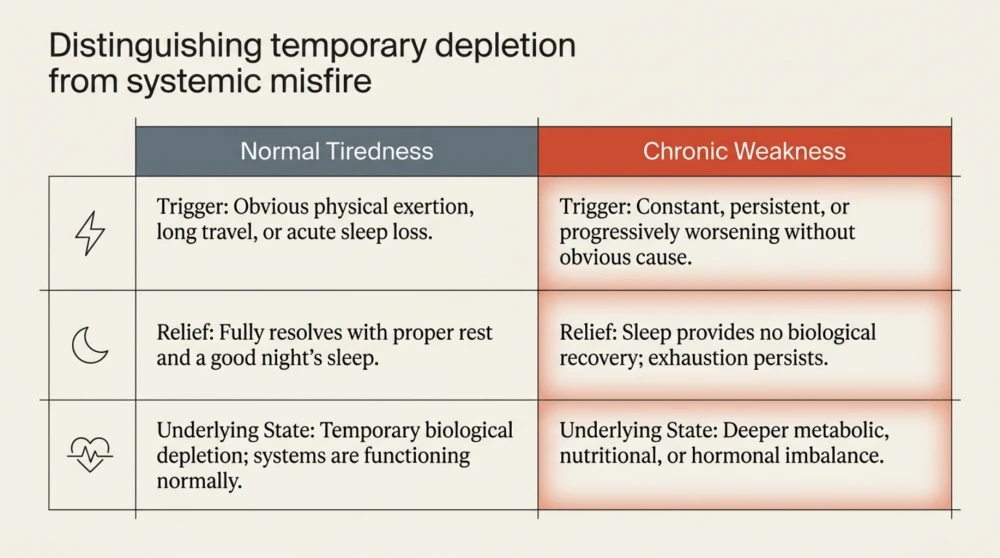
Almost everyone feels tired occasionally. Busy work schedules, emotional stress, poor sleep, long travel days, or physically exhausting routines can temporarily reduce energy levels. In such situations, fatigue usually improves with proper rest and recovery.
But one important problem in modern healthcare is that many individuals continue experiencing persistent weakness and low energy for weeks or months while assuming it is simply a “normal part of life.”
This is exactly why understanding why constant weakness and low energy should be properly evaluated has become increasingly important.
In clinical practice, many patients describe symptoms such as:
- Persistent tiredness throughout the day
- Low stamina
- Mental fatigue
- Reduced concentration
- Lack of motivation
- Feeling exhausted despite sleeping
Initially, most people normalize these symptoms. They assume: “Maybe I’m just stressed.” Or: “Everyone feels tired nowadays.”
But when weakness becomes persistent, repetitive, or progressively worsening, the body may actually be signaling deeper metabolic, nutritional, hormonal, or lifestyle imbalance underneath.
Energy Production Inside the Body Is Extremely Complex
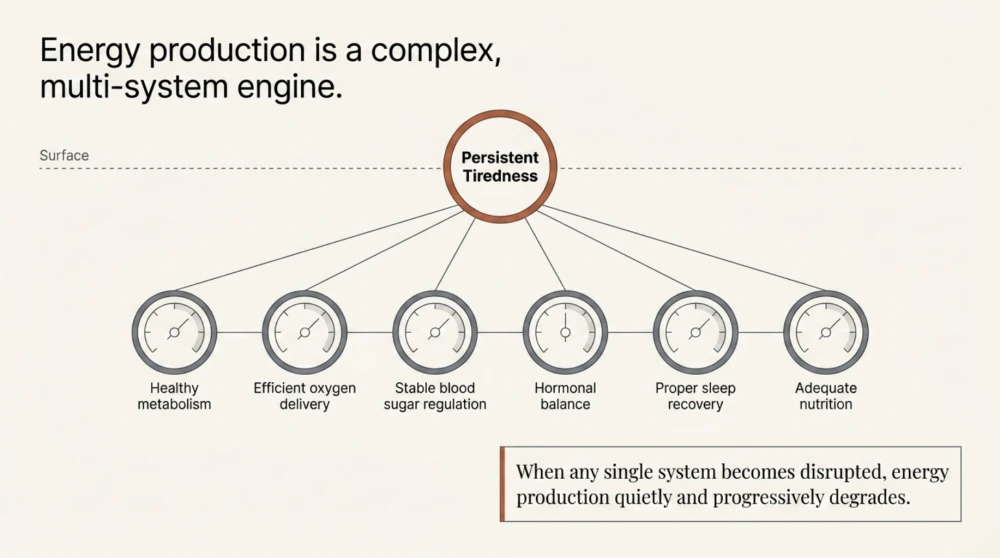
One major reason chronic weakness should not be ignored is because human energy production depends on multiple systems functioning together efficiently.
The body continuously requires:
- Healthy metabolism
- Efficient oxygen delivery
- Stable blood sugar regulation
- Hormonal balance
- Proper sleep recovery
- Adequate nutrition
When any of these systems becomes disrupted, energy production gradually becomes less efficient. Initially, the symptoms may remain subtle.
A person may simply feel:
- Less productive
- More sleepy after meals
- Mentally exhausted
- Unable to maintain stamina
But over time, this can significantly affect overall quality of life and metabolic health.
Why Poor Sleep Is One of the Biggest Hidden Causes of Low Energy
One of the most common modern causes of persistent fatigue is poor sleep quality.
Many individuals technically spend enough hours in bed but still experience inadequate biological recovery because of:
- Late-night screen exposure
- Stress overload
- Irregular sleep timing
- Frequent awakenings
- Mental overstimulation
When sleep quality becomes poor, the body fails to restore hormonal and nervous system balance properly.
This commonly leads to:
- Morning fatigue
- Brain fog
- Reduced concentration
- Low exercise motivation
- Persistent daytime weakness
Many people try compensating with caffeine repeatedly while the underlying recovery problem continues worsening quietly.
If you want to understand this relationship more deeply, you may also explore why poor sleep can make weight loss more difficult.
Why Blood Sugar Imbalance Commonly Causes Fatigue
Another important but frequently overlooked cause of weakness is poor blood sugar regulation. Many individuals assume blood sugar problems only become important once diabetes develops.
But long before diabetes appears, the body often goes through years of worsening insulin resistance and metabolic instability.
During this phase, individuals commonly experience:
- Fatigue after meals
- Energy crashes
- Brain fog
- Cravings
- Difficulty maintaining stamina
This happens because glucose handling becomes increasingly inefficient. The body struggles to maintain stable energy delivery throughout the day.
Many patients therefore feel temporarily energized after sugary foods or caffeine but quickly experience another energy decline afterward. This repeated cycle often signals deeper metabolic dysfunction rather than simple “laziness” or poor motivation.
Why Nutritional Deficiencies Frequently Cause Weakness
One extremely common cause of persistent fatigue is nutritional deficiency. Modern eating patterns frequently provide calories without necessarily providing optimal nutritional quality.
Deficiencies commonly associated with weakness include:
- Vitamin B12 deficiency
- Iron deficiency
- Vitamin D deficiency
- Poor protein intake
These deficiencies may gradually reduce:
- Energy production
- Muscle function
- Nervous system efficiency
- Oxygen delivery
Initially, symptoms may remain mild.
But over time, patients often notice:
- Low stamina
- Mental tiredness
- Exercise intolerance
- Persistent exhaustion
This is why unexplained weakness deserves proper evaluation rather than blind supplementation alone.
Why Thyroid Imbalance Can Cause Constant Fatigue
The thyroid gland strongly influences metabolic speed and energy regulation. When thyroid function becomes abnormal, metabolism may gradually slow down.
Many individuals with thyroid imbalance experience:
- Persistent tiredness
- Reduced motivation
- Weight gain
- Mental slowing
- Reduced exercise tolerance
Because thyroid dysfunction usually develops gradually, many people normalize these symptoms for long periods before seeking evaluation. This is one reason chronic fatigue should not always be dismissed casually.
Why Stress Quietly Drains Energy
Modern lifestyles frequently combine:
- Mental overload
- Long work hours
- Poor sleep
- Sedentary routines
- Continuous digital stimulation
This creates a nervous system that remains chronically overstimulated. Initially, stress hormones may temporarily increase alertness. But over time, chronic stress gradually drains physical and mental energy reserves.
Many individuals eventually feel:
- Emotionally exhausted
- Mentally tired
- Unable to recover properly
- Physically weak despite minimal activity
This is one reason persistent weakness frequently overlaps with poor sleep, burnout, and metabolic dysfunction together.
Why Sedentary Lifestyle Can Also Reduce Energy
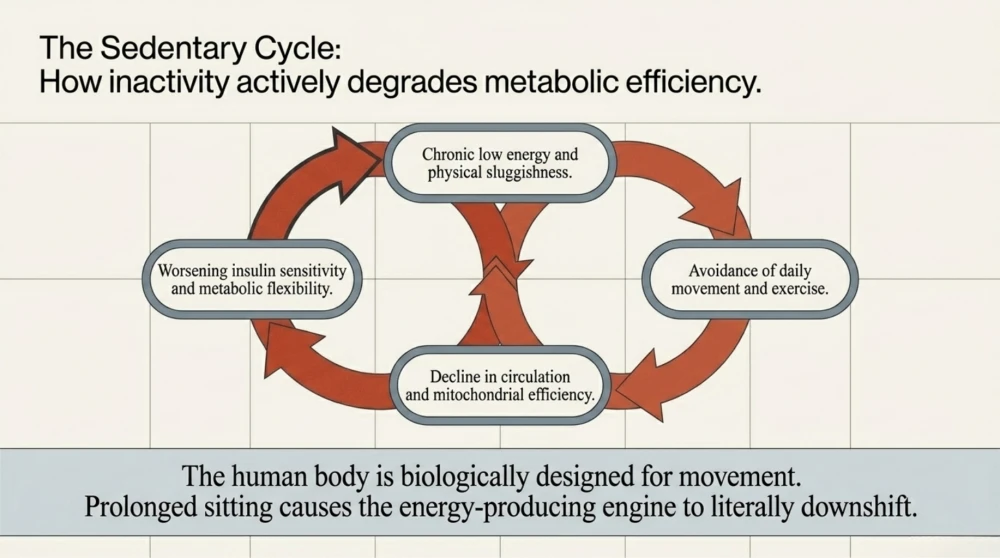
One surprising reality is that excessive inactivity itself can worsen fatigue. The body is biologically designed for movement.
When daily activity becomes extremely low because of prolonged sitting and screen-heavy routines, circulation and metabolic efficiency gradually decline.
Many sedentary individuals therefore experience:
- Low stamina
- Physical sluggishness
- Reduced exercise tolerance
- Post-meal sleepiness
Over time, inactivity, poor sleep, insulin resistance, and stress frequently reinforce each other.
Why Constant Weakness Should Be Viewed Holistically
One major problem in modern healthcare is treating fatigue as an isolated symptom.
In reality, persistent weakness is often influenced by interaction between:
- Sleep quality
- Nutrition
- Stress
- Hormonal balance
- Movement patterns
- Metabolic health
This is why simply taking random supplements or stimulants often provides only temporary relief while deeper imbalance continues underneath.
Structured approaches like the Lifestyle Modification Program focus on identifying these broader metabolic and lifestyle contributors rather than only suppressing symptoms temporarily.
Why Anemia Commonly Causes Persistent Weakness
One of the most common medical causes of chronic fatigue is anemia. Anemia develops when the body’s oxygen-carrying capacity becomes reduced, commonly because of low haemoglobin or deficiencies such as iron deficiency or Vitamin B12 deficiency.
Oxygen is essential for energy production inside cells. When oxygen delivery becomes less efficient, the body gradually starts struggling to maintain normal physical and mental performance.
Initially, many individuals simply notice:
- Low stamina
- Fatigue during routine activity
- Reduced concentration
- Breathlessness on exertion
- Generalized weakness
Because anemia often develops gradually, the symptoms may slowly become normalized over months or years.
Many patients adapt unconsciously by:
- Avoiding physical activity
- Reducing movement
- Sleeping more
- Increasing caffeine intake
while the underlying deficiency continues worsening quietly. This is why persistent low energy should not automatically be dismissed as stress or overwork alone.
Why Weakness After Meals Should Not Be Ignored
Another important but frequently overlooked symptom is post-meal weakness or sleepiness. Many individuals feel unusually tired shortly after eating and assume this is “normal digestion.”
But repetitive fatigue after meals often signals deeper metabolic imbalance. One common reason is worsening insulin resistance.
When glucose handling becomes inefficient, blood sugar fluctuations become more unstable after meals. Some individuals experience rapid rises followed by energy crashes, leading to:
- Sleepiness after eating
- Mental fogginess
- Reduced productivity
- Sudden fatigue
This pattern becomes increasingly common in individuals with:
- Sedentary lifestyles
- Belly fat accumulation
- Poor sleep
- Prediabetes
- Fatty liver
Many patients treat these symptoms casually for years without recognizing the underlying metabolic dysfunction developing underneath.
The Connection Between Fatty Liver and Low Energy
One increasingly important metabolic observation is that many individuals with fatty liver also report chronic low energy and fatigue.
Fatty liver is not simply a “liver problem.” It frequently reflects broader metabolic dysfunction involving:
- Insulin resistance
- Visceral fat accumulation
- Inflammation
- Poor metabolic flexibility
As metabolism becomes less efficient, many patients experience:
- Persistent tiredness
- Reduced exercise tolerance
- Post-meal heaviness
- Mental fatigue
- Poor recovery
This does not necessarily mean fatty liver directly “causes weakness,” but it often reflects an overall metabolically stressed body.
Why Modern Burnout Often Feels Physical
One major issue today is that chronic mental overload frequently starts producing physical symptoms.
Modern lifestyles continuously expose individuals to:
- High cognitive demand
- Continuous notifications
- Digital overstimulation
- Long work hours
- Reduced recovery time
Initially, the body may continue functioning through stress hormones and adrenaline-driven alertness. But over time, chronic overstimulation gradually drains both physical and mental energy reserves.
Many individuals eventually begin experiencing:
- Constant exhaustion
- Poor concentration
- Loss of motivation
- Sleep disturbance
- Reduced emotional resilience
This is one reason modern burnout frequently feels like “physical weakness” even when routine medical reports initially appear relatively normal.
Why Younger Adults Now Commonly Experience Chronic Fatigue
One major shift in modern healthcare is that persistent fatigue is increasingly affecting younger adults as well.
Many younger professionals now live with a combination of:
- Poor sleep
- Late-night screen exposure
- Sedentary routines
- Stress-heavy schedules
- Irregular eating patterns
This creates a lifestyle where recovery remains continuously incomplete. The body gradually loses metabolic efficiency and resilience.
As a result, many younger individuals begin experiencing:
- Low energy
- Mental exhaustion
- Exercise intolerance
- Cravings
- Poor stamina
even though they are relatively young chronologically. This is why age alone does not guarantee healthy metabolism anymore.
Why Excessive Caffeine Use Can Mask Underlying Fatigue
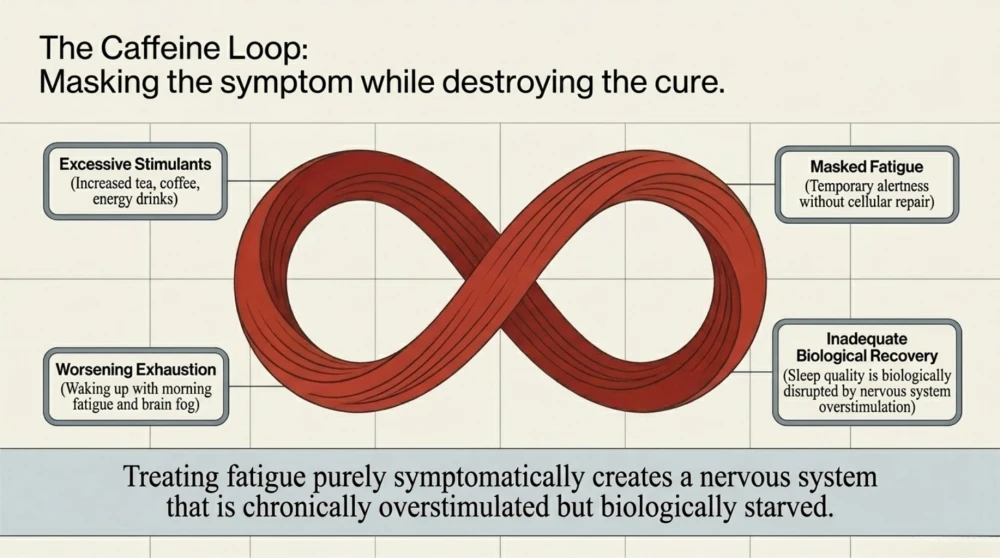
Many individuals experiencing chronic tiredness start depending heavily on caffeine for temporary energy. Initially, caffeine may improve alertness and productivity. But excessive reliance on stimulants often masks deeper problems rather than solving them.
Many people gradually increase:
- Tea intake
- Coffee intake
- Energy drinks
- Frequent caffeine consumption throughout the day
while continuing to experience:
- Poor sleep
- Stress overload
- Nutritional imbalance
- Metabolic dysfunction
Over time, this creates a cycle where:
- Poor sleep increases fatigue
- Fatigue increases caffeine dependence
- Caffeine further disrupts sleep quality
This repeated pattern often worsens long-term energy regulation rather than improving it.
Why Weakness Should Never Be Treated Only Symptomatically
One common mistake is focusing only on temporary symptom suppression.
Many individuals try:
- Random supplements
- Energy boosters
- High caffeine intake
- Temporary quick fixes
without evaluating why the body is continuously struggling with low energy in the first place.
But persistent weakness usually reflects deeper imbalance involving:
- Sleep
- Nutrition
- Hormonal health
- Metabolic stability
- Stress physiology
- Lifestyle rhythm
This is why proper evaluation matters significantly more than simply chasing temporary stimulation.
What Actually Helps Improve Long-Term Energy Levels
Once people understand that persistent weakness is often linked with deeper metabolic and lifestyle imbalance, the next important question naturally becomes:
“What should I realistically do to improve my energy?”
The answer usually does not involve temporary stimulants, excessive caffeine, or random supplements alone. In most cases, meaningful recovery happens gradually when the body’s overall metabolic environment becomes healthier and more stable.
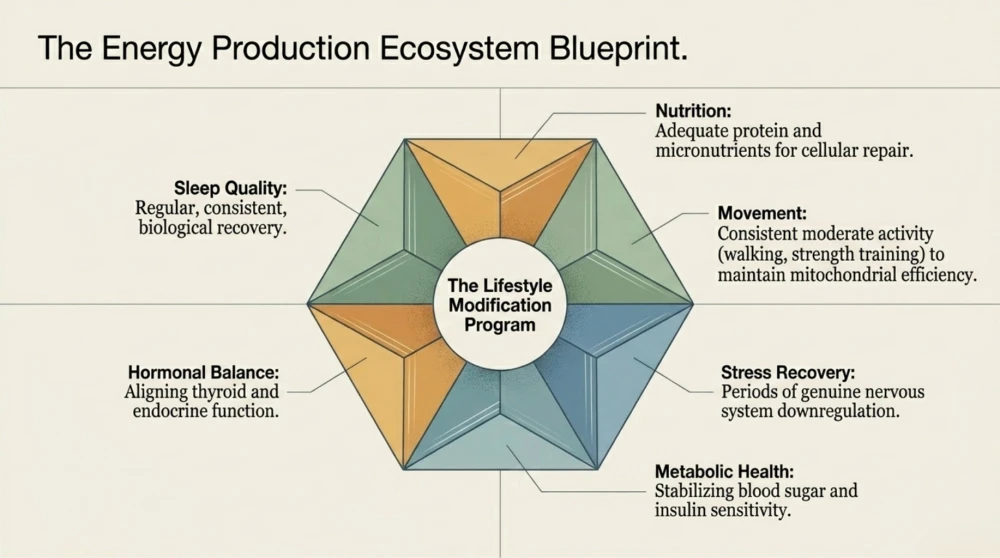
Energy production inside the body depends on multiple systems functioning together properly. This includes:
- Sleep quality
- Nutrition
- Hormonal balance
- Movement
- Stress recovery
- Metabolic health
When these systems improve collectively, the body often starts regaining stamina naturally.
Why Sleep Recovery Is Essential for Energy Restoration
One of the most important foundations of long-term energy is proper sleep recovery.
Many individuals underestimate how deeply poor sleep affects:
- Hormonal balance
- Nervous system recovery
- Mental performance
- Metabolic efficiency
When sleep quality improves consistently, many people notice gradual improvement in:
- Morning freshness
- Mental clarity
- Exercise tolerance
- Mood stability
- Daytime stamina
The body recovers best when sleep becomes:
- Regular
- Consistent
- Recovery-oriented
rather than highly irregular or continuously disrupted.
This is why fixing sleep often becomes one of the most powerful ways to improve chronic fatigue.
Why Nutrition Strongly Influences Energy Production
The body cannot produce energy efficiently without proper nutritional support. Modern eating patterns frequently provide excess calories but poor nutritional quality.
Many individuals consume:
- Highly processed foods
- Refined carbohydrates
- Irregular meals
- Low protein intake
while simultaneously experiencing:
- Weakness
- Poor recovery
- Muscle fatigue
- Brain fog
Protein intake is especially important because muscle tissue, hormones, enzymes, and metabolic repair all depend heavily on adequate protein availability.
Similarly, deficiencies involving:
- Iron
- Vitamin B12
- Vitamin D
can significantly reduce energy production and stamina. This is why proper evaluation matters rather than blindly taking random supplements without understanding the underlying cause.
Why Exercise Actually Improves Energy Instead of Draining It
Many individuals with chronic weakness avoid movement because they feel too tired to exercise. Initially, this feels logical. But biologically, excessive inactivity often worsens fatigue further.
The human body is designed for regular movement. Physical activity improves:
- Circulation
- Insulin sensitivity
- Muscle efficiency
- Oxygen delivery
- Mitochondrial function
Mitochondria are the energy-producing structures inside cells. Regular movement helps maintain mitochondrial efficiency and metabolic flexibility. This is one reason consistent moderate exercise often improves energy levels over time rather than draining them.
Importantly, the goal is not extreme exercise. Many individuals fail because they attempt highly aggressive workout routines that become difficult to sustain.
In reality, the body often responds much better to:
- Walking
- Strength training
- Regular movement breaks
- Consistent moderate activity
than short bursts of unsustainable intensity.
Why Stress Recovery Is Critical for Energy
One major modern problem is continuous nervous system overstimulation.
Many individuals now live in a state of near-constant mental activation because of:
- Digital overload
- Work pressure
- Continuous notifications
- Reduced recovery time
- Emotional stress
Initially, stress hormones may temporarily increase alertness and productivity. But over time, chronic stress gradually exhausts both mental and physical recovery systems.
Many individuals therefore begin feeling:
- Mentally tired
- Emotionally drained
- Physically weak
- Unable to recover properly
This is why improving recovery is often as important as improving productivity. The body requires periods of genuine relaxation and nervous system downregulation to restore energy efficiently.
Why Sedentary Lifestyle and Fatigue Reinforce Each Other
Another important issue is that fatigue and inactivity often create a repeating cycle. Low energy reduces movement.
Reduced movement gradually worsens:
- Circulation
- Metabolic flexibility
- Muscle conditioning
- Insulin sensitivity
As metabolic efficiency declines further, energy levels often worsen again. This is why long-term energy recovery usually requires gradually rebuilding daily movement rather than remaining continuously sedentary.
Why Sustainable Lifestyle Structure Matters Most
One of the biggest mistakes people make while trying to improve energy is depending on temporary intensity instead of sustainable structure.
Many individuals repeatedly attempt:
- Extreme dieting
- Overtraining
- Heavy supplementation
- Short-term “detox” routines
while continuing:
- Poor sleep
- Stress overload
- Sedentary behavior
- Irregular eating
True long-term recovery usually happens when the body experiences:
- Better sleep consistency
- Improved nutrition
- Regular movement
- Reduced lifestyle chaos
- Better metabolic stability
This is exactly why structured approaches focusing on long-term metabolic correction often improve energy much more effectively than temporary symptom-focused strategies alone.
You can explore this broader approach through the Lifestyle Modification Program.
Key Takeaways: What You Should Remember
- Persistent weakness is not always “normal tiredness”
- Poor sleep, stress, metabolic imbalance, and nutritional deficiency commonly contribute to low energy
- Insulin resistance and blood sugar instability often cause fatigue after meals
- Fatty liver and metabolic dysfunction frequently overlap with chronic tiredness
- Excessive caffeine may temporarily mask deeper fatigue rather than solve it
- Regular movement improves long-term energy production
- Sustainable lifestyle correction works better than temporary quick fixes
When Should Constant Weakness Be Properly Evaluated?
You should consider proper evaluation if weakness becomes:
- Persistent
- Progressively worsening
- Associated with poor sleep
- Accompanied by weight changes
- Associated with breathlessness or poor stamina
- Interfering with daily life or productivity
Early identification of metabolic, nutritional, hormonal, or lifestyle imbalance often improves long-term health outcomes significantly.
You can book a consultation here:
Book Appointment
Written by Dr. Pankaj Kumar, General & Lifestyle Physician, Dwarka, New Delhi