
















- 17th August 2026
Table of Contents
- What Is Uric Acid and Why Does It Increase?
- What Is Insulin Resistance?
- Why Uric Acid and Insulin Resistance Are Closely Connected
- Can High Uric Acid Also Worsen Insulin Resistance?
- Why Visceral Fat Links Uric Acid and Insulin Resistance
- High Uric Acid Often Travels With Other Metabolic Problems
- Why High Uric Acid Does Not Always Mean Gout
- Why Diet Alone May Not Correct Uric Acid and Insulin Resistance
- How Fructose Can Connect Uric Acid and Insulin Resistance
- Sugary Drinks Can Worsen Uric Acid and Insulin Resistance
- Alcohol Can Affect Uric Acid and Insulin Resistance
- The Kidneys Are Central to Uric Acid and Insulin Resistance
- Uric Acid and Insulin Resistance in Fatty Liver Disease
- Why High Triglycerides Often Occur Alongside High Uric Acid
- High Blood Pressure, Uric Acid and Insulin Resistance
- Can PCOS Be Associated With Uric Acid and Insulin Resistance?
- Why Thin People Can Have Uric Acid and Insulin Resistance
- What Tests May Be Useful When Uric Acid Is High?
- Does Every Person With High Uric Acid Need Medicine?
- Should You Stop Eating Dal Because Uric Acid Is High?
- What Matters More Than a Long List of Forbidden Foods?
- How to Improve Uric Acid and Insulin Resistance Together
- Weight Loss Can Help Uric Acid and Insulin Resistance
- Reducing Waist Circumference May Matter More Than Chasing a Perfect Weight
- Exercise Can Improve Insulin Sensitivity Even Before Major Weight Loss
- What Should You Eat for Uric Acid and Insulin Resistance?
- Do You Need to Stop Eating Rice and Roti?
- Do You Need to Stop Eating Dal?
- Hydration Matters When Uric Acid Is High
- Sleep Can Influence Insulin Resistance
- Common Myths About Uric Acid and Insulin Resistance
- Myth 1: High Uric Acid Means You Ate Too Much Protein
- Myth 2: Everyone With High Uric Acid Will Develop Gout
- Myth 3: Dal and Tomatoes Must Be Stopped
- Myth 4: High Uric Acid Means You Have Diabetes
- Myth 5: Lowering Uric Acid Will Automatically Reverse Insulin Resistance
- Myth 6: Every High Uric Acid Result Needs Allopurinol
- When Does High Uric Acid Need Medical Treatment?
- When Should High Uric Acid Prompt a Broader Metabolic Assessment?
- Key Takeaways About Uric Acid and Insulin Resistance
- References
High uric acid is often discussed only in relation to gout. When a blood test shows an elevated uric acid level, most people immediately think about joint pain, avoiding certain foods, or the possibility of developing gout in the future.
But uric acid can sometimes tell us something broader about metabolic health.
In clinical practice, elevated uric acid is frequently seen alongside abdominal obesity, high triglycerides, fatty liver, prediabetes, high blood pressure, and type 2 diabetes. One important factor connecting many of these conditions is insulin resistance.
The relationship between uric acid and insulin resistance is not as simple as saying that one always causes the other. Instead, several metabolic processes can push both problems in the same direction. High insulin levels can reduce the kidney's ability to eliminate uric acid efficiently, while excess uric acid has also been investigated for possible effects on oxidative stress, inflammation, and insulin signalling.
This is why an elevated uric acid result should sometimes prompt a broader question: is this simply an isolated laboratory abnormality, or is it appearing as part of a wider pattern of metabolic dysfunction?
What Is Uric Acid and Why Does It Increase?
Uric acid is produced when the body breaks down purines. Purines occur naturally in human cells and are also present in certain foods. Most uric acid circulates in the bloodstream before being filtered and eliminated mainly through the kidneys, with a smaller proportion being handled through the gastrointestinal tract.
A high blood uric acid level, known as hyperuricemia, develops when uric acid production exceeds the body's ability to eliminate it. In many people, reduced renal excretion is more important than simply eating too many purine-rich foods.
This distinction matters because high uric acid is frequently blamed entirely on diet. Someone may stop tomatoes, dal, spinach, or several other foods while the more important metabolic contributors remain unaddressed.
Kidney function, genetics, medications, alcohol intake, body composition, dietary patterns, and uric acid and insulin resistance can all influence the final laboratory result.
What Is Insulin Resistance?
Insulin is a hormone produced by the pancreas. One of its major functions is to help glucose move from the bloodstream into cells, particularly skeletal muscle, where it can be used or stored.
With insulin resistance, muscle, liver, and fat cells become less responsive to insulin. The pancreas initially compensates by producing more insulin to maintain blood glucose within an acceptable range.
This means a person may have insulin resistance for years before fasting glucose or HbA1c becomes clearly abnormal.
During this early stage, several metabolic changes may already be developing, including increasing abdominal fat, high triglycerides, fatty liver, blood pressure abnormalities, and elevated uric acid.
Uric Acid and Insulin Resistance Can Appear Before Diabetes
People often assume that metabolic problems begin only after diabetes is diagnosed. In reality, the underlying metabolic environment may have been changing for many years.
A person may still have normal fasting glucose while compensatory insulin levels are high. During this period, the kidneys may handle uric acid differently, visceral fat may increase, and triglycerides may gradually rise.
This helps explain why uric acid and insulin resistance may occur together before someone meets the diagnostic criteria for type 2 diabetes.
Why Uric Acid and Insulin Resistance Are Closely Connected
The kidneys provide one of the clearest links between these two conditions.
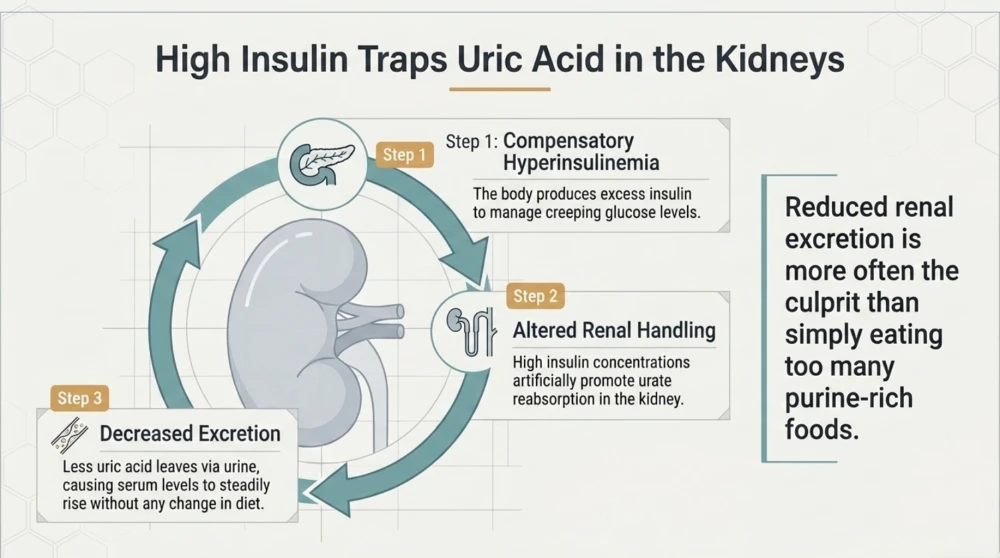
When insulin levels remain elevated, renal handling of sodium and uric acid can change. Higher insulin concentrations can promote urate reabsorption within the kidney, allowing less uric acid to leave the body through urine.
As a result, serum uric acid can rise even without an unusually high intake of purine-rich food.
This is one reason uric acid and insulin resistance are frequently found together in people with metabolic syndrome.
High Insulin Can Reduce Uric Acid Excretion
In early insulin resistance, the body may still produce enough insulin to prevent overt hyperglycaemia. The problem is that insulin concentrations may need to remain higher than normal to achieve that effect.
These higher insulin levels can influence kidney urate transport and reduce uric acid excretion. Over time, the blood uric acid level may gradually increase.
This does not mean that every person with elevated uric acid has insulin resistance. Kidney disease, genetic factors, certain medicines, alcohol, dehydration, and other causes must also be considered.
However, when high uric acid occurs alongside increasing waist circumference, high triglycerides, fatty liver, or prediabetes, the connection deserves more attention.
Can High Uric Acid Also Worsen Insulin Resistance?
This is an area of active research.
Experimental and observational studies have suggested that excess uric acid may influence oxidative stress, endothelial function, inflammation, and intracellular insulin signalling. These mechanisms could potentially contribute to worsening insulin sensitivity.
However, association does not automatically prove causation in humans. People with high uric acid often have many overlapping risk factors—including abdominal obesity, high fructose intake, kidney dysfunction, hypertension, and physical inactivity—that can independently contribute to insulin resistance.
It is therefore more accurate to view uric acid and insulin resistance as closely interconnected metabolic abnormalities rather than claim that high uric acid is always the direct cause of insulin resistance.
Why the Relationship May Become a Metabolic Cycle
In some individuals, the relationship may become self-reinforcing. Insulin resistance can increase insulin levels and reduce renal uric acid excretion, while metabolic dysfunction associated with hyperuricemia may further overlap with inflammation, oxidative stress, and impaired vascular function.
At the same time, abdominal fat, poor dietary quality, inactivity, and genetic susceptibility may continue driving both abnormalities.
This is why simply lowering one laboratory value without addressing the broader metabolic environment may not provide a complete solution.
Why Visceral Fat Links Uric Acid and Insulin Resistance
Visceral fat is the fat stored deep inside the abdomen around organs such as the liver, pancreas, and intestines. Unlike the fat directly beneath the skin, visceral fat is strongly associated with metabolic dysfunction.
As visceral fat increases, insulin sensitivity often declines. The liver may produce more triglycerides, fatty liver may develop, and glucose regulation can become less efficient.
Elevated uric acid is also commonly found within this metabolic pattern.
This explains why someone may have several laboratory abnormalities at the same time rather than separate unrelated diseases.
Normal Body Weight Does Not Exclude Uric Acid and Insulin Resistance
Not everyone with visceral fat or insulin resistance appears obese.
Some normal-weight adults have relatively low muscle mass and disproportionately high abdominal or visceral fat. This is particularly relevant in South Asian populations, where metabolic abnormalities can develop at lower BMI levels.
A normal number on the weighing scale therefore does not completely exclude uric acid and insulin resistance.
Waist circumference, waist-to-height ratio, triglycerides, glucose status, liver health, physical activity, family history, and body composition may provide important additional information.
High Uric Acid Often Travels With Other Metabolic Problems
When uric acid is elevated, it is useful to look beyond the isolated number and consider whether other features of metabolic syndrome are present.
Common accompanying abnormalities may include:
- Increasing waist circumference.
- High triglycerides.
- Low HDL cholesterol.
- Prediabetes or type 2 diabetes.
- High blood pressure.
- Fatty liver disease.
The presence of several of these findings strengthens the likelihood that uric acid and insulin resistance are part of a broader metabolic pattern rather than completely independent problems.
Uric Acid and Insulin Resistance in Fatty Liver
Fatty liver disease frequently occurs alongside both hyperuricemia and insulin resistance. The liver plays a central role in glucose, fructose, and lipid metabolism, making it particularly vulnerable when several metabolic abnormalities occur together.
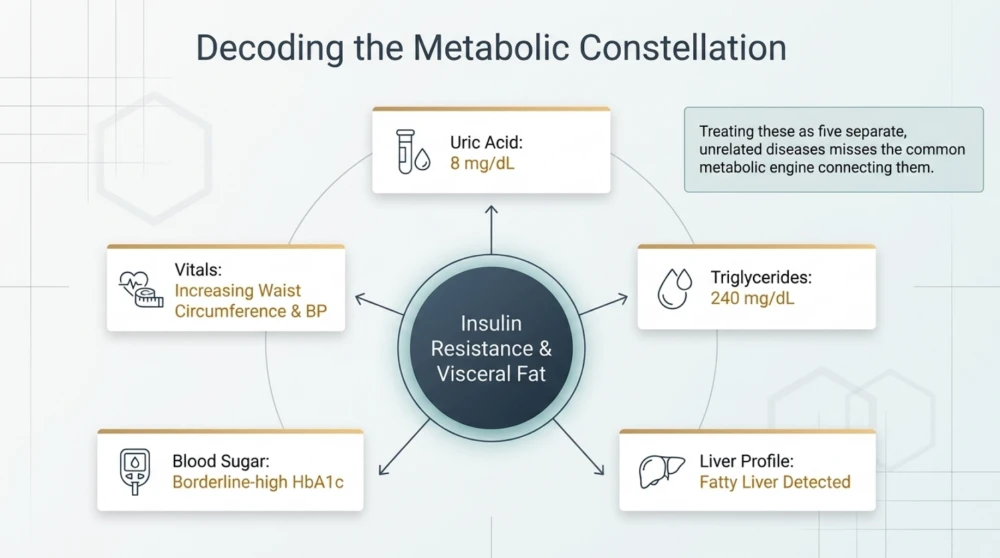
A patient may therefore have high uric acid, high triglycerides, fatty liver, and borderline HbA1c at the same time. Treating each laboratory result as an isolated disease can miss the common metabolic factors connecting them.
Why High Uric Acid Does Not Always Mean Gout
Hyperuricemia and gout are related but are not the same condition.
Gout occurs when monosodium urate crystals form in joints or other tissues and trigger inflammation. Many people with elevated uric acid never experience a gout attack, while persistent elevation increases the environment in which crystal formation can occur.
This distinction is important because someone without joint pain may still have clinically relevant hyperuricemia.
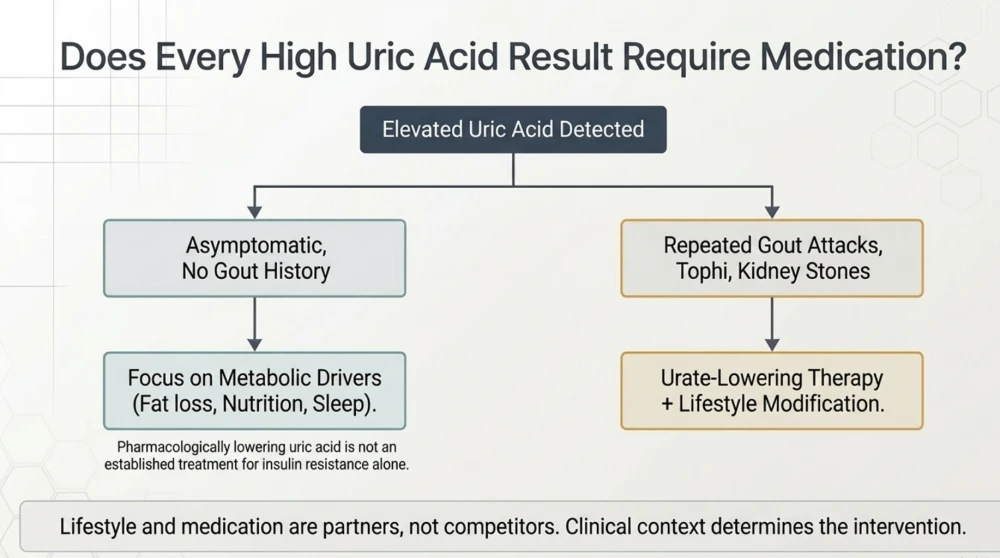
At the same time, an elevated uric acid result should not automatically lead to urate-lowering medication solely because insulin resistance is present. Treatment decisions depend on the uric acid level, gout history, kidney stones, kidney function, medications, comorbidities, and the overall clinical picture.
Why Diet Alone May Not Correct Uric Acid and Insulin Resistance
Diet matters, but a narrow “low-purine diet” may fail to address the real metabolic problem.
If someone removes several purine-containing foods while continuing to have abdominal obesity, sugary beverages, poor sleep, minimal physical activity, high alcohol intake, or significant insulin resistance, uric acid may remain elevated.
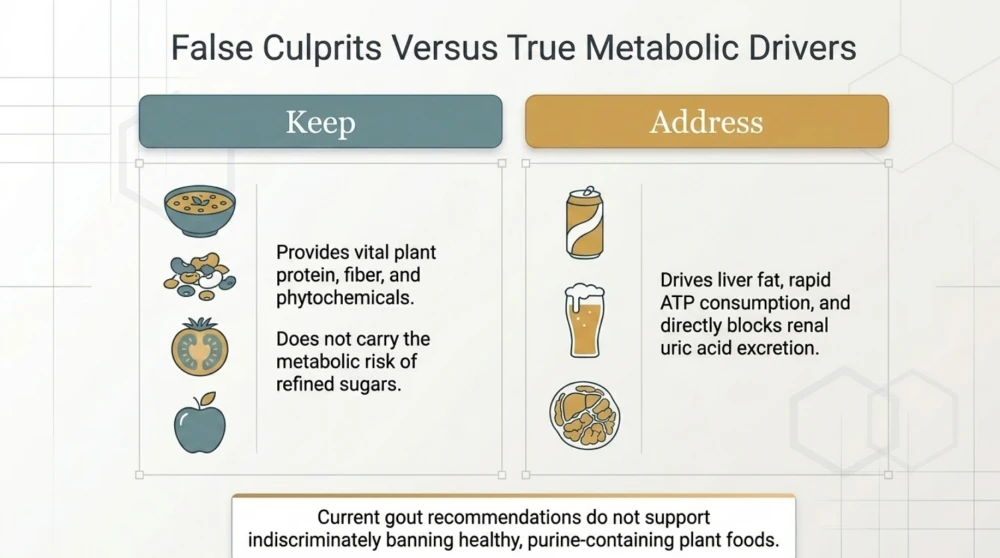
Similarly, some nutritious foods contain purines but do not necessarily carry the same metabolic implications as alcohol, excessive fructose-containing beverages, or an overall calorie-surplus dietary pattern.
This is why management of uric acid and insulin resistance should focus on the complete lifestyle and metabolic profile rather than creating an unnecessarily restrictive list of forbidden foods.
How Fructose Can Connect Uric Acid and Insulin Resistance
Fructose deserves special attention when discussing uric acid and insulin resistance. Fructose is a naturally occurring sugar found in fruit, but it is also present in table sugar, honey, syrups, sweetened beverages, desserts, and many processed foods.
When fructose is metabolised in the liver, it can increase uric acid production through pathways involving rapid ATP consumption and purine degradation. Large amounts of rapidly absorbed fructose—particularly from sugar-sweetened beverages—can therefore contribute to higher uric acid levels while also adding excess calories and promoting metabolic dysfunction.
This does not mean that fructose from a whole apple should be treated the same way as fructose delivered through a large soft drink. The amount, food structure, fibre content, speed of consumption, and overall dietary pattern are very different.
Whole Fruit Is Not the Main Problem in Uric Acid and Insulin Resistance
People with high uric acid are sometimes advised to avoid nearly all fruit because fruit contains fructose. That advice is usually too simplistic.
Whole fruit provides fibre, water, vitamins, minerals, and phytochemicals and is generally consumed much more slowly than sweetened beverages. Current gout guidance places much greater emphasis on limiting high-fructose corn syrup and excessive sugar-sweetened beverages than on routinely eliminating whole fruit.
Portion size still matters, particularly in people with diabetes, severe hypertriglyceridaemia, or very high total carbohydrate intake. But treating whole fruit as equivalent to a sugary drink does not reflect the nutritional differences between them.
Sugary Drinks Can Worsen Uric Acid and Insulin Resistance
Soft drinks, sweetened juices, energy drinks, sweetened iced tea, and other sugar-containing beverages are particularly easy to overconsume because liquid calories produce relatively little satiety.
A person can drink several hundred calories within minutes without feeling as full as they would after eating an equivalent amount of whole food.
Frequent consumption can contribute to:
- Excess calorie intake.
- Weight gain.
- Visceral fat accumulation.
- High triglycerides.
- Fatty liver.
- Poorer glucose regulation.
- Higher uric acid levels.
For someone with both uric acid and insulin resistance, reducing sugar-sweetened beverages is often more useful than unnecessarily removing multiple nutritious foods from the diet.
Alcohol Can Affect Uric Acid and Insulin Resistance
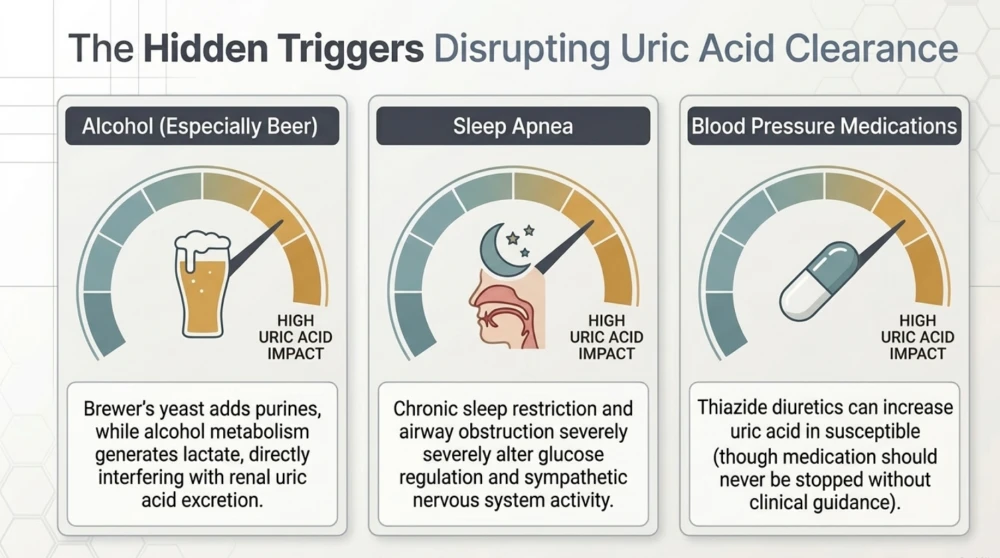
Alcohol can influence uric acid through more than one mechanism. Alcohol metabolism may increase urate production, while lactate generated during alcohol metabolism can interfere with renal uric acid excretion.
Beer deserves particular attention because it contains alcohol as well as purine compounds derived from brewer's yeast.
Alcohol also contributes calories and, when consumed excessively, may worsen triglycerides, blood pressure, sleep quality, fatty liver, and weight management.
Alcohol Is Not the Only Cause of High Uric Acid
Someone who does not drink alcohol can still develop hyperuricemia. Genetics, kidney function, insulin resistance, obesity, medications, diet, and other factors can all contribute.
Therefore, alcohol history is one part of the assessment of uric acid and insulin resistance, not the entire explanation.
The Kidneys Are Central to Uric Acid and Insulin Resistance
The kidneys are responsible for eliminating most of the uric acid produced by the body. Uric acid is filtered and then undergoes a complex process of reabsorption and secretion within the renal tubules.
Insulin can influence this process. Hyperinsulinaemia associated with insulin resistance may promote renal urate reabsorption, contributing to higher serum uric acid levels.
Kidney function itself also matters. When renal function declines, the body's ability to eliminate uric acid may decrease.
High Uric Acid Does Not Automatically Mean Poor Kidney Function
It is important not to reverse the relationship too simplistically. Many people with hyperuricemia have normal kidney function.
However, when uric acid is persistently elevated, kidney function should generally be interpreted alongside the result, particularly in people with diabetes, hypertension, kidney stones, or known chronic kidney disease.
Uric Acid and Insulin Resistance in Fatty Liver Disease
Metabolic dysfunction-associated steatotic liver disease (MASLD) is strongly linked with insulin resistance. High uric acid is also commonly observed in people with fatty liver.
The overlap is not surprising.
Visceral fat, insulin resistance, excess energy intake, high triglycerides, poor dietary quality, and physical inactivity can contribute to an environment in which both fatty liver and hyperuricemia become more likely.
This means a person with ultrasound-detected fatty liver and elevated uric acid may benefit from assessment of their broader metabolic health rather than receiving advice focused only on avoiding purine-rich foods.
Uric Acid and Insulin Resistance May Be Part of the Same Metabolic Pattern
Consider a patient whose reports show:
- Fatty liver.
- Uric acid of 8 mg/dL.
- Triglycerides of 240 mg/dL.
- Borderline-high HbA1c.
- Increasing waist circumference.
These findings should not necessarily be viewed as five unrelated problems.
Insulin resistance and visceral adiposity may be important common contributors linking several of them.
This is why understanding uric acid and insulin resistance can change the way the entire metabolic picture is approached.
Why High Triglycerides Often Occur Alongside High Uric Acid
High triglycerides are another common feature of insulin resistance.
When insulin sensitivity declines, the liver may receive increased fatty acid delivery and produce more triglyceride-rich lipoproteins. High intake of refined carbohydrates, excess calories, alcohol, and visceral fat can further aggravate the problem.
High uric acid and high triglycerides therefore frequently appear together because they share several underlying metabolic drivers.
Look Beyond Total Cholesterol
Someone may have a total cholesterol value that does not appear particularly alarming while triglycerides, waist circumference, glucose regulation, and uric acid are all moving in an unhealthy direction.
Looking only at total cholesterol may therefore miss a broader pattern of metabolic dysfunction.
High Blood Pressure, Uric Acid and Insulin Resistance
Hypertension also frequently overlaps with hyperuricemia and insulin resistance.
Insulin resistance may promote sympathetic nervous system activity, altered sodium handling, vascular dysfunction, and other mechanisms relevant to blood pressure regulation. Meanwhile, some antihypertensive medicines can influence serum uric acid.
For example, thiazide and thiazide-like diuretics can increase uric acid levels in susceptible individuals.
This does not mean these medicines are inappropriate. They are effective blood-pressure treatments with established cardiovascular benefits. The important point is that medication history should be considered when interpreting an elevated uric acid result.
Do Not Stop Blood Pressure Medicines Because Uric Acid Is High
Stopping an antihypertensive medicine without medical advice can be dangerous.
If a medication appears to be contributing to recurrent gout or significant hyperuricemia, the clinician can review the overall treatment plan, blood pressure control, kidney function, and available alternatives.
The decision should be individualised rather than made from a single laboratory result.
Can PCOS Be Associated With Uric Acid and Insulin Resistance?
Insulin resistance is common in polycystic ovary syndrome (PCOS), particularly when abdominal obesity and other features of metabolic syndrome are present.
Women with PCOS may also develop high triglycerides, fatty liver, prediabetes, and other metabolic abnormalities. Some studies have reported higher uric acid levels in women with PCOS, particularly in the presence of insulin resistance and obesity.
However, uric acid is not used to diagnose PCOS, and an elevated result should not automatically be attributed to the condition.
PCOS Requires a Broader Metabolic Assessment
When PCOS occurs alongside increasing waist circumference, acanthosis nigricans, high triglycerides, fatty liver, or prediabetes, assessment should extend beyond menstrual symptoms alone.
The metabolic component may require attention to nutrition, physical activity, sleep, body composition, and glucose regulation.
Why Thin People Can Have Uric Acid and Insulin Resistance
One of the most persistent misconceptions about metabolic disease is that insulin resistance occurs only in people who appear overweight.
Body weight does not reveal where fat is stored or how much muscle a person has.
A normal-weight adult may still have:
- Excess visceral fat.
- Low skeletal muscle mass.
- Fatty liver.
- High triglycerides.
- Genetic susceptibility to diabetes.
- Low physical activity.
South Asian populations are particularly relevant because metabolic risk can develop at a lower BMI than in many Western populations.
Therefore, normal weight should not automatically exclude uric acid and insulin resistance when other metabolic abnormalities are present.
What Tests May Be Useful When Uric Acid Is High?
The appropriate investigations depend on the individual. A mildly elevated uric acid level in an otherwise healthy person is different from persistent hyperuricemia in someone with gout, diabetes, hypertension, kidney disease, or fatty liver.
Depending on the clinical situation, evaluation may include:
- Repeat serum uric acid when appropriate.
- Fasting blood glucose.
- HbA1c.
- Lipid profile, particularly triglycerides and HDL cholesterol.
- Serum creatinine and estimated glomerular filtration rate (eGFR).
- Urine albumin-to-creatinine ratio when indicated.
- Liver function tests.
- Blood pressure.
- Waist circumference or waist-to-height ratio.
- Liver imaging when clinically indicated.
These tests help determine whether elevated uric acid is occurring in isolation or alongside broader metabolic dysfunction.
Do You Need a Fasting Insulin Test?
Fasting insulin and indices such as HOMA-IR are frequently discussed online as tests for insulin resistance.
They can be useful in research and selected clinical contexts, but there is no universally standardised fasting insulin threshold that reliably diagnoses insulin resistance in routine practice across all populations and laboratories.
For most patients, clinicians assess the metabolic picture using history, waist circumference, blood pressure, glucose and HbA1c, triglycerides, HDL cholesterol, fatty liver status, and other relevant findings rather than relying on a single fasting insulin result.
Does Every Person With High Uric Acid Need Medicine?
No.
This is an important distinction because laboratory reports often lead people to believe that any uric acid value above the reference range must immediately be treated with medication.
Urate-lowering therapy is clearly important for many patients with established gout and selected complications. But routinely prescribing urate-lowering medication solely for asymptomatic hyperuricemia is not recommended in many clinical situations.
The decision depends on factors such as:
- Previous gout attacks.
- Presence of tophi.
- Kidney stones.
- Kidney function.
- Degree and persistence of uric acid elevation.
- Current medications.
- Overall clinical risk.
Lowering Uric Acid Is Not an Established Treatment for Insulin Resistance
Because uric acid and insulin resistance are associated, it may seem logical to assume that lowering uric acid with medication will automatically improve insulin sensitivity or prevent diabetes.
Current evidence does not justify using urate-lowering medication simply as a treatment for insulin resistance in people who otherwise have no established indication for it.
Instead, the metabolic drivers should be addressed directly through appropriate weight management, physical activity, dietary quality, sleep, and treatment of associated conditions.
Should You Stop Eating Dal Because Uric Acid Is High?
This is particularly relevant for Indian diets.
Dal and legumes contain purines, but they also provide protein, fibre, minerals, and beneficial plant compounds. Eliminating them indiscriminately can make a vegetarian diet unnecessarily restrictive and may reduce protein quality.
Current evidence does not support treating plant-based purine sources as equivalent to organ meats, excessive red meat, beer, or high-fructose beverages in terms of gout risk.
For most people, portion size, overall dietary pattern, hydration, weight management, alcohol intake, and metabolic health deserve more attention than automatically banning dal.
Do Tomatoes Increase Uric Acid?
Tomatoes are another food frequently removed from Indian diets after a high uric acid report.
There is no good reason for most people with hyperuricemia to routinely eliminate tomatoes solely because of their uric acid level.
Individual gout triggers can vary, but long lists of unnecessary food restrictions can make a healthy diet harder to maintain without addressing the main metabolic drivers.
What Matters More Than a Long List of Forbidden Foods?
When uric acid and insulin resistance occur together, the most useful strategy usually addresses the overall metabolic environment.
That means paying attention to:
- Visceral and abdominal fat.
- Total diet quality.
- Sugar-sweetened beverages.
- Excess alcohol.
- Physical activity.
- Muscle mass.
- Sleep.
- Blood pressure.
- Glucose regulation.
- Kidney health.
A uric acid report can therefore be more than a warning about gout. In the right clinical context, it can be one piece of a larger metabolic puzzle.
How to Improve Uric Acid and Insulin Resistance Together
When uric acid and insulin resistance occur together, treating them as completely separate problems may miss an opportunity. Several lifestyle changes that improve insulin sensitivity can also improve the metabolic environment associated with hyperuricemia.
The goal is not to create an extremely restrictive “uric acid diet.” A more useful approach is to improve body composition, dietary quality, physical activity, hydration, and associated metabolic abnormalities while treating gout or significant hyperuricemia appropriately when medication is indicated.
This broader approach is supported by recent evidence showing a strong association between hyperuricemia and metabolic syndrome. A 2025 systematic review and meta-analysis involving more than 214,000 participants found that metabolic syndrome was associated with substantially greater odds of hyperuricemia, although such observational associations do not prove that one condition directly causes the other.
Weight Loss Can Help Uric Acid and Insulin Resistance
For someone with excess body fat, particularly abdominal or visceral fat, gradual weight reduction can be one of the most useful interventions.
Losing excess fat can improve insulin sensitivity, triglycerides, blood pressure, fatty liver, and glucose regulation. Weight reduction is also recommended as part of gout management in people with overweight or obesity.
The objective should be sustainable fat loss rather than simply making the weighing scale fall as quickly as possible.
Avoid Crash Dieting When Uric Acid Is High
Extreme fasting and crash diets are not a sensible solution for uric acid and insulin resistance.
Rapid weight loss and ketosis can temporarily interfere with renal urate excretion in susceptible individuals. At the same time, aggressive diets are difficult to maintain and may increase the loss of lean tissue.
A better strategy is a moderate, sustainable calorie deficit combined with adequate protein, resistance exercise, daily physical activity, and a dietary pattern that can realistically be maintained.
Reducing Waist Circumference May Matter More Than Chasing a Perfect Weight
Because visceral fat is strongly associated with insulin resistance, changes around the abdomen can provide useful information beyond body weight alone.
A person may lose relatively few kilograms while reducing waist circumference, improving strength, lowering triglycerides, and improving glucose regulation.
These changes can represent meaningful metabolic progress even if BMI remains above the so-called ideal range.
Build Muscle While Reducing Visceral Fat
Skeletal muscle is one of the body's major sites for glucose disposal. Maintaining and building muscle through resistance training can therefore improve the metabolic environment associated with insulin resistance.
This is particularly relevant for South Asian adults who may develop insulin resistance and metabolic disease at comparatively lower BMI levels.
Exercise Can Improve Insulin Sensitivity Even Before Major Weight Loss
Exercise should not be viewed merely as a way to burn calories.
Muscle contraction increases glucose uptake through mechanisms that are partly independent of insulin. Regular exercise can therefore improve glucose handling even before substantial weight loss occurs.
A balanced programme can include both aerobic activity and resistance training.
Walking Helps, but Add Strength Training
Brisk walking is practical and beneficial for cardiovascular and metabolic health. However, resistance exercise provides an additional stimulus for preserving or increasing muscle.
Depending on fitness and medical status, this might include:
- Squats or chair squats.
- Wall or incline push-ups.
- Resistance-band exercises.
- Dumbbell exercises.
- Weight machines.
- Other progressive resistance exercises.
The best exercise programme is one that is safe, progressive, and sustainable rather than excessively intense for a few weeks.
What Should You Eat for Uric Acid and Insulin Resistance?
There is no single diet that everyone with high uric acid needs to follow. In fact, NICE guidance notes that evidence is insufficient to recommend one specific diet as capable of preventing gout flares or lowering serum urate, and instead recommends a healthy, balanced dietary pattern.
When uric acid and insulin resistance coexist, the overall diet should generally emphasise minimally processed foods while controlling excess calories and refined carbohydrates.
A practical eating pattern can include:
- Plenty of vegetables.
- Whole fruit in appropriate portions.
- Legumes and pulses.
- Whole grains according to metabolic needs.
- Appropriate protein sources.
- Unsweetened dairy if tolerated.
- Nuts and seeds in controlled portions.
- Healthy unsaturated fats.
Reduce Added Sugar Rather Than Becoming Afraid of Every Carbohydrate
People with insulin resistance sometimes respond by eliminating virtually all carbohydrate-containing foods.
That is rarely necessary.
A more useful first step is often reducing sugar-sweetened beverages, sweets, desserts, refined snacks, and excessive portions of highly processed carbohydrates.
The American College of Rheumatology also recommends limiting high-fructose corn syrup in people with gout.
Do You Need to Stop Eating Rice and Roti?
No food needs to be automatically banned simply because uric acid and insulin resistance are present.
Rice and roti contribute carbohydrate, so portion size matters, particularly when someone has prediabetes, diabetes, high triglycerides, or significant insulin resistance.
Instead of eliminating them completely, consider the complete meal.
For example, a plate dominated by several rotis or a large mound of white rice with very little protein or vegetables is metabolically different from a controlled portion accompanied by dal, vegetables, curd, paneer, eggs, fish, chicken, or another appropriate protein source.
Do You Need to Stop Eating Dal?
For most people, no.
This deserves repeating because dal is frequently removed from Indian diets after an elevated uric acid report.
Pulses contain purines, but they also provide plant protein, fibre, minerals, and beneficial carbohydrates. Current gout recommendations do not support treating every purine-containing food as metabolically equivalent.
For a vegetarian patient with insulin resistance, indiscriminately removing dal, beans, and other legumes may actually make it harder to build a balanced, protein-containing diet.
Choose Protein Intelligently With High Uric Acid
Protein requirements should still be met. Depending on dietary preference and medical conditions, useful options may include:
- Low-fat curd or Greek yogurt.
- Milk.
- Paneer in appropriate portions.
- Tofu and soy foods.
- Dal and legumes.
- Eggs.
- Fish or poultry in appropriate portions.
Large quantities of organ meats and excessive intake of certain high-purine animal foods are less suitable for people with gout or significant hyperuricemia.
Hydration Matters When Uric Acid Is High
Dehydration can increase uric acid concentration and may contribute to gout attacks in susceptible people.
Regular fluid intake is therefore sensible for most adults, particularly in hot weather or during exercise.
However, there is no reason to force extreme quantities of water simply to “flush out” uric acid.
More Water Is Not Always Better
Fluid requirements vary according to climate, activity, body size, kidney function, medications, and medical conditions.
People with heart failure, advanced kidney disease, or another condition requiring fluid restriction should follow individual medical advice rather than deliberately increasing water intake.
Sleep Can Influence Insulin Resistance
Diet and exercise receive most of the attention in metabolic health, but sleep should not be ignored.
Chronic sleep restriction and obstructive sleep apnoea can adversely affect glucose regulation, appetite, sympathetic activity, and blood pressure.
Someone with abdominal obesity, insulin resistance, hypertension, and loud habitual snoring may therefore benefit from assessment of sleep quality and possible sleep apnoea rather than focusing entirely on calories.
Common Myths About Uric Acid and Insulin Resistance
Myth 1: High Uric Acid Means You Ate Too Much Protein
Not necessarily.
Hyperuricemia can result from reduced kidney urate excretion, genetics, medications, metabolic factors, alcohol, dietary patterns, and other causes. Simply blaming protein intake ignores much of uric acid physiology.
Myth 2: Everyone With High Uric Acid Will Develop Gout
No. Hyperuricemia increases the environment in which urate crystals can form, but many people with elevated uric acid never develop symptomatic gout.
Myth 3: Dal and Tomatoes Must Be Stopped
Routine elimination of these foods is usually unnecessary. Long lists of prohibited foods can distract from more important issues such as excess body fat, sugary beverages, alcohol, dietary quality, and metabolic health.
Myth 4: High Uric Acid Means You Have Diabetes
No. Elevated uric acid does not diagnose diabetes or insulin resistance.
However, because uric acid and insulin resistance frequently occur within the same metabolic pattern, associated abnormalities may justify evaluation when clinically appropriate.
Myth 5: Lowering Uric Acid Will Automatically Reverse Insulin Resistance
This has not been established.
Uric acid and metabolic syndrome are strongly associated, but association does not prove that pharmacologically lowering uric acid will correct insulin resistance. A 2025 meta-analysis reinforces the strong relationship while also highlighting the need for further research into the underlying mechanisms.
Myth 6: Every High Uric Acid Result Needs Allopurinol
No. Treatment depends on the clinical context.
For example, the American College of Rheumatology guideline recommends against routinely starting urate-lowering therapy in most people with asymptomatic hyperuricemia who have never had gout or tophi.
Guidelines are not identical worldwide, however. More recent Chinese guidance takes a more proactive approach to pharmacological treatment of asymptomatic hyperuricemia. This is another reason medication decisions should be individualised rather than based only on an internet uric acid chart.
When Does High Uric Acid Need Medical Treatment?
Medication becomes particularly important in established gout and in selected higher-risk situations.
The exact decision depends on the diagnosis, frequency and severity of gout attacks, serum urate level, tophi, kidney function, kidney stones, medications, and comorbidities.
Someone who has repeated painful gout attacks should therefore not rely solely on lemon water, dietary restrictions, or weight loss while ignoring appropriate urate-lowering treatment.
Lifestyle and Medication Are Not Competitors
If urate-lowering therapy is indicated, lifestyle improvement should complement the medication rather than replace it.
Conversely, taking medication does not make metabolic health irrelevant.
A person with gout, abdominal obesity, fatty liver, high triglycerides, hypertension, and prediabetes still benefits from addressing the underlying metabolic risk factors even when the serum urate is successfully controlled with medication.
When Should High Uric Acid Prompt a Broader Metabolic Assessment?
An isolated mildly elevated uric acid result does not automatically require an extensive metabolic work-up.
However, a broader assessment becomes more useful when high uric acid occurs together with:
- Increasing waist circumference.
- Fatty liver.
- High triglycerides.
- Low HDL cholesterol.
- Prediabetes or diabetes.
- High blood pressure.
- A strong family history of metabolic disease.
- Low physical activity.
In this setting, the uric acid result may be one clue within a larger pattern rather than an isolated abnormality.
Key Takeaways About Uric Acid and Insulin Resistance
- Uric acid and insulin resistance frequently occur together, particularly in people with metabolic syndrome.
- High insulin levels may reduce renal uric acid excretion, providing one biological link between the two conditions.
- High uric acid does not prove that someone has insulin resistance, and the relationship should not be presented as simple cause and effect.
- Visceral fat, fatty liver, high triglycerides, hypertension, and abnormal glucose regulation commonly overlap with hyperuricemia.
- Gradual weight reduction can improve several metabolic abnormalities simultaneously when excess body fat is present.
- Resistance training and regular physical activity can improve insulin sensitivity and help preserve muscle during weight loss.
- Sugary beverages and excessive alcohol deserve more attention than unnecessarily banning every purine-containing plant food.
- Dal, legumes, tomatoes, and whole fruit usually do not need to be automatically eliminated simply because uric acid is elevated.
- Not everyone with asymptomatic hyperuricemia requires urate-lowering medication; treatment should depend on the complete clinical picture and applicable guidelines.
- Managing uric acid and insulin resistance effectively means looking beyond one laboratory value and addressing overall metabolic health.
References
- Fan J, Bian C, Wang J, et al. Correlation Between Metabolic Syndrome and Hyperuricemia: A Systematic Review and Meta-analysis. American Journal of Hypertension. 2025;38(7):485-497.
- National Institute for Health and Care Excellence (NICE). Gout: Diagnosis and Management (NG219). Current guidance accessed 2026.
- FitzGerald JD, Dalbeth N, Mikuls T, et al. 2020 American College of Rheumatology Guideline for the Management of Gout. Arthritis & Rheumatology. 2020;72(6):879-895.
- Sun R, et al. 2024 Update of Chinese Guidelines for Diagnosis and Treatment of Hyperuricemia and Gout: Recommendations for General Patients. International Journal of Rheumatic Diseases. 2025.
- American Diabetes Association Professional Practice Committee. Standards of Care in Diabetes—2026. Diabetes Care. 2026.
Written by Dr. Pankaj Kumar, General & Lifestyle Physician, Dwarka, New Delhi