















- 1st June 2026
Table of Contents
- Inflammation Is Not Always a Bad Thing
- Why Modern Lifestyle Habits Promote Chronic Inflammation
- Why Belly Fat Is Metabolically Active
- How Chronic Inflammation Affects Metabolism
- Why Chronic Inflammation and Insulin Resistance Often Develop Together
- Why Inflammation Can Increase Hunger and Cravings
- Why Chronic Inflammation Often Causes Fatigue
- Why Chronic Inflammation Is Often Invisible
- Why Processed Foods Can Quietly Promote Chronic Inflammation
- The Connection Between Chronic Inflammation and Fatty Liver
- Why Gut Health Influences Inflammation
- Why Poor Sleep Can Fuel Inflammation
- Why Chronic Stress Can Keep the Body in a Metabolic Alarm State
- Why Belly Fat and Inflammation Reinforce Each Other
- Why Modern Adults Experience More Inflammatory Triggers Than Previous Generations
- Why Inflammation Should Be Viewed as a Metabolic Issue
- What Actually Helps Reduce Chronic Inflammation?
- Why Sustainable Weight Loss Itself Helps Reduce Inflammation
- Why Regular Physical Activity Helps Control Inflammation
- Why Strength Training Deserves Special Attention
- Why Sleep Is One of the Most Powerful Anti-Inflammatory Tools
- Why Nutrition Matters Beyond Calories
- Why Stress Management Is Essential for Metabolic Health
- Why There Is No Single Anti-Inflammatory Solution
- Why Sustainable Lifestyle Change Produces the Best Results
- Key Takeaways: What You Should Remember
Many individuals begin their weight-loss journey with genuine commitment and determination. They reduce sugar, avoid junk food, start walking regularly, join gyms, and attempt to follow structured diet plans. Initially, they expect the weighing scale to respond quickly.
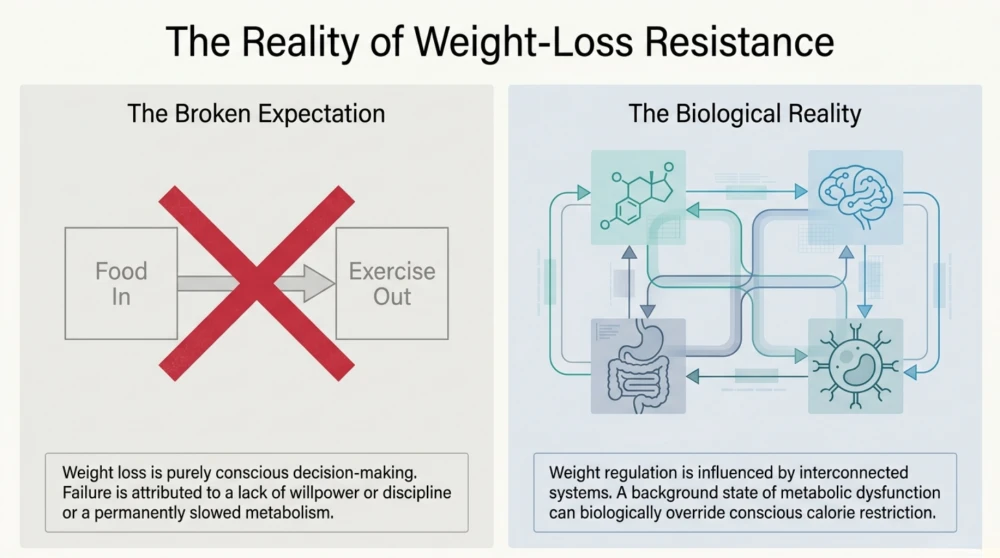
However, for many people, reality becomes frustratingly different. Despite sincere efforts, weight loss progresses slowly. Belly fat remains stubborn. Cravings continue appearing unexpectedly. Energy levels fluctuate. Some individuals even feel that their body is actively resisting fat loss. This often leads to frustration and self-blame.
Many people start believing they lack willpower or discipline. Others assume their metabolism has permanently slowed down. While calorie intake and physical activity certainly matter, modern metabolic medicine has shown that body weight regulation is influenced by many interconnected systems.
One increasingly important factor is chronic inflammation. This is exactly why understanding why chronic inflammation makes weight loss difficult has become an important topic in obesity, diabetes, fatty liver disease, and metabolic health.
Inflammation Is Not Always a Bad Thing
When most people hear the word inflammation, they immediately think of something harmful. However, inflammation is actually a normal and essential biological process.
When you cut your finger, develop an infection, or suffer an injury, inflammation helps the body heal and recover. Without inflammation, proper tissue repair would not occur.
The problem begins when inflammation stops being a short-term protective response and becomes a long-term background process. This type of persistent low-grade inflammation can quietly affect metabolism for years without producing obvious symptoms.
Unlike an infection or injury, chronic inflammation often develops silently. Individuals may feel relatively normal while important metabolic changes continue progressing underneath.
Why Modern Lifestyle Habits Promote Chronic Inflammation
Human biology evolved in a very different environment from the one most people live in today.
Modern lifestyles frequently combine several factors that can promote ongoing metabolic stress, including:
- Poor sleep quality
- Sedentary routines
- Chronic psychological stress
- Ultra-processed food consumption
- Excess abdominal fat
- Physical inactivity
Individually, each of these factors may seem relatively minor. However, when they occur together for years, they can gradually contribute to a chronic inflammatory state. Many individuals therefore experience metabolic dysfunction not because of a single problem, but because multiple lifestyle factors slowly accumulate over time.
Why Belly Fat Is Metabolically Active
One of the biggest misconceptions about body fat is that it simply serves as passive energy storage. Modern research has shown that fat tissue is biologically active.
Particularly when excess fat accumulates around abdominal organs, it begins releasing various signaling molecules that influence metabolism, hormones, and immune activity.
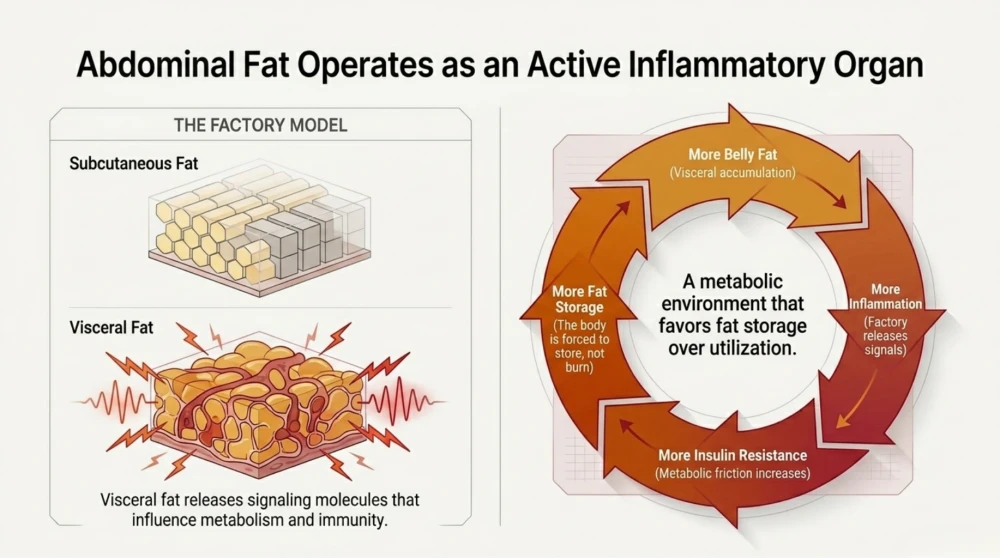
This type of abdominal fat, often called visceral fat, behaves very differently from fat stored under the skin. As visceral fat increases, inflammatory activity often increases as well.
This helps explain why abdominal obesity is strongly associated with:
- Insulin resistance
- Fatty liver disease
- Prediabetes
- Elevated triglycerides
- Cardiovascular disease
Over time, inflammation and belly fat begin reinforcing each other, creating a cycle that makes weight loss increasingly difficult.
How Chronic Inflammation Affects Metabolism
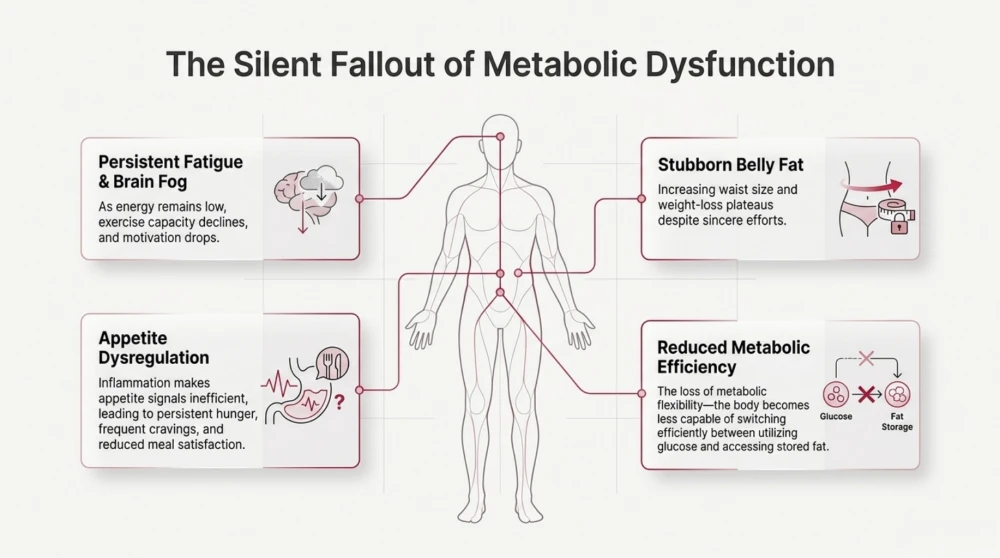
One reason chronic inflammation makes weight loss difficult is its effect on metabolic efficiency.
Under healthy conditions, the body continuously adapts to changing energy demands. It efficiently utilizes glucose when available and accesses stored fat when energy is needed.
This flexibility is essential for maintaining healthy body composition. However, chronic inflammation may interfere with several metabolic pathways involved in energy regulation.
As inflammatory activity increases, the body often becomes less efficient at maintaining normal metabolic balance. Many individuals begin noticing:
- Persistent belly fat
- Difficulty losing weight
- Weight-loss plateaus
- Reduced exercise tolerance
- Increased fatigue
These changes often develop gradually, making them easy to overlook initially.
Why Chronic Inflammation and Insulin Resistance Often Develop Together
One of the strongest links between inflammation and weight gain involves insulin resistance. Insulin is responsible for helping glucose move from the bloodstream into cells where it can be used for energy.
When insulin sensitivity declines, the body must produce more insulin to achieve the same effect. Over time, chronic inflammation may contribute to worsening insulin signaling.
This creates a situation where:
- Blood sugar regulation becomes less efficient
- Fat storage becomes easier
- Cravings increase
- Weight loss becomes more difficult
Many patients therefore experience increasing abdominal obesity, prediabetes, and metabolic dysfunction long before diabetes is formally diagnosed.
If you want to understand this relationship more deeply, you may also explore why sitting too long affects blood sugar levels.
Why Inflammation Can Increase Hunger and Cravings
One of the most frustrating aspects of chronic inflammation is its effect on appetite regulation. Weight management is not controlled solely by conscious decision-making. Appetite is regulated through complex communication between the digestive system, hormones, metabolism, and brain.
When chronic inflammation develops, these signals may become less efficient. Many individuals begin experiencing:
- Persistent hunger
- Frequent cravings
- Reduced meal satisfaction
- Difficulty controlling portions
This often leads people to believe they lack discipline when, in reality, underlying metabolic dysfunction may be influencing eating behavior biologically.
Why Chronic Inflammation Often Causes Fatigue
Another reason inflammation affects weight loss is its impact on energy levels. Many individuals with metabolic dysfunction describe feeling tired most of the time.
They frequently report:
- Low stamina
- Brain fog
- Poor motivation
- Reduced exercise capacity
- Persistent fatigue
When energy remains low, physical activity naturally declines. People begin moving less, exercising less consistently, and spending more time sitting.
This further worsens metabolic health and contributes to additional fat accumulation. Over time, inflammation, fatigue, inactivity, and weight gain begin reinforcing one another.
Why Chronic Inflammation Is Often Invisible
One of the most challenging aspects of chronic inflammation is that it rarely produces dramatic symptoms in its early stages.
Instead, people often notice subtle changes such as:
- Increasing waist size
- Persistent fatigue
- Weight-loss resistance
- Poor recovery
- Reduced stamina
Because these symptoms develop gradually, they are often dismissed as normal aging or a consequence of a busy lifestyle. However, they may actually represent early signs of deeper metabolic dysfunction that deserves attention.
Why Processed Foods Can Quietly Promote Chronic Inflammation
One of the biggest lifestyle changes over the past few decades has been the dramatic increase in consumption of ultra-processed foods.
Modern diets often contain foods that are convenient, highly palatable, and easy to overconsume. While occasional consumption is unlikely to create major problems, repeated intake over many years may contribute to metabolic dysfunction.
Many ultra-processed foods are characterized by combinations of:
- Refined carbohydrates
- Added sugars
- Poor-quality fats
- Low fiber content
- High calorie density
These foods frequently provide large amounts of energy while offering relatively little nutritional value. As a result, people often consume excess calories without achieving the same level of satiety that would occur with minimally processed foods.
Over time, this pattern may contribute to increasing visceral fat accumulation, worsening insulin resistance, and greater inflammatory activity. This is one reason many individuals find themselves gaining weight despite feeling hungry frequently and eating often.
The Connection Between Chronic Inflammation and Fatty Liver
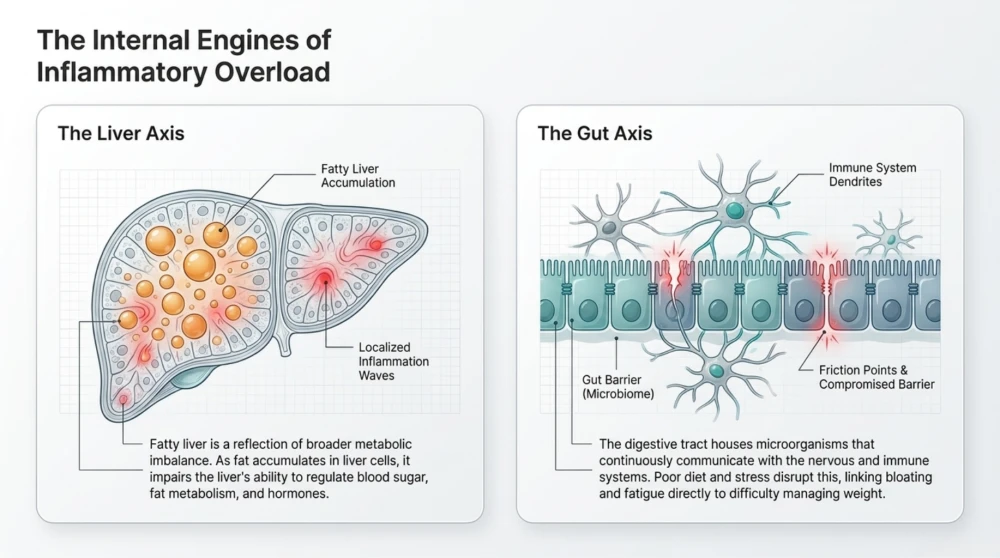
One of the most important examples of inflammation-related metabolic dysfunction is fatty liver disease. Fatty liver is often viewed simply as a liver problem. However, it is increasingly recognized as a reflection of broader metabolic imbalance.
Many individuals with fatty liver also have:
- Insulin resistance
- Abdominal obesity
- Elevated triglycerides
- Poor metabolic flexibility
As fat accumulates within liver cells, inflammatory processes often increase. This may further impair the liver's ability to regulate metabolism efficiently.
The liver plays a central role in:
- Blood sugar regulation
- Fat metabolism
- Energy management
- Hormonal processing
When liver health becomes compromised, weight management frequently becomes more difficult. This is why fatty liver and chronic inflammation often coexist in individuals struggling with obesity and metabolic syndrome.
Why Gut Health Influences Inflammation
Another fascinating area of modern metabolic research involves the relationship between gut health and inflammation. The digestive tract is home to trillions of microorganisms that interact continuously with the immune system, metabolism, and nervous system.
When digestive health is functioning well, these interactions generally support metabolic balance. However, poor dietary habits, chronic stress, inadequate sleep, and sedentary lifestyles may influence digestive function and contribute to greater inflammatory activity.
Many individuals with chronic digestive symptoms also experience:
- Bloating
- Cravings
- Fatigue
- Difficulty managing weight
This overlap highlights how closely digestive health and metabolic health are connected. Inflammation is not simply a problem occurring in one organ. It often reflects interaction between multiple systems throughout the body.
Why Poor Sleep Can Fuel Inflammation
Sleep is one of the body's most important recovery mechanisms. During healthy sleep, numerous physiological processes occur that help regulate immune activity, hormone balance, metabolism, and tissue repair.
When sleep becomes poor or inconsistent, these recovery processes become less efficient. Many modern adults live with:
- Late-night screen exposure
- Irregular sleep schedules
- Work-related stress
- Chronic sleep restriction
Over time, these habits may contribute to increasing inflammatory activity. Many individuals therefore find themselves trapped in a cycle where poor sleep worsens inflammation, and inflammation contributes to fatigue and further sleep disruption.
This is one reason sleep quality is increasingly viewed as a major pillar of metabolic health rather than simply a lifestyle preference.
Why Chronic Stress Can Keep the Body in a Metabolic Alarm State
The human stress response was originally designed to help people survive short-term challenges. In modern life, however, many individuals experience stress that is persistent rather than temporary.
Work pressure, financial concerns, family responsibilities, continuous digital stimulation, and lack of recovery time often keep the body in a prolonged state of physiological alertness. Initially, this may improve focus and productivity. However, when stress becomes chronic, the body begins paying a metabolic price.
Long-term stress is associated with:
- Poor sleep
- Emotional eating
- Reduced physical activity
- Greater inflammatory activity
- Worsening insulin resistance
Many people therefore experience gradual weight gain not because of a single dietary mistake but because chronic stress is influencing multiple metabolic pathways simultaneously.
Why Belly Fat and Inflammation Reinforce Each Other
One of the most challenging aspects of metabolic dysfunction is that belly fat and inflammation often create a self-perpetuating cycle. As visceral fat increases, inflammatory signaling tends to increase.
As inflammatory activity increases, insulin resistance often worsens. As insulin resistance worsens, fat storage becomes easier. The result is a cycle that may look something like this:
More belly fat → More inflammation → More insulin resistance → More fat storage → More belly fat.
This helps explain why many individuals feel that weight gain accelerates over time. The body gradually becomes trapped in a metabolic environment that favors fat storage rather than fat utilization.
Why Modern Adults Experience More Inflammatory Triggers Than Previous Generations
Modern life exposes people to a combination of factors that rarely existed together at such scale in previous generations.
Many adults simultaneously experience:
- Sleep deprivation
- Physical inactivity
- Ultra-processed foods
- Chronic stress
- Excess screen time
- Irregular meal timing
Each factor individually may seem manageable. Together, however, they can create a powerful environment that promotes inflammation and metabolic dysfunction. This is one reason obesity, fatty liver disease, insulin resistance, and metabolic syndrome have become increasingly common worldwide.
Why Inflammation Should Be Viewed as a Metabolic Issue
One of the biggest misconceptions is viewing inflammation as a completely separate medical topic. In reality, inflammation often sits at the center of many metabolic problems.
It influences:
- Insulin sensitivity
- Fat storage
- Appetite regulation
- Energy levels
- Recovery capacity
- Body composition
This is why successful long-term weight management frequently requires addressing the broader lifestyle and metabolic factors that contribute to inflammation rather than focusing exclusively on calorie reduction alone.

What Actually Helps Reduce Chronic Inflammation?
Once people understand the relationship between inflammation and metabolism, the next question naturally becomes: “What can I do to reduce chronic inflammation and improve weight loss?” The answer is often simpler than many people expect.
Despite the popularity of anti-inflammatory supplements, detox products, and social media trends, the most powerful tools for reducing chronic inflammation are usually the same lifestyle habits that improve overall metabolic health.
Chronic inflammation rarely develops because of a single cause. It typically emerges from the combined effect of poor sleep, excess body fat, physical inactivity, chronic stress, and unhealthy dietary patterns.
As a result, meaningful improvement usually requires addressing these root causes rather than searching for a quick fix.
Why Sustainable Weight Loss Itself Helps Reduce Inflammation
One of the most effective ways to reduce chronic inflammation is improving body composition. As excess visceral fat decreases, inflammatory signaling often declines as well.
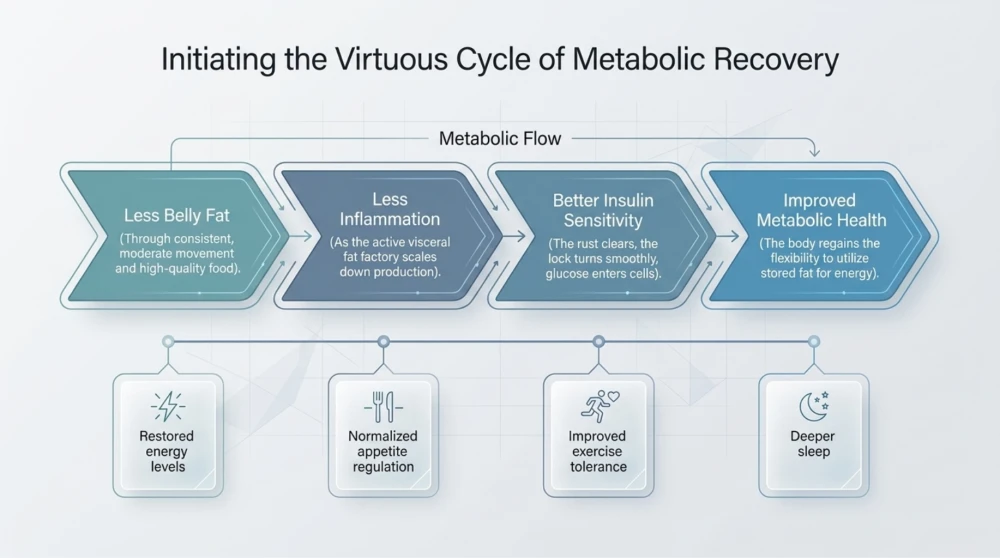
This creates a positive cycle that works in the opposite direction of metabolic dysfunction.
Instead of: More belly fat → More inflammation → More insulin resistance
The body gradually moves toward:
Less belly fat → Less inflammation → Better insulin sensitivity → Improved metabolic health
This is one reason sustainable fat loss often produces benefits that extend far beyond appearance alone.
Many individuals notice improvements in:
- Energy levels
- Blood sugar control
- Exercise tolerance
- Sleep quality
- Appetite regulation
as metabolic health improves.
Why Regular Physical Activity Helps Control Inflammation
Exercise is frequently discussed in terms of calorie burning, but its benefits extend far beyond energy expenditure. Regular movement improves multiple aspects of metabolic health simultaneously.
Physical activity helps:
- Improve insulin sensitivity
- Reduce visceral fat
- Support healthy circulation
- Improve metabolic flexibility
- Support healthy immune regulation
Importantly, the goal is not extreme exercise. Many individuals mistakenly believe they must perform intense workouts every day to experience benefits.
In reality, consistent moderate activity often produces substantial improvements. Walking, resistance training, cycling, swimming, and other sustainable forms of exercise can all contribute positively to metabolic health. The key is consistency rather than perfection.
Why Strength Training Deserves Special Attention
One of the most effective tools for improving metabolic health is preserving and building muscle mass.
Muscle tissue plays a major role in:
- Glucose regulation
- Insulin sensitivity
- Energy utilization
- Metabolic flexibility
As muscle mass improves, the body often becomes more efficient at handling glucose and utilizing energy. This is one reason strength training has become a cornerstone of modern obesity and diabetes prevention strategies.
Many adults focus exclusively on cardio exercise while completely neglecting muscle preservation. However, healthy muscle tissue acts as one of the body's most important metabolic assets.
If you want to understand this relationship further, you may also explore why muscle loss after 35 can affect weight and metabolic health.
Why Sleep Is One of the Most Powerful Anti-Inflammatory Tools
Sleep is often underestimated because it appears passive. However, during healthy sleep, the body performs critical recovery functions that influence:
- Immune regulation
- Hormonal balance
- Metabolic health
- Inflammatory activity
When sleep becomes chronically poor, the body remains in a state of incomplete recovery.
Over time, this may contribute to:
- Insulin resistance
- Fatigue
- Weight gain
- Increased inflammatory activity
Many people attempt to solve metabolic problems while ignoring sleep completely. Yet improving sleep quality often produces noticeable improvements in energy, cravings, appetite control, and overall well-being.
Why Nutrition Matters Beyond Calories
Weight management is often simplified into a discussion about calories alone. While energy balance remains important, food quality also influences metabolic health.
Dietary patterns rich in minimally processed foods generally provide:
- Better nutrient density
- More fiber
- Greater satiety
- Improved metabolic support
In contrast, diets dominated by ultra-processed foods frequently encourage overeating and contribute to metabolic dysfunction. This does not mean a single food causes inflammation.
Rather, long-term dietary patterns influence the overall metabolic environment within which inflammation develops. Many individuals achieve meaningful improvements not through extreme dietary restriction but through gradually improving food quality and consistency.
Why Stress Management Is Essential for Metabolic Health
Chronic stress is one of the most underestimated contributors to inflammation and weight gain. When stress remains elevated for prolonged periods, the body continues operating in a state of physiological alertness.
This can affect:
- Sleep quality
- Appetite regulation
- Food choices
- Exercise consistency
- Metabolic efficiency
Many individuals therefore find themselves eating emotionally, sleeping poorly, and struggling to maintain healthy routines during stressful periods. Over time, these behaviors can contribute to both inflammation and weight gain.
This is why stress management should be viewed as a metabolic health strategy rather than simply a mental health intervention.
Why There Is No Single Anti-Inflammatory Solution
One common misconception is that inflammation can be solved through a specific supplement, superfood, or detox plan. Unfortunately, metabolism rarely works that way.
Chronic inflammation usually reflects the combined effect of multiple lifestyle factors operating simultaneously.
This means meaningful improvement typically occurs when:
- Sleep improves
- Physical activity increases
- Body composition improves
- Stress becomes more manageable
- Nutritional quality improves
There is rarely a single intervention capable of replacing these foundational habits.
Why Sustainable Lifestyle Change Produces the Best Results
Perhaps the most important lesson in metabolic medicine is that long-term success comes from sustainability. Extreme approaches often produce temporary changes but are difficult to maintain.
In contrast, consistent improvements in daily habits gradually transform the metabolic environment. This is exactly why structured approaches such as the Lifestyle Modification Program focus on long-term behavior change rather than short-term dieting.
The goal is not simply losing weight. The goal is creating a body that functions more efficiently and remains metabolically healthy over time.
Key Takeaways: What You Should Remember
- Chronic inflammation can contribute to insulin resistance, cravings, fatigue, and weight-loss resistance.
- Visceral fat and inflammation often reinforce each other.
- Poor sleep, chronic stress, inactivity, and processed-food-heavy diets may promote inflammatory activity.
- Fatty liver and chronic inflammation frequently occur together.
- Strength training and regular physical activity support healthier metabolism.
- Improving body composition often helps reduce inflammation.
- Sustainable lifestyle change remains the most effective long-term strategy.
You can book a consultation here:
Book Appointment
Written by Dr. Pankaj Kumar, General & Lifestyle Physician, Dwarka, New Delhi