













- 12th August 2026
Table of Contents
- Why Low Appetite on GLP-1 Medicines Happens
- Why Muscle Loss Can Occur During GLP-1 Weight Loss
- Why Preserving Muscle Matters During GLP-1 Treatment
- Protein Becomes Especially Important With Low Appetite on GLP-1
- How Much Protein Do You Need on GLP-1 Medicines?
- Protein Quality Matters When You Can Eat Only Small Portions
- Low Appetite on GLP-1 Can Also Lead to Micronutrient Gaps
- The Scale Cannot Tell You Whether You Are Protecting Muscle
- Practical Protein Targets When You Have Low Appetite on GLP-1
- What Should You Eat When Low Appetite on GLP-1 Makes Large Meals Difficult?
- Protein First Can Help When Early Fullness Is Severe
- What If Low Appetite on GLP-1 Comes With Nausea?
- Are Protein Shakes Useful for Low Appetite on GLP-1?
- Protein Shakes Should Supplement Food, Not Replace the Entire Diet
- What Should You Look for in a Protein Supplement?
- Vegetarian Protein Options for Low Appetite on GLP-1
- Resistance Training Is Essential for Protecting Muscle
- Walking Is Important, but It Is Not a Complete Muscle-Preservation Strategy
- How Do You Know If Weight Loss May Be Too Aggressive?
- Do Not Increase the GLP-1 Dose Simply Because Weight Loss Has Slowed
- Muscle Preservation Requires More Than a High-Protein Diet
- Why Older Adults Need Extra Attention With Low Appetite on GLP-1
- A Practical Day of Eating With Low Appetite on GLP-1
- Breakfast When Low Appetite on GLP-1 Is Strongest in the Morning
- Lunch
- Small Protein-Rich Snack if Needed
- Dinner
- Hydration Matters When You Have Low Appetite on GLP-1
- Constipation Can Make Low Appetite on GLP-1 Even Worse
- How to Monitor Muscle During GLP-1 Weight Loss
- Should You Use a Smart Scale to Measure Muscle?
- Common Mistakes With Low Appetite on GLP-1
- Mistake 1: Celebrating the Lowest Possible Food Intake
- Mistake 2: Watching Only Body Weight
- Mistake 3: Eating Almost No Protein
- Mistake 4: Doing Cardio but No Resistance Training
- Mistake 5: Relying Entirely on Protein Shakes
- Mistake 6: Increasing the Medicine Dose Too Quickly
- Mistake 7: Ignoring Persistent Weakness
- When Low Appetite on GLP-1 Needs Medical Review
- Who Needs Particular Attention to Muscle Preservation?
- Do You Need Supplements While Taking a GLP-1 Medicine?
- Key Takeaways About Low Appetite on GLP-1
- References
One of the reasons GLP-1-based medicines can be so effective for weight management is that they reduce hunger and help people feel satisfied with smaller portions. For someone who has struggled with persistent hunger, food cravings, or difficulty controlling portions for years, this change can feel remarkable.
However, there is another side to appetite suppression that deserves attention.
Low appetite on GLP-1 medicines can sometimes become so pronounced that people struggle to eat enough protein, vegetables, fluids, and other nutrient-dense foods. Meals become very small, breakfast may be skipped, and foods that were previously easy to eat may suddenly feel unappealing.
The weighing scale may continue moving downward, which can make everything appear successful. But the quality of that weight loss matters.
During any substantial weight loss, some lean tissue can be lost along with body fat. The objective should therefore not be simply to become lighter. A better goal is to lose excess body fat while preserving as much skeletal muscle, physical strength, and nutritional adequacy as reasonably possible.
This makes low appetite on GLP-1 an important nutritional issue rather than simply evidence that the medicine is “working well.”
Why Low Appetite on GLP-1 Medicines Happens
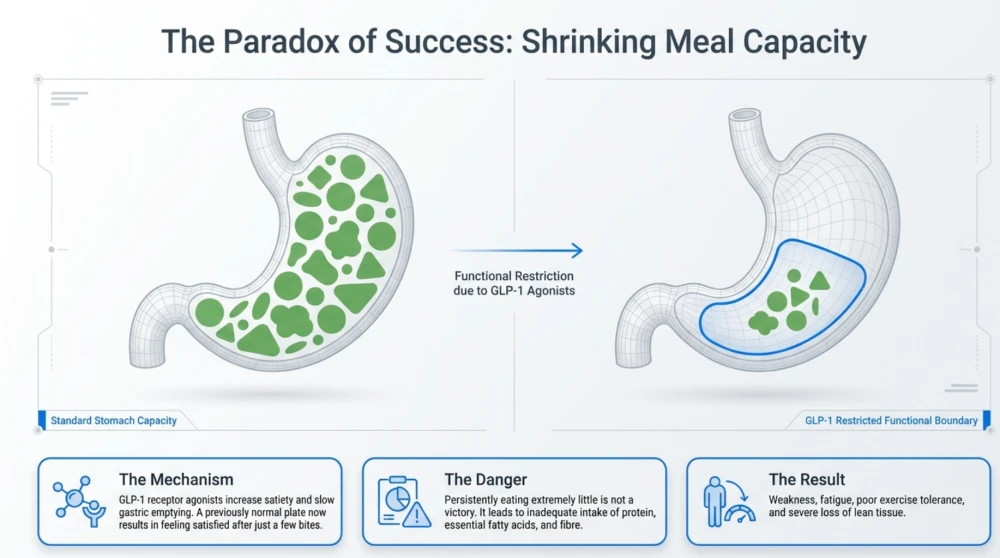
GLP-1 receptor agonists and related incretin-based medicines influence appetite regulation through several mechanisms. Depending on the medicine, they can increase satiety, reduce hunger, alter food preferences, and slow gastric emptying to varying degrees.
As a result, someone who previously ate a full plate may feel satisfied after only a small portion. Others describe forgetting to eat because hunger signals have become much weaker.
This reduction in appetite is therapeutically useful when excess calorie intake has contributed to obesity. But low appetite on GLP-1 becomes problematic when calorie reduction is accompanied by inadequate protein and nutrient intake.
Low Appetite on GLP-1 Is Not a Reason to Stop Eating
A common misunderstanding is that the less someone eats while taking a GLP-1 medicine, the better the treatment must be working.
That is not a useful goal.
These medicines are intended to support clinically appropriate weight management and metabolic health—not starvation. Persistently eating extremely little can make it difficult to obtain adequate protein, essential fatty acids, vitamins, minerals, and fibre.
Very low food intake may also contribute to weakness, fatigue, constipation, dehydration, poor exercise tolerance, and loss of lean tissue.
Therefore, low appetite on GLP-1 should be managed intelligently rather than celebrated simply because it produces faster weight loss.
Why Muscle Loss Can Occur During GLP-1 Weight Loss
Muscle loss is not unique to GLP-1 medicines. Whenever body weight decreases substantially, the weight lost generally includes a combination of fat mass and fat-free mass.
Fat-free mass includes more than skeletal muscle—it also includes water, organs, connective tissue, and other non-fat components. This distinction is important because changes reported as “lean mass loss” should not automatically be interpreted as pure muscle loss.
Nevertheless, preserving skeletal muscle remains clinically important during weight reduction.
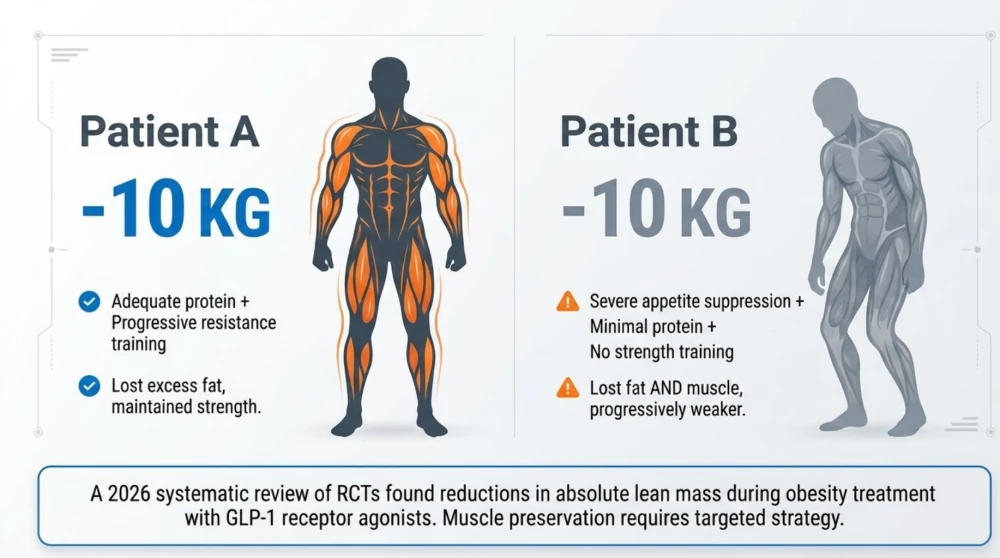
A 2026 systematic review and meta-analysis of randomised trials found reductions in absolute lean mass during obesity treatment with GLP-1 receptor agonists, although lean mass as a proportion of total body weight improved. The authors emphasised combining treatment with nutrition and exercise strategies to preserve muscle.
Why Low Appetite on GLP-1 Can Increase the Risk of Losing Muscle
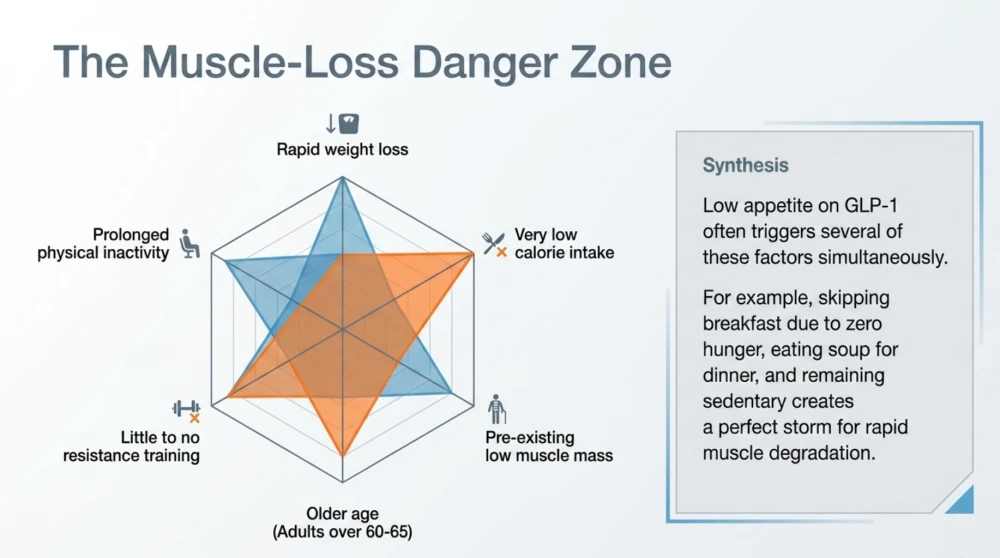
The risk becomes more concerning when several factors occur together:
- Rapid weight loss.
- Very low calorie intake.
- Inadequate protein intake.
- Little or no resistance training.
- Pre-existing low muscle mass.
- Older age.
- Prolonged physical inactivity.
A person experiencing low appetite on GLP-1 may unintentionally develop several of these factors at the same time.
For example, someone may skip breakfast because they are not hungry, eat a few bites at lunch, and manage only soup or fruit at dinner. Their calorie intake falls dramatically, but their protein intake may also become extremely low.
The resulting weight loss may look impressive on the scale while muscle preservation receives very little attention.
Why Preserving Muscle Matters During GLP-1 Treatment
Skeletal muscle is not simply important for appearance. It is metabolically active tissue with major roles in movement, strength, glucose utilisation, physical independence, and healthy ageing.
Muscle is also an important site for insulin-mediated glucose disposal. Maintaining adequate muscle mass therefore supports metabolic health, particularly in people with insulin resistance, prediabetes, or type 2 diabetes.
Excessive muscle loss during weight reduction can contribute to:
- Reduced strength.
- Lower exercise capacity.
- Greater physical fatigue.
- Reduced functional ability.
- Difficulty maintaining body composition over time.
This is why successful GLP-1 treatment should not be judged exclusively by kilograms lost.
The Goal Is Fat Loss With Muscle Preservation
A better question than “How much weight have I lost?” is:
“What kind of weight am I losing?”
Someone losing excess fat while maintaining strength and muscle is achieving something very different from someone losing weight rapidly while becoming progressively weaker.
Monitoring waist circumference, strength, physical function, dietary intake, and body composition when clinically appropriate can provide useful information beyond body weight alone.
Protein Becomes Especially Important With Low Appetite on GLP-1
Protein provides amino acids needed for maintaining and repairing muscle tissue. During weight loss, adequate protein becomes particularly important because the body is operating under an energy deficit.
The challenge is that low appetite on GLP-1 can make protein-rich foods difficult to consume in sufficient quantities.
Some people feel full after only a few bites. Others develop nausea or aversion to foods such as meat, eggs, or large meals. If protein is left until the end of the meal, a person may already be too full to eat it.
A practical solution is to make protein one of the nutritional priorities of each meal rather than treating it as an optional addition.
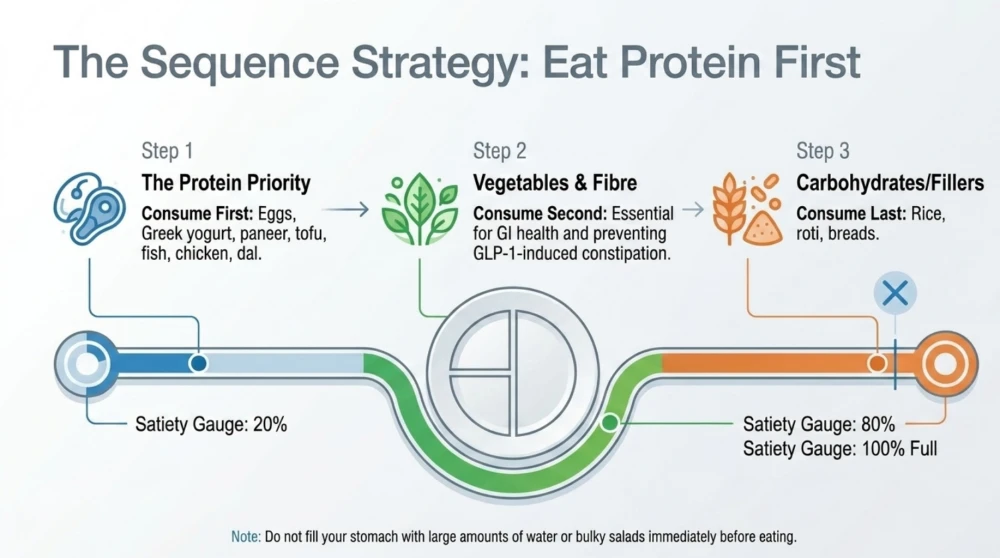
Eat Protein First When Low Appetite on GLP-1 Limits Meal Size
When meal capacity is small, the order in which food is eaten can become useful.
Instead of filling up first on salad, soup, rice, roti, or fruit, consider eating the protein-rich component early in the meal.
Depending on dietary preference, this could include:
- Eggs.
- Curd or Greek yogurt.
- Paneer.
- Tofu.
- Soy foods.
- Fish.
- Chicken.
- Dal and other legumes.
This does not mean vegetables, whole grains, or fruit are unimportant. The objective is simply to prevent protein from being repeatedly displaced when low appetite on GLP-1 limits how much food can comfortably be eaten.
How Much Protein Do You Need on GLP-1 Medicines?
There is no single protein target that is appropriate for every person taking a GLP-1 medicine.
Requirements depend on age, body size, lean mass, physical activity, rate of weight loss, kidney function, medical conditions, and whether resistance training is being performed.
The 2025 multidisciplinary GLP-1 nutrition advisory notes that optimal protein prescription remains uncertain. It discusses approaches based on lean body mass as well as practical absolute protein targets, while emphasising that recommendations should be individualised.
This is important because simply telling every patient to consume a very high amount of protein can be inappropriate, particularly when chronic kidney disease or another condition requires individual nutritional planning.
Do Not Chase a Protein Number Without Looking at the Whole Patient
Protein requirements should be interpreted in context.
A young adult performing resistance training has different nutritional needs from an older adult with chronic kidney disease. Similarly, someone losing weight rapidly with very little food intake requires a different assessment from someone eating adequately and losing weight gradually.
Instead of focusing only on a numerical target, clinicians should also consider:
- What the patient actually eats each day.
- How many meals they can tolerate.
- Whether nausea or vomiting is limiting intake.
- Rate of weight loss.
- Muscle strength and physical function.
- Resistance-training habits.
- Renal function and other medical conditions.
This broader assessment is particularly important when low appetite on GLP-1 persists for several weeks.
Protein Quality Matters When You Can Eat Only Small Portions
When appetite is substantially reduced, every meal becomes an opportunity to provide useful nutrition.
A large plate of low-protein food may create fullness without providing enough amino acids to support muscle. Smaller portions of nutrient-dense, protein-rich foods may therefore be easier to manage.
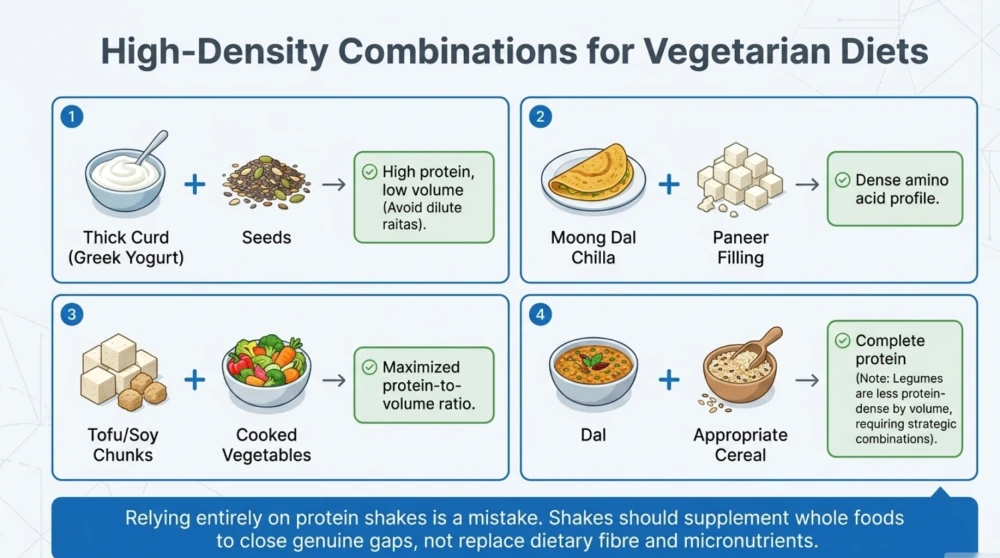
Examples for Indian diets include:
- Thick curd or Greek yogurt rather than a very dilute raita.
- Paneer or tofu added to vegetables.
- Eggs with a small portion of vegetables or whole-grain toast.
- Moong dal chilla with paneer or curd.
- Dal combined with an appropriate cereal and additional protein where needed.
- Fish or chicken with vegetables and a modest rice or roti portion.
The aim is not to create a “protein-only” diet. Fruits, vegetables, whole grains, legumes, nuts, seeds, and healthy fats remain important for fibre and micronutrient adequacy. The goal is to ensure that protein does not disappear from the diet simply because appetite has fallen.
Low Appetite on GLP-1 Can Also Lead to Micronutrient Gaps
Protein is not the only nutritional concern.
If total food intake becomes very small, intake of iron, vitamin B12, folate, calcium, vitamin D, and other nutrients may also become inadequate depending on the person's usual diet.
The 2025 multidisciplinary advisory recommends ongoing attention to dietary intake, hydration, nutritional adequacy, and targeted supplementation when clinically appropriate rather than automatically prescribing supplements to everyone using GLP-1 therapy.
Low Appetite on GLP-1 Should Trigger a Nutrition Review When Intake Becomes Very Low
Reduced appetite is expected to some degree, but there is a difference between eating smaller portions and being unable to meet basic nutritional needs.
A nutrition and medication review becomes particularly important when someone develops persistent:
- Weakness.
- Marked fatigue.
- Dizziness.
- Repeated vomiting.
- Difficulty maintaining fluid intake.
- Very rapid weight loss.
- Noticeable loss of strength.
- Inability to tolerate protein-rich foods.
These symptoms should not simply be accepted as the price of successful weight loss.
The Scale Cannot Tell You Whether You Are Protecting Muscle
Imagine two people who each lose 10 kilograms while taking a GLP-1-based medicine.
The first person eats adequate protein, performs progressive resistance training, remains physically active, and loses mainly excess body fat.
The second person eats very little because of severe appetite suppression, consumes minimal protein, performs no strength training, and becomes progressively weaker.
The weighing scale reports the same 10-kilogram loss.
But these are not equivalent outcomes.
This is the central message when managing low appetite on GLP-1: successful treatment should improve health and body composition, not simply produce the lowest possible number on the scale.
Practical Protein Targets When You Have Low Appetite on GLP-1
Once appetite falls, simply advising someone to “eat more protein” is often not enough. The recommendation needs to be practical enough to follow when a normal-sized meal suddenly feels overwhelming.
Protein requirements vary considerably between individuals. Age, body size, muscle mass, physical activity, rate of weight loss, kidney function, and medical history all influence the appropriate amount.
Rather than automatically calculating protein from a person’s current weight—which may overestimate requirements in someone with substantial obesity—a clinician or dietitian may use an individualised target based on factors such as adjusted body weight, ideal body weight, lean mass, or an appropriate absolute daily amount.
The more important principle is that low appetite on GLP-1 should not result in protein disappearing from the diet altogether.
Why Protein Should Be Distributed Across the Day
Trying to consume almost the entire daily protein requirement at dinner can be particularly difficult for someone experiencing early fullness.
A more practical approach is to distribute protein across the eating opportunities that the person can tolerate.
For example, protein might be included at:
- Breakfast.
- Lunch.
- An afternoon snack if needed.
- Dinner.
Someone who can tolerate only small meals may find three or four modest protein servings easier than two very large portions.
This approach also provides repeated amino acid availability across the day, which is useful when muscle preservation is a priority.
What Should You Eat When Low Appetite on GLP-1 Makes Large Meals Difficult?
One of the most common mistakes during GLP-1 treatment is continuing to serve the same large portions that were eaten before treatment.
The person takes a few bites, becomes uncomfortable, and then stops eating altogether.
Smaller meals are often easier to tolerate.
Instead of thinking in terms of a traditional large breakfast, lunch, and dinner, some people may temporarily do better with smaller, nutrient-dense meals that provide meaningful protein without excessive volume.
Small Protein-Rich Meals for Low Appetite on GLP-1
Practical options may include:
- Greek yogurt or thick curd with a small portion of fruit and nuts.
- Two eggs with vegetables.
- A small paneer or tofu bhurji.
- Moong dal chilla with curd or paneer filling.
- A modest bowl of dal with vegetables and curd.
- Grilled fish or chicken with cooked vegetables.
- Unsweetened milk or a protein-rich beverage when solid food is temporarily difficult.
The exact portion should be guided by tolerance rather than forcing a predetermined plate size.
Protein First Can Help When Early Fullness Is Severe
When low appetite on GLP-1 means that only a small amount of food can be eaten, meal sequence becomes relevant.
Starting with a large salad, soup, or several glasses of water may fill the stomach before meaningful protein has been consumed. Similarly, beginning with rice, bread, or other carbohydrate-rich foods can leave insufficient appetite for the protein portion.
For people struggling to meet protein requirements, eating some of the protein-rich component first may be practical.
This is not a universal rule for everyone using GLP-1 medicines. It is a strategy for people whose reduced meal capacity is preventing adequate protein intake.
Do Not Remove Vegetables and Fibre
Prioritising protein does not mean abandoning vegetables, fruit, legumes, or whole grains.
Fibre remains important for gastrointestinal health, glucose regulation, and constipation prevention. The objective is to organise a smaller meal intelligently so that protein and other essential nutrients can coexist within the amount of food the person can comfortably tolerate.
What If Low Appetite on GLP-1 Comes With Nausea?
Nausea is a recognised gastrointestinal adverse effect of GLP-1-based medicines, particularly during treatment initiation or dose escalation. For many people it improves with time, but significant nausea can further reduce food intake.
Large, high-fat meals may be particularly difficult to tolerate because GLP-1 medicines can affect gastric emptying and satiety.
When nausea occurs, practical measures may include:
- Eating smaller portions.
- Eating slowly.
- Stopping as soon as comfortable fullness develops.
- Avoiding very large or high-fat meals.
- Avoiding lying down immediately after eating.
- Maintaining fluids through small, regular amounts if large drinks feel uncomfortable.
Persistent or severe nausea should be discussed with the prescribing clinician rather than managed by simply eating less and less.
Repeated Vomiting Is Not Normal Appetite Suppression
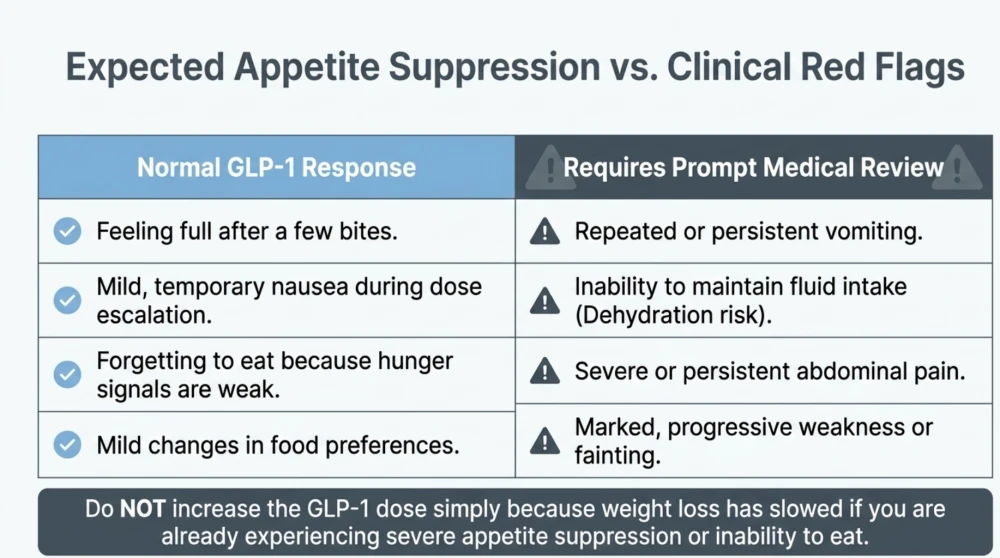
There is an important difference between reduced hunger and being unable to keep food or fluids down.
Repeated vomiting can cause dehydration and electrolyte disturbances and may make adequate nutrition impossible.
Someone experiencing persistent vomiting, inability to maintain hydration, severe or persistent abdominal pain, or significant deterioration in general condition should seek medical assessment rather than assuming these symptoms are an expected part of GLP-1 treatment.
Are Protein Shakes Useful for Low Appetite on GLP-1?
Protein supplements are not mandatory for everyone taking a GLP-1 medicine. Many people can meet their requirements through ordinary food.
However, a protein shake can sometimes be useful when low appetite on GLP-1 makes adequate solid-food intake difficult.
A smaller-volume protein drink may be easier to tolerate than a large plate of food, particularly after exercise or during periods of pronounced early satiety.
Protein Shakes Should Supplement Food, Not Replace the Entire Diet
Protein powder provides protein; it does not automatically provide everything required for a nutritionally complete diet.
Relying heavily on shakes while eating almost no whole foods may result in inadequate fibre and limited dietary variety.
A more balanced approach is to use a protein supplement selectively when it helps close a genuine protein gap while continuing to include vegetables, fruit, legumes, whole grains, nuts, seeds, and other appropriate foods.
What Should You Look for in a Protein Supplement?
If a supplement is needed, practical considerations include:
- Protein content per serving.
- Amount of added sugar.
- Total calories.
- Ingredient list.
- Digestive tolerance.
- Independent quality testing where available.
Whey protein can be convenient for people who tolerate dairy. Plant-based options may use soy, pea, or combinations of plant proteins.
People with chronic kidney disease, significant liver disease, allergies, or other conditions affecting dietary protein should discuss supplementation with their healthcare professional.
Vegetarian Protein Options for Low Appetite on GLP-1
Meeting protein requirements can require more planning in vegetarian diets when appetite is substantially reduced, but it is entirely possible.
Useful Indian vegetarian options include:
- Paneer.
- Greek yogurt or high-protein curd.
- Milk.
- Tofu.
- Soy chunks.
- Tempeh.
- Dal.
- Rajma.
- Chickpeas.
- Moong and other legumes.
Legumes provide valuable protein, fibre, and micronutrients, although they are generally less protein-dense by volume than some dairy or soy foods. When low appetite on GLP-1 is pronounced, combining different protein sources can make it easier to reach an appropriate intake without requiring very large portions.
A Practical Vegetarian Breakfast
Instead of eating only fruit or toast, consider a small serving of moong dal chilla with paneer or curd and fruit on the side.
Alternatively, Greek yogurt with fruit, seeds, and a small portion of nuts may be easier to tolerate when morning appetite is particularly low.
Resistance Training Is Essential for Protecting Muscle
Protein alone cannot provide the strongest possible protection against muscle loss.
Muscle needs a reason to remain.
Resistance exercise provides a mechanical stimulus that tells the body that skeletal muscle is still required. This makes strength training an important partner to adequate protein during GLP-1-associated weight loss.
The 2025 multidisciplinary advisory on nutritional priorities during GLP-1 therapy specifically emphasises resistance training alongside adequate protein intake as part of preserving muscle and bone during weight reduction.
What Counts as Resistance Training?
Resistance training does not necessarily mean heavy bodybuilding exercises.
Depending on fitness level, it can include:
- Chair squats.
- Wall or incline push-ups.
- Resistance-band exercises.
- Weight machines.
- Dumbbell exercises.
- Bodyweight movements.
Someone who is new to exercise should begin at an appropriate level and progress gradually rather than attempting an advanced programme immediately.
Walking Is Important, but It Is Not a Complete Muscle-Preservation Strategy
Walking is excellent for cardiovascular health, daily energy expenditure, glucose regulation, and general fitness. It should be encouraged whenever medically appropriate.
However, walking does not provide the same muscle-loading stimulus as progressive resistance exercise.
For someone with low appetite on GLP-1 who is losing weight rapidly, relying only on walking while consuming inadequate protein may not provide the best strategy for maintaining muscle mass.
A more complete programme usually combines:
- Regular walking or other aerobic activity.
- Resistance training.
- Adequate dietary protein.
- Appropriate recovery and sleep.
Strength Matters More Than Appearance
The objective of resistance training during GLP-1 therapy is not necessarily to develop visibly large muscles.
Maintaining the ability to climb stairs, lift everyday objects, get up from a chair, exercise comfortably, and remain physically independent is clinically much more important.
How Do You Know If Weight Loss May Be Too Aggressive?
There is no single rate of weight loss that defines a problem for every patient. The starting weight, medication, dose, medical conditions, calorie intake, and treatment stage all matter.
However, rapid scale changes combined with deteriorating nutrition or physical function deserve attention.
Warning Signs During Low Appetite on GLP-1
Speak with your prescribing clinician if appetite suppression is accompanied by:
- Progressive weakness.
- Noticeable loss of strength.
- Difficulty completing normal daily activities.
- Persistent dizziness.
- Repeated vomiting.
- Difficulty maintaining fluid intake.
- Very limited food intake for a prolonged period.
- Persistent constipation despite appropriate measures.
- Continued rapid weight loss with worsening fatigue.
These symptoms may have several causes and should not automatically be attributed to muscle loss. They indicate that the treatment, nutritional intake, hydration, medication dose, and overall health need reassessment.
Do Not Increase the GLP-1 Dose Simply Because Weight Loss Has Slowed
GLP-1 medicines are generally titrated according to the specific product, indication, tolerability, treatment response, and prescribing guidance.
A temporary slowing of weight loss does not automatically mean the dose should be increased.
If someone already has severe low appetite on GLP-1, persistent nausea, poor protein intake, or difficulty eating adequately, further appetite suppression may not be desirable.
Dose decisions should therefore be made with the prescribing clinician rather than according to social-media dosing schedules or the desire to lose weight as quickly as possible.
Muscle Preservation Requires More Than a High-Protein Diet
It is tempting to reduce the entire discussion to one instruction: “Eat more protein.” But muscle health is influenced by several interacting factors.
A more complete muscle-preservation strategy includes:
- Adequate protein intake.
- Progressive resistance training.
- Sufficient overall nutrition.
- Regular physical activity.
- Avoiding unnecessarily rapid weight loss.
- Adequate sleep and recovery.
- Monitoring strength and physical function.
This is especially important for older adults and people who already have low muscle mass before starting treatment.
Why Older Adults Need Extra Attention With Low Appetite on GLP-1
Ageing is naturally associated with a gradual decline in muscle mass and strength. When significant calorie restriction and rapid weight loss are added to this process, preserving muscle becomes particularly important.
An older adult may lose kilograms successfully while simultaneously becoming weaker if nutrition and resistance exercise are neglected.
For this reason, management of low appetite on GLP-1 in older adults should consider physical function as carefully as body weight.
Changes in walking speed, ability to rise from a chair, exercise tolerance, grip strength, and ability to perform everyday tasks may provide useful clues that the treatment plan needs adjustment.
The Best Weight Loss Should Improve Function
Weight reduction should make movement easier, improve metabolic health, and support quality of life.
If the scale is improving while strength, energy, nutrition, and physical function are progressively deteriorating, the treatment strategy deserves reassessment.
The goal of GLP-1 therapy is not maximum appetite suppression. It is sustainable improvement in health.
A Practical Day of Eating With Low Appetite on GLP-1
When appetite is substantially reduced, the goal is not to force large meals. A better strategy is to make smaller meals nutritionally meaningful.
The following example is not a fixed prescription. Protein and calorie requirements vary according to body size, age, activity, kidney function, medical conditions, and treatment goals. It simply demonstrates how someone experiencing low appetite on GLP-1 might distribute protein across the day.
Breakfast When Low Appetite on GLP-1 Is Strongest in the Morning
Choose a small protein-rich meal that is easy to tolerate. Examples include Greek yogurt or thick curd with a small portion of fruit, eggs with vegetables, or a small moong dal chilla with curd or paneer.
If a normal breakfast feels impossible, starting with a smaller portion may be more realistic than skipping protein completely.
Lunch
A practical Indian lunch might contain dal, paneer, tofu, fish, chicken, or another protein source alongside cooked vegetables and an appropriate portion of rice or roti.
When early fullness is significant, eat some of the protein before filling up on large quantities of rice, bread, salad, or other bulky foods.
Small Protein-Rich Snack if Needed
Not everyone requires snacks. However, when meals are very small and daily protein intake is falling short, a planned protein-rich snack may be useful.
Options may include curd, Greek yogurt, milk, a small portion of paneer, or an appropriate protein drink.
Dinner
Dinner can follow the same principle: a tolerable portion of protein with vegetables and an appropriate amount of carbohydrate rather than a very large meal.
The important point is consistency. Someone experiencing low appetite on GLP-1 may find several modest protein opportunities easier than trying to compensate with an enormous high-protein dinner.
Hydration Matters When You Have Low Appetite on GLP-1
Some people notice that their desire to drink decreases along with their appetite. Nausea, vomiting, diarrhoea, or simply forgetting to drink can further reduce fluid intake.
Dehydration may contribute to:
- Dizziness.
- Headache.
- Fatigue.
- Constipation.
- Dark or reduced urine.
- Poor exercise tolerance.
Rather than drinking a very large quantity at once, people who feel easily full may tolerate smaller amounts of fluid regularly throughout the day.
Do Not Fill Your Stomach With Water Immediately Before Eating
Hydration is important, but drinking a large amount immediately before a meal can make early fullness worse in someone already struggling with low appetite on GLP-1.
Spacing fluids through the day may make it easier to remain hydrated without displacing food at every meal.
People with heart failure, advanced kidney disease, or another condition requiring fluid restriction should follow their clinician's individual advice rather than increasing fluid intake indiscriminately.
Constipation Can Make Low Appetite on GLP-1 Even Worse
Constipation is another gastrointestinal problem that can occur during GLP-1 therapy. Reduced food volume, inadequate fluid intake, lower fibre intake, and reduced physical activity may contribute.
Constipation can then worsen bloating and fullness, making eating even more difficult.
Useful preventive measures may include adequate fluids where medically appropriate, vegetables, whole fruit, legumes, whole grains, seeds, and regular physical activity.
However, suddenly consuming very large amounts of fibre when fluid intake is inadequate may worsen gastrointestinal discomfort in some people. Changes should therefore be gradual and based on tolerance.
How to Monitor Muscle During GLP-1 Weight Loss
The weighing scale cannot distinguish fat loss from muscle loss. A lower number therefore does not automatically mean body composition is improving optimally.
More useful monitoring may include a combination of:
- Body weight trend.
- Waist circumference.
- Strength during resistance exercises.
- Ability to perform everyday activities.
- Walking capacity.
- Dietary protein intake.
- Body composition assessment when clinically useful.
Strength Is a Practical Marker During Low Appetite on GLP-1
Body-composition devices have limitations, and small changes in hydration can alter some measurements. Physical function therefore provides valuable additional information.
If someone is losing weight while maintaining or gradually improving their resistance-training performance, that is generally more reassuring than rapid weight loss accompanied by progressive weakness.
Conversely, difficulty getting out of a chair, carrying routine household items, climbing stairs, or completing previously manageable exercises deserves attention.
Should You Use a Smart Scale to Measure Muscle?
Home bioelectrical impedance scales can estimate body fat and lean mass, but the numbers should not be treated as precise measurements of skeletal muscle.
Hydration, food intake, recent exercise, and other factors can influence readings.
If you use such a device, look at longer-term trends under similar measurement conditions rather than reacting to small daily fluctuations.
Clinical body-composition assessment may be useful in selected patients, but it is not necessary for everyone taking a GLP-1 medicine.
Common Mistakes With Low Appetite on GLP-1
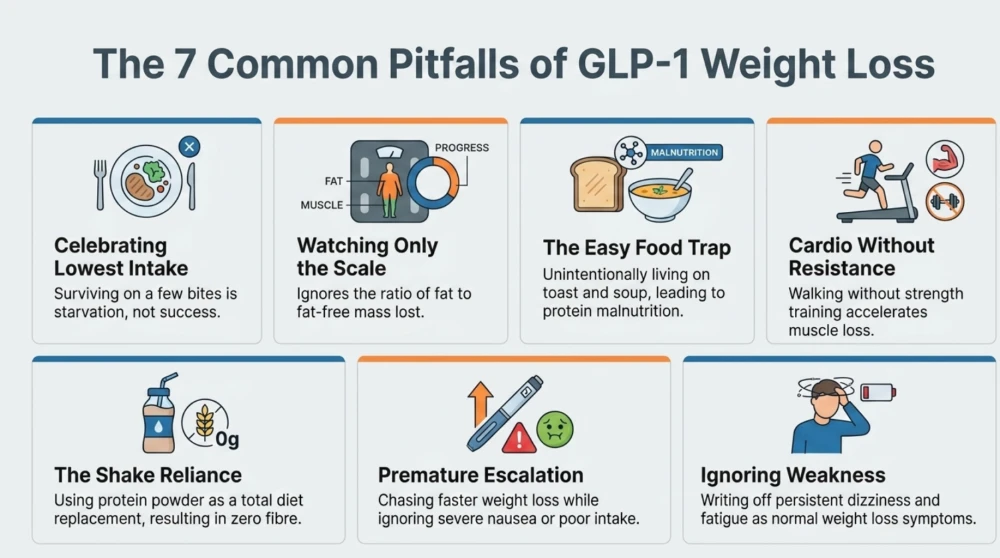
Mistake 1: Celebrating the Lowest Possible Food Intake
Being able to survive on a few bites of food is not the objective of GLP-1 therapy.
Persistent severe appetite suppression can make adequate nutrition difficult and should prompt review rather than being interpreted automatically as excellent treatment response.
Mistake 2: Watching Only Body Weight
Weight is useful, but it cannot tell you whether the kilograms lost came predominantly from fat or whether substantial lean tissue was also lost.
Waist circumference, strength, function, dietary quality, and metabolic markers add important context.
Mistake 3: Eating Almost No Protein
Someone with low appetite on GLP-1 may unintentionally eat mainly fruit, toast, soup, tea, or very small carbohydrate-based meals because these foods feel easier.
Over time, protein intake can become inadequate unless it is deliberately prioritised.
Mistake 4: Doing Cardio but No Resistance Training
Walking, cycling, and other aerobic activities are valuable, but muscle preservation benefits from a direct resistance-training stimulus.
Combining aerobic activity with appropriately progressive strength training provides a more complete exercise strategy.
Mistake 5: Relying Entirely on Protein Shakes
A supplement can be useful when appetite is low, but protein powder should not become a substitute for an otherwise nutritionally diverse diet.
Mistake 6: Increasing the Medicine Dose Too Quickly
More medication is not automatically better. Dose escalation should follow the prescribing plan and consider treatment response and tolerability.
If the current dose already produces substantial nausea or an inability to eat adequately, the prescribing clinician should know before further escalation is considered.
Mistake 7: Ignoring Persistent Weakness
Fatigue and weakness during treatment can have many causes, including inadequate calorie intake, dehydration, anaemia, nutrient deficiencies, medication effects, illness, and loss of physical conditioning.
They should not automatically be labelled as normal consequences of weight loss.
When Low Appetite on GLP-1 Needs Medical Review
Some appetite reduction is expected with these medicines. However, there is a point at which reduced appetite becomes clinically important.
Contact your prescribing clinician if you are consistently unable to eat enough to maintain reasonable nutrition or if symptoms are interfering significantly with daily activities.
Seek Prompt Assessment for Significant Symptoms
Medical assessment is particularly important with:
- Persistent or repeated vomiting.
- Inability to maintain fluids.
- Signs of dehydration.
- Severe or persistent abdominal pain.
- Marked or progressive weakness.
- Fainting or significant dizziness.
- Very low food intake continuing for several days.
- Rapid deterioration in physical function.
Severe abdominal pain, especially when persistent or accompanied by vomiting, should not be self-managed simply by reducing food intake. The prescribing information for GLP-1-based medicines includes warnings about potentially serious gastrointestinal and other adverse events that require clinical assessment.
Who Needs Particular Attention to Muscle Preservation?
Muscle preservation matters for everyone undergoing substantial weight loss, but certain groups deserve additional attention.
These include:
- Adults over 60–65 years.
- People who already have low muscle mass.
- People who have repeatedly followed very-low-calorie diets.
- People losing weight rapidly.
- People with very low protein intake.
- Adults who are physically inactive.
- People recovering from illness or prolonged inactivity.
For these individuals, managing low appetite on GLP-1 should include explicit attention to strength, physical function, nutrition, and resistance exercise rather than focusing solely on BMI or kilograms lost.
Do You Need Supplements While Taking a GLP-1 Medicine?
There is no universal supplement package that every person taking semaglutide, tirzepatide, or another GLP-1-based medicine needs.
Supplementation should ideally be based on dietary intake, symptoms, clinical risk factors, and laboratory evidence where appropriate.
Depending on the individual, clinicians may assess nutrients such as vitamin B12, iron, folate, vitamin D, or others when there is a reasonable clinical indication.
Buying multiple supplements cannot compensate for persistently inadequate food intake.
Food Quality Still Matters During Low Appetite on GLP-1
Because meal size is smaller, food quality arguably becomes more important, not less.
Prioritise foods that provide meaningful nutrition within a manageable volume:
- High-quality protein sources.
- Vegetables.
- Whole fruit.
- Legumes.
- Whole grains as appropriate.
- Nuts and seeds.
- Healthy unsaturated fats.
The aim is not dietary perfection. It is to avoid allowing appetite suppression to turn into nutritional neglect.
Key Takeaways About Low Appetite on GLP-1
- Low appetite on GLP-1 is expected to some degree, but extreme food restriction is not the treatment goal.
- Weight lost during treatment includes both fat and some fat-free mass, making muscle preservation an important consideration.
- Adequate protein and resistance training work together to support muscle preservation during weight loss.
- When portions are very small, prioritising protein early in the meal can help prevent it from being displaced.
- Protein needs should be individualised rather than applying the same high-protein target to everyone.
- Protein shakes can be useful when solid food is difficult, but they should supplement rather than replace a varied diet.
- Walking is valuable, but progressive resistance training provides an additional stimulus for maintaining muscle.
- Hydration, fibre, micronutrient adequacy, sleep, and overall dietary quality remain important during GLP-1 treatment.
- Persistent vomiting, inability to maintain fluids, severe abdominal pain, progressive weakness, or extremely low food intake require medical review.
- Successful GLP-1 treatment should improve metabolic health and physical function—not simply produce the fastest possible fall on the weighing scale.
References
- Mozaffarian D, et al. Nutritional Priorities to Support GLP-1 Therapy for Obesity: A Joint Advisory From the American College of Lifestyle Medicine, American Society for Nutrition, Obesity Medicine Association, and The Obesity Society. American Journal of Clinical Nutrition. 2025.
- Neeland IJ, et al. Lean mass changes with glucagon-like peptide-1 receptor agonist treatment in obesity: a systematic review and meta-analysis of randomised controlled trials. International Journal of Obesity. 2026.
- American Diabetes Association Professional Practice Committee. Standards of Care in Diabetes—2026. Diabetes Care. 2026.
- American Gastroenterological Association. Multisociety Clinical Practice Guidance for the Safe Use of GLP-1 Receptor Agonists. Updated guidance accessed 2026.
- U.S. Food and Drug Administration. Prescribing Information for Semaglutide and Tirzepatide Products. Current prescribing information accessed 2026.
Written by Dr. Pankaj Kumar, General & Lifestyle Physician, Dwarka, New Delhi