
















- 3rd August 2026
Table of Contents
- What Is Waist-to-Height Ratio?
- What Is BMI?
- Why Waist-to-Height Ratio Is Receiving More Attention
- Why BMI Can Miss Metabolic Risk
- Waist-to-Height Ratio and Hidden Visceral Fat
- Can Waist-to-Height Ratio Predict Diabetes Better Than BMI?
- Why Waist-to-Height Ratio Matters for South Asians
- What Is a Healthy Waist-to-Height Ratio?
- How to Measure Waist Circumference for Waist-to-Height Ratio
- Common Mistakes When Measuring Waist-to-Height Ratio
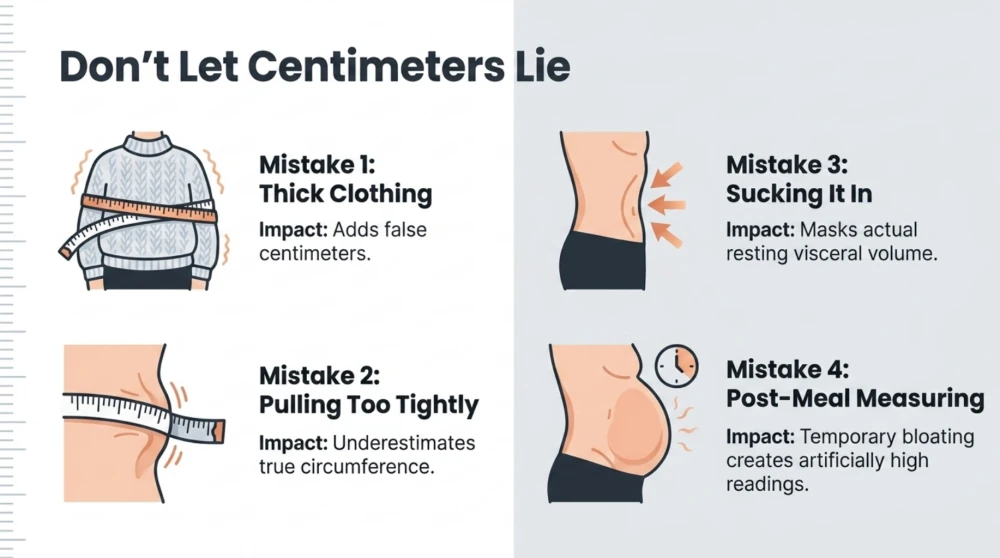
- Measuring Over Thick Clothing
- Pulling the Tape Too Tightly
- Holding the Stomach In
- Measuring After a Large Meal
- Using Different Waist Locations
- Waist-to-Height Ratio for Men and Women
- Waist-to-Height Ratio vs BMI: A Practical Comparison
- Why Waist-to-Height Ratio May Predict Metabolic Risk Better
- Can Waist-to-Height Ratio Replace Laboratory Testing?
- Why Tracking Waist-to-Height Ratio Can Be More Useful Than Tracking Weight Alone
- How to Improve Your Waist-to-Height Ratio
- Why Nutrition Influences Waist-to-Height Ratio
- Why Strength Training Helps Improve Waist-to-Height Ratio
- How Sleep and Stress Affect Waist-to-Height Ratio
- When an Elevated Waist-to-Height Ratio Needs Medical Assessment
- Limitations of Waist-to-Height Ratio
- Waist-to-Height Ratio During Pregnancy
- Waist-to-Height Ratio in Children and Adolescents
- Waist-to-Height Ratio in Very Muscular Adults
- Should You Use Waist-to-Height Ratio or BMI?
- How Often Should You Check Waist-to-Height Ratio?
- Key Takeaways About Waist-to-Height Ratio
- References
For decades, Body Mass Index (BMI) has been one of the most commonly used tools to assess whether someone has a healthy body weight. It is simple, inexpensive, and widely used in clinics, hospitals, research studies, and public health programmes around the world.
However, healthcare professionals are increasingly recognising an important limitation of BMI—it tells us how heavy a person is for their height, but it does not tell us where body fat is stored.
This distinction matters because fat accumulated around the abdomen is far more strongly associated with diabetes, fatty liver disease, hypertension, heart disease, and metabolic syndrome than fat stored elsewhere in the body.
As a result, waist-to-height ratio has gained considerable attention as a practical tool for identifying people at increased metabolic risk, even when their BMI appears normal.
Understanding the difference between waist-to-height ratio and BMI can help you assess your health more accurately and identify hidden metabolic risk before chronic disease develops.
What Is Waist-to-Height Ratio?
Waist-to-height ratio is a simple measurement that compares your waist circumference with your height.
Unlike BMI, which estimates body size using weight and height, waist-to-height ratio focuses on abdominal fat, one of the strongest predictors of cardiometabolic disease.
The calculation is straightforward:
Waist-to-Height Ratio = Waist Circumference ÷ Height
Both measurements should be recorded using the same units, such as centimetres.
For example:
- Height = 170 cm
- Waist circumference = 82 cm
- Waist-to-height ratio = 82 ÷ 170 = 0.48
Because it requires only a measuring tape, waist-to-height ratio is easy to calculate at home without specialised equipment.
What Is BMI?
Body Mass Index (BMI) estimates body size using a person's weight and height.
It is calculated as:
BMI = Weight (kg) ÷ Height² (m²)
BMI is useful for assessing population trends and identifying individuals who may be underweight, overweight, or obese.
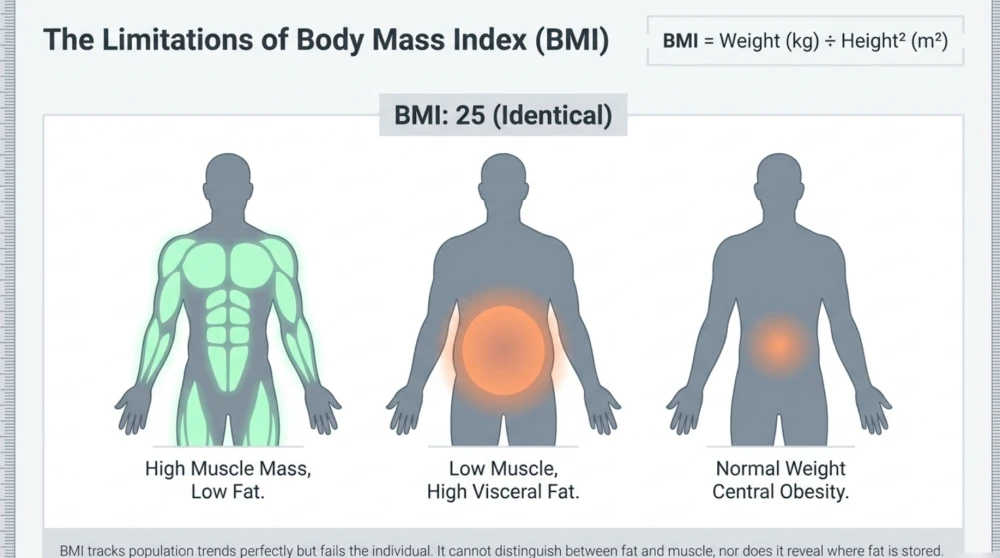
However, BMI cannot distinguish between:
- Fat and muscle.
- Subcutaneous fat and visceral fat.
- Athletic individuals and sedentary adults.
- Different patterns of fat distribution.
This means two individuals with exactly the same BMI may have very different metabolic health.
Why Waist-to-Height Ratio Is Receiving More Attention
One of the biggest advantages of waist-to-height ratio is that it reflects central obesity.
Visceral fat surrounding internal organs is metabolically active and contributes to insulin resistance, inflammation, abnormal cholesterol levels, and increased cardiovascular risk.
Numerous studies have shown that abdominal obesity often predicts future metabolic disease more accurately than overall body weight alone.
This is why many experts now consider waist-to-height ratio a valuable complement to BMI rather than a replacement for it.
Why BMI Can Miss Metabolic Risk
Many adults are surprised when routine blood tests reveal prediabetes, fatty liver disease, or high triglycerides despite having a "normal" BMI.
This occurs because BMI does not measure body composition or fat distribution.
Examples include:
- A person with low muscle mass and excess abdominal fat.
- A lean individual with significant visceral fat.
- An athlete with high muscle mass and very little body fat.
All three people may have similar BMI values, yet their metabolic health can be completely different.
In these situations, waist-to-height ratio often provides additional information that BMI alone cannot offer.
Waist-to-Height Ratio and Hidden Visceral Fat
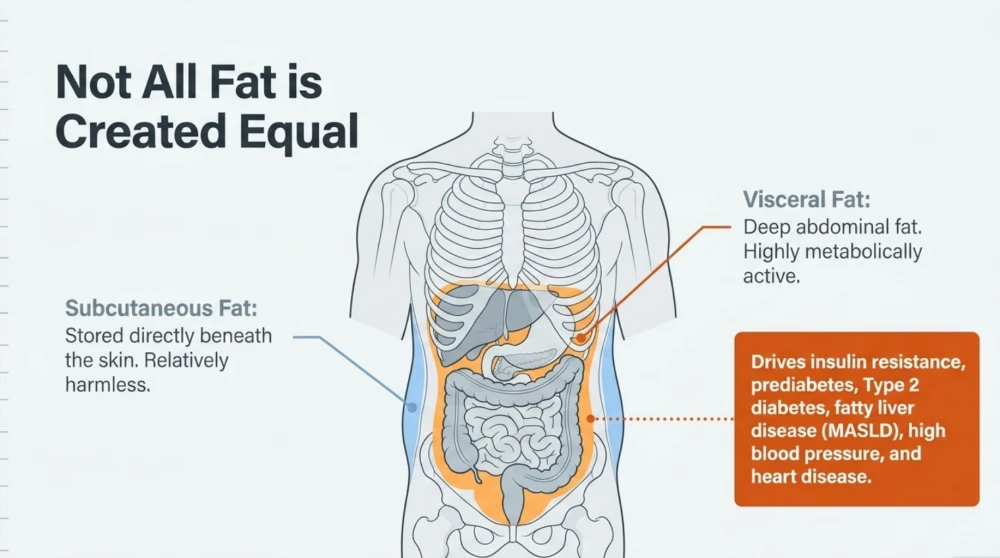
Visceral fat is stored deep inside the abdomen around organs such as the liver, pancreas, and intestines.
Unlike fat beneath the skin, visceral fat is strongly associated with:
- Insulin resistance.
- Prediabetes.
- Type 2 diabetes.
- Fatty liver disease (MASLD).
- High blood pressure.
- Heart disease.
Because waist-to-height ratio reflects abdominal fat more directly than BMI, it often identifies individuals with increased metabolic risk who might otherwise be overlooked.
Can Waist-to-Height Ratio Predict Diabetes Better Than BMI?
Growing evidence suggests that waist-to-height ratio is often a better predictor of insulin resistance, metabolic syndrome, and type 2 diabetes than BMI alone.
This does not mean BMI has become obsolete. Rather, combining BMI with waist-to-height ratio provides a more complete assessment of body composition and metabolic health.
For example, two adults may have the same BMI of 24 kg/m². If one has a much larger waist circumference relative to height, that individual is generally more likely to have excess visceral fat and a higher metabolic risk.
Why Waist-to-Height Ratio Matters for South Asians
South Asian populations, including Indians, often develop metabolic diseases at lower BMI values than many Western populations.
Many Indian adults develop:
- Prediabetes.
- Type 2 diabetes.
- Fatty liver disease.
- High triglycerides.
- Central obesity.
despite appearing relatively lean.
This phenomenon makes waist-to-height ratio particularly valuable because it helps identify abdominal obesity that may not be obvious from body weight alone.
What Is a Healthy Waist-to-Height Ratio?
The most widely used interpretation of waist-to-height ratio is based on a simple principle: your waist circumference should ideally remain less than half of your height.
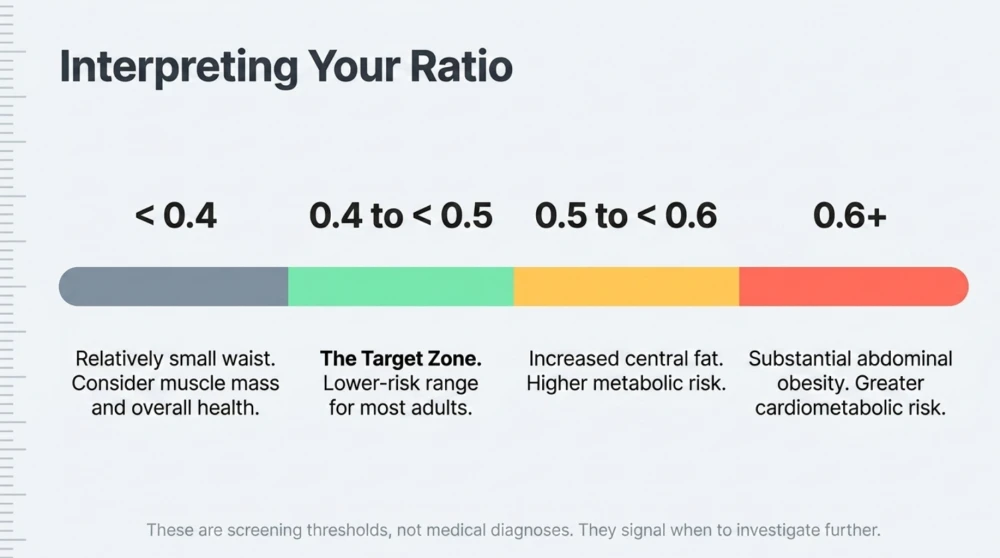
In practical terms, a waist-to-height ratio below 0.5 is generally considered a useful target for many adults. A result between 0.5 and 0.59 suggests increasing central fat accumulation and a higher likelihood of cardiometabolic risk, while a value of 0.6 or above may indicate substantially increased abdominal obesity.
These numbers should be treated as screening thresholds rather than diagnoses. A waist-to-height ratio cannot confirm diabetes, fatty liver disease, hypertension, or heart disease. However, it can identify people who may benefit from closer assessment of blood pressure, blood glucose, cholesterol, liver health, and other metabolic markers.
How to Interpret Waist-to-Height Ratio
| Waist-to-Height Ratio | General Interpretation |
|---|---|
| Below 0.4 | May indicate a relatively small waist; interpretation should consider age, muscle mass, nutrition, and overall health. |
| 0.4 to below 0.5 | Generally considered a lower-risk range for many adults. |
| 0.5 to below 0.6 | Suggests increased central fat and potentially higher metabolic risk. |
| 0.6 or above | Suggests substantial abdominal obesity and greater cardiometabolic risk. |
The easy-to-remember public health message is: keep your waist circumference below half your height. Although this does not replace medical evaluation, it makes waist-to-height ratio understandable and practical for people who may find BMI categories confusing.
How to Measure Waist Circumference for Waist-to-Height Ratio
The usefulness of waist-to-height ratio depends heavily on accurate measurement. Measuring at the wrong point, pulling the tape too tightly, or recording the waist after a large meal may produce misleading results.
The measurement should be taken with a flexible, non-stretchable measuring tape placed horizontally around the abdomen. The person should stand upright, breathe normally, and keep the abdominal muscles relaxed rather than pulling the stomach inward.
Different medical organisations use slightly different anatomical landmarks for waist measurement. One commonly used approach is to measure midway between the lowest rib and the top of the hip bone. Another practical method is to measure around the abdomen at the level recommended by the clinician or laboratory and then use the same location consistently during follow-up.
Consistency is more important than repeatedly changing the measurement point. If a person is tracking progress over time, the waist-to-height ratio should be calculated using the same technique on each occasion.
Step-by-Step Waist-to-Height Ratio Measurement
- Remove bulky clothing from around the abdomen.
- Stand upright with feet comfortably apart.
- Identify the midpoint between the lowest rib and the top of the hip bone.
- Wrap the measuring tape horizontally around the waist.
- Keep the tape snug but do not compress the skin.
- Take the measurement after a normal breath out.
- Measure height without shoes.
- Divide waist circumference by height using the same unit.
For example, if your waist measures 90 centimetres and your height is 170 centimetres, your waist-to-height ratio is approximately 0.53. This suggests that abdominal fat may be increasing metabolic risk even if BMI is not in the obesity range.
Common Mistakes When Measuring Waist-to-Height Ratio
A small measurement error can noticeably change the final waist-to-height ratio. This is especially important when the result is close to a threshold such as 0.5.
Measuring Over Thick Clothing
Jeans, belts, heavy shirts, and layered clothing can add centimetres to the waist measurement. Whenever possible, measure directly over bare skin or thin clothing.
Pulling the Tape Too Tightly
The tape should touch the skin without indenting it. Pulling it tightly may underestimate the true waist circumference and create a falsely reassuring waist-to-height ratio.
Holding the Stomach In
Many people unconsciously tighten their abdominal muscles while measuring. The abdomen should remain relaxed, and the measurement should be taken after a normal breath out rather than after forcefully exhaling.
Measuring After a Large Meal
Temporary bloating or abdominal distension may affect the reading. For better consistency, measure at a similar time of day, ideally before a large meal.
Using Different Waist Locations
Measuring at the narrowest part of the waist on one day and at the level of the navel on another makes comparison unreliable. Choose one validated method and use it consistently.
Waist-to-Height Ratio for Men and Women
One practical advantage of waist-to-height ratio is that the simple target of keeping the waist below half the height can be applied to both men and women.
Traditional waist-circumference cut-offs often use separate thresholds for men and women because average body shape and fat distribution differ. The waist-to-height ratio, however, automatically adjusts waist size according to body height.
This does not mean sex-related differences become irrelevant. Hormonal status, menopause, muscle mass, pregnancy history, ethnicity, and age can all affect body composition and metabolic risk. Nevertheless, waist-to-height ratio remains a useful first-line screening tool because it is easy to interpret across a wide range of adults.
Waist-to-Height Ratio After Menopause
Women often experience changes in fat distribution during and after menopause. Even when total body weight changes only slightly, more fat may accumulate around the abdomen.
This means BMI may remain stable while waist-to-height ratio gradually increases. Monitoring the waist can therefore provide useful information about central obesity that the weighing scale may not reveal.
Waist-to-Height Ratio in Men With Normal BMI
Some men maintain a normal BMI but develop an expanding waist because of long sitting hours, declining muscle mass, poor sleep, alcohol intake, and reduced physical activity.
In such cases, waist-to-height ratio may identify increasing visceral fat before the person crosses into the overweight BMI category.
Waist-to-Height Ratio vs BMI: A Practical Comparison
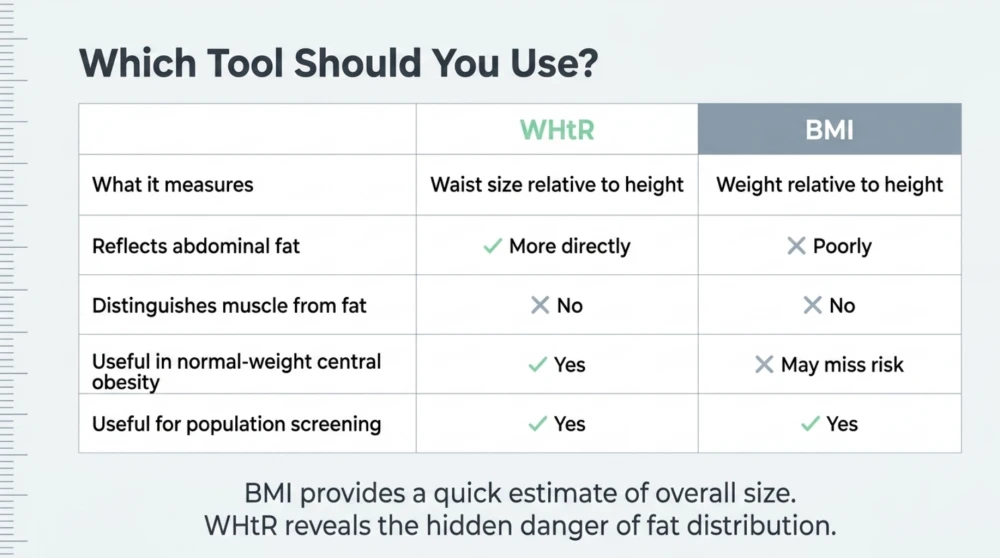
| Feature | Waist-to-Height Ratio | BMI |
|---|---|---|
| What it measures | Waist size relative to height | Weight relative to height |
| Reflects abdominal fat | More directly | Poorly |
| Distinguishes muscle from fat | No | No |
| Useful in normal-weight central obesity | Yes | May miss risk |
| Easy to calculate | Yes | Yes |
| Useful for population screening | Yes | Yes |
| Main limitation | Depends on accurate waist measurement | Does not show fat distribution or body composition |
This comparison shows why the question should not always be framed as waist-to-height ratio versus BMI in an either-or manner. Each tool measures something different.
BMI provides a quick estimate of body size, while waist-to-height ratio provides more information about abdominal fat distribution. Using both together generally creates a clearer clinical picture than relying on either measure alone.
Why Waist-to-Height Ratio May Predict Metabolic Risk Better
Metabolic risk is influenced less by total body weight than by the amount and location of excess fat. Fat concentrated around the liver, pancreas, and abdominal organs is more closely linked with insulin resistance than fat stored around the hips or limbs.
Because waist-to-height ratio focuses on central fat accumulation, it often shows a stronger relationship with metabolic syndrome, type 2 diabetes, hypertension, and cardiovascular risk than BMI alone.
This advantage is particularly relevant in people who have:
- A normal BMI but an increasing waist.
- Prediabetes despite being thin.
- Fatty liver without obvious obesity.
- Low muscle mass and relatively high body fat.
- A South Asian family background.
However, no anthropometric measurement should be interpreted in isolation. A normal waist-to-height ratio does not guarantee healthy blood pressure, normal blood glucose, or absence of fatty liver. Similarly, an elevated result does not confirm that disease is already present.
Can Waist-to-Height Ratio Replace Laboratory Testing?
No. Waist-to-height ratio is a screening tool, not a blood test or diagnostic procedure.
A person may have an increased waist-to-height ratio but normal HbA1c, liver enzymes, and cholesterol. Another person may have a ratio below 0.5 but still develop diabetes because of genetics, pancreatic insulin deficiency, medication effects, or other medical factors.
When the ratio is elevated or other risk factors are present, appropriate evaluation may include:
- Blood pressure measurement.
- Fasting glucose or HbA1c.
- Lipid profile.
- Liver function tests.
- Assessment for fatty liver.
- Review of physical activity, sleep, and family history.
The value of waist-to-height ratio lies in identifying who may need a more complete metabolic assessment, not in replacing that assessment.
Why Tracking Waist-to-Height Ratio Can Be More Useful Than Tracking Weight Alone
During lifestyle modification, the weighing scale may move slowly even when body composition is improving. Someone performing resistance training may preserve or gain muscle while losing abdominal fat.
In that situation, body weight may remain relatively stable, but waist circumference and waist-to-height ratio may decline. This can indicate meaningful improvement in central fat accumulation and metabolic health.
Tracking the ratio every week is usually unnecessary because waist measurements fluctuate and body composition changes gradually. Recording it every four to eight weeks under similar conditions is generally more useful than measuring repeatedly.
The direction of change matters. A gradually declining waist-to-height ratio, combined with improvements in strength, blood pressure, glucose, triglycerides, and energy levels, provides a more complete picture of progress than weight alone.
How to Improve Your Waist-to-Height Ratio
An elevated waist-to-height ratio is not a diagnosis, and it should not be treated as a reason for panic. Instead, it can be viewed as an early signal that abdominal fat and metabolic health deserve greater attention.
The most useful goal is not simply to reduce body weight. It is to improve body composition by reducing excess visceral fat while preserving or building muscle mass. This distinction matters because aggressive dieting may lower weight without producing the same improvement in strength, insulin sensitivity, or long-term metabolic health.
A person may therefore improve their waist-to-height ratio even when the weighing scale changes slowly. A decreasing waist measurement, better glucose control, improved triglycerides, greater strength, and increased physical activity may all indicate meaningful metabolic progress.
Why Nutrition Influences Waist-to-Height Ratio
No single food causes abdominal obesity, and no single food can remove visceral fat. The waist-to-height ratio is shaped by overall dietary patterns repeated over months and years.
Diets dominated by sugary beverages, refined carbohydrates, frequent restaurant meals, oversized portions, and ultra-processed snacks can make calorie intake much higher than people realise. These foods are often easy to consume quickly and may provide relatively poor satiety compared with balanced meals containing protein, vegetables, legumes, whole grains, and minimally processed foods.
For an Indian adult, improving meal quality may involve keeping rice or roti portions appropriate rather than eliminating them, increasing vegetables, including dal or another protein source, reducing repeated fried snacks, and limiting sweetened drinks. The aim is not to create an extreme low-carbohydrate diet but to build meals that support satiety, muscle health, and more stable energy intake.
Prioritise Protein While Reducing Abdominal Fat
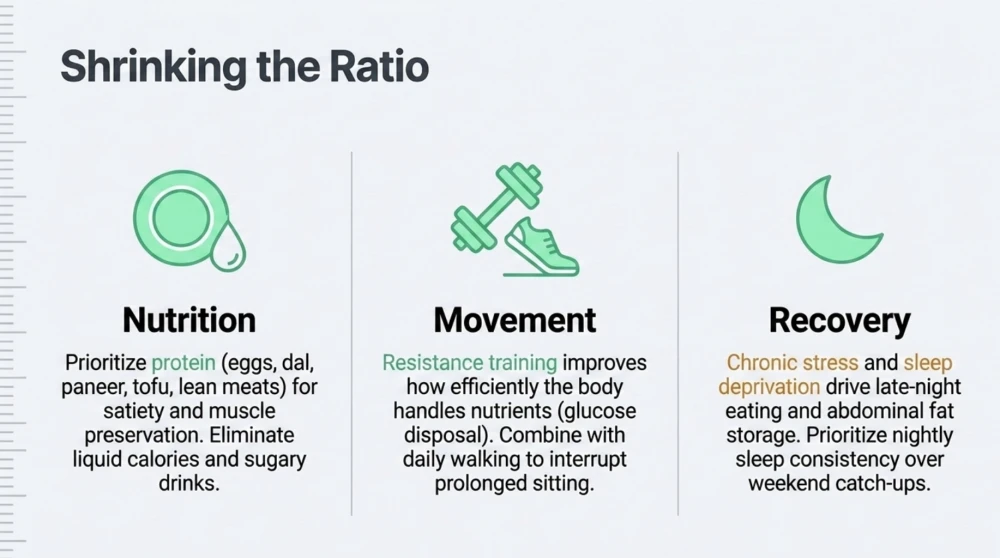
Adequate protein becomes especially important when trying to reduce waist-to-height ratio. Protein supports muscle preservation, improves satiety, and may make a calorie-controlled eating pattern easier to maintain.
Useful options may include:
- Eggs, fish, chicken, or lean meat.
- Paneer, curd, Greek yoghurt, or milk.
- Dal, chickpeas, rajma, and other legumes.
- Tofu, soy chunks, or tempeh.
- Protein-rich breakfasts such as moong dal chilla with curd.
The appropriate amount depends on body weight, activity level, age, kidney function, and individual health goals. People with chronic kidney disease or medically prescribed protein restrictions should follow personalised advice rather than increasing protein indiscriminately.
Reduce Liquid Calories
Sweetened tea, soft drinks, packaged juices, flavoured coffees, milkshakes, and alcoholic beverages can add substantial calories without creating the same fullness as solid food.
Reducing these drinks is often one of the simplest ways to improve energy balance and gradually reduce waist-to-height ratio. Plain water, unsweetened beverages, and appropriately portioned traditional drinks without added sugar are generally more suitable for regular hydration.
Why Strength Training Helps Improve Waist-to-Height Ratio
Many people trying to reduce abdominal fat focus exclusively on walking or cardiovascular exercise. Aerobic activity is valuable, but resistance training deserves equal attention.
Muscle tissue plays an important role in glucose disposal and insulin sensitivity. Preserving or increasing muscle mass may improve how efficiently the body handles nutrients while also supporting long-term weight maintenance.
Strength training can include:
- Bodyweight exercises.
- Resistance-band exercises.
- Free weights.
- Weight machines.
- Supervised functional exercises.
A person does not need to become a bodybuilder to benefit. Two or three appropriately structured resistance-training sessions each week, combined with regular daily movement, may support a healthier waist-to-height ratio and better body composition.
Why Walking Still Matters
Walking remains one of the most practical ways to increase energy expenditure, interrupt prolonged sitting, and improve overall metabolic health. The benefit is especially important for people with sedentary jobs who may exercise briefly but remain seated for most of the day.
Short walks after meals, movement breaks during work, stair use, and a regular walking routine can all contribute. The goal is not to rely on one intense workout while remaining inactive for the rest of the week.
How Sleep and Stress Affect Waist-to-Height Ratio
Abdominal fat is not determined by food and exercise alone. Poor sleep and chronic stress can make healthy eating and physical activity considerably harder to maintain.
Sleep deprivation often increases hunger, reduces exercise motivation, worsens food choices, and encourages late-night eating. Chronic stress can also promote emotional eating and reduce the time available for recovery and movement.
Improving sleep consistency and stress management will not directly shrink the waist overnight. However, these changes create a lifestyle environment in which reducing waist-to-height ratio becomes more realistic and sustainable.
Do Not Depend Only on Weekend Recovery
Sleeping longer on weekends may reduce tiredness temporarily, but it cannot fully compensate for repeated sleep restriction throughout the working week. A reasonably consistent bedtime, reduced late-night screen exposure, and adequate nightly sleep usually support better appetite regulation than alternating between sleep deprivation and weekend oversleeping.
When an Elevated Waist-to-Height Ratio Needs Medical Assessment
A high waist-to-height ratio does not prove that someone has diabetes, fatty liver, hypertension, or heart disease. It indicates that further assessment may be worthwhile, particularly when additional risk factors are present.
Clinical evaluation becomes more important when an elevated ratio occurs alongside:
- A family history of type 2 diabetes or premature heart disease.
- High blood pressure.
- Elevated triglycerides or low HDL cholesterol.
- Fatty liver disease.
- PCOS or previous gestational diabetes.
- Darkening around the neck or other signs associated with insulin resistance.
- Persistent post-meal fatigue or increasing food cravings.
- Progressive waist gain despite stable body weight.
Depending on the clinical picture, evaluation may include blood pressure measurement, fasting glucose, HbA1c, lipid profile, liver tests, kidney function, and assessment for fatty liver. The purpose is to identify metabolic abnormalities early rather than waiting for symptoms or complications to appear.
Limitations of Waist-to-Height Ratio
Although waist-to-height ratio is practical, it is not a perfect measure. Like BMI, it does not directly measure body fat percentage, muscle mass, or the exact amount of visceral fat surrounding the organs.
Its accuracy also depends on measuring waist circumference correctly. Bloating, abdominal muscle tone, recent meals, pregnancy, loose skin, and inconsistent tape placement can affect the reading.
This is why waist-to-height ratio should be interpreted as one part of a wider health assessment rather than a standalone verdict about health.
Waist-to-Height Ratio During Pregnancy
Waist-to-height ratio is not appropriate for assessing central obesity during pregnancy because normal pregnancy changes abdominal circumference substantially. Pregnancy-related weight and metabolic risk should be assessed using obstetric history, pre-pregnancy measurements, gestational weight patterns, blood pressure, and appropriate glucose screening.
Waist-to-Height Ratio in Children and Adolescents
The ratio has also been studied in children and adolescents, but growth, puberty, age, and sex influence body composition. Parents should not use an adult threshold in isolation to label a child as healthy or unhealthy.
Paediatric measurements should be interpreted using age-appropriate growth assessment and professional guidance, particularly when there are concerns about rapid weight gain, delayed growth, early puberty, or family history of metabolic disease.
Waist-to-Height Ratio in Very Muscular Adults
Muscular adults may have a high BMI despite having relatively little body fat. In such cases, waist-to-height ratio may provide useful additional information because it focuses on waist size rather than total weight.
However, even this ratio does not directly measure visceral fat. Clinical history, physical examination, body composition assessment, fitness, and laboratory markers may still be required for a meaningful interpretation.
Should You Use Waist-to-Height Ratio or BMI?
For most adults, the best answer is not to choose only one. BMI and waist-to-height ratio answer different questions.
BMI estimates total body size relative to height. It remains useful for population screening and for identifying substantial underweight or obesity. However, it cannot distinguish muscle from fat and may miss central obesity in someone whose total weight appears normal.
Waist-to-height ratio focuses on abdominal size relative to height and therefore provides additional information about fat distribution. It may be especially useful for South Asian adults, people with normal-weight central obesity, and anyone whose waist is increasing despite relatively stable weight.
Using both measurements together is generally more informative than relying on either alone. These measurements should then be interpreted alongside blood pressure, glucose, lipids, liver health, muscle mass, physical activity, family history, and other clinical factors.
How Often Should You Check Waist-to-Height Ratio?
Daily or weekly measurement is unnecessary and may create confusion because abdominal measurements fluctuate with food intake, bowel habits, hydration, and measurement technique.
For someone actively working on body composition, measuring waist circumference and calculating waist-to-height ratio approximately every four to eight weeks under similar conditions is usually sufficient.
Try to use:
- The same measuring tape.
- The same anatomical location.
- A similar time of day.
- Minimal clothing.
- A relaxed abdomen after a normal breath out.
The long-term trend matters more than a one-centimetre change on a single day.
Key Takeaways About Waist-to-Height Ratio
- Waist-to-height ratio compares waist circumference with height and provides information about central fat accumulation.
- A waist below half of height is a useful general screening target for many adults, but it is not a diagnosis.
- Waist-to-height ratio may identify metabolic risk that BMI misses, particularly in people with normal-weight abdominal obesity.
- BMI remains useful but does not distinguish muscle from fat or show where fat is stored.
- The most complete assessment usually combines BMI, waist-to-height ratio, metabolic tests, blood pressure, and clinical risk factors.
- Balanced nutrition, resistance training, daily movement, adequate sleep, and stress management may help reduce abdominal fat.
- During pregnancy, the adult waist-to-height ratio threshold should not be used to assess central obesity.
- An elevated ratio should prompt risk assessment rather than fear or extreme dieting.
You can book a consultation here:
Book an Appointment
References
- National Institute for Health and Care Excellence. Overweight and Obesity Management: Identifying and Assessing Central Adiposity. Updated 2025.
- Chan V, et al. Diagnostic Accuracy of Waist-to-Height Ratio, Waist Circumference and Body Mass Index in Identifying Metabolic Syndrome and Its Components in Older Adults: A Systematic Review and Meta-analysis. Current Developments in Nutrition. 2024.
- Agbaje AO. Waist-Circumference-to-Height Ratio and Longitudinal Assessment of Adiposity in Children and Adolescents. Pediatric Research. 2024.
- European Society of Cardiology. Clinical Consensus Statement on Obesity and Cardiovascular Disease. 2024.
- World Health Organization. Obesity and Overweight. Updated 2025.
- Ashwell M, Gunn P, Gibson S. Waist-to-Height Ratio as a Screening Tool for Adult Cardiometabolic Risk Factors: Systematic Review and Meta-analysis. Obesity Reviews.
Written by Dr. Pankaj Kumar, General & Lifestyle Physician, Dwarka, New Delhi