

















- 8th August 2026
Table of Contents
- Why Snoring and Metabolic Risk Can Be Connected
- Metabolic Risk 1: Snoring May Signal Obstructive Sleep Apnoea and Insulin Resistance
- Metabolic Risk 2: Snoring May Accompany Prediabetes and Type 2 Diabetes
- Metabolic Risk 3: Snoring and Metabolic Risk May Point Toward Abdominal Obesity
- Can Thin People Have Snoring and Metabolic Risk?
- Why Snoring Should Be Viewed as a Symptom, Not a Diagnosis
- Metabolic Risk 4: Snoring May Be Associated With High Blood Pressure
- Metabolic Risk 5: Snoring May Accompany High Triglycerides and Abnormal Cholesterol
- Metabolic Risk 6: Snoring May Signal Increased Fatty Liver Risk
- Snoring and Metabolic Risk in People With Fatty Liver
- Can Lean Adults Have Fatty Liver and Sleep Apnoea?
- Metabolic Risk 7: Snoring May Signal Higher Cardiovascular Risk
- How Intermittent Hypoxia Connects Snoring and Metabolic Risk
- Why Fragmented Sleep Matters Even When You Sleep for Eight Hours
- Why Weight Loss Alone Is Not the Complete Answer
- The Seven Metabolic Risks Snoring May Signal
- Who Should Be Evaluated for Snoring and Metabolic Risk?
- What Is the STOP-BANG Questionnaire?
- Home Sleep Study vs Polysomnography
- Does Treating Sleep Apnoea Improve Metabolic Health?
- Lifestyle Measures That Can Improve Snoring and Metabolic Risk
- Reduce Excess Abdominal Fat
- Increase Physical Activity
- Limit Alcohol Near Bedtime
- Avoid Unnecessary Sedatives
- Sleep Position May Matter
- Why Nasal Congestion Should Not Be Ignored
- Common Myths About Snoring and Metabolic Risk
- Myth 1: Everyone Who Snores Has Sleep Apnoea
- Myth 2: Only People With Obesity Develop Sleep Apnoea
- Myth 3: If I Sleep Eight Hours, My Sleep Must Be Healthy
- Myth 4: Stopping the Snoring Sound Solves the Metabolic Problem
- When Snoring Requires Urgent Medical Attention
- Key Takeaways About Snoring and Metabolic Risk
- References
Snoring Is Not Just a Sleep Problem: 7 Metabolic Risks It May Signal
Snoring is often treated as little more than an irritating nighttime habit. Someone snores, their partner complains, everyone jokes about it, and the problem may continue for years without medical attention.
But persistent loud snoring deserves a little more respect.
Snoring itself does not automatically mean that someone has a metabolic disorder. Many people occasionally snore because of nasal congestion, sleeping position, alcohol intake, or anatomical differences in the nose and throat. However, frequent loud snoring—particularly when accompanied by pauses in breathing, choking during sleep, morning headaches, or excessive daytime sleepiness—can be a warning sign of obstructive sleep apnoea (OSA).
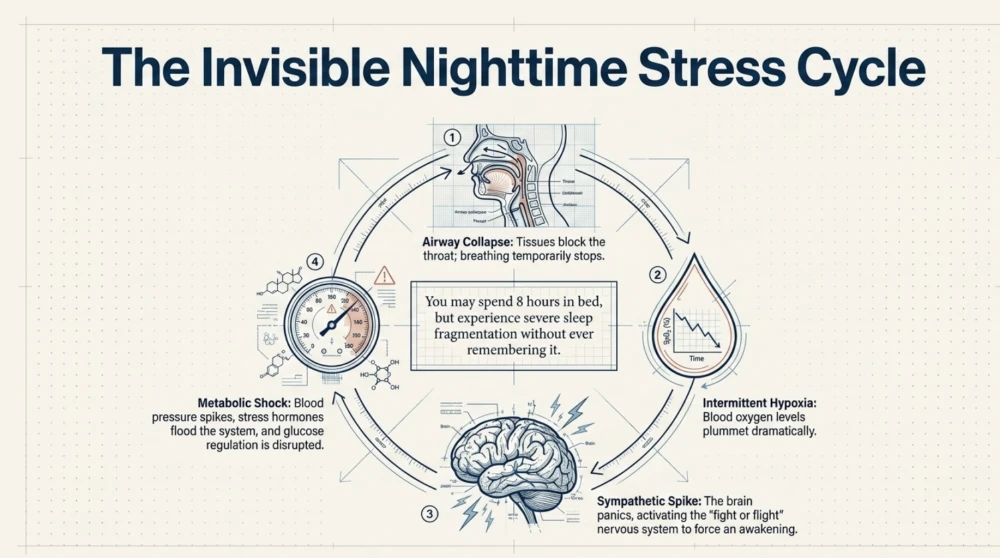
That distinction is important when discussing snoring and metabolic risk. Obstructive sleep apnoea repeatedly interrupts breathing during sleep. These episodes can fragment sleep, reduce oxygen levels intermittently, activate the sympathetic nervous system, and influence glucose regulation, blood pressure, appetite, and cardiovascular health.
In other words, the important question is not simply, “Do you snore?” It is, “What is causing the snoring, and what else is happening while you sleep?”
Why Snoring and Metabolic Risk Can Be Connected
During normal sleep, the muscles surrounding the upper airway relax. In some people, the airway becomes narrower and surrounding tissues vibrate as air moves through it. This vibration produces the familiar sound of snoring.
When narrowing becomes severe enough to repeatedly restrict or temporarily stop airflow, obstructive sleep apnoea may occur. The brain then briefly activates the body to reopen the airway. A person may experience these events many times during the night without remembering them the next morning.
Repeated sleep disruption can affect much more than daytime alertness. The combination of fragmented sleep and intermittent oxygen deprivation can influence several systems involved in metabolic health.
This is where the relationship between snoring and metabolic risk becomes clinically relevant.
When Snoring and Metabolic Risk Deserve More Attention
Occasional mild snoring during a cold is very different from loud snoring occurring almost every night. Evaluation becomes particularly important when snoring occurs together with:
- Witnessed pauses in breathing during sleep.
- Gasping, choking, or suddenly waking at night.
- Excessive daytime sleepiness.
- Morning headaches.
- Dry mouth on waking.
- Poor concentration or irritability.
- High blood pressure that is difficult to control.
- Increasing neck or waist circumference.
These features do not confirm sleep apnoea, but they increase the importance of proper assessment rather than dismissing snoring as a harmless habit.
Metabolic Risk 1: Snoring May Signal Obstructive Sleep Apnoea and Insulin Resistance
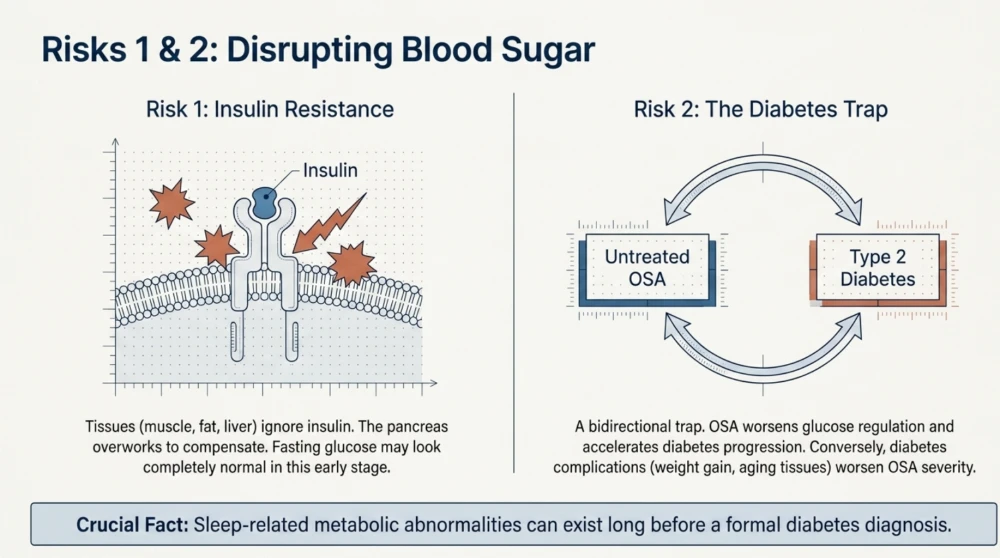
Insulin resistance occurs when tissues such as skeletal muscle, liver, and fat become less responsive to insulin. The pancreas may initially compensate by producing more insulin, allowing blood glucose to remain relatively normal for some time.
Obstructive sleep apnoea has been associated with impaired glucose metabolism and insulin resistance. Repeated oxygen fluctuations, sympathetic nervous system activation, disturbed sleep architecture, and inflammation are among the mechanisms that may contribute.
This does not mean that snoring directly causes insulin resistance. Rather, the association between snoring and metabolic risk becomes stronger when habitual snoring reflects underlying sleep-disordered breathing.
Why Snoring and Metabolic Risk May Exist Before Diabetes
A person does not need to have diabetes before sleep-related metabolic abnormalities become relevant.
During early insulin resistance, fasting glucose may still be normal. Over time, however, glucose regulation may deteriorate and HbA1c may gradually enter the prediabetes range.
People who already have abdominal obesity, fatty liver, a family history of diabetes, or low physical activity may have several overlapping risk factors. Untreated sleep apnoea can add another metabolic stressor.
For this reason, persistent snoring in someone with increasing blood sugar should not automatically be considered unrelated.
Metabolic Risk 2: Snoring May Accompany Prediabetes and Type 2 Diabetes
The relationship between obstructive sleep apnoea and type 2 diabetes is particularly important because the two conditions frequently coexist.
Obesity and visceral fat increase the risk of both conditions, which explains part of the association. However, sleep fragmentation and intermittent hypoxia may also independently contribute to poorer glucose regulation.
At the same time, the relationship can become bidirectional. Diabetes-related complications, weight changes, ageing, and other health factors may further affect sleep quality.
Therefore, when considering snoring and metabolic risk, it is useful to look beyond body weight and consider the person's complete metabolic profile.
Should People With Diabetes Pay Attention to Snoring?
Yes—particularly when snoring is loud, habitual, and accompanied by symptoms suggestive of sleep apnoea.
A person with diabetes should discuss possible sleep apnoea with a healthcare professional if they also experience:
- Witnessed breathing pauses.
- Persistent daytime sleepiness despite spending enough time in bed.
- Morning headaches.
- Repeated nighttime awakenings.
- Resistant hypertension.
- Significant obesity or central fat accumulation.
Recognising sleep apnoea does not replace standard diabetes management. Instead, it identifies another potentially treatable condition that may influence overall cardiometabolic health.
Metabolic Risk 3: Snoring and Metabolic Risk May Point Toward Abdominal Obesity
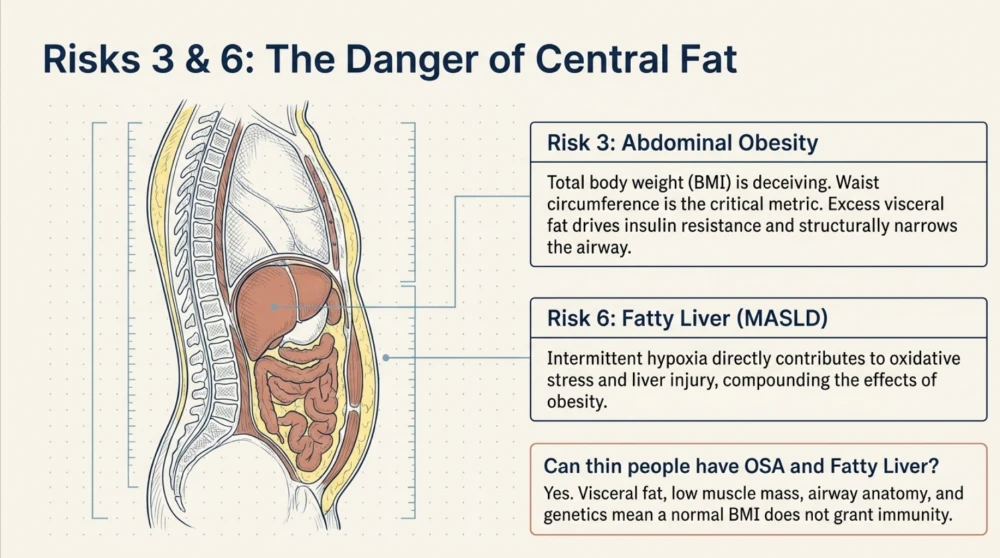
Obesity is one of the strongest risk factors for obstructive sleep apnoea, but total body weight does not tell the whole story.
Fat distribution matters.
Excess fat around the neck can narrow the upper airway, while visceral fat around the abdomen is strongly associated with insulin resistance, fatty liver, high triglycerides, and cardiovascular disease.
This creates an important overlap between snoring and metabolic risk: the same pattern of central fat accumulation that increases metabolic risk may also increase vulnerability to obstructive sleep apnoea.
Why Waist Circumference Matters in People Who Snore
Someone may gain only a few kilograms over several years while their waist circumference increases substantially. This change may reflect increasing visceral fat even when BMI has not changed dramatically.
For South Asian adults, this deserves particular attention because diabetes and other metabolic abnormalities can develop at comparatively lower BMI levels.
Checking waist circumference, blood pressure, blood glucose, HbA1c, and lipid levels may therefore provide useful information when persistent snoring occurs alongside other metabolic risk factors.
Can Thin People Have Snoring and Metabolic Risk?
Absolutely. Obesity substantially increases the risk of obstructive sleep apnoea, but thin people can develop the condition as well.
Upper-airway anatomy, jaw structure, enlarged tonsils, nasal obstruction, ageing, family predisposition, alcohol use, and other factors can contribute to sleep-disordered breathing independently of obesity.
This is why a normal BMI should not automatically end the evaluation of snoring and metabolic risk when someone has loud habitual snoring, witnessed apnoeas, choking episodes, or significant daytime sleepiness.
Similarly, not every thin person who snores has a metabolic disorder. The purpose of recognising the association is to identify people who need further assessment—not to diagnose disease based on snoring alone.
Why Snoring Should Be Viewed as a Symptom, Not a Diagnosis
The sound of snoring tells us that airflow through the upper airway is creating tissue vibration. It does not tell us how severely airflow is restricted or whether oxygen levels are falling.
Two people may sound equally loud at night while having very different sleep studies.
One may have simple primary snoring with no clinically important breathing interruptions. Another may experience repeated episodes of obstructive sleep apnoea throughout the night.
Therefore, the connection between snoring and metabolic risk should always be interpreted in context. Symptoms, medical history, blood pressure, metabolic risk factors, physical examination, and—when indicated—a sleep study help determine whether snoring represents a larger health problem.
Metabolic Risk 4: Snoring May Be Associated With High Blood Pressure
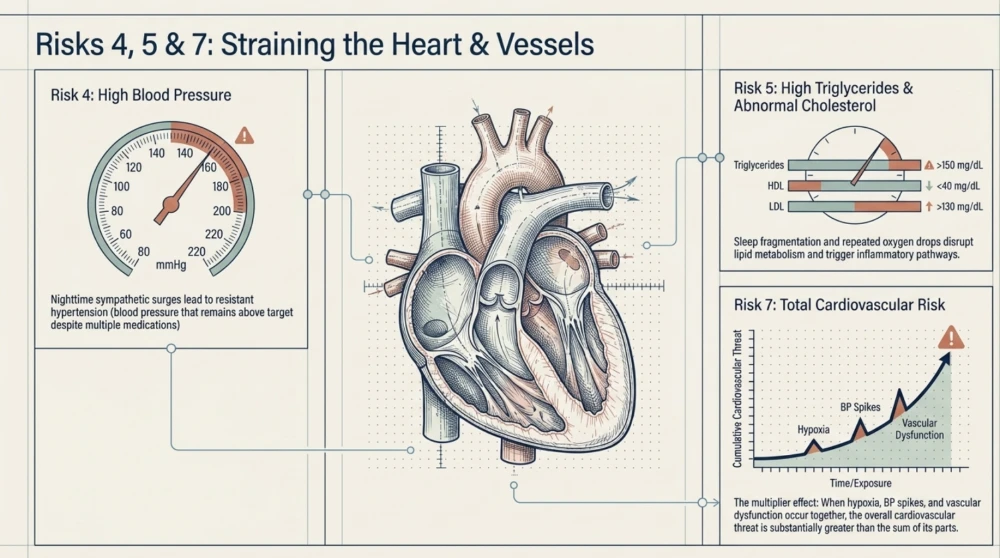
High blood pressure is one of the most important health conditions associated with obstructive sleep apnoea. This relationship is particularly relevant when discussing snoring and metabolic risk because sleep-disordered breathing can repeatedly activate mechanisms that raise blood pressure during the night.
When breathing stops or becomes significantly restricted during an apnoea episode, blood oxygen levels may fall. The brain responds by activating the sympathetic nervous system—the same “fight or flight” system that increases heart rate and blood pressure during stress.
If this process occurs repeatedly throughout the night, the cardiovascular system may remain under increased stress even during sleep.
Over time, untreated obstructive sleep apnoea has been associated with persistent hypertension, abnormal nighttime blood pressure patterns, and greater difficulty controlling blood pressure in some individuals.
Snoring and Metabolic Risk in Resistant Hypertension
Resistant hypertension refers to blood pressure that remains above target despite treatment with several appropriately selected blood pressure medicines.
Obstructive sleep apnoea is common among people with resistant hypertension. Therefore, someone who has difficult-to-control blood pressure together with loud habitual snoring, witnessed breathing pauses, or excessive daytime sleepiness may require assessment for sleep-disordered breathing.
This does not mean that sleep apnoea is responsible for every case of resistant hypertension. Kidney disease, hormonal disorders, medications, excessive salt intake, and other causes must also be considered.
However, recognising the possible relationship between snoring and metabolic risk can prevent an important contributor from being overlooked.
Metabolic Risk 5: Snoring May Accompany High Triglycerides and Abnormal Cholesterol
Cholesterol and triglyceride abnormalities are usually associated with diet, obesity, genetics, diabetes, and physical inactivity. Sleep health receives much less attention.
Obstructive sleep apnoea frequently occurs alongside dyslipidaemia, particularly in people with central obesity and insulin resistance.
Repeated intermittent hypoxia and sleep fragmentation may influence lipid metabolism, oxidative stress, and inflammatory pathways. At the same time, obesity and other lifestyle factors can contribute to both abnormal lipids and sleep apnoea.
This makes the relationship between snoring and metabolic risk complex rather than simply cause and effect.
Why High Triglycerides Matter in Snoring and Metabolic Risk
High triglycerides often occur as part of a broader metabolic pattern that includes:
- Abdominal obesity.
- Insulin resistance.
- Prediabetes or type 2 diabetes.
- Low HDL cholesterol.
- Fatty liver disease.
- High blood pressure.
When several of these abnormalities occur in someone who also snores heavily, it may be reasonable to consider whether undiagnosed obstructive sleep apnoea is part of the overall picture.
Simply treating cholesterol without considering sleep, physical activity, body composition, diet, smoking, and glucose regulation may miss other important aspects of cardiometabolic health.
Metabolic Risk 6: Snoring May Signal Increased Fatty Liver Risk
Fatty liver disease—now commonly called metabolic dysfunction-associated steatotic liver disease (MASLD)—is strongly associated with insulin resistance, abdominal obesity, type 2 diabetes, and high triglycerides.
Obstructive sleep apnoea frequently overlaps with these same conditions.
Research has also examined whether the intermittent hypoxia associated with obstructive sleep apnoea may contribute to oxidative stress, inflammation, and liver injury. The relationship is complicated because obesity and insulin resistance can independently contribute to both sleep apnoea and fatty liver.
Nevertheless, the association is clinically relevant when evaluating snoring and metabolic risk.
Snoring and Metabolic Risk in People With Fatty Liver
A person diagnosed with fatty liver should not assume that snoring is unrelated simply because liver disease and sleep appear to involve different organs.
Consider discussing sleep apnoea assessment with a healthcare professional when fatty liver occurs alongside:
- Loud habitual snoring.
- Witnessed pauses in breathing.
- Gasping or choking during sleep.
- Significant daytime sleepiness.
- Morning headaches.
- Obesity or increasing waist circumference.
- Hypertension or type 2 diabetes.
This is especially important because many people with both fatty liver and sleep apnoea may have few obvious symptoms during the early stages.
Can Lean Adults Have Fatty Liver and Sleep Apnoea?
Yes. Although obesity increases the likelihood of both conditions, neither is limited exclusively to people with obesity.
Normal-weight adults can develop fatty liver because of visceral fat, insulin resistance, low muscle mass, genetics, dietary factors, or other medical conditions. Similarly, sleep apnoea can occur in lean individuals because of upper-airway anatomy and other factors.
Therefore, BMI alone should not be used to dismiss the possibility of snoring and metabolic risk.
Metabolic Risk 7: Snoring May Signal Higher Cardiovascular Risk
The cardiovascular implications of obstructive sleep apnoea extend beyond high blood pressure.
Repeated episodes of airway obstruction can produce intermittent reductions in oxygen, sudden changes in heart rate and blood pressure, sympathetic nervous system activation, oxidative stress, and sleep fragmentation.
Over time, obstructive sleep apnoea has been associated with several cardiovascular conditions, although the degree of risk varies according to severity, age, accompanying diseases, and other factors.
This is why persistent snoring and metabolic risk should be considered within the broader context of cardiovascular health rather than viewed only as a nighttime inconvenience.
Snoring and Metabolic Risk May Overlap With Several Heart Risk Factors
A person with obstructive sleep apnoea may simultaneously have:
- High blood pressure.
- Type 2 diabetes.
- Abdominal obesity.
- Abnormal cholesterol or triglycerides.
- Physical inactivity.
- Fatty liver disease.
Each of these factors can independently increase cardiovascular risk. When they occur together, overall risk may be substantially greater than any single measurement suggests.
The purpose of identifying possible sleep apnoea is therefore not simply to stop someone from snoring. It is to determine whether repeated nighttime breathing disturbances are part of a broader cardiometabolic problem that requires attention.
How Intermittent Hypoxia Connects Snoring and Metabolic Risk
One of the important biological features of obstructive sleep apnoea is intermittent hypoxia.
During an obstructive event, airflow may decrease or temporarily stop even though the body continues trying to breathe. Blood oxygen levels can fall, followed by recovery when the airway reopens.
This cycle may repeat many times during the night in moderate or severe sleep apnoea.
Repeated oxygen fluctuations may contribute to:
- Sympathetic nervous system activation.
- Oxidative stress.
- Inflammatory signalling.
- Changes in glucose metabolism.
- Blood pressure dysregulation.
- Vascular dysfunction.
These mechanisms help explain why the relationship between snoring and metabolic risk becomes much more important when snoring represents underlying obstructive sleep apnoea.
Why Fragmented Sleep Matters Even When You Sleep for Eight Hours
People often judge sleep only by duration. Someone may say, “I sleep for eight hours every night, so my sleep cannot be the problem.”
But sleep duration and sleep quality are not the same thing.
In obstructive sleep apnoea, repeated airway obstruction can trigger brief arousals that restore breathing. Many of these arousals are so short that the person does not remember waking.
A person may therefore spend eight hours in bed while obtaining poor-quality, fragmented sleep.
Snoring and Metabolic Risk Can Be Hidden Behind Daytime Fatigue
Sleep fragmentation may appear during the day as:
- Persistent tiredness.
- Poor concentration.
- Reduced productivity.
- Irritability.
- Morning headaches.
- Sleepiness while watching television or reading.
- Dependence on caffeine to remain alert.
These symptoms are often attributed to work stress, ageing, vitamin deficiency, or a busy lifestyle.
Those explanations may sometimes be correct. However, persistent daytime fatigue combined with loud snoring should raise the possibility that sleep quality is being repeatedly disrupted.
Why Weight Loss Alone Is Not the Complete Answer
Weight reduction can significantly improve obstructive sleep apnoea in many people with overweight or obesity. Reducing excess fat around the neck and abdomen may decrease airway obstruction and improve metabolic health at the same time.
However, telling every person who snores simply to lose weight is inadequate.
First, some normal-weight people develop sleep apnoea because of airway anatomy or other factors. Second, people with moderate or severe disease may require specific treatment rather than waiting months for weight reduction. Third, metabolic health involves muscle mass, visceral fat, physical activity, sleep, diet quality, alcohol intake, smoking, blood pressure, and glucose regulation—not weight alone.
Managing snoring and metabolic risk therefore requires identifying the underlying cause rather than treating the sound of snoring itself.
The Seven Metabolic Risks Snoring May Signal
When habitual snoring is associated with obstructive sleep apnoea or broader metabolic dysfunction, the seven important risks discussed in this article are:
- Insulin resistance.
- Prediabetes and type 2 diabetes.
- Abdominal obesity and excess visceral fat.
- High blood pressure.
- High triglycerides and abnormal cholesterol.
- Fatty liver disease (MASLD).
- Increased cardiovascular risk.
These conditions do not occur because someone makes a snoring sound. The clinical concern is that persistent snoring may identify underlying sleep-disordered breathing or coexist with metabolic abnormalities that deserve proper assessment.
Recognising this distinction keeps the relationship between snoring and metabolic risk scientifically accurate while helping people understand why chronic snoring should sometimes prompt more than a request to “sleep quietly.”
Who Should Be Evaluated for Snoring and Metabolic Risk?
Not everyone who snores requires a sleep study. Occasional snoring during a cold, after alcohol intake, or while sleeping on the back may not indicate a major health problem.
Evaluation becomes more important when snoring and metabolic risk occur together with symptoms or conditions that increase the likelihood of obstructive sleep apnoea.
People who may benefit from further assessment include those with:
- Loud snoring on most nights.
- Witnessed pauses in breathing.
- Gasping or choking during sleep.
- Excessive daytime sleepiness.
- Morning headaches.
- Resistant high blood pressure.
- Type 2 diabetes or prediabetes.
- Abdominal obesity.
- Fatty liver disease.
- Unexplained poor concentration or persistent fatigue.
The presence of several of these features makes the relationship between snoring and metabolic risk more clinically meaningful and should prompt discussion with a healthcare professional.
What Is the STOP-BANG Questionnaire?
STOP-BANG is a simple screening questionnaire commonly used to estimate the likelihood of obstructive sleep apnoea.
The questions consider:
- Snoring.
- Tiredness during the daytime.
- Observed breathing pauses during sleep.
- High blood Pressure.
- Body Mass Index.
- Age.
- Neck circumference.
- Gender.
A higher score suggests a greater likelihood of moderate-to-severe obstructive sleep apnoea.
However, STOP-BANG is a screening tool, not a diagnosis. Someone with a high score still requires appropriate clinical assessment, while a low score does not completely exclude sleep apnoea in every situation.
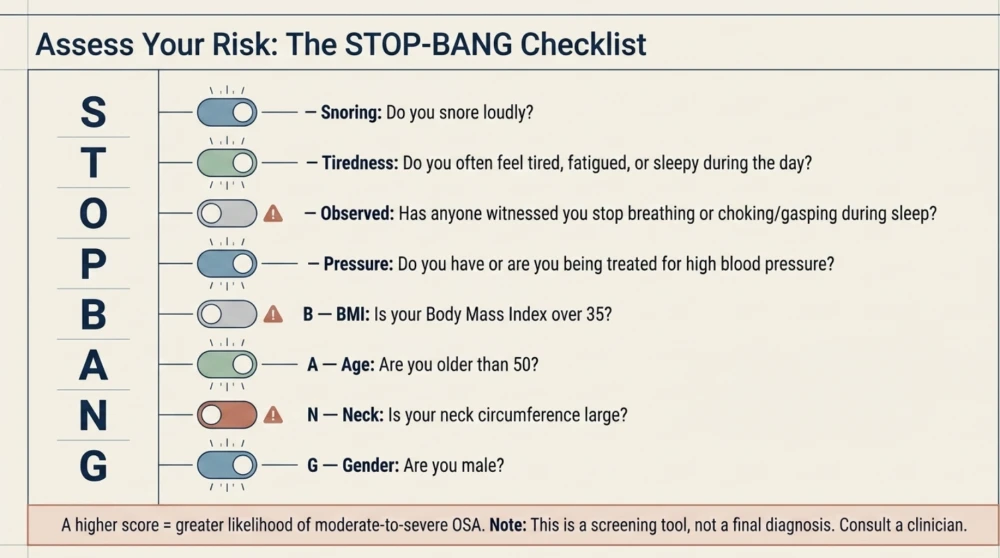
How STOP-BANG Helps Assess Snoring and Metabolic Risk
The usefulness of STOP-BANG lies in identifying people whose snoring may represent more than an isolated sleep symptom.
For example, someone who snores loudly, feels tired during the day, has high blood pressure, and has a large neck circumference may have a much higher likelihood of obstructive sleep apnoea than someone with occasional mild snoring and no other symptoms.
This helps clinicians decide who may benefit from formal sleep testing.
Home Sleep Study vs Polysomnography
When obstructive sleep apnoea is suspected, sleep testing may be recommended.
Two commonly used approaches are:
- Home sleep apnoea testing.
- Overnight polysomnography in a sleep laboratory.
A home sleep study records selected breathing parameters during sleep and may be appropriate for many adults with a high clinical suspicion of uncomplicated obstructive sleep apnoea.
Polysomnography is more comprehensive and can measure:
- Brain activity.
- Eye movements.
- Muscle activity.
- Heart rhythm.
- Breathing effort.
- Airflow.
- Blood oxygen levels.
The choice between these tests depends on symptoms, other medical conditions, clinical suspicion, and local availability.
Does Treating Sleep Apnoea Improve Metabolic Health?
Treating obstructive sleep apnoea clearly improves sleep quality, daytime alertness, and several symptoms in many patients. It can also help reduce blood pressure in selected individuals.
However, treatment should not be presented as a cure for obesity, diabetes, fatty liver, or metabolic syndrome.
The relationship between snoring and metabolic risk is multifactorial. Continuous positive airway pressure (CPAP), weight management, physical activity, nutrition, alcohol reduction, and treatment of diabetes or hypertension may all be needed depending on the individual.
CPAP and Snoring and Metabolic Risk
CPAP works by delivering gentle positive pressure through a mask to keep the upper airway open during sleep.
When used consistently in appropriate patients, CPAP can:
- Reduce apnoea events.
- Improve oxygen levels.
- Reduce daytime sleepiness.
- Improve sleep quality.
- Help lower blood pressure in some patients.
Its effect on insulin resistance, weight, and long-term cardiovascular outcomes varies and should not be overstated.
CPAP treats airway obstruction; broader metabolic health still requires attention to lifestyle and associated medical conditions.
Lifestyle Measures That Can Improve Snoring and Metabolic Risk
Lifestyle changes are an important part of management, particularly when excess body fat, alcohol intake, poor sleep habits, or sedentary behaviour contribute to symptoms.
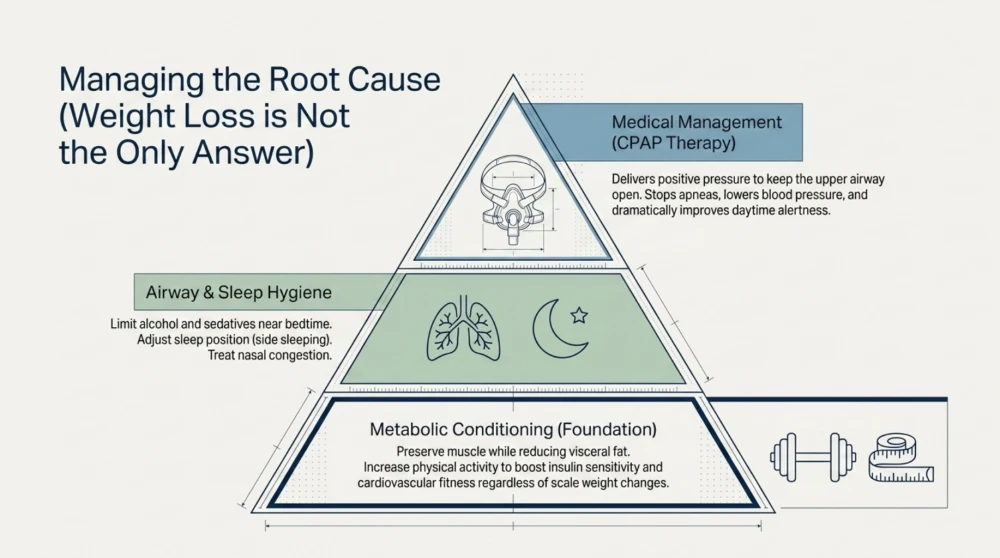
Reduce Excess Abdominal Fat
For people with overweight or obesity, clinically meaningful weight loss can reduce upper-airway obstruction and improve several components of snoring and metabolic risk.
However, the goal should be to improve body composition while preserving muscle rather than simply pursuing rapid weight loss.
Increase Physical Activity
Regular aerobic activity and resistance training improve insulin sensitivity, cardiovascular fitness, body composition, and metabolic health.
Exercise may provide benefits even before major weight loss occurs.
Limit Alcohol Near Bedtime
Alcohol relaxes the muscles of the upper airway and may worsen snoring or obstructive sleep apnoea in susceptible individuals.
Reducing alcohol intake, particularly in the hours before sleep, may improve nighttime breathing for some people.
Avoid Unnecessary Sedatives
Certain sedative medicines can worsen upper-airway collapse or suppress normal arousal responses during sleep.
Prescribed medication should never be stopped without medical advice, but people with suspected sleep apnoea should inform their clinician about all sleep medicines and sedatives they use.
Sleep Position May Matter
Some individuals experience more severe snoring and apnoea while sleeping on their back.
Side sleeping may reduce symptoms in positional obstructive sleep apnoea, although this approach is not sufficient for everyone.
Why Nasal Congestion Should Not Be Ignored
Nasal obstruction can worsen snoring by increasing resistance to airflow.
Allergic rhinitis, deviated nasal septum, chronic sinus problems, and temporary respiratory infections may all contribute.
Treating significant nasal obstruction may reduce snoring in some individuals, although it does not necessarily treat obstructive sleep apnoea when airway collapse occurs deeper in the throat.
Common Myths About Snoring and Metabolic Risk
Myth 1: Everyone Who Snores Has Sleep Apnoea
This is incorrect. Many people have primary snoring without clinically important apnoea.
The concern increases when snoring is loud, habitual, and associated with breathing pauses, choking, daytime sleepiness, or metabolic risk factors.
Myth 2: Only People With Obesity Develop Sleep Apnoea
Obesity is an important risk factor, but thin adults can also develop obstructive sleep apnoea because of airway anatomy, jaw structure, ageing, nasal obstruction, and other factors.
Myth 3: If I Sleep Eight Hours, My Sleep Must Be Healthy
Time in bed does not guarantee restorative sleep. Repeated apnoea events can fragment sleep throughout the night without the person remembering the awakenings.
Myth 4: Stopping the Snoring Sound Solves the Metabolic Problem
No. Treating the sound alone does not necessarily address airway obstruction or metabolic disease.
The clinically important goal is to identify whether obstructive sleep apnoea or another medical condition is present.
When Snoring Requires Urgent Medical Attention
Most snoring does not require emergency care. However, urgent evaluation is appropriate when nighttime breathing problems occur with severe symptoms such as:
- Repeated prolonged choking or breathing pauses.
- Severe daytime sleepiness causing near-miss accidents.
- Chest pain.
- Severe shortness of breath.
- Confusion.
- Fainting.
- New neurological symptoms.
People who feel dangerously sleepy while driving or operating machinery should not continue those activities until the cause of excessive sleepiness has been assessed.
Key Takeaways About Snoring and Metabolic Risk
- Snoring and metabolic risk can be connected when habitual snoring reflects obstructive sleep apnoea.
- Snoring alone does not diagnose sleep apnoea or metabolic disease.
- Insulin resistance, diabetes, abdominal obesity, hypertension, abnormal lipids, fatty liver, and cardiovascular risk frequently overlap with sleep apnoea.
- Witnessed breathing pauses, choking during sleep, morning headaches, and excessive daytime sleepiness deserve medical evaluation.
- STOP-BANG can help screen for obstructive sleep apnoea but does not replace a sleep study.
- CPAP improves sleep-disordered breathing and daytime symptoms but should be combined with appropriate metabolic risk management when needed.
- Weight management, exercise, good sleep habits, reduced alcohol intake, and treatment of associated medical conditions may improve both sleep and metabolic health.
- Normal body weight does not completely exclude sleep apnoea.
You can book a consultation here:
Book an Appointment
References
- American Academy of Sleep Medicine. Clinical Practice Guidance for the Diagnosis and Management of Obstructive Sleep Apnoea. Updated guidance accessed 2026.
- American Heart Association. Obstructive Sleep Apnoea and Cardiovascular Disease: Scientific Statement. Circulation.
- European Respiratory Society. Clinical Practice Guidance on Obstructive Sleep Apnoea. Updated 2024–2025.
- American Diabetes Association. Standards of Care in Diabetes. 2026.
- European Association for the Study of the Liver, European Association for the Study of Diabetes, and European Association for the Study of Obesity. Clinical Practice Guidelines on MASLD. 2024.
- World Health Organization. Cardiovascular Diseases and Metabolic Risk Factors. Updated 2025.
Written by Dr. Pankaj Kumar, General & Lifestyle Physician, Dwarka, New Delhi