


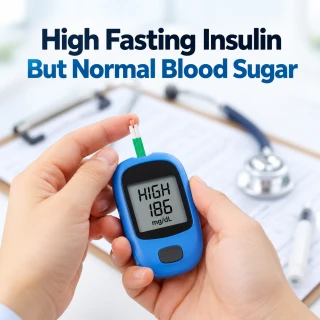














- 23rd May 2026
Table of Contents
- The Human Body Is Extremely Good at Compensation
- Why Modern Lifestyle Diseases Are Often Silent Initially
- Why Patients Often Discover Problems “Accidentally”
- Fatty Liver Is One of the Best Examples of Silent Disease
- Why Blood Pressure Problems Often Remain Hidden
- Prediabetes Often Exists Long Before Diabetes
- Why Early Detection Changes Long-Term Outcomes
- The Biggest Mistake: Waiting Until Symptoms Become Severe
- Why Symptoms Often Appear Much Later Than Disease Development
- Silent Inflammation Quietly Drives Many Modern Diseases
- Why Family History Matters More Than Many People Realize
- Why Younger Adults Are Increasingly Developing Metabolic Problems
- The Emotional Resistance Toward Health Checkups
- Why Routine Screening Often Reveals Multiple Problems Together
- Modern Lifestyle Accelerates Silent Disease Progression
- The Biggest Advantage of Early Detection: Reversibility
- What Actually Helps After Early Detection
- Why Lifestyle Correction Works Best in Early Stages
- The Goal Is Not Just “Normal Reports”
- Why Sustainable Habits Matter More Than Extreme Short-Term Effort
- Why Sleep Quality Is Central to Preventive Health
- Movement Is One of the Most Powerful Preventive Tools
- Why Monitoring Matters Even After Normal Reports
- The Preventive Healthcare Mindset Shift
- Why Structured Metabolic Care Matters
- What I Commonly Observe in Clinical Practice
- Key Takeaways: What You Should Remember
- When Should You Consider Preventive Health Evaluation?
One of the biggest misconceptions in healthcare is the belief that disease always produces obvious symptoms early. In reality, many metabolic and lifestyle-related conditions develop quietly for years before the body finally starts showing visible warning signs.
This is exactly why understanding why preventive health checks detect problems early is becoming increasingly important in modern healthcare.
In clinical practice, it is extremely common to see patients who feel “mostly fine” but are unexpectedly found to have:
- Fatty liver
- Prediabetes
- High blood pressure
- Vitamin deficiencies
- Elevated cholesterol
- Thyroid imbalance
Many of these individuals seek testing only for routine purposes, insurance requirements, or minor nonspecific symptoms. Yet their reports often reveal metabolic changes that had already been developing silently for long periods.
This surprises many patients because modern lifestyle diseases frequently progress gradually rather than dramatically.
The Human Body Is Extremely Good at Compensation
One reason lifestyle diseases remain hidden for long durations is that the human body has remarkable compensatory ability. When metabolism begins shifting in an unhealthy direction, the body initially adapts rather than immediately producing severe symptoms.
For example:
- Blood sugar may remain “normal” despite worsening insulin resistance
- Blood pressure may fluctuate before becoming persistently elevated
- Fat accumulation in the liver may occur without pain
- Cholesterol abnormalities may progress silently
Because these changes happen gradually, many individuals continue functioning normally while underlying metabolic dysfunction slowly progresses underneath. This is why relying only on symptoms is often risky.
Why Modern Lifestyle Diseases Are Often Silent Initially
Many modern diseases develop slowly because they are strongly influenced by long-term lifestyle patterns.
Conditions such as:
- Insulin resistance
- Fatty liver
- Hypertension
- High triglycerides
- Metabolic syndrome
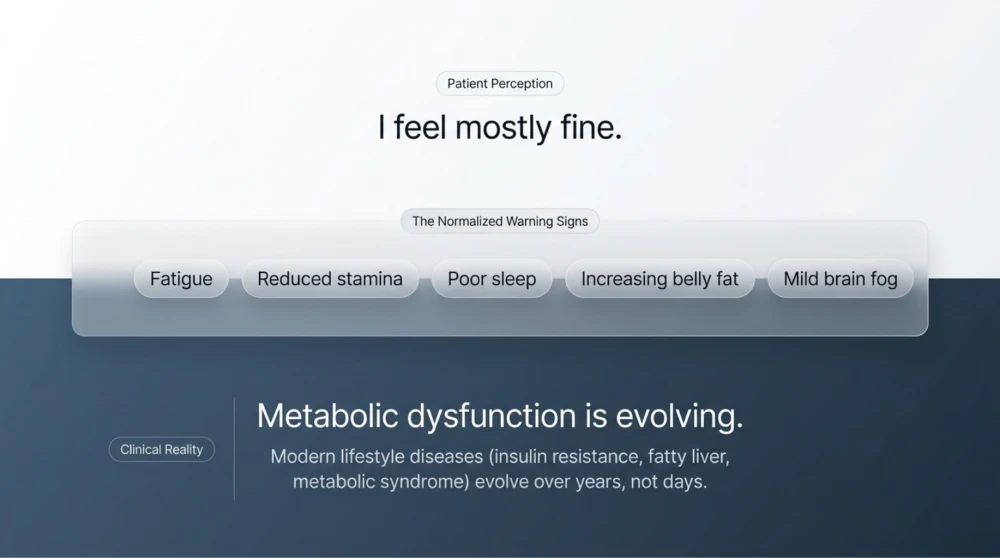
usually evolve over years rather than days. Initially, the symptoms may appear extremely nonspecific.
A person may simply notice:
- Fatigue
- Reduced stamina
- Poor sleep
- Increasing belly fat
- Mild brain fog
But because these symptoms overlap heavily with stress and busy lifestyle patterns, they are often ignored or normalized. This is one reason preventive health screening becomes extremely valuable.
Why Patients Often Discover Problems “Accidentally”
One of the most common clinical observations today is accidental detection. Many individuals discover metabolic problems only because they underwent routine blood tests or imaging for unrelated reasons.
For example:
- A routine ultrasound may reveal fatty liver
- A wellness checkup may show prediabetes
- A routine blood pressure reading may uncover hypertension
- A standard lipid profile may detect high triglycerides
Patients are often shocked because they were waiting for “serious symptoms” before expecting disease. But modern metabolic disorders frequently remain silent until significant physiological changes have already occurred.
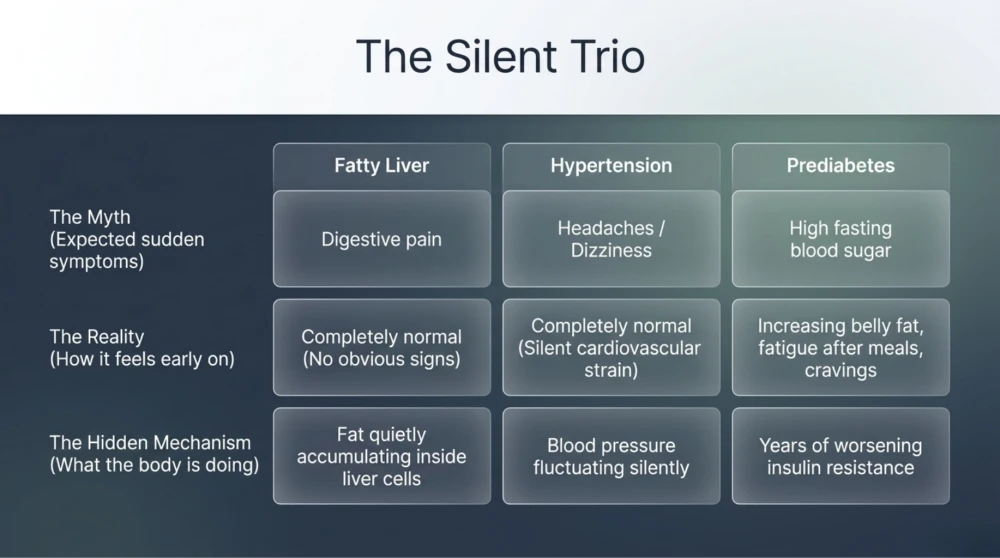
Fatty Liver Is One of the Best Examples of Silent Disease
Fatty liver demonstrates perfectly why preventive health checks matter.
Most patients with fatty liver initially experience:
- No pain
- No obvious digestive symptoms
- No dramatic warning signs
Yet internally, fat may already be accumulating inside liver cells for years.
This gradual process is strongly linked with:
- Insulin resistance
- Visceral fat accumulation
- High triglycerides
- Metabolic syndrome
Many patients discover fatty liver only during routine ultrasound evaluation. This is why preventive evaluation often identifies disease much earlier than symptom-based diagnosis.
Why Blood Pressure Problems Often Remain Hidden
High blood pressure is another condition that frequently develops silently. Many individuals expect hypertension to always produce symptoms such as:
- Headache
- Dizziness
- Palpitations
But in reality, many patients with elevated blood pressure feel completely normal. This is why hypertension is often called a “silent” cardiovascular risk factor.
Without routine screening, blood pressure abnormalities may remain undetected for years while gradually increasing cardiovascular strain.
Prediabetes Often Exists Long Before Diabetes
Another important example is prediabetes. Many patients assume diabetes develops suddenly once blood sugar becomes high.
But long before diabetes appears, the body often goes through years of worsening insulin resistance.
During this phase, patients may experience:
- Increasing belly fat
- Fatigue after meals
- Cravings
- Difficulty losing weight
Yet blood sugar may still appear “acceptable” in early stages. Preventive testing helps identify these metabolic changes before more serious disease develops.
Why Early Detection Changes Long-Term Outcomes
One of the biggest advantages of preventive health checks is timing.
When disease is identified early:
- Lifestyle correction becomes more effective
- Metabolic damage may still be reversible
- Long-term complications can often be reduced
- Progression may slow significantly
This is especially important for modern metabolic conditions because early stages usually respond much better to lifestyle intervention than advanced disease.
The Biggest Mistake: Waiting Until Symptoms Become Severe
Many individuals delay evaluation because they believe: “I feel mostly okay, so my health must be fine.”
But the absence of severe symptoms does not always mean the absence of disease. The body often compensates quietly for long periods before visible warning signs finally appear.
This is exactly why preventive health checks have become increasingly important in modern metabolic healthcare.
Structured approaches like the Lifestyle Modification Program focus heavily on identifying early metabolic imbalance before severe complications develop.
Why Symptoms Often Appear Much Later Than Disease Development
One of the most important reasons preventive health checks are valuable is because the body often delays obvious symptoms until significant physiological changes have already occurred.
Most lifestyle-related diseases do not begin with dramatic warning signs. Instead, they usually progress silently through gradual metabolic changes that the body initially compensates for remarkably well.
For example, insulin resistance may worsen for years before fasting blood sugar finally becomes abnormal. Fat may continue accumulating inside the liver long before pain or digestive symptoms appear. Blood pressure may fluctuate silently before developing into persistent hypertension.
This compensation creates a dangerous illusion of “normal health.” The person feels reasonably functional, continues daily routines, and assumes everything is fine because severe symptoms are absent.
Meanwhile, the underlying metabolic imbalance continues progressing slowly underneath. This is exactly why waiting for symptoms before seeking evaluation can delay early intervention significantly.
Silent Inflammation Quietly Drives Many Modern Diseases
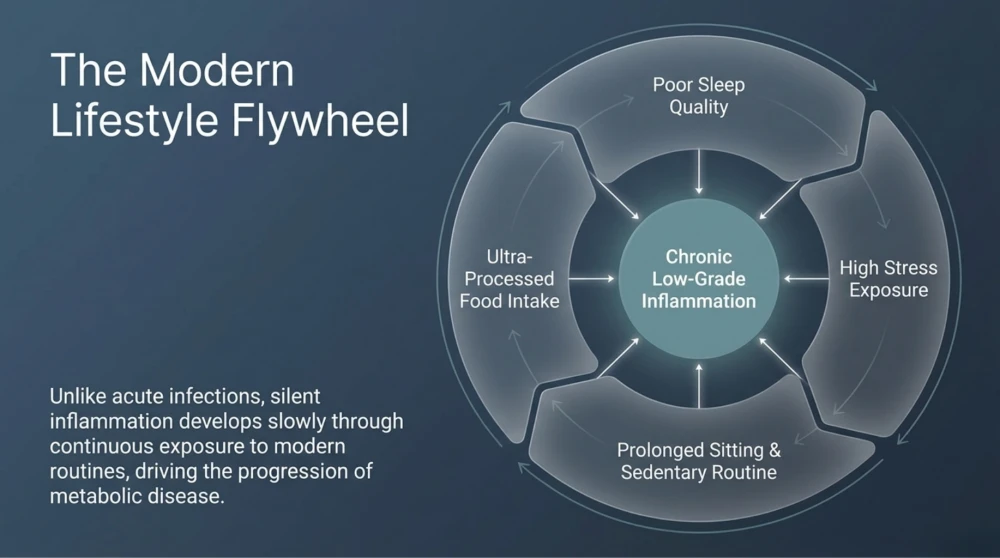
Another important reason preventive health screening matters is because many modern lifestyle diseases are linked with chronic low-grade inflammation. This type of inflammation is very different from acute infections or visible illness.
It usually develops slowly through long-term exposure to:
- Poor sleep
- Stress
- Sedentary lifestyle
- Ultra-processed foods
- Excess visceral fat
Initially, the effects may feel extremely vague.
A person may simply notice:
- Persistent tiredness
- Reduced stamina
- Low motivation
- Increasing belly fat
- Poor metabolic flexibility
Because these symptoms overlap heavily with busy modern lifestyles, many individuals normalize them for years.
But internally, inflammatory pathways may already be contributing to:
- Insulin resistance
- Fatty liver
- Blood pressure changes
- Cardiovascular strain
Preventive health checks help identify these metabolic shifts before severe complications develop.
Why Family History Matters More Than Many People Realize
Another important aspect of preventive screening is identifying inherited risk early. Many lifestyle-related conditions have strong genetic influence.
This includes increased predisposition toward:
- Diabetes
- Hypertension
- High cholesterol
- Heart disease
- Thyroid dysfunction
Genetics alone do not determine destiny, but they significantly influence how the body responds to modern lifestyle patterns.
This is why two individuals with similar routines may develop very different metabolic outcomes. When family history is strong, preventive screening becomes even more important because early metabolic changes may appear sooner than expected.
Many patients discover problems only after seeing similar diseases develop in parents or siblings.
Why Younger Adults Are Increasingly Developing Metabolic Problems
One major shift in modern healthcare is that lifestyle diseases are now appearing much earlier than before. Conditions once associated mainly with older age are increasingly being detected in younger professionals and even adults in their 20s and 30s.
This is strongly linked with modern lifestyle patterns such as:
- Prolonged sitting
- Poor sleep quality
- High stress exposure
- Ultra-processed food intake
- Reduced physical activity
Many younger individuals assume preventive screening is unnecessary because they “feel young.” But biologically, metabolism responds to lifestyle patterns regardless of age.
This is why early preventive evaluation has become increasingly relevant even for younger adults.
The Emotional Resistance Toward Health Checkups
One interesting psychological pattern frequently seen in clinical practice is avoidance behavior. Many individuals delay preventive testing not because they dislike healthcare, but because they subconsciously fear discovering abnormalities.
Some people think: “If I feel okay, maybe I should not overthink.”
Others avoid testing because they worry about:
- Unexpected diagnoses
- Lifestyle restrictions
- Medication requirements
- Health anxiety
Ironically, this delay often increases long-term risk. Most metabolic diseases are much easier to manage during early stages than after years of progression.
This is why preventive health checks should not be viewed as “looking for disease.” They should be viewed as identifying imbalance before serious damage develops.
Why Routine Screening Often Reveals Multiple Problems Together
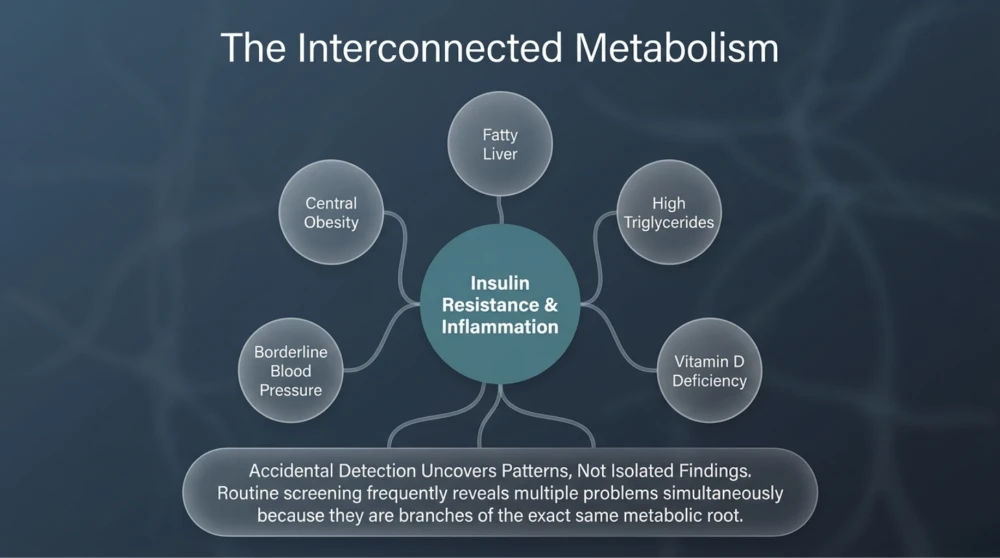
One common clinical observation is that metabolic abnormalities rarely occur completely alone.
For example, a patient may come for routine testing and simultaneously show:
- Fatty liver
- High triglycerides
- Borderline blood sugar elevation
- Vitamin D deficiency
- Increasing abdominal obesity
This happens because modern lifestyle diseases are usually interconnected through metabolism. Insulin resistance, visceral fat accumulation, inflammation, poor sleep, and sedentary behavior often reinforce each other gradually over time.
This is why preventive screening frequently uncovers patterns rather than isolated findings.
Modern Lifestyle Accelerates Silent Disease Progression
One reason preventive healthcare has become increasingly important is the pace of modern lifestyle disruption.
Today many individuals experience:
- Irregular sleep timing
- Long sitting hours
- Chronic stress
- Screen overload
- Continuous mental stimulation
These factors continuously influence metabolism.
Over time, they gradually increase the risk of:
- Insulin resistance
- Fatty liver
- Weight gain
- Blood pressure abnormalities
- Hormonal imbalance
Because these changes occur slowly, preventive screening often becomes the first opportunity to identify them objectively.
The Biggest Advantage of Early Detection: Reversibility
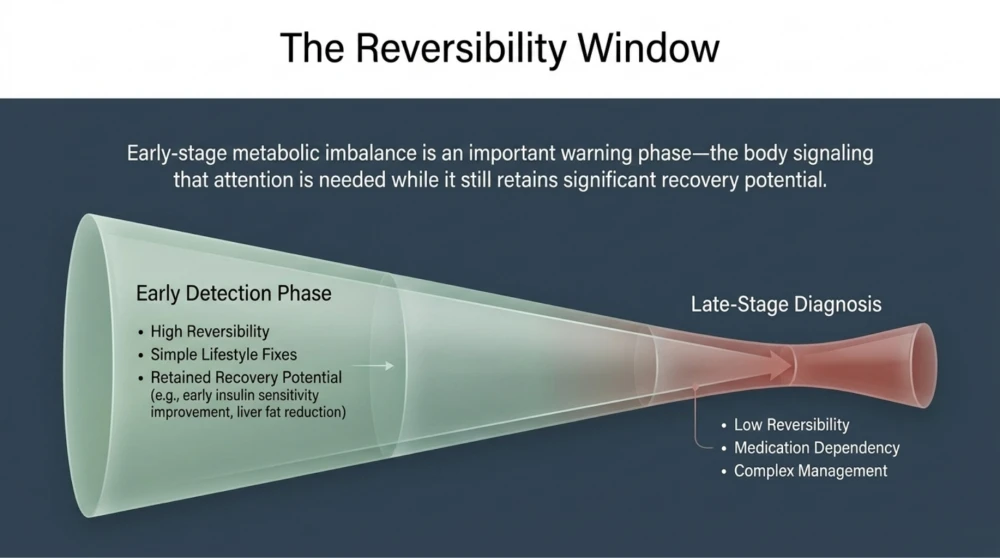
Perhaps the most important benefit of preventive health checks is that many early metabolic changes are still partially or significantly reversible.
At earlier stages, lifestyle correction can often improve:
- Insulin sensitivity
- Liver fat accumulation
- Triglyceride levels
- Weight regulation
- Sleep quality
But once disease progresses further, management becomes more difficult and complications become more likely. This is why timing matters so much in preventive healthcare.
What Actually Helps After Early Detection
One of the biggest advantages of preventive health checks is that they create an opportunity for correction before severe disease develops.
Many patients become anxious after discovering early abnormalities such as:
- Fatty liver
- Prediabetes
- High triglycerides
- Borderline hypertension
- Vitamin deficiencies
But early-stage metabolic imbalance should not be viewed only as bad news. In many cases, it is actually an important warning phase where the body is signaling that lifestyle and metabolism need attention before more serious complications develop.
This stage is often the best time for meaningful intervention because the body usually still retains significant recovery potential.
Why Lifestyle Correction Works Best in Early Stages
One of the most important realities in metabolic healthcare is that early disease responds much better to lifestyle correction than advanced disease.
For example, early insulin resistance may improve significantly with:
- Better sleep
- Regular movement
- Weight reduction
- Improved meal structure
- Stress reduction
Similarly, early fatty liver often responds much more effectively to metabolic correction before severe inflammation or fibrosis develops.
The same principle applies to:
- Blood pressure abnormalities
- High triglycerides
- Central obesity
- Poor metabolic flexibility
This is why preventive detection creates a valuable therapeutic window. Waiting until disease becomes severe usually makes management more difficult and recovery slower.
The Goal Is Not Just “Normal Reports”
One important mindset shift patients need to understand is that preventive healthcare is not simply about collecting laboratory numbers. The real goal is improving long-term metabolic stability and reducing future risk.
For example, someone may technically have “borderline” blood sugar or “mild” fatty liver today, but those findings often represent deeper metabolic imbalance already developing underneath.
This is why early intervention matters even when abnormalities appear “small.” Metabolic disease usually progresses gradually. Small abnormalities today can become major health issues years later if lifestyle patterns remain unchanged.
Why Sustainable Habits Matter More Than Extreme Short-Term Effort
One common mistake after abnormal reports is overreaction.
Many individuals suddenly attempt:
- Crash dieting
- Excessive exercise
- Severe food restriction
- Internet detox programs
Initially, this may feel motivating. But extreme approaches usually become difficult to sustain within real life. As a result, many people lose consistency after a few weeks and eventually return to previous routines.
The body responds much better to sustainable long-term improvement than temporary intensity. This is why realistic lifestyle correction usually works better than perfection-based strategies.
Long-term metabolic improvement typically requires:
- Better routine stability
- Improved sleep consistency
- Regular physical activity
- More structured eating patterns
- Reduced lifestyle chaos
Why Sleep Quality Is Central to Preventive Health
One of the most underestimated factors in preventive metabolic health is sleep. Many individuals focus heavily on food and exercise while continuously neglecting recovery. But biologically, poor sleep affects nearly every major metabolic system.
Sleep disruption influences:
- Insulin sensitivity
- Stress hormone balance
- Appetite regulation
- Inflammatory pathways
- Energy stability
This is why chronic poor sleep often contributes to:
- Weight gain
- Cravings
- Poor metabolic flexibility
- Fatigue
- Reduced exercise consistency
Improving sleep quality is often one of the most effective yet overlooked preventive strategies.
Movement Is One of the Most Powerful Preventive Tools
The human body is biologically designed for regular movement. Modern sedentary lifestyles significantly reduce metabolic efficiency over time.
Prolonged sitting contributes to:
- Reduced calorie expenditure
- Poor insulin sensitivity
- Increasing visceral fat
- Metabolic slowing
This is why regular movement becomes one of the strongest long-term protective factors against lifestyle disease. Importantly, exercise does not always need to be extreme.
Even moderate but consistent activity such as:
- Walking
- Strength training
- Cycling
- Home workouts
- Movement breaks during work
can significantly improve metabolic health over time.
Why Monitoring Matters Even After Normal Reports
Another important concept in preventive healthcare is that health is dynamic.
Metabolism continuously changes based on:
- Age
- Stress exposure
- Lifestyle patterns
- Body composition
- Sleep quality
- Physical activity
This means one “normal” report does not guarantee lifelong protection. Regular preventive evaluation helps identify gradual metabolic changes before severe disease develops.
This becomes especially important in individuals with:
- Family history of diabetes
- Hypertension
- Fatty liver
- Obesity
- Cardiovascular disease
The Preventive Healthcare Mindset Shift
One major problem in modern healthcare is that many individuals seek medical attention only after symptoms become severe. But preventive medicine works differently.
The goal is not waiting for disease to become advanced. The goal is identifying imbalance early enough to reduce long-term damage. This shift in thinking is extremely important because many lifestyle diseases remain partially reversible during earlier stages.
Preventive health checks should therefore be viewed as:
- Long-term metabolic monitoring
- Risk assessment
- Early correction opportunity
- Protection against future complications
rather than simply “testing for disease.”
Why Structured Metabolic Care Matters
Modern lifestyle diseases are rarely isolated problems.
They usually develop through interaction between:
- Poor sleep
- Stress
- Sedentary behavior
- Irregular eating
- Visceral fat accumulation
- Insulin resistance
This is why structured approaches focusing on long-term metabolic correction often produce better outcomes than temporary symptomatic treatment alone.
You can explore this broader preventive strategy through the Lifestyle Modification Program.
What I Commonly Observe in Clinical Practice
Many patients tell me: “Doctor, I wish I had checked earlier.”
Often, their reports reveal metabolic changes that had likely been developing quietly for years. By the time symptoms become obvious, lifestyle disease may already have progressed significantly. This is why preventive evaluation becomes so valuable.
It allows individuals to identify:
- Silent metabolic imbalance
- Early hormonal changes
- Lifestyle-related risk patterns
- Gradual physiological deterioration
before severe complications appear.
Key Takeaways: What You Should Remember
- Many lifestyle diseases develop silently for years before symptoms appear
- The body often compensates for metabolic imbalance initially
- Preventive health checks help detect early metabolic changes
- Fatty liver, prediabetes, hypertension, and high triglycerides are often discovered accidentally
- Early-stage disease usually responds much better to lifestyle correction
- Sustainable routines work better than extreme short-term efforts
- Preventive healthcare focuses on reducing long-term risk, not just treating symptoms
When Should You Consider Preventive Health Evaluation?
Preventive health checks become especially important if you have:
- Family history of diabetes or hypertension
- Increasing belly fat
- Poor sleep
- Sedentary lifestyle
- Persistent fatigue
- High stress exposure
Early detection can significantly reduce future metabolic and cardiovascular complications.
You can book a consultation here:
Book Appointment
Written by Dr. Pankaj Kumar, General & Lifestyle Physician, Dwarka, New Delhi