

















- 14th July 2026
Table of Contents
- Why Neck and Shoulder Pain Is Becoming Increasingly Common
- The Human Body Was Never Designed to Sit for Hours
- Why Poor Sitting Posture Places Extra Stress on the Neck
- Why Forward Head Posture Is a Major Cause of Neck and Shoulder Pain
- Why Shoulder Muscles Become Tight During Desk Work
- How Reduced Movement Affects the Muscles
- Why Laptop and Smartphone Use Makes the Problem Worse
- Why Neck and Shoulder Pain Often Develops Gradually
- Why Poor Workstation Ergonomics Increases Neck and Shoulder Pain
- Why Working From Home Has Increased Neck and Shoulder Pain
- Why Stress Makes Neck and Shoulder Pain Worse
- Why Muscle Imbalances Develop During Prolonged Sitting
- Why Lack of Movement Is More Harmful Than Sitting Alone
- Why Neck and Shoulder Pain Can Trigger Headaches
- Why Physical Inactivity Affects Joint Mobility
- Why Early Intervention Prevents Chronic Neck and Shoulder Pain
- How Regular Movement Can Help Prevent Neck and Shoulder Pain
- Why Micro-Breaks Are Better Than Waiting for Pain
- Simple Stretching Can Improve Flexibility
- Why Strengthening Postural Muscles Matters
- Why Sleep Position Can Influence Neck and Shoulder Pain
- Why Physical Activity Protects More Than Just the Neck
- When Neck and Shoulder Pain Requires Medical Evaluation
- Why Prevention Is Easier Than Treatment
- Key Takeaways: What You Should Remember
Why Neck and Shoulder Pain Is Becoming Increasingly Common
Neck and shoulder pain has become one of the most common health complaints among adults living a modern lifestyle. Whether you work in an office, run a business, study for long hours, drive professionally, or work from home, spending prolonged periods sitting has become part of everyday life.
Many people begin their careers without any discomfort. However, after months or years of desk-based work, they gradually notice stiffness around the neck, aching shoulders, tightness in the upper back, or headaches that seem to appear almost every evening. Initially, these symptoms disappear after a night's sleep, but with time they become more frequent and may even start affecting work performance, sleep quality, and daily activities.
Because these symptoms develop slowly, many individuals simply accept them as a normal consequence of ageing or a busy lifestyle. In reality, prolonged sitting is often one of the biggest contributors.
This is exactly why understanding why long sitting hours can trigger neck and shoulder pain is important. Identifying the underlying causes early can help prevent temporary discomfort from progressing into persistent musculoskeletal problems.
The Human Body Was Never Designed to Sit for Hours
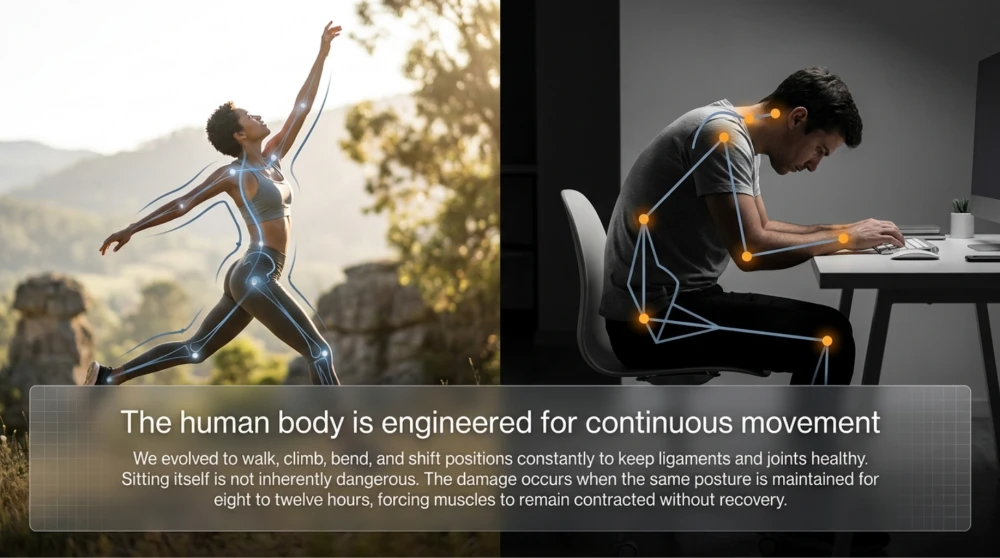
The human body evolved to move throughout the day. Walking, climbing, bending, lifting, reaching, and changing positions regularly keep the muscles, joints, and ligaments healthy.
Modern life is very different.
Many adults spend eight to twelve hours every day sitting in front of a computer, attending virtual meetings, driving, or looking at mobile phones. Even after work, many continue sitting while watching television or scrolling through social media.
Sitting itself is not harmful. The real problem begins when the same posture is maintained for long periods without movement.
When muscles remain in one position for hours, they become fatigued, joints become stiff, and blood circulation slows. Gradually, this creates the ideal environment for developing neck and shoulder pain.
Why Poor Sitting Posture Places Extra Stress on the Neck
Very few people maintain perfect posture throughout an entire working day.
As concentration shifts toward work, posture usually begins to deteriorate without the person noticing it.
Common postural habits include:
- Leaning towards the computer screen.
- Rounded shoulders.
- Slouching in the chair.
- Looking down at a laptop.
- Holding the phone between the shoulder and ear.
- Bending the neck while checking messages.
These positions may seem harmless when maintained for only a few minutes. However, repeating them every day for several hours places continuous stress on the muscles that support the head and upper spine.
Instead of relaxing, these muscles remain contracted throughout the day. Eventually, fatigue develops, followed by stiffness and persistent neck and shoulder pain.
Why Forward Head Posture Is a Major Cause of Neck and Shoulder Pain
One of the most common posture-related problems seen in modern workplaces is forward head posture.
In a healthy posture, the ears remain roughly aligned over the shoulders. This allows the spine to support the weight of the head efficiently.
However, while working on computers or smartphones, the head often moves several centimetres forward.
Although the head itself does not become heavier, this forward position dramatically increases the workload placed on the muscles, ligaments, and joints of the neck.
Imagine holding a heavy object close to your chest. It feels manageable. Now stretch your arms forward while holding the same object. The weight suddenly feels much greater because of the increased mechanical load.
A similar process occurs in the neck.
The farther the head moves forward, the harder the supporting muscles must work. After several hours, these muscles become overworked and fatigued, eventually leading to neck and shoulder pain, upper back tightness, and tension headaches.
Why Shoulder Muscles Become Tight During Desk Work
Many people assume their shoulders are resting while sitting at a desk. In reality, the shoulder muscles remain active throughout most computer-based tasks.
Typing, operating a mouse, writing notes, answering phone calls, and using mobile devices all require the shoulders to maintain a stable position for prolonged periods.
Unlike walking or exercising, where muscles repeatedly contract and relax, desk work often keeps the same muscles engaged continuously.
This prolonged muscle activity reduces the opportunity for recovery.
As fatigue develops, people commonly notice:
- Aching shoulders.
- Tight muscles around the neck.
- Pain between the shoulder blades.
- Difficulty relaxing the upper back.
- Reduced neck mobility.
These symptoms are among the earliest warning signs that prolonged sitting is beginning to affect the musculoskeletal system.
How Reduced Movement Affects the Muscles
Movement acts like a natural pump for the body's muscles. Every time muscles contract and relax, blood circulation improves, oxygen is delivered efficiently, and metabolic waste products are removed.
When someone remains seated for several hours, this natural cycle slows considerably.
The muscles around the neck, shoulders, and upper back remain under low-level tension without receiving the regular movement needed to stay flexible.
Over time, this leads to muscle stiffness, reduced flexibility, and increasing discomfort.
Many people notice they feel particularly stiff immediately after standing up from a long meeting or after several uninterrupted hours at the computer. This stiffness often improves temporarily with movement, which demonstrates how strongly prolonged sitting contributes to neck and shoulder pain.
Why Laptop and Smartphone Use Makes the Problem Worse
The widespread use of laptops and smartphones has significantly increased the number of people experiencing neck and shoulder pain.
Laptops usually position the screen lower than eye level, encouraging users to bend their neck forward. Smartphones create an even greater challenge because most people hold them close to their lap while reading or typing.
Many adults spend several additional hours each evening using their phones after already working on computers throughout the day.
This means the muscles supporting the neck receive very little opportunity to recover.
The cumulative effect of computer work during office hours followed by prolonged smartphone use at home often explains why neck and shoulder pain has become increasingly common across all age groups.

Why Neck and Shoulder Pain Often Develops Gradually
One of the reasons people ignore early symptoms is that the problem rarely appears suddenly.
Instead, it develops slowly over months or even years.
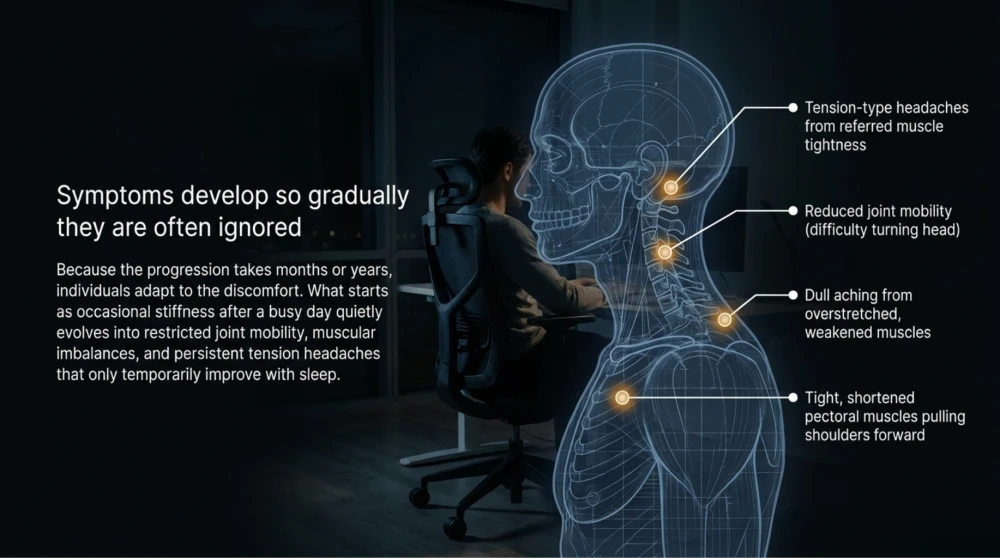
Initially, there may only be occasional stiffness after a particularly busy workday. Later, discomfort begins appearing almost every evening. Eventually, the pain may persist throughout the day or even interfere with sleep.
Because the progression is gradual, many people adapt to the discomfort without recognising how much their posture, mobility, and quality of life have changed.
This is why early attention to posture, regular movement, and workplace ergonomics is far easier than treating chronic neck and shoulder pain after it becomes established.
Why Poor Workstation Ergonomics Increases Neck and Shoulder Pain
Many people assume that simply buying an expensive office chair will prevent neck and shoulder pain. While a comfortable chair can certainly help, it is only one part of a much larger picture.
The entire workstation influences how the body functions throughout the day. The position of the monitor, keyboard, mouse, desk, chair, and even the placement of frequently used items all affect posture.
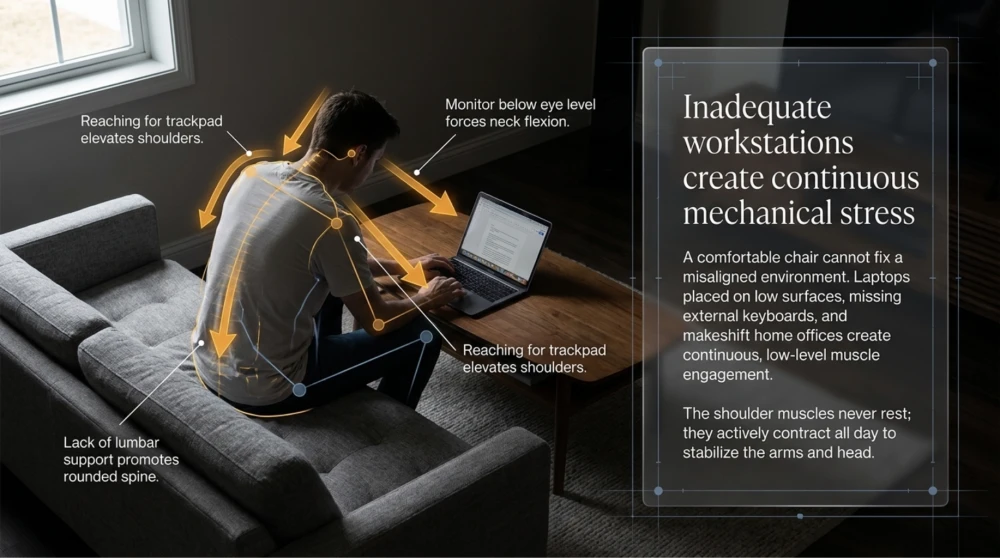
For example, if the computer monitor is positioned too low, people naturally bend their neck forward to see the screen. If the keyboard is placed too far away, the shoulders remain elevated and the arms constantly reach forward. Even using a mouse that is positioned too far from the body may increase tension around the shoulder muscles.
These small ergonomic problems may appear insignificant individually, but together they create continuous mechanical stress that eventually contributes to neck and shoulder pain.
Why Working From Home Has Increased Neck and Shoulder Pain
The shift towards remote and hybrid working has provided many advantages, including reduced commuting time and greater flexibility. However, it has also introduced new musculoskeletal challenges.
Many people work from dining tables, sofas, beds, or kitchen counters rather than properly designed workstations. Laptops are often placed on low surfaces, forcing users to bend their necks for several hours.
Unlike traditional offices, home workspaces frequently lack:
- Adjustable chairs.
- Proper monitor height.
- External keyboards and mice.
- Adequate lumbar support.
- Dedicated workspaces.
As a result, many professionals developed persistent neck and shoulder pain during the years they spent working remotely.
Even after returning to offices, poor habits developed during that period often continue.
Why Stress Makes Neck and Shoulder Pain Worse
Physical posture is not the only factor contributing to discomfort. Emotional stress also plays an important role.
When people experience work pressure, deadlines, financial concerns, or emotional stress, the body responds by increasing muscle tension.
Many individuals unconsciously tighten their shoulders, clench their jaw, or keep the muscles around the neck contracted throughout the day.
Unlike brief muscle contraction during exercise, stress-related muscle tension may continue for several hours without relief.
This prolonged tightening often produces symptoms such as:
- Stiff shoulders.
- Pain at the base of the neck.
- Tension headaches.
- Upper back tightness.
- Difficulty relaxing after work.
When poor posture and emotional stress occur together, the likelihood of developing chronic neck and shoulder pain increases even further.
Why Muscle Imbalances Develop During Prolonged Sitting
The muscles surrounding the neck and shoulders work together to maintain proper posture. However, prolonged sitting changes how these muscles function.
Some muscles remain shortened because they are continuously contracted, while others gradually become weaker because they are used less effectively. Over months or years, these imbalances alter normal movement patterns.
For example, tight chest muscles may pull the shoulders forward, while weaker upper back muscles struggle to maintain an upright posture. Similarly, deep neck muscles that normally stabilize the cervical spine may become less active, forcing larger muscles to work much harder.
This imbalance creates additional strain during even simple daily activities and contributes significantly to persistent neck and shoulder pain.
Why Lack of Movement Is More Harmful Than Sitting Alone
Research increasingly suggests that the problem is not sitting itself but remaining in the same position without interruption. The human body tolerates sitting quite well when regular movement is incorporated throughout the day.
Unfortunately, many people become deeply focused on work and remain seated for two or three consecutive hours without standing, stretching, or walking even briefly. During this time, muscles receive little opportunity to relax, joints remain in fixed positions, and circulation becomes less efficient.
Simple movement breaks lasting only a few minutes may help reduce stiffness by restoring muscle activity and changing posture before discomfort becomes established.
Why Neck and Shoulder Pain Can Trigger Headaches
Many people do not realise that persistent muscle tension around the neck and shoulders may contribute to headaches.
When muscles remain tight for prolonged periods, pain may spread upward towards the base of the skull and around the temples.
These headaches often develop gradually during the day and become more noticeable after prolonged computer work.
Unlike migraines, tension-type headaches are frequently associated with muscle tightness, poor posture, and prolonged sitting.
Individuals commonly describe:
- A dull aching pain.
- A feeling of pressure around the head.
- Tightness at the back of the neck.
- Discomfort extending into the shoulders.
Recognising the relationship between posture and headaches is important because treating only the headache without addressing the underlying neck and shoulder pain often provides only temporary relief.
Why Physical Inactivity Affects Joint Mobility
Healthy joints depend on regular movement.
Movement helps lubricate joints, maintains flexibility, and allows muscles to work through their normal range of motion.
When movement becomes limited, the neck and shoulder joints gradually become stiffer.
Many individuals notice difficulty turning their head while reversing a car, looking over one shoulder, or reaching overhead for objects.
These early mobility changes often develop gradually and may be overlooked until everyday activities become uncomfortable.
Maintaining joint mobility is therefore just as important as maintaining muscle strength.
Why Early Intervention Prevents Chronic Neck and Shoulder Pain
Perhaps the most encouraging aspect of posture-related discomfort is that it often responds well to early intervention.
Small adjustments made before pain becomes chronic are usually far more effective than waiting until symptoms become severe.
Improving workstation ergonomics, taking regular movement breaks, strengthening postural muscles, managing stress, and correcting daily posture can significantly reduce the mechanical strain placed on the neck and shoulders.
Rather than accepting neck and shoulder pain as an unavoidable consequence of modern work, recognising it as an early warning sign allows people to make meaningful lifestyle changes before long-term problems develop.
How Regular Movement Can Help Prevent Neck and Shoulder Pain
One of the most effective ways to reduce the risk of neck and shoulder pain does not require expensive equipment or complicated treatments. It simply involves moving more frequently throughout the day.
The muscles supporting the neck and shoulders are designed to work during movement, not to remain in the same position for several consecutive hours. Even maintaining a good sitting posture continuously can eventually lead to muscle fatigue if movement is absent.
Getting up from the chair, walking for a few minutes, gently stretching, or changing posture allows overworked muscles to relax while activating muscles that have remained inactive during prolonged sitting.
These small interruptions may appear insignificant, but when repeated consistently throughout the day, they can substantially reduce the cumulative stress placed on the upper body.
Why Micro-Breaks Are Better Than Waiting for Pain
Many people wait until their neck becomes stiff before deciding to stand up or stretch. Unfortunately, by the time discomfort develops, muscle fatigue has often been present for quite some time.
A more effective approach is to prevent excessive muscle strain from developing in the first place.
Many workplace health experts recommend taking brief movement breaks at regular intervals rather than remaining seated continuously.
A practical strategy is the 30–30 rule. After approximately 30 minutes of sitting, spend about 30 seconds changing your posture, standing, stretching, or walking a short distance.
This brief interruption is often enough to reduce continuous muscle loading without affecting work productivity.
For individuals whose work demands prolonged sitting, these small breaks can play an important role in preventing neck and shoulder pain.
Simple Stretching Can Improve Flexibility
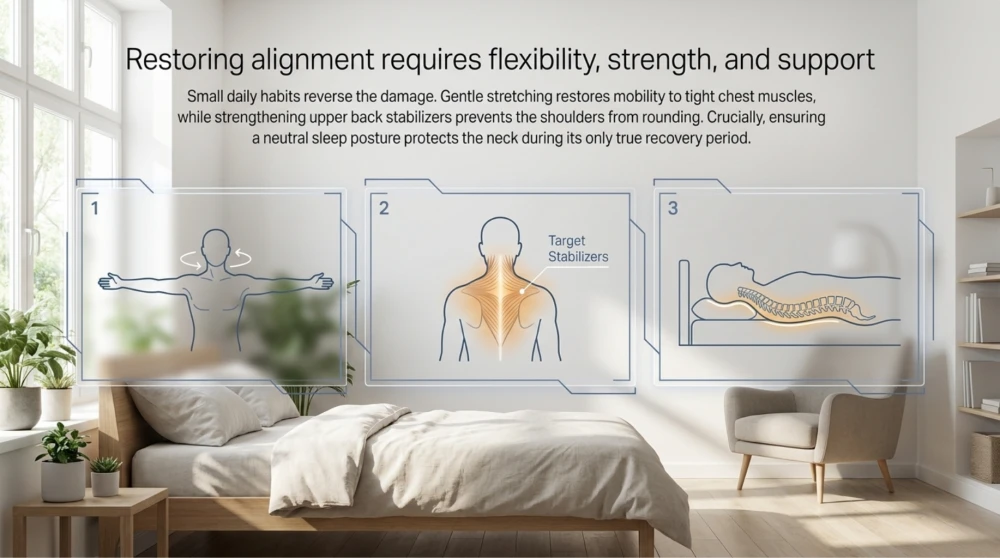
Gentle stretching helps restore flexibility to muscles that remain shortened during desk work.
Stretching should always be slow and comfortable rather than forceful or painful.
Simple exercises that many people find helpful include:
- Slow neck rotations within a comfortable range.
- Gentle side bending of the neck.
- Shoulder rolls forwards and backwards.
- Shoulder blade squeezes.
- Chest-opening stretches to counter rounded shoulders.
These movements encourage better mobility and may reduce the feeling of stiffness that commonly develops after prolonged computer work.
If pain is severe, follows an injury, or radiates into the arm, stretching should not replace proper medical evaluation.
Why Strengthening Postural Muscles Matters
Flexibility alone is not enough to maintain healthy posture.
The muscles responsible for supporting the neck, shoulders, and upper back also need adequate strength and endurance.
Weak postural muscles fatigue more quickly during prolonged sitting. As they tire, the shoulders round forward and the head gradually moves out of alignment.
Regular strengthening exercises targeting the upper back, shoulder stabilisers, and deep neck muscles help improve posture and reduce unnecessary strain during daily activities.
Importantly, these exercises do not need to be performed for hours. A structured programme performed consistently is usually far more beneficial than occasional intense workouts.
Why Sleep Position Can Influence Neck and Shoulder Pain
Many people focus entirely on their posture during the day while overlooking the six to eight hours spent sleeping each night.
An unsupportive sleeping position may place unnecessary strain on the neck for several hours without interruption.
Although there is no single "perfect" sleeping position for everyone, certain general principles may help.
- Choose a pillow that supports the natural curve of the neck without forcing it too high or too low.
- Try to keep the neck aligned with the rest of the spine.
- Avoid sleeping with multiple thick pillows that push the head excessively forward.
- If sleeping on your side, ensure the pillow fills the space between the shoulder and head comfortably.
Comfort and proper spinal alignment are generally more important than selecting a specific pillow brand.
Why Physical Activity Protects More Than Just the Neck
Regular exercise benefits the entire musculoskeletal system.
Walking, swimming, resistance training, yoga, Pilates, and mobility exercises all encourage healthy movement patterns and improve muscle endurance.
People who remain physically active often develop:
- Better posture.
- Improved flexibility.
- Stronger supporting muscles.
- Greater joint mobility.
- Improved circulation.
These adaptations not only reduce the likelihood of neck and shoulder pain but also support long-term metabolic health, cardiovascular fitness, and overall quality of life.
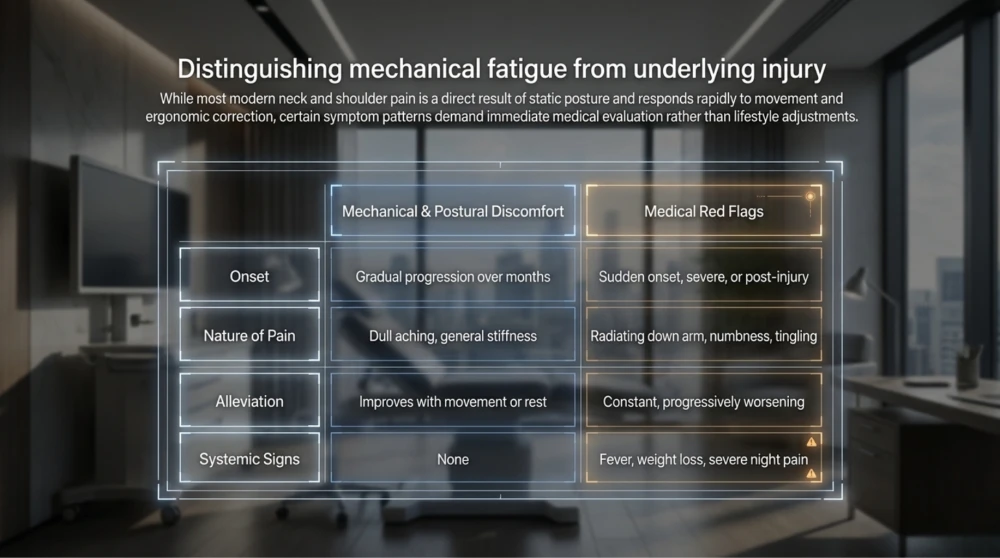
When Neck and Shoulder Pain Requires Medical Evaluation
Most episodes of posture-related discomfort improve with movement, ergonomic correction, and appropriate exercise.
However, not every case of neck and shoulder pain is caused by prolonged sitting.
Medical evaluation is recommended if pain:
- Persists for several weeks despite lifestyle changes.
- Becomes progressively worse.
- Develops after a significant injury or fall.
- Radiates into the arm or hand.
- Is associated with numbness, tingling, or muscle weakness.
- Occurs with fever, unexplained weight loss, or severe night pain.
These symptoms may indicate conditions that require further investigation rather than simple ergonomic adjustments.
Why Prevention Is Easier Than Treatment
One of the most valuable lessons in lifestyle medicine is that prevention is almost always easier than treating established disease.
Small daily habits repeated consistently often have a greater long-term impact than occasional corrective measures.
Maintaining good posture, moving regularly, strengthening postural muscles, managing stress, and creating an ergonomic workspace help reduce the mechanical stress responsible for many cases of neck and shoulder pain.
These habits require relatively little time yet may significantly improve comfort, productivity, and long-term musculoskeletal health.
Key Takeaways: What You Should Remember
- Long sitting hours are a major contributor to modern neck and shoulder pain.
- Poor posture, forward head position, and rounded shoulders increase muscle strain.
- Computer work, laptop use, and smartphones commonly worsen posture-related discomfort.
- Regular movement breaks are more effective than sitting continuously for several hours.
- Stretching, strengthening, and proper workstation ergonomics help reduce mechanical stress.
- Stress can increase muscle tension and make neck and shoulder pain worse.
- Persistent pain associated with numbness, weakness, severe injury, or other warning signs requires medical evaluation.
- Consistent daily habits are the most effective strategy for preventing chronic neck and shoulder pain.
You can book a consultation here:
Book Appointment
Written by Dr. Pankaj Kumar, General & Lifestyle Physician, Dwarka, New Delhi