
















- 6th July 2026
Table of Contents
- Why Many People Feel Tired Even When They Are Eating Well
- What Is Mild Dehydration?
- Why Modern Lifestyles Increase the Risk of Dehydration
- Why Mild Dehydration Can Reduce Energy Levels
- Why Dehydration Can Affect Concentration and Mental Performance
- Why Mild Dehydration Can Increase Hunger
- Why Mild Dehydration Can Make Weight Control More Difficult
- Why Thirst Is Not Always a Reliable Indicator
- Why Hydration Is Part of Overall Metabolic Health
- Why Hydration Supports Normal Metabolism
- Why Dehydration Can Reduce Physical Performance
- Why Dehydration Can Increase Food Cravings
- Why Hot Weather Increases Fluid Requirements
- Why Older Adults Are More Susceptible to Dehydration
- Common Myths About Drinking Water
- Why Sugary Drinks Are Not the Best Way to Stay Hydrated
- Why Hydration Is About Consistency, Not Quantity Alone
- How Much Water Should You Actually Drink?
- Can Food Help Meet Your Hydration Needs?
- Simple Habits That Can Improve Daily Hydration
- When Should Dehydration Be Taken Seriously?
- Hydration Is Important, but It Is Only One Part of Weight Management
- Why Lifestyle Consistency Matters More Than Occasional Effort
- Key Takeaways: What You Should Remember
Why Many People Feel Tired Even When They Are Eating Well
Many adults try to improve their health by eating balanced meals, exercising regularly, and getting enough sleep. Yet despite these efforts, they often complain of feeling tired, lacking energy, experiencing headaches, or struggling to concentrate during the day.
Some also notice frequent hunger, unexplained food cravings, or difficulty losing weight despite following a healthy lifestyle. These symptoms are commonly blamed on stress, lack of sleep, or a slow metabolism.
However, one simple factor is often overlooked—hydration.
Many people assume dehydration only becomes important during extreme heat, strenuous exercise, or severe illness. In reality, even mild dehydration can influence how the body functions throughout the day.
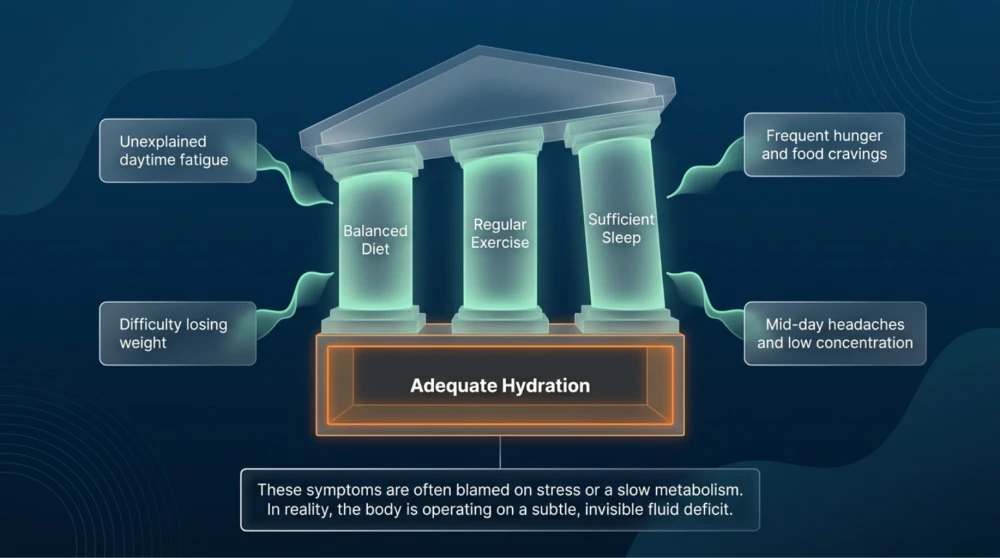
This is exactly why understanding why mild dehydration can affect energy, hunger, and weight control is important for anyone trying to improve their overall health.
What Is Mild Dehydration?
The human body is made up largely of water, and every organ depends on adequate hydration to function efficiently. Water plays an essential role in maintaining blood circulation, regulating body temperature, transporting nutrients, removing waste products, and supporting normal cellular activity.
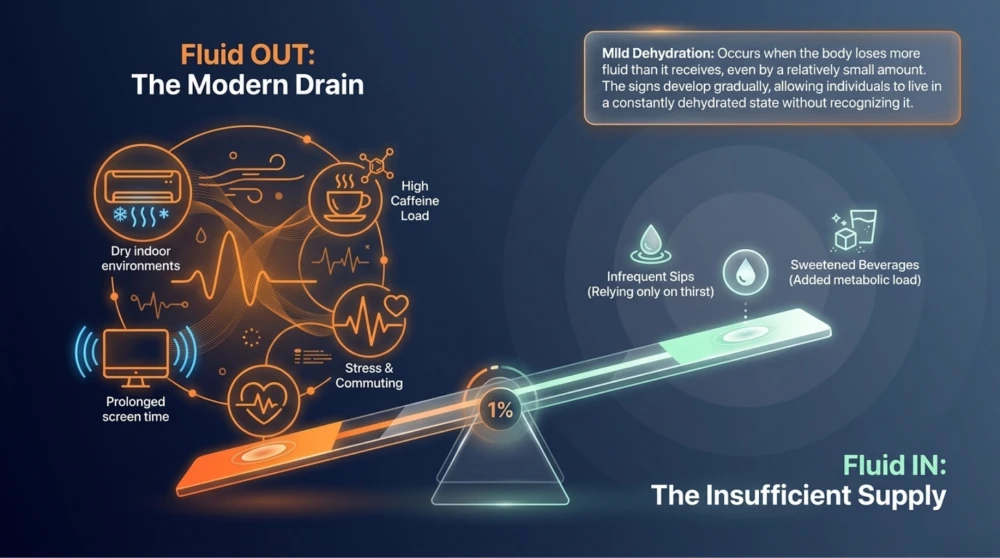
Mild dehydration occurs when the body loses more fluid than it receives, even by a relatively small amount. Unlike severe dehydration, it may not cause dramatic symptoms. Instead, the signs are often subtle and develop gradually.
Many individuals continue their normal daily routine without realizing that inadequate fluid intake may already be affecting their physical and mental performance.
Why Modern Lifestyles Increase the Risk of Dehydration
Modern lifestyles make it surprisingly easy to drink less water than the body requires.
Many people spend long hours at work, attend back-to-back meetings, travel frequently, or remain focused on screens for extended periods. During busy days, drinking water often becomes an afterthought.
Some individuals replace water with:
- Tea
- Coffee
- Soft drinks
- Energy drinks
- Sweetened beverages
Although these beverages contribute some fluid, they may also contain sugar, caffeine, or excess calories that are not ideal when consumed frequently.
Hot weather, air-conditioned environments, physical activity, and certain medical conditions can further increase daily fluid requirements. As a result, many adults live in a mildly dehydrated state without recognizing it.
Why Mild Dehydration Can Reduce Energy Levels
One of the earliest effects of inadequate hydration is reduced energy.
Water supports normal circulation, allowing oxygen and nutrients to reach tissues efficiently. When hydration declines, the body has to work harder to maintain these essential functions.
Many people experiencing mild dehydration describe symptoms such as:
- Feeling tired during the day
- Reduced physical stamina
- General weakness
- Lower productivity
- Difficulty completing routine tasks
These symptoms are often mistaken for overwork or poor sleep, even though inadequate hydration may be contributing to the problem.
Why Dehydration Can Affect Concentration and Mental Performance
The brain is particularly sensitive to changes in hydration. Even relatively small fluid deficits may influence attention, concentration, and mental performance.
Many individuals notice:
- Difficulty focusing
- Headaches
- Mental fatigue
- Reduced alertness
- Slower thinking
Students, office workers, healthcare professionals, and anyone performing mentally demanding tasks may notice these effects more readily. In many cases, simply restoring adequate hydration improves mental clarity.
If you want to understand this relationship further, you may also explore why brain fog and low concentration should not be ignored.
Why Mild Dehydration Can Increase Hunger
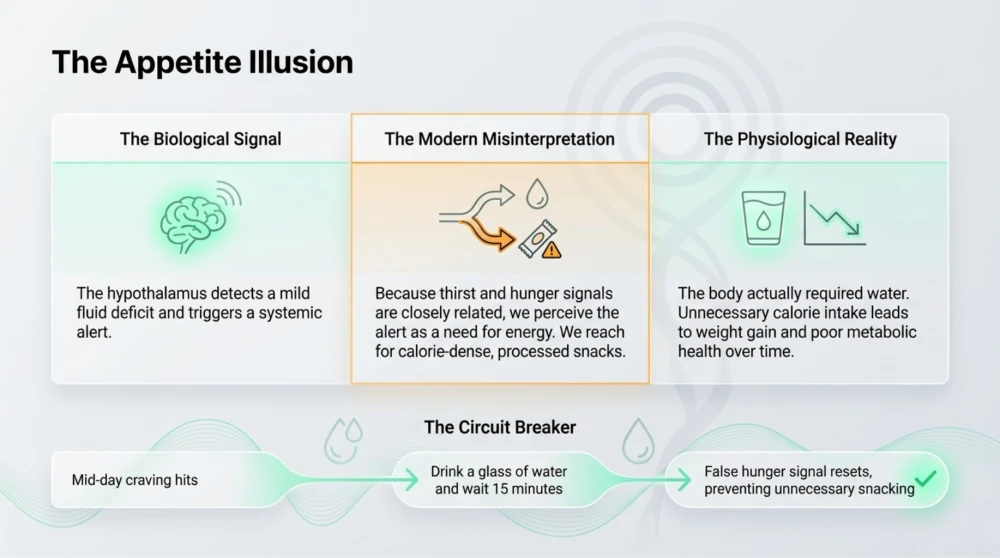
One of the most overlooked effects of dehydration is its influence on appetite. The body's signals for thirst and hunger are processed through closely related mechanisms in the brain.
As a result, some individuals may misinterpret thirst as hunger. Instead of drinking water, they reach for snacks. This often leads to unnecessary calorie intake, especially when the chosen foods are highly processed or rich in sugar.
Many people who believe they are constantly hungry may actually be inadequately hydrated during the day. This does not mean every episode of hunger is caused by dehydration, but it explains why drinking water before reaching for a snack is often a practical habit.
Why Mild Dehydration Can Make Weight Control More Difficult
Hydration itself does not directly cause weight loss, nor does drinking large amounts of water magically burn fat. However, adequate hydration supports several processes that are important for successful weight management.
When dehydration contributes to fatigue, people are often less physically active. When thirst is mistaken for hunger, calorie intake may increase unnecessarily.
When concentration declines, meal planning and healthy food choices may become more difficult. Over time, these small effects can make weight control more challenging.
This is one reason hydration should be viewed as part of a comprehensive lifestyle approach rather than an isolated strategy for weight loss.
Why Thirst Is Not Always a Reliable Indicator
Many adults believe they simply need to drink water whenever they feel thirsty. Although thirst is an important protective mechanism, it does not always appear immediately when fluid needs begin increasing.
Older adults, busy professionals, and people working in air-conditioned environments may delay drinking for long periods without noticing significant thirst.
By the time thirst becomes obvious, mild dehydration may already be affecting physical or mental performance. This is why developing regular hydration habits is often more effective than relying solely on thirst.
Why Hydration Is Part of Overall Metabolic Health
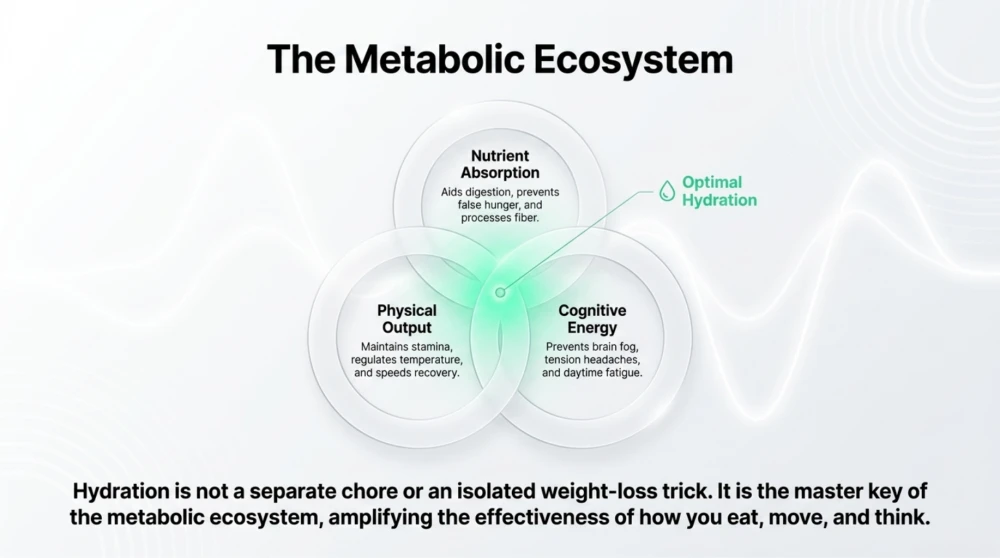
Hydration is often discussed separately from nutrition and exercise, but in reality, all three work together.
Healthy hydration supports circulation, digestion, temperature regulation, physical performance, and cognitive function. It also complements healthy eating habits by helping people better recognize true hunger and maintain consistent energy levels.
Rather than viewing water as a treatment for weight loss, it is more accurate to consider it one of the foundations of overall metabolic health.
Why Hydration Supports Normal Metabolism
Many people believe that drinking more water directly speeds up metabolism and leads to rapid weight loss. While the relationship is not that simple, hydration does play an important role in helping the body's normal metabolic processes function efficiently.
Every cell in the body depends on water to carry out routine activities. Digestion, absorption of nutrients, circulation, temperature regulation, waste removal, and countless biochemical reactions require adequate hydration.
When fluid intake becomes insufficient, these processes may become less efficient.
This does not mean mild dehydration suddenly causes metabolic disease. Instead, it creates an environment where the body may function below its optimal level, affecting energy, physical performance, and overall well-being.
Hydration should therefore be viewed as one component of a healthy metabolic system rather than a standalone weight-loss strategy.
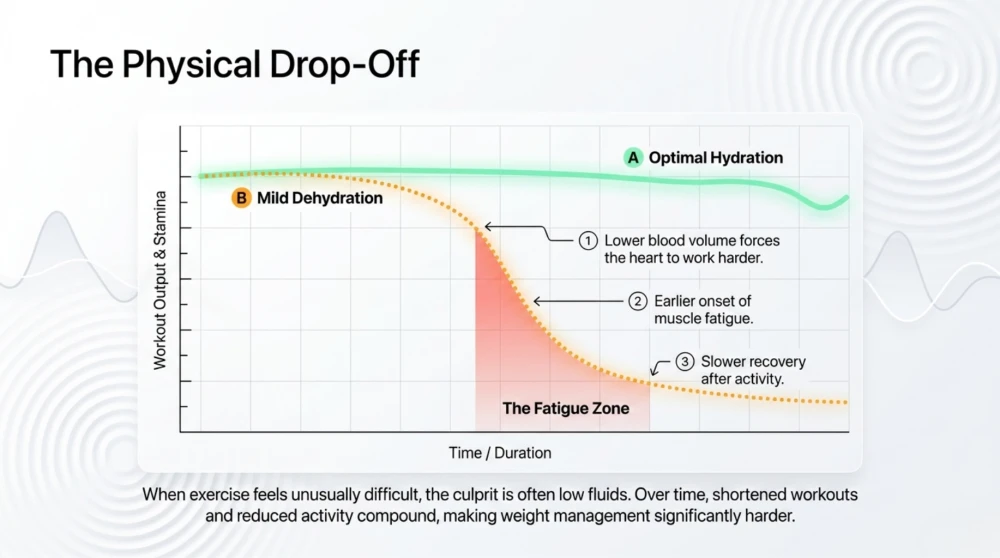
Why Dehydration Can Reduce Physical Performance
Many individuals notice that exercise feels more difficult on days when they have not consumed enough fluids.
This is because water helps maintain normal blood volume, supports circulation, and assists in regulating body temperature during physical activity.
When mild dehydration develops, people may experience:
- Earlier fatigue during exercise
- Reduced stamina
- Lower exercise tolerance
- Difficulty maintaining workout intensity
- Slower recovery after activity
As a result, they may shorten workouts, reduce physical activity, or avoid exercise altogether. Over weeks and months, reduced activity can influence overall fitness and make weight management more difficult.
Why Dehydration Can Increase Food Cravings
Many people are surprised to learn that inadequate hydration may sometimes contribute to unnecessary snacking. When thirst is mistaken for hunger, individuals often reach for calorie-dense foods instead of drinking water.
This pattern is especially common during busy workdays when people:
- Forget to drink water
- Consume multiple cups of tea or coffee
- Skip regular meals
- Snack while working
After several hours, they may experience fatigue and assume they need food, when in reality, both hydration and nutrition may require attention.
This does not mean every craving is caused by dehydration. Stress, poor sleep, insulin resistance, and dietary habits also influence appetite. However, ensuring adequate hydration before eating unnecessarily is a simple strategy that may help some individuals better distinguish thirst from true hunger.
Why Hot Weather Increases Fluid Requirements
Climate plays a major role in hydration needs. In countries such as India, where high temperatures and humidity are common for much of the year, fluid losses through sweating increase significantly.
People working outdoors, travelling in hot weather, exercising, or spending long periods without access to drinking water may lose substantial amounts of fluid without realizing it.
Children and older adults are particularly vulnerable because they may not always recognize or communicate thirst effectively.
During hot weather, it becomes even more important to:
- Drink fluids regularly throughout the day.
- Increase fluid intake during prolonged physical activity.
- Choose water as the primary beverage.
- Replace fluids lost through excessive sweating.
Waiting until intense thirst develops may not always be the best strategy during prolonged exposure to heat.
Why Older Adults Are More Susceptible to Dehydration
As people age, several physiological changes increase the risk of dehydration. The sensation of thirst may become less pronounced, making it easier to go long periods without drinking enough fluids.
In addition, some older adults intentionally reduce fluid intake because they worry about frequent urination or limited access to toilets while travelling. Certain medications, including diuretics prescribed for high blood pressure or heart conditions, may also increase fluid loss.
For these reasons, dehydration is often more common among older adults than younger individuals.
Maintaining regular hydration becomes particularly important in this age group because dehydration may contribute to:
- Fatigue
- Dizziness
- Constipation
- Confusion
- Falls
Recognizing these symptoms early can help prevent more serious complications.
Common Myths About Drinking Water
Hydration is surrounded by many myths, some of which create unnecessary confusion. One common belief is that everyone must drink exactly eight glasses of water every day.
In reality, fluid requirements vary depending on age, body size, climate, physical activity, diet, health conditions, and medications. There is no single number that is appropriate for everyone.
Another misconception is that drinking excessive amounts of water automatically leads to weight loss.
Water does not melt body fat or replace the need for healthy eating and physical activity. Its role is to support normal body functions that contribute to overall health.
Some people also believe that tea and coffee always cause dehydration.
Moderate consumption of these beverages contributes to daily fluid intake, although plain water remains the best choice for routine hydration because it contains no added sugar or calories.
Why Sugary Drinks Are Not the Best Way to Stay Hydrated
Many commercially available beverages are marketed as refreshing and hydrating. However, some contain large amounts of added sugar.
Regular consumption of sugar-sweetened beverages may contribute to:
- Excess calorie intake
- Weight gain
- Higher blood sugar levels
- Poor metabolic health
For most healthy adults, plain water remains the preferred option for daily hydration.
Unsweetened beverages, buttermilk without added sugar, coconut water in appropriate portions, or lemon water without added sugar may also fit into a balanced dietary pattern depending on an individual's health status.
Why Hydration Is About Consistency, Not Quantity Alone
Some people drink very little water throughout the day and then attempt to compensate by consuming large amounts in the evening.
While this may temporarily increase total fluid intake, it does not necessarily provide the same benefits as maintaining hydration consistently throughout the day.
Small, regular fluid intake is generally easier for the body to manage and helps support steady hydration.
Developing simple habits—such as keeping a water bottle nearby, drinking water between meals, and increasing fluid intake during hot weather or exercise—can make hydration a natural part of daily life.
How Much Water Should You Actually Drink?
One of the most common questions patients ask is, "How much water should I drink every day?"
Unfortunately, there is no single answer that applies to everyone.
Daily fluid requirements depend on several factors, including:
- Age
- Body weight
- Climate
- Physical activity
- Occupation
- Overall health
- Pregnancy and breastfeeding
- Certain medications and medical conditions
For example, someone working outdoors in the summer heat will generally require more fluids than someone working in an air-conditioned office. Similarly, a person exercising regularly or recovering from fever, vomiting, or diarrhea may have significantly higher fluid requirements.
Rather than focusing on a fixed number of glasses, it is more practical to develop the habit of drinking fluids regularly throughout the day and increasing intake whenever fluid losses are greater.
For most healthy adults, pale yellow urine is often a reassuring sign of adequate hydration, although urine colour alone should not be used to diagnose dehydration because certain foods, medications, and vitamin supplements can also change its appearance.
Can Food Help Meet Your Hydration Needs?
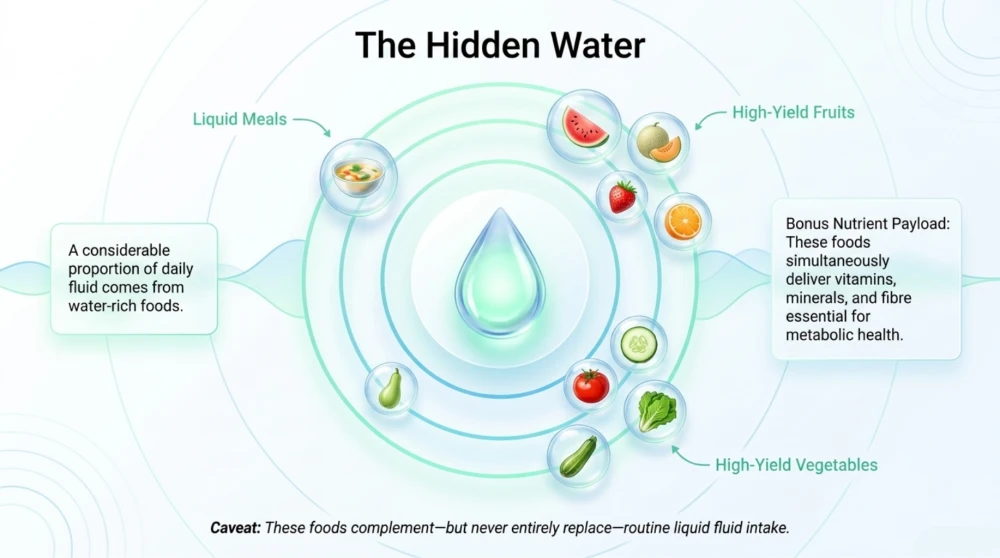
Many people forget that water does not come only from beverages.
A considerable proportion of daily fluid intake also comes from foods, especially those naturally rich in water.
Examples include:
- Cucumber
- Watermelon
- Muskmelon
- Tomatoes
- Oranges
- Strawberries
- Lettuce
- Bottle gourd (Lauki)
- Zucchini
- Clear soups
Including these foods as part of a balanced diet not only contributes to hydration but also provides vitamins, minerals, fibre, and other nutrients that support overall metabolic health.
However, these foods should complement—not replace—regular fluid intake.
Simple Habits That Can Improve Daily Hydration
For many people, dehydration develops not because water is unavailable but because drinking water is repeatedly postponed during a busy day.
Small lifestyle changes are often enough to improve hydration consistently.
Helpful habits include:
- Starting the day with a glass of water.
- Keeping a reusable water bottle at your desk or in your bag.
- Drinking water before long meetings or journeys.
- Taking regular water breaks during work.
- Increasing fluid intake during hot weather or exercise.
- Choosing water instead of sugar-sweetened beverages whenever possible.
These habits are simple, inexpensive, and easy to maintain over the long term.
When Should Dehydration Be Taken Seriously?
Mild dehydration often improves by increasing fluid intake.
However, dehydration can occasionally become severe and require prompt medical attention, particularly in young children, older adults, and people with chronic illnesses.
Warning signs that should not be ignored include:
- Extreme thirst
- Very dark or minimal urine output
- Persistent dizziness or fainting
- Confusion or unusual drowsiness
- Rapid heartbeat
- Inability to keep fluids down because of repeated vomiting
- Severe diarrhoea lasting more than a day
Anyone experiencing these symptoms should seek appropriate medical evaluation rather than relying solely on home remedies.
Hydration Is Important, but It Is Only One Part of Weight Management
It is easy to come across claims suggesting that drinking more water alone will produce dramatic weight loss. Current scientific evidence does not support this idea.
Water is essential for health, but successful weight management depends on a combination of factors, including:
- Balanced nutrition
- Adequate protein intake
- Regular physical activity
- Quality sleep
- Stress management
- Consistent lifestyle habits
Hydration supports these healthy behaviours by helping maintain energy, concentration, exercise performance, and normal appetite regulation.
When viewed as part of a comprehensive lifestyle approach rather than a quick fix, hydration becomes a valuable tool for improving long-term health.
Why Lifestyle Consistency Matters More Than Occasional Effort
One of the key lessons in lifestyle medicine is that health is shaped by everyday habits rather than occasional actions.
Drinking adequate water for one day cannot compensate for weeks of inadequate hydration, just as one healthy meal cannot offset months of unhealthy eating.
Likewise, becoming severely dehydrated during the workweek and attempting to "catch up" by drinking large amounts of water over the weekend is unlikely to provide the same benefits as maintaining steady hydration every day.
Small, sustainable habits practiced consistently often have a much greater impact on long-term health than dramatic short-term changes.
Key Takeaways: What You Should Remember
- Mild dehydration can reduce energy, impair concentration, and affect physical performance.
- Thirst and hunger may sometimes be confused, leading to unnecessary snacking.
- Hydration supports normal metabolism but is not a standalone weight-loss treatment.
- Hot weather, exercise, illness, and ageing can increase fluid requirements.
- Water-rich fruits and vegetables contribute to daily hydration but do not replace drinking fluids.
- Plain water remains the best choice for routine hydration for most healthy adults.
- Maintaining consistent hydration habits throughout the day is generally more effective than drinking large amounts at once.
- Persistent symptoms of dehydration or signs of severe dehydration require medical evaluation.
You can book a consultation here:
Book Appointment
Written by Dr. Pankaj Kumar, General & Lifestyle Physician, Dwarka, New Delhi